Search results
Search for "Green Chemistry" in Full Text gives 235 result(s) in Beilstein Journal of Organic Chemistry. Showing first 200.
Hydroarylations by cobalt-catalyzed C–H activation
Beilstein J. Org. Chem. 2018, 14, 2266–2288, doi:10.3762/bjoc.14.202
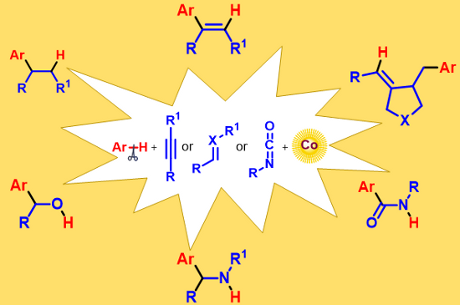
- synthesis owing to the necessity of green chemistry for the modern universe [1][2][3]. In this context, catalytic C–H functionalization has been acknowledged as an atom- and step-economical process [4][5][6]. A wide range of transition metal-catalyzed non-directed or directing group assisted C–H activation


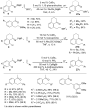






Bi-mediated allylation of aldehydes in [bmim][Br]: a mechanistic investigation
Beilstein J. Org. Chem. 2018, 14, 2198–2203, doi:10.3762/bjoc.14.193

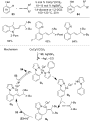
- [20] etc. are also tedious and not ideal for green chemistry. The use of a second metal with lower reduction potential than the active metals could not reduce the amounts of disposable metallic wastes [21][22]. Since most of the in situ-generated allylmetals are hydrolytically unstable, a large excess




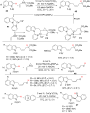
Heterogeneous acidic catalysts for the tetrahydropyranylation of alcohols and phenols in green ethereal solvents
Beilstein J. Org. Chem. 2018, 14, 1655–1659, doi:10.3762/bjoc.14.141

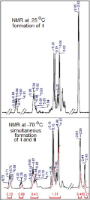
- one-pot reaction conditions. Keywords: green chemistry; green solvents; heterogeneous catalysts; multistep reactions; tetrahydropyranylation; Introduction Due to their general stability to a wide range of reagents and ease of removal, tetrahydropyranyl (THP) ethers are widely employed in multistep


Mild and selective reduction of aldehydes utilising sodium dithionite under flow conditions
Beilstein J. Org. Chem. 2018, 14, 1529–1536, doi:10.3762/bjoc.14.129
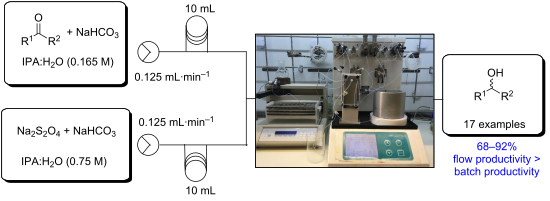
- Chemical Society (ACS), the Green Chemistry Institute (GCI) and several global pharmaceutical companies as one of the primary areas for research and development for chemical manufacturing [1][2][3][4]. For the past decade flow chemistry and the application of flow devices has been gaining acceptance in


2-Iodo-N-isopropyl-5-methoxybenzamide as a highly reactive and environmentally benign catalyst for alcohol oxidation
Beilstein J. Org. Chem. 2018, 14, 971–978, doi:10.3762/bjoc.14.82

- isophthalic acids (SIBX) [39] has been reported. Nevertheless, from a green chemistry viewpoint, pentavalent iodine oxidants are not ideal because oxidation reactions require a stoichiometric amount of the oxidant that produces an equimolar amount of organoiodine waste. The catalytic use of pentavalent iodine



Mechanochemistry of nucleosides, nucleotides and related materials
Beilstein J. Org. Chem. 2018, 14, 955–970, doi:10.3762/bjoc.14.81
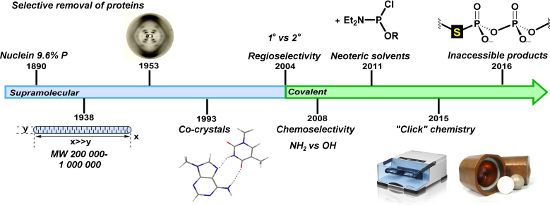
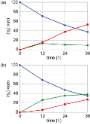
- : specifically, solid solutions, cocrystals, polymorph transitions, carbon nanotube dissolution and inclusion complex formation. Keywords: DNA; green chemistry; mechanochemistry; nucleoside; nucleotide; Introduction Several definitions of mechanochemistry have been attempted since Ostwald included it as one of
- elements of the subject relevant to the current work including applications in organic synthesis [5][6][7][8], green chemistry [9], API formulation [10] and coordination/materials chemistry [11][12]. Some aspects of the current work have also been reviewed recently [13]. However, the impact of
- arduous ion-exchange and drying processes required to render these materials soluble in organic solvents. Likewise, significant reductions in solvent processing (especially if these are high boiling and often toxic and/or carcinogenic) is an attractive green chemistry target. In this context, Thorwith et


Methyl isocyanide as a convertible functional group for the synthesis of spirocyclic oxindole γ-lactams via post-Ugi-4CR/transamidation/cyclization in a one-pot, three-step sequence
Beilstein J. Org. Chem. 2018, 14, 875–883, doi:10.3762/bjoc.14.74

- Amarendar Reddy Maddirala Peter R. Andreana Department of Chemistry and Biochemistry and School of Green Chemistry and Engineering, University of Toledo, 2801 W. Bancroft Street, Toledo, OH 43606, USA 10.3762/bjoc.14.74 Abstract The synthesis of spiro[indoline-3,2'-pyrrole]-2,5'(1'H)-diones and


Bromide-assisted chemoselective Heck reaction of 3-bromoindazoles under high-speed ball-milling conditions: synthesis of axitinib
Beilstein J. Org. Chem. 2018, 14, 786–795, doi:10.3762/bjoc.14.66

- transition-metal-catalyzed reactions [1][2], which has shown itself as a powerful synthetic tool in both academic and industrial practice [3][4][5][6][7]. The transformation has been enrolled as key steps for numerous synthetic routes, including the recent President Green Chemistry Award winner route of



Nanoreactors for green catalysis
Beilstein J. Org. Chem. 2018, 14, 716–733, doi:10.3762/bjoc.14.61
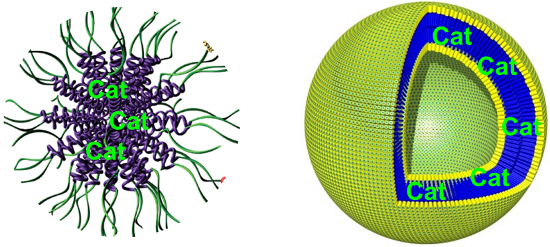
- concept of green chemistry has been recently defined to guide chemists towards minimizing any harmful outcome of chemical processes in either industry or research. Towards greener reactions, scientists have developed various approaches in order to decrease environmental risks while attaining chemical
- , namely: (polymer) vesicles, micelles, dendrimers and nanogels. The ability and efficiency of catalytic nanoreactors to carry out organic reactions in water, to perform cascade reaction and their ability to be recycled will be discussed. Keywords: catalysis; dendrimers; green chemistry; nanogels
- often related to the use of a green non-harmful solvent [3], water. In principle, green chemistry refers to (1) the employment of raw material (substrates) in an efficient manner, (2) decreasing the resulting waste or undesired byproducts, and (3) using cheap and environment friendly solvents (i.e


Liquid-assisted grinding and ion pairing regulates percentage conversion and diastereoselectivity of the Wittig reaction under mechanochemical conditions
Beilstein J. Org. Chem. 2018, 14, 688–696, doi:10.3762/bjoc.14.57
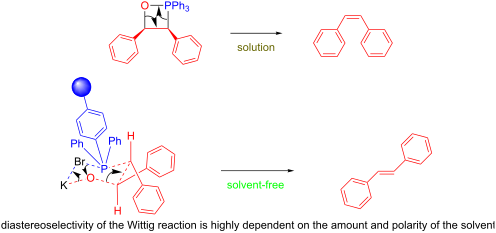
- the Wittig reaction. Keywords: green chemistry; high-speed ball milling; HSBM; LAG; liquid-assisted grinding; Wittig; Introduction Mechanochemistry is maturing as a discipline and continuing to develop and grow [1][2][3][4][5][6][7][8][9][10][11][12][13][14][15][16]. Thus it is important to continue


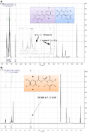


Mannich base-connected syntheses mediated by ortho-quinone methides
Beilstein J. Org. Chem. 2018, 14, 560–575, doi:10.3762/bjoc.14.43
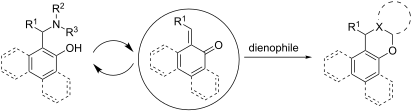
- reactions is definitely more advantageous. Ionic liquids have also attracted considerable attention due to their „green chemistry” values, including reusability, high thermal stability and non-inflammability. Hajipour et al. reported the one-pot synthesis of 1-amidoalkyl-2-naphthols catalysed by N-(4


Investigations towards the stereoselective organocatalyzed Michael addition of dimethyl malonate to a racemic nitroalkene: possible route to the 4-methylpregabalin core structure
Beilstein J. Org. Chem. 2018, 14, 553–559, doi:10.3762/bjoc.14.42
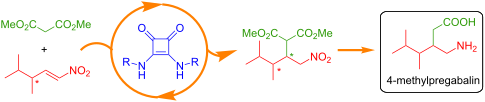
- ][21]. Other green chemistry concepts such as reusable media [22], immobilized catalysts [23], or flow set-ups have also been used with success for the synthesis of GABA derivatives [24]. Pregabalin is currently manufactured using enzymatic kinetic resolution [25], but an organocatalytic procedure


Electrochemical Corey–Winter reaction. Reduction of thiocarbonates in aqueous methanol media and application to the synthesis of a naturally occurring α-pyrone
Beilstein J. Org. Chem. 2018, 14, 547–552, doi:10.3762/bjoc.14.41
- reaction conditions. Importantly, they also represent a useful way to fulfilling important aspects of the green chemistry [26][27][28], making the synthetic pathways safer and more economical. Therefore, electrosynthetic reactions can be advantageous not only for solving synthetic problems where a redox
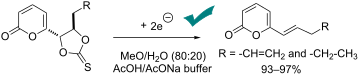
- molecule 5. In this letter we report the electrochemical behavior of thiocarbonates 4 and 6 in aqueous methanol MeOH/H2O (80:20) with 0.5 M AcOH/AcONa buffer as supporting electrolyte, as well as the results of several reductive electrolysis performed under green chemistry conditions. Cyclic thiocarbonate


Palladium-catalyzed ortho-halogenations of acetanilides with N-halosuccinimides via direct sp2 C–H bond activation in ball mills
Beilstein J. Org. Chem. 2018, 14, 430–435, doi:10.3762/bjoc.14.31
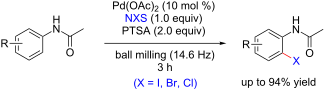
- construction of C–X bonds. With the development of transition-metal-catalyzed cross-coupling reactions, a series of halogenations at the ortho-position of the directing groups have been disclosed [5][6][7][8][9][10][11][12][13][14][15][16][17][18]. Nevertheless, from the viewpoint of green chemistry, the


Progress in copper-catalyzed trifluoromethylation
Beilstein J. Org. Chem. 2018, 14, 155–181, doi:10.3762/bjoc.14.11
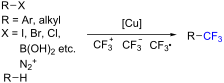
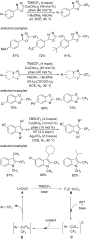
- imidazoheterocycles and meet the guiding principles of green chemistry, this reaction was conducted in a recyclable mixed medium of 1-butyl-3-methylimidazolium tetrafluoroborate ([Bmim]BF4) and water. In the presence of catalytic amounts of cupric acetate and TBHP, various substrates, such as 6-arylimidazo[2,1-b










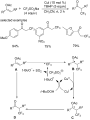


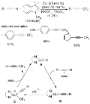

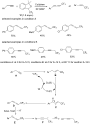
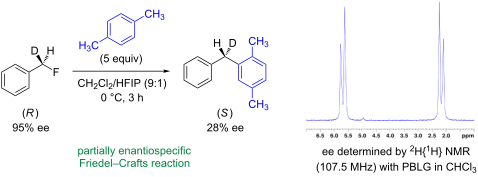
Stereochemical outcomes of C–F activation reactions of benzyl fluoride
Beilstein J. Org. Chem. 2018, 14, 106–113, doi:10.3762/bjoc.14.6
- Facility at Swansea University. This work was also supported by the Natural Sciences and Engineering Research Council of Canada (NSERC), the FRQNT Centre in Green Chemistry and Catalysis (CGCC), and the Université Laval.


Halogen-containing thiazole orange analogues – new fluorogenic DNA stains
Beilstein J. Org. Chem. 2017, 13, 2902–2914, doi:10.3762/bjoc.13.283
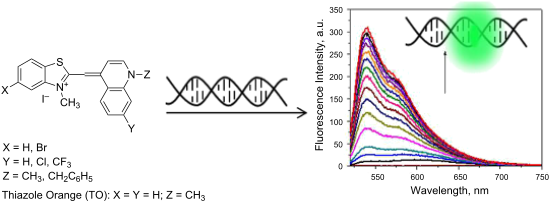
- Discussion Synthesis of intermediates and dyes On the basis of Green Chemistry concepts [47][48][49] and with the aim of avoiding the disadvantages of Brooker’s method and reducing the adverse effects of the synthesis, we report here a simple, environmentally more benign (in comparison the Brooker’s method




A semisynthesis of 3'-O-ethyl-5,6-dihydrospinosyn J based on the spinosyn A aglycone
Beilstein J. Org. Chem. 2017, 13, 2603–2609, doi:10.3762/bjoc.13.257
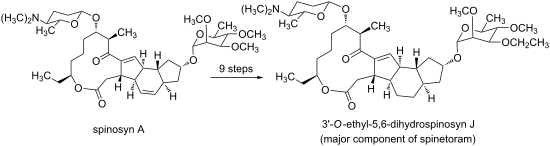
- persistence and low mammalian and avian toxicity [12]. Therefore, spinosad was awarded the Presidential Green Chemistry Challenge Award in 1999. However, spinosad was not effective in killing certain key pests of fruit trees and nut trees. To solve this problem, Dow AgroSciences used an "artificial neural
- addition, spinetoram shows excellent selectivity for the target insects, while being less harmful to beneficial predators, mammals and human beings [16]. Therefore, spinetoram was awarded the Presidential Green Chemistry Challenge Award in 2008. At present, spinetoram is obtained from spinosyn J and


Synthesis of naturally-derived macromolecules through simplified electrochemically mediated ATRP
Beilstein J. Org. Chem. 2017, 13, 2466–2472, doi:10.3762/bjoc.13.243
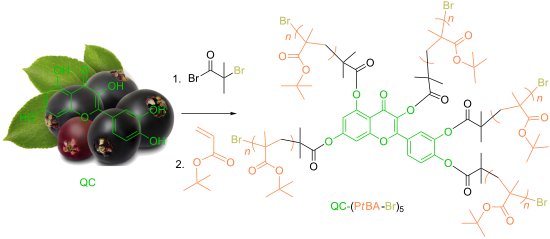
- the development of the “green chemistry” variety of this method. The catalyst complex concentration has been substantially reduced to parts per million (ppm) level in the reaction system, due to the development of the simplified electrochemically mediated ATRP (seATRP) approach [54], which offers


Exploring mechanochemistry to turn organic bio-relevant molecules into metal-organic frameworks: a short review
Beilstein J. Org. Chem. 2017, 13, 2416–2427, doi:10.3762/bjoc.13.239
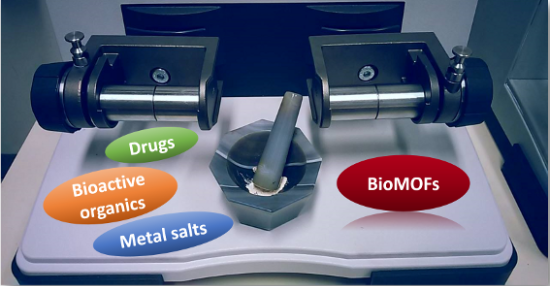
- : BioMOFs; drugs; green chemistry; mechanochemistry; organic based materials; Introduction Mechanochemistry is a straightforward and clean technique by which the desired products are obtained in high purity and high or quantitative yield. It combines high reaction efficiency with a minimum input of energy
- and solvent. It is an approach to green chemistry, an area devoted to the discovery of environmentally friendly synthetic pathways, eliminating or drastically reducing the amount of solvent necessary to catalytically promote reactions. Mechanochemistry consists of grinding together two or more




Mechanochemistry
Beilstein J. Org. Chem. 2017, 13, 2372–2373, doi:10.3762/bjoc.13.234
- Jose G. Hernandez Institute of Organic Chemistry, RWTH Aachen University, Landoltweg 1, D-52074 Aachen, Germany 10.3762/bjoc.13.234 Keywords: green chemistry; mechanochemistry; organic chemistry; solvent-free; The scientific community’s general interest in using mechanical energy to trigger or
- otherwise impossible chemical reactivity in many cases. From a green chemistry perspective, mechanochemical activation conducted by milling, shearing, pulling or ultrasonic irradiation allows for the possibility to drastically reduce the amount of solvent needed during chemical reactions, even to the point
The effect of milling frequency on a mechanochemical organic reaction monitored by in situ Raman spectroscopy
Beilstein J. Org. Chem. 2017, 13, 2160–2168, doi:10.3762/bjoc.13.216
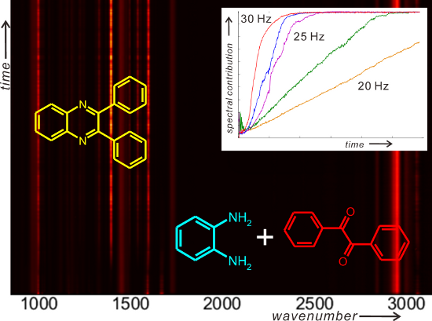
- : green chemistry; mechanism; mechanochemistry; milling; monitoring; Raman spectroscopy; Introduction Over the past decade, mechanochemical reactions [1][2][3][4], i.e., chemical transformations induced or sustained through the application of mechanical force in the form of grinding, milling and shearing


Peptide synthesis: ball-milling, in solution, or on solid support, what is the best strategy?
Beilstein J. Org. Chem. 2017, 13, 2087–2093, doi:10.3762/bjoc.13.206
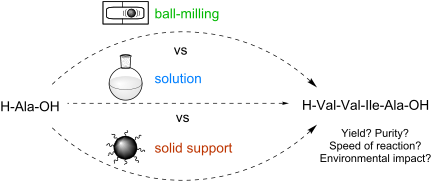
- build more efficient and sustainable peptide syntheses in the near future. Keywords: ball-mill; green chemistry; mechanochemistry; peptide synthesis; SPPS; Introduction Peptides play a central role both in biological mechanisms and in therapeutic solutions of the future [1][2]. Pharmaceutical


New bio-nanocomposites based on iron oxides and polysaccharides applied to oxidation and alkylation reactions
Beilstein J. Org. Chem. 2017, 13, 1982–1993, doi:10.3762/bjoc.13.194
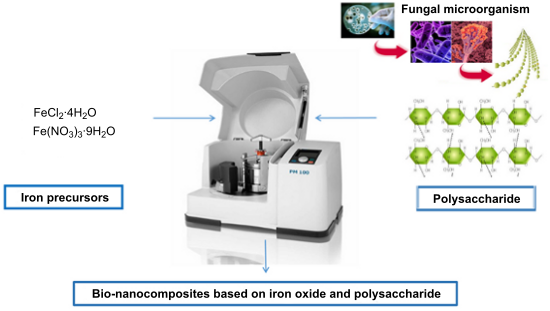
- over the use of catalysts in a homogeneous phase due to the difficulty in separation and recovery of the latter. Heterogeneous catalytic systems, as a priority of research activity in the field of green chemistry, open up new possibilities for further development of environmentally friendly, catalyzed


Mechanochemical synthesis of small organic molecules
Beilstein J. Org. Chem. 2017, 13, 1907–1931, doi:10.3762/bjoc.13.186
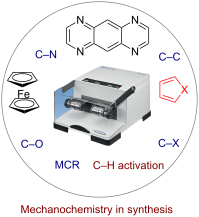
- (C–X), etc. is documented. Mechanochemical syntheses of heterocyclic rings, multicomponent reactions and organometallic molecules including their catalytic applications are also highlighted. Keywords: ball-milling; green chemistry; mechanochemistry; solid-phase synthesis; solvent-free synthesis
- ; Introduction The field of organic synthesis has experienced recently significant changes towards achieving the goal of more efficient and sustainable processes [1]. Thus, a new branch of chemistry termed as “Green Chemistry” has become a part of research interest by the chemists [2][3][4]. Green chemistry
- been documented and thereby developing many existing protocols with superior results are further anticipated [8][9]. To address one of the major issues of green chemistry, i.e., minimizing chemical-waste/energy, solvent-free syntheses have become a popular research topic [8]. The mechanochemical