


Search results
Search for "five-membered ring" in Full Text gives 153 result(s) in Beilstein Journal of Organic Chemistry.
Dipolar addition to cyclic vinyl sulfones leading to dual conformation tricycles
- Steven S. Y. Wong,
- Michael G. Brant,
- Christopher Barr,
- Allen G. Oliver and
- Jeremy E. Wulff
Beilstein J. Org. Chem. 2013, 9, 1419–1425, doi:10.3762/bjoc.9.159

- expedient regio- and stereospecific synthesis of five-membered ring N-, O- or S-containing heterocycles [4][5]. Various 1,3-dipoles can be used, including nitrones [6], azomethine ylides [7], diazoalkanes [8][9] and many others [10][11][12]. α,β-Unsaturated carbonyl compounds are often found to be good

Graphical Abstract

Scheme 1: Synthesis of a conformationally constrained bicyclic sulfone, and application as an inhibitor of an...

Figure 1: X-ray structure of 3a.
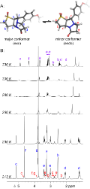
Figure 2: Assignment of major and minor conformations of 3a; A: DFT-calculated conformers; B: Collected 1H NM...
Conformational analysis and intramolecular interactions in monosubstituted phenylboranes and phenylboronic acids
- Josué M. Silla,
- Rodrigo A. Cormanich,
- Roberto Rittner and
- Matheus P. Freitas
Beilstein J. Org. Chem. 2013, 9, 1127–1134, doi:10.3762/bjoc.9.125

- an interaction giving a four- or five-membered ring. Experimental 2-Fluorophenylboronic acid was purchased from Sigma–Aldrich and used without further treatment. 1H and 11B NMR spectra were obtained from a Bruker Avance III 600 spectrometer operating at 600.2 MHz for 1H and 192.6 MHz for 11B, using

Graphical Abstract

Figure 1: 2- and 4-fluorophenylboronic acids (1 and 2) and 2-substituted phenylboranes [X = F (3), Cl (4), Br...

Figure 2: Molecular graphs for the energy minima of 2- and 4-fluorophenylboronic acids. Green dots represent ...

Figure 3: Important hyperconjugative interactions for 1a (from the left to the right: nF→σ*OH, nF→π*CC and πCC...

Figure 4: Infrared spectrum of 2-fluorophenylboronic acid in 0.1 M chloroform solution.
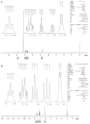
Figure 5: 1H NMR spectrum for 1 in (a) C6D6 solution (2 mg mL−1) and (b) CD3CN solution (20 mg mL−1).

Figure 6: Angular dependence of 1hJF,H(O) and nF→σ*OH in 1a, obtained at the BHandH/EPR-III (J) and B3LYP/aug...

Figure 7: Molecular graphs indicating bond paths (BPs), bond critical points (BCPs; green dots), and ring cri...
Simple synthesis of pyrrolo[3,2-e]indole-1-carbonitriles
- Adam Trawczyński,
- Robert Bujok,
- Zbigniew Wróbel and
- Krzysztof Wojciechowski
Beilstein J. Org. Chem. 2013, 9, 934–941, doi:10.3762/bjoc.9.107

- that the five-membered ring finally isomerizes to the N-hydroxypyrrole fragment of 6e. To remove the benzyloxymethyl group from the compound 8a we adopted the procedure proposed by Macor [6]. Heating 8a with ammonium formate and 10% palladium on carbon as a catalyst in isopropanol in a sealed tube (95

Graphical Abstract

Scheme 1: Synthesis of pyrrolo[3,2-e]indoles via VNS in 5-nitroindoles [6,12].

Scheme 2: Synthesis of pyrrolo[3,2-e]indoles 6.

Scheme 3: Plausible route for transformation of indoles 5 into pyrrolo[3,2-e]indoles 6.

Scheme 4: Removal of the benzyloxymethyl group from the compound 8a.
A computational study of base-catalyzed reactions of cyclic 1,2-diones: cyclobutane-1,2-dione
- Nargis Sultana and
- Walter M. F. Fabian
Beilstein J. Org. Chem. 2013, 9, 594–601, doi:10.3762/bjoc.9.64
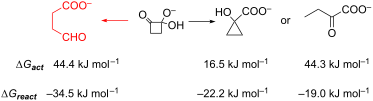
- –C2 bonds and the oxygen atom O1 [α = 103° (TS4), 106° (Int4), and 112° (TS5)]. The product P3a of path C has a largely planar five-membered ring structure (α = 165°). In both TS4 and Int4 the C1–C2 distance (1.48 Å) is in the range of C–C single bonds, while in TS5 this bond is significantly

Graphical Abstract

Scheme 1: Reactions of 1,2-dicarbonyl compounds with base.

Scheme 2: Reactions of cyclic 1,2-diones with base.

Scheme 3: Possible intermediates, transition structures, and products considered for the reaction of cyclobut...

Figure 1: CEPA-1/def2-QZVPP calculated reaction paths for the reaction of 1·(H2O)2 + [OH(H2O)4]–.
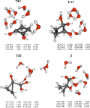
Figure 2: M06-2X/6-31+G(d,p) calculated structures of stationary points along the benzilic acid type rearrang...

Scheme 4: Reaction sequence calculated for an extended conformation of Int2.

Figure 3: Calculated structure of transition state TS3a. Distances are given in angstrom (Å), angles in degre...
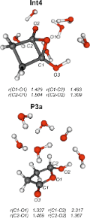
Figure 4: Calculated structures of pertinent stationary points along path C. Distances are given in angstroms...

Scheme 5: Actual path C obtained by the calculations (as in Scheme 3, Int1, TS4, Int4, and TS5 are hydrated by six wa...
Intramolecular carbolithiation cascades as a route to a highly strained carbocyclic framework: competition between 5-exo-trig ring closure and proton transfer
- William F. Bailey and
- Justin D. Fair
Beilstein J. Org. Chem. 2013, 9, 537–543, doi:10.3762/bjoc.9.59
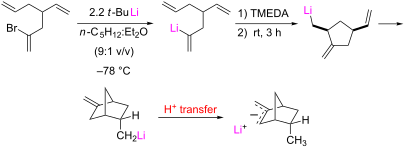
- reaction appears to provide an interesting … procedure for formation of five-membered ring systems which is potentially significant for synthetic purposes” [3]. Indeed, the facile cyclization of olefinic and acetylenic organolithiums has proven to be a regiospecific and highly stereoselective route [4] to

Graphical Abstract

Scheme 1: Retrosynthetic plan.

Scheme 2: Preparation of 2.

Scheme 3: Generation of 3 by lithium–bromine exchange.

Scheme 4: Cascade products.

Figure 1: Reaction progress of the attempted triple-cyclization cascade.

Scheme 5: Proton transfer that foils final cyclization.

Scheme 6: Preparation of iodide 7 and an authentic sample of 5.

Scheme 7: Evidence for the intermolecular nature of the formal [1,4]-proton transfer.
Tricyclic flavonoids with 1,3-dithiolium substructure
- Lucian G. Bahrin,
- Peter G. Jones and
- Henning Hopf
Beilstein J. Org. Chem. 2012, 8, 1999–2003, doi:10.3762/bjoc.8.226
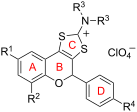
- charge at the nitrogen atom. Similarly, C3–C4, at 1.342(2) Å, is also a (marginally lengthened) double bond. The C–S bond lengths in the five-membered ring are approximately equal [1.727(1) – 1.746(1) Å]. The new 1,3-dithiolium cations are particularly prone to nucleophilic attack at their 2-positions

Graphical Abstract

Figure 1: Polycyclic flavonoids.

Scheme 1: The synthesis of flavonoids 6 and 7.

Figure 2: Diastereoisomers of flavonoids 6.

Figure 3: Molecular structure of flavonoid 6a in the solid state. Ellipsoids represent 50% probability levels...

Figure 4: Molecular structure of flavonoid 6b in the solid state. Ellipsoids represent 50% probability levels...

Figure 5: Molecular structure of flavonoid 7a in the solid state. Ellipsoids represent 50% probability levels....
The chemistry of bisallenes
- Henning Hopf and
- Georgios Markopoulos
Beilstein J. Org. Chem. 2012, 8, 1936–1998, doi:10.3762/bjoc.8.225
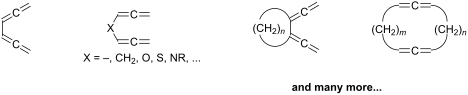

Graphical Abstract

Figure 1: Loschmidt’s structure proposal for benzene (1) (Scheme 181 from [3]) and the corresponding modern stru...

Figure 2: The first isolated bisallenes.

Figure 3: Carbon skeletons of selected bisallenes discussed in this review.

Scheme 1: The preparation of 1,2,4,5-hexatetraene (2).

Scheme 2: The preparation of a conjugated bisallene by the DMS-protocol.

Scheme 3: Preparation of the 3-deuterio- and 3,4-dideuterio derivatives of 24.

Scheme 4: A versatile method to prepare alkylated conjugated bisallenes and other allenes.

Scheme 5: A preparation of 3,4-dimethyl-1,2,4,5-hexatetraene (38).

Scheme 6: A (C6 + 0)-approach to 1,2,4,5-hexatetraene (2).

Scheme 7: The preparation of a fully alkylated bisallenes from a 2,4-hexadiyne-1,6-diol diacetate.

Scheme 8: The preparation of the first phenyl-substituted conjugated bisallenes 3 and 4.

Scheme 9: Selective hydrogenation of [5]cumulenes to conjugated bisallenes: another (C6 + 0)-route.

Scheme 10: Aryl-substituted conjugated bisallenes by a (C3 + C3)-approach.

Scheme 11: Hexaphenyl-1,2,4,5-hexatetraene (59) by a (C3 + C3)-approach.

Scheme 12: An allenation route to conjugated bisallenes.

Scheme 13: The preparation of 3,4-difunctionalized conjugated bisallenes.

Scheme 14: Problems during the preparation of sulfur-substituted conjugated bisallenes.

Scheme 15: The preparation of 3,4-dibromo bisallenes.

Scheme 16: Generation of allenolates by an oxy-Cope rearrangement.

Scheme 17: A linear trimerization of alkynes to conjugated bisallenes: a (C2 + C2 + C2)-protocol.

Scheme 18: Preparation of a TMS-substituted conjugated bisallene by a C3-dimerization route.

Scheme 19: A bis(trimethylsilyl)bisallene by a C3-coupling protocol.

Scheme 20: The rearrangement of highly substituted benzene derivatives into their conjugated bisallenic isomer...

Scheme 21: From fully substituted benzene derivatives to fully substituted bisallenes.

Scheme 22: From a bicyclopropenyl to a conjugated bisallene derivative.

Scheme 23: The conversion of a bismethylenecyclobutene into a conjugated bisallene.

Scheme 24: The preparation of monofunctionalized bisallenes.

Scheme 25: Preparation of bisallene diols and their cyclization to dihydrofurans.

Scheme 26: A 3,4-difunctionalized conjugated bisallene by a C3-coupling process.

Scheme 27: Preparation of a bisallenic diketone by a coupling reaction.

Scheme 28: Sulfur and selenium-substituted bisallenes by a [2.3]sigmatropic rearrangement.

Scheme 29: The biallenylation of azetidinones.

Scheme 30: The preparation of a fully ferrocenylated conjugated bisallene.

Scheme 31: The first isomerization of a 1,5-hexadiyne to a 1,2,4,5-hexatetraene.

Scheme 32: The preparation of alkynyl-substituted bisallenes by a C3-dimerization protocol.

Scheme 33: Preparation of another completely ferrocenylated bisallene.

Scheme 34: The cyclization of 1,5-hexadiyne (129) to 3,4-bismethylenecyclobutene (130) via 1,2,4,5-hexatetraen...
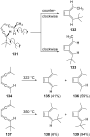
Scheme 35: Stereochemistry of the thermal cyclization of bisallenes to bismethylenecyclobutenes.

Scheme 36: Bisallene→bismethylenecyclobutene ring closures in the solid state.

Scheme 37: A bisallene cyclization/dimerization reaction.

Scheme 38: A selection of Diels–Alder additions of 1,2,4,5-hexatetraene with various double-bond dienophiles.

Scheme 39: The stereochemistry of the [2 + 4] cycloaddition to conjugated bisallenes.

Scheme 40: Preparation of azetidinone derivatives from conjugated bisallenes.

Scheme 41: Cycloaddition of heterodienophiles to a conjugated bisallene.

Scheme 42: Addition of triple-bond dienophiles to conjugated bisallenes.

Scheme 43: Sulfur dioxide addition to conjugated bisallenes.

Scheme 44: The addition of a germylene to a conjugated bisallene.

Scheme 45: Trapping of conjugated bisallenes with phosphinidenes.

Scheme 46: The cyclopropanantion of 1,2,4,5-hexatetraene (2).

Scheme 47: Photochemical reactions involving conjugated bisallenes.

Scheme 48: Base-catalyzed isomerizations of conjugated bisallenes.

Scheme 49: Ionic additions to a conjugated bisallene.

Scheme 50: Oxidation reactions of a conjugated bisallene.
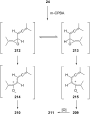
Scheme 51: The mechanism of oxidation of the bisallene 24.

Scheme 52: CuCl-catalyzed cyclization of 1,2,4,5-hexatetraene (2).

Scheme 53: The conversion of conjugated bisallenes into cyclopentenones.

Scheme 54: Oligomerization of a conjugated bisallene by nickel catalysts.
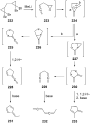
Scheme 55: Generation of 1,2,5,6-heptatetraene (229) as a reaction intermediate.

Scheme 56: The preparation of a stable derivative of 1,2,5,6-heptatetraene.

Scheme 57: A bisallene with a carbonyl group as a spacer element.

Scheme 58: The first preparation of 1,2,6,7-octatetraene (242).

Scheme 59: Preparation of 1,2,6,7-octatetraenes by (C4 + C4)-coupling of enynes.

Scheme 60: Preparation of 1,2,6,7-octatetraenes by (C4 + C4)-coupling of homoallenyl bromides.

Scheme 61: Preparation of 1,2,6,7-octatetraenes by alkylation of propargylic substrates.

Scheme 62: Preparation of two highly functionalized 1,2,6,7-octatetraenes.

Scheme 63: Preparation of several higher α,ω-bisallenes.

Scheme 64: Preparation of different alkyl derivatives of α,ω-bisallenes.

Scheme 65: The preparation of functionalized 1,2,7,8-nonatetraene derivatives.

Scheme 66: Preparation of functionalized α,ω-bisallenes.

Scheme 67: The preparation of an α,ω-bisallene by direct homologation of an α,ω-bisalkyne.

Scheme 68: The gas-phase pyrolysis of 4,4-dimethyl-1,2,5,6-heptatetraene (237).
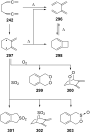
Scheme 69: Gas-phase pyrolysis of 1,2,6,7-octatetraene (242).

Scheme 70: The cyclopropanation of 1,2,6,7-octatetraene (242).

Scheme 71: Intramolecular cyclization of 1,2,6,7-octatetraene derivatives.

Scheme 72: The gas-phase pyrolysis of 1,2,7,8-nonatetraene (265) and 1,2,8,9-decatetraene (266).

Scheme 73: Rh-catalyzed cyclization of a functionalized 1,2,7,8-nonatetraene.

Scheme 74: A triple cyclization involving two different allenic substrates.

Scheme 75: Bicyclization of keto derivatives of 1,2,7,8-nonatetraene.

Scheme 76: The preparation of complex organic compounds from functionalized bisallenes.

Scheme 77: Cycloisomerization of an α,ω-bisallene containing a C9 tether.

Scheme 78: Organoborane polymers from α,ω-bisallenes.

Scheme 79: Preparation of trans- (337) and cis-1,2,4,6,7-octapentaene (341).

Scheme 80: The preparation of 4-methylene-1,2,5,6-heptatetraene (349).

Scheme 81: The preparation of acetylenic bisallenes.

Scheme 82: The preparation of derivatives of hydrocarbon 351.

Scheme 83: The construction of macrocyclic alleno-acetylenes.

Scheme 84: Preparation and reactions of 4,5-bismethylene-1,2,6,7-octatetraene (365).

Scheme 85: Preparation of 1,2-bis(propadienyl)benzene (370).

Scheme 86: The preparation of 1,4-bis(propadienyl)benzene (376).

Scheme 87: The preparation of aromatic and heteroaromatic bisallenes by metal-mediated coupling reactions.

Scheme 88: Double cyclization of an aromatic bisallene.

Scheme 89: Preparation of an allenic [15]paracyclophane by a ring-closing metathesis reaction of an aromatic α...

Scheme 90: Preparation of a macrocyclic ring system containing 1,4-bis(propadienyl)benzene units.

Scheme 91: Preparation of copolymers from 1,4-bis(propadienyl)benzene (376).

Scheme 92: A boration/copolymerization sequence of an aromatic bisallene and an aromatic bisacetylene.

Scheme 93: Formation of a layered aromatic bisallene.

Figure 4: The first members of the semicyclic bisallene series.

Scheme 94: Preparation of the first bis(vinylidene)cyclobutane derivative.
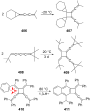
Scheme 95: Dimerization of strain-activated cumulenes to bis(vinylidene)cyclobutanes.

Scheme 96: Photodimerization of two fully substituted butatrienes in the solid state.

Scheme 97: Preparation of the two parent bis(vinylidene)cyclobutanes.

Scheme 98: The preparation of 1,3-bis(vinylidene)cyclopentane and its thermal isomerization.

Scheme 99: The preparation of the isomeric bis(vinylidene)cyclohexanes.

Scheme 100: Bi- and tricyclic conjugated bisallenes.
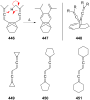
Scheme 101: A selection of polycyclic bisallenes.

Scheme 102: The first endocyclic bisallenes.

Figure 5: The stereochemistry of 1,2,6,7-cyclodecatetraene.

Scheme 103: The preparation of several endocyclic bisallenes.

Scheme 104: Synthesis of diastereomeric derivatives of 1,2,6,7-cyclodecatetraene.

Scheme 105: Preparation of a derivative of 1,2,8,9-cyclotetradecatetraene.

Scheme 106: The preparation of keto derivatives of cyclic bisallenes.

Scheme 107: The preparation of cyclic biscumulenic ring systems.

Scheme 108: Cyclic bisallenes in natural- and non-natural-product chemistry.

Scheme 109: The preparation of iron carbonyl complexes from cyclic bisallenes.

Figure 6: A selection of unknown exocyclic bisallenes that should have interesting chemical properties.

Scheme 110: The thermal isomerization of 1,2-diethynylcyclopropanes and -cyclobutanes.

Scheme 111: Intermediate generation of a cyclooctapentaene.

Scheme 112: Attempted preparation of a cyclodecahexaene.

Scheme 113: The thermal isomerization of 1,5,9-cyclododecatriyne (511) into [6]radialene (514).

Scheme 114: An isomerization involving a diketone derived from a conjugated bisallene.

Scheme 115: Typical reaction modes of heteroorganic bisallenes.

Scheme 116: Generation and thermal behavior of acyclic hetero-organic bisallenes.

Scheme 117: Generation of bis(propadienyl)thioether.

Scheme 118: The preparation of a bisallenic sulfone and its thermal isomerization.

Scheme 119: Bromination of the bisallenic sulfone 535.

Scheme 120: Metalation/hydrolysis of the bisallenic sulfone 535.

Scheme 121: Aromatic compounds from hetero bisallenes.

Scheme 122: Isomerization/cyclization of bispropargylic ethers.

Scheme 123: The preparation of novel aromatic systems by base-catalyzed isomerization of bispropargyl ethers.

Scheme 124: The isomerization of bisacetylenic thioethers to bicyclic thiophenes.

Scheme 125: Aromatization of macrocyclic bispropargylic sulfides.

Scheme 126: Preparation of ansa-compounds from macrocyclic bispropargyl thioethers.

Scheme 127: Alternate route for cyclization of a heterorganic bisallene.
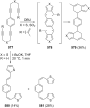
Scheme 128: Multiple isomerization/cyclization of “double” bispropargylic thioethers.

Scheme 129: Preparation of a bisallenyl disulfide and its subsequent bicyclization.

Scheme 130: Thermal cyclization of a bisallenyl thiosulfonate.

Scheme 131: Some reactions of heteroorganic bisallenes with two sulfur atoms.

Scheme 132: Further methods for the preparation of heteroorganic bisallenes.

Scheme 133: Cyclization reactions of heteroorganic bisallenes.

Scheme 134: Thermal cycloadditions of bisallenic tertiary amines.

Scheme 135: Cyclization of a bisallenic tertiary amine in the presence of a transition-metal catalyst.

Scheme 136: A Pauson–Khand reaction of a bisallenic ether.

Scheme 137: Formation of a 2:1adduct from two allenic substrates.

Scheme 138: A ring-forming silastannylation of a bisallenic tertiary amine.

Scheme 139: A three-component cyclization involving a heterorganic bisallene.

Scheme 140: Atom-economic construction of a complex organic framework from a heterorganic α,ω-bisallene.
Binaphthyl-anchored antibacterial tripeptide derivatives with hydrophobic C-terminal amino acid variations
- John B. Bremner,
- Paul A. Keller,
- Stephen G. Pyne,
- Mark J. Robertson,
- K. Sakthivel,
- Kittiya Somphol,
- Dean Baylis,
- Jonathan A. Coates,
- John Deadman,
- Dharshini Jeevarajah and
- David I. Rhodes
Beilstein J. Org. Chem. 2012, 8, 1265–1270, doi:10.3762/bjoc.8.142
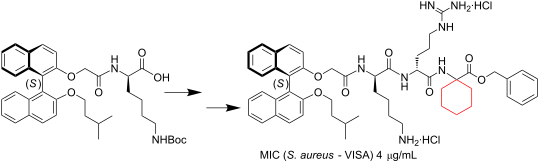
- assessing the effect of variation in the spatial disposition of the cycloalkyl or oxacycloalkyl ring on antibacterial activity. The conformationally less restricted gem diethyl-substituted compound 2g was also targeted in order to make antibacterial activity comparisons with the five-membered ring analogue

Graphical Abstract

Figure 1: Binaphthyl-anchored tripeptide derivatives 1.

Scheme 1: Synthesis of compounds 2a–g. Reagents and conditions: (i) 2a–b,d–g, BnBr, acetone or THF, K2CO3, re...
Stereoselective synthesis of trans-fused iridoid lactones and their identification in the parasitoid wasp Alloxysta victrix, Part II: Iridomyrmecins
- Robert Hilgraf,
- Nicole Zimmermann,
- Lutz Lehmann,
- Armin Tröger and
- Wittko Francke
Beilstein J. Org. Chem. 2012, 8, 1256–1264, doi:10.3762/bjoc.8.141
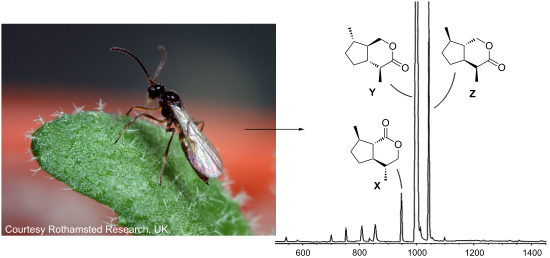
- mitsugashiwalactone (25) [42] and its “nor-iridomyrmecin-complement” boschnialactone (26), [43] which all are plant volatiles, the methyl group in the typical five-membered ring of iridoids keeps its (S)-configuration (see also Figure 8), which is just in contrast to X and Z [44]. However, recently, two stereoisomers

Graphical Abstract

Figure 1: Structures of cis- and trans-fused iridoid lactones.

Figure 2: 70 eV EI-mass spectrum of compounds Y and Z of Alloxysta victrix.

Figure 3: Chemical structures of all eight stereoisomers of trans-fused iridomyrmecins and their gas chromato...

Figure 4: Strategy for the stereoselective synthesis of trans-fused iridomyrmecins A–D from (R)-limonene.

Scheme 1: Synthesis of the trans-fused iridomyrmecins A and B. Reaction conditions and yields: a) ammonium fo...

Figure 5: Configurations of the trans-fused iridomyrmecins A and B’.

Scheme 2: Synthesis of the trans-fused iridomyrmecins C and D. Reaction conditions and yields: a) Crabtree's ...

Figure 6: Configurations of the trans-fused iridomyrmecins C and D’.

Figure 7: Volatile terpenoids in the cephalic secretion of Alloxysta victrix. For the identification of compo...
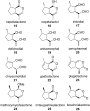
Figure 8: Structures of iridoids from insects and plants. Absolute configurations of 19 and 20 are "educated ...

Figure 9: Biosynthetic ways to iridoids from geraniol.
Stereoselective synthesis of trans-fused iridoid lactones and their identification in the parasitoid wasp Alloxysta victrix, Part I: Dihydronepetalactones
- Nicole Zimmermann,
- Robert Hilgraf,
- Lutz Lehmann,
- Daniel Ibarra and
- Wittko Francke
Beilstein J. Org. Chem. 2012, 8, 1246–1255, doi:10.3762/bjoc.8.140
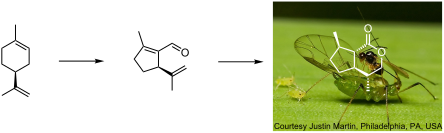
- few others, the stereogenic center carrying the methyl group in the five-membered ring of iridoid lactones including insect semiochemicals [13][14][15] generally shows (S)-configuration. Only recently, two isomeric iridoid lactones showing (7R)-configuration have been identified from the Drosophila
- may turn out that the chiral center carrying the methyl group in the five-membered ring of iridoids may much more often show (R)-configuration than it is known today. Terpenoids 1–5 present in Alloxysta victrix and cis-fused bicyclic iridoids known from other insects (6–8). 70 eV EI-mass spectrum of

Graphical Abstract

Figure 1: Terpenoids 1–5 present in Alloxysta victrix and cis-fused bicyclic iridoids known from other insect...

Figure 2: 70 eV EI-mass spectrum of the iridoid X, a component of the volatile secretions of the parasitoid w...

Figure 3: Structures and gas chromatographic retention times of trans-fused dihydronepetalactones on a conven...

Scheme 1: Route from (S)-pulegone to the mixture of dihydronepetalactones a and b, consequently following Wol...

Figure 4: Configuration of the dihydronepetalactone a.

Figure 5: Route to stereochemically pure trans-fused dihydronepetalactones a–d from (R)-limonene.

Scheme 2: Synthesis of the key compound 16. Reaction conditions: a) O3, MeOH, −50 °C (86%); b) AcOH, piperidi...

Scheme 3: Synthesis of trans,trans-substituted dihydronepetalactone b. Reaction conditions: a) TBDMSCl, imida...

Figure 6: Configurations of compound 24 and the dihydronepetalactone b.

Scheme 4: Synthesis of cis,trans-substituted dihydronepetalactone c. Reaction conditions: a) Crabtree's catal...

Figure 7: Configurations of compound 26 and the dihydronepetalactone c.

Scheme 5: Synthesis of a 2:3 mixture of dihydronepetalactones c and d. Reaction conditions: a) (COCl)2, DMSO,...

Scheme 6: Formal synthesis of a mixture of dihydronepetalactones a and b from (R)-limonene.
Synthesis and characterization of Sant-75 derivatives as Hedgehog-pathway inhibitors
- Chao Che,
- Song Li,
- Bo Yang,
- Shengchang Xin,
- Zhixiong Yu,
- Taofeng Shao,
- Chuanye Tao,
- Shuo Lin and
- Zhen Yang
Beilstein J. Org. Chem. 2012, 8, 841–849, doi:10.3762/bjoc.8.94
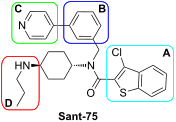
- various heteroaryl acids 8a–h to yield 9a–h (Scheme 4). The following considerations were taken for the selection of the heteroaryl acids: removal of the Cl atom (8a); replacement of the S atom with N or O atoms (8b, 8c); two heteroatoms in a five-membered ring (8d–f); and a 5,5-fused ring heterocycle (8h

Graphical Abstract

Figure 1: Structures of Smo antagonists and agonists.

Scheme 1: General synthetic route for Sant-75. Reagents and conditions: (a) Pd(PPh3)4, PhMe, Na2CO3, H2O, 85 ...

Scheme 2: Substituent-modifications on the motif A. Reagents and conditions: (a) CH2Cl2, Et3N; (b) CH2Cl2, TF...

Scheme 3: Substituent-modifications on the motif A. Reagents and conditions: (a) (i) FeCl3, Zn, H2O, DMF, 100...

Scheme 4: Core modification on the motif A. Reagents and conditions: (a) BOP, DIEA, DMF; (b) CH2Cl2, TFA.

Figure 2: Core modification on the motif B.

Scheme 5: Synthesis of key intermediate biaryl aldehydes. Reagents and conditions: (a) Pd(OAc)2, PPh3, 1,4-di...

Scheme 6: Chemical modifications on the motif C. Reagents and conditions: (a) Pd(OAc)2, PPh3, 1,4-dioxane, Na2...

Scheme 7: Chemical modifications on the motif D. Reagents and conditions: (a) R2COCl, CH2Cl2.
Synthesis of 2,6-disubstituted tetrahydroazulene derivatives
- Zakir Hussain,
- Henning Hopf,
- Khurshid Ayub and
- S. Holger Eichhorn
Beilstein J. Org. Chem. 2012, 8, 693–698, doi:10.3762/bjoc.8.77
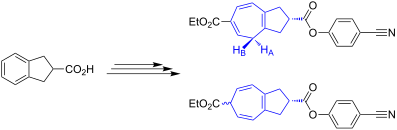
- double bond of the substrate. It is worth mentioning that in our earlier work on similar compounds [19], we isolated at least two isomers of 4 (with the methine hydrogen atom at the five-membered ring being present at either the α or β position). In our earlier work [10], carbene addition to similar
- , which was recrystallized from hexane and dichloromethane to afford single crystals suitable for X-ray analysis. The X-ray data [20] showed that the central, six-membered ring is almost planar but is slightly folded about the axis C(2)···C(6); the five-membered ring is essentially planar. The two larger

Graphical Abstract

Scheme 1: Preparation of carbene adducts 4 [18] and 5.

Scheme 2: Preparation of the cycloheptatrienes 7 and 8 [18,20].

Scheme 3: Preparation of derivatives 9 and 10.
Synthesis and biological evaluation of nojirimycin- and pyrrolidine-based trehalase inhibitors
- Davide Bini,
- Francesca Cardona,
- Matilde Forcella,
- Camilla Parmeggiani,
- Paolo Parenti,
- Francesco Nicotra and
- Laura Cipolla
Beilstein J. Org. Chem. 2012, 8, 514–521, doi:10.3762/bjoc.8.58
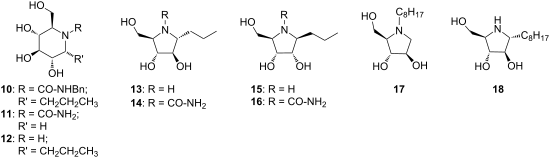
- synthesized with different stereochemistry on the five-membered ring (i.e., compounds 14, 16 versus 17, 19, Figure 3), in order to elucidate whether this feature could be relevant for enzyme recognition, and with a sterically demanding alkyl chain positioned either at the nitrogen atom or at the adjacent

Graphical Abstract
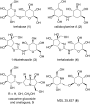
Figure 1: Structure of trehalose (1), validoxylamine A (2), 1-thiatrehazolin (3), trehalostatin (4), casuarin...

Figure 2: Structure of nojirimycin-based (7, 8) and pyrrolidine-based (9) leads.
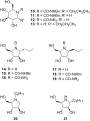
Figure 3: Structures of potential inhibitors 10–21.
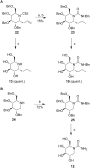
Scheme 1: Synthesis of nojirimycin-based inhibitors 10,12 and 13. Reagents and conditions: (a) H2, Pd/C, NH4O...
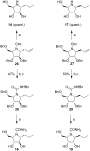
Scheme 2: Synthesis of pyrrolidine derivatives 14, 16, 17 and 19. Reagents and conditions: (a) H2, Pd(OH)2/C,...

Scheme 3: Synthesis of pyrrolidines 20 and 21. Reagents and conditions: (a) H2, Pd/C, MeOH, HCl; (b) octanal,...
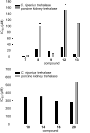
Figure 4: Histogram of the inhibitory activity of compounds 7–10, 12–14, 16 and 20. Derivatives 10, 14 and 16...
Perhydroazulene-based liquid-crystalline materials with smectic phases
- Zakir Hussain,
- Henning Hopf and
- S. Holger Eichhorn
Beilstein J. Org. Chem. 2012, 8, 403–410, doi:10.3762/bjoc.8.44
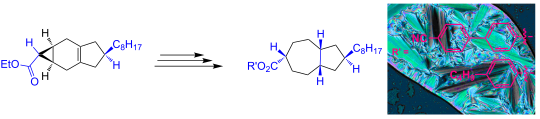
- , obtained in >98% purity, and characterized by NMR spectroscopy as well as by their other analytical data [14]. The NMR data of 1a and 1b indicate that methylene groups in the five-membered ring carry pairwise enantiotopic and diastereotopic H-atoms; enantiotopic with respect to the internal mirror plane

Graphical Abstract

Figure 1: Overall molecular structure of the perhydroazulene core with trans-stereochemistry.

Scheme 1: Stereochemistry of carbene adducts 1a and 1b.

Scheme 2: Preparation of the tropylidenes 4a and 4b.

Scheme 3: Formation of esters 5a and 5b and the corresponding acids 6a and 6b.

Scheme 4: Preparation of 8a and 8b.

Scheme 5: Preparation of 10a and 10b.
Directed aromatic functionalization in natural-product synthesis: Fredericamycin A, nothapodytine B, and topopyrones B and D
- Charles Dylan Turner and
- Marco A. Ciufolini
Beilstein J. Org. Chem. 2011, 7, 1475–1485, doi:10.3762/bjoc.7.171
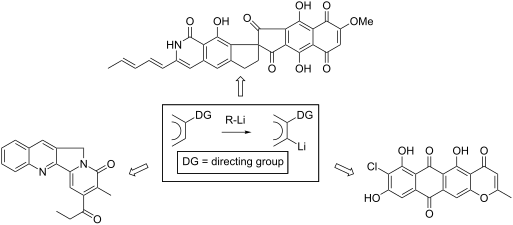
- cyanopyridones 39b instead. In keeping with a principle introduced during our work on camptothecin [81][82][83], the five-membered ring of 36 was imagined to result upon acid treatment of 40 (Scheme 8) [84], which in turn could be assembled by using the chemistry of Scheme 8 on substrate 41, provided that the

Graphical Abstract
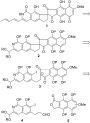
Scheme 1: Structure and retrosynthetic analysis of fredericamycin A.

Scheme 2: Assembly of the isoquinolone segment of fredericamycin.

Scheme 3: Synthesis of a naphthalide precursor to the quinoid moiety of fredericamycin.
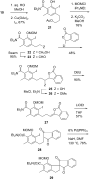
Scheme 4: Palladium-mediated cyclization of a fredericamycin model system.
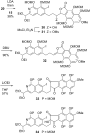
Scheme 5: Synthesis of the precursor of fredericamycin and the facile air oxidation thereof.

Scheme 6: Formal synthesis of fredericamycin A.

Figure 1: Structure of nothapodytine B.

Scheme 7: A useful pyridone synthesis.

Scheme 8: Retrosynthetic logic for nothapodytine B.

Scheme 9: Preparation of a key nothapodytine fragment.

Scheme 10: Total synthesis of nothapodytine B.

Figure 2: Structures of topopyrones.

Scheme 11: Retrosynthetic logic for the linear series of topopyrones.

Scheme 12: Construction of the molecular subunit common to all topopyrones.
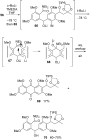
Scheme 13: Difficulties encountered during the merger of the topopyrone D moieties.

Scheme 14: Efficient synthesis of a simplified anthraquinone.

Scheme 15: Total synthesis of topopyrone D.
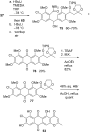
Scheme 16: Total synthesis of topopyrone B.
Amines as key building blocks in Pd-assisted multicomponent processes
- Didier Bouyssi,
- Nuno Monteiro and
- Geneviève Balme
Beilstein J. Org. Chem. 2011, 7, 1387–1406, doi:10.3762/bjoc.7.163
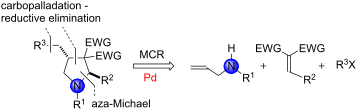
- -allylpalladium intermediate that would lead to 2,5-dihydropyrrole or vinylic azacyclopropane derivatives. This is followed by a five-membered ring cyclization leading to polysubstituted imidazolidinones 75 in rather good yields and excellent selectivity (Scheme 32). A conceptually related strategy was developed

Graphical Abstract

Scheme 1: Synthesis of substituted amides.

Scheme 2: Synthesis of ketocarbamates and imidazolones.

Scheme 3: Access to β-lactams.

Scheme 4: Access to β-lactams with increased structural diversity.

Scheme 5: Synthesis of imidazolinium salts.

Scheme 6: Access to the indenamine core.

Scheme 7: Synthesis of substituted tetrahydropyridines.

Scheme 8: Synthesis of more substituted tetrahydropyridines.

Scheme 9: Synthesis of chiral tetrahydropyridines.

Scheme 10: Preparation of α-aminonitrile by a catalyzed Strecker reaction.

Scheme 11: Synthesis of spiroacetals.

Scheme 12: Synthesis of masked 3-aminoindan-1-ones.

Scheme 13: Synthesis of homoallylic amines and α-aminoesters.

Scheme 14: Preparation of 1,2-dihydroisoquinolin-1-ylphosphonates.

Scheme 15: Pyrazole elaboration by cycloaddition of hydrazines with alkynones generated in situ.

Scheme 16: An alternative approach to pyrazoles involving hydrazine cycloaddition.

Scheme 17: Synthesis of pyrroles by cyclization of propargyl amines.

Scheme 18: Isoindolone and phthalazone synthesis by cyclization of acylhydrazides.

Scheme 19: Sultam synthesis by cyclization of sulfonamides.

Scheme 20: Synthesis of sulfonamides by aminosulfonylation of aryl iodides.

Scheme 21: Pyrrolidine synthesis by carbopalladation of allylamines.

Scheme 22: Synthesis of indoles through a sequential C–C coupling/desilylation–coupling/cyclization reaction.

Scheme 23: Synthesis of indoles by a site selective Pd/C catalyzed cross-coupling approach.

Scheme 24: Synthesis of isoindolin-1-one derivatives through a sequential Sonogashira coupling/carbonylation/h...

Scheme 25: Synthesis of pyrroles through an allylic amination/Sonogashira coupling/hydroamination reaction.

Scheme 26: Synthesis of indoles through a Sonogashira coupling/cyclofunctionalization reaction.

Scheme 27: Synthesis of indoles through a one-pot two-step Sonogashira coupling/cyclofunctionalization reactio...

Scheme 28: Synthesis of α-alkynylindoles through a Pd-catalyzed Sonogashira/double C–N coupling reaction.

Scheme 29: Synthesis of indoles through a Pd-catalyzed sequential alkenyl amination/C-arylation/N-arylation.

Scheme 30: Synthesis of N-aryl-2-benzylpyrrolidines through a sequential N-arylation/carboamination reaction.

Scheme 31: Synthesis of phenothiazine derivatives through a one-pot palladium-catalyzed double C–N arylation i...

Scheme 32: Synthesis of substituted imidazolidinones through a palladium-catalyzed three-component reaction of...

Scheme 33: Synthesis of 2,3-diarylated amines through a palladium-catalyzed four-component reaction involving ...

Scheme 34: Synthesis of rolipram involving a Pd-catalyzed three-component reaction.

Scheme 35: Synthesis of seven-membered ring lactams through a Pd-catalyzed amination/intramolecular cyclocarbo...
Metathesis access to monocyclic iminocyclitol-based therapeutic agents
- Ileana Dragutan,
- Valerian Dragutan,
- Carmen Mitan,
- Hermanus C.M. Vosloo,
- Lionel Delaude and
- Albert Demonceau
Beilstein J. Org. Chem. 2011, 7, 699–716, doi:10.3762/bjoc.7.81

- . Its synthesis, as well as that of its dihydroxylated homologue 36, features as the key step five-membered ring formation via RCM induced by the 2nd-generation Grubbs catalyst 5 (Scheme 6) [58]. A further contribution to new pyrrolidine-based azasugars, characteristically having 1,2-dihydroxyethyl side

Graphical Abstract

Scheme 1: Well-defined Mo- and Ru-alkylidene metathesis catalysts.

Scheme 2: Representative pyrrolidine-based iminocyclitols.

Scheme 3: Synthesis of (±)-(2R*,3R*,4S*)-2-hydroxymethylpyrrolidin-3,4-diol (18), (±)-2-hydroxymethylpyrrolid...

Scheme 4: Synthesis of enantiopure iminocyclitol (−)-(2S,3R,4S,5S)-2,5-dihydroxymethylpyrrolidin-3,4-diol (23...

Scheme 5: Synthesis of 1,4-dideoxy-1,4-imino-D-allitol (29) and formal synthesis of (2S,3R,4S)-3,4-dihydroxyp...

Scheme 6: Synthesis of iminocyclitols 35 and 36.

Scheme 7: Total synthesis of iminocyclitols 40 and 44.

Scheme 8: Synthesis of 2,5-dideoxy-2,5-imino-D-mannitol [(+)-DMDP] (49) and (−)-bulgecinine (50).

Scheme 9: Synthesis of (+)-broussonetine G (53).
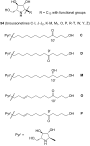
Scheme 10: Structural features of broussonetines 54.

Scheme 11: Synthesis of broussonetines by cross-metathesis.
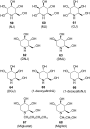
Scheme 12: Representative piperidine-based iminocyclitols.

Scheme 13: Total synthesis of 1-deoxynojirimycin (62) and 1-deoxyaltronojirimycin (65).

Scheme 14: Synthesis by RCM of 1-deoxymannonojirimycin (63) and 1-deoxyallonojirimycin (66).

Scheme 15: Total synthesis of (+)-1-deoxynojirimycin (62).

Scheme 16: Synthesis of ent-1,6-dideoxynojirimycin (83) and 5-amino-1,5,6-trideoxyaltrose (84).

Scheme 17: Synthesis of 1-deoxygalactonojirimycin (64), 1-deoxygulonojirimycin (91) and 1-deoxyidonojirimycin (...

Scheme 18: Synthesis of L-1-deoxyaltronojirimycin (96).

Scheme 19: Synthesis of 1-deoxymannonojirimycin (63) and 1-deoxyaltronojirimycin (65).

Scheme 20: Synthesis of 5-des(hydroxymethyl)-1-deoxymannonojirimycin (111) and 5-des(hydroxymethyl)-1-deoxynoj...

Scheme 21: Synthesis of D-1-deoxygulonojirimycin (91) and L-1-deoxyallonojirimycin (122).

Scheme 22: Total synthesis of fagomine (129), 3-epi-fagomine (126) and 3,4-di-epi-fagomine (130).

Scheme 23: Total synthesis of (+)-adenophorine (135).

Scheme 24: Total synthesis of (+)-5-deoxyadenophorine (138) and analogues 142–145.

Scheme 25: Synthesis by RCM of 1,6-dideoxy-1,6-iminoheptitols 148 and 149.

Scheme 26: Synthesis by RCM of oxazolidinyl azacycles 152 and 154.

Scheme 27: Representative azepane-based iminocyclitols.

Scheme 28: Synthesis of hydroxymethyl-1-(4-methylphenylsulfonyl)azepane 3,4,5-triol (169).

Scheme 29: Synthesis by RCM of tetrahydropyridin-3-ol 171 and tetrahydroazepin-3-ol 173.
Advances in synthetic approach to and antifungal activity of triazoles
- Kumari Shalini,
- Nitin Kumar,
- Sushma Drabu and
- Pramod Kumar Sharma
Beilstein J. Org. Chem. 2011, 7, 668–677, doi:10.3762/bjoc.7.79

- Kumari Shalini Nitin Kumar Sushma Drabu Pramod Kumar Sharma Department of Pharmaceutical Technology, Meerut Institute of Engineering & Technology, Meerut, U. P., India, Pin-250005 Director, M.S.I.P., Janakpuri, New Delhi, India 10.3762/bjoc.7.79 Abstract Several five membered ring systems, e.g
- azoles are a class of synthetic compounds that possess one or more azole rings. Whilst both imidazole and triazole are five membered ring heterocycles, imidazole contains two ring nitrogen atoms, whereas triazoles have three. However, compared with imidazoles (clotrimazole, ketoconazole, miconazole
- agents posaconazole (12) and ravuconazole (13)) are synthetic compounds that have one or more azole rings with three nitrogen atoms in a five membered ring. They act by inhibition of the cytochrome P450-dependent conversion of lanosterol to ergosterol [42]. Triazoles act as cytochrome P450 14α

Graphical Abstract

Figure 1: Isomeric forms of triazole.

Scheme 1: Copper catalyzed azide–alkyne cycloaddition.

Scheme 2: Ruthenium catalyzed azide–alkyne cycloaddition.

Scheme 3: Copper-sulfate catalyzed azide–alkyne cycloaddition.

Scheme 4: Azide–dimethylbut-2-yne-dioate cycloaddition.

Figure 2: Triazole compound 3 with most potent antifugal activity against various strains [20].

Figure 3: Triazole compounds 4 and 5 showing antifungal activity against Candida albicans [31].

Figure 4: Triazole compound 6 with the highest activity against Aspergillus flavus, Aspergillus versicolor, A...

Figure 5: Triazole compound 7 exhibiting an MIC of 25 µg/mL against Aspergillus niger [33].
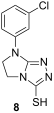
Figure 6: Triazole compound 8 showing the most significant activity against Aspergillus niger and Fusarium ox...
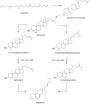
Figure 7: Ergosterol biosynthesis inhibitor pathway.

Figure 8: Fluconazole (9).

Figure 9: Itraconazole (10).

Figure 10: Voriconazole (11).

Figure 11: Posaconazole (12).

Figure 12: Ravuconazole (13).
Gold-catalyzed heterocyclizations in alkynyl- and allenyl-β-lactams
- Benito Alcaide and
- Pedro Almendros
Beilstein J. Org. Chem. 2011, 7, 622–630, doi:10.3762/bjoc.7.73
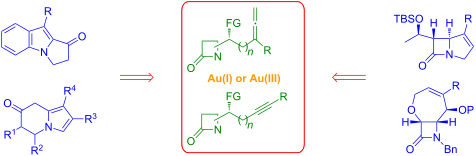
- exclusively β-lactam–tetrahydrofuran hybrids 6 in good isolated yields (Scheme 3). Besides total chemocontrol, the reaction was regiospecific and only the five-membered ring ether was formed: The isomeric six-membered ring product was not observed. By contrast, when the cyclization of olefinic α-allenols 5

Graphical Abstract

Scheme 1: Gold-catalyzed cyclization of 4-allenyl-2-azetidinones for the preparation of bicyclic β-lactams.

Scheme 2: Possible catalytic cycle for the gold-catalyzed cyclization of 4-allenyl-2-azetidinones.

Scheme 3: Gold- and iron-catalyzed chemodivergent cyclization of ene-allenols for the preparation of oxacycli...

Scheme 4: Gold-catalyzed cyclization of hydroxyallenes for the preparation of five-membered oxacyclic β-lacta...

Figure 1: Free energy profile [kcal mol–1] for the transformation of γ-allenol I into the tetrahydrofuran typ...

Scheme 5: Possible catalytic cycle for the gold-catalyzed cyclization of hydroxyallenes.

Scheme 6: Gold-catalyzed cyclization of MOM-protected α-hydroxyallenes for the preparation of five-membered o...

Scheme 7: Gold-catalyzed cyclization of MOM-protected γ-hydroxyallenes for the preparation of seven-membered ...

Scheme 8: Possible catalytic cycle for the gold-catalyzed cyclization of MOM protected γ-allenol derivatives....

Scheme 9: Au(III)-catalyzed heterocyclization reaction of MOM protected γ-allenol derivative 14a.

Scheme 10: Precious metal-catalyzed formation of benzo-fused pyrrolizinones from N-(2-alkynylphenyl)-β-lactams....

Scheme 11: Gold-catalyzed formation of 5,6-dihydro-8H-indolizin-7-ones from N-(pent-2-en-4-ynyl)-β-lactams.

Scheme 12: Gold-catalyzed formation of non-fused tetrahydrofuryl-β-lactam hemiacetals from 2-azetidinone-tethe...

Scheme 13: Gold-catalyzed formation of spiro tetrahydrofuryl-β-lactam hemiacetals from 2-azetidinone-tethered ...

Scheme 14: Gold-catalyzed formation of fused tetrahydrofuryl-β-lactam hemiacetals from 2-azetidinone-tethered ...
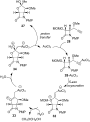
Scheme 15: Possible catalytic cycle for the gold-catalyzed cyclization of MOM protected alkynol derivatives.

Scheme 16: Gold/Brønsted acid co-catalyzed formation of bridged β-lactam acetals from 2-azetidinone-tethered a...
Construction of cyclic enones via gold-catalyzed oxygen transfer reactions
- Leping Liu,
- Bo Xu and
- Gerald B. Hammond
Beilstein J. Org. Chem. 2011, 7, 606–614, doi:10.3762/bjoc.7.71
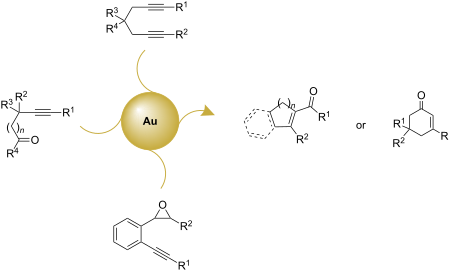
- -membered ring oxonium intermediate C than for the seven-membered ring oxonium A. This energetic preference is also observed in the stabilities of the oxoniums themselves, with C considerably more stable by 16.1 kcal/mol. The subsequent transformations are all computed to be feasible, with the barrier to [4
- accordance with the experimental findings, the [4 + 2] pathway is found to be the more favorable. The rate-limiting step in each pathway is the intramolecular nucleophilic addition to the Au-coordinated alkyne – the barrier for this step is computed to be 6.8 kcal/mol lower for the formation of the five

Graphical Abstract

Scheme 1: Lewis acid or Brønsted acid-catalyzed alkyne–carbonyl metathesis and a proposed [2 + 2] intermediat...
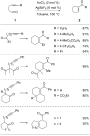
Scheme 2: Gold-catalyzed cyclization of internal alkynyl ketones.

Scheme 3: Proposed [2 + 2] mechanism for the cyclization of alkynyl ketones.

Scheme 4: Gold-catalyzed cyclization of terminal alkynyl ketones.

Scheme 5: Gold-catalyzed tandem oxygen transfer/Nazarov cyclizations.

Scheme 6: TfOH-mediated cyclization of alkynyl ketones.

Scheme 7: Gold-catalyzed cyclizations of 2-alkynyl-1,5-diketones.

Scheme 8: Designed isotopic labeling experiment for mechanistic studies.

Scheme 9: 18O isotopic experiments.

Scheme 10: B2PLYP/6-311+G(d,p)//B2PLYP/6-31G(d) computed reaction profile, relative energies in kcal/mol.

Scheme 11: Gold-catalyzed cyclization of tethered alkynyl arylaldehydes.

Scheme 12: Gold-catalyzed cyclization of terminal diynes.

Scheme 13: Proposed hydrolysis/cyclization mechanism.

Scheme 14: Gold-catalyzed cyclization of internal diynes.

Scheme 15: Proposed solvolysis/cyclization mechanism.

Scheme 16: Gold-catalyzed cyclization of alkynyl epoxides and the 18O isotopic labeling experiment.

Scheme 17: Proposed oxygen transfer mechanism.

Scheme 18: Gold or silver-catalyzed cyclization of alkynyl epoxides and the corresponding deuterium labeling e...
The arene–alkene photocycloaddition
- Ursula Streit and
- Christian G. Bochet
Beilstein J. Org. Chem. 2011, 7, 525–542, doi:10.3762/bjoc.7.61
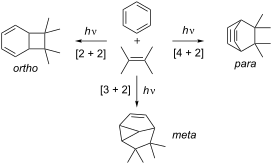
- derivative would lead initially to the formation of the four-membered ring. The five-membered ring will be preferred but the radical formed cannot recombine and fragments back to the starting material. Once the four-membered ring containing a primary exocyclic radical is formed, recombination either directly

Graphical Abstract

Scheme 1: Photochemistry of benzene.

Scheme 2: Three distinct modes of photocycloaddition of arenes to alkenes.

Scheme 3: Mode selectivity with respect of the free enthalpy of the radical ion pair formation.

Scheme 4: Photocycloaddition shows lack of mode selectivity.

Scheme 5: Mechanism of the meta photocycloaddition.

Scheme 6: Evidence of biradiacal involved in meta photocycloaddition by Reedich and Sheridan.

Scheme 7: Regioselectivity with electron withdrawing and electron donating substituents.

Scheme 8: Closure of cyclopropyl ring affords regioisomers.

Scheme 9: Endo versus exo product in the photocycloaddition of pentene to anisole [33].

Scheme 10: Regio- and stereoselectivity in the photocycloaddition of cyclopentene with a protected isoindoline....

Scheme 11: 2,6- and 1,3-addition in intramolecular approach.

Scheme 12: Linear and angularly fused isomers can be obtained upon intramolecular 1,3-addition.

Scheme 13: Synthesis of α-cedrene via diastereoselective meta photocycloaddition.

Scheme 14: Asymmetric meta photocycloaddition introduced by chirality of tether at position 2.

Scheme 15: Enantioselective meta photocycloaddition in β-cyclodextrin cavity.

Scheme 16: Vinylcyclopropane–cyclopentene rearrangement.

Scheme 17: Further diversification possibilities of the meta photocycloaddition product.

Scheme 18: Double [3 + 2] photocycloaddition reaction affording fenestrane.

Scheme 19: Total synthesis of Penifulvin B.

Scheme 20: Towards the total synthesis of Lacifodilactone F.

Scheme 21: Regioselectivity of ortho photocycloaddition in polarized intermediates.

Scheme 22: Exo and endo selectivity in ortho photocycloaddition.

Scheme 23: Ortho photocycloaddition of alkanophenones.

Scheme 24: Photocycloadditions to naphtalenes usually in an [2 + 2] mode [79].

Scheme 25: Ortho photocycloaddition followed by rearrangements.

Scheme 26: Stable [2 + 2] photocycloadducts.

Scheme 27: Ortho photocycloadditions with alkynes.

Scheme 28: Intramolecular ortho photocycloaddition and rearrangement thereof.

Scheme 29: Intramolecular ortho photocycloaddition to access propellanes.

Scheme 30: Para photocycloaddition with allene.

Scheme 31: Photocycloadditions of dianthryls.

Scheme 32: Photocycloaddition of enone with benzene.

Scheme 33: Intramolecular photocycloaddition affording multicyclic compounds via [4 + 2].

Scheme 34: Photocycloaddition described by Sakamoto et al.

Scheme 35: Proposed mechanism by Sakamoto et al.

Scheme 36: Photocycloaddition described by Jones et al.

Scheme 37: Proposed mechanism for the formation of benzoxepine by Jones et al.

Scheme 38: Photocycloaddition observed by Griesbeck et al.

Scheme 39: Mechanism proposed by Griesbeck et al.

Scheme 40: Intramolecular photocycloaddition of allenes to benzaldehydes.
Synthesis of 5-(2-methoxy-1-naphthyl)- and 5-[2-(methoxymethyl)-1-naphthyl]-11H-benzo[b]fluorene as 2,2'-disubstituted 1,1'-binaphthyls via benzannulated enyne–allenes
- Yu-Hsuan Wang,
- Joshua F. Bailey,
- Jeffrey L. Petersen and
- Kung K. Wang
Beilstein J. Org. Chem. 2011, 7, 496–502, doi:10.3762/bjoc.7.58
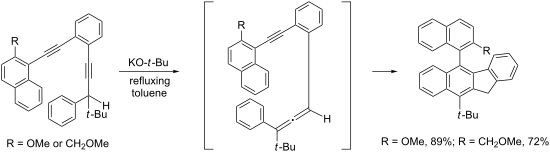
- methylene hydrogens on the five-membered ring. AB systems from the methylene hydrogens were also observed in other similar 11H-benzo[b]fluorenyl structures [7][22][23][24]. The AB pattern remained unchanged at 70 °C, suggesting a relatively slow rate of rotation, on the NMR time scale, around the carbon
- methoxy group. The signals of the methylene hydrogens on the five-membered ring could barely be discerned as an AB system with the two inner signals overlapped at δ 4.51 and two small outer signals at δ 4.55 and 4.47. The rotational barrier of the parent 1,1'-binaphthyl in N,N-dimethylformamide was
- spectrometer, the signals of the methylene hydrogens on the five-membered ring could be discerned as an AB system at δ 4.27 (J = 21 Hz) and 4.25 (J = 21 Hz). The rotational barrier of BINOL as a member of the 2,2'-disubstituted 1,1'-binaphthyls was determined to be 37.2 kcal/mol at 195 °C in naphthalene

Graphical Abstract

Scheme 1: Synthesis of 5-aryl-11H-benzo[b]fluorenes via benzannulated enyne–allenes.

Scheme 2: Synthesis of 1,1'-binaphthyl-substituted 11H-benzo[b]fluorene 3c.

Scheme 3: Synthesis of 5-(2-methoxyphenyl)- and 5-[2-(methoxymethyl)phenyl]-11H-benzo[b]fluorene 13a and 13b.

Scheme 4: Synthesis of 5-(1-naphthyl)- and 5-(2-methoxy-1-naphthyl)-11H-benzo[b]fluorene 20a and 20b.

Scheme 5: Synthesis of 5-[2-(methoxymethyl)-1-naphthyl]-11H-benzo[b]fluorene 20c.

Scheme 6: Demethylation of 22b to form 5-(2-hydroxy-1-naphthyl)-11H-benzo[b]fluorene 24.
Palladium-catalyzed formation of oxazolidinones from biscarbamates: a mechanistic study
- Benan Kilbas and
- Metin Balci
Beilstein J. Org. Chem. 2011, 7, 246–253, doi:10.3762/bjoc.7.33
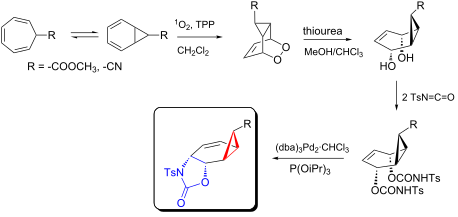
- assigned from 1H (COSY, HSQC, HMBC) and 13C NMR spectroscopic data. The most conspicuous features in the 1H NMR spectrum of this compound were the five-membered ring proton resonances. The proton H-6b adjacent to the oxygen atom resonates at 5.12 ppm as a doublet of doublets, (J6b,3a = 7.8 Hz, J6b,6a = 1.4

Graphical Abstract

Scheme 1: General route to oxazolidinones via a palladium-catalyzed reaction.

Figure 1: Metal–olefin complexation from the anti-face of the double bond.

Figure 2: Cyclic systems with enantiotopic leaving groups at allylic positions.

Scheme 2: The cycloheptatriene–norcaradiene equilibrium.

Scheme 3: Synthesis of oxazolidinone 9 starting from carboxymethyl cycloheptatriene 5a.

Scheme 4: Attempted isomerization of 7 to 10.

Scheme 5: Synthesis of oxazolidinones 17 and 20.

Scheme 6: The mechanism for the formation of oxazolidinones [3].
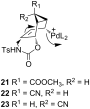
Figure 3: Nucleophilic attack on the double bond from the leaving group's side.
A surprising new route to 4-nitro-3-phenylisoxazole
- Henning Hopf,
- Aboul-fetouh E. Mourad and
- Peter G. Jones
Beilstein J. Org. Chem. 2010, 6, No. 68, doi:10.3762/bjoc.6.68

- 1.4283(13), O1–C5 1.2202(15) Å) may be considered normal. The five-membered ring is planar within a mean deviation of 0.002 Å, and subtends interplanar angles of 6.5° with the nitro and (in the same sense) 58.4° with the phenyl substituent. Molecules are connected to form broad ribbons in the (101) plane

Graphical Abstract

Scheme 1: Preparation of 2 and 4 by treatment of cinnamyl alcohol (1).

Figure 1: The crystal structure of compound 4. Ellipsoids correspond to 50% probability levels.

Figure 2: Packing diagram of compound 4 viewed perpendicular to (101). Hydrogen bonds are indicated by thick ...

Scheme 2: Suggested mechanism for the formation of 4.
Molecular recognition of organic ammonium ions in solution using synthetic receptors
- Andreas Späth and
- Burkhard König
Beilstein J. Org. Chem. 2010, 6, No. 32, doi:10.3762/bjoc.6.32

Graphical Abstract

Figure 1: Biologically important amines and quaternary ammonium salts: histamine (1), dopamine (2) and acetyl...

Figure 2: Crown ether 18-crown-6.

Figure 3: Conformations of 18-crown-6 (4) in solvents of different polarity.

Figure 4: Binding topologies of the ammonium ion depending on the crown ring size.
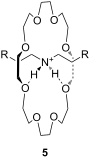
Figure 5: A “pseudorotaxane” structure consisting of 24-crown-8 and a secondary ammonium ion (5); R = Ph.

Figure 6: Typical examples of azacrown ethers, cryptands and related aza macrocycles.

Figure 7: Binding of ammonium to azacrown ethers and cryptands [111-113].

Figure 8: A 19-crown-6-ether with decalino blocking groups (11) and a thiazole-dibenzo-18-crown-6-ether (12).

Figure 9: 1,3-Bis(6-oxopyridazin-1-yl)propane derivatives 13 and 14 by Campayo et al.

Figure 10: Fluorescent azacrown-PET-sensors based on coumarin.

Figure 11: Two different pyridino-cryptands (17 and 18) compared to a pyridino-crown (19); chiral ammonium ion...

Figure 12: Pyridino-18-crown-6 ligand (21), a similar acridino-18-crown-6 ligand (22) and a structurally relat...

Figure 13: Ciral pyridine-azacrown ether receptors 24.

Figure 14: Chiral 15-crown-5 receptors 26 and an analogue 18-crown-6 ligand 27 derived from amino alcohols.

Figure 15: C2-symmetric chiral 18-crown-6 amino alcohol derivatives 28 and related macrocycles.

Figure 16: Macrocycles with diamide-diester groups (30).

Figure 17: C2-symmetric chiral aza-18-crown-6 ethers (31) with phenethylamine residues.

Figure 18: Chiral C-pivot p-methoxy-phenoxy-lariat ethers.

Figure 19: Chiral lariat crown ether 34.

Figure 20: Sucrose-based chiral crown ether receptors 36.
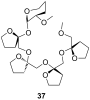
Figure 21: Permethylated fructooligosaccharide 37 showing induced-fit chiral recognition.

Figure 22: Biphenanthryl-18-crown-6 derivative 38.

Figure 23: Chiral lariat crown ethers derived from binol by Fuji et al.

Figure 24: Chiral phenolic crown ether 41 with “aryl chiral barriers” and guest amines.
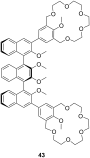
Figure 25: Chiral bis-crown receptor 43 with a meso-ternaphthalene backbone.

Figure 26: Chromogenic pH-dependent bis-crown chemosensor 44 for diamines.

Figure 27: Triamine guests for binding to receptor 44.

Figure 28: Chiral bis-crown phenolphthalein chemosensors 46.

Figure 29: Crown ether amino acid 47.

Figure 30: Luminescent receptor 48 for bis-alkylammonium guests.

Figure 31: Luminescent CEAA (49a), a bis-CEAA receptor for amino acids (49b) and the structure of lysine bindi...

Figure 32: Luminescent CEAA tripeptide for binding small peptides.

Figure 33: Bis crown ether 51a self assembles co-operatively with C60-ammonium ion 51b.

Figure 34: Triptycene-based macrotricyclic dibenzo-[24]-crown-8 ether host 52 and guests.

Figure 35: Copper imido diacetic acid azacrown receptor 53a and the suggested His-Lys binding motif; a copper ...

Figure 36: Urea (54) and thiourea (55) benzo crown receptor for transport and extraction of amino acids.

Figure 37: Crown pyryliums ion receptors 56 for amino acids.

Figure 38: Ditopic sulfonamide bridged crown ether receptor 57.

Figure 39: Luminescent peptide receptor 58.

Figure 40: Luminescent receptor 59 for the detection of D-glucosamine hydrochloride in water/ethanol and lumin...

Figure 41: Guanidinium azacrown receptor 61 for simple amino acids and ditopic receptor 62 with crown ether an...

Figure 42: Chiral bicyclic guanidinium azacrown receptor 63 and similar receptor 64 for the enantioselective t...

Figure 43: Receptors for zwitterionic species based on luminescent CEAAs.

Figure 44: 1,10-Azacrown ethers with sugar podand arms and the anticancer agent busulfan.

Figure 45: Benzo-18-crown-6 modified β-cyclodextrin 69 and β-cyclodextrin functionalized with diaza-18-crown-6...

Figure 46: Receptors for colorimetric detection of primary and secondary ammonium ions.

Figure 47: Porphyrine-crown-receptors 72.

Figure 48: Porphyrin-crown ether conjugate 73 and fullerene-ammonium ion guest 74.

Figure 49: Calix[4]arene (75a), homooxocalix[4]arene (75b) and resorcin[4]arene (75c) compared (R = H, alkyl c...

Figure 50: Calix[4]arene and ammonium ion guest (R = H, alkyl, OAcyl etc.), possible binding sites; A: co-ordi...

Figure 51: Typical guests for studies with calixarenes and related molecules.
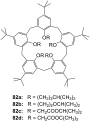
Figure 52: Lower rim modified p-tert-butylcalix[5]arenes 82.

Figure 53: The first example of a water soluble calixarene.

Figure 54: Sulfonated water soluble calix[n]arenes that bind ammonium ions.
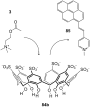
Figure 55: Displacement assay for acetylcholine (3) with a sulfonato-calix[6]arene (84b).

Figure 56: Amino acid inclusion in p-sulfonatocalix[4]arene (84a).

Figure 57: Calixarene receptor family 86 with upper and lower rim functionalization.

Figure 58: Calix[6]arenes 87 with one carboxylic acid functionality.
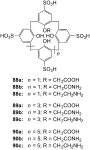
Figure 59: Sulfonated calix[n]arenes with mono-substitution at the lower rim systematically studied on their r...

Figure 60: Cyclotetrachromotropylene host (91) and its binding to lysine (81c).

Figure 61: Calixarenes 92 and 93 with phosphonic acids groups.

Figure 62: Calix[4]arene tetraphosphonic acid (94a) and a double bridged analogue (94b).
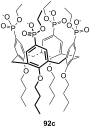
Figure 63: Calix[4]arene tetraphosphonic acid ester (92c) for surface recognition experiments.

Figure 64: Calixarene receptors 95 with α-aminophosphonate groups.

Figure 65: A bridged homocalix[3]arene 95 and a distally bridged homocalix[4]crown 96.

Figure 66: Homocalix[3]arene ammonium ion receptor 97a and the Reichardt’s dye (97b) for colorimetric assays.

Figure 67: Chromogenic diazo-bridged calix[4]arene 98.

Figure 68: Calixarene receptor 99 by Huang et al.
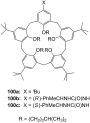
Figure 69: Calixarenes 100 reported by Parisi et al.

Figure 70: Guest molecules for inclusion in calixarenes 100: DAP × 2 HCl (101a), APA (101b) and Lys-OMe × 2 HC...

Figure 71: Different N-linked peptido-calixarenes open and with glycol chain bridges.

Figure 72: (S)-1,1′-Bi-2-naphthol calixarene derivative 104 published by Kubo et al.

Figure 73: A chiral ammonium-ion receptor 105 based on the calix[4]arene skeleton.

Figure 74: R-/S-phenylalaninol functionalized calix[6]arenes 106a and 106b.

Figure 75: Capped homocalix[3]arene ammonium ion receptor 107.

Figure 76: Two C3 symmetric capped calix[6]arenes 108 and 109.

Figure 77: Phosphorous-containing rigidified calix[6]arene 110.

Figure 78: Calix[6]azacryptand 111.

Figure 79: Further substituted calix[6]azacryptands 112.

Figure 80: Resorcin[4]arene (75c) and the cavitands (113).

Figure 81: Tetrasulfonatomethylcalix[4]resorcinarene (114).
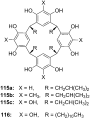
Figure 82: Resorcin[4]arenes (115a/b) and pyrogallo[4]arenes (115c, 116).
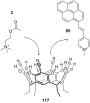
Figure 83: Displacement assay for acetylcholine (3) with tetracyanoresorcin[4]arene (117).

Figure 84: Tetramethoxy resorcinarene mono-crown-5 (118).

Figure 85: Components of a resorcinarene based displacement assay for ammonium ions.

Figure 86: Chiral basket resorcin[4]arenas 121.

Figure 87: Resorcinarenes with deeper cavitand structure (122).

Figure 88: Resorcinarene with partially open deeper cavitand structure (123).
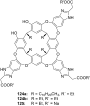
Figure 89: Water-stabilized deep cavitands with partially structure (124, 125).
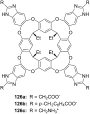
Figure 90: Charged cavitands 126 for tetralkylammonium ions.

Figure 91: Ditopic calix[4]arene receptor 127 capped with glycol chains.

Figure 92: A calix[5]arene dimer for diammonium salt recognition.

Figure 93: Calixarene parts 92c and 129 for the formation molecular capsules.
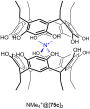
Figure 94: Encapsulation of a quaternary ammonium cation by two resorcin[4]arene molecules (NMe4+@[75c]2 × Cl−...

Figure 95: Encapsulation of a quaternary ammonium cation by six resorcin[4]arene molecules (NMe3D+@[130]6 × Cl−...

Figure 96: Structure and schematic of cucurbit[6]uril (CB[6], 131a).
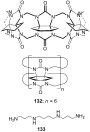
Figure 97: Cyclohexanocucurbit[6]uril (CB′[6], 132) and the guest molecule spermine (133).

Figure 98: α,α,δ,δ-Tetramethylcucurbit[6]uril (134).

Figure 99: Structure of the cucurbituril-phthalhydrazide analogue 135.

Figure 100: Organic cavities for the displacement assay for amine differentiation.

Figure 101: Displacement assay methodology for diammonium- and related guests involving cucurbiturils and some ...

Figure 102: Nor-seco-Cucurbituril (±)-bis-ns-CB[6] (140) and guest molecules.

Figure 103: The cucurbit[6]uril based complexes 141 for chiral discrimination.
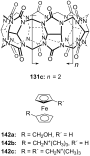
Figure 104: Cucurbit[7]uril (131c) and its ferrocene guests (142) opposed.

Figure 105: Cucurbit[7]uril (131c) guest inclusion and representative guests.

Figure 106: Cucurbit[7]uril (131c) binding to succinylcholine (145) and different bis-ammonium and bis-phosphon...

Figure 107: Paraquat-cucurbit[8]uril complex 149.
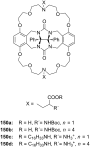
Figure 108: Gluconuril-based ammonium receptors 150.
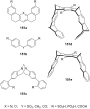
Figure 109: Examples of clefts (151a), tweezers (151b, 151c, 151d) and clips (151e).

Figure 110: Kemp’s triacid (152a), on example of Rebek’s receptors (152b) and guests.

Figure 111: Amino acid receptor (154) by Rebek et al.

Figure 112: Hexagonal lattice designed hosts by Bell et al.

Figure 113: Bell’s amidinium receptor (156) and the amidinium ion (157).
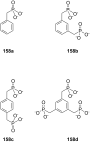
Figure 114: Aromatic phosphonic acids.

Figure 115: Xylene phosphonates 159 and 160a/b for recognition of amines and amino alcohols.
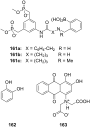
Figure 116: Bisphosphonate recognition motif 161 for a colorimetric assay with alizarin complexone (163) for ca...

Figure 117: Bisphosphonate/phosphate clip 164 and bisphosphonate cleft 165.

Figure 118: N-Methylpyrazine 166a, N-methylnicotinamide iodide (166b) and NAD+ (166c).

Figure 119: Bisphosphate cavitands.
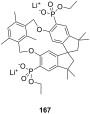
Figure 120: Bisphosphonate 167 of Schrader and Finocchiaro.
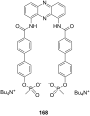
Figure 121: Tweezer 168 for noradrenaline (80b).

Figure 122: Different tripods and heparin (170).
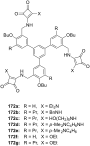
Figure 123: Squaramide based receptors 172.
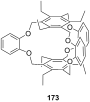
Figure 124: Cage like NH4+ receptor 173 of Kim et al.

Figure 125: Ammonium receptors 174 of Chin et al.

Figure 126: 2-Oxazolin-based ammonium receptors 175a–d and 176 by Ahn et al.

Figure 127: Racemic guest molecules 177.

Figure 128: Tripods based on a imidazole containing macrocycle (178) and the guest molecules employed in the st...

Figure 129: Ammonium ion receptor 180.

Figure 130: Tetraoxa[3.3.3.3]paracyclophanes 181 and a cyclophanic tetraester (182).

Figure 131: Peptidic bridged paraquat-cyclophane.
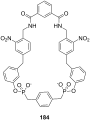
Figure 132: Shape-selective noradrenaline host.

Figure 133: Receptor 185 for binding of noradrenaline on surface layers from Schrader et al.

Figure 134: Tetraphosphonate receptor for binding of noradrenaline.

Figure 135: Tetraphosphonate 187 of Schrader and Finocchiaro.

Figure 136: Zinc-Porphyrin ammonium-ion receptors 188 and 189 of Mizutani et al.
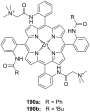
Figure 137: Zinc porphyrin receptor 190.

Figure 138: Zinc porphyrin receptors 191 capable of amino acid binding.

Figure 139: Zinc-porphyrins with amino acid side chains for stereoinduction.

Figure 140: Bis-zinc-bis-porphyrin based on Tröger’s base 193.

Figure 141: BINAP-zinc-prophyrin derivative 194 and it’s guests.

Figure 142: Bisaryl-linked-zinc-porphyrin receptors.
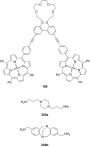
Figure 143: Bis-zinc-porphyrin 199 for diamine recognition and guests.

Figure 144: Bis-zinc-porphyrin crown ether 201.

Figure 145: Bis-zinc-porphyrin 202 for stereodiscrimination (L = large substituent; S = small substituent).

Figure 146: Bis-zinc-porphyrin[3]rotaxane and its copper complex and guests.

Figure 147: Dien-bipyridyl ligand 206 for co-ordination of two metal atoms.

Figure 148: The ligand and corresponding tetradentate co-complex 207 serving as enantioselective receptor for a...

Figure 149: Bis(oxazoline)–copper(II) complex 208 for the recognition of amino acids in aqueous solution.

Figure 150: Zinc-salen-complexes 209 for the recognition tertiary amines.

Figure 151: Bis(oxazoline)–copper(II) 211 for the recognition of amino acids in aqueous solution.

Figure 152: Zn(II)-complex of a C2 terpyridine crown ether.

Figure 153: Displacement assay and receptor for aspartate over glutamate.

Figure 154: Chiral complex 214 for a colorimetric displacement assay for amino acids.

Figure 155: Metal complex receptor 215 with tripeptide side arms.

Figure 156: A sandwich complex 216 and its displaceable dye 217.

Figure 157: Lanthanide complexes 218–220 for amino acid recognition.
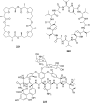
Figure 158: Nonactin (221), valinomycin (222) and vancomycin (223).

Figure 159: Monesin (224a) and a chiral analogue for enantiodiscrimination of ammonium guests (224b).

Figure 160: Chiral podands (226) compared to pentaglyme-dimethylether (225) and 18-crown-6 (4).

Figure 161: Lasalocid A (228).

Figure 162: Lasalocid derivatives (230) of Sessler et al.

Figure 163: The Coporphyrin I tetraanion (231).

Figure 164: Linear and cyclic peptides for ammonium ion recognition.

Figure 165: Cyclic and bicyclic depsipeptides for ammonium ion recognition.
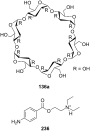
Figure 166: α-Cyclodextrin (136a) and novocaine (236).
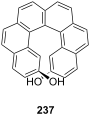
Figure 167: Helical diol receptor 237 by Reetz and Sostmann.

Figure 168: Ammonium binding spherand by Cram et al. (238a) and the cyclic[6]metaphenylacetylene 238b in compar...

Figure 169: Receptor for peptide backbone and ammonium binding (239).

Figure 170: Anion sensor principle with 3-hydroxy-2-naphthanilide of Jiang et al.

Figure 171: 7-bromo-3-hydroxy-N-(2-hydroxyphenyl)naphthalene 2-carboxamide (241) and its amine binding.

Figure 172: Naturally occurring catechins with affinity to quaternary ammonium ions.

Figure 173: Spiropyran (244) and merocyanine form (244a) of the amino acid receptors of Fuji et al.

Figure 174: Coumarin aldehyde (245) and its iminium species with amino acid bound (245a) by Glass et al.
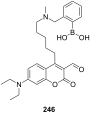
Figure 175: Coumarin aldehyde appended with boronic acid.

Figure 176: Quinolone aldehyde dimers by Glass et al.

Figure 177: Chromogenic ammonium ion receptors with trifluoroacetophenone recognition motifs.

Figure 178: Chromogenic ammonium ion receptor with trifluoroacetophenone recognition motif bound on different m...



