


Search results
Search for "multicomponent reactions" in Full Text gives 186 result(s) in Beilstein Journal of Organic Chemistry.
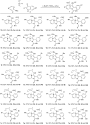
One-pot synthesis of tetracyclic fused imidazo[1,2-a]pyridines via a three-component reaction
Beilstein J. Org. Chem. 2016, 12, 1487–1492, doi:10.3762/bjoc.12.145

- Multicomponent reactions (MCRs) have attracted considerable attention in organic and medicinal chemistry due to their high efficiency, simple operability, atom economy and unmatched versatility [1][2][3][4][5][6]. Especially, these reactions serve as an ideal synthetic tool for the assembly of structurally



Multicomponent reactions: A simple and efficient route to heterocyclic phosphonates
Beilstein J. Org. Chem. 2016, 12, 1269–1301, doi:10.3762/bjoc.12.121
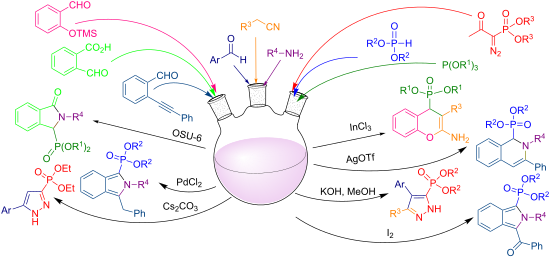
- Mohammad Haji Chemistry Department, Science and Research Branch, Islamic Azad University, Tehran, Iran 10.3762/bjoc.12.121 Abstract Multicomponent reactions (MCRs) are one of the most important processes for the preparation of highly functionalized organic compounds in modern synthetic chemistry
- . As shown in this review, they play an important role in organophosphorus chemistry where phosphorus reagents are used as substrates for the synthesis of a wide range of phosphorylated heterocycles. In this article, an overview about multicomponent reactions used for the synthesis of heterocyclic
- compounds bearing a phosphonate group on the ring is given. Keywords: multicomponent reactions; organophosphorus chemistry; phosphorus reagents; phosphorylated heterocycles; Introduction Heterocyclic rings are found in many naturally occurring compounds and they compose the core structures of many


Modular synthesis of the pyrimidine core of the manzacidins by divergent Tsuji–Trost coupling
Beilstein J. Org. Chem. 2016, 12, 1111–1121, doi:10.3762/bjoc.12.107
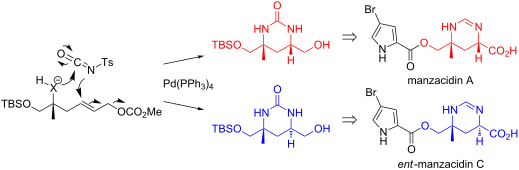
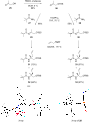
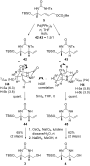
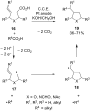
- already been reported in preliminary form [31]. Homoallylic amines of type 12 may be efficiently obtained through multicomponent reactions. These involve the nucleophilic allylation of imines which may be generated in situ by the condensation of an amine and a carbonyl compound. As shown in Scheme 2, two



Diastereoselective Ugi reaction of chiral 1,3-aminoalcohols derived from an organocatalytic Mannich reaction
Beilstein J. Org. Chem. 2016, 12, 139–143, doi:10.3762/bjoc.12.15

- , allowing the introduction of five diversity inputs. Keywords: aminoalcohols; isocyanides; multicomponent reactions; peptidomimetics; Ugi reaction; Findings Isocyanide-based multicomponent reactions [1][2][3], such as the Ugi reaction, were demonstrated to be very useful in the rapid assembly of complex
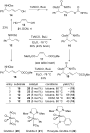
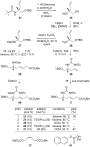
- is considered excellent for isocyanide-based multicomponent reactions, due to the very low steric biases of isocyanides. We then moved on to establish the scope of the method, varying the Boc-protected aminoalcohol, the carboxylic acid and the isocyanide (see Table 2). For a comparison, we performed


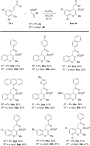
Facile synthesis of 4H-chromene derivatives via base-mediated annulation of ortho-hydroxychalcones and 2-bromoallyl sulfones
Beilstein J. Org. Chem. 2016, 12, 16–21, doi:10.3762/bjoc.12.3
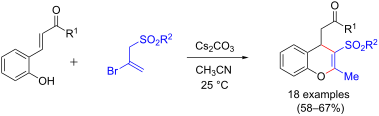
- ], multicomponent reactions [8], ring-closing metathesis approaches [9][10], tandem reactions of 1,3-dicarbonyl compounds [11][12] and cyclocondenzation reactions of salicylic aldehydes with α,β-unsaturated carbonyl compounds [13][14][15]. The utility of some of these methods are limited by drawbacks such as



Synthesis of alpha-tetrasubstituted triazoles by copper-catalyzed silyl deprotection/azide cycloaddition
Beilstein J. Org. Chem. 2015, 11, 1425–1433, doi:10.3762/bjoc.11.154
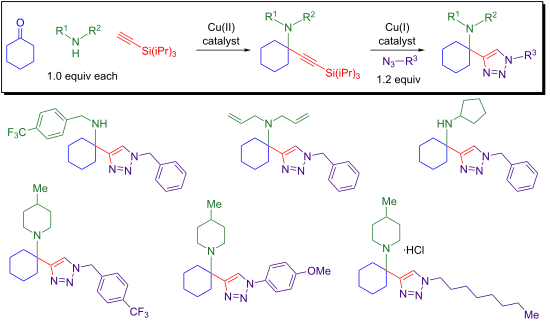
- ; copper catalysis; multicomponent reactions; tetrasubstituted carbon; triazole; Introduction 1,2,3-Triazoles demonstrate wide spread application in biological systems and drug development [1][2][3][4][5][6][7][8][9][10][11][12]. Copper-catalyzed azide–alkyne cycloadditions (CuAAC) regioselectively
- ]. The lengthy synthesis of tetrasubstituted propargylamine precursors limits the exploration of such alpha-tetrasubstitued triazoles. The vast majority of three-component couplings produce trisubstituted propargylamines. Copper remains the most popular catalyst for these multicomponent reactions


Multicomponent versus domino reactions: One-pot free-radical synthesis of β-amino-ethers and β-amino-alcohols
Beilstein J. Org. Chem. 2015, 11, 66–73, doi:10.3762/bjoc.11.10
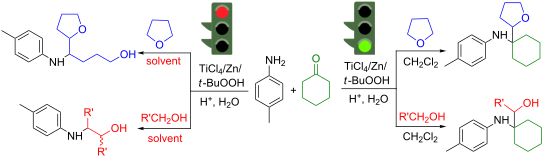
- : aminoalcohols; free-radical addition; imine; multicomponent reaction; titanium salts; Introduction Multicomponent reactions (MCRs) represent a green approach towards the synthesis of polyfunctionalized molecules by promoting multiple bond-forming mechanisms in a one-pot synthesis [1][2][3][4][5][6][7


Synthesis of antibacterial 1,3-diyne-linked peptoids from an Ugi-4CR/Glaser coupling approach
Beilstein J. Org. Chem. 2015, 11, 25–30, doi:10.3762/bjoc.11.4
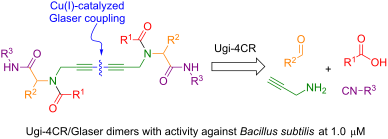
- -libraries of homo- and heterodimers verified by ESI-MS and HPLC. In a preliminary evaluation, some compounds display moderate activity against the Gram-positive bacterium Bacillus subtilis. Keywords: antibacterial; combinatorial; diynes; homodimerization; multicomponent reactions; peptoids; Ugi reaction


The unexpected influence of aryl substituents in N-aryl-3-oxobutanamides on the behavior of their multicomponent reactions with 5-amino-3-methylisoxazole and salicylaldehyde
Beilstein J. Org. Chem. 2014, 10, 3019–3030, doi:10.3762/bjoc.10.320
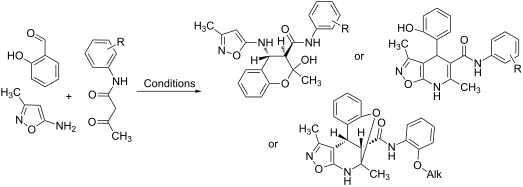
- spectrum of biological activity [5][6], which led to choose acetoacetamides as perspective methylene-active compounds for further studies of multicomponent reactions. The interactions of 3-oxobutanamides with aldehydes and a number of aminoazoles, namely 3-amino-1,2,4-triazoles [7][8][9][10][11], 5


Recent advances in the electrochemical construction of heterocycles
Beilstein J. Org. Chem. 2014, 10, 2858–2873, doi:10.3762/bjoc.10.303
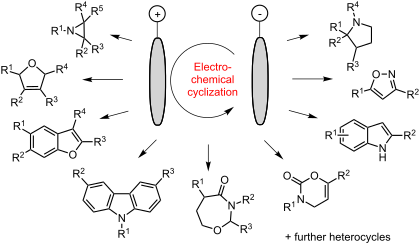
- hypervalent iodine reagents [9][10][11][12], and homogeneously or heterogeneously catalyzed multicomponent reactions [13][14]. Moreover, radical cyclizations predominantly conducted using Bu3SnH in the presence of azobisisobutyronitrile (AIBN) play a crucial role [15][16]. However, all these methods require




One-pot four-component reaction for convenient synthesis of functionalized 1-benzamidospiro[indoline-3,4'-pyridines]
Beilstein J. Org. Chem. 2014, 10, 2671–2676, doi:10.3762/bjoc.10.281
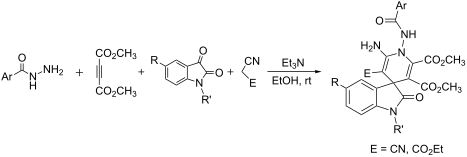
- efficient and practical synthetic procedures have emerged for the synthesis of versatile spirooxindole-fused heterocycles [5][6][7][8][9]. In recent years, because of the emphasis on the development of green and sustainable chemistry, multicomponent reactions have been developed as efficient and potent
- tools for the preparation of structurally diverse molecules. Practically, multicomponent reactions based on the versatile reactivity of isatins and their 3-methylene derivatives have emerged in large numbers and become the new efficient protocols for the synthesis of various spirooxindoles [10][11][12
- [indoline-3,4'-pyrano[2,3-c]pyrazoles] have been developed very recently by several groups [25][26][27]. Against this background and in continuation of our efforts toward the development of practical multicomponent reactions based on the reactivity of isatin and its derivatives [28][29][30][31][32][33][34


Facile synthesis of 1H-imidazo[1,2-b]pyrazoles via a sequential one-pot synthetic approach
Beilstein J. Org. Chem. 2014, 10, 2338–2344, doi:10.3762/bjoc.10.243
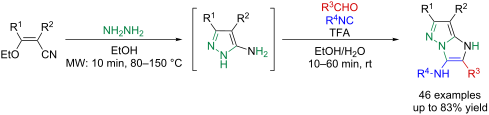
- -imidazo[1,2-b]pyrazole; isocyanide; multicomponent reaction; N-heterocycles; Introduction For the relatively rapid design and construction of a diverse, large pharmacophore library, the basic concepts of diversity-oriented synthesis and isocyanide-based multicomponent reactions, such as the Ugi four


Synthesis of α-amino amidines through molecular iodine-catalyzed three-component coupling of isocyanides, aldehydes and amines
Beilstein J. Org. Chem. 2014, 10, 2065–2070, doi:10.3762/bjoc.10.214

- methods provide amidines in acceptable yields, they suffer from limitations such as limited structural diversity of the final products. Since multicomponent reactions (MCRs) are expected to provide a rich structural diversity, much attention was paid on the development of multicomponent-coupling
- strategies for the synthesis of amidines. The Ugi reaction is probably one of the best multicomponent reactions to provide huge structural diversification of the products [12]. Thus, several modifications of the Ugi reaction were explored recently. As depicted in Figure 1, diamides, α-amino amides, and α


Synthesis of trifluoromethyl-substituted pyrazolo[4,3-c]pyridines – sequential versus multicomponent reaction approach
Beilstein J. Org. Chem. 2014, 10, 1759–1764, doi:10.3762/bjoc.10.183

- all obtained products. Keywords: microwave-assisted reactions; multicomponent reactions; NMR (1H; 13C; 15N; 19F); Sonogashira coupling; trifluoromethylpyrazoles; Introduction Fluorine-containing compounds play an important role in medicinal and pharmaceutical chemistry as well as in agrochemistry [1
- afforded the corresponding pyrazolo[4,3-c]pyridine 5-oxides 7a–c by a regioselective 6-endo-dig cyclisation [30] in high yields. Moreover, we tested an alternative approach to access compounds 7 through multicomponent reactions (MCR). Attempts to react chloroaldehyde 2 with hydroxylamine hydrochloride and


Multicomponent reactions in nucleoside chemistry
Beilstein J. Org. Chem. 2014, 10, 1706–1732, doi:10.3762/bjoc.10.179
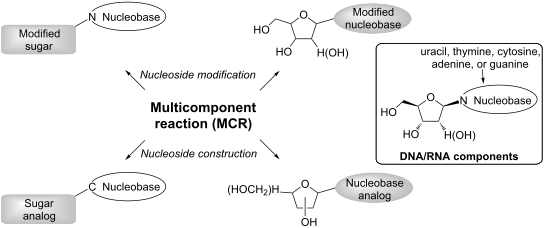
- Mariola Koszytkowska-Stawinska Wlodzimierz Buchowicz Faculty of Chemistry, Warsaw University of Technology, ul. Noakowskiego 3, 00-664 Warszawa, Poland 10.3762/bjoc.10.179 Abstract This review covers sixty original publications dealing with the application of multicomponent reactions (MCRs) in
- ][9], anti-infective agents [10][11][12], or molecular probes [13][14]. Taking into account the importance of nucleoside analogs in medicine and biotechnology, there is a considerable interest in the development of simple and efficient synthesis of these compounds. Multicomponent reactions (MCRs
- carbon atom. Conclusion In this comprehensive review application of multicomponent reactions (MCRs) in nucleoside chemistry has been presented. In recent years, growing interest in the construction of novel nucleoside scaffolds by MCR has been observed. This conclusion is supported by the fact that 23


Asymmetric Ugi 3CR on isatin-derived ketimine: synthesis of chiral 3,3-disubstituted 3-aminooxindole derivatives
Beilstein J. Org. Chem. 2014, 10, 1383–1389, doi:10.3762/bjoc.10.141

- methodologies to access chiral 3,3-disubstituted 3-aminooxindoles [16][17][18][19], we looked at isocyanide-based multicomponent reactions as a possible efficient tool to quickly prepare oxindole-based peptidomimetic compounds [20][21][22]. Despite the synthetic efficiency of the Ugi reaction and its wide
- application in combinatorial and medicinal chemistry [23][24][25][26][27][28], to the best of our knowledge a synthesis of 3,3-disubstituted 3-aminooxindoles which relies on isocyanide-based multicomponent reactions has not been unexplored yet. Although in this kind of reaction a new stereogenic center is


Tandem Cu-catalyzed ketenimine formation and intramolecular nucleophile capture: Synthesis of 1,2-dihydro-2-iminoquinolines from 1-(o-acetamidophenyl)propargyl alcohols
Beilstein J. Org. Chem. 2014, 10, 1255–1260, doi:10.3762/bjoc.10.125
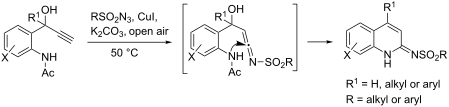
- groups (including the discoverers) have utilized the reaction for the synthesis of diverse chemical compounds by trapping the thus formed ketenimine inter- and intramolecularly. Various multicomponent reactions using external nucleophiles like H2O, alcohols, amines, imines, etc., have been reported while


Consecutive isocyanide-based multicomponent reactions: synthesis of cyclic pentadepsipeptoids
Beilstein J. Org. Chem. 2014, 10, 1017–1022, doi:10.3762/bjoc.10.101
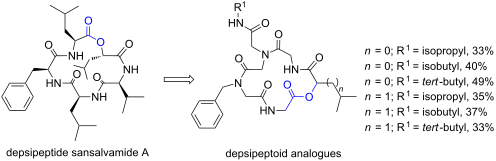
- sansalvamide A is described. An efficient and fast synthetic strategy was developed using a combination of consecutive isocyanide-based multicomponent reactions (Ugi and Passerini reactions). This methodology can be used to access a variety of cyclic oligodepsipeptoids. Keywords: depsipeptoids; multicomponent
- the Ugi four-component reaction (U-4CR) [8][9][10][11][12][13][14]. It has been demonstrated that the combination of multicomponent reactions with the use of microwave irradiation is able to efficiently produce complex molecules with a reduced number of steps and short reaction times [15][16][17][18
- significantly reduced number of steps in short reaction times, and high yields in most of the steps. The strategic combination of two isocyanide-based multicomponent reactions and microwave irradiation makes this a very useful and attractive protocol. The obtained depsipeptoids will be tested for different


The Ugi four-component reaction as a concise modular synthetic tool for photo-induced electron transfer donor-anthraquinone dyads
Beilstein J. Org. Chem. 2014, 10, 1006–1016, doi:10.3762/bjoc.10.100
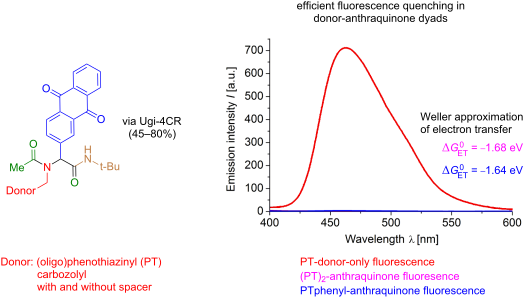
- approximation. Keywords: absorption spectroscopy; cyclic voltammetry; chromophores; fluorescence; multicomponent reactions; photo-induced electron transfer; Introduction Chromophores, fluorophores, and electrophores, are functional organic materials [1] and constitute active components in molecular
- rigid Do–Acc dyads [55]. Nevertheless, a modular and rapid access by multicomponent reactions to these types of functional targets has never been explored prior to our recent studies [56]. For instance, the Ugi four-component reaction (Ugi 4CR) [57][58][59][60] establishes the chemically robust α
- multicomponent reactions should as well be applicable to functional Do–Acc dyads. Therefore, we set out to place electron-rich phenothiazinyl and carbazolyl derivatives 4 as amino component in the Ugi 4CR, whereas the electron acceptor was introduced as anthraquinone-2-carbaldehyde (5). Acetic acid (6) and tert



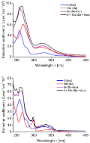

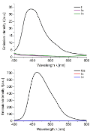
Rapid pseudo five-component synthesis of intensively blue luminescent 2,5-di(hetero)arylfurans via a Sonogashira–Glaser cyclization sequence
Beilstein J. Org. Chem. 2014, 10, 672–679, doi:10.3762/bjoc.10.60
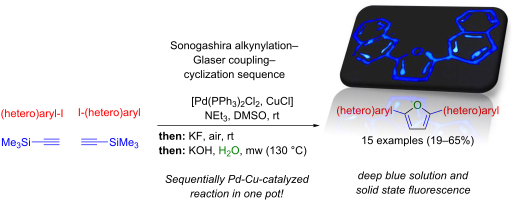
- interesting due to their bright blue luminescence with remarkably high quantum yields. The electronic structure of the title compounds is additionally studied with DFT computations. Keywords: C–C coupling; copper; DFT; fluorescence; furans; mircowave-assisted synthesis; multicomponent reactions; palladium
- ; Introduction Multicomponent reactions (MCRs) [1][2][3][4][5] are conceptually diversity-oriented syntheses (DOS) [6][7] and have been developed to powerful tools for exploring broad ranges of different structural and functional characteristics. In addition, MCRs address the very fundamental principles of


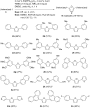


One-pot three-component synthesis and photophysical characteristics of novel triene merocyanines
Beilstein J. Org. Chem. 2014, 10, 599–612, doi:10.3762/bjoc.10.51
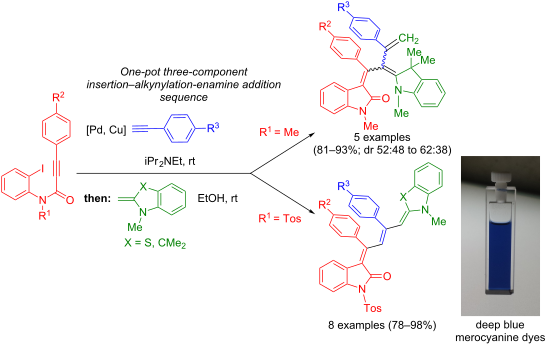
- convergent strategies paved the way to luminescent push–pull dienes 1–4 with conformationally flexible and fixed acceptor units (Figure 1) [30][31][32], pyrazoles [33][34], benzodiazepines [35], furans and pyrroles [36][37] by consecutive multicomponent reactions and to highly emissive spirocycles [38][39
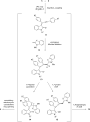
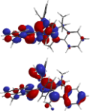
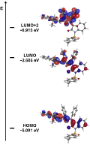
- -en-1-ylideneindolones are essentially nonemissive in films or in the solid state. TD-DFT computations rationalize the charge-transfer nature of the characteristic broad long-wavelength absorptions bands. Keywords: alkynes; cross coupling; enamines; fluorescence; heterocycles; multicomponent
- reactions; Introduction Functional organic materials [1], such as chromophores, fluorophores, and electrophores, constitute the active components in molecular electronics [2], photonics [3], and bioanalytics [4][5][6]. Among many chromophores the class of merocyanines [7][8][9], i.e. α-donor-ω-acceptor




Isocyanide-based multicomponent reactions towards cyclic constrained peptidomimetics
Beilstein J. Org. Chem. 2014, 10, 544–598, doi:10.3762/bjoc.10.50

- peptidomimetics usually a sequence of multiple reactions has been applied, which makes it difficult to easily introduce structural diversity necessary for fine tuning the biological activity. A promising approach to tackle this problem is the use of multicomponent reactions (MCRs), because they can introduce both
- structural diversity and molecular complexity in only one step. Among the MCRs, the isocyanide-based multicomponent reactions (IMCRs) are most relevant for the synthesis of peptidomimetics because they provide peptide-like products. However, these IMCRs usually give linear products and in order to obtain
- -components that bear an additional alkene, alkyne or azide moiety and can be cyclized via either a deprotection–cyclization strategy, a ring-closing metathesis, a 1,3-dipolar cycloaddition or even via a sequence of multiple multicomponent reactions. The sequential IMCR-cyclization reactions can afford small


Silver and gold-catalyzed multicomponent reactions
Beilstein J. Org. Chem. 2014, 10, 481–513, doi:10.3762/bjoc.10.46
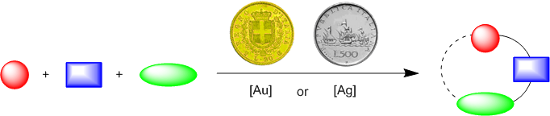
- multicomponent reactions. Keywords: A3-coupling; gold; multicomponent reactions; silver; Introduction Coinage metals (copper, silver and gold) are extensively used in the homogenous catalysis of organic reactions. Similarities and differences in the catalytic activity of these elements have been recently
- comprehensive for copper than for silver and gold. However, silver and gold experienced a continuous growth in interest by the scientific community. This also holds true in the field of multicomponent reactions (MCRs). A rough investigation of the literature dealing with Ag or Au-mediated MCRs published since
- 2000 reveals an exponential growth in the number of published papers. A deeper analysis allows discriminating between a specific class of multicomponent reactions, the A3-coupling reactions, which are subjected to systematic investigations, and a plethora of miscellaneous reactions. Thus, this review


A catalyst-free multicomponent domino sequence for the diastereoselective synthesis of (E)-3-[2-arylcarbonyl-3-(arylamino)allyl]chromen-4-ones
Beilstein J. Org. Chem. 2014, 10, 459–465, doi:10.3762/bjoc.10.43
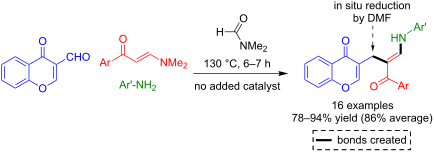
- –Hilman condensation, and a final deoxygenation. The deoxygenation is assumed to be induced by carbon monoxide resulting from the thermal decomposition of the dimethylformamide solvent. Keywords: chromones; domino reactions; Michael additions; multicomponent reactions; transfer hydrogenation
- allows their application in the synthesis of important heterocycles such as indole [28], dihydropyridine [29], quinoline [30], pyrrole [31] and pyridinone [32]. Furthermore, they can take part in one-pot multicomponent reactions with both nucleophilic and electrophilic reactants, leading to a fast access


The Flögel-three-component reaction with dicarboxylic acids – an approach to bis(β-alkoxy-β-ketoenamides) for the synthesis of complex pyridine and pyrimidine derivatives
Beilstein J. Org. Chem. 2014, 10, 394–404, doi:10.3762/bjoc.10.37
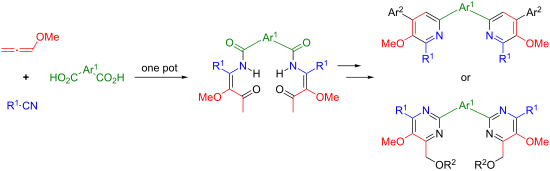
- . Keywords: alkoxyallenes; condensations; DFT calculations; β-ketoenamides; multi-component reactions; olefin metathesis; pyridines; pyrimidines; Introduction Multicomponent reactions (MCRs) generally allow a diversity-oriented fast and efficient access to complex synthetic intermediates and are thus
- E- and Z-configured enamide moieties [51][52], finally leading to identical products. After these successful multicomponent reactions we investigated the intramolecular condensations of the bis(β-ketoenamides) 13–15 to pyridine and pyrimidine derivatives. Enamides 13 and 14 were treated with
- addition we exemplarily investigated subsequent transformations of these compounds either by palladium-catalyzed cross-couplings or by oxidations of the 4-methyl groups of the pyrimidine subunits. Although the yields for the crucial initial multicomponent reactions leading to the bis(β-methoxy-β





