Search results
Search for "overall yield" in Full Text gives 525 result(s) in Beilstein Journal of Organic Chemistry. Showing first 200.
Total synthesis of ent-pavettamine
Beilstein J. Org. Chem. 2021, 17, 1440–1446, doi:10.3762/bjoc.17.99
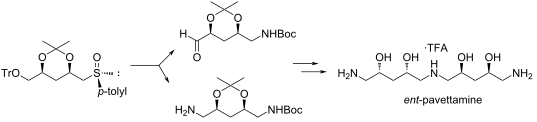
- developing a route for the synthesis of enantiomer 2 by modification of the established protocol used for the synthesis of 1. The plan was that the alternative strategy would lead to an improvement in the overall yield whilst eliminating some of the troublesome steps. Results and Discussion The synthetic
- , using our previously published methodology in an overall yield of 8% over 8 steps (Scheme 1) [1]. An alternative strategy for the synthesis of 4 was developed so as to avoid a cumbersome continuous extraction step of a triol associated with the established method, in addition to improving the overall
- that the new route doubled the overall yield to 16% for a similar number of steps. The specific optical rotation for 4 of +28.1° in acetone was comparable to that obtained previously [1]. Single crystal X-ray analysis of compound 4 (Figure 3), further confirmed the identity and stereochemistry of the


A comprehensive review of flow chemistry techniques tailored to the flavours and fragrances industries
Beilstein J. Org. Chem. 2021, 17, 1181–1312, doi:10.3762/bjoc.17.90
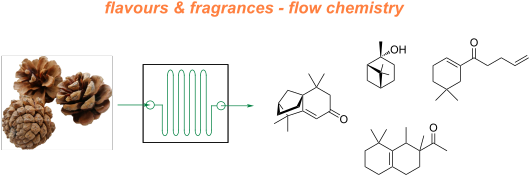
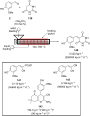
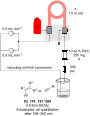
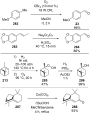
- synthesis of coumarin (90) was also reported, which involved an intramolecular aldol-type condensation of the acetylated intermediate 89 derived from salicylaldehyde (88, Scheme 18) [125]. The initial O-acetylation step was telescoped directly into the next reactor; the two-step process gave an overall
- yield of 91% under optimal conditions. Beneficially as all components were liquids the need for a solvent was completely avoided; from a green chemistry standpoint this is highly attractive and the intrinsic low melting points of many fragrance ingredients and precursors lend themselves to continuous










N-tert-Butanesulfinyl imines in the asymmetric synthesis of nitrogen-containing heterocycles
Beilstein J. Org. Chem. 2021, 17, 1096–1140, doi:10.3762/bjoc.17.86

- N-methylation led to (−)-angustureine (107) in high overall yield (Scheme 31). The same methodology was applied to the synthesis of (−)-cuspareine (108), starting in this case from enantiomeric imine (RS)-104b, and using 2-(3,4-dimethoxyphenyl)ethylmagnesium bromide as Grignard reagent. A
- , which after desulfination and N-methylation led to expected (+)-sedamine (125) in 30% overall yield from ketone derivative 124. The stereoselective synthesis of trans-5-hydroxy-6-substituted-2-piperidinones was also reported by the group of Wei, taking advantage of the addition of Grignard reagents to N
- the Grignard reagent in this synthesis, with a 18% overall yield after seven steps from aldimine ent-126 (Scheme 35) [125]. The reaction of chiral α-siloxyl imine (SS)-126 with enolates derived from methyl ketones 131 was also investigated. The enolate was formed with LDA at −78 °C and reacted at the


Metal-free glycosylation with glycosyl fluorides in liquid SO2
Beilstein J. Org. Chem. 2021, 17, 964–976, doi:10.3762/bjoc.17.78

- halides α-1a–c gave O-mannoside 3a as the major product in 58 to 71% yield, while overall yield of products 3a,c varied from 77% for α-1b to quant. for α-1a (Table S1, Supporting Information File 1). Pivaloyl-protected mannosyl fluoride α-1a was further applied for the synthesis of various O-, S- and C



Total synthesis of pyrrolo[2,3-c]quinoline alkaloid: trigonoine B
Beilstein J. Org. Chem. 2021, 17, 730–736, doi:10.3762/bjoc.17.62
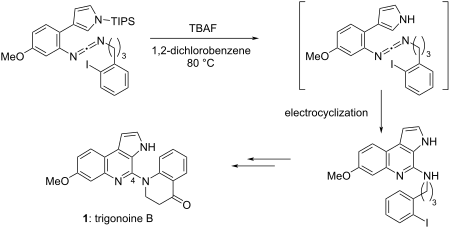
- ]quinoline framework via electrocyclization of 2-(pyrrol-3-yl)benzene containing a carbodiimide moiety as a 2-azahexatriene system. The employed six-step sequence afforded trigonoine B (1) in 9.2% overall yield. The described route could be employed for the preparation of various N-substituted 4
- , trigonoine B (1), was achieved for the first time through the electrocyclization of 2-(pyrrol-3-yl)benzene bearing a carbodiimide moiety as a 2-azahexatriene system. The employed six-step sequence afforded the desired product 1 in 9.2% overall yield. Notably, the developed synthetic route could be used for





Synthesis of (Z)-3-[amino(phenyl)methylidene]-1,3-dihydro-2H-indol-2-ones using an Eschenmoser coupling reaction
Beilstein J. Org. Chem. 2021, 17, 527–539, doi:10.3762/bjoc.17.47

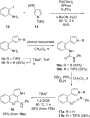
- Eschenmoser coupling reaction can be found in the recent literature [38][39][40]. In our case, the 3-bromooxindoles 1a–e worked very well but they are accessible from commercially available isatins only through a three-step synthesis in an acceptable overall yield 51–76% (see Table 6 in the Experimental). In
- reference [14]). As a result, a good overall yield of 65% was achieved over three steps starting from N-methylisatin. For comparison, the four-step synthesis starting from N-methylisatin and giving 11 through 3-bromo-N-methyloxindole (1a’), has an overall yield of only 48%. Moreover, no formation of the
- starting 3-bromooxindoles 1a–e are available from the corresponding isatins by a three-step synthesis (overall yield 51–76%), the total yields related to these commercially available and cheap starting compounds are better or at least competitive to the methods described in Scheme 1 of which several have


Synthesis of N-perfluoroalkyl-3,4-disubstituted pyrroles by rhodium-catalyzed transannulation of N-fluoroalkyl-1,2,3-triazoles with terminal alkynes
Beilstein J. Org. Chem. 2021, 17, 504–510, doi:10.3762/bjoc.17.44
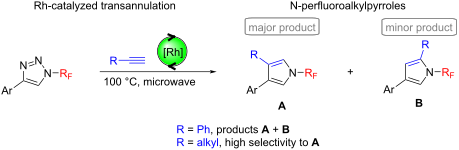
- an electrophile, the crude product 2a was treated with butyllithium, followed by the reaction with carbon dioxide to afford pyrrole carboxylic acid 6 in a good overall yield (Scheme 5). The trifluoromethyl group on the nitrogen was not affected by these highly basic reaction conditions. The mechanism


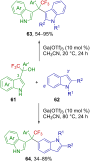
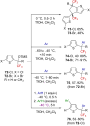
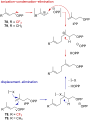
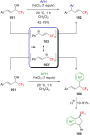
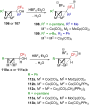
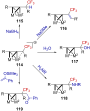
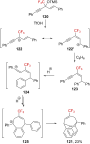
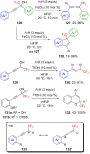
CF3-substituted carbocations: underexploited intermediates with great potential in modern synthetic chemistry
Beilstein J. Org. Chem. 2021, 17, 343–378, doi:10.3762/bjoc.17.32



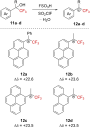

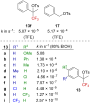


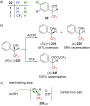


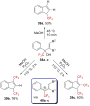







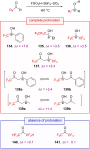


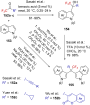

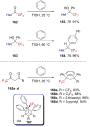


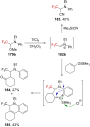


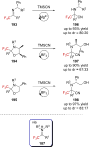
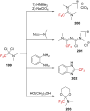


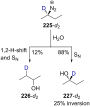


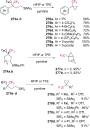






Synthesis of legonmycins A and B, C(7a)-hydroxylated bacterial pyrrolizidines
Beilstein J. Org. Chem. 2021, 17, 334–342, doi:10.3762/bjoc.17.31

- , equating to 44% overall yield from proline derivative 16). Rf 0.10 (ethyl acetate/methanol 9:1); 1H NMR (400 MHz, CDCl3) δ [the resonances vary with sample concentration and source of CDCl3] 1.56–1.65 (m, 1H) overlaying 1.60 (s, 3H), 1.94–2.04 (m, 2H), 2.10–2.29 (m, 1H), 3.08–3.15 (m, 1H), 3.17–3.23 (m, 1H


Regioselective chemoenzymatic syntheses of ferulate conjugates as chromogenic substrates for feruloyl esterases
Beilstein J. Org. Chem. 2021, 17, 325–333, doi:10.3762/bjoc.17.30
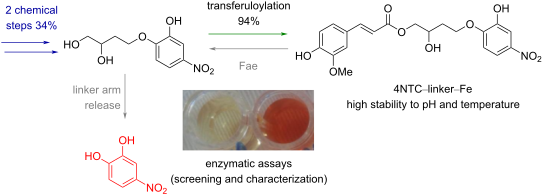
- ferulate to the primary hydroxy group of α‐ʟ‐arabinofuranosides. Moreover, a novel feruloylated 4-nitrocatechol-1-yl-substituted butanetriol analog, containing a cleavable hydroxylated linker, was also synthesized in 32% overall yield in 3 steps (convergent synthesis). The latter route combined the
- the primary hydroxy group compare favorably with the previously reported overall yield (46 and 47%, respectively, in three steps) [15][16][17][29], which relate to the selective enzymatic O-5-deacetylation and esterification of the primary hydroxy group and a final deprotection of the 2,3-O-acetyl
- in a high yield of 94%. Accordingly, the synthesis of the chromogenic ferulate 12 was achieved in 32% overall yield in 3 steps from commercial reactants (convergent synthesis using a slight excess of the synthesized vinyl ferulate 2) and without the requirement to perform a final deprotection. As


Diels–Alder reaction of β-fluoro-β-nitrostyrenes with cyclic dienes
Beilstein J. Org. Chem. 2021, 17, 283–292, doi:10.3762/bjoc.17.27

- and stereoisomers, respectively) 3d in 40% overall yield. Two pairs of regioisomers were partially separated by column chromatography with sufficiently slow elution and analyzed by 1H NMR spectroscopy. The structure assignment was made as depicted in Scheme 5. The structures of two pairs of



Direct synthesis of anomeric tetrazolyl iminosugars from sugar-derived lactams
Beilstein J. Org. Chem. 2021, 17, 115–123, doi:10.3762/bjoc.17.12
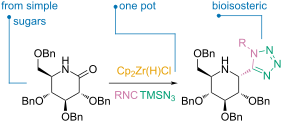
- highest yield and diastereoselectivity, thus were chosen as optimal (Table 1, entry 9.). We also tried to isolate the imine after the reduction step and carry out the second step in a solvent commonly used for the Ugi–azide reaction alone. For this, we observed a significant decrease in overall yield and




Progress in the total synthesis of inthomycins
Beilstein J. Org. Chem. 2021, 17, 58–82, doi:10.3762/bjoc.17.7
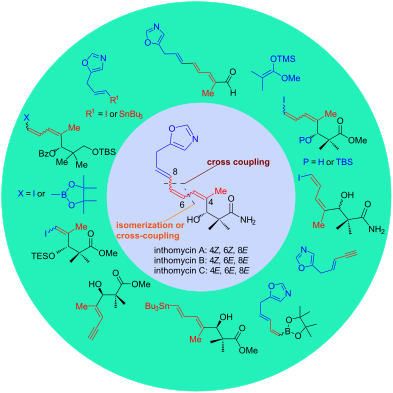
- step due to its high instability. Finally, the Stille cross-coupling reaction between vinylstannane 24 and dienyl iodide (rac)-20 using PdCl2(CN)2 and triethylamine in DMF produced racemic inthomycin A (or phthoxazolin A) (rac)-1 in 22% yield (Scheme 1). Although the overall yield of this route was
- derivative (rac)-63 was subjected to undergo acetylation, acid chloride formation, and quenching with ammonium hydroxide to produce amide derivative (rac)-64 in 70% yield. Finally, saponification of acetate (rac)-64 using lithium hydroxide gave racemic inthomycin A ((rac)-1) in 14% overall yield (Scheme 5
- triene (+)-146c was successfully converted into an 8:1 mixture of inthomycin C ((−)-3) and another minor isomer in good overall yield after the final step (Scheme 26). The spectroscopic data and specific rotation values of the three inthomycins A–C ((+)-1, (+)-2, and (−)-3) were consistent with those









Recent progress in the synthesis of homotropane alkaloids adaline, euphococcinine and N-methyleuphococcinine
Beilstein J. Org. Chem. 2021, 17, 28–41, doi:10.3762/bjoc.17.4
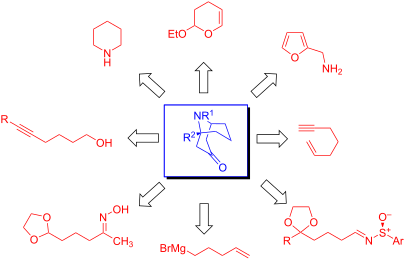
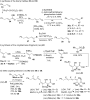
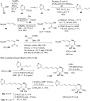
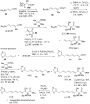
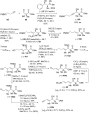
- tricyclic adduct (+)-23b, a precursor to (−)-adaline (1). This methodology, based on the synthesis of optically active β-sulfinyl nitrones, was proved to be efficient in the synthesis of (+)-euphococcinine (2) in 7 steps from piperidine (17), in an overall yield of 2.1%. Specific rotation for (+)-2 was [α
- ]D24 +7.43 (c 0.350, MeOH); {lit. [α]D +7.5 (c 2.0, MeOH), [26]}. The (−)-adaline precursor (+)-23b was also accessed from 17 in 5 steps, in an overall yield of 7.3%. Inspired by Gössinger’s work, Murahashi et al. prepared a nitrone from a cyclic amine. However, the route was improved by the
- from 30 not only led to the formation of the bicyclic system but also resulted in the loss of the chiral auxiliary, providing (+)-euphococcinine (2). Meyer's approach led to (+)-euphococcinine (2) in 5 steps from lactam 26 in an overall yield of 51.2%. The spectral analysis (1H and 13C NMR, IR, MS) was


Metal-free synthesis of biarenes via photoextrusion in di(tri)aryl phosphates
Beilstein J. Org. Chem. 2020, 16, 3008–3014, doi:10.3762/bjoc.16.250
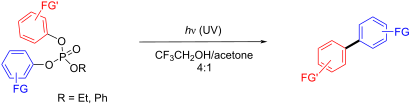
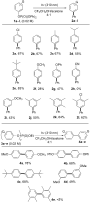
- dichloromethane, acetonitrile, and acetone (Table 1, entries 1–3), whereas 4-chlorobiphenyl (2a) was observed in traces as the only product in neat methanol (30% of 1a consumption, Table 1, entry 4). Interestingly, the addition of water (a methanol/water 2:1 mixture) increased the overall yield of the product 2a



Synthesis of imidazo[1,5-a]pyridines via cyclocondensation of 2-(aminomethyl)pyridines with electrophilically activated nitroalkanes
Beilstein J. Org. Chem. 2020, 16, 2903–2910, doi:10.3762/bjoc.16.239

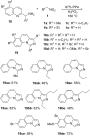
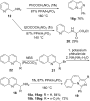
- :1–80:30:1. The titled compound was obtained as colorless powder, overall yield 80% (1.89 g, 8.00 mmol). Overall yield 1.89 g (8.00 mmol, 80%). Mp 73–74 °C; Rf 0.50 (CH2Cl2/EtOH/NEt3 80:30:1, v/v/v); 1H NMR (400 MHz, CDCl3) δ 8.01 (d, J = 8.5 Hz, 1H, 9-H), 7.95 (d, J = 1.0 Hz, 1H, 4-H), 7.91 (d, J


Changed reactivity of secondary hydroxy groups in C8-modified adenosine – lessons learned from silylation
Beilstein J. Org. Chem. 2020, 16, 2854–2861, doi:10.3762/bjoc.16.234

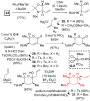
- Sonogashira coupling following a previously established protocol [13], resulting in nucleoside derivative 7 with 44 % yield over these two steps, corresponding to an overall yield of 17% over six reaction steps. Further functionalization of 7 for RNA synthesis required selective 2’-O-silylation to deliver
- , formation of the desired adenosine derivative 8 was achieved with an overall yield of 12.4% over seven reaction steps. A mentioned above, 3’-O-phosphitylation of 8 was carried out [40], and the resulting phosphoramidite building block 9 was used for the synthesis of an oligoribonucleotide (Table S1 in
- various Pd-catalyzed reactions. Comparing the two reaction paths, the overall yield of the desired adenosine derivative 8 was increased from 2% to 12% over 7 reaction steps by changing the protecting group strategy. Characterization and assignment of the TBDMS isomers via HSQC (red) and HMBC (blue) NMR


Design and synthesis of a bis-macrocyclic host and guests as building blocks for small molecular knots
Beilstein J. Org. Chem. 2020, 16, 2314–2321, doi:10.3762/bjoc.16.192

- % overall yield. Ammonium and pyridinium guests were synthesized in 4–5 steps. The TLC knot-forming sequence was carried out and produced a product with the expected molecular weight, but, unfortunately, further characterization did not produce conclusive results regarding the topology of the product
- % yield (Scheme 1). Alkylation of 5 with 1,2-dibromoethane provided key intermediate azido-bromide 6 in 60% yield. This two-step route to 6 is efficient, but the 16% overall yield was lower than desired. An alternate route began by converting diol 4 to bis(2-hydroxyethoxy)naphthalene 7 in 92% yield by
- DMSO to give azide-mesylate 9 in 35–46% yield, which is reasonable based on a maximum statistical yield of 50%. Displacement of the mesylate with bromide provided a 94% yield of 6. This route to 6 is twice as long as the alternative described above, but it is preferred because the 37% overall yield is


Syntheses of spliceostatins and thailanstatins: a review
Beilstein J. Org. Chem. 2020, 16, 1991–2006, doi:10.3762/bjoc.16.166

- removal of the dithiane protecting group and the cyclic-ketal formation gave 84. The oxidative hydrolysis of the PMB ether and the reaction with mCPBA afforded the epoxide 85. While relatively short (9 steps), the nonstereoselective formation of 81a/b led to a lower overall yield. Syntheses of the C-1–C-6
- cleavage afforded the methyl ketone 96. The cyclic hemiketal 97 was unstable at an elevated temperature (37 °C), with t1/2 = 48 h. Both the Jacobsen (10 steps, 24.4% yield) and the Koide syntheses (11 steps, 22.3% yield) are relatively efficient in terms of the length and overall yield. Syntheses of the C
- 100 was relatively inefficient (31%) and was the main factor in diminishing the overall yield. The transformation of the silyl-protected 1° alcohol group of 100 into an ester afforded 101. Finally, the C-3 spirocyclic oxirane was introduced stereoselectively by a VO(acac)2-directed epoxidation. While








Selective preparation of tetrasubstituted fluoroalkenes by fluorine-directed oxetane ring-opening reactions
Beilstein J. Org. Chem. 2020, 16, 1936–1946, doi:10.3762/bjoc.16.160
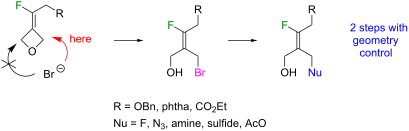
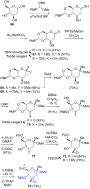
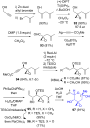
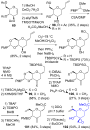
- corresponding chloride (not shown). An Arbuzov reaction was performed directly on the allylic bromide obtained by treatment of 27 with LiBr (5 equiv), to give the phosphonate 29 in 76% overall yield. Finally, azide 28 was obtained in 89% yield in two steps from the non-isolated intermediate mesylate 27. After


Et3N/DMSO-supported one-pot synthesis of highly fluorescent β-carboline-linked benzothiophenones via sulfur insertion and estimation of the photophysical properties
Beilstein J. Org. Chem. 2020, 16, 1740–1753, doi:10.3762/bjoc.16.146

- increment in the overall yield of 2bA (from 67% to 74%) was also noted. Similarly, a remarkable improvement in the yields of 2aA (from 32% to 35%), 2dA (from 78% to 83%), and 2hA (from 69% to 78%) was also observed during the one-pot approach. The comparison of the product yields obtained through both


Nonenzymatic synthesis of anomerically pure, mannosyl-based molecular probes for scramblase identification studies
Beilstein J. Org. Chem. 2020, 16, 1732–1739, doi:10.3762/bjoc.16.145
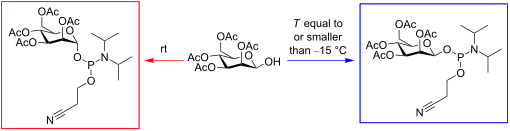
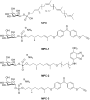
- (DCM), and ETT served as the activator. The subsequent oxidation of the unstable phosphite triester to the more stable phosphotriester was performed with t-BuOOH. The resulting intermediates were then treated overnight with a solution of ammonia in methanol to remove the protecting groups. An overall
- yield of about 45% was achieved when no further purification was carried out (for details see Supporting Information File 1). The major goal of this work was the synthesis of molecular probes with a configurationally defined mannosyl headgroup, i.e., a pure β-anomer. In order to verify the preferred



Synthesis of the tetrasaccharide repeating unit of the O-specific polysaccharide of Azospirillum doebereinerae type strain GSF71T using linear and one-pot iterative glycosylations
Beilstein J. Org. Chem. 2020, 16, 1700–1705, doi:10.3762/bjoc.16.141
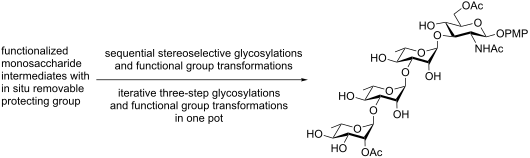
- temperature of the reaction and coupling the in situ-generated trisaccharide derivative 6 with compound 4 to furnish the desired tetrasaccharide derivative 7 in 30% overall yield. The structure of compound 7 obtained by the three iterative glycosylation reactions in one pot fully matched with the product
- treatment with HClO4-SiO2 [34]; (c) selective acetylation of the primary hydroxy group, and (d) removal of the benzyl groups by catalytic transfer hydrogenation [35] using triethylsilane in the presence of Pearlman’s catalyst [36] to furnish the desired tetrasaccharide 1 in 50% overall yield with the two O
- successively washed with 5% Na2S2O3 (25 mL), satd. NaHCO3 (25 mL), and H2O (25 mL), dried (Na2SO4) and concentrated to give the crude product, which was purified on SiO2 using hexane/EtOAc 2:1 as eluent to give pure compound 7 (320 mg, overall yield 30%). Structure of the synthesized tetrasaccharide and its


Clickable azide-functionalized bromoarylaldehydes – synthesis and photophysical characterization
Beilstein J. Org. Chem. 2020, 16, 1683–1692, doi:10.3762/bjoc.16.139
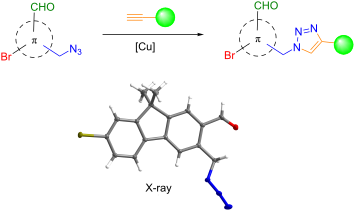
- 78% yield and an overall yield of 56% (starting from 4-bromobenzaldehyde). Azide-functionalized ortho-bromobenzaldehyde 4 was prepared by a similar route as aldehyde 3. Initially, oxazoline formation from 4-methylbenzaldehyde yielded 2-aryloxazoline 10 in almost quantitative yield. The introduction
- of benzyl bromide with sodium azide delivered the primary azide 13 in quantitative yield. Again, the final back-conversion of the oxazoline group to the corresponding aldehyde afforded azide-functionalized ortho-bromobenzaldehyde 4 in 85% yield and an overall yield of 41% (starting from 4
- previous deprotection reactions, fluorene 21 was converted by means of a three-step sequence to the desired azide-functionalized 7-bromofluorene-2-carbaldehyde 5 in 86% yield and an overall yield of 45% (starting from fluorene). The molecular structure of 5 could be verified by X-ray diffraction (XRD, see



Facile synthesis of 7-alkyl-1,2,3,4-tetrahydro-1,8-naphthyridines as arginine mimetics using a Horner–Wadsworth–Emmons-based approach
Beilstein J. Org. Chem. 2020, 16, 1617–1626, doi:10.3762/bjoc.16.134
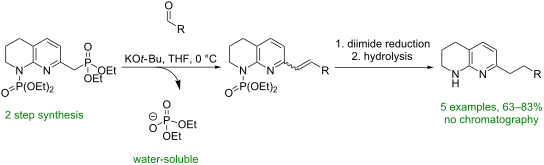
- . This represents a 64% overall yield which was increased to 68% when no column chromatography was undertaken between transformations, with no loss of purity (Scheme 5). Olefin reduction and Cbz deprotection could not be performed simultaneously by palladium-catalysed hydrogenation as this resulted in
- defluorination, presumably via a Tsuji–Trost-like elimination of the allylic fluoride [18][19]. This sequence represents a marked improvement from the Wittig-including route, lowering the number of synthetic steps and increasing the overall yield [2]. Furthermore, no problematic byproducts are formed, and good
- desired compound in 64% overall yield. A Horner–Wadsworth–Emmons/reduction/deprotection procedure was used to synthesise amines in good yield requiring no chromatography, although racemisation was observed where chiral aldehydes possessed an α-proton. This methodology utilised the underused base-stable