


Search results
Search for "phosphate" in Full Text gives 474 result(s) in Beilstein Journal of Organic Chemistry. Showing first 200.
Biochemistry of fluoroprolines: the prospect of making fluorine a bioelement
Beilstein J. Org. Chem. 2021, 17, 439–460, doi:10.3762/bjoc.17.40
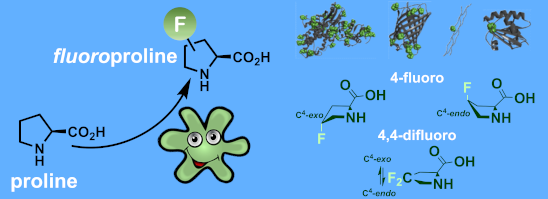
- the action of glutamate 5-kinase (enzyme proB, Figure 9A). The resulting intermediate undergoes reduction into glutamate semialdehyde via the action of the γ-glutamyl phosphate reductase proA. The semialdehyde then undergoes spontaneous cyclization to form 1-pyrroline-5-carboxylate. In the final step
- , 1-pyrroline-5-carboxylate is reduced via the action of the pyrroline-5-carboxylate reductase proC, generating proline. Alternatively, glutamate semialdehyde can be created from ornithine via the action of a pyridoxal phosphate-dependent enzyme, the ornithine-oxo-acid aminotransferase rocD. Very


Helicene synthesis by Brønsted acid-catalyzed cycloaromatization in HFIP [(CF3)2CHOH]
Beilstein J. Org. Chem. 2021, 17, 396–403, doi:10.3762/bjoc.17.35
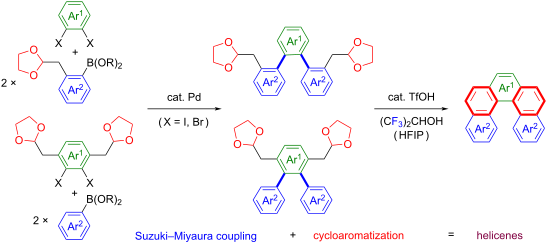
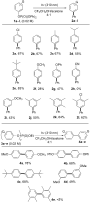
- for 40 min, the reaction was quenched with phosphate buffer (pH 7). Organic materials were extracted with CH2Cl2 three times, and the combined extracts were washed with brine and dried over Na2SO4. After removal of the solvents under reduced pressure, the residue was purified by silica gel column
- with phosphate buffer (pH 7). Organic materials were extracted with ethyl acetate three times, and the combined extracts were washed with brine and dried over Na2SO4. After removal of the solvents under reduced pressure, the residue was purified by silica gel column chromatography (hexane/CH2Cl2 = 3:1




Regioselective chemoenzymatic syntheses of ferulate conjugates as chromogenic substrates for feruloyl esterases
Beilstein J. Org. Chem. 2021, 17, 325–333, doi:10.3762/bjoc.17.30
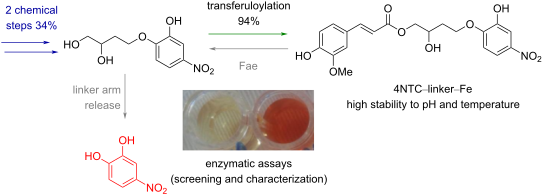
- /L ammonium chloride, 20 mL/L oleic acid, 10 g/L ᴅ-glucose, 2 g/L casamino acid, and 15 g/L bacto agar in 100 mM citrate–phosphate buffer at pH 5). The petri dishes were incubated for 48 h at 30 °C and then overlayered with a preparation of 1% (w/v) molten top agar containing the chromogenic
- enzyme. Liquid-medium-based colorimetric assays using 4NTC–linker–Fe (12) In a typical experiment, discontinuous enzyme assays were performed in triplicates under buffered conditions (100 mM sodium phosphate at pH 6.0) in the presence of 1.8 mM 12 and 3.6% DMSO, final concentrations. For the assay, this


19F NMR as a tool in chemical biology
Beilstein J. Org. Chem. 2021, 17, 293–318, doi:10.3762/bjoc.17.28


The preparation and properties of 1,1-difluorocyclopropane derivatives
Beilstein J. Org. Chem. 2021, 17, 245–272, doi:10.3762/bjoc.17.25


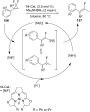


Supramolecular polymerization of sulfated dendritic peptide amphiphiles into multivalent L-selectin binders
Beilstein J. Org. Chem. 2021, 17, 97–104, doi:10.3762/bjoc.17.10
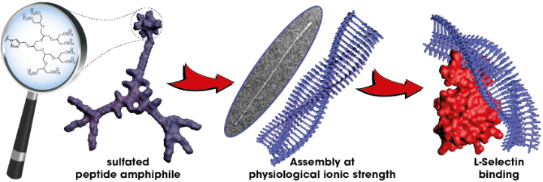
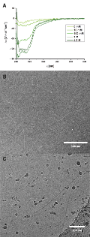
- containing 100 mM NaCl, over the phosphate buffer in PBS, since TRIS is known to avoid artefacts due to phosphate salts [42][43]. Cryo-TEM experiments were performed using solutions of II in PBS (−/−, containing 100 mM NaCl). All TEM and cryo-TEM micrographs clearly demonstrated the formation of long rigid



Synthesis, crystal structures and properties of carbazole-based [6]helicenes fused with an azine ring
Beilstein J. Org. Chem. 2021, 17, 11–21, doi:10.3762/bjoc.17.2
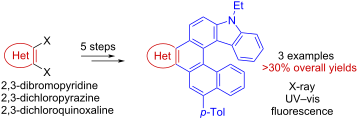
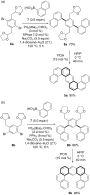
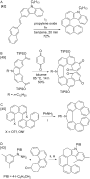
- % ii) SPINOL-derived phosphoric acid, Amberlite CG50, CH2Cl2, −7 °C, 72 h, 74%; iii) chloranil, diphenyl phosphate, CHCl3, 50 °C, 5 h, 76%. Synthetic strategy for the carbazole-based [6]helicenes fused with an azine ring. Sonogashira coupling of compound 4b with phenylacetylene. i) Pd(PPh3)2Cl2, CuI



Pentannulation of N-heterocycles by a tandem gold-catalyzed [3,3]-rearrangement/Nazarov reaction of propargyl ester derivatives: a computational study on the crucial role of the nitrogen atom
Beilstein J. Org. Chem. 2020, 16, 3059–3068, doi:10.3762/bjoc.16.255
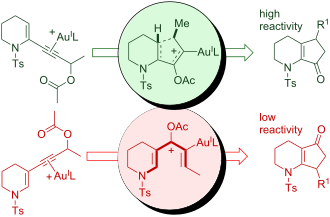
- was prepared via the palladium-catalyzed reduction of the corresponding phosphate 17 [54]. Iodination and Sonogashira coupling, followed by acetylation led to the formation of the desired enynyl acetate 20. This compound was treated with 5 mol % Ph3PAuCl/AgSbF6 in DCM, and after 6 h, this afforded the


Metal-free synthesis of biarenes via photoextrusion in di(tri)aryl phosphates
Beilstein J. Org. Chem. 2020, 16, 3008–3014, doi:10.3762/bjoc.16.250
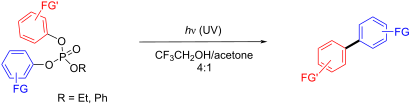
- synthesis of biarenes has been developed. The approach is based on the photoextrusion of a phosphate moiety occurring upon irradiation of biaryl- and triaryl phosphates. The reaction involves an exciplex as the intermediate and it is especially suitable for the preparation of electron-rich biarenes
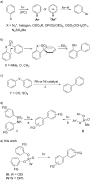
- metal-free eco-sustainable conditions we reinvestigated the photochemistry of di- and triaryl phosphates III and IV (Scheme 1e), compounds that can be easily achieved from the corresponding phenols [62][63]. Results and Discussion At the onset of our investigation, we tested a triaryl phosphate such as
- 4-chlorophenyl diphenyl phosphate (1a), as the model compound in different solvents by irradiation in a multilamp reactor (wavelength centered at 310 nm, see Supporting Information File 1 for details). The obtained results are depicted in Table 1. Compound 1a (0.02 M) was quite photostable in



Secondary metabolites of Bacillus subtilis impact the assembly of soil-derived semisynthetic bacterial communities
Beilstein J. Org. Chem. 2020, 16, 2983–2998, doi:10.3762/bjoc.16.248
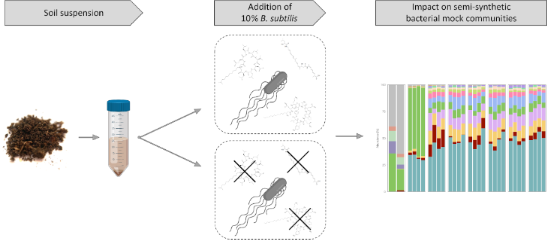
- g⋅L−1 dipotassium hydrogen phosphate, and 2.5 g⋅L−1 glucose. Semisynthetic mock community assay Semisynthetic soil communities were obtained from the soil of sampling site P5 (55.788800, 12.558300) [51][64]. 1 g soil was mixed in a 1:9 ratio with a 0.9% saline solution, vortexed on a rotary shaker


Selected peptide-based fluorescent probes for biological applications
Beilstein J. Org. Chem. 2020, 16, 2971–2982, doi:10.3762/bjoc.16.247

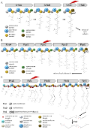
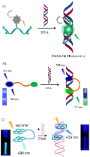
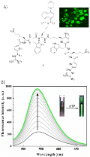
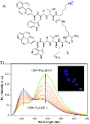
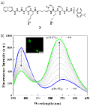
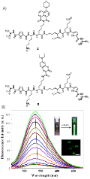
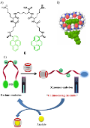
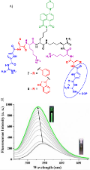
- interacts effectively with double-stranded DNA (dsDNA) as positively charged lysine residues are expected to interact with the phosphate backbone electrostatically. Upon binding to dsDNA, it undergoes a conformational change from the folded to an extended form that switches the fluorescence signal from
- serum albumin. Other biomolecules such as adenosine, adenosine monophosphate, adenosine triphosphate, phosphate, pyrophosphate, glucose, heparin, hyaluronic acid and chondroitin sulfate, and amino acids containing two carboxylates (glutamic acid and aspartic acid) have not increased the fluorescence
- biological analytes including such as adenosine, adenosine monophosphate (AMP), adenosine triphosphates (ATP), phosphate (Pi), pyrophosphate (PPi), ct-DNA, glucose, bovine serum albumin (BSA), glutamic acid and aspartic acid. They are also selective over the similar biological analytes hyaluronic acid or




Synthesis and investigation of quadruplex-DNA-binding, 9-O-substituted berberine derivatives
Beilstein J. Org. Chem. 2020, 16, 2795–2806, doi:10.3762/bjoc.16.230
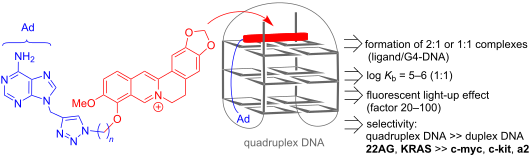
- (resistivity ≥ 18 MΩ cm) and filtered through a membrane filter (0.45 µm pore size). K-phosphate-buffer (22AG, a2): 25 mM K2HPO4, 70 mM KCl; pH 7.0; Na-cacodylate buffer (F21T, Fa2T, FmycT, FkitT, and FkrasT): 90 µM LiCl, 10 mM KCl, 10 mM Na(CH3)2AsO2 × 3H2O, pH 7.2–7.3. The K-phosphate buffer solutions and
- in K+-phosphate buffer) was used as a cosolvent. For the CD spectra, solutions of G4-DNA in K+-phosphate butter and the ligands in buffer/DMSO were recorded after an equilibration time of 30 min. For the thermal DNA denaturation analyses stock solutions of the ligand (20 µM) and the G4-DNA (50 µM) in
- ; cDNA = 200 μM) in K+-phosphate buffer (pH 7.0) with 10% v/v DMSO). The arrows indicate the development of the absorption or emission bands with increasing DNA concentration. Insets: Plots of Abs./Abs.0 and I/I0, respectively, versus cDNA/c3c. Inset B1: Picture of the emission color and intensity of


Selective recognition of ATP by multivalent nano-assemblies of bisimidazolium amphiphiles through “turn-on” fluorescence response
Beilstein J. Org. Chem. 2020, 16, 2728–2738, doi:10.3762/bjoc.16.223
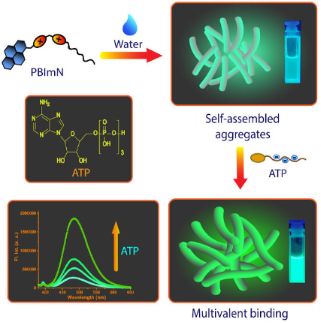
- electrostatic and (C–H)···O− hydrogen bonds involving the acidic proton at the 2-position of the imidazolium moiety to bind to ATP and other phosphate analytes [46]. A number of cyclophanes and tweezers [53][54][55][56] have been reported possessing the following common structural features: a) the presence of
- of anthracene tagged imidazolium receptors responded to ATP through an amplified fluorescence quenching [60]. Based on these results, we wanted to develop similar self-assembled systems which would show a “turn-on” response in the presence of ATP or other phosphate analytes. The current design of
- issues of a sensor design is the selectivity for an analyte in comparison to other interfering analytes. Therefore, we carried out selectivity studies with the multivalent sensors for ATP over the other adenosine phosphates ADP and AMP, PPi and inorganic phosphate (Pi). We employed PBIm12 (75 µM) for


Optical detection of di- and triphosphate anions with mixed monolayer-protected gold nanoparticles containing zinc(II)–dipicolylamine complexes
Beilstein J. Org. Chem. 2020, 16, 2687–2700, doi:10.3762/bjoc.16.219
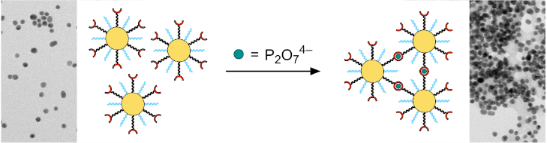
- water/methanol 1:2 (v/v). These anions caused the bright red solutions of the nanoparticles to change their color because of nanoparticle aggregation followed by precipitation, whereas halides or oxoanions such as sulfate, nitrate, or carbonate produced no effect. The sensitivity of phosphate sensing
- preferred binding mode of zinc(II)–dipicolylamine complexes with phosphate anions which involves binding of the anion between two metal centers. This work thus provided information on how the behavior of mixed monolayer-protected gold nanoparticles is affected by multivalent interactions, at the same time
- . The extent of aggregation of AuNPs containing peripheral phosphate groups in the presence of an externally added low molecular weight bis(zinc(II)–DPA) complex could be controlled by diphosphate anions, which in turn allowed correlating the optical properties of the nanoparticle solution with the


A consensus-based and readable extension of Linear Code for Reaction Rules (LiCoRR)
Beilstein J. Org. Chem. 2020, 16, 2645–2662, doi:10.3762/bjoc.16.215
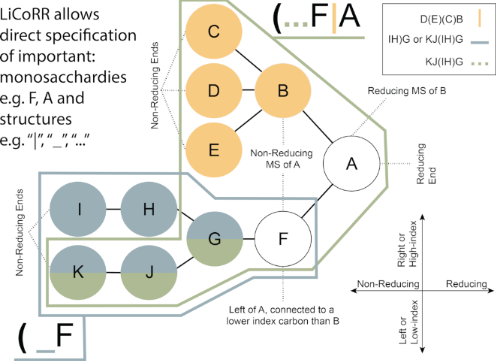
- represent known modifications (Table 3: MR1). For example, “A[2P]” represents a galactose with its second position modified by a phosphate. However, this specific modification may not always be known. Therefore, in addition to “ [] ” as exact modifications, we recommended using the “ $ ” sign to represent a


Anion exchange resins in phosphate form as versatile carriers for the reactions catalyzed by nucleoside phosphorylases
Beilstein J. Org. Chem. 2020, 16, 2607–2622, doi:10.3762/bjoc.16.212
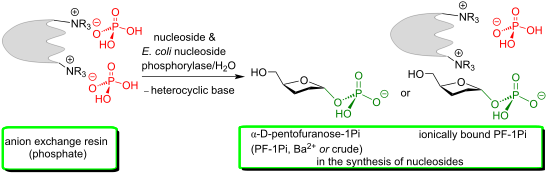
- Shemyakin and Ovchinnikov Institute of Bioorganic Chemistry, Russian Academy of Sciences, Miklukho-Maklaya 16/10, 117997 GSP-7, Moscow B-437, Russian Federation 10.3762/bjoc.16.212 Abstract In the present work, we suggested anion exchange resins in the phosphate form as a source of phosphate, one of the
- found that phosphorolysis of uridine, thymidine, and Ara-U in the presence of Dowex® 1X8 (phosphate; Dowex-nPi) proceeded smoothly in the presence of magnesium cations in water at 20–50 °C for 54–96 h giving rise to quantitative formation of the corresponding pyrimidine bases and PF-1Pis. The resulting
- letter to the editor Kalckar reported for the first time that specific inosine nucleosidase from rat liver catalyzes the reversible reaction “inosine + phosphate ⇌ hypoxanthine + ribose-1-phosphate”: the equilibrium of this reaction in water at pH 6.5 is displaced to the nucleoside synthesis. Moreover


NMR Spectroscopy of supramolecular chemistry on protein surfaces
Beilstein J. Org. Chem. 2020, 16, 2505–2522, doi:10.3762/bjoc.16.203
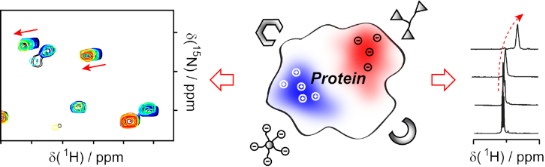
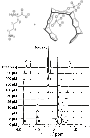
- formed between the charged head group of the encapsulated amino acid and one of the phosphate moieties attached to the tweezer’s central benzene ring [5]. Supramolecular tweezers have not only proven to be interesting tools to modulate protein–protein interactions [6][7], reverse amyloid fibril formation
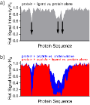
- severely destabilized by the mutation, while the stability of the wild-type tetramer was not affected. The binding of several anionic supramolecular ligands to the model protein ubiquitin was compared using NMR by Crowley’s lab [82]. These ligands, including phosphate tweezers (CLR01), sulfonatocalix[4
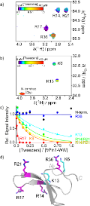
- though a total of 6 basic residues are present [80]. Most of the identified patches bound by the tweezers contain two basic residues. QM/MM calculations [7] show that one of these residues is bound inside the tweezer cavity while the second residue can form a salt bridge with the second phosphate group




Recent developments in enantioselective photocatalysis
Beilstein J. Org. Chem. 2020, 16, 2363–2441, doi:10.3762/bjoc.16.197
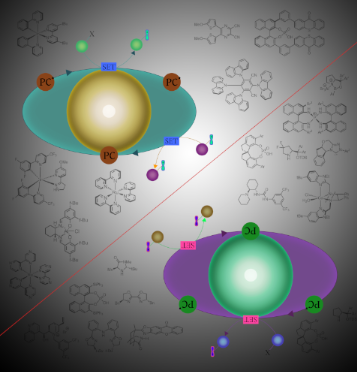
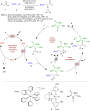
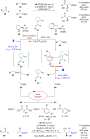
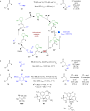
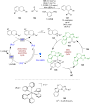
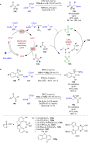
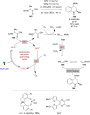
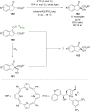
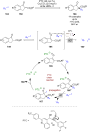
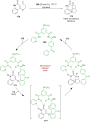
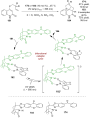
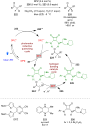
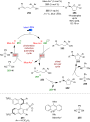
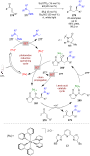
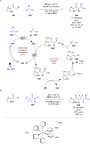
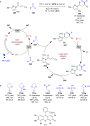
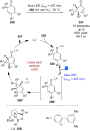
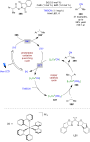
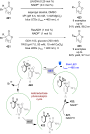
- "Brønsted acid catalysis", yet interestingly their conjugate bases can also be used as efficient hydrogen bonding catalysts. Knowles et al. showed that a tricatalytic system using chiral phosphate 235 can mediate the deracemisation of cyclic urea rac-236 (Scheme 36) [97]. The proposed mechanism involves a
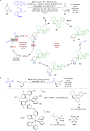
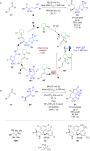
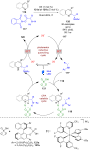
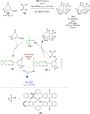
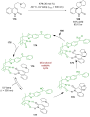
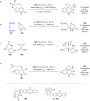
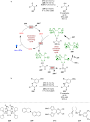
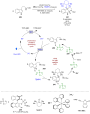
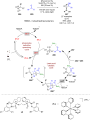
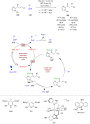
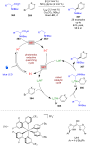
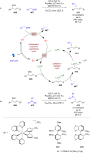
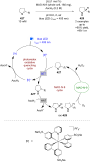
- decarboxylation. The excited photocatalyst is reductively quenched by 242• to give the imine intermediate 243. Indoles 241 and 243 are then brought together by the chiral phosphate catalyst 244 and the lithium counterion in a hydrogen-bonded complex 245 to give the desired enantioenriched products 246 in
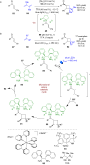
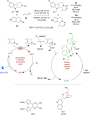
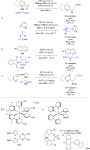
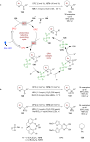
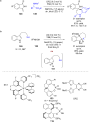
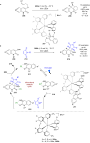
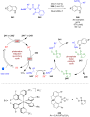
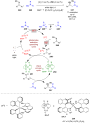
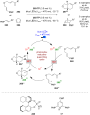
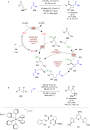
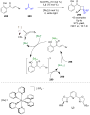
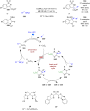
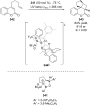
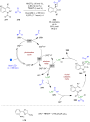
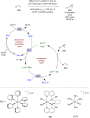
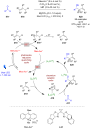
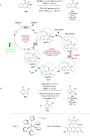
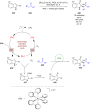
- -centred radical. The previous example used a chiral cation to induce enantioselectivity, while Luo et al. used a chiral phosphate base 251 as a counterion to Mes-Acr+ (Scheme 40) [101]. With this combination, they successfully developed an enantioselective variant of Nicewicz’s hydroetherification

























The B & B approach: Ball-milling conjugation of dextran with phenylboronic acid (PBA)-functionalized BODIPY
Beilstein J. Org. Chem. 2020, 16, 2272–2281, doi:10.3762/bjoc.16.188
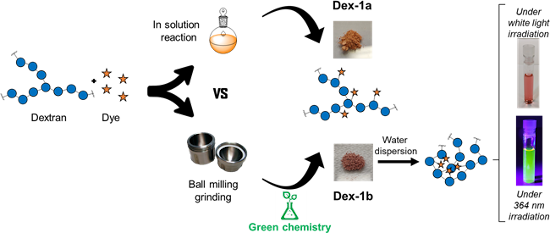
- performed for the conjugate Dex-1b in water and in phosphate-buffered saline (PBS) solution (Figure 4A, see Experimental). Nonfunctionalized dextran showed very low scattering and poor autocorrelation functions as there is limited association among dextran chains and single chains have limited scattering
- (hydrodynamic diameter) of the nanoparticles in H2O was 198 ± 42 nm (Figure 4A, black). The measurements were performed also in phosphate-buffered saline (PBS) solution to evaluate a potential additional aggregation in cell medium. The aggregates were stable in solution and did not precipitate over time. The


Clustering and curation of electropherograms: an efficient method for analyzing large cohorts of capillary electrophoresis glycomic profiles for bioprocessing operations
Beilstein J. Org. Chem. 2020, 16, 2087–2099, doi:10.3762/bjoc.16.176
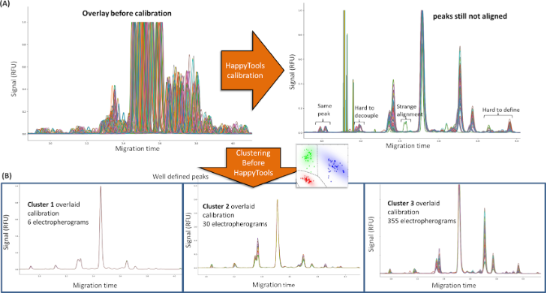
- large cohort glycomic studies, where the comparison of glyco-profiles is important to clinical studies, cellular biology, and glycobiology in general. Experimental Materials Sodium phosphate (Merck) and glycine·HCl (Merck) were purchased from Merck. Tris-HCl and EX-CELL Advanced CHO Fed-batch medium
- , GE Healthcare, USA). The columns were equilibrated and washed via centrifugation (100g, 30 s) with 20 mM sodium phosphate (pH 7.0). The sample was loaded to each column (maximum volume of 600 µL) and incubated end-over-end for 10 min. The column was washed with 20 mM sodium phosphate (pH 7.0) via


Convenient access to pyrrolidin-3-ylphosphonic acids and tetrahydro-2H-pyran-3-ylphosphonates with multiple contiguous stereocenters from nonracemic adducts of a Ni(II)-catalyzed Michael reaction
Beilstein J. Org. Chem. 2020, 16, 2073–2079, doi:10.3762/bjoc.16.174
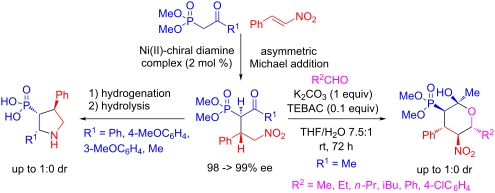
- detected in the reaction even after 72 h in the presence of 1 equiv of potassium phosphate or carbonate with TEBAC (0.1 equiv, Table 1, entries 4 and 5). If potassium fluoride or cesium carbonate were used as a base, the initial phosphonate 6e was consumed in a few hours, but unidentified products were



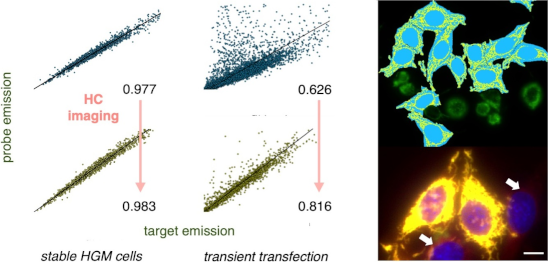
Automated high-content imaging for cellular uptake, from the Schmuck cation to the latest cyclic oligochalcogenides
Beilstein J. Org. Chem. 2020, 16, 2007–2016, doi:10.3762/bjoc.16.167
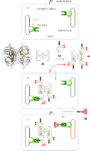
- )pyrrole (GCP) cation 1 as a synthetic analogue of the guanidinium cations, somehow a “super-guanidinium” conceived to drive “arginine magic” [20][21] to the extreme (Figure 1) [23]. The power of the Schmuck cation to bind carboxylate and phosphate anions in competitive water has several origins [22




Synthesis of monophosphorylated lipid A precursors using 2-naphthylmethyl ether as a protecting group
Beilstein J. Org. Chem. 2020, 16, 1955–1962, doi:10.3762/bjoc.16.162

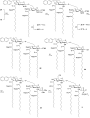
- ][8][9]. Various lipid A derivatives have since been synthesized to dissociate endotoxic effects from beneficial immunomodulatory activities. Lipid X, 2-N;3-O-di[(R)-3-hydroxytetradecanoyl]-ᴅ-glucosamine-1-phosphate, is the naturally occurring early monosaccharide precursor of lipid A biosynthesis
- showed that synthetic lipid X could be contaminated with small amounts of disaccharide-1-phosphate containing four (R)-3-hydroxytetradecanoic acids at the 2,2’ and 3,3’ positions (structure 2, Figure 1). This disaccharide precursor 2 was identified as the main immunostimulatory side product [12][13
- )-ᴅ-glucosamine disaccharide 1-phosphate) (Figure 1). The synthesis of such precursors is particularly important as it will facilitate the aforementioned goal of harnessing the immunostimulatory effects of lipid A through development of a clear understanding of the structure–activity relationship


Selective preparation of tetrasubstituted fluoroalkenes by fluorine-directed oxetane ring-opening reactions
Beilstein J. Org. Chem. 2020, 16, 1936–1946, doi:10.3762/bjoc.16.160
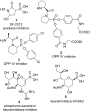
- antiviral agents, respectively (Figure 1) [5][6]. The field of acyclonucleotides (ACN) has been explored less, however, the introduction of fluorine atoms showed remarkable effects. The most representative examples are phosphate analogues such as the nucleoside phosphorylase inhibitor III and acyclic
- VIII was observed due to the difficulty of phosphorylation of the substrate by kinases [16]. The first kinase phosphorylation step is generally rate limiting, and the prior introduction of a phosphate or phosphonate function can circumvent this problem. The preparation of diols VIII was realized by


Synthesis, docking study and biological evaluation of ᴅ-fructofuranosyl and ᴅ-tagatofuranosyl sulfones as potential inhibitors of the mycobacterial galactan synthesis targeting the galactofuranosyltransferase GlfT2
Beilstein J. Org. Chem. 2020, 16, 1853–1862, doi:10.3762/bjoc.16.152
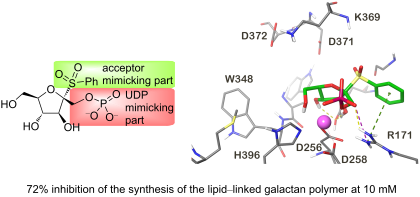
- -acetylglucosaminyltransferase I (GnT-I) reaction transition state [11]. Previously, we have designed 2-thiohexofuranoside skeletons bearing a phosphate group in position 1 by molecular modeling as potential transition state inhibitors of human glycosyltransferase I (GnT-I) [12], the bisubstrate enzyme requiring a metal co
- originally suggested by molecular modeling having the 1-O-phosphate group stabilized by anomeric sulfones on the ᴅ-fructofuranose and ᴅ-tagatofuranose skeleton (1–3, Figure 1). Similarities in the TS structures of GnT-I and GlfT2 prompted us to examine these molecules against GlfT2, a possible target for the
- -up of lipid-linked galactan precursors. The crude enzymes used in the assay allow for in situ synthesis of the acceptor for galactan polymerization, decaprenyl-P-P-GlcNAc-Rha (GL2), from endogenous decaprenyl phosphate and sugar nucleotides UDP-GlcNAc and TDP-Rha supplied in the reaction mixture





