


Search results
Search for "receptors" in Full Text gives 320 result(s) in Beilstein Journal of Organic Chemistry. Showing first 200.
Non-native autoinducer analogs capable of modulating the SdiA quorum sensing receptor in Salmonella enterica serovar Typhimurium
Beilstein J. Org. Chem. 2018, 14, 2651–2664, doi:10.3762/bjoc.14.243
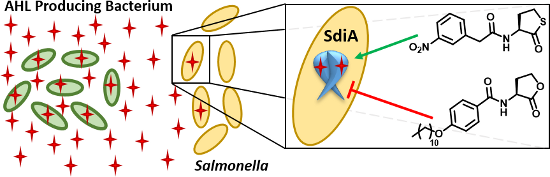
- , host colonization, and biofilm formation at high population densities. This cell–cell signaling process is regulated by N-acyl L-homoserine lactone (AHL) signals, or autoinducers, and LuxR-type receptors in Gram-negative bacteria. SdiA is an orphan LuxR-type receptor found in Escherichia, Salmonella
- , Klebsiella, and Enterobacter genera that responds to AHL signals produced by other species and regulates genes involved in several aspects of host colonization. The inhibition of QS using non-native small molecules that target LuxR-type receptors offers a non-biocidal approach for studying, and potentially
- intracellular LuxR-type receptors (Figure 1A) [13]. The AHL signals are produced at a low, but constant basal level, and rapidly diffuse into the local environment. As the population grows, so does the concentration of AHL, and once it reaches a threshold intracellular level (and thus a “quorum” has been



Transition metal-free oxidative and deoxygenative C–H/C–Li cross-couplings of 2H-imidazole 1-oxides with carboranyl lithium as an efficient synthetic approach to azaheterocyclic carboranes
Beilstein J. Org. Chem. 2018, 14, 2618–2626, doi:10.3762/bjoc.14.240

- capture therapy (BNCT) of cancer [8][9][10][11][12], as well as agonists and antagonists of biological receptors [13][14][15][16][17], etc. In addition, azaheterocyclic carboranes are actively used as ligands in the synthesis of metal complexes of various architectures, possessing catalytic activity [18


Comparative cell biological study of in vitro antitumor and antimetastatic activity on melanoma cells of GnRH-III-containing conjugates modified with short-chain fatty acids
Beilstein J. Org. Chem. 2018, 14, 2495–2509, doi:10.3762/bjoc.14.226
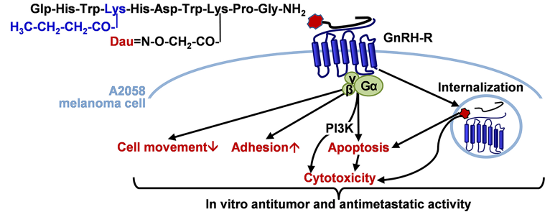
- , Hungary 10.3762/bjoc.14.226 Abstract Background: Peptide hormone-based targeted tumor therapy is an approved strategy to selectively block the tumor growth and spreading. The gonadotropin-releasing hormone receptors (GnRH-R) overexpressed on different tumors (e.g., melanoma) could be utilized for drug
- approaches to diminish this kind of cytotoxic effects on healthy tissues is the employment of drug delivery systems directed specifically to cancer cells. The chemotherapeutic drug targeting is often based on the receptors for certain peptide hormones that are preferentially expressed by cancer cells. The
- utilization of these receptors for cancer cell targeting allows for minimizing the toxic side effects and producing high drug concentration selectively at the tumor site. In general, drug delivery systems consist of a targeting moiety in order to recognize a receptor on tumor cells and a cytotoxic drug


Calixazulenes: azulene-based calixarene analogues – an overview and recent supramolecular complexation studies
Beilstein J. Org. Chem. 2018, 14, 2488–2494, doi:10.3762/bjoc.14.225
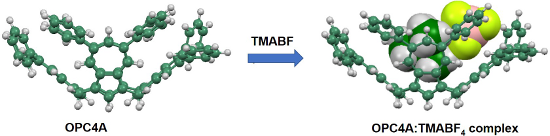
- investigated. Keywords: azulene; calixarenes; calixazulenes; supramolecular chemistry; tetraalkylammonium salts; Introduction Among the great variety of synthetic macrocyclic molecular receptors which have been reported, those that are referred to by their generic name “calixarene” loom large [1][2][3]. The


Semi-synthesis and insecticidal activity of spinetoram J and its D-forosamine replacement analogues
Beilstein J. Org. Chem. 2018, 14, 2321–2330, doi:10.3762/bjoc.14.207
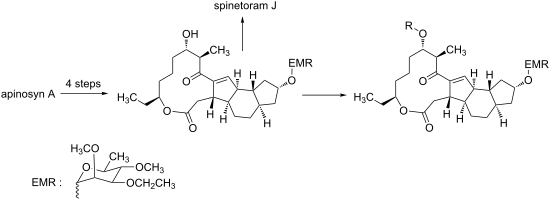
- spinosyn molecule interacts with both gamma-aminobutyric acid (GABA) receptor and nicotine acetylcholine (NACh) receptors [9]. Spinosad and spinetoram can be degraded via a combination of photolysis and microbial action, ultimately producing CO2, H2O, and nitrogen oxides [10]. That suggests that along with




Synthesis and post-functionalization of alternate-linked-meta-para-[2n.1n]thiacyclophanes
Beilstein J. Org. Chem. 2018, 14, 2190–2197, doi:10.3762/bjoc.14.192

- homodithiacalix[4]arenes by dynamic covalent chemistry [12][13][14]. Functionalization of homothiacalix[4]arenes was made possible by changing the precursors before macrocyclization (Scheme 1) [12]. Recently, pillar[n]arenes have attracted much interest as new supramolecular receptors due to their pillar-shaped


Synthesis of new p-tert-butylcalix[4]arene-based polyammonium triazolyl amphiphiles and their binding with nucleoside phosphates
Beilstein J. Org. Chem. 2018, 14, 1980–1993, doi:10.3762/bjoc.14.173
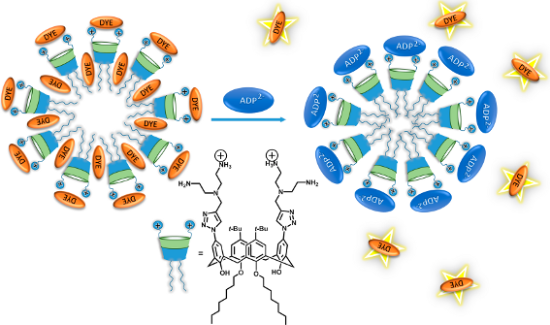
- /bjoc.14.173 Abstract The synthesis of new calix[4]arenes adopting a cone stereoisomeric form bearing two or four azide fragments on the upper rim and water-soluble triazolyl amphiphilic receptors with two or four polyammonium headgroups via copper-catalyzed azide–alkyne cycloaddition reaction has been
- are very important as a universal energy source and as intracellular mediators in many biological processes [6]. In the cellular metabolism, adenosine 5'-triphosphate (ATP) is hydrolyzed to adenosine 5'-monophosphate (AMP) or adenosine 5'-diphosphate (ADP) by enzymes [7]. Thus, the receptors for
- nucleotides must possess selectivity towards these anions. From this point of view, nucleotide receptors based on polyammonium cations are of great demand because the electrostatic interactions of such polyammonium systems and negatively charged phosphates are strong. Hydrogen bonding [8] and π-stacking


Asymmetric Michael addition reactions catalyzed by calix[4]thiourea cyclohexanediamine derivatives
Beilstein J. Org. Chem. 2018, 14, 1901–1907, doi:10.3762/bjoc.14.164
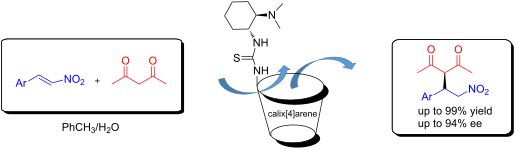
- and yields of the Michael reactions. Supramolecular catalysis has drawn tremendous interest in the past few years [15][16][17][18][19][20][21][22][23]. In this context, calixarenes are ideal supramolecular macrocyclic scaffolds for the design of molecular receptors and organocatalysts due to their



Strong binding and fluorescence sensing of bisphosphonates by guanidinium-modified calix[5]arene
Beilstein J. Org. Chem. 2018, 14, 1840–1845, doi:10.3762/bjoc.14.157
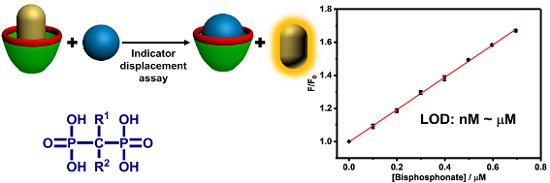
- particularly suitable for the detection of analytes lacking chromophores. The key factor in IDA is the rational design of artificial receptors that are capable of binding analytes strongly and specifically. Calixarenes are the third generation of macrocyclic receptors after crown ethers and cyclodextrins. Due


Defining the hydrophobic interactions that drive competence stimulating peptide (CSP)-ComD binding in Streptococcus pneumoniae
Beilstein J. Org. Chem. 2018, 14, 1769–1777, doi:10.3762/bjoc.14.151
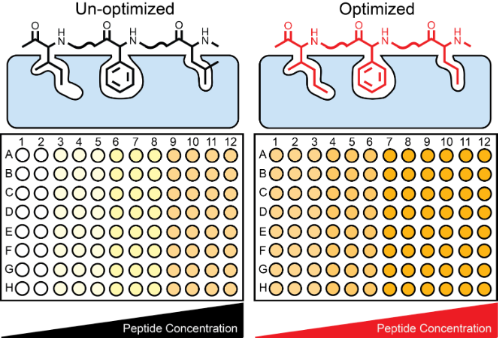
- the CSP signal that they produce (CSP1 and CSP2, Figure 1) and their cognate receptors (ComD1 and ComD2, respectively), with minimal cross-talk between the groups [28]. The two CSP signals share approximately 50% homology and differ mainly in hydrophobic residues in the central region of the peptides
- for ComD1 binding [19]. Moreover, three of these positions, 4, 7 and 8, were suggested by Johnsborg et al. to confer specificity between the ComD receptors [29]. Therefore, in this work, we aimed to define the hydrophobic pockets within the ComD1 receptor that are occupied by the hydrophobic residues
- peptide to assess the occupancy level and degree of specificity. Since no structural information is available for the ComD receptors, we chose to assess the ComD1 binding pocket by synthesizing a set of CSP1 analogs bearing highly conservative point mutation in key hydrophobic positions (4, 7, 8, 11, 12


Synthesis and photophysical studies of a multivalent photoreactive RuII-calix[4]arene complex bearing RGD-containing cyclopentapeptides
Beilstein J. Org. Chem. 2018, 14, 1758–1768, doi:10.3762/bjoc.14.150
- functionalized [54][55][56]. It is noteworthy that the calix[4]arene skeleton has been already exploited for the development of multivalent glyco- and peptidocalixarenes that can be recognized by cell-membrane receptors [57][58][59] and of calixarene derivatives able to specifically target membrane proteins
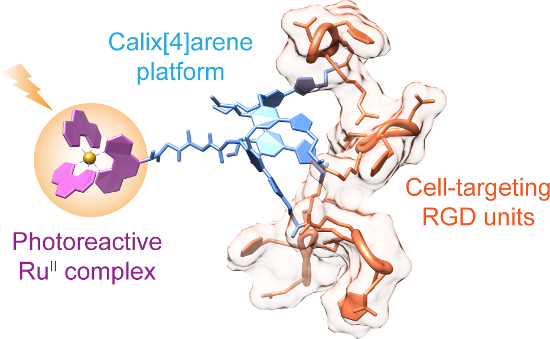
- that calixarenes themselves display antibacterial, antiviral, and anticancer properties [64]. Herein, we describe the synthesis of a multivalent phototherapeutic agent designed in order to specifically target membrane receptors involved in the angiogenesis process. The multivalent system is composed of





Host–guest complexes of conformationally flexible C-hexyl-2-bromoresorcinarene and aromatic N-oxides: solid-state, solution and computational studies
Beilstein J. Org. Chem. 2018, 14, 1723–1733, doi:10.3762/bjoc.14.146
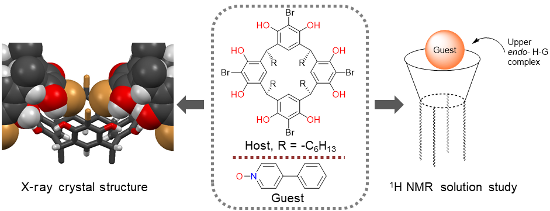
- , aiding in the binding of polar guests such as N-oxides. Keywords: aromatic N-oxides; C–H···π Interactions; ditopic receptors; endo/exo complexation; host–guest chemistry; resorcinarenes; Introduction Resorcinarenes are macrocyclic compounds with a bowl-shaped cavity stabilised by circular
- intramolecular O···H–O hydrogen bonds (HBs) [1][2]. The combination of their confined cavity and conformational flexibility has driven the interest in these synthetic receptors [3], a subclass of calixarenes [4], for a wide range of applications in fields such as catalysis [5][6][7][8][9], sensors [10][11


Drug targeting to decrease cardiotoxicity – determination of the cytotoxic effect of GnRH-based conjugates containing doxorubicin, daunorubicin and methotrexate on human cardiomyocytes and endothelial cells
Beilstein J. Org. Chem. 2018, 14, 1583–1594, doi:10.3762/bjoc.14.136
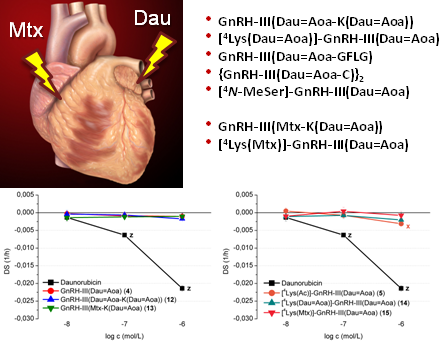
- potentially increases the tumor selectivity of drugs and decreases their cardiotoxicity. Increased expression of gonadotropin-releasing hormone (GnRH) receptors on the surface of tumor cells has been reported. Thus, the attachment of the aforementioned chemotherapeutic drugs to GnRH-based peptides may result
- the first step in the hypothalamus-pituitary-gonadal axis, which plays an important role in reproduction [1]. It has been reported that gonadotropin-releasing hormone receptors (GnRH-Rs) are highly expressed on the surface of tumor cells, especially in gynaecological malignant tumors (breast, ovarian
- . Small peptides that recognize target receptors on tumor cells might be suitable targeting moieties for this purpose. Hormone peptides, in particular, GnRH and somatostatin derivatives that possess antiproliferative effect on their own, are among the best candidates as homing peptides [10]. A.V. Schally


A conformationally adaptive macrocycle: conformational complexity and host–guest chemistry of zorb[4]arene
Beilstein J. Org. Chem. 2018, 14, 1570–1577, doi:10.3762/bjoc.14.134
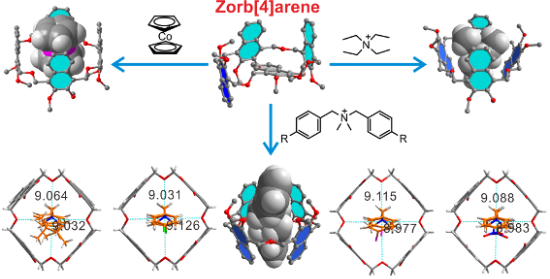
- , Wuhan, 430079, China 10.3762/bjoc.14.134 Abstract Large amplitude conformational change is one of the features of biomolecular recognition and is also the basis for allosteric effects and signal transduction in functional biological systems. However, synthetic receptors with controllable conformational
- binding behavior of ZB4 and lays the basis for the construction of stimuli-responsive materials with ZB4 as a major component. Keywords: conformations; host–guest chemistry; macrocycles; supramolecular chemistry; zorb[4]arene; Introduction Macrocyclic receptors are the principal workhorses used in
- [15][16] and signal transduction [17] observed with bioreceptors. However, similar conformationally adaptive synthetic macrocyclic receptors are relatively rare in the literature [18][19][20][21][22][23]. During the last five years, we have developed two classes of macrocyclic receptors with


Design and biological characterization of novel cell-penetrating peptides preferentially targeting cell nuclei and subnuclear regions
Beilstein J. Org. Chem. 2018, 14, 1378–1388, doi:10.3762/bjoc.14.116
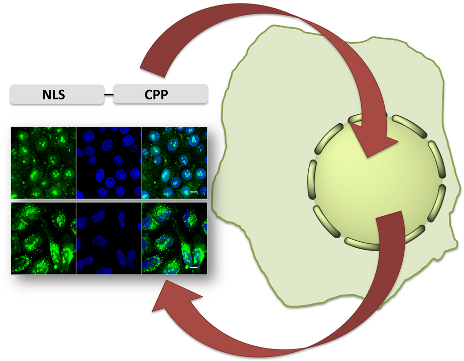
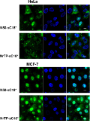
- molecules is regulated, separates the nucleus from the cytosol. Macromolecules, like proteins, gain access to the nucleus by recognition of their nuclear localization sequences (NLS) by NLS-receptors, and following energy-dependent uptake processes. Several such natural occurring protein-derived NLS have



The first Pd-catalyzed Buchwald–Hartwig aminations at C-2 or C-4 in the estrone series
Beilstein J. Org. Chem. 2018, 14, 998–1003, doi:10.3762/bjoc.14.85

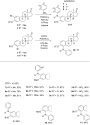
- estrogen receptors (ERα and ERβ) [28]. Certain derivatives of 2- or 4-aminoestrone or their 3-methyl ether possess diverse biological activities, including enzyme inhibitory or antiproliferative properties [1][2][3][29][30]. The 17β-HSD1 enzyme is responsible for the reduction of estrone into 17β-estradiol


On the design principles of peptide–drug conjugates for targeted drug delivery to the malignant tumor site
Beilstein J. Org. Chem. 2018, 14, 930–954, doi:10.3762/bjoc.14.80
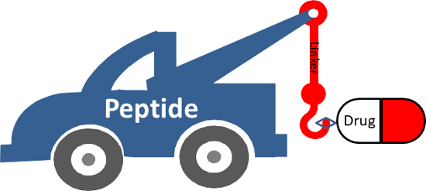
- diminishing expressed nucleoside receptors responsible for the cell uptake of gemcitabine [6]. Additionally, chemotherapy with anticancer agents is often hampered by their poor aqueous solubility, low oral bioavailability and metabolic instability. These drawbacks are linked to the unfavorable ADME
- exploited for developing targeted cytotoxic agents: Dysregulation of translation initiation factors and regulators [14]. Mutations in epigenetic regulatory genes [15]. Overexpression of surface receptors like HER2R [16], folate receptor [17], GnRH receptor [18][19] and amino acid transporters [20
- , present on the cell surface of the targeted tissues and not within their cytosol or nucleus (i.e., steroid receptors [33]). The selected receptor should be uniquely expressed or overexpressed on cancer cells (usually 3-fold or higher in comparison with normal cells). Additionally, it should be expressed


Development of novel cyclic NGR peptide–daunomycin conjugates with dual targeting property
Beilstein J. Org. Chem. 2018, 14, 911–918, doi:10.3762/bjoc.14.78
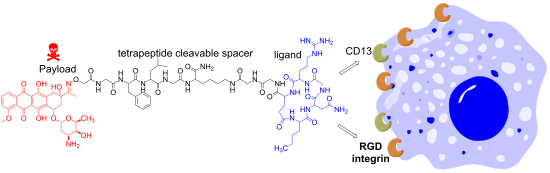
- receptors are highly expressed on cancer cells/tissues. NGR (Asn-Gly-Arg) motif-containing peptides identified by phage display are suitable candidates for selective drug delivery. NGR peptides bind to CD13-receptors on tumor cells and tumor related angiogenic blood vessels [1][2]. CD13 is a transmembrane
- ratio of 3:1 after hydrolysis [5][6][7][8][9][10][11]. IsoDGR peptides are bound to RGD-integrin receptors with high affinity [12][13][14]. Due to their function in tumor proliferation, metastasis and angiogenesis, integrin receptors are also promising targets for cancer therapy. Thus, NGR-peptide
- in vitro antitumor activity of the conjugates. We believe that the measurement of binding affinity on isolated receptors, that was not task of this experiment, could not explain properly the efficacies and selectivity. The receptor profile of both cell types are very complex. HT-1080 contain


Synthesis and in vitro biochemical evaluation of oxime bond-linked daunorubicin–GnRH-III conjugates developed for targeted drug delivery
Beilstein J. Org. Chem. 2018, 14, 756–771, doi:10.3762/bjoc.14.64
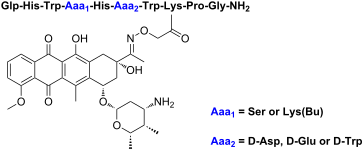
- Debrecen, 4032 Debrecen, Hungary 10.3762/bjoc.14.64 Abstract Gonadotropin releasing hormone-III (GnRH-III), a native isoform of the human GnRH isolated from sea lamprey, specifically binds to GnRH receptors on cancer cells enabling its application as targeting moieties for anticancer drugs. Recently, we
- liver lysosomal homogenate have been performed. All derivatives showed high binding affinities to GnRH receptors and displayed in vitro cytostatic effects on HT-29 and MCF-7 cancer cells with IC50 values in a low micromolar range. Moreover, we found that the release of the active drug metabolite and the
- chemotherapeutics. A promising treatment option to overcome these drawbacks can be targeted tumor therapy. This approach is based on the fact that receptors for many regulatory ligands such as peptide hormones are overexpressed on the surface of various cancer cells including gonadotropin-releasing hormone



Synthesis of a sucrose-based macrocycle with unsymmetrical monosaccharides "arms"
Beilstein J. Org. Chem. 2018, 14, 634–641, doi:10.3762/bjoc.14.50

- ; Introduction Chiral macrocyclic compounds play an important role in supramolecular and biological systems [1][2]. Many of them serve as convenient receptors for cations [3], anions [4], ion pairs [5], neutral molecules [6] etc. Binaphthols [7][8][9], amino acids [10], chiral diamines [11][12], carbohydrates


Diastereoselective auxiliary- and catalyst-controlled intramolecular aza-Michael reaction for the elaboration of enantioenriched 3-substituted isoindolinones. Application to the synthesis of a new pazinaclone analogue
Beilstein J. Org. Chem. 2018, 14, 593–602, doi:10.3762/bjoc.14.46

- sedative-hypnotic activities used for the treatment of anxiety by acting as partial agonists at GABAA (γ-aminobutyric acid type A) benzodiazepine receptors [17]. All these studies have highlighted a strong correlation between the compound pharmacological activities and the absolute configurations of their
- agonist at GABAA (γ-aminobutyric acid type A) benzodiazepine receptors [17]. In order to circumvent any hydrolysis of the ketal group during the preparation of the starting benzamide (see Supporting Information File 1), the synthesis of intermediate 24 was performed according another pathway depicted in
- acid type A) benzodiazepine-receptors. Various functionalized isoindolinones were prepared in good yields and diastereomeric excesses by intramolecular aza-Michael reactions using a double stereo-induction approach. The combined use of selected cinchoninium salts as phase-transfer catalysts and of


Synthesis and biological evaluation of RGD and isoDGR peptidomimetic-α-amanitin conjugates for tumor-targeting
Beilstein J. Org. Chem. 2018, 14, 407–415, doi:10.3762/bjoc.14.29
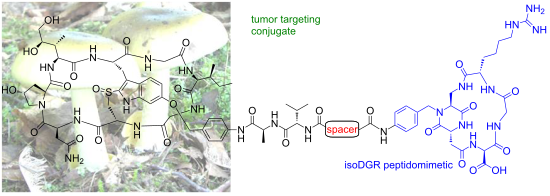
- receptors. Inhibition of biotinylated vitronectin binding to αvβ3 receptor. Evaluation of anti-proliferative activity of α-amanitin and α-amanitin conjugates 7–11 in U-87, MDA-MB-468 and A549. Competition experiments of conjugates 10 and 11 in the presence of a 50-fold excess of cilengitide in U-87 and MDA


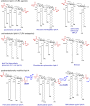
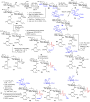
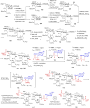
Aminosugar-based immunomodulator lipid A: synthetic approaches
Beilstein J. Org. Chem. 2018, 14, 25–53, doi:10.3762/bjoc.14.3
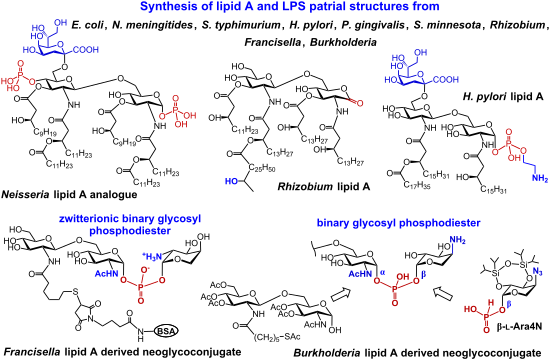
- . The receptors of the innate immune system can detect particular components present in bacteria, viruses or fungi which are designated as “pathogen associated molecular patterns” (PAMPs) [1]. These receptors, termed pattern recognition receptors (PRRs), are able of sensing and responding to PAMPs. The
- activated by the intracellular Gram-negative bacteria and largely contribute to development of endotoxic shock [70][71]. Biochemical studies revealed that caspase-4/11, which mediate inflammatory cell death by pyroptosis, are LPS receptors themselves [72][73]. Due to considerable micro-heterogeneity of the






Microfluidic radiosynthesis of [18F]FEMPT, a high affinity PET radiotracer for imaging serotonin receptors
Beilstein J. Org. Chem. 2017, 13, 2922–2927, doi:10.3762/bjoc.13.285
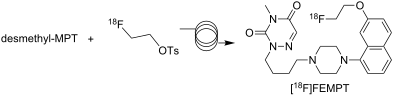
- supersensitivity. Significant research has been directed at the differences between agonist and antagonist binding to 5-HT1A receptors in Alzheimer's disease [10] and this interest has led to the development of a high-resolution in vivo atlas for four of the human brain's serotonin receptors and transporters [11
- -fluoroethane in the presence of K2CO3 (Scheme 1 and Supporting Information File 1). The in vitro binding assays to establish the potency and selectivity of FEMPT towards 5-HT1AR and various other biogenic amines, brain receptors, and transporters were evaluated by the National Institute of Mental Health
- Psychoactive Drug Screening Program (NIMH-PDSP). FEMPT shows 0.2 nM binding affinity (Ki) to 5-HT1AR. The next closest bindings for MPT are Sigma2 PC12, H1, 5-HT7, and 5-HT1B (Table 1) and are >50 times higher than 5-HT1AR. The Ki values for several other brain receptors and transporters were low (0.1 to 10 μM


Position-dependent impact of hexafluoroleucine and trifluoroisoleucine on protease digestion
Beilstein J. Org. Chem. 2017, 13, 2869–2882, doi:10.3762/bjoc.13.279
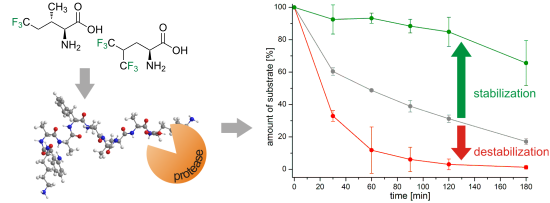
- strong, short C–F bonds and perturb the acidity and basicity of adjacent functional groups. Moreover, these changes may strongly influence hydrogen bonding and electrostatic interactions that are crucial for binding to receptors or, in context of protease stability, enzymes. Thus, when introduced in the





