


Search results
Search for "C–N bond" in Full Text gives 199 result(s) in Beilstein Journal of Organic Chemistry.
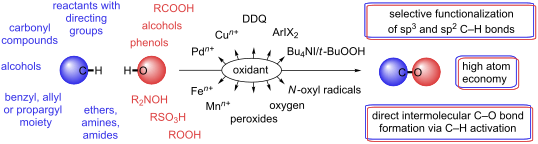
Cross-dehydrogenative coupling for the intermolecular C–O bond formation
- Igor B. Krylov,
- Vera A. Vil’ and
- Alexander O. Terent’ev
Beilstein J. Org. Chem. 2015, 11, 92–146, doi:10.3762/bjoc.11.13
- compounds [15], the Pd(II)-catalyzed oxidative C–C, C–O, and C–N bond formation [3], the transition metal-catalyzed etherification of unactivated C–H bonds [19], the Pd(II)-catalyzed oxidative functionalization at the allylic position of alkenes [20][21], the oxidative functionalization catalyzed by copper

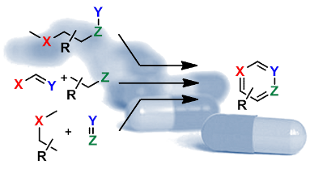
Graphical Abstract

Scheme 1: Cross-dehydrogenative coupling.

Scheme 2: Cross-dehydrogenative C–O coupling.

Scheme 3: Regioselective ortho-acetoxylation of meta-substituted arylpyridines and N-arylamides.
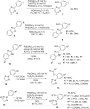
Scheme 4: ortho-Acyloxylation and alkoxylation of arenes directed by pyrimidine, benzoxazole, benzimidazole a...

Scheme 5: Cu(OAc)2/AgOTf/O2 oxidative system in the ortho-alkoxylation of arenes.
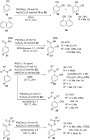
Scheme 6: Pd(OAc)2/persulfate oxidative system in the ortho-alkoxylation and acetoxylation of arenes with nit...
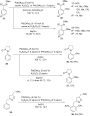
Scheme 7: ortho-Acetoxylation and methoxylation of O-methyl aryl oximes, N-phenylpyrrolidin-2-one, and (3-ben...

Scheme 8: Ruthenium-catalyzed ortho-acyloxylation of acetanilides.

Scheme 9: Acetoxylation and alkoxylation of arenes with amide directing group using Pd(OAc)2/PhI(OAc)2 oxidat...

Scheme 10: Alkoxylation of azoarenes, 2-aryloxypyridines, picolinamides, and N-(1-methyl-1-(pyridin-2-yl)ethyl...

Scheme 11: Acetoxylation of compounds containing picolinamide and quinoline-8-amine moieties using the Pd(OAc)2...

Scheme 12: (CuOH)2CO3 catalyzed oxidative ortho-etherification using air as oxidant.

Scheme 13: Copper-catalyzed aerobic alkoxylation and aryloxylation of arenes containing pyridine-N-oxide moiet...

Scheme 14: Cobalt-catalyzed aerobic alkoxylation of arenes and alkenes containing pyridine N-oxide moiety.

Scheme 15: Non-symmetric double-fold C–H ortho-acyloxylation.

Scheme 16: N-nitroso directed ortho-alkoxylation of arenes.

Scheme 17: Selective alkoxylation and acetoxylation of alkyl groups.

Scheme 18: Acetoxylation of 2-alkylpyridines and related compounds.
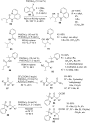
Scheme 19: Acyloxylation and alkoxylation of alkyl fragments of substrates containing amide or sulfoximine dir...

Scheme 20: Palladium-catalyzed double sp3 C–H alkoxylation of N-(quinolin-8-yl)amides for the synthesis of sym...

Scheme 21: Copper-catalyzed acyloxylation of methyl groups of N-(quinolin-8-yl)amides.

Scheme 22: One-pot acylation and sp3 C–H acetoxylation of oximes.

Scheme 23: Possible mechanism of oxidative esterification catalyzed by N-heterocyclic nucleophilic carbene.

Scheme 24: Oxidative esterification employing stoichiometric amounts of aldehydes and alcohols.

Scheme 25: Selective oxidative coupling of aldehydes with alcohols in the presence of amines.

Scheme 26: Iodine mediated oxidative esterification.

Scheme 27: Oxidative C–O coupling of benzyl alcohols with methylarenes under the action of Bu4NI/t-BuOOH syste...

Scheme 28: Oxidative coupling of methyl- and ethylarenes with aromatic aldehydes under the action of Bu4NI/t-B...

Scheme 29: Cross-dehydrogenative C–O coupling of aldehydes with t-BuOOH in the presence of Bu4NI.

Scheme 30: Bu4NI-catalyzed α-acyloxylation reaction of ethers and ketones with aldehydes and t-BuOOH.

Scheme 31: Oxidative coupling of aldehydes with N-hydroxyimides and hexafluoroisopropanol.

Scheme 32: Oxidative coupling of alcohols with N-hydroxyimides.

Scheme 33: Oxidative coupling of aldehydes and primary alcohols with N-hydroxyimides using (diacetoxyiodo)benz...

Scheme 34: Proposed mechanism of the oxidative coupling of aldehydes and N-hydroxysuccinimide under action of ...

Scheme 35: Oxidative coupling of aldehydes with pivalic acid (172).

Scheme 36: Oxidative C–O coupling of aldehydes with alkylarenes using the Cu(OAc)2/t-BuOOH system.

Scheme 37: Copper-catalyzed acyloxylation of C(sp3)-H bond adjacent to oxygen in ethers using benzyl alcohols.

Scheme 38: Oxidative C–O coupling of aromatic aldehydes with cycloalkanes.

Scheme 39: Ruthenium catalyzed cross-dehydrogenative coupling of primary and secondary alcohols.

Scheme 40: Cross-dehydrogenative C–O coupling reactions of β-dicarbonyl compounds with sulfonic acids, acetic ...

Scheme 41: Acyloxylation of ketones, aldehydes and β-dicarbonyl compounds using carboxylic acids and Bu4NI/t-B...

Scheme 42: Acyloxylation of ketones using Bu4NI/t-BuOOH system.

Scheme 43: Cross-dehydrogenative C–O coupling of β-dicarbonyl compounds and their heteroanalogues with N-hydro...

Scheme 44: Cross-dehydrogenative C–O coupling of β-dicarbonyl compounds and their heteroanalogues with t-BuOOH....

Scheme 45: Oxidative C–O coupling of 2,6-dialkylphenyl-β-keto esters and thioesters with tert-butyl hydroxycar...

Scheme 46: α’-Acyloxylation of α,β-unsaturated ketones using KMnO4.

Scheme 47: Possible mechanisms of the acetoxylation at the allylic position of alkenes by Pd(OAc)2.

Scheme 48: Products of the oxidation of terminal alkenes by Pd(II)/AcOH/oxidant system.

Scheme 49: Acyloxylation of terminal alkenes with carboxylic acids.

Scheme 50: Synthesis of linear E-allyl esters by cross-dehydrogenative coupling of terminal alkenes wih carbox...

Scheme 51: Pd(OAc)2-catalyzed acetoxylation of Z-vinyl(triethylsilanes).

Scheme 52: α’-Acetoxylation of α-acetoxyalkenes with copper(II) chloride in acetic acid.

Scheme 53: Oxidative acyloxylation at the allylic position of alkenes and at the benzylic position of alkylare...

Scheme 54: Copper-catalyzed alkoxylation of methylheterocyclic compounds using di-tert-butylperoxide as oxidan...

Scheme 55: Oxidative C–O coupling of methylarenes with β-dicarbonyl compounds or phenols.

Scheme 56: Copper-catalyzed esterification of methylbenzenes with cyclic ethers and cycloalkanes.

Scheme 57: Oxidative C–O coupling of carboxylic acids with toluene catalyzed by Pd(OAc)2.

Scheme 58: Oxidative acyloxylation at the allylic position of alkenes with carboxylic acids using the Bu4NI/t-...

Scheme 59: Cross-dehydrogenative C–O coupling of carboxylic acids with alkylarenes using the Bu4NI/t-BuOOH sys...

Scheme 60: Oxidative C–O cross-coupling of methylarenes with ethyl or isopropylarenes.

Scheme 61: Phosphorylation of benzyl C–H bonds using the Bu4NI/t-BuOOH oxidative system.

Scheme 62: Selective C–H acetoxylation of 2,3-disubstituted indoles.

Scheme 63: Acetoxylation of benzylic position of alkylarenes using DDQ as oxidant.

Scheme 64: C–H acyloxylation of diarylmethanes, 3-phenyl-2-propen-1-yl acetate and dimethoxyarene using DDQ.

Scheme 65: Cross-dehydrogenative C–O coupling of 1,3-diarylpropylenes and 1,3-diarylpropynes with alcohols.

Scheme 66: One-pot azidation and C–H acyloxylation of 3-chloro-1-arylpropynes.

Scheme 67: Cross-dehydrogenative C–O coupling of 1,3-diarylpropylenes, (E)-1-phenyl-2-isopropylethylene and is...

Scheme 68: Cross-dehydrogenative C–O coupling of alkylarenes and related compounds with N-hydroxyphthalimide.

Scheme 69: Acetoxylation at the benzylic position of alkylarenes mediated by N-hydroxyphthalimide.

Scheme 70: C–O coupling of methylarenes with aromatic carboxylic acids employing the NaBrO3/NaHSO3 system.

Scheme 71: tert-Butyl peroxidation of allyl, propargyl and benzyl ethers catalyzed by Fe(acac)3.

Scheme 72: Cross-dehydrogenative C–O coupling of ethers with carboxylic acids mediated by Bu4NI/t-BuOOH system....

Scheme 73: Oxidative acyloxylation of dimethylamides and dioxane with 2-aryl-2-oxoacetic acids accompanied by ...

Scheme 74: tert-Butyl peroxidation of N-benzylamides and N-allylbenzamide using the Bu4NI/t-BuOOH system.

Scheme 75: Cross-dehydrogenative C–O coupling of aromatic carboxylic acids with ethers using Fe(acac)3 as cata...

Scheme 76: Cross-dehydrogenative C–O coupling of cyclic ethers with 2-hydroxybenzaldehydes using iron carbonyl...
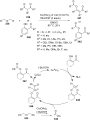
Scheme 77: Cross-dehydrogenative C–O coupling of ethers with β-dicarbonyl compounds and phenols using copper c...

Scheme 78: Cross-dehydrogenative C–O coupling of 2-hydroxybenzaldehyde with dioxane catalyzed by Cu2(BPDC)2(BP...

Scheme 79: Ruthenium chloride-catalyzed acyloxylation of β-lactams.

Scheme 80: Ruthenium-catalyzed tert-butyl peroxydation amides and acetoxylation of β-lactams.

Scheme 81: PhI(OAc)2-mediated α,β-diacetoxylation of tertiary amines.

Scheme 82: Electrochemical oxidative methoxylation of tertiary amines.

Scheme 83: Cross-dehydrogenative C–O coupling of ketene dithioacetals with carboxylic acids in the presence of...

Scheme 84: Cross-dehydrogenative C–O coupling of enamides with carboxylic acids using iodosobenzene as oxidant....

Scheme 85: Oxidative alkoxylation, acetoxylation, and tosyloxylation of acylanilides using PhI(O(O)CCF3)2 in t...

Scheme 86: Proposed mechanism of the oxidative C–O coupling of actetanilide with O-nucleophiles in the presenc...

Scheme 87: Three-component coupling of aldehydes, anilines and alcohols involving oxidative intermolecular C–O...

Scheme 88: Oxidative coupling of phenols with alcohols.

Scheme 89: 2-Acyloxylation of quinoline N-oxides with arylaldehydes in the presence of the CuOTf/t-BuOOH syste...

Scheme 90: Cross-dehydrogenative C–O coupling of azoles with primary alcohols.

Scheme 91: Oxidation of dipyrroles to dipyrrins and subsequent oxidative alkoxylation in the presence of Na3Co...

Scheme 92: Oxidative dehydrogenative carboxylation of alkanes and cycloalkanes to allylic esters.

Scheme 93: Pd-catalyzed acetoxylation of benzene.
Formal total syntheses of classic natural product target molecules via palladium-catalyzed enantioselective alkylation
- Yiyang Liu,
- Marc Liniger,
- Ryan M. McFadden,
- Jenny L. Roizen,
- Jacquie Malette,
- Corey M. Reeves,
- Douglas C. Behenna,
- Masaki Seto,
- Jimin Kim,
- Justin T. Mohr,
- Scott C. Virgil and
- Brian M. Stoltz
Beilstein J. Org. Chem. 2014, 10, 2501–2512, doi:10.3762/bjoc.10.261

- groups have pursued its total synthesis [74][75][76][77], including a number of enantioselective syntheses [78][79][80][81][82]. In 2001, Magnus reported a total synthesis of rhazinilam in racemic form (Scheme 10) [83]. In their approach, the first retrosynthetic disconnection of the amide C–N bond in

Graphical Abstract
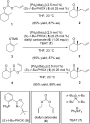
Scheme 1: Three classes of Pd-catalyzed enantioselective allylic alkylations.

Figure 1: Selected natural products from Thujopsis dolabrata.

Scheme 2: Srikrishna and Anebouselvy’s approach to (+)-thujopsene.

Scheme 3: Formal total synthesis of (−)-thujopsene.

Scheme 4: Renaud’s formal total synthesis of (−)-quinic acid.

Scheme 5: Formal total synthesis of (−)-quinic acid.

Scheme 6: Danishefsky’s approach to (±)-dysidiolide.

Scheme 7: Formal total synthesis of (−)-dysidiolide.

Scheme 8: Meyers’ approach to unnatural (+)-aspidospermine.

Scheme 9: Formal total synthesis of (−)-aspidospermine.

Scheme 10: Magnus’ approach to (±)-rhazinilam.

Scheme 11: Formal total synthesis of (+)-rhazinilam.

Scheme 12: Amat’s approach to (−)-quebrachamine.

Scheme 13: Formal total synthesis of (+)-quebrachamine.

Scheme 14: Pandey’s approach to (+)-vincadifformine.
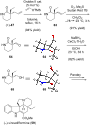
Scheme 15: Formal total synthesis of (−)-vincadifformine.

Scheme 16: Two generations of building blocks.
Derivatives of the triaminoguanidinium ion, 3. Multiple N-functionalization of the triaminoguanidinium ion with isocyanates and isothiocyanates
- Jan Szabo,
- Kerstin Karger,
- Nicolas Bucher and
- Gerhard Maas
Beilstein J. Org. Chem. 2014, 10, 2255–2262, doi:10.3762/bjoc.10.234
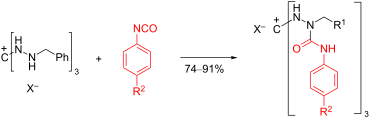
- Information File 1) reveals significant differences between the two structures. The C–N bond lengths of the guanidinium unit in 7a are equal (1.330(3)–1.333(3) Å) and indicate the full charge delocalization and partial double bond character of these bonds. In the neutral guanidine 8 this symmetry is lost; one

Graphical Abstract

Scheme 1: Conditions: a) benzaldehyde, ethanol/water, reflux, 1 h, 96% yield; b) H2, Pd/C (10%), MeOH, rt, 48...

Scheme 2: Carbamoylation of 1,2,3-tris(benzylamino)guanidinium salts 3 and 5-OTs.

Figure 1: Solid-state structure of 7a·3CH3CN. Left: Molecular structure with numbering of atoms. Right: N–H··...

Scheme 3: Deprotonation of 7a to yield the neutral guanidine derivative 8.

Figure 2: Solid-state structure of 8. Thermal displacement ellipsoids are drawn at the 20% probability level....

Scheme 4: Sulfonylcarbamoylation of salt 3.

Figure 3: Hydrogen-bonded one-dimensional network of guanidine 8 in the solid state. The intramolecular N9···...

Scheme 5: Reaction of 1,2,3-trisbenzylaminoguanidinium chloride (3) with aryl isothiocyanates.

Figure 4: Solid-state structure of 10b. Thermal displacement ellipsoids are drawn at the 30% probability leve...

Scheme 6: Proposed mechanism of the formation of 10 and 11.
Exploration of C–H and N–H-bond functionalization towards 1-(1,2-diarylindol-3-yl)tetrahydroisoquinolines
- Michael Ghobrial,
- Marko D. Mihovilovic and
- Michael Schnürch
Beilstein J. Org. Chem. 2014, 10, 2186–2199, doi:10.3762/bjoc.10.226

- wanted to use direct functionalization either via C–H activation or cross dehydrogenative coupling for C–C-bond-forming reactions avoiding the use of two prefunctionalized building blocks. Naturally, C–N-bond formation should proceed via Buchwald–Hartwig coupling. The target molecules can be considered

Graphical Abstract

Figure 1: General structures of biologically active dihydroisoquinolines, THIQs and 1,2-diarylindoles.

Scheme 1: Li’s THIQ indolation protocol.

Scheme 2: Possible strategies for the synthesis of target structure 1. Dashed arrows indicate literature-know...

Scheme 3: Nucleophilic substitution of DMEDA with 2-fluoro-3-iodopyridine (10).

Scheme 4: Decomposition of 1-(indol-3-yl)-THIQ 4d during N-arylation (monitored by GC–MS).

Scheme 5: Formation of byproduct 13 via benzylic oxidation.

Scheme 6: Routes towards 1,2-diarylindoles starting from indole; a: PhB(OH)2 (3 equiv), Pd(OAc)2 (5 mol %), A...

Scheme 7: Palladium-catalyzed C2-arylation attempt of 1-(1-phenylindol-3-yl)-N-Boc-THIQ.
Chemistry of polyhalogenated nitrobutadienes, 14: Efficient synthesis of functionalized (Z)-2-allylidenethiazolidin-4-ones
- Viktor A. Zapol’skii,
- Jan C. Namyslo,
- Mimoza Gjikaj and
- Dieter E. Kaufmann
Beilstein J. Org. Chem. 2014, 10, 1638–1644, doi:10.3762/bjoc.10.170

- -substituted anilines 16–18 two atropisomers were generated. This phenomenon is due to a less hindered rotation of the C–N bond of the former anilines (Figure 1). The steric hindrance is additionally forcing by the s-cis conformation of the nitrobutadiene moiety (cf. Figure 2). A DFT calculation of the energy

Graphical Abstract

Scheme 1: SNVin reactions of pentachloro-2-nitro-1,3-butadiene (1).

Scheme 2: Formation of thiazolidin-4-ones 7–19.

Figure 1: Hindered rotation in the case of ortho- or meta-substituted aniline precursors.

Figure 2: X-ray analysis of thiazolidin-4-one 11.

Scheme 3: Assumed mechanism for the formation of thiazolidin-4-ones 7–18.

Scheme 4: Substitution reactions of the precursors 3 and 5 with additional amines.

Scheme 5: Synthesis of 5-arylmethylidenethiazolidin-4-ones 22–26 and 1H-pyrazoles 27, 28.

Scheme 6: Assumed mechanism for the formation of 1H-pyrazole 27.

Scheme 7: Formation of ethyl propanoate 29 and subsequent reactions.
On the mechanism of photocatalytic reactions with eosin Y
- Michal Majek,
- Fabiana Filace and
- Axel Jacobi von Wangelin
Beilstein J. Org. Chem. 2014, 10, 981–989, doi:10.3762/bjoc.10.97
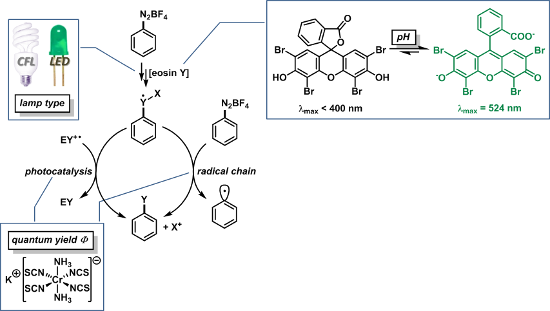
- phenanthrene synthesis [19]. A solution of o-biphenyldiazonium tetrafluoroborate in acetonitrile showed strong absorption between 400–500 nm with all light at the UV–vis edge at 400 nm being completely absorbed. This again indicates that direct photocleavage of the C–N bond might be operating. The cyclization
- Deronzier from 1984 [32]. The significant overlap of the absorption spectra of the arenediazonium salt recorded before and after the addition of eosin Y (Figure 4) suggests that direct photolysis of the C–N bond could account for the erosion of product yield in the catalytic process due to competitive
- heterolytic C–N bond cleavage toward highly reactive aryl cation species. The standard reaction conditions of many literature reports involve concentrations which are orders of magnitude higher than those suitable for absorption spectroscopy studies. This means that even very inefficient transitions (at

Graphical Abstract

Scheme 1: Oxidative quenching of eosin Y with arenediazonium salts and reactions of the resultant aryl radica...

Scheme 2: Proposed general reaction mechanism of eosin Y-catalyzed substitutions with arene diazonium salts.

Figure 1: UV–vis spectra of the photoborylation reaction mixture (RM).

Figure 2: Fluorescence spectra of the photoborylation reaction mixture (RM). Ex. = excitation wavelength.

Scheme 3: Acid–base behaviour of eosin Y.

Figure 3: UV–vis spectrum of p-bromobenzenediazonium tetrafluoroborate (pBrPhN2) and bispinacolato diboron (B2...

Scheme 4: Eosin Y-catalyzed and dye-free photolytic borylation.

Scheme 5: Eosin Y-catalyzed and dye-free reactions with ethyl propiolate.

Figure 4: UV–vis spectra of ortho-biphenyldiazonium tetrafluoroborate (biPhN2) in acetonitrile.
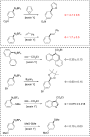
Scheme 6: Quantum yield determinations of selected visible-light-driven aromatic substitutions.
Addition of H-phosphonates to quinine-derived carbonyl compounds. An unexpected C9 phosphonate–phosphate rearrangement and tandem intramolecular piperidine elimination
- Łukasz Górecki,
- Artur Mucha and
- Paweł Kafarski
Beilstein J. Org. Chem. 2014, 10, 883–889, doi:10.3762/bjoc.10.85
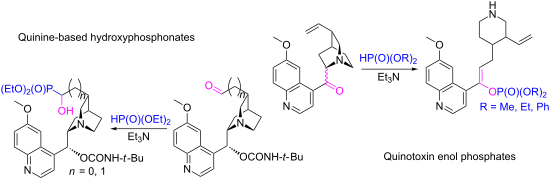
- C8 resonance signal was consequently shifted from 60 ppm to approximately 120 ppm. The aromatic system remained intact. These data suggest formation of the C8=C9 double bond in a cascade process with concomitant cleavage of the C–N bond that follows the phosphonate–phosphate rearrangement (Scheme 6

Graphical Abstract

Scheme 1: Quinine (1) and O-9-t-butylcarbamoylquinine (2) as the substrates for oxidation of the C9 hydroxy a...
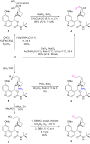
Scheme 2: Oxidation of the vinyl group of 9-O-tert-butylcarbamoylquinine to homologous aldehydes.
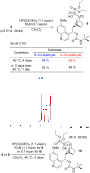
Scheme 3: Addition of diethyl phosphite to aldehydes obtained in oxidation of the vinyl group.

Scheme 4: Oxidation of quinine to quininone and quinidinone and addition of phosphites to the ketones yieldin...

Scheme 5: Spectroscopic features that confirmed the structure of the phosphate ester product of rearrangement...

Scheme 6: Tentative mechanism of the phosphonate–phosphate rearrangement associated with tandem quinuclidine ...
Domino reactions of 2H-azirines with acylketenes from furan-2,3-diones: Competition between the formation of ortho-fused and bridged heterocyclic systems
- Alexander F. Khlebnikov,
- Mikhail S. Novikov,
- Viktoriia V. Pakalnis,
- Roman O. Iakovenko and
- Dmitry S. Yufit
Beilstein J. Org. Chem. 2014, 10, 784–793, doi:10.3762/bjoc.10.74

- the formation of dihydropyrazines 11 via azirine–nitrile ylide isomerization cannot compete with reaction of azirines with acylketenes (Figure 2). Dimerization of azirine 2a via nucleophilic attack of the nitrogen lone pair of one azirine molecule on the C=N bond of another is also energetically
- unfavourable (ΔG# = 53.6 kcal·mol−1, 353 K, benzene (PCM)). In contrast to this, the nucleophilic attack of the nitrogen lone pair of azirine 2 on the C=N bond of protonated azirine 14 and consequent cyclization to dihydropyrazine 15 proceeds via quite low barriers (Figure 4). By comparison of the data

Graphical Abstract

Scheme 1: Reactions of furan-2,3-diones 1 and azirines 2.

Figure 1: Molecular structures of compounds 3а, 4b.

Scheme 2: The route of formation of compounds 3 and possible intermediates in route to compounds 4 and 5.

Figure 2: Energy profiles for the reactions of azirines 2a,c and acylketene 6a, as well as acylketene 6a with...

Scheme 3: Possible intermediates in routes to compounds 4 and 5.

Figure 3: Energy profiles for the reactions of dihydropyrazine 11a with acylketene 6a, as well as acylketene ...

Figure 4: Energy profiles for the reactions of azirines 2a,c with protonated azirines 14a,c. Relative free en...

Scheme 4: Isodesmic equation for evaluation of relative basicity of azirines 2c,a.

Scheme 5: Reaction of furandione 1a with azirine 2d.

Figure 5: Molecular structure of compound 17.

Scheme 6: Reaction of furandione 1d with azirine 2a.

Scheme 7: Reactions of compounds 3d and 18a with methanol.
Use of activated enol ethers in the synthesis of pyrazoles: reactions with hydrazine and a study of pyrazole tautomerism
- Denisa Tarabová,
- Stanislava Šoralová,
- Martin Breza,
- Marek Fronc,
- Wolfgang Holzer and
- Viktor Milata
Beilstein J. Org. Chem. 2014, 10, 752–760, doi:10.3762/bjoc.10.70

- second half of the molecule has two equivalent ester moieties and a C=N bond instead of a C=C bond leading to an sp3 hybridized C-atom (δ 54.8 ppm) between the equivalent methyl ester groups. The two different N-atoms in B have 15N chemical shifts of −48.1 ppm (C=N) and −211.7 ppm (=N–NH) (Figure 6

Graphical Abstract

Scheme 1: Preparation of enol ethers.

Scheme 2: Reaction of enol ethers with hydrazine hydrate.

Scheme 3: Pyrazoles 5.

Figure 1: Tautomers of 5a.

Figure 2: Tautomers of 5b (R = Me), 5c (R = Et).

Figure 3: Tautomers of 5b (R = Me), 5c (R = Et).

Figure 4: Tautomers of 5d.

Scheme 4: Reactions of hydrazine hydrate with dialkyl alkoxymethylidenemalonates.
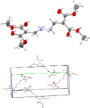
Figure 5: Crystal structure and crystal packing of compound 6a.

Figure 6: Key 1H (red), 13C (black) and 15N (blue) NMR chemical shifts (δ, ppm) in isomers A and B of compoun...
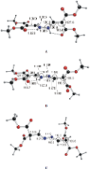
Figure 7: DFT optimized isomers of compound 6a. (Distances are in Å, angles are in degrees.)
Chromatographically separable rotamers of an unhindered amide
- Mario Geffe,
- Lars Andernach,
- Oliver Trapp and
- Till Opatz
Beilstein J. Org. Chem. 2014, 10, 701–706, doi:10.3762/bjoc.10.63
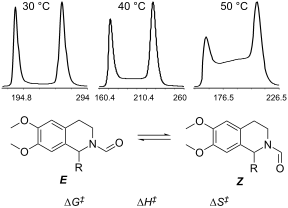
- conformer, a potential energy surface (PES) scan for the rotation around the C–N bond in steps of 10° was done. This scan provided two local minima as well as two maxima (Figure 5). The asymmetric peak shape is caused by the inversion of the pyramidal nitrogen between = 110° and = 120° as well as = 280
- , respectively. The geometries of the E- and Z-ground states of 4 and both transition states (TS1 and TS2) are shown in Figure 6 together with the dihedral angle O–C–N–C1 () and the C–N bond length. Both transition states show a single imaginary frequency (−280.8 cm−1 (TS1) and −364.5 cm−1 (TS2) in hexane and at
- −284.0 cm−1 (TS1) and −362.2 cm−1 (TS2) in the gas phase). This imaginary frequency belongs to the rotational vibration of the formyl hydrogen and the formyl oxygen along the reaction pathway for the E/Z isomerization of 4. In both transition states geometries, the C–N bond (143 pm) is significantly

Graphical Abstract

Scheme 1: Synthesis of formamide 4. Reagents and conditions: a) KHMDS, THF, −78 °C; then: NaBH4, MeOH, 63%. b...

Figure 1: Equilibration of the Z-rotamer of 4 at 293 K.

Figure 2: Equilibration of the E-rotamer of 4 at 293 K.

Figure 3: Elution profiles obtained by temperature-dependent DHPLC measurements of 4.

Figure 4: Eyring plot obtained by temperature dependent DHPLC measurements of 4.

Figure 5:
Potential energy surface scan graph for the dihedral angle O–C–N–C1 (![[Graphic 2]](/bjoc/content/inline/1860-5397-10-63-i3.png?max-width=637&scale=1.18182) ) in 4 (BP-D3/def2-SVP).
) in 4 (BP-D3/def2-SVP).

Figure 6: Energy differences and geometries for E- and Z-4 and both transition states (TS1 and TS2) in hexane...
Silver and gold-catalyzed multicomponent reactions
- Giorgio Abbiati and
- Elisabetta Rossi
Beilstein J. Org. Chem. 2014, 10, 481–513, doi:10.3762/bjoc.10.46
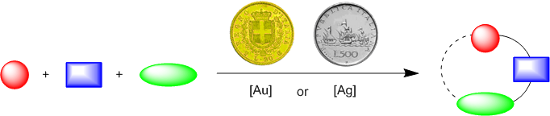
- 28, and the nucleophilic attack on the imine C=N bond could also be synchronized. The two proposed mechanisms are described in Scheme 20 and Scheme 21, respectively. The scope of these reactions has been examined with a wide range of substrates. Therefore, 2-alkynylbenzaldehydes can be functionalized

Graphical Abstract

Scheme 1: General reaction mechanism for Ag(I)-catalyzed A3-coupling reactions.

Scheme 2: A3-coupling reaction catalyzed by polystyrene-supported NHC–silver halides.

Figure 1: Various NHC–Ag(I) complexes used as catalysts for A3-coupling.

Scheme 3: Proposed reaction mechanism for NHC–AgCl catalyzed A3-coupling reactions.

Scheme 4: Liu’s synthesis of pyrrole-2-carboxaldehydes 4.

Scheme 5: Proposed reaction mechanism for Liu’s synthesis of pyrrole-2-carboxaldehydes 4.

Scheme 6: Gold-catalyzed synthesis of propargylamines 1.

Scheme 7: A3-coupling catalyzed by phosphinamidic Au(III) metallacycle 6.

Scheme 8: Gold-catalyzed KA2-coupling.

Scheme 9: A3-coupling applied to aldehyde-containing oligosaccharides 8.

Scheme 10: A3-MCR for the preparation of propargylamine-substituted indoles 9.

Scheme 11: A3-coupling interceded synthesis of furans 12.

Scheme 12: A3/KA2-coupling mediated synthesis of functionalized dihydropyrazoles 13 and polycyclic dihydropyra...

Scheme 13: Au(I)-catalyzed entry to cyclic carbamimidates 17 via an A3-coupling-type approach.

Scheme 14: Proposed reaction mechanism for the Au(I)-catalyzed synthesis of cyclic carbamimidates 17.

Figure 2: Chiral trans-1-diphenylphosphino-2-aminocyclohexane–Au(I) complex 20.

Scheme 15: A3-coupling-type synthesis of oxazoles 21 catalyzed by Au(III)–salen complex.

Scheme 16: Proposed reaction mechanism for the synthesis of oxazoles 21.

Scheme 17: Synthesis of propargyl ethyl ethers 24 by an A3-coupling-type reaction.

Scheme 18: General mechanism of Ag(I)-catalyzed MCRs of 2-alkynylbenzaldehydes, amines and nucleophiles.

Scheme 19: General synthetic pathway to 1,3-disubstituted-1,2-dihydroisoquinolines.

Scheme 20: Synthesis of 1,3-disubstituted-1,2-dihydroisoquinolines 29.

Scheme 21: Synthesis of 1,3-disubstituted-1,2-dihydroisoquinolines 35 and 36.

Scheme 22: Rh(II)/Ag(I) co-catalyzed synthesis of 1,3-disubstituted-1,2-dihydroisoquinolines 40.

Scheme 23: General synthetic pathway to 2-amino-1,2-dihydroquinolines.

Scheme 24: Synthesis of 2-amino-1,2-dihydroquinolines 47.

Scheme 25: Synthesis of tricyclic H-pyrazolo[5,1-a]isoquinoline 48.

Scheme 26: Synthesis of tricyclic H-pyrazolo[5,1-a]isoquinolines 48.

Scheme 27: Cu(II)/Ag(I) catalyzed synthesis of H-pyrazolo[5,1-a]isoquinolines 48.

Scheme 28: Synthesis of 2-aminopyrazolo[5,1-a]isoquinolines 53.

Scheme 29: Synthesis of 1-(isoquinolin-1-yl)guanidines 55.

Scheme 30: Ag(I)/Cu(I) catalyzed synthesis of 2-amino-H-pyrazolo[5,1-a]isoquinolines 58.

Scheme 31: Ag(I)/Ni(II) co-catalyzed synthesis of 3,4-dihydro-1H-pyridazino[6,1-a]isoquinoline-1,1-dicarboxyla...

Scheme 32: Ag(I) promoted activation of the α-carbon atom of the isocyanide group.

Scheme 33: Synthesis of dihydroimidazoles 65.

Scheme 34: Synthesis of oxazoles 68.

Scheme 35: Stereoselective synthesis of chiral butenolides 71.

Scheme 36: Proposed reaction mechanism for the synthesis of butenolides 71.

Scheme 37: Stereoselective three-component approach to pirrolidines 77 by means of a chiral auxiliary.

Scheme 38: Stereoselective three-component approach to pyrrolidines 81 and 82 by means of a chiral catalyst.

Scheme 39: Synthesis of substituted five-membered carbocyles 86.

Scheme 40: Synthesis of regioisomeric arylnaphthalene lactones.

Scheme 41: Enantioselective synthesis of spiroacetals 96 by Fañanás and Rodríguez [105].

Scheme 42: Enantioselective synthesis of spiroacetals 101 by Gong [106].

Scheme 43: Synthesis of polyfunctionalized fused bicyclic ketals 103 and bridged tricyclic ketals 104.

Scheme 44: Proposed reaction mechanism for the synthesis of ketals 103 and 104.

Scheme 45: Synthesis of β-alkoxyketones 108.

Scheme 46: Synthesis of N-methyl-1,4-dihydropyridines 112.

Scheme 47: Synthesis of tetrahydrocarbazoles 115–117.

Scheme 48: Plausible reaction mechanism for the synthesis of tetrahydrocarbazoles 115–117.

Scheme 49: Carboamination, carboalkoxylation and carbolactonization of terminal alkenes.

Scheme 50: Oxyarylation of alkenes with arylboronic acids and Selectfluor as reoxidant.

Scheme 51: Proposed reaction mechanism for oxyarylation of alkenes.

Scheme 52: Oxyarylation of alkenes with arylsilanes and Selectfluor as reoxidant.

Scheme 53: Oxyarylation of alkenes with arylsilanes and IBA as reoxidant.
A catalyst-free multicomponent domino sequence for the diastereoselective synthesis of (E)-3-[2-arylcarbonyl-3-(arylamino)allyl]chromen-4-ones
- Pitchaimani Prasanna,
- Pethaiah Gunasekaran,
- Subbu Perumal and
- J. Carlos Menéndez
Beilstein J. Org. Chem. 2014, 10, 459–465, doi:10.3762/bjoc.10.43
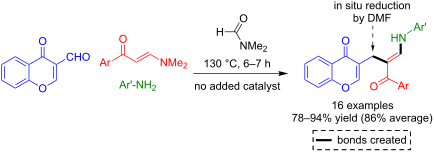
- and in a diastereoselective transformation. This transformation generates one C–C and one C–N bond and presumably proceeds via a reaction sequence comprising a Michael-type addition–elimination reaction, a nucleophilic attack of an enamine to a carbonyl reminiscent of one of the steps of the Bayllis
- transformation occurs via a domino sequence of reactions, which generates one C–C and one C–N bond. Presumably, this transformation proceeds via a reaction sequence comprising a Michael-type addition–elimination reaction, a nucleophilic attack of an enamine to a carbonyl, and a final deoxygenation step. We

Graphical Abstract

Scheme 1: Summary of the transformations involved in the synthesis of compounds 5, containing chromone and β-...

Scheme 2: Synthesis of compounds 5.

Figure 1: X-ray structure of compound 5h.

Scheme 3: Initial mechanistic proposal to explain the formation of compounds 5 that was ruled out by deuterat...

Scheme 4: Alternative mechanistic proposal based on a carbon monoxide-induced deoxygenation.
Substrate dependent reaction channels of the Wolff–Kishner reduction reaction: A theoretical study
- Shinichi Yamabe,
- Guixiang Zeng,
- Wei Guan and
- Shigeyoshi Sakaki
Beilstein J. Org. Chem. 2014, 10, 259–270, doi:10.3762/bjoc.10.21
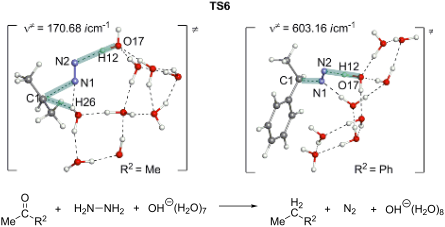
- , acetone and hydrazine molecules are distant. When they are close to each other, the geometry of the Me2(O=C)C....NH2–NH2 form was calculated in (ii). It is regarded as a Mulliken charge-transfer (CT) complex, because the C···N distance, 1.614 Å, is larger than the standard C–N bond length of 1.47 Å. The

Graphical Abstract

Scheme 1: The Wolff–Kishner (W-K) reduction. DEG, diethylene glycol (HO–C2H4–O–C2H4–OH), is usually used as a...

Scheme 2: Mechanism of the Wolff–Kishner reduction. The route (a) is taken from ref. [6] and (b) from refs. [5,7,8].

Scheme 3: An uncatalyzed (without base) Knoevenagel condensation in water. Experimental conditions and yields...
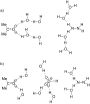
Scheme 4: Reaction models of neutral (a) and anionic (b) systems. Water molecules are linked to oxygen lone-p...
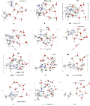
Figure 1: Geometric changes of the neutral Wolff–Kishner reduction reaction. The employed model is shown in Scheme 4a ...

Scheme 5: A CT complex between R1R2C=O and H2N–NH2 assisted by two hydrogen networks. R3–OH is an alcohol mol...

Figure 2: Energy changes of the neutral W-K reaction of acetone. Geometric changes are shown in Figure 1 and Figure S...
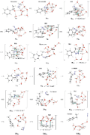
Figure 3: Geometric changes of the base-promoted Wolff–Kishner reduction reaction. The model employed is show...

Figure 4: Energy changes of the OH− containing W-K reaction of acetone calculated by B3LYP/6-311+G**. Geometr...

Scheme 6: The main part of TS6. The N1···H26 hydrogen bond is converted into the C1–H26 covalent bond.

Figure 5: A trans-diimine → propane conversion step corresponding to TS6 in Figure 3. The system is composed of trans...
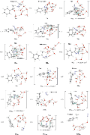
Figure 6: Geometric changes of the base-promoted Wolff–Kishner reduction reaction of acetophenone [Me–C(=O)–P...

Figure 7: Energy changes of the OHˉ containing W-K reaction of acetophenone. Geometric changes are shown in Figure 6....

Scheme 7: Elementary processes of the W-K reduction obtained by DFT calculations. From the diimine intermedia...
Studies on the interaction of isocyanides with imines: reaction scope and mechanistic variations
- Ouldouz Ghashghaei,
- Consiglia Annamaria Manna,
- Esther Vicente-García,
- Marc Revés and
- Rodolfo Lavilla
Beilstein J. Org. Chem. 2014, 10, 12–17, doi:10.3762/bjoc.10.3
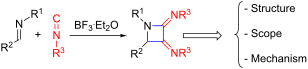
- involves a sequential double isocyanide incorporation into the C=N bond. The final step is a nucleophilic 4-exo-dig cyclization, and the anti addition modes likely lead to less stable stereoisomers which spontaneously isomerize to the observed compounds. Furthermore, we have determined the scope of the

Graphical Abstract

Scheme 1: Azetidine formation from the interaction of imines with isocyanides.

Scheme 2: Reaction conditions.

Figure 1: X-ray diffraction analysis of azetidine 3a.

Scheme 3: Stepwise mechanism for the formation of azetidine 3a.

Scheme 4: Manifold reaction mechanism.
Advancements in the mechanistic understanding of the copper-catalyzed azide–alkyne cycloaddition
- Regina Berg and
- Bernd F. Straub
Beilstein J. Org. Chem. 2013, 9, 2715–2750, doi:10.3762/bjoc.9.308
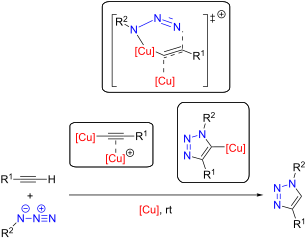
- as well. The C–N bond is formed concomitantly to the formation of a double bond between the copper ion and the C1 atom of the acetylide. This unusual six-membered copper(III) metallacycle then undergoes a transannular ring contraction to give the copper triazolide. The latter can be protonated to

Graphical Abstract

Scheme 1: Exemplary 1,3-dipolar cycloaddition of phenylacetylene with phenyl azide [6].

Scheme 2: CuAAC reaction of benzyl azide with (prop-2-yn-1-yloxy)benzene [12].

Scheme 3: Bioconjugation reaction of capsid-bound azide groups with alkynyl-functionalized dye molecules (cow...

Figure 1: Tris(triazolylmethyl)amine ligands for CuAAC applications in bioorganic chemistry: TBTA = tris[(1-b...

Figure 2: Derivatives of 2,2’-bipyridine and 1,10-phenanthroline, commonly used ligands in CuAAC reactions un...

Scheme 4: CuAAC reaction with copper(II) precursor salt and rate-accelerating monodentate phosphoramidite lig...

Scheme 5: Synthesis of 1-(adamant-1-yl)-1H-1,2,3-triazol-4-ylcarbonyl-Phe-Gly-OH by solid-supported Click cat...

Scheme 6: CuAAC reaction with re-usable copper(I)-tren catalyst [129].

Scheme 7: CuAAC test reaction with chlorido[tris(1-benzyl-1H-1,2,3-triazol-4-yl)methanol-κ3N3]copper(I) and a...

Scheme 8: CuAAC model reaction with [Cu2(μ-TBTA-κ4N2,N3,N3’,N3’’)2][BF4]2 [131].

Scheme 9: Application of a (2-aminoarenethiolato)copper(I) complex as homogeneous catalyst for the CuAAC test...

Scheme 10: Application of [CuBr(PPh3)3] as homogeneous catalyst for the CuAAC test reaction of benzyl azide wi...

Figure 3: Phosphinite and phosphonite copper(I) complexes presented by Díez-González [144].

Scheme 11: Effect of additives on the CuAAC test reaction with [(SIMes)CuCl] [149].

Scheme 12: Initiation of the catalytic cycle by formation of the copper acetylide intermediate from [(ICy)2Cu]...

Scheme 13: Early mechanistic proposal by Sharpless [12,42].

Scheme 14: Chemoselective synthesis of a 5-iodo-1,4-disubstituted 1,2,3-triazole [156].

Scheme 15: Mechanistic proposals for the copper-catalyzed azide–iodoalkyne cycloaddition [156].

Scheme 16: 1,3-Dipolar cycloaddition of 3-hexyne catalyzed by [(SIMes)CuBr] [146].

Scheme 17: Mechanistic picture for the cycloaddition of internal alkynes catalyzed by NHC-copper(I) complexes ...

Scheme 18: Catalytic cycle of the CuAAC reaction on the basis of the proposed mechanistic scheme by Fokin and ...

Figure 4: Schematic representation of the single crystal X-ray structures of copper(I) acetylide complexes [Cu...

Figure 5: Acetylide-bridged dicopper complexes with tris(heteroarylmethyl)amine ligand(s) as key intermediate...

Scheme 19: Off-cycle equilibrium between unreactive polymeric copper(I) acetylide species (right) and reactive...
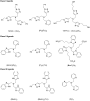
Figure 6: Categories of tris(heteroarylmethyl)amine ligands regarding their binding ability to copper(I) ions ...

Scheme 20: Mechanistic scheme for ligand-accelerated catalysis with tripodal tris(heteroarylmethyl)amine ligan...

Scheme 21: Synthesis of supposed intermediates in the CuAAC’s catalytic cycle [164,187].

Figure 7: Tetranuclear copper acetylide complexes as reported by Weiss (left) [176] and Tasker (middle) [185] and model...

Figure 8: Gibbs free energy diagram for the computed mechanistic pathway of the CuAAC reaction starting from ...

Figure 9: Energy diagram by Ahlquist and Fokin [125].

Scheme 22: Mechanistic proposal for the CuAAC reaction based on DFT calculations by Fokin [125] and our group [186] ([Cu...

Figure 10: ORTEP plot [202,203] of the X-ray powder diffraction crystal structure of (phenylethynyl)copper(I) [(PhC≡CCu)...

Scheme 23: Synthesis of [(PhC≡CCu)2]n as co-product in the Glaser coupling of phenylacetylene in the presence ...

Scheme 24: Mechanistic explanation for the isotopic enrichment in the product triazolide in the presence of th...

Scheme 25: Homogeneous CuAAC catalysis with a bistriazolylidene dicopper complex (0.5 mol %) and comparison wi...
Reaction of 2,2,4,4-tetrakis(trifluoromethyl)-1,3-dithiethane with N-vinyl compounds
- Viacheslav A. Petrov and
- Will Marshall
Beilstein J. Org. Chem. 2013, 9, 2615–2619, doi:10.3762/bjoc.9.295

- purified 3b was established by single crystal X-ray diffraction (Figure 1). Interestingly, the 19F and 1H NMR spectra of both compounds 3a and 3b show two sets of signals, probably being a result of restricted rotation around the C–N bond in the amide fragment, similar to restricted rotation of –N(CH3)2 in
- a significantly lower rotation barrier around the C–N bond in these two materials. The structures of both 3c and 3d were established by single crystal X-ray diffraction. Compounds 3b and 3e were also prepared in 56–60% yield by using a one-step process in which dimer 1 was generated by the reaction
- 3e showed only one set of signals, despite the fact that in the corresponding cyclopropane (prepared by the reaction of compound 3e with PBu3), restricted rotation around the C–N bond was observed [11]. N-vinylimidazole (4) was found to have a different reactivity profile. The reaction of 4 with 1

Graphical Abstract

Scheme 1: Reaction of vinylamides 2a,b with 1.

Figure 1: Crystal structure of 3b with thermal ellipsoids drawn at the 30% probability level.

Scheme 2: Reaction of N-vinyllactames 2c,d with 1.

Scheme 3: Reaction of N-vinylcarbazole with 1.
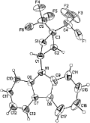
Figure 2: Crystal structure of 3e with thermal ellipsoids drawn at the 30% probability level. Disordered atom...

Scheme 4: Formation of thione 5 in reaction of 4 and 1.

Figure 3: Crystal structure of 5 with thermal ellipsoids drawn at the 30% probability level.
New developments in gold-catalyzed manipulation of inactivated alkenes
- Michel Chiarucci and
- Marco Bandini
Beilstein J. Org. Chem. 2013, 9, 2586–2614, doi:10.3762/bjoc.9.294
- activated carbonyl compound 9 was also hypothesized (Scheme 4b). 3 Hydroamination of olefins 3.1 Mechanistic considerations Due to the ubiquity of the C–N bond in organic compounds the development of efficient catalytic systems for the hydroamination of olefins is of particular significance from a practical

Graphical Abstract

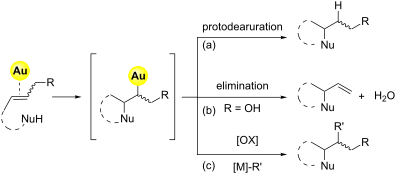
Figure 1: Elementary steps in the gold-catalyzed nucleophilic addition to olefins.

Figure 2: Different approaches for the gold-catalyzed manipulation of inactivated alkenes.

Figure 3: Computed mechanistic cycle for the gold-catalyzed alkoxylation of ethylene with PhOH.

Scheme 1: [Au(I)]-catalyzed addition of phenols and carboxylic acids to alkenes.

Scheme 2: [Au(III)] catalyzed annulations of phenols and naphthols with dienes.

Scheme 3: [Au(III)]-catalyzed addition of aliphatic alcohols to alkenes.

Scheme 4: [Au(III)]-catalyzed carboalkoxylation of alkenes with dimethyl acetals 6.

Figure 4: Postulated mechanism for the [Au(I)]-catalyzed hydroamination of olefins.
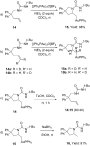
Scheme 5: Isolation and reactivity of alkyl gold intermediates in the intramolecular hydroamination of alkene...

Scheme 6: [Au(I)]-catalyzed intermolecular hydroamination of dienes.
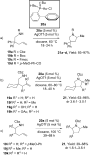
Scheme 7: Intramolecular [Au(I)]-catalyzed hydroamination of alkenes with carbamates.
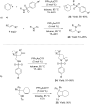
Scheme 8: [Au(I)]-catalyzed inter- as well as intramolecular addition of sulfonamides to isolated alkenes.

Scheme 9: Intramolecular hydroamination of N-alkenylureas catalyzed by gold(I) carbene complex.

Scheme 10: Enantioselective hydroamination of alkenyl ureas with biphenyl tropos ligand and chiral silver phos...

Scheme 11: Intramolecular [Au(I)]-catalyzed hydroamination of N-allyl-N’-aryl ureas. (PNP = pNO2-C6H4, PMP = p...

Scheme 12: [Au(I)]-catalyzed hydroamination of alkenes with ammonium salts.

Scheme 13: Enantioselective [Au(I)]-catalyzed intermolecular hydroamination of alkenes with cyclic ureas.

Scheme 14: Mechanistic proposal for the cooperative [Au(I)]/menthol catalysis for the enantioselective intramo...

Scheme 15: [Au(III)]-catalyzed addition of 1,3-diketones to alkenes.

Scheme 16: [Au(I)]-catalyzed intramolecular addition of β-keto amides to alkenes.

Scheme 17: Intermolecular [Au(I)]-catalyzed addition of indoles to alkenes.

Scheme 18: Intermolecular [Au(III)]-catalyzed hydroarylation of alkenes with benzene derivatives and thiophene....

Scheme 19: a) Intramolecular [Au(III)]-catalyzed hydroarylation of alkenes. b) A SEAr-type mechanism was hypot...

Scheme 20: Intramolecular [Au(I)]-catalyzed hydroalkylation of alkenes with simple ketones.

Scheme 21: Proposed reaction mechanism for the intramolecular [Au(I)]-catalyzed hydroalkylation of alkenes wit...

Scheme 22: Tandem Michael addition/hydroalkylation catalyzed by [Au(I)] and [Ag(I)] salts.

Scheme 23: Intramolecular [Au(I)]-catalyzed tandem migration/[2 + 2] cycloaddition of 1,7-enyne benzoates.

Scheme 24: Intramolecular [Au(I)]-catalyzed cyclopropanation of alkenes.

Scheme 25: Stereospecificity in [Au(I)]-catalyzed hydroalkoxylation of allylic alcohols.

Scheme 26: Mechanistic investigation on the intramolecular [Au(I)]-catalyzed hydroalkoxylation of allylic alco...

Scheme 27: Mechanistic investigation on the intramolecular enantioselective [Au(I)]-catalyzed alkylation of in...

Scheme 28: Synthesis of (+)-isoaltholactone via stereospecific intramolecular [Au(I)]-catalyzed alkoxylation o...

Scheme 29: Intramolecular enantioselective dehydrative amination of allylic alcohols catalyzed by chiral [Au(I...

Scheme 30: Enantioselective intramolecular hydroalkylation of allylic alcohols with aldehydes catalyzed by 20c...
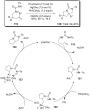
Scheme 31: Gold-catalyzed intramolecular diamination of alkenes.
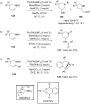
Scheme 32: Gold-catalyzed aminooxygenation and aminoarylation of alkenes.

Scheme 33: Gold-catalyzed carboamination, carboalkoxylation and carbolactonization of terminal alkenes with ar...
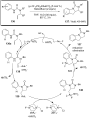
Scheme 34: Synthesis of tricyclic indolines via gold-catalyzed formal [3 + 2] cycloaddition.

Scheme 35: Gold(I) catalyzed aminoarylation of terminal alkenes in presence of Selectfluor [dppm = bis(dipheny...

Scheme 36: Mechanistic investigation on the aminoarylation of terminal alkenes by bimetallic gold(I) catalysis...

Scheme 37: Proposed mechanism for the aminoarylation of alkenes via [Au(I)-Au(I)]/[Au(II)-Au(II)] redox cataly...

Scheme 38: Oxyarylation of terminal olefins via redox gold catalysis.

Scheme 39: a) Intramolecular gold-catalyzed oxidative coupling reactions with aryltrimethylsilanes. b) Oxyaryl...
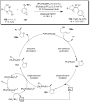
Scheme 40: Oxy- and amino-arylation of alkenes by [Au(I)]/[Au(III)] photoredox catalysis.
An overview of the synthetic routes to the best selling drugs containing 6-membered heterocycles
- Marcus Baumann and
- Ian R. Baxendale
Beilstein J. Org. Chem. 2013, 9, 2265–2319, doi:10.3762/bjoc.9.265

Graphical Abstract

Scheme 1: Scaled industrial processes for the synthesis of simple pyridines.

Scheme 2: Synthesis of nicotinic acid from 2-methyl-5-ethylpyridine (1.11).

Scheme 3: Synthesis of 3-picoline and nicotinic acid.

Scheme 4: Synthesis of 3-picoline from 2-methylglutarodinitrile 1.19.

Scheme 5: Picoline-based synthesis of clarinex (no yields reported).

Scheme 6: Mode of action of proton-pump inhibitors and structures of the API’s.

Scheme 7: Hantzsch-like route towards the pyridine rings in common proton pump inhibitors.

Figure 1: Structures of rosiglitazone (1.40) and pioglitazone (1.41).

Scheme 8: Synthesis of rosiglitazone.

Scheme 9: Syntheses of 2-pyridones.

Scheme 10: Synthesis and mechanism of 2-pyrone from malic acid.

Scheme 11: Polymer-assisted synthesis of rosiglitazone.

Scheme 12: Synthesis of pioglitazone.

Scheme 13: Meerwein arylation reaction towards pioglitazone.

Scheme 14: Route towards pioglitazone utilising tyrosine.

Scheme 15: Route towards pioglitazone via Darzens ester formation.

Scheme 16: Syntheses of the thiazolidinedione moiety.

Scheme 17: Synthesis of etoricoxib utilising Negishi and Stille cross-coupling reactions.

Scheme 18: Synthesis of etoricoxib via vinamidinium condensation.

Figure 2: Structures of nalidixic acid, levofloxacin and moxifloxacin.

Scheme 19: Synthesis of moxifloxacin.

Scheme 20: Synthesis of (S,S)-2,8-diazabicyclo[4.3.0]nonane 1.105.

Scheme 21: Synthesis of levofloxacin.

Scheme 22: Alternative approach to the levofloxacin core 1.125.

Figure 3: Structures of nifedipine, amlodipine and clevidipine.

Scheme 23: Mg3N2-mediated synthesis of nifedipine.

Scheme 24: Synthesis of rac-amlodipine as besylate salt.

Scheme 25: Aza Diels–Alder approach towards amlodipine.

Scheme 26: Routes towards clevidipine.

Figure 4: Examples of piperidine containing drugs.

Figure 5: Discovery of tiagabine based on early leads.

Scheme 27: Synthetic sequences to tiagabine.

Figure 6: Structures of solifenacin (2.57) and muscarine (2.58).

Scheme 28: Enantioselective synthesis of solifenacin.

Figure 7: Structures of DPP-4 inhibitors of the gliptin-type.

Scheme 29: Formation of inactive diketopiperazines from cis-rotameric precursors.

Figure 8: Co-crystal structure of carmegliptin bound in the human DPP-4 active site (PDB 3kwf).

Scheme 30: Improved route to carmegliptin.

Figure 9: Structures of lamivudine and zidovudine.

Scheme 31: Typical routes accessing uracil, thymine and cytosine.

Scheme 32: Coupling between pyrimidones and riboses via the Vorbrüggen nucleosidation.

Scheme 33: Synthesis of lamivudine.

Scheme 34: Synthesis of raltegravir.

Scheme 35: Mechanistic studies on the formation of 3.22.

Figure 10: Structures of selected pyrimidine containing drugs.

Scheme 36: General preparation of pyrimidines and dihydropyrimidones.

Scheme 37: Synthesis of imatinib.

Scheme 38: Flow synthesis of imatinib.

Scheme 39: Syntheses of erlotinib.

Scheme 40: Synthesis of erlotinib proceeding via Dimroth rearrangement.

Scheme 41: Synthesis of lapatinib.

Scheme 42: Synthesis of rosuvastatin.

Scheme 43: Alternative preparation of the key aldehyde towards rosuvastatin.

Figure 11: Structure comparison between nicotinic acetylcholine receptor agonists.

Scheme 44: Syntheses of varenicline and its key building block 4.5.

Scheme 45: Synthetic access to eszopiclone and brimonidine via quinoxaline intermediates.

Figure 12: Bortezomib bound in an active site of the yeast 20S proteasome ([114], pdb 2F16).

Scheme 46: Asymmetric synthesis of bortezomib.

Figure 13: Structures of some prominent piperazine containing drugs.

Figure 14: Structural comparison between the core of aplaviroc (4.35) and a type-1 β-turn (4.36).

Scheme 47: Examplary synthesis of an aplaviroc analogue via the Ugi-MCR.

Scheme 48: Syntheses of azelastine (5.1).

Figure 15: Structures of captopril, enalapril and cilazapril.

Scheme 49: Synthesis of cilazapril.

Figure 16: Structures of lamotrigine, ceftriaxone and azapropazone.

Scheme 50: Synthesis of lamotrigine.

Scheme 51: Alternative synthesis of lamotrigine (no yields reported).

Figure 17: Structural comparison between imiquimod and the related adenosine nucleoside.

Scheme 52: Conventional synthesis of imiquimod (no yields reported).

Scheme 53: Synthesis of imiquimod.

Scheme 54: Synthesis of imiquimod via tetrazole formation (not all yields reported).

Figure 18: Structures of various anti HIV-medications.

Scheme 55: Synthesis of abacavir.

Figure 19: Structures of diazepam compared to modern replacements.

Scheme 56: Synthesis of ocinaplon.

Scheme 57: Access to zaleplon and indiplon.

Scheme 58: Different routes towards the required N-methylpyrazole 6.65 of sildenafil.

Scheme 59: Polymer-supported reagents in the synthesis of key aminopyrazole 6.72.

Scheme 60: Early synthetic route to sildenafil.

Scheme 61: Convergent preparations of sildenafil.

Figure 20: Comparison of the structures of sildenafil, tadalafil and vardenafil.

Scheme 62: Short route to imidazotriazinones.

Scheme 63: Alternative route towards vardenafils core imidazotriazinone (6.95).

Scheme 64: Bayer’s approach to the vardenafil core.

Scheme 65: Large scale synthesis of vardenafil.

Scheme 66: Mode of action of temozolomide (6.105) as methylating agent.

Scheme 67: Different routes to temozolomide.

Scheme 68: Safer route towards temozolomide.

Figure 21: Some unreported heterocyclic scaffolds in top market drugs.
Synthesis of axially chiral gold complexes and their applications in asymmetric catalyses
- Yin-wei Sun,
- Qin Xu and
- Min Shi
Beilstein J. Org. Chem. 2013, 9, 2224–2232, doi:10.3762/bjoc.9.261
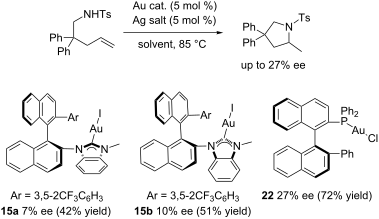
- structures clearly revealed the presence of a weak gold–π interaction between the Au atom and the aromatic rings in these gold complexes. Because of the gold–π interaction, the C–N bond could not rotate freely, giving two diastereomeric rotamers (S)-15a and (S)-15b. Slaughter and co-workers have also found
- two rotamers in gold complexes 1 caused by the handicap of C–N bond rotation on the basis of X-ray diffraction and named them as “out” rotamer and “in” rotamer [49] (Scheme 5). Their energy barrier has been also disclosed by DFT calculations. Synthesis of the P–Au(I) complexes. The synthesis of the Au

Graphical Abstract

Figure 1: Monodentate chiral NHC gold catalysts in recent years.

Scheme 1: Synthesis of compound 9.

Scheme 2: Synthesis of N-heterocyclic carbene precursor.

Scheme 3: Synthesis of benzimidazolium salt (S)-14.

Scheme 4: Synthesis of carbene Au complexes.

Figure 2: The crystal data of gold complex (S)-15a was deposited in the CCDC with the number 883917. Empirica...

Figure 3: The crystal data of gold complex (S)-15b was deposited in the CCDC with the number 883916. Empirica...

Scheme 5: Rotamers of 1a and 1b by DFT calculation reported by Slaughter’s group.

Scheme 6: The synthesis of P–Au complexes.
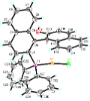
Figure 4: The crystal data of gold complex (S)-18 was deposited in the CCDC with the number 920617. Empirical...

Figure 5: The crystal data of gold complex (S)-22 was deposited in the CCDC with the number 928664. Empirical...
Synthesis of enantiomerically pure N-(2,3-dihydroxypropyl)arylamides via oxidative esterification
- Akula Raghunadh,
- Satish S More,
- T. Krishna Chaitanya,
- Yadla Sateesh Kumar,
- Suresh Babu Meruva,
- L. Vaikunta Rao and
- U. K. Syam Kumar
Beilstein J. Org. Chem. 2013, 9, 2129–2136, doi:10.3762/bjoc.9.250

- ][6] or (ii) catalytic oxidations with peroxides and chiral transition metal complexes [7][8][9]. The oxidative esterification of aldehydes involving oxidation followed by a C–O or C–N bond formation has received significant synthetic interest of late. Various transition metal complexes are employed

Graphical Abstract

Scheme 1: Retro synthetic approach for the construction of N-(2,3-dihydroxypropyl)arylamides.

Scheme 2: Synthesis of phthalimido-protected chiral hydroxypropyl benzoate.

Scheme 3: Proposed mechanism of epoxide opening.

Scheme 4: Reagents and conditions: (a) Methylamine, DCM, 30–35 °C, 94%.
The chemistry of isoindole natural products
- Klaus Speck and
- Thomas Magauer
Beilstein J. Org. Chem. 2013, 9, 2048–2078, doi:10.3762/bjoc.9.243
- . Oxidative C–C-bond formation gives the hetidine core (233) and C–N-bond formation the hetisine skeleton (234). The first total synthesis of a hetisine-type alkaloid was accomplished by Muratake and Natsume in 2004 [177]. In their seminal work, (±)-nominine (225) was synthesized within 40 steps and 0.15

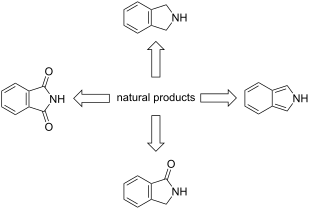
Graphical Abstract

Figure 1: a) Structural features and b) selected examples of non-natural congeners.

Scheme 1: Synthesis of isoindole 18.

Scheme 2: Staining amines with 1,4-diketone 19 (R = H).

Figure 2: Representative members of the indolocarbazole alkaloid family.

Figure 3: Staurosporine (26) bound to the adenosine-binding pocket [19] (from pdb1stc).
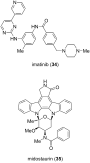
Figure 4: Structure of imatinib (34) and midostaurin (35).

Scheme 3: Biosynthesis of staurosporine (26).

Scheme 4: Wood’s synthesis of K-252a via the common intermediate 48.
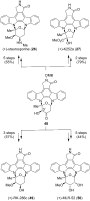
Scheme 5: Synthesis of 26, 27, 49 and 50 diverging from the common intermediate 48.

Figure 5: Selected members of the cytochalasan alkaloid family.

Scheme 6: Biosynthesis of chaetoglobosin A (57) [56].

Scheme 7: Synthesis of cytochalasin D (70) by Thomas [63].

Scheme 8: Synthesis of L-696,474 (78).

Scheme 9: Synthesis of aldehyde 85 (R = TBDPS).

Scheme 10: Synthesis of (+)-aspergillin PZ (79) by Tanis.
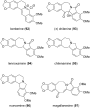
Figure 6: Representative Berberis alkaloids.

Scheme 11: Proposed biosynthetic pathway to chilenine (93).
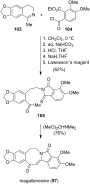
Scheme 12: Synthesis of magallanesine (97) by Danishefsky [84].

Scheme 13: Kurihara’s synthesis of magallanesine (85).

Scheme 14: Proposed biosynthesis of 113, 117 and 125.

Scheme 15: DNA lesion caused by aristolochic acid I (117) [102].

Scheme 16: Snieckus’ synthesis of piperolactam C (131).
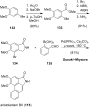
Scheme 17: Synthesis of aristolactam BII (104).

Figure 7: Representative cularine alkaloids.

Scheme 18: Proposed biosynthesis of 136.

Scheme 19: The syntheses of 136 and 137 reported by Castedo and Suau.
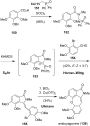
Scheme 20: Synthesis of 136 by Couture.
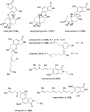
Figure 8: Representative isoindolinone meroterpenoids.

Scheme 21: Postulated biosynthetic pathway for the formation of 156 (adopted from George) [143].

Scheme 22: Synthesis of stachyflin (156) by Katoh [144].

Figure 9: Selected examples of spirodihydrobenzofuranlactams.
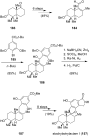
Scheme 23: Synthesis of stachybotrylactam I (157).
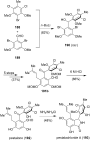
Scheme 24: Synthesis of pestalachloride A (193) by Schmalz.

Scheme 25: Proposed mechanism for the BF3-catalyzed metal-free carbonyl–olefin metathesis [149].
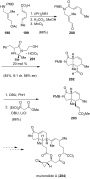
Scheme 26: Preparation of the isoindoline core of muironolide A (204).
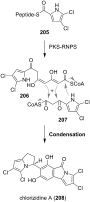
Scheme 27: Proposed biosynthesis of 208.

Scheme 28: Model for the biosynthesis of 215 and 217.

Scheme 29: Synthesis of lactonamycin (215) and lactonamycin Z (217).

Figure 10: Hetisine alkaloids 225–228.

Scheme 30: Biosynthetic proposal for the formation of the hetisine core [167].
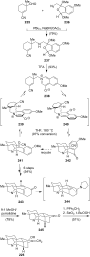
Scheme 31: Synthesis of nominine (225).
The chemistry of amine radical cations produced by visible light photoredox catalysis
- Jie Hu,
- Jiang Wang,
- Theresa H. Nguyen and
- Nan Zheng
Beilstein J. Org. Chem. 2013, 9, 1977–2001, doi:10.3762/bjoc.9.234
- 15 by abstraction of a hydrogen atom directly. The addition of the enol form of α-ketoester 59 to 15 furnishes the Mannich adduct 60. A retro-aza-Michael reaction via enol 61 allows cleavage of the C–N bond to yield secondary aniline 62. Aniline 62 is first oxidized to imine 63, which is further

Graphical Abstract

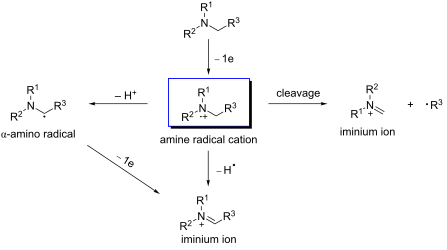
Scheme 1: Amine radical cations’ mode of reactivity.

Scheme 2: Reductive quenching of photoexcited Ru complexes by Et3N.

Scheme 3: Photoredox aza-Henry reaction.

Scheme 4: Formation of iminium ions using BrCCl3 as stoichiometric oxidant.

Scheme 5: Oxidative functionalization of N-aryltetrahydroisoquinolines using Eosin Y.

Scheme 6: Synthetic and mechanistic studies of Eosin Y-catalyzed aza-Henry reaction.

Scheme 7: Oxidative functionalization of N-aryltetrahydroisoquinolines using RB and GO.

Scheme 8: Merging Ru-based photoredox catalysis and Lewis base catalysis for the Mannich reaction.

Scheme 9: Merging Au-based photoredox catalysis and Lewis base catalysis for the Mannich reaction.

Scheme 10: Merging Ru-based photoredox catalysis and Cu-catalyzed alkynylation reaction.

Scheme 11: Merging Ru-based photoredox catalysis and NHC catalysis.

Scheme 12: 1,3-Dipolar cycloaddition of photogenically formed azomethine ylides.

Scheme 13: Plausible mechanism for photoredox 1,3-dipolar cycloaddition.

Scheme 14: Photoredox-catalyzed cascade reaction for the synthesis of fused isoxazolidines.

Scheme 15: Plausible mechanism for the photoredox-catalyzed cascade reaction.

Scheme 16: Photoredox-catalyzed α-arylation of glycine derivatives.

Scheme 17: Photoredox-catalyzed α-arylation of amides.

Scheme 18: Intramolecular interception of iminium ions by sulfonamides.

Scheme 19: Intramolecular interception of iminium ions by alcohols and sulfonamides.

Scheme 20: Intermolecular interception of iminium ions by phosphites.

Scheme 21: Photoredox-catalyzed oxidative phosphonylation by Eosin Y.
Scheme 22: Conjugated addition of α-amino radicals to Michael acceptors.

Scheme 23: Conjugated addition of α-amino radicals to Michael acceptors assisted by a Brønsted acid.

Scheme 24: Conjugated addition of α-amino radicals derived from anilines to Michael acceptors.

Scheme 25: Oxygen switch between two pathways involving α-amino radicals.

Scheme 26: Interception of α-amino radicals by azodicarboxylates.

Scheme 27: α-Arylation of amines.

Scheme 28: Plausible mechanism for α-arylation of amines.

Scheme 29: Photoinduced C–C bond cleavage of tertiary amines.

Scheme 30: Photoredox cleavage of C–C bonds of 1,2-diamines.

Scheme 31: Proposed mechanism photoredox cleavage of C–C bonds.

Scheme 32: Intermolecular [3 + 2] annulation of cyclopropylamines with olefins.

Scheme 33: Proposed mechanism for intermolecular [3 + 2] annulation.

Scheme 34: Photoinduced clevage of N–N bonds of aromatic hydrazines and hydrazides.
True and masked three-coordinate T-shaped platinum(II) intermediates
- Manuel A. Ortuño,
- Salvador Conejero and
- Agustí Lledós
Beilstein J. Org. Chem. 2013, 9, 1352–1382, doi:10.3762/bjoc.9.153
- ) [126]. The suggested mechanism begins with a C–N bond rotation by chelating ligand dissociation forming species 46, which is stabilized by solvent coordination. Eventually, an agostic interaction in 47 prior to the rate-determining C–H bond cleavage should displace the solvent molecule. An oxidative

Graphical Abstract
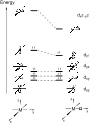
Figure 1: Qualitative orbital diagram for a d8 metal in ML4 square-planar and ML3 T-shaped complexes.

Figure 2: Walsh diagram for the d-block of a d8 ML3 complex upon bending of one L–M–L angle.

Figure 3: Neutral Y-shaped Pt complex Y1 [15]. Angles are given in degrees.

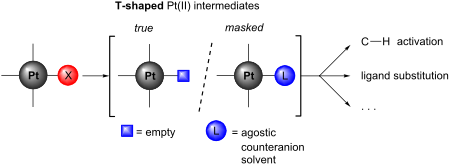
Figure 4: General classification of T-shaped Pt(II) structures according to the fourth coordination site.

Figure 5: Hydride, boryl and borylene true T-shaped Pt(II) complexes.

Figure 6: NHC-based true T-shaped Pt(II) complexes.

Figure 7: Phosphine-based agostic T-shaped Pt(II) complexes. Compounds in brackets correspond with hydrido–al...

Figure 8: Phenylpyridine and NHC-based agostic T-shaped Pt(II) complexes.

Figure 9: Counteranion coordination in T-shaped Pt(II) complexes.

Figure 10: Phosphine-based solvento Pt(II) complexes.

Figure 11: Nitrogen-based solvento Pt(II) complexes.

Figure 12: Pincer-based solvento Pt(II) complexes.
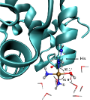
Figure 13: Structure of the QM/MM optimized cisplatin–protein adduct [94].

Figure 14: NMR coupling constants used for the characterization of three-coordinate Pt(II) species.

Figure 15: The chemical formula of the complexes discussed in Table 2.

Scheme 1: Halogen abstraction from 1.

Scheme 2: Halogen abstraction from 2 forming the dicationic complex T3 [22].

Scheme 3: Hydrogenation of complexes A5a and A5b [39].

Scheme 4: Hydrogenation of complexes 3 and A5c [40].

Scheme 5: Intermolecular C–H bond activation from T5a [28].

Scheme 6: Protonation of complexes 4 [35,36].

Scheme 7: Cyclometalation of 5 [43].

Scheme 8: Protonation of 6.

Scheme 9: Reductive elimination of ethane from 7.

Scheme 10: Reductive elimination of methane from six-coordinate Pt(IV) complexes.

Scheme 11: Proposed dissociative mechanism for the fluxional motion of dmphen in [Pt(Me)(dmphen)(PR3)]+ comple...

Figure 16: Feasible interactions for unsaturated intermediates 11b (left) and 12b (right) during fluxional mot...

Scheme 12: Halogen abstraction from 13a,b and subsequent cyclometalation to yield complexes A5a,b [39].

Scheme 13: Proposed mechanism for the acid-catalyzed cyclometalation of 14 via intermediate 15 [41].

Scheme 14: Proposed mechanism for the formation of 19 [102].

Scheme 15: Cyclometalation of 20 via thioether dissociation [117].

Figure 17: Gibbs energy profile (in chloroform solvent) for the cyclometalation of 23 [120].

Scheme 16: Coordination of tmtu to 29 and subsequent C–H bond activation via three-coordinate species 31 and 32...

Scheme 17: Cyclometalation process of NHC-based Pt(II) complexes [28,44].

Scheme 18: Cyclometalation process of complex A9 [43].

Scheme 19: “Rollover” reaction of 38 and subsequent oligomerization [123].

Scheme 20: Proposed mechanism for the formation of cyclometalated species 44 [124].

Scheme 21: Self-assembling process of 45 by “rollover” reaction [126].

Scheme 22: “Rollover” reaction of A9. Energies (solvent) in kcal mol−1 [127].

Scheme 23: Proposed mechanisms for the “rollover” cyclometalation of 52 in gas-phase ion-molecule reactions [128].

Scheme 24: β-H elimination and 1,2-insertion equilibrium involving A1d and the subsequent generation of 57 [35].

Scheme 25: Proposed mechanism for thermolysis of 7b and 7c in benzene-d6 and cyclohexane-d12 solvents [101].

Scheme 26: β-H elimination process of A11a [28].

Scheme 27: Intermolecular C–H bond activation from 62 [95].

Scheme 28: Reductive elimination of methane from 65 followed by CD3CN coordination or C–D bond-activation proc...

Figure 18: DFT-optimized structures describing the κ2 (69, left) and κ3 (69’, right) coordination modes of [Pt...

Scheme 29: Intermolecular arene C–H bond activation from NHC-based complexes [28].

Figure 19: Energy profiles (in benzene solvent) for the benzene C–H bond activation from A11a, A11b, T5a and T...

Scheme 30: Intermolecular arene C–H bond activation from PNP-based complex 71 [12].

Scheme 31: Intermolecular C–H bond-activation by gas-phase ion-molecule reactions of 74 [7,142].

Scheme 32: Dihydrogen activation through complexes A5a, A5b [39], A5c [40] and S1a [54].

Scheme 33: Dihydrogen activation through complexes A7 and 16 [41]. For a: see Scheme 13.

Scheme 34: Br2 and I2 bond activations through complexes A11a and T5a [143].

Scheme 35: Detection and isolation of the Pt(III) complex 81a [143].

Scheme 36: Cl2 bond activation through complexes 82 and 83 [144].

Scheme 37: cis–trans Isomerization mechanism of the solvento Pt(II) complexes S5 [2,61].

Figure 20: Energy profiles for the isomerization of complexes [Pt(R)(PMe3)2(NCMe)]+ where R means Me (85a, red...

Figure 21: DFT-optimized structure of intermediate 86 [62]. Bond distances in angstrom and angles in degrees.

Scheme 38: Proposed dissociative ligand-substitution mechanism of cis-[Pt(R)2S2] complexes (87) [117].

Scheme 39: Proposed mechanisms for the ligand substitution of the dinuclear species 91 [146].
Palladium-catalyzed synthesis of N-arylated carbazoles using anilines and cyclic diaryliodonium salts
- Stefan Riedmüller and
- Boris J. Nachtsheim
Beilstein J. Org. Chem. 2013, 9, 1202–1209, doi:10.3762/bjoc.9.136

- present an alternative Pd-catalyzed method for the construction of N-substituted carbazoles based on a stable, cyclic iodonium salt and electron-deficient anilines [24][25]. In the initial C–N bond-forming step of this cascade reaction, a ring opening of the cyclic iodonium salt through the amine is

Graphical Abstract

Figure 1: Representative examples of carbazoles with hole-transport, host or luminescent properties.
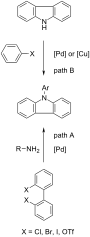
Scheme 1: Synthetic access to N-arylated carbazoles.

Scheme 2: Proposed mechanistic motivation towards the formation of 3a.

Figure 2: FID chromatogram of the reaction mixture. Only the most intense peaks were structurally assigned. x...

Figure 3: Substrate scope. All reactions were performed using iodonium salt 1 (0.35 mmol), 1.2 equiv of prima...

Scheme 3: Synthesis of dibenzo[b,d]bromolium trifluoromethanesulfonate (6).

Scheme 4: Dibenzo[b,d]bromolium trifluoromethanesulfonate (6) and p-fluoroaniline (2f) to construct carbazole ...
Conformational analysis and intramolecular interactions in monosubstituted phenylboranes and phenylboronic acids
- Josué M. Silla,
- Rodrigo A. Cormanich,
- Roberto Rittner and
- Matheus P. Freitas
Beilstein J. Org. Chem. 2013, 9, 1127–1134, doi:10.3762/bjoc.9.125

- electron donors than halogens in these cases. This interaction is explicitly expressed for 8b and 9c by means of X∙∙∙B bond paths in QTAIM (Figure 7). Indeed, the B–C–C(N) bond angle in 8c and 9c is significantly curved to allow the formation of a four-membered ring, reflecting the effectiveness of the X/B

Graphical Abstract

Figure 1: 2- and 4-fluorophenylboronic acids (1 and 2) and 2-substituted phenylboranes [X = F (3), Cl (4), Br...

Figure 2: Molecular graphs for the energy minima of 2- and 4-fluorophenylboronic acids. Green dots represent ...

Figure 3: Important hyperconjugative interactions for 1a (from the left to the right: nF→σ*OH, nF→π*CC and πCC...

Figure 4: Infrared spectrum of 2-fluorophenylboronic acid in 0.1 M chloroform solution.
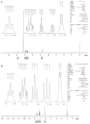
Figure 5: 1H NMR spectrum for 1 in (a) C6D6 solution (2 mg mL−1) and (b) CD3CN solution (20 mg mL−1).

Figure 6: Angular dependence of 1hJF,H(O) and nF→σ*OH in 1a, obtained at the BHandH/EPR-III (J) and B3LYP/aug...

Figure 7: Molecular graphs indicating bond paths (BPs), bond critical points (BCPs; green dots), and ring cri...



