


Search results
Search for "alkaloid" in Full Text gives 241 result(s) in Beilstein Journal of Organic Chemistry. Showing first 200.
Beyond catalyst deactivation: cross-metathesis involving olefins containing N-heteroaromatics
- Kevin Lafaye,
- Cyril Bosset,
- Lionel Nicolas,
- Amandine Guérinot and
- Janine Cossy
Beilstein J. Org. Chem. 2015, 11, 2223–2241, doi:10.3762/bjoc.11.241
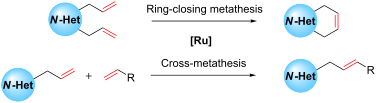
- temperature (Scheme 11) [48]. This method was used to prepare polycyclic scaffolds that can be encountered in diverse alkaloid natural products such as coralyne and berberine (Scheme 12) [49]. Similarly, enyne ring-closing metathesis reactions were performed to access a variety of vinyl-3,4

Graphical Abstract

Figure 1: Some ruthenium catalysts for metathesis reactions.

Scheme 1: Decomposition of methylidenes 1 and 2.

Scheme 2: Deactivation of G-HII in the presence of ethylene.

Scheme 3: Reaction between GI/GII and n-BuNH2.

Scheme 4: Reaction of GII with amines a–d.

Scheme 5: Amine-induced decomposition of GII methylidene 2.

Scheme 6: Amine-induced decomposition of GII in RCM conditions.

Scheme 7: Deactivation of methylidene 2 in the presence of pyridine.

Scheme 8: Reaction of G-HII with various amines.

Scheme 9: Formation of olefin 22 from styrene.

Scheme 10: Hypothetic deactivation pathway of G-HII.

Scheme 11: RCM of dienic pyridinium salts.

Scheme 12: Synthesis of polycyclic scaffolds using RCM.

Scheme 13: Enyne ring-closing metathesis.

Scheme 14: Synthesis of (R)-(+)-muscopyridine using a RCM strategy.

Scheme 15: Synthesis of a tris-pyrrole macrocycle.

Scheme 16: Synthesis of a bicyclic imidazole.

Scheme 17: RCM using Schrock’s catalyst 44.

Scheme 18: Synthesis of 1,6-pyrido-diazocine 46 by using a RCM.

Scheme 19: Synthesis of fused pyrimido-azepines through RCM.

Scheme 20: RCM involving alkenes containing various N-heteroaromatics.

Scheme 21: Synthesis of dihydroisoquinoline using a RCM.

Scheme 22: Formation of tricyclic compound 59.

Scheme 23: RCM in the synthesis of normuscopyridine.

Scheme 24: Synthesis of macrocycle 64.

Scheme 25: Synthesis of macrocycles possessing an imidazole group.

Scheme 26: Retrosynthesis of an analogue of erythromycin.

Scheme 27: Retrosynthesis of haminol A.

Scheme 28: CM involving 3-vinylpyridine 70 with 71 and vinylpyridine 70 with 73.

Scheme 29: Revised retrosynthesis of haminol A.

Scheme 30: CM between 78 and crotonaldehyde.

Scheme 31: Hypothesized deactivation pathway.

Scheme 32: CM involving an allyl sulfide containing a quinoline.

Scheme 33: CM involving allylic sulfide possessing a quinoxaline or a phenanthroline.

Scheme 34: CM between an acrylate and a 2-methoxy-5-bromo pyridine.

Scheme 35: Successful CM of an alkene containing a 2-chloropyridine.

Scheme 36: Variation of the substituent on the pyridine ring.

Scheme 37: CM involving alkenes containing a variety of N-heteroaromatics.
The marine sponge Agelas citrina as a source of the new pyrrole–imidazole alkaloids citrinamines A–D and N-methylagelongine
- Christine Cychon,
- Ellen Lichte and
- Matthias Köck
Beilstein J. Org. Chem. 2015, 11, 2029–2037, doi:10.3762/bjoc.11.220
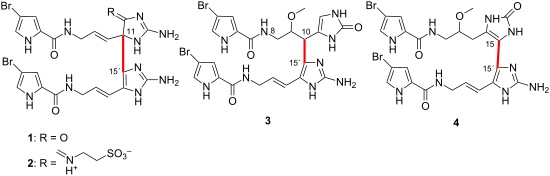
- alkaloids (PIAs), the citrinamines A–D (1–4) and the bromopyrrole alkaloid N-methylagelongine (5). All citrinamines are dimers of hymenidin (6) which was also isolated from this sponge as the major metabolite. Citrinamines A (1) and B (2) are derivatives of the PIA dimer mauritiamine (7), whereas
- (10) [8][9][10] (Figure 1). Additionally, five new compounds, four with a dimeric PIA structure (1–4) and the N-methyl analogue (5) of the bromopyrrole alkaloid agelongine (12) [11], were isolated. Herein, we describe the isolation and structure elucidation of citrinamines A (1), B (2), and N
- the marine sponge Agelas citrina revealed four new compounds of the pyrrole–imidazole alkaloid (PIA) family. Citrinamines A (1) and B (2) are closely related to mauritiamine (7) which can be seen as the most less complex dimeric PIA (the first published one) in which the monomeric units are only

Graphical Abstract

Figure 1: Selected pyrrole-imidazole alkaloids (1–4, 6–11, and 13–20), and agelongine analogues (5, 12, and 21...

Figure 2: Selected 1H,1H-COSY (blue bonds), 1H,1H-NOESY (blue arrows), 1H,13C-HMBC, and 1H,15N-HMBC (both red...

Figure 3: Selected 1H,1H-COSY (blue bonds), 1H,1H-NOESY (blue arrows), 1H,13C-HMBC, and 1H,15N-HMBC (both red...

Figure 4: Selected 1H,1H-COSY (blue bonds), 1H,1H-NOESY (blue arrows), and 1H,13C-HMBC (red arrows) correlati...

Figure 5: Selected 1H,1H-COSY (blue bonds), 1H,1H-NOESY (blue arrows), 1H,13C-HMBC, and 1H,15N-HMBC (both red...

Figure 6: Selected 1H,1H-COSY (blue bonds), 1H,13C-HMBC, and 1H,15N-HMBC (both red arrows) correlations for N...
Asymmetric 1,4-bis(ethynyl)bicyclo[2.2.2]octane rotators via monocarbinol functionalization. Ready access to polyrotors
- Cyprien Lemouchi and
- Patrick Batail
Beilstein J. Org. Chem. 2015, 11, 1881–1885, doi:10.3762/bjoc.11.202

- obtainment of 14 (Scheme 4), a new class of extended alkaloid ligands similar to isonicotinic acid (of much smaller spatial extension) which was obtained recently in a synthesis of a simple Li(I) salt with an extended framework by Abrahams, Robson and co-workers [21]. Compound 13 was prepared either from 5
- potential in the development of molecular machines that can perform mechanical functions can now be systematically studied. Synthesis of the asymmetric rotor 1. Synthesis of dirotors 6 and 10. Synthesis of the tertiary amide 12. Synthesis of the extended alkaloid ligand 14. Supporting Information

Graphical Abstract

Scheme 1: Synthesis of the asymmetric rotor 1.
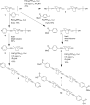
Scheme 2: Synthesis of dirotors 6 and 10.

Scheme 3: Synthesis of the tertiary amide 12.

Scheme 4: Synthesis of the extended alkaloid ligand 14.
Recent applications of ring-rearrangement metathesis in organic synthesis
- Sambasivarao Kotha,
- Milind Meshram,
- Priti Khedkar,
- Shaibal Banerjee and
- Deepak Deodhar
Beilstein J. Org. Chem. 2015, 11, 1833–1864, doi:10.3762/bjoc.11.199
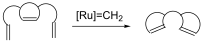
- (Scheme 6). The erythrina alkaloids are known to exhibit sedative, hypotensive and neuromuscular activity. This alkaloid skeleton consists of a tetracyclic spiroamine framework and synthetic chemists consider it as a challenging target. Simpkins and co-workers [11] have used the RRM sequence tactically to
- spiropiperidine alkaloid nitramine was proved to be efficient by this methodology (Scheme 13). In 2004, Ni and Ma [18] have described the synthesis of bicyclic compounds 75 and 76 by adopting a metathesis protocol with catalysts 1 and 2 in good yields, but the product ratio is catalyst-dependent. In this context
- derivative 104 were obtained in a 22:78 ratio (Scheme 21). Aubé and co-workers [26] have accomplished the asymmetric synthesis of the dendrobatid alkaloid 251F by employing a RRM as the key step. The required building block 108a has been synthesized from enone 107 via a RRM protocol. When enone 107 was

Graphical Abstract

Figure 1: Ruthenium alkylidene catalysts used in RRM processes.
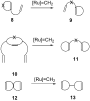
Figure 2: General representation of various RRM processes.

Figure 3: A general mechanism for RRM process.

Scheme 1: RRM of cyclopropene systems.

Scheme 2: RRM of cyclopropene with catalyst 2. (i) catalyst 2 (2.5 mol %), ethylene (24, 1 atm), (ii) toluene...
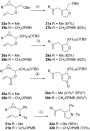
Scheme 3: RRM of various cyclopropene derivatives with catalyst 2. (i) catalyst 2 (2.5 mol %), CH2Cl2 (c = 0....

Scheme 4: RRM of substituted cyclopropene system with catalyst 2.

Scheme 5: RRM of cyclobutene system with catalyst 2.

Scheme 6: RRM approach to various bicyclic compounds.

Scheme 7: RRM approach to erythrina alkaloid framework.

Scheme 8: ROM–RCM sequence to lactone derivatives.

Scheme 9: RRM protocol towards the synthesis of lactone derivative 58.

Scheme 10: RRM protocol towards the asymmetric synthesis of asteriscunolide D (61).
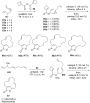
Scheme 11: RRM strategy towards the synthesis of various macrolide rings.

Scheme 12: RRM protocol to dipiperidine system.

Scheme 13: RRM of cyclopentene system to generate the cyclohexene systems.

Scheme 14: RRM of cyclopentene system 74.

Scheme 15: RRM approach to compound 79.

Scheme 16: RRM approach to spirocycles.

Scheme 17: RRM approach to bicyclic dihydropyrans.

Scheme 18: RCM–ROM–RCM cascade using non strained alkenyl heterocycles.

Scheme 19: First ROM–RCM–ROM–RCM cascade for the synthesis of trisaccharide 97.

Scheme 20: RRM of cyclohexene system.

Scheme 21: RRM approach to tricyclic spirosystem.

Scheme 22: RRM approach to bicyclic building block 108a.

Scheme 23: ROM–RCM protocol for the synthesis of the bicyclo[3.3.0]octene system.

Scheme 24: RRM protocol to bicyclic enone.

Scheme 25: RRM protocol toward the synthesis of the tricyclic system 118.

Scheme 26: RRM approach toward the synthesis of the tricyclic enones 122a and 122b.

Scheme 27: Synthesis of tricyclic and tetracyclic systems via RRM protocol.

Scheme 28: RRM protocol towards the synthesis of tetracyclic systems.

Scheme 29: RRM of the propargylamino[2.2.1] system.

Scheme 30: RRM of highly decorated bicyclo[2.2.1] systems.

Scheme 31: RRM protocol towards fused tricyclic compounds.

Scheme 32: RRM protocol to functionalized tricyclic systems.

Scheme 33: RRM approach to functionalized polycyclic systems.

Scheme 34: Sequential RRM approach to functionalized tricyclic ring system 166.

Scheme 35: RRM protocol to functionalized CDE tricyclic ring system of schintrilactones A and B.

Scheme 36: Sequential RRM approach to 7/5 fused bicyclic systems.

Scheme 37: Sequential ROM-RCM protocol for the synthesis of bicyclic sugar derivatives.

Scheme 38: ROM–RCM sequence of the norbornene derivatives 186 and 187.

Scheme 39: RRM approach toward highly functionalized bridge tricyclic system.

Scheme 40: RRM approach toward highly functionalized tricyclic systems.

Scheme 41: Synthesis of hexacyclic compound 203 by RRM approach.

Scheme 42: RRM approach toward C3-symmetric chiral trimethylsumanene 209.

Scheme 43: Triquinane synthesis via IMDA reaction and RRM protocol.

Scheme 44: RRM approach to polycyclic compounds.

Scheme 45: RRM strategy toward cis-fused bicyclo[3.3.0]carbocycles.

Scheme 46: RRM protocol towards the synthesis of bicyclic lactone 230.

Scheme 47: RRM approach to spiro heterocyclic compounds.

Scheme 48: RRM approach to spiro heterocyclic compounds.

Scheme 49: RRM approach to regioselective pyrrolizidine system 240.
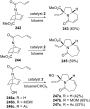
Scheme 50: RRM approach to functionalized bicyclic derivatives.

Scheme 51: RRM approach to tricyclic derivatives 249 and 250.

Scheme 52: RRM approach to perhydroindoline derivative and spiro system.

Scheme 53: RRM approach to bicyclic pyran derivatives.

Scheme 54: RRM of various functionalized oxanorbornene systems.

Scheme 55: RRM to assemble the spiro fused-furanone core unit. (i) 129, benzene, 55 °C, 3 days; (ii) Ph3P=CH2B...

Scheme 56: RRM protocol to norbornenyl sultam systems.

Scheme 57: Ugi-RRM protocol for the synthesis of 2-aza-7-oxabicyclo system.

Scheme 58: Synthesis of spiroketal systems via RRM protocol.

Scheme 59: RRM approach to cis-fused heterotricyclic system.

Scheme 60: RRM protocol to functionalized bicyclic systems.

Scheme 61: ROM/RCM/CM cascade to generate bicyclic scaffolds.

Scheme 62: RCM of ROM/CM product.

Scheme 63: RRM protocol to bicyclic isoxazolidine ring system.

Scheme 64: RRM approach toward the total synthesis of (±)-8-epihalosaline (300).

Scheme 65: Sequential RRM approach to decalin 304 and 7/6 fused 305 systems.

Scheme 66: RRM protocol to various fused carbocyclic derivatives.

Scheme 67: RRM to cis-hydrindenol derivatives.

Scheme 68: RRM protocol towards the cis-hydrindenol derivatives.

Scheme 69: RRM approach toward the synthesis of diversed polycyclic lactams.

Scheme 70: RRM approach towards synthesis of hexacyclic compound 324.

Scheme 71: RRM protocol to generate luciduline precursor 327 with catalyst 2.

Scheme 72: RRM protocol to key building block 330.

Scheme 73: RRM approach towards the synthesis of key intermediate 335.

Scheme 74: RRM protocol to highly functionalized spiro-pyran system 339.

Scheme 75: RRM to various bicyclic polyether derivatives.
Pyridinoacridine alkaloids of marine origin: NMR and MS spectral data, synthesis, biosynthesis and biological activity
- Louis P. Sandjo,
- Victor Kuete and
- Maique W. Biavatti
Beilstein J. Org. Chem. 2015, 11, 1667–1699, doi:10.3762/bjoc.11.183
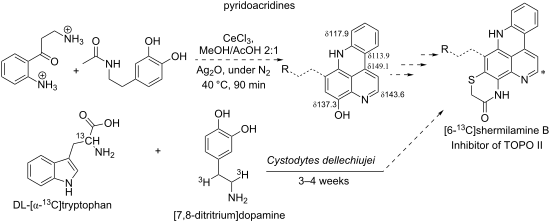
- , dihydroacridine, and quinolone cores are features regularly found in these alkaloid skeletons. The lack of hydrogen atoms next to quaternary carbon atoms for two or three rings makes the chemical shift assignment a difficult task. In this regard, one of the aims of this review is the compilation of previously
- comprised of four to eight fused rings including heterocycles [34][35][36][37][38][39]. Acridine, acridone, dihydroacridine, and quinolone cores [33][40] are features regularly found in these alkaloid skeletons. The high conjugation of their structure induces a strong electron delocalization, leading to
- conditions. The bipyridine derivative obtained was subjected to a strong base (sodium hydride) to give 12-deoxyascididemin which was immediately oxidized in situ by oxygen to yield ascididemin (42, Scheme 6) [65]. Synthesis of subarine (37) Method A: This alkaloid was successfully prepared in five steps with

Graphical Abstract

Figure 1: Fragments produced by the FAB–MS of dehydrokuanoniamine B (20) [42].

Figure 2: Fragments produced by the EIMS of sagitol (26) [55].

Figure 3: Fragments produced by the EIMS of styelsamine B (4) [45].

Figure 4: Fragments produced by the EIMS of styelsamine D (6) [45].
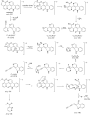
Figure 5: Fragments produced by the EIMS of subarine (37) [40].

Scheme 1: Synthesis of styelsamine B (4) and cystodytin J (1) [58].

Scheme 2: Synthesis of sebastianine A (38) and its regioisomer 39 [59].

Scheme 3: Synthesis route A of neoamphimedine (12) [61].
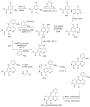
Scheme 4: Synthesis route B of neoamphimedine (12) [62].
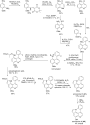
Scheme 5: Synthesis of arnoamines A (40) and B (41) [63].

Scheme 6: Synthesis of ascididemin (42) [65].
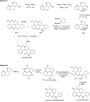
Scheme 7: Synthesis of subarine (37) [66,67].

Scheme 8: Synthesis of demethyldeoxyamphimedine (9) [68].

Scheme 9: Synthesis of pyridoacridine analogues related to ascididemin (42) [70].
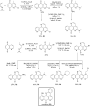
Scheme 10: Synthesis of analogues of meridine (56) [71].

Scheme 11: Synthesis of bulky pyridoacridine as eilatin (58) [72].

Scheme 12: Synthesis of AK37 (59), analogue of kuanoniamine A (60) [73].

Figure 6: Biosynthesis pathway I [74].

Figure 7: Reaction illustrating catechol and kynuramine as possible biosynthetic precursors [75].

Figure 8: Biosynthesis pathway B deduced from the feeding experiment A using labelled precursors [76].

Figure 9: Proposed biosynthesis pathway [47].

Figure 10: 4H-Pyrido[2,3,4-kl]acridin-4-one as a cytotoxic pharmacophore.

Figure 11: 7H-Pyrido[2,3,4-kl]acridine as a cytotoxic pharmacophore.

Figure 12: 9H-Quinolino[4,3,2-de][1,10]phenanthrolin-9-one as a cytotoxic pharmacophore.

Figure 13: 8H-Benzo[b]pyrido[4,3,2-de][1,7]phenanthrolin-8-one as a cytotoxic pharmacophore.

Figure 14: Pyrido[4,3,2-mn]pyrrolo[3,2,1-de]acridine as a cytotoxic pharmacophore.

Figure 15: 9H-Pyrido[4,3,2-mn]thiazolo[4,5-b]acridin-9-one and 8H-pyrido[4,3,2-mn]thiazolo[4,5-b]acridine: cyt...
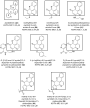
Figure 16: 9H-quinolino[4,3,2-de][1,10]phenanthrolin-9-one as an anti-mycobacterial pharmacophore.

Figure 17: 9H-Quinolino[4,3,2-de][1,10]phenanthrolin-9-one as an antibacterial pharmacophore.

Figure 18: Saturated and less saturated pyridine moieties as aspartyl inhibitor cores.

Figure 19: Iminobenzoquinone and acridone cores as intercalating and TOPO inhibitor motifs found in pyridoacri...
Fates of imine intermediates in radical cyclizations of N-sulfonylindoles and ene-sulfonamides
- Hanmo Zhang,
- E. Ben Hay,
- Stephen J. Geib and
- Dennis P. Curran
Beilstein J. Org. Chem. 2015, 11, 1649–1655, doi:10.3762/bjoc.11.181

- alkaloid aspidophytine published in 2008 [14]. In 2005, Stevens and coworkers reported that treatment of trichloroacetamide-substituted N-sulfonylindole 3 under conditions for copper-catalyzed atom transfer cyclization provided chlorine transfer product 4 with the N-sulfonyl group intact (Scheme 1) [15

Graphical Abstract
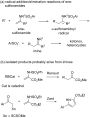
Figure 1: (a) Radical reactions of ene-sulfonamides give diverse isolated products; (b) these products are of...

Figure 2: Isolation of stable imines strengthens the case for sulfonyl radical elimination.

Scheme 1: Cyclizations of N-sulfonylindole 3 occur with retention or elimination of the sulfonyl group depend...
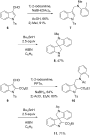
Scheme 2: Aryl radical cyclization to N-sulfonylindoles.
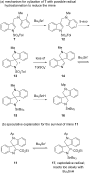
Figure 3: Mechanistic aspects of cyclizations shown in Scheme 2; (a) mechanism for formation of 7; (b) possible reaso...

Figure 4: Substrate design by swapping radical precursor and acceptor.

Scheme 3: Synthesis and cyclization of precursors 22–24.

Figure 5: ORTEP representation of the crystal structure of 27.

Figure 6: Proposed hydration/retro-Claisen path to formamides.
Dicarboxylic esters: Useful tools for the biocatalyzed synthesis of hybrid compounds and polymers
- Ivan Bassanini,
- Karl Hult and
- Sergio Riva
Beilstein J. Org. Chem. 2015, 11, 1583–1595, doi:10.3762/bjoc.11.174

- 18, obtained by linking together a steroid (cortisone, 14) and an alkaloid (colchicoside, 15; thiocolchicoside, 16). Worth of notice the use, among others, of activated esters of dithio-dicarboxylic acids, in 18. More recently Kren and coworkers have synthesized hybrid dimeric antioxidants 23–25

Graphical Abstract

Scheme 1: Activated derivatives of dicarboxylic acids.

Figure 1: Example of natural compounds selectively acylated with dicarboxylic esters.

Figure 2: C6-dicarboxylic acid diesters derivatives of NAG-thiazoline.

Figure 3: Sylibin dimers obtained by CAL-B catalyzed trans-acylation reactions.

Scheme 2: Biocatalyzed synthesis of paclitaxel derivatives.

Figure 4: 5-Fluorouridine derivatives obtained by CAL-B catalysis.

Scheme 3: Biocatalyzed synthesis of hybrid diesters 17 and 18.

Scheme 4: Hybrid derivatives of sylibin.

Figure 5: Bolaamphiphilic molecules containing (L)- and/or (D)-isoascorbic acid moieties.

Figure 6: Doxorubicin (29) trapped in a polyester made of glycolate, sebacate and 1,4-butandiol units.

Figure 7: Polyesters containing functionalized pentofuranose derivatives.

Figure 8: Polyesters containing disulfide moieties.

Figure 9: Polyesters containing epoxy moieties.

Figure 10: Biocatalyzed synthesis of polyesters containing glycerol.

Figure 11: Iataconic (34) and malic (35) acid.

Figure 12: Oxidized poly(hexanediol-2-mercaptosuccinate) polymer.

Figure 13: C-5-substituted isophthalates.

Figure 14: Curcumin-based polyesters.

Figure 15: Silylated polyesters.

Figure 16: Polyesters containing reactive ether moieties.

Figure 17: Polyesters obtained by CAL-B-catalyzed condensation of dicarboxylic esters and N-substituted dietha...

Figure 18: Polyesters comprising mexiletine (38) moieties.

Figure 19: Poly(amide-co-ester)s comprising a terminal hydroxy moiety.

Figure 20: Polymer comprising α-oxydiacid moieties.

Figure 21: Telechelics with methacrylate ends.

Figure 22: Telechelics with allyl-ether ends.

Figure 23: Telechelics with ends functionalized as epoxides.
Pd(OAc)2-catalyzed dehydrogenative C–H activation: An expedient synthesis of uracil-annulated β-carbolinones
- Biplab Mondal,
- Somjit Hazra,
- Tarun K. Panda and
- Brindaban Roy
Beilstein J. Org. Chem. 2015, 11, 1360–1366, doi:10.3762/bjoc.11.146
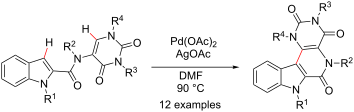
- ]. For example, SL651498 was documented as a potential drug development candidate in a research program designed to discover subtype-selective GABAA receptor agonists for the treatment of muscle spasms and generalized anxiety disorder [13]. β-Carbolinones such as strychnocarpine, the alkaloid from

Graphical Abstract

Figure 1: Naturally occurring β-carbolinones.

Scheme 1: Preparation of starting substrate.
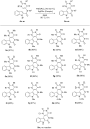
Scheme 2: Synthesis of various β-carbolinone derivatives.

Figure 2: ORTEP diagram of 5h.

Scheme 3: Proposed mechanistic pathway.
Selected synthetic strategies to cyclophanes
- Sambasivarao Kotha,
- Mukesh E. Shirbhate and
- Gopalkrushna T. Waghule
Beilstein J. Org. Chem. 2015, 11, 1274–1331, doi:10.3762/bjoc.11.142
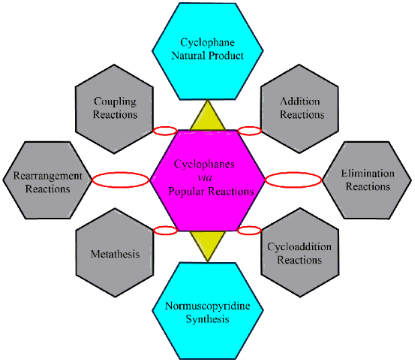

Graphical Abstract

Figure 1: General representation of cyclophanes.

Figure 2: cyclophanes one or more with heteroatom.

Figure 3: Metathesis catalysts 12–17 and C–C coupling catalyst 18.

Figure 4: Natural products containing the cyclophane skeleton.

Figure 5: Turriane family of natural products.

Scheme 1: Synthesis of [3]ferrocenophanes through Mannich reaction. Reagents and conditions: (i) excess HNMe2...

Scheme 2: Synthesis of cyclophanes through Michael addition. Reagents and conditions: (i) xylylene dibromide,...

Scheme 3: Synthesis of normuscopyridine analogue 37 through an oxymercuration–oxidation strategy. Reagents an...

Scheme 4: Synthesis of tribenzocyclotriyne 39 through Castro–Stephens coupling reaction. Reagents and conditi...

Scheme 5: Synthesis of cyclophane 43 through Glaser–Eglinton coupling. Reagents and conditions: (i) 9,10-bis(...

Scheme 6: Synthesis of the macrocyclic C-glycosyl cyclophane through Glaser coupling. Reagents and conditions...

Scheme 7: Synthesis of cyclophane-containing complex 49 through Glaser–Eglinton coupling reaction. Reagents a...

Scheme 8: Synthesis of cyclophane 53 through Glaser–Eglinton coupling. Reagents and conditions: (i) K2CO3, ac...

Figure 6: Cyclophanes 54–56 that have been synthesized through Glaser–Eglinton coupling.

Figure 7: Synthesis of tetrasubstituted [2.2]paracyclophane 57 and chiral cyclophyne 58 through Eglinton coup...

Scheme 9: Synthesis of cyclophane through Glaser–Hay coupling reaction. Reagents and conditions: (i) CuCl2 (1...

Scheme 10: Synthesis of seco-C/D ring analogs of ergot alkaloids through intramolecular Heck reaction. Reagent...

Scheme 11: Synthesis of muscopyridine 73 via Kumada coupling. Reagents and conditions: (i) 72, THF, ether, 20 ...

Scheme 12: Synthesis of the cyclophane 79 via McMurry coupling. Reagents and conditions: (i) 75, decaline, ref...

Scheme 13: Synthesis of stilbenophane 81 via McMurry coupling. Reagents and conditions: (i) TiCl4, Zn, pyridin...

Scheme 14: Synthesis of stilbenophane 85 via McMurry coupling. Reagents and conditions: (i) NBS (2 equiv), ben...
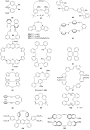
Figure 8: List of cyclophanes prepared via McMurry coupling reaction as a key step.

Scheme 15: Synthesis of paracyclophane by cross coupling involving Pd(0) catalyst. Reagents and conditions: (i...

Scheme 16: Synthesis of the cyclophane 112 via the pinacol coupling and 113 by RCM. Reagents and conditions: (...

Scheme 17: Synthesis of cyclophane derivatives 122a–c via Sonogoshira coupling. Reagents and conditions: (i) C...

Scheme 18: Synthesis of cyclophane 130 via Suzuki–Miyaura reaction as a key step. Reagents and conditions: (i)...

Scheme 19: Synthesis of the mycocyclosin via Suzuki–Miyaura cross coupling. Reagents and conditions: (i) benzy...

Scheme 20: Synthesis of cyclophanes via Wurtz coupling reaction Reagents and conditions: (i) PhLi, Et2O, C6H6,...

Scheme 21: Synthesis of non-natural glycophanes using alkyne metathesis. Reagents and conditions: (i) G-I (12)...

Figure 9: Synthesis of cyclophanes via ring-closing alkyne metathesis.

Scheme 22: Synthesis of crownophanes by cross-enyne metathesis. Reagents and conditions: (i) G-II (13), 5 mol ...

Scheme 23: Synthesis of (−)-cylindrocyclophanes A (156) and (−)-cylindrocyclophanes F (155). Reagents and cond...

Scheme 24: Synthesis of cyclophane 159 derivatives via SM cross-coupling and RCM. Reagents and conditions: (i)...

Scheme 25: Sexithiophene synthesis via cross metathesis. Reagents and conditions: (i) 161, Pd(PPh3)4, K2CO3, T...

Scheme 26: Synthesis of pyrrole-based cyclophane using enyne metathesis. Reagents and conditions: (i) Se, chlo...

Scheme 27: Synthesis of macrocyclic derivatives by RCM. Reagents and conditions: (i) G-I/G-II, CH2Cl2, 0.005 M...

Scheme 28: Synthesis of enantiopure β-lactam-based dienyl bis(dihydrofuran) 179. Reagents and conditions: (i) ...

Scheme 29: Synthesis of a [1.1.6]metaparacyclophane derivative 183 via SM cross coupling. Reagents and conditi...

Scheme 30: Synthesis of a [1.1.6]metaparacyclophane derivative 190 via SM cross coupling. Reagents and conditi...

Scheme 31: Template-promoted synthesis of cyclophanes involving RCM. Reagents and conditions: (i) acenaphthene...

Scheme 32: Synthesis of [3.4]cyclophane derivatives 200 via SM cross coupling and RCM. Reagents and conditions...
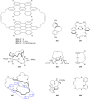
Figure 10: Examples for cyclophanes synthesized by RCM.

Scheme 33: Synthesis of the longithorone C framework assisted by fluorinated auxiliaries. Reagents and conditi...

Scheme 34: Synthesis of the longithorone framework via RCM. Reagents and conditions: (i) 213, NaH, THF, rt, 10...

Scheme 35: Synthesis of floresolide B via RCM as a key step. Reagents and conditions: (i) G-II (13, 0.1 equiv)...

Scheme 36: Synthesis of normuscopyridine (223) by the RCM strategy. Reagents and condition: (i) Mg, THF, hexen...

Scheme 37: Synthesis of muscopyridine (73) via RCM. Reagents and conditions: (i) 225, NaH, THF, 0 °C to rt, 1....

Scheme 38: Synthesis of muscopyridine (73) via RCM strategy. Reagents and conditions: (i) NaH, n-BuLi, 5-bromo...

Scheme 39: Synthesis of pyridinophane derivatives 223 and 245. Reagents and conditions: (i) PhSO2Na, TBAB, CH3...

Scheme 40: Synthesis of metacyclophane derivatives 251 and 253. Reagents and conditions: (i) 240, NaH, THF, rt...

Scheme 41: Synthesis of normuscopyridine and its higher analogues. Reagents and conditions: (i) alkenyl bromid...

Scheme 42: Synthesis of fluorinated ferrocenophane 263 via a [2 + 2] cycloaddition. Reagents and conditions: (...

Scheme 43: Synthesis of [2.n]metacyclophanes 270 via a [2 + 2] cycloaddition. Reagents and conditions: (i) Ac2...

Scheme 44: Synthesis of metacyclophane 273 by a [2 + 2 + 2] co-trimerization. Reagents and conditions: (i) [Rh...

Scheme 45: Synthesis of paracyclophane 276 via a [2 + 2 + 2] cycloaddition reaction. Reagents and conditions: ...

Scheme 46: Synthesis of cyclophane 278 via a [2 + 2 + 2] cycloaddition reaction. Reagents and conditions: (i) ...

Scheme 47: Synthesis of cyclophane 280 via a [2 + 2 + 2] cycloaddition. Reagents and conditions: (i) [(Rh(cod)(...

Scheme 48: Synthesis of taxane framework by a [2 + 2 + 2] cycloaddition. Reagents and conditions: (i) Cp(CO)2 ...

Scheme 49: Synthesis of cyclophane 284 and 285 via a [2 + 2 + 2] cycloaddition reaction. Reagents and conditio...

Scheme 50: Synthesis of pyridinophanes 293a,b and 294a,b via a [2 + 2 + 2] cycloaddition. Reagents and conditi...

Scheme 51: Synthesis of pyridinophanes 296 and 297 via a [2 + 2 + 2] cycloaddition. Reagents and conditions: (...

Scheme 52: Synthesis of triazolophane by a 1,3-dipolar cycloaddition. Reagents and conditions: (i) propargyl b...

Scheme 53: Synthesis of glycotriazolophane 309 by a click reaction. Reagents and conditions: (i) LiOH, H2O, Me...

Figure 11: Cyclophanes 310 and 311 prepared via click chemistry.

Scheme 54: Synthesis of cyclophane via the Dötz benzannulation. Reagents and conditions: (i) THF, 100 °C, 12 h...

Scheme 55: Synthesis of [6,6]metacyclophane by a Dötz benzannulation. Reagents and conditions: (i) THF, 100 °C...

Scheme 56: Synthesis of cyclophanes by a Dötz benzannulation. Reagents and conditions: (i) THF, 65 °C, 3 h; (i...

Scheme 57: Synthesis of muscopyridine (73) via an intramolecular DA reaction of ketene. Reagents and condition...

Scheme 58: Synthesis of bis[10]paracyclophane 336 via Diels–Alder reaction. Reagents and conditions: (i) DMAD,...

Scheme 59: Synthesis of [8]paracyclophane via DA reaction. Reagents and conditions: (i) maleic anhydride, 3–5 ...

Scheme 60: Biomimetic synthesis of (−)-longithorone A. Reagents and conditions: (i) Me2AlCl, CH2Cl2, −20 °C, 7...

Scheme 61: Synthesis of sporolide B (349) via a [4 + 2] cycloaddition reaction. Reagents and conditions: (i) P...

Scheme 62: Synthesis of the framework of (+)-cavicularin (352) via a [4 + 2] cycloaddition. Reagents and condi...

Scheme 63: Synthesis of oxazole-containing cyclophane 354 via Beckmann rearrangement. Reagents and conditions:...

Scheme 64: Synthesis of cyclophanes 360a–c via benzidine rearrangement. Reagents and conditions: (i) 356a–d, K2...

Scheme 65: Synthesis of cyclophanes 365a–c via benzidine rearrangement. Reagents and conditions: (i) BocNHNH2,...

Scheme 66: Synthesis of metacyclophane 367 via Ciamician–Dennstedt rearrangement. Reagents and conditions: (i)...

Scheme 67: Synthesis of cyclophane by tandem Claisen rearrangement and RCM as key steps. Reagents and conditio...

Scheme 68: Synthesis of cyclophane derivative 380. Reagents and conditions: (i) K2CO3, CH3CN, allyl bromide, r...

Scheme 69: Synthesis of metacyclophane via Cope rearrangement. Reagents and conditions: (i) MeOH, NaBH4, rt, 1...

Scheme 70: Synthesis of cyclopropanophane via Favorskii rearrangement. Reagents and conditions: (i) Br2, CH2Cl2...

Scheme 71: Cyclophane 389 synthesis via photo-Fries rearrangement. Reagents and conditions: (i) DMAP, EDCl/CHCl...

Scheme 72: Synthesis of normuscopyridine (223) via Schmidt rearrangement. Reagents and conditions: (i) ethyl s...

Scheme 73: Synthesis of crownophanes by tandem Claisen rearrangement. Reagents and conditions: (i) diamine, Et3...

Scheme 74: Attempted synthesis of cyclophanes via tandem Claisen rearrangement and RCM. Reagents and condition...

Scheme 75: Synthesis of muscopyridine via alkylation with 2,6-dimethylpyridine anion. Reagents and conditions:...

Scheme 76: Synthesis of cyclophane via Friedel–Craft acylation. Reagents and conditions: (i) CS2, AlCl3, 7 d, ...

Scheme 77: Pyridinophane 418 synthesis via Friedel–Craft acylation. Reagents and conditions: (i) 416, AlCl3, CH...

Scheme 78: Cyclophane synthesis involving the Kotha–Schölkopf reagent 421. Reagents and conditions: (i) NBS, A...

Scheme 79: Cyclophane synthesis involving the Kotha–Schölkopf reagent 421. Reagents and conditions: (i) BEMP, ...

Scheme 80: Cyclophane synthesis by coupling with TosMIC. Reagents and conditions: (i) (a) ClCH2OCH3, TiCl4, CS2...

Scheme 81: Synthesis of diaza[32]cyclophanes and triaza[33]cyclophanes. Reagents and conditions: (i) DMF, NaH,...

Scheme 82: Synthesis of cyclophane 439 via acyloin condensation. Reagents and conditions: (i) Na, xylene, 75%;...

Scheme 83: Synthesis of multibridged binuclear cyclophane 442 by aldol condensation. Reagents and conditions: ...

Scheme 84: Synthesis of various macrolactones. Reagents and conditions: (i) iPr2EtN, DMF, 77–83%; (ii) TBDMSCl...

Scheme 85: Synthesis of muscone and muscopyridine via Yamaguchi esterification. Reagents and conditions: (i) 4...

Scheme 86: Synthesis of [5]metacyclophane via a double elimination reaction. Reagents and conditions: (i) LiBr...

Figure 12: Cyclophanes 466–472 synthesized via Hofmann elimination.

Scheme 87: Synthesis of cryptophane via Baylis–Hillman reaction. Reagents and conditions: (i) methyl acrylate,...

Scheme 88: Synthesis of cyclophane 479 via double Chichibabin reaction. Reagents and conditions: (i) excess 478...

Scheme 89: Synthesis of cyclophane 483 via double Chichibabin reaction. Reagents and conditions: (i) 481, OH−;...

Scheme 90: Synthesis of cyclopeptide via an intramolecular SNAr reaction. Reagents and conditions: (i) TBAF, T...

Scheme 91: Synthesis of muscopyridine (73) via C-zip ring enlargement reaction. Reagents and conditions: (i) H...

Figure 13: Mechanism of the formation of compound 494.

Scheme 92: Synthesis of indolophanetetraynes 501a,b using the Nicholas reaction as a key step. Reagents and co...

Scheme 93: Synthesis of cyclophane via radical cyclization. Reagents and conditions: (i) cyclododecanone, phen...

Scheme 94: Synthesis of (−)-cylindrocyclophanes A (156) and (−)-cylindrocyclophanes F (155). Reagents and cond...

Scheme 95: Cyclophane synthesis via Wittig reaction. Reagents and conditions: (i) LiOEt (2.1 equiv), THF, −78 ...

Figure 14: Representative examples of cyclophanes synthesized via Wittig reaction.

Scheme 96: Synthesis of the [6]paracyclophane via isomerization of Dewar benzene. Reagents and conditions: (i)...
A new and convenient synthetic way to 2-substituted thieno[2,3-b]indoles
- Roman A. Irgashev,
- Arseny A. Karmatsky,
- Gennady L. Rusinov and
- Valery N. Charushin
Beilstein J. Org. Chem. 2015, 11, 1000–1007, doi:10.3762/bjoc.11.112
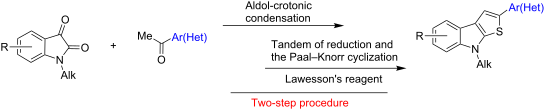
- attention of researchers, mainly due to the fact that thieno[2,3-b]indole derivatives exhibit a wide range of biological properties, and can be regarded as promising compounds for agricultural or pharmacological applications. For example, the alkaloid thienodolin [1], isolated from the fermentation mixture

Graphical Abstract

Figure 1: Natural and synthetic derivatives of thieno[2,3-b]indole.

Scheme 1: Synthetic routes to thieno[2,3-b]indoles.

Scheme 2: Synthesis and thionation of indodin-2-ones 11.

Scheme 3: Synthetic paths to thieno[2,3-b]indole 12a. LR = Lawesson's reagent

Figure 2: Mercury [34] representation of the X-ray crystal structure of 12a. Thermal ellipsoids of 50% probabilit...

Scheme 4: Two-step synthesis of 2-(hetero)aryl substituted thieno[2,3-b]indoles 12.

Scheme 5: Synthesis of mono- and dibromo-substituted thieno[2,3-b]indoles 12n,o.
Gold-catalyzed formation of pyrrolo- and indolo-oxazin-1-one derivatives: The key structure of some marine natural products
- Sultan Taskaya,
- Nurettin Menges and
- Metin Balci
Beilstein J. Org. Chem. 2015, 11, 897–905, doi:10.3762/bjoc.11.101

- , such as lukianol A (1) and lukianol B (2) (Figure 1) [8][9][10]. Lukianol B (2) was found to be the most potent human aldose reductase (h-ALR2) inhibitor in thousands of marine natural products screened [11]. The ningalin B alkaloid 3, having an isomeric pyrrolo-oxazinone skeleton, possesses antitumor

Graphical Abstract

Figure 1: Structures of some marine natural products 1–4.

Figure 2: Structures 5–7.

Scheme 1: Intramolecular gold(I)-catalyzed cyclization reaction of 8 to give 9 and 10.

Scheme 2: Synthesis of 13 and its reaction with AuCl3.

Scheme 3: Synthesis of 6.

Figure 3: Geometry optimized structures of 6, 7, 30 and 31.

Scheme 4: Reaction of 15 with Au(I)/AgOTf in the presence of EtOH and CD3OD.

Scheme 5: Reaction of 7 with Au(I)/AgOTf in the presence of EtOH.
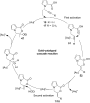
Scheme 6: Proposed reaction mechanism for the intramolecular gold-catalyzed cyclization followed by EtOH addi...
Novel stereocontrolled syntheses of tashiromine and epitashiromine
- Loránd Kiss,
- Enikő Forró and
- Ferenc Fülöp
Beilstein J. Org. Chem. 2015, 11, 596–603, doi:10.3762/bjoc.11.66

- . Tashiromine is a natural indolizidine alkaloid isolated from Maackia tashiroi (1990). Strategies for the synthesis of indolizidine derivatives have received considerable interest from synthetic and medicinal chemists (Figure 2). A number of synthetic approaches have been described earlier for construction of
- concentrated under reduced pressure. The crude oil was purified by column chromatography on silica gel (CH2Cl2/MeOH/NH4OH 90:8:2 or CH2Cl2/MeOH/NH4OH 90:5:5) to give the alkaloid. Ethyl (1R*,2S*)-2-(benzyloxycarbonylamino)cyclooct-5-enecarboxylate ((±)-3) A colourless oil (Rf 0.6, n-hexane/EtOAc 4:1); yield

Graphical Abstract

Figure 1: Some indolizidine alkaloids.

Figure 2: Approaches to racemic tashiromine and epitashiromine.

Figure 3: Synthetic routes to (+)-tashiromine and (+)-epitashiromine.

Figure 4: Synthetic routes to (−)-tashiromine and (−)-epitashiromine.

Figure 5: Oxidative functionalizations of cyclic β-amino acids.

Scheme 1: Retrosynthesis of tashiromine and epitashiromine.

Scheme 2: Synthesis of (±)-tashiromine ((±)-6).

Scheme 3: Synthesis of (±)-epitashiromine ((±)-10).
Diastereoselective and enantioselective conjugate addition reactions utilizing α,β-unsaturated amides and lactams
- Katherine M. Byrd
Beilstein J. Org. Chem. 2015, 11, 530–562, doi:10.3762/bjoc.11.60


Graphical Abstract

Scheme 1: Generic mechanism for the conjugate addition reaction.

Figure 1: Methods to activate unsaturated amide/lactam systems.

Scheme 2: DCA of Grignard reagents to an L-ephedrine derived chiral α,β–unsaturated amide.

Figure 2: Chiral auxiliaries used in DCA reactions.

Scheme 3: Comparison between auxiliary 5 and the Oppolzer auxiliary in a DCA reaction.

Scheme 4: Use of Evans auxiliary in a DCA reaction.
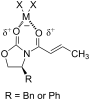
Figure 3: Lewis acid complex of the Evans auxiliary [43].

Scheme 5: DCA reactions of α,β-unsaturated amides utilizing (S,S)-(+)-pseudoephedrine and the OTBS-derivative...

Figure 4: Proposed model accounting for the diastereoselectivity observed in the 1,4-addition of Bn2NLi to α,...

Scheme 6: An example of a tandem conjugate addition–α-alkylation reaction of an α,β-unsaturated amide utilizi...

Scheme 7: Conjugate addition to an α,β-unsaturated bicyclic lactam leading to (+)-paroxetine and (+)-femoxeti...

Scheme 8: Intramolecular conjugate addition reaction to α,β-unsaturated amide.

Scheme 9: Conjugate addition to an α,β-unsaturated pyroglutamate derivative.

Scheme 10: Cu(I)–NHC-catalyzed asymmetric silylation of α,β-unsaturated lactams and amides.

Scheme 11: Asymmetric copper-catalyzed 1,4-borylation of an α,β-unsaturated amide.

Scheme 12: Asymmetric cross-coupling 49 to phenyl chloride.

Scheme 13: Rhodium-catalyzed asymmetric 1,4-arylation of an α,β-unsaturated lactam.

Scheme 14: Rhodium-catalyzed asymmetric 1,4-arylation of an α,β-unsaturated amide.

Scheme 15: Rhodium-catalyzed asymmetric 1,4-arylation of an α,β-unsaturated amide using a chiral bicyclic dien...

Scheme 16: Synthesis of (R)-(−)-baclofen through a rhodium-catalyzed asymmetric 1,4-arylation of lactam 58.

Scheme 17: Rhodium-catalyzed asymmetric 1,4-arylation of an α,β-unsaturated amide and lactam employing organo[...

Scheme 18: Rhodium-catalyzed asymmetric 1,4-arylation of an α,β-unsaturated lactam employing benzofuran-2-ylzi...

Figure 5: Further chiral ligands that have been used in rhodium-catalyzed 1,4-additions of α,β-unsaturated am...

Scheme 19: Palladium-catalyzed asymmetric 1,4-arylation of arylsiloxanes to a α,β-unsaturated lactam.

Scheme 20: SmI2-mediated cyclization of α,β-unsaturated Weinreb amides.

Figure 6: Chiral Lewis acid complexes used in the Mukaiyama–Michael addition of α,β-unsaturated amides.

Scheme 21: Mukaiyama–Michael addition of thioester silylketene acetal to α,β-unsaturated N-alkenoyloxazolidino...

Scheme 22: Asymmetric 1,4-addition of aryl acetylides to α,β-unsaturated thioamides.

Scheme 23: Asymmetric 1,4-addition of alkyl acetylides to α,β-unsaturated thioamides.

Scheme 24: Asymmetric vinylogous conjugate additions of unsaturated butyrolactones to α,β-unsaturated thioamid...

Scheme 25: Gd-catalyzed asymmetric 1,4-cyanation of α,β-unsaturated N-acylpyrroles [205].

Scheme 26: Lewis acid-catalyzed asymmetric 1,4-cyanation of α,β-unsaturated N-acylpyrazole 107.

Scheme 27: Lewis acid mediated 1,4-addition of dibenzyl malonate to α,β-unsaturated N-acylpyrroles.

Scheme 28: Chiral Lewis acid mediated 1,4-radical addition to α,β-unsaturated N-acyloxazolidinone [224].

Scheme 29: Aza-Michael addition of O-benzylhydroxylamine to an α,β-unsaturated N-acylpyrazole.

Scheme 30: An example of the aza-Michael addition of secondary aryl amines to an α,β-unsaturated N-acyloxazoli...

Scheme 31: Aza-Michael additions of anilines to a α,β-unsaturated N-alkenoyloxazolidinone catalyzed by palladi...

Scheme 32: Aza-Michael additions of aniline to an α,β-unsaturated N-alkenoylbenzamide and N-alkenoylcarbamate ...

Scheme 33: Difference between aza-Michael addition ran using the standard protocol versus the slow addition pr...

Scheme 34: Aza-Michael additions of aryl amines salts to an α,β-unsaturated N-alkenoyloxazolidinone catalyzed ...

Scheme 35: Aza-Michael addition of N-alkenoyloxazolidiniones catalyzed by samarium diiodide [244].

Scheme 36: Asymmetric aza-Michael addition of p-anisidine to α,β-unsaturated N-alkenoyloxazolidinones catalyze...

Scheme 37: Asymmetric aza-Michael addition of O-benzylhydroxylamine to N-alkenoyloxazolidinones catalyzed by i...

Scheme 38: Asymmetric 1,4-addition of purine to an α,β-unsaturated N-alkenoylbenzamide catalyzed by (S,S)-(sal...

Scheme 39: Asymmetric 1,4-addition of phosphites to α,β-unsaturated N-acylpyrroles.

Scheme 40: Asymmetric 1,4-addition of phosphine oxides to α,β-unsaturated N-acylpyrroles.

Scheme 41: Tandem Michael-aldol reaction catalyzed by a hydrogen-bonding organocatalyst.

Scheme 42: Examples of the sulfa-Michael–aldol reaction employing α,β-unsaturated N-acylpyrazoles.

Scheme 43: Example of the sulfa-Michael addition of α,β-unsaturated N-alkenoyloxazolidinones.

Figure 7: Structure of cinchona alkaloid-based squaramide catalyst.

Scheme 44: Asymmetric intramolecular oxa-Michael addition of an α,β-unsaturated amide.

Scheme 45: Formal synthesis atorvastatin.
Chemoselective O-acylation of hydroxyamino acids and amino alcohols under acidic reaction conditions: History, scope and applications
- Tor E. Kristensen
Beilstein J. Org. Chem. 2015, 11, 446–468, doi:10.3762/bjoc.11.51
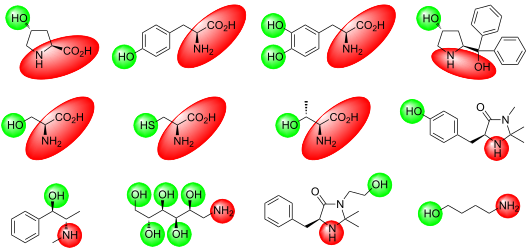
- , Trost and Genêt used a careful O-acetylation of an amino alcohol alkaloid intermediate with acetic anhydride in CH2Cl2 acidified with HClO4 as part of a total synthesis (Scheme 15) [88]. In the footsteps of Bretschneider, chemoselective O-acetylation of natural product amino alcohols also inspired

Graphical Abstract

Scheme 1: Selective O-acetylation of hydroxyamino acids with acetic anhydride in perchloric acid-acetic acid ...

Scheme 2: Selective O-acetylation of L-tyrosine as reported by Bretschneider and Biemann in 1950 [13].

Scheme 3: Selective O-acetylation of L-serine in acetic acid saturated with hydrogen chloride as reported by ...

Scheme 4: Chemoselective O-acetylation of hydroxyamino acids with acetyl chloride in hydrochloric acid–acetic...

Scheme 5: Chemoselective O-acylation of hydroxyamino acids with acyl chlorides in anhydrous trifluoroacetic a...

Scheme 6: Chemoselective O-acylation of hydroxyproline with acyl chlorides or carboxylic anhydrides in methan...

Scheme 7: Chemoselective O-acetylation of L-DOPA as reported by Fuller, Verlander and Goodman in 1978 [35].

Scheme 8: Chemoselective O-acylation of L-tyrosine as reported by Huang, Kimura, Bawarshi-Nassar and Hussain ...

Scheme 9: Preparation of proline amphiphiles or acrylic proline monomers (for macromolecular synthesis) by ch...
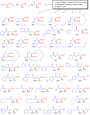
Scheme 10: Preparation of amphiphilic organocatalysts from serine, threonine and cysteine by chemoselective O-...
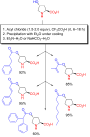
Scheme 11: Preparation of amphiphilic proline organocatalysts by chemoselective O-acylation with acyl chloride...
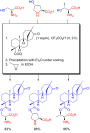
Scheme 12: Amphiphilic organocatalysts prepared from hydroxyamino acids and isosteviol by chemoselective O-acy...

Scheme 13: Preparation of acrylic proline precursors for polymeric organocatalysts by chemoselective O-acylati...

Scheme 14: Conversion of trans-4-hydroxy-L-proline to cis-4-hydroxy-D-proline·HCl and subsequent chemoselectiv...

Scheme 15: Some examples of chemoselective O-acylation of amino alcohols under acidic reaction conditions repo...

Scheme 16: An assembly of chiral acrylic building blocks useful in the synthesis of polymer-supported diphenyl...

Scheme 17: The chemoselective pentaacetylation of D-glucamine under acidic reaction conditions [95].
Stereoselective cathodic synthesis of 8-substituted (1R,3R,4S)-menthylamines
- Carolin Edinger,
- Jörn Kulisch and
- Siegfried R. Waldvogel
Beilstein J. Org. Chem. 2015, 11, 294–301, doi:10.3762/bjoc.11.34
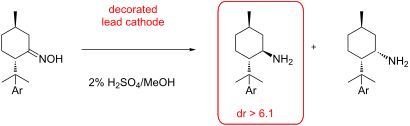
- tools in organic synthesis. Among numerous applications they are applied as chiral ligands [1], as catalysts for various asymmetric transformations [2], and as building blocks for alkaloid and pharmaceutical drug synthesis [3][4]. The increasing number of applications leads to a growing interest in the

Graphical Abstract

Scheme 1: Structural features of 8-substituted menthylamines 1.

Scheme 2: Synthetic strategies to menthylamines.

Scheme 3: Stereoselective synthesis of 8-substituted (1R,3R,4S)-menthylamines.

Scheme 4: Influence of the cathode system onto the stereoselectivity of the reduction of (1R,4S)-menthone oxi...

Scheme 5: Preparation of 8-substituted (1R)-menthones 6 and the corresponding oximes 7.

Scheme 6: Influence of cathode material on the preparation of (1R,3R,4S)-menthylamine 8a.

Scheme 7: Protection of the oxime functionality in 7c due to the sterically demanding diphenyl moiety in 8-po...

Scheme 8: Separation of the diastereomeric 8-substituted menthylamines by crystallization of their hydrochlor...
Formation of nanoparticles by cooperative inclusion between (S)-camptothecin-modified dextrans and β-cyclodextrin polymers
- Thorbjørn Terndrup Nielsen,
- Catherine Amiel,
- Laurent Duroux,
- Kim Lambertsen Larsen,
- Lars Wagner Städe,
- Reinhard Wimmer and
- Véronique Wintgens
Beilstein J. Org. Chem. 2015, 11, 147–154, doi:10.3762/bjoc.11.14
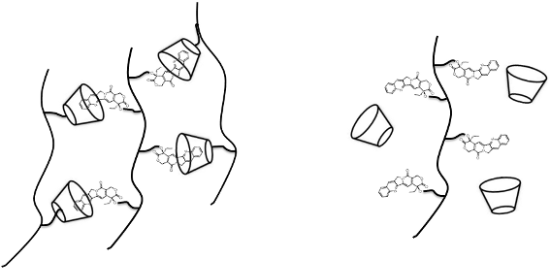
- specific delivery of drugs to the desired place of action lowers the adverse effects associated with conventional chemotherapy tremendously [3]. Therefore, much effort is continuously being made to develop novel drug-carrier systems. (S)-Camptothecin (CPT) is a natural cytotoxic quinoline alkaloid with a

Graphical Abstract

Scheme 1: Reaction scheme for synthesis of azide-modified (S)-camptothecin.

Scheme 2: Cu(I)-catalyzed grafting of azide-modified (S)-camptothecin onto alkyne-modified dextran.

Figure 1: Titration of a) D70GP-CPT2 and b) D10GP-CPT1 by D70HPβ-CD at 298 K showing heat flow as a function ...

Figure 2: Fluorescence emission spectra of a) D70GPCPT and b) D10GPCPT recorded at different concentrations (...
The Shono-type electroorganic oxidation of unfunctionalised amides. Carbon–carbon bond formation via electrogenerated N-acyliminium ions
- Alan M. Jones and
- Craig E. Banks
Beilstein J. Org. Chem. 2014, 10, 3056–3072, doi:10.3762/bjoc.10.323
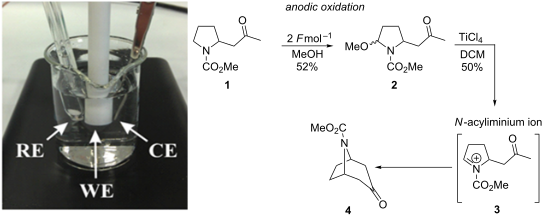
- afforded the carbonyl compound and the 5,6 and 6,6-ring systems of the target compounds. Toyooka and co-workers have designed a route to both enantiomers of the quinolizidine poison frog alkaloid 195C. Key to the success of their synthetic endeavour was the preparation via direct anodic oxidation of
- glycine cation equivalents. Steckhan and co-workers have previously demonstrated the power of electrosynthetic chiral glycine equivalents [99][100]. Combination of technology and natural product analogue synthesis Lastly, Ley and co-workers have recently reported the expedient synthesis of indole alkaloid
- oxidation used in the preparation of the poison frog alkaloid 195C [80]. Preparation of iminosugars using an electrochemical approach [81]. The electrosynthetic preparation of α-L-fucosidase inhibitors [84][85]. Enantioselective synthesis of the anaesthetic ropivacaine 85 [71]. The preparation of

Graphical Abstract

Scheme 1: Application of anodic oxidation to the generation of new carbon-carbon bonds [11].

Scheme 2: The influence of the amino protecting group on the “kinetic” and “thermodynamic” anodic methoxylati...

Scheme 3: Example of the application of the cation pool method [17].

Scheme 4: A thiophenyl electroauxiliary allows for regioselective anodic oxidation [32].

Scheme 5: A diastereoselective cation carbohydroxylation reaction and postulated intermediate 18 [18].

Scheme 6: A radical addition and electron transfer reaction of N-acyliminium ions generated electrosynthetica...

Scheme 7: Catalytic indirect anodic fluorodesulfurization reaction [37].

Figure 1: Schematic of a cation flow system and also shown is the electrochemical microflow reactor reported ...

Figure 2: Example of a parallel laminar flow set-up. Figure redrawn from reference [38].

Figure 3: A catch and release cation pool method [42].

Scheme 8: Micromixing effects on yield 92% vs 36% and ratio of alkylation products [43].

Figure 4: Schematic illustration of the anodic substitution reaction system using acoustic emulsification. Fi...

Scheme 9: Electrooxidation to prepare a chiral oxidation mediator and application to the kinetic resolution o...

Scheme 10: Electrooxidation reactions on 4-membered ring systems [68].

Figure 5: Example of a chiral auxiliary Shono-oxidation intermediate [69].

Scheme 11: An electrochemical multicomponent reaction where a carbon felt anode and platinum cathode were util...

Scheme 12: Preparation of dienes using the Shono oxidation [23].

Scheme 13: Combination of an electroauxiliary mediated anodic oxidation and RCM to afford spirocyclic compound...

Scheme 14: Total synthesis of (+)-myrtine (66) using an electrochemical approach [78].

Scheme 15: Total synthesis of (−)-A58365A (70) and (±)-A58365B (71) [79].

Scheme 16: Anodic oxidation used in the preparation of the poison frog alkaloid 195C [80].

Scheme 17: Preparation of iminosugars using an electrochemical approach [81].

Scheme 18: The electrosynthetic preparation of α-L-fucosidase inhibitors [84,85].

Scheme 19: Enantioselective synthesis of the anaesthetic ropivacaine 85 [71].

Scheme 20: The preparation of synthetically challenging aza-nucleosides employing an electrochemical step [88].

Scheme 21: Synthesis of a bridged tricyclic diproline analogue 93 that induces α-helix conformation into linea...

Scheme 22: Synthesis of (i) a peptidomimetic and (ii) a functionalised peptide from silyl electroauxiliary pre...

Scheme 23: Examples of Phe7–Phe8 mimics prepared using an electrochemical approach [93].

Scheme 24: Preparation of arginine mimics employing an electrooxidation step [96].

Scheme 25: Preparation of chiral cyclic amino acids [20].

Scheme 26: Two-step preparation of Nazlinine 117 using Shono flow electrochemistry [101].
Come-back of phenanthridine and phenanthridinium derivatives in the 21st century
- Lidija-Marija Tumir,
- Marijana Radić Stojković and
- Ivo Piantanida
Beilstein J. Org. Chem. 2014, 10, 2930–2954, doi:10.3762/bjoc.10.312

- potential carcinogenic and mutagenic properties of some derivatives (EB and analogues), which had negative influence on biomedically-oriented studies of the complete phenanthridine class till the end of the 20th century. However, discovery of phenanthridine alkaloid analogues and in parallel new studies of
- bioactivity-guided fractionation, the bioactive compound chelerythrine (21, a quaternary benzo[c]phenanthridine alkaloid) was isolated from Chelidonium majus L. [103]. In addition to strong antihelmintic activity (against D. intermedius), chelerythrine also showed antimicrobial, antifungal and anti

Graphical Abstract

Scheme 1: The Grignard-based synthesis of 6-alkyl phenanthridine.

Scheme 2: Radical-mediated synthesis of 6-arylphenanthridine [14].

Scheme 3: A t-BuO• radical-assisted homolytic aromatic substitution mechanism proposed for the conversion of ...

Scheme 4: Synthesis of 5,6-unsubstituted phenanthridine starting from 2-iodobenzyl chloride and aniline [17].

Scheme 5: Phenanthridine synthesis initiated by UV-light irradiation photolysis of acetophenone O-ethoxycarbo...

Scheme 6: PhI(OAc)2-mediated oxidative cyclization of 2-isocyanobiphenyls with CF3SiMe3 [19,20].

Scheme 7: Targeting 6-perfluoroalkylphenanthridines [21,22].

Scheme 8: Easily accessible biphenyl isocyanides reacting under mild conditions (room temp., visible light ir...

Scheme 9: Microwave irradiation of Diels–Alder adduct followed by UV irradiation of dihydrophenanthridines yi...

Scheme 10: A representative palladium catalytic cycle.

Scheme 11: The common Pd-catalyst for the biphenyl conjugation results simultaneously in picolinamide-directed...

Scheme 12: Pd(0)-mediated cyclisation of imidoyl-selenides forming 6-arylphenanthridine derivatives [16]. The inse...

Scheme 13: Palladium-catalysed phenanthridine synthesis.

Scheme 14: Aerobic domino Suzuki coupling combined with Michael addition reaction in the presence of a Pd(OAc)2...

Scheme 15: Rhodium-catalysed alkyne [2 + 2 + 2] cycloaddition reactions [36].

Scheme 16: The O-acetyloximes derived from 2′-arylacetophenones underwent N–O bond cleavage and intramolecular ...

Scheme 17: C–H arylation with aryl chloride in the presence of a simple diol complex with KOt-Bu (top) [39]; for s...

Scheme 18: The subsequent aza-Claisen rearrangement, ring-closing enyne metathesis and Diels–Alder reaction – ...

Scheme 19: Phenanthridine central-ring cyclisation with simultaneous radical-driven phosphorylation [42].

Scheme 20: Three component reaction yielding the benzo[a]phenanthridine core in excellent yields [44].
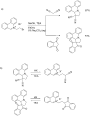
Scheme 21: a) Reaction of malononitrile and 1,3-indandione with BEP to form the cyclised DPP products; b) pH c...

Figure 1: Schematic presentation of the intercalative binding mode by the neighbour exclusion principle and i...

Figure 2: Urea and guanidine derivatives of EB with modified DNA interactions [57].

Figure 3: Structure of mono- (3) and bis-biguanide (4) derivative. Fluorescence (y-axis normalised to startin...

Scheme 22: Bis-phenanthridinium derivatives (5–7; inert aliphatic linkers, R = –(CH2)4– or –(CH2)6–): rigidity...

Figure 4: Series of amino acid–phenanthridine building blocks (general structure 10; R = H; Gly) and peptide-...

Figure 5: General structure of 45 bis-ethidium bromide analogues. Reproduced with permission from [69]. Copyright...

Scheme 23: Top: Recognition of poly(U) by 12 and ds-polyAH+ by 13; bottom: Recognition of poly(dA)–poly(dT) by ...

Figure 6: The bis-phenanthridinium–adenine derivative 15 (LEFT) showed selectivity towards complementary UMP;...

Figure 7: The neomycin–methidium conjugate targeting DNA:RNA hybrid structures [80].

Figure 8: Two-colour RNA intercalating probe for cell imaging applications: Left: Chemical structure of EB-fl...

Figure 9: The ethidium bromide nucleosides 17 (top) and 18 (bottom). DNA duplex set 1 and 2 (E = phenanthridi...

Figure 10: Left: various DNA duplexes; DNA1 and DNA2 used to study the impact on the adjacent basepair type on...

Figure 11: Structure of 4,9-DAP derivative 19; Rright: MIAPaCa-2 cells stained with 10 μM 19 after 60 and 120 ...

Figure 12: Examples of naturally occurring phenanthridine analogues.
Formal total syntheses of classic natural product target molecules via palladium-catalyzed enantioselective alkylation
- Yiyang Liu,
- Marc Liniger,
- Ryan M. McFadden,
- Jenny L. Roizen,
- Jacquie Malette,
- Corey M. Reeves,
- Douglas C. Behenna,
- Masaki Seto,
- Jimin Kim,
- Justin T. Mohr,
- Scott C. Virgil and
- Brian M. Stoltz
Beilstein J. Org. Chem. 2014, 10, 2501–2512, doi:10.3762/bjoc.10.261

- synthetic approaches have been reported [61][62]. One popular target in this family is aspidospermine (36, Scheme 8). Although its medicinal potency is inferior to other members of the class, this alkaloid has served as a proving ground for many synthetic chemists. In 1989, Meyers reported an
- enantioselective synthesis of the (4aS,8aR,8S)-hydrolilolidone core 37 [63][64] present in aspidospermine (36), and thus a formal total synthesis of the alkaloid itself, intercepting Stork’s classic route [61]. One precursor described in the core synthesis is enone 38, which bears the quaternary stereocenter of
- [71]. It features a tetracyclic scaffold with a nine-membered ring and an all-carbon quaternary stereocenter. This alkaloid is a microtubule-disrupting agent that displays similar cellular effects to paclitaxel [72][73]. Because of its biological activities and potential pharmaceutical use, many

Graphical Abstract
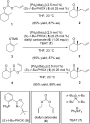
Scheme 1: Three classes of Pd-catalyzed enantioselective allylic alkylations.

Figure 1: Selected natural products from Thujopsis dolabrata.

Scheme 2: Srikrishna and Anebouselvy’s approach to (+)-thujopsene.

Scheme 3: Formal total synthesis of (−)-thujopsene.

Scheme 4: Renaud’s formal total synthesis of (−)-quinic acid.

Scheme 5: Formal total synthesis of (−)-quinic acid.

Scheme 6: Danishefsky’s approach to (±)-dysidiolide.

Scheme 7: Formal total synthesis of (−)-dysidiolide.

Scheme 8: Meyers’ approach to unnatural (+)-aspidospermine.

Scheme 9: Formal total synthesis of (−)-aspidospermine.

Scheme 10: Magnus’ approach to (±)-rhazinilam.

Scheme 11: Formal total synthesis of (+)-rhazinilam.

Scheme 12: Amat’s approach to (−)-quebrachamine.

Scheme 13: Formal total synthesis of (+)-quebrachamine.

Scheme 14: Pandey’s approach to (+)-vincadifformine.
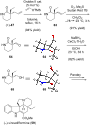
Scheme 15: Formal total synthesis of (−)-vincadifformine.

Scheme 16: Two generations of building blocks.
Chiral phosphines in nucleophilic organocatalysis
- Yumei Xiao,
- Zhanhu Sun,
- Hongchao Guo and
- Ohyun Kwon
Beilstein J. Org. Chem. 2014, 10, 2089–2121, doi:10.3762/bjoc.10.218
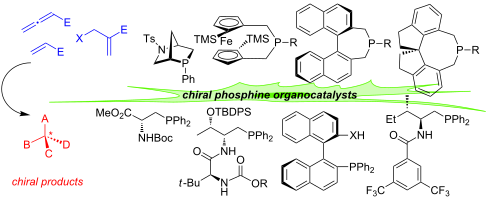
- , Kwon and Andrews completed the first enantioselective total synthesis of the indole alkaloid (+)-ibophyllidine in 15 steps and 13% overall yield from N-Boc-indole-3-aldehyde (Scheme 32) [66]. This approach was the first non-formal total synthesis of a complex natural product employing phosphine

Graphical Abstract

Figure 1: Cyclic chiral phosphines based on bridged-ring skeletons.

Figure 2: Cyclic chiral phosphines based on binaphthyl skeletons.

Figure 3: Cyclic chiral phosphines based on ferrocene skeletons.

Figure 4: Cyclic chiral phosphines based on spirocyclic skeletons.

Figure 5: Cyclic chiral phosphines based on phospholane ring skeletons.

Figure 6: Acyclic chiral phosphines.

Figure 7: Multifunctional chiral phosphines based on binaphthyl skeletons.

Figure 8: Multifunctional chiral phosphines based on amino acid skeletons.

Scheme 1: Asymmetric [3 + 2] annulations of allenoates with electron-deficient olefins, catalyzed by the chir...

Scheme 2: Asymmetric [3 + 2] annulations of allenoate and enones, catalyzed by the chiral binaphthyl-based ph...

Scheme 3: Asymmetric [3 + 2] annulations of N-substituted olefins and allenoates, catalyzed by the chiral bin...

Scheme 4: Asymmetric [3 + 2] annulations of 2-aryl-1,1-dicyanoethylenes with ethyl allenoate, catalyzed by th...

Scheme 5: Asymmetric [3 + 2] annulations of 3-alkylideneindolin-2-ones with ethyl allenoate, catalyzed by the...

Scheme 6: Asymmetric [3 + 2] annulations of 2,6-diarylidenecyclohexanones with allenoates, catalyzed by the c...

Scheme 7: Asymmetric [3 + 2] annulations of allenoate with alkylidene azlactones, catalyzed by the chiral bin...

Scheme 8: Asymmetric [3 + 2] annulations of C60 with allenoates, catalyzed by the chiral phosphine B6.

Scheme 9: Asymmetric [3 + 2] annulations of α,β-unsaturated esters and ketones with an allenoate, catalyzed b...

Scheme 10: Asymmetric [3 + 2] annulations of exocyclic enones with allenoates, catalyzed by the ferrocene-modi...

Scheme 11: Asymmetric [3 + 2] annulations of enones with an allenylphosphonate, catalyzed by the ferrocene-mod...

Scheme 12: Asymmetric [3 + 2] annulations of 3-alkylidene-oxindoles with ethyl allenoate, catalyzed by the fer...

Scheme 13: Asymmetric [3 + 2] annulations of dibenzylideneacetones with ethyl allenoate, catalyzed by the ferr...

Scheme 14: Asymmetric [3 + 2] annulations of trisubstituted alkenes with ethyl allenoate, catalyzed by the fer...

Scheme 15: Asymmetric [3 + 2] annulations of 2,6-diarylidenecyclohexanones with allenoates, catalyzed by the f...

Scheme 16: Asymmetric [3 + 2] annulations of α,β-unsaturated ketones with ethyl allenoates, catalyzed by the f...

Scheme 17: Asymmetric [3 + 2] annulations of α,β-unsaturated esters with allenoates, catalyzed by the ferrocen...

Scheme 18: Asymmetric [3 + 2] annulations of alkylidene azlactones with allenoates, catalyzed by the chiral sp...

Scheme 19: Asymmetric [3 + 2] annulations of α-trimethylsilyl allenones and electron-deficient olefins, cataly...

Scheme 20: Asymmetric [3 + 2] annulations of α,β-unsaturated ketones with an allenone, catalyzed by the chiral...

Scheme 21: Asymmetric [3 + 2] annulations of cyclic enones with allenoates, catalyzed by the chiral α-amino ac...

Scheme 22: Asymmetric [3 + 2] annulations of arylidenemalononitriles and analogues with an allenoate, catalyze...

Scheme 23: Asymmetric [3 + 2] annulations of α,β-unsaturated esters with an allenoate, catalyzed by the chiral...

Scheme 24: Asymmetric [3 + 2] annulations of 3,5-dimethyl-1H-pyrazole-derived acrylamides with an allenoate, c...

Scheme 25: Asymmetric [3 + 2] annulations of maleimides with allenoates, catalyzed by the chiral phosphine H10....

Scheme 26: Asymmetric [3 + 2] annulations of α-substituted acrylates with allenoate, catalyzed by the chiral p...

Scheme 27: Asymmetric [3 + 2] annulation of an N-tosylimine with an allenoate, catalyzed by the chiral phosphi...

Scheme 28: Asymmetric [3 + 2] annulations of N-tosylimines with an allenoate, catalyzed by the chiral phosphin...

Scheme 29: Asymmetric [3 + 2] annulations of N-tosylimines with an allenoate, catalyzed by the chiral phosphin...

Scheme 30: Asymmetric [3 + 2] annulations of N-diphenylphosphinoyl aromatic imines with butynoates, catalyzed ...

Scheme 31: Asymmetric [3 + 2] annulations of N-tosylimines with allenylphosphonates, catalyzed by the chiral p...

Scheme 32: Asymmetric [3 + 2] annulation of an N-tosylimine with an allenoate, catalyzed by the chiral phosphi...

Scheme 33: Asymmetric [3 + 2] annulations of N-diphenylphosphinoyl aromatic imines with allenoates (top), cata...

Scheme 34: Asymmetric [3 + 2] annulation of N-diphenylphosphinoylimines with allenoates, catalyzed by the chir...

Scheme 35: Asymmetric [3 + 2] annulation of an azomethine imine with an allenoate, catalyzed by the chiral pho...

Scheme 36: Asymmetric [3 + 2] annulations between α,β-unsaturated esters/ketones and 3-butynoates, catalyzed b...

Scheme 37: Asymmetric intramolecular [3 + 2] annulations of electron-deficient alkenes and MBH carbonates, cat...

Scheme 38: Asymmetric [3 + 2] annulations of methyleneindolinone and methylenebenzofuranone derivatives with M...

Scheme 39: Asymmetric [3 + 2] annulations of activated isatin-based alkenes with MBH carbonates, catalyzed by ...

Scheme 40: Asymmetric [3 + 2] annulations of maleimides with MBH carbonates, catalyzed by the chiral phosphine ...

Scheme 41: A series of [3 + 2] annulations of various activated alkenes with MBH carbonates, catalyzed by the ...

Scheme 42: Asymmetric [3 + 2] annulations of an alkyne with isatins, catalyzed by the chiral phosphine F1.

Scheme 43: Asymmetric [4 + 2] annulations catalyzed by the chiral phosphine B1.

Scheme 44: Asymmetric [4 + 2] annulations catalyzed by the chiral phosphine H5.

Scheme 45: Asymmetric [4 + 2] annulations catalyzed by the chiral phosphines H13 and H12.

Scheme 46: Asymmetric [4 + 2] annulations catalyzed by the chiral phosphine H6.

Scheme 47: Kerrigan’s [2 + 2] annulations of ketenes with imines, catalyzed by the chiral phosphine B7.

Scheme 48: Asymmetric [4 + 1] annulations, catalyzed by the chiral phosphine G6.

Scheme 49: Asymmetric homodimerization of ketenes, catalyzed by the chiral phosphine F5 and F6.

Scheme 50: Aza-MBH/Michael reactions, catalyzed by the chiral phosphine G1.

Scheme 51: Tandem RC/Michael additions, catalyzed by the chiral phosphine H14.

Scheme 52: Intramolecular tandem RC/Michael addition, catalyzed by the chiral phosphine H15.

Scheme 53: Double-Michael addition, catalyzed by the chiral aminophosphine G9.

Scheme 54: Tandem Michael addition/Wittig olefinations, mediated by the chiral phosphine BIPHEP.

Scheme 55: Asymmetric Michael additions, catalyzed by the chiral phosphines H7, H8, and H9.

Scheme 56: Asymmetric γ-umpolung additions, catalyzed by the chiral phosphine A1.

Scheme 57: Asymmetric γ-umpolung additions, catalyzed by the chiral phosphines E2 and E3.

Scheme 58: Intramolecular γ-additions of hydroxy-2-alkynoates, catalyzed by the chiral phosphine D2.

Scheme 59: Intra-/intermolecular γ-additions, catalyzed by the chiral phosphine D2.

Scheme 60: Intermolecular γ-additions, catalyzed by the chiral phosphines B5 and B3.

Scheme 61: Intermolecular γ-additions, catalyzed by the chiral phosphines E6 and B4.

Scheme 62: Asymmetric allylic substitution of MBH acetates, catalyzed by the chiral phosphine G2.

Scheme 63: Allylic substitutions between MBH acetates or carbonates and an array of nucleophiles, catalyzed by...

Scheme 64: Asymmetric acylation of diols, catalyzed by the chiral phosphines E4 and E5.

Scheme 65: Kinetic resolution of secondary alcohols, catalyzed by the chiral phosphine E8 and E9.
Selective allylic hydroxylation of acyclic terpenoids by CYP154E1 from Thermobifida fusca YX
- Anna M. Bogazkaya,
- Clemens J. von Bühler,
- Sebastian Kriening,
- Alexandrine Busch,
- Alexander Seifert,
- Jürgen Pleiss,
- Sabine Laschat and
- Vlada B. Urlacher
Beilstein J. Org. Chem. 2014, 10, 1347–1353, doi:10.3762/bjoc.10.137
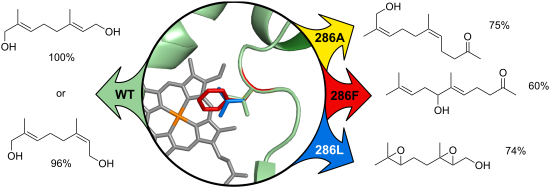
- Catharanthus roseus [40] has been cloned and heterologously expressed in baculovirus-infected insect cells [41]. This cytochrome P450 monooxygenase belonging to the CYP76B family has been demonstrated to be involved into the biosynthesis of the alkaloid secologanin, and produced 8-hydroxynerol. It should be

Graphical Abstract

Figure 1: Immediate heme surroundings shown for the nearest relative of CYP154E1 with available crystal struc...
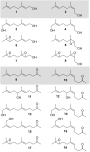
Scheme 1: Terpene substrates (grey background) and their oxidised derivatives.

Scheme 2: a) Ac2O, pyridine, room temperature, 24 h; b) SeO2, t-BuOOH, CH2Cl2, 0 °C, 5 h; c) K2CO3, MeOH, roo...

Scheme 3: a) SeO2, t-BuOOH, CH2Cl2, 0 °C, 3.5 h.
Preparation of phosphines through C–P bond formation
- Iris Wauters,
- Wouter Debrouwer and
- Christian V. Stevens
Beilstein J. Org. Chem. 2014, 10, 1064–1096, doi:10.3762/bjoc.10.106
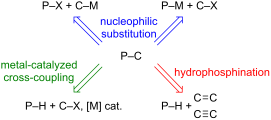
- used to carry out an asymmetric alkylation reaction (Scheme 4). The monoalkylation of phosphine–borane complex 15 was performed in the presence of the Cinchona alkaloid ammonium salt 16 [50]. However, the enantioselectivity of the reaction was low. Imamoto et al. prepared a new tetraphosphine ligand 19

Graphical Abstract

Scheme 1: Synthesis of P-stereogenic phosphines 5 using menthylphosphinite borane diastereomers 2.

Scheme 2: Enantioselective synthesis of chiral phosphines 10 with ephedrine as a chiral auxiliary.

Scheme 3: Chlorophosphine boranes 11a as P-chirogenic electrophilic building blocks.

Scheme 4: Monoalkylation of phenylphosphine borane 15 with methyl iodide in the presence of Cinchona alkaloid...

Scheme 5: Preparation of tetraphosphine borane 19.

Scheme 6: Using chiral chlorophosphine-boranes 11b as phosphide borane 20 precursors.

Scheme 7: Nickel-catalyzed cross-coupling (dppe = 1,2-bis(diphenylphosphino)ethane).

Scheme 8: Pd-catalyzed cross-coupling reaction with organophosphorus stannanes 30.

Scheme 9: Copper iodide catalyzed carbon–phosphorus bond formation.

Scheme 10: Thermodynamic kinetic resolution as the origin of enantioselectivity in metal-catalyzed asymmetric ...

Scheme 11: Ru-catalyzed asymmetric phosphination of benzyl and alkyl chlorides 35 with HPPhMe (36a, PHOX = pho...

Scheme 12: Pt-catalyzed asymmetric alkylation of secondary phosphines 36b.

Scheme 13: Different adducts 43 can result from hydrophosphination.

Scheme 14: Pt-catalyzed asymmetric hydrophosphination.

Scheme 15: Intramolecular hydrophosphination of phosphinoalkene 47.

Scheme 16: Organocatalytic asymmetric hydrophosphination of α,β-unsaturated aldehydes 59.

Scheme 17: Preparation of phosphines using zinc organometallics.

Scheme 18: Preparation of alkenylphosphines 71a from alkenylzirconocenes 69 (dtc = N,N-diethyldithiocarbamate,...

Scheme 19: SNAr with P-chiral alkylmethylphosphine boranes 13c.

Scheme 20: Synthesis of QuinoxP 74 (TMEDA = tetramethylethylenediamine).

Scheme 21: Pd-Mediated couplings of a vinyl triflate 76 with diphenylphosphine borane 13e.

Figure 1: Menthone (83) and camphor (84) derived chiral phosphines.

Scheme 22: Palladium-catalyzed cross-coupling reaction of vinyl tosylates 85 and 87 with diphenylphosphine bor...

Scheme 23: Attempt for the enantioselective palladium-catalyzed C–P cross-coupling reaction between an alkenyl...

Scheme 24: Enol phosphates 88 as vinylic coupling partners in the palladium-catalyzed C–P cross-coupling react...

Scheme 25: Nickel-catalyzed cross-coupling in the presence of zinc (dppe = 1,2-bis(diphenylphosphino)ethane).

Scheme 26: Copper-catalyzed coupling of secondary phosphines with vinyl halide 94.

Scheme 27: Palladium-catalyzed cross-coupling of aryl iodides 97 with organoheteroatom stannanes 30.

Scheme 28: Synthesis of optically active phosphine boranes 100 by cross-coupling with a chiral phosphine boran...

Scheme 29: Palladium-catalyzed P–C cross-coupling reactions between primary or secondary phosphines and functi...

Scheme 30: Enantioselective synthesis of a P-chirogenic phosphine 108.

Scheme 31: Enantioselective arylation of silylphosphine 110 ((R,R)-Et-FerroTANE = 1,1'-bis((2R,4R)-2,4-diethyl...

Scheme 32: Nickel-catalyzed arylation of diphenylphosphine 25d.

Scheme 33: Nickel-catalyzed synthesis of (R)-BINAP 116 (dppe = 1,2-bis(diphenylphosphino)ethane, DABCO = 1,4-d...

Scheme 34: Nickel-catalyzed cross-coupling between aryl bromides 119 and diphenylphosphine (25d) (dppp = 1,3-b...

Scheme 35: Stereocontrolled Pd(0)−Cu(I) cocatalyzed aromatic phosphorylation.

Scheme 36: Preparation of alkenylphosphines by hydrophosphination of alkynes.

Scheme 37: Palladium and nickel-catalyzed addition of P–H to alkynes 125a.

Scheme 38: Palladium-catalyzed asymmetric hydrophosphination of an alkyne 128.

Scheme 39: Ruthenium catalyzed hydrophosphination of propargyl alcohols 132 (cod = 1,5-cyclooctadiene).

Scheme 40: Cobalt-catalyzed hydrophosphination of alkynes 134a (acac = acetylacetone).

Scheme 41: Tandem phosphorus–carbon bond formation–oxyfunctionalization of substituted phenylacetylenes 125c (...

Scheme 42: Organolanthanide-catalyzed intramolecular hydrophosphination/cyclization of phosphinoalkynes 143.

Scheme 43: Hydrophosphination of alkynes 134c catalyzed by ytterbium-imine complexes 145 (hmpa = hexamethylpho...

Scheme 44: Calcium-mediated hydrophosphanylation of alkyne 134d.

Scheme 45: Formation and substitution of bromophosphine borane 151.

Scheme 46: General scheme for a nickel or copper catalyzed cross-coupling reaction.

Scheme 47: Copper-catalyzed synthesis of alkynylphosphines 156.
Primary-tertiary diamine-catalyzed Michael addition of ketones to isatylidenemalononitrile derivatives
- Akshay Kumar and
- Swapandeep Singh Chimni
Beilstein J. Org. Chem. 2014, 10, 929–935, doi:10.3762/bjoc.10.91

- 86% yield and 88% ee (Table 5, entry 9). A recently reported similar reaction catalyzed by Cinchona alkaloid-based primary amine catalyst requires high catalyst loading and is only suitable for N-unprotected isatylidenemalononitrile derivatives [5]. In contrast, our methodology is suitable for both N

Graphical Abstract

Figure 1: Oxindole based Michael acceptors.

Figure 2: Primary-tertiary diamine organocatalysts.

Scheme 1: Diamine catalyzed Michael addition of acetone to isatylidenemalononitrile.

Scheme 2: Substrate scope of the addition of 2 with 3 catalyzed by 1a D-CSA.

Scheme 3: One-pot, three-component Knoevenagel condensation–Michael addition.

Scheme 4: Cascade reduction–cyclization for the synthesis of spirooxindole.
Aza-Diels–Alder reaction between N-aryl-1-oxo-1H-isoindolium ions and tert-enamides: Steric effects on reaction outcome
- Amitabh Jha,
- Ting-Yi Chou,
- Zainab ALJaroudi,
- Bobby D. Ellis and
- T. Stanley Cameron
Beilstein J. Org. Chem. 2014, 10, 848–857, doi:10.3762/bjoc.10.81
- -a]isoquinolinone which has been isolated from Berberis darwinii [1][2][3]. Cryptolepine is an indolo[3,2-b]quinolone alkaloid found in west African shrub Cryptolepis sanguinolenta, a plant used in traditional medicine for the treatment of malaria [3]. This alkaloid has shown potent antiplasmodial [4
- ] and anticancer [5] activities. The bioactive β-carboline alkaloids canthinone [6] and vinpocitine [7] also bear these substructures. Vinpocetine is a dehydrated derivative of the natural alkaloid of vincamine [8]. It is reported to have cerebral blood-flow enhancing [7] and neuroprotective effects [9

Graphical Abstract

Figure 1: Pyridoisoindole frameworks (highlighted) in bioactive molecules and compounds under present investi...

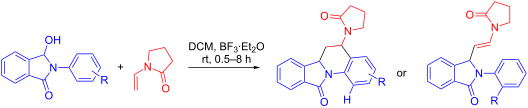
Scheme 1: Comparison of the retro-synthetic approach for the synthesis of isoindoloquinoline skeleton reporte...

Scheme 2: Mechanistic explanation for regio- and diastereoselectivity leading to (±)-6,6a-dihydroisoindolo[2,...

Figure 2: ORTEP diagrams and 2D structures for the isoindolo[2,1-a]quinolone derivatives 1b, 1h and 2b.

Figure 3: ORTEP diagram and 2D structure of E-2-(2-fluorophenyl)-3-(2-(2-oxopyrrolidin-1-yl)vinyl)isoindolin-...

Scheme 3: Most plausible mechamism for the formation of E-2-(2-substituted-phenyl)-3-(2-(2-oxopyrrolidin-1-yl...
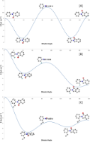
Figure 4: Rotational barrier calculation across N-aryl bond for the N-acyliminium ion intermediates of 1a [A]...
An oxidative amidation and heterocyclization approach for the synthesis of β-carbolines and dihydroeudistomin Y
- Suresh Babu Meruva,
- Akula Raghunadh,
- Raghavendra Rao Kamaraju,
- U. K. Syam Kumar and
- P. K. Dubey
Beilstein J. Org. Chem. 2014, 10, 471–480, doi:10.3762/bjoc.10.45

- activity. Xestomanzamine A (3) [5] is a β-carboline alkaloid with an 1-methyl-1H-imidazole-5-acyl group at the C-1 position and was isolated from the Okinawan marine sponge Xestopongia sp. The other β-carboline alkaloids reported in the literature are fascaplysin (4) [7], eudistomin A (5a) [3], harmine (5b

Graphical Abstract

Figure 1: Natural products containing the β-carboline skeletal.

Scheme 1: Retrosynthetic analysis of 6.

Scheme 2: Plausible mechanism of the oxidative amidation for 9.

Scheme 3: Synthesis of α-ketoamide 9.

Scheme 4: Synthesis of dihydroeudistomin Y analogues.

Scheme 5: Plausible mechanism for the formation of 7.

Scheme 6: Rearrangement of 8a into 7a and coupling interactions of 7a.

Figure 2: COSY and HSQC of 8a and 7a.



