


Search results
Search for "analogue" in Full Text gives 622 result(s) in Beilstein Journal of Organic Chemistry. Showing first 200.
Synthesis of purines and adenines containing the hexafluoroisopropyl group
Beilstein J. Org. Chem. 2020, 16, 2739–2748, doi:10.3762/bjoc.16.224
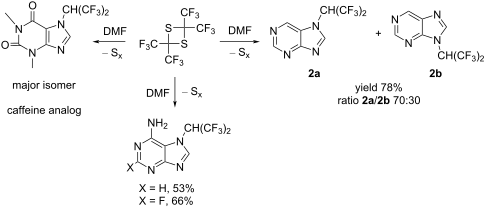
- caffeine analogue, modified by the attachment of two CF3 groups to the methyl group. This is the first example of an introduction of a fluoroalkyl group bigger than CF3 or CF2H into a theophylline (7) molecule, since known examples of fluorinated caffeine derivatives are limited to 7-trifluoromethyl



Selective recognition of ATP by multivalent nano-assemblies of bisimidazolium amphiphiles through “turn-on” fluorescence response
Beilstein J. Org. Chem. 2020, 16, 2728–2738, doi:10.3762/bjoc.16.223
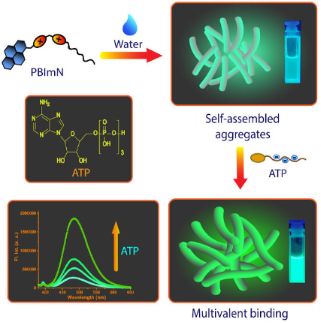
- , Figure S10b and 10c). The absorption maxima red shifted slightly and increased scattering was observed at higher amounts of ATP. The A0–0/A0–1 values were also found to decrease upon formation of the co-aggregates with ATP (Supporting Information File 1, Table S5). The small-chain analogue, PBIm4 (100 µM


Synthesis and characterization of S,N-heterotetracenes
Beilstein J. Org. Chem. 2020, 16, 2636–2644, doi:10.3762/bjoc.16.214

- systems. The various obtained heteroatom sequences ‘SSNS’ (SN4), ‘SNNS’ (SN4’’), and ‘NSSN’ (SN4’) allowed for evaluation of structure–property relationships relative to the sulfur analogue tetrathienoacene (‘SSSS’). In line with the results for the whole series of S,N-heteroacenes, we find that
- azide precursors, and a Cadogan cyclization of nitro-substituted precursors were successfully applied. The various heteroatom sequences ‘SSNS’, ‘SNNS’, and benzannulated ‘NSSN’ allowed for evaluation of structure–property relationships relative to sulfur analogue tetrathienoacene (‘SSSS’). In line with


Synthesis of novel fluorinated building blocks via halofluorination and related reactions
Beilstein J. Org. Chem. 2020, 16, 2562–2575, doi:10.3762/bjoc.16.208
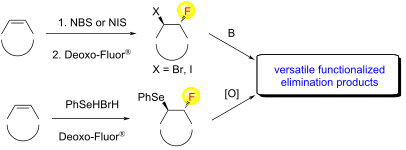
- was similar to the N-benzyl analogue 19. The treatment of 24 with Deoxo-Fluor®/NBS yielded two bromofluorinated products and the dibrominated compound 26. Unfortunately, from the two bromofluorinated products, only (rac)-25a could be isolated in a pure form (Scheme 14). The reaction of 24 with NIS


Synthetic approaches to bowl-shaped π-conjugated sumanene and its congeners
Beilstein J. Org. Chem. 2020, 16, 2212–2259, doi:10.3762/bjoc.16.186
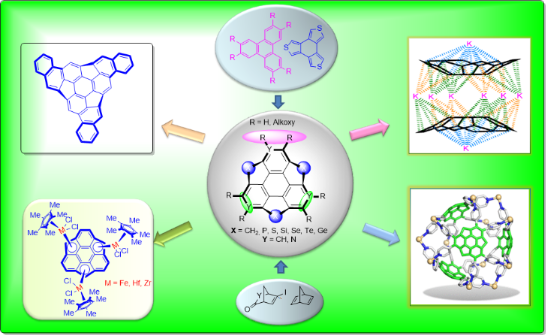
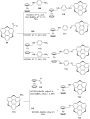
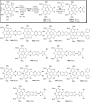
- [CpRu(η6-sumanene)]PF6 126 along with its bowl-to-bowl inversion and anticipated it to be more flexible in comparison to the iron analogue 123a, may be due to the longer C–Ru bond (Scheme 32) [64]. The complex 126 was prepared in a similar manner as its iron analogue was prepared. Quite recently











Naphthalene diimide bis-guanidinio-carbonyl-pyrrole as a pH-switchable threading DNA intercalator
Beilstein J. Org. Chem. 2020, 16, 2201–2211, doi:10.3762/bjoc.16.185
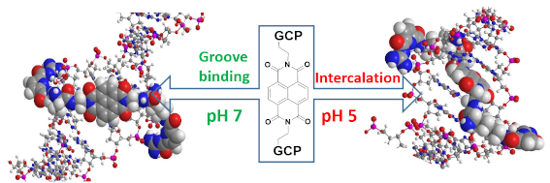
- naphthalene diimde analogue (NDI) equipped at the imide positions with two guanidinio-carbonyl-pyrrole (GCP) pendant arms interacted significantly stronger with ds-DNA at pH 5 than at pH 7, due to reversible protonation of the GCP arms. This was consequence of a pH-switchable threading intercalation into ds
- most likely bind within one of the DNA/RNA grooves, as in previously described aryl-GCP conjugates [16][17][18][19][20][21][22]. Further, the designed novel naphthalene diimide (NDI) analogue 4 (Scheme 1) is characterized by four pH-dependent positive charges, two of them present at neutral conditions
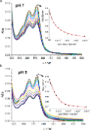
- analogue poly(dAdT)2 (Table S2, Supporting Information File 1). For comparison between double-stranded (ds) DNA and ds-RNA, poly(rA)–poly(rU) was chosen as an A-helical structure having a major groove convenient for binding of bulky small molecules. Results and Discussion Synthesis The synthesis of





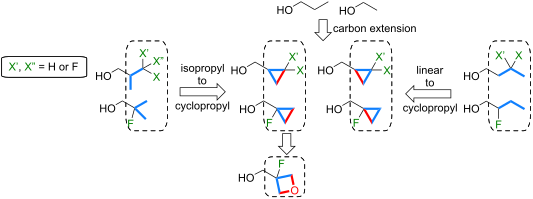
Lipophilicity trends upon fluorination of isopropyl, cyclopropyl and 3-oxetanyl groups
Beilstein J. Org. Chem. 2020, 16, 2141–2150, doi:10.3762/bjoc.16.182
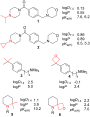
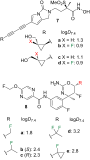
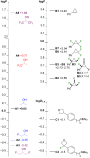
- give analogue 7b reduced the lipophilicity. Interestingly, while the nonfluorinated 7a and 7c diastereomers have different logD7.4 values, this is not the case for their fluorinated analogues 7b and 7d. Oxazine derivative 8 featured in the development of centrally active β-secretase (BACE1) inhibitors
- [24]. Although the logD7.4 of the unsubstituted cyclopropyl containing analogue was not provided, it can be seen that two-carbon extension of 8a, and one-carbon extension of 8b,c to give the cyclopropyl derivative 8e, cause a lipophilicity increase. Conversely, changing a CF2Me for a cPrF group (8d to
- (compare E1 with F1). A much lower lipophilicity decrease is seen when converting the acyclic β-fluorinated compounds D2 and G2 to the cyclopropyl analogue E2, but an appreciable logP decrease is still seen going from E2 to the oxetanyl derivative F2. With γ-fluorination, the logP decreases are similarly



Naphthalene diimide–amino acid conjugates as novel fluorimetric and CD probes for differentiation between ds-DNA and ds-RNA
Beilstein J. Org. Chem. 2020, 16, 2032–2045, doi:10.3762/bjoc.16.170
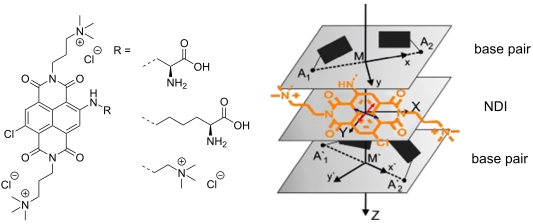
- ). Schematic representation of the alignment of the intercalating 3a (left) and 3b (right) between the base pairs of the oligonucleotide. The complex with 3b was prepared analogously to the NDI analogue [53] by replacing the threading intercalator in PDB258D [54] with 3b, and performing MM2 minimisation in


Automated high-content imaging for cellular uptake, from the Schmuck cation to the latest cyclic oligochalcogenides
Beilstein J. Org. Chem. 2020, 16, 2007–2016, doi:10.3762/bjoc.16.167
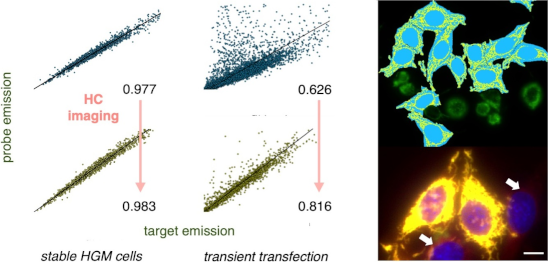
- )pyrrole (GCP) cation 1 as a synthetic analogue of the guanidinium cations, somehow a “super-guanidinium” conceived to drive “arginine magic” [20][21] to the extreme (Figure 1) [23]. The power of the Schmuck cation to bind carboxylate and phosphate anions in competitive water has several origins [22




Selective preparation of tetrasubstituted fluoroalkenes by fluorine-directed oxetane ring-opening reactions
Beilstein J. Org. Chem. 2020, 16, 1936–1946, doi:10.3762/bjoc.16.160
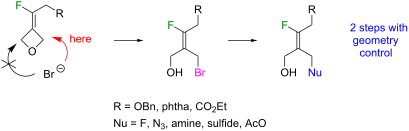
- -selectivity (as determined by 1H NMR of the crude). As in case of the fluorinated analogue, a substantial part of the newly formed alcohol 5d reacted with acetic acid forming the corresponding acetate 5d’. Interestingly, it appeared that only the E-isomer of 5d reacted with AcOH giving pure E-5d’ in 44
- ) and CSA (2 equiv) an 84% conversion into mainly brominated lactone 15 (79%) with traces of hydroxylated lactone 14, and of bromoalkene Z-13 was determined by crude 19F NMR. The remaining 8% appeared to be the β-chloromethyllactone 19 (see Scheme 7 below), an analogue of 15 as determined by NMR


Synthesis, docking study and biological evaluation of ᴅ-fructofuranosyl and ᴅ-tagatofuranosyl sulfones as potential inhibitors of the mycobacterial galactan synthesis targeting the galactofuranosyltransferase GlfT2
Beilstein J. Org. Chem. 2020, 16, 1853–1862, doi:10.3762/bjoc.16.152
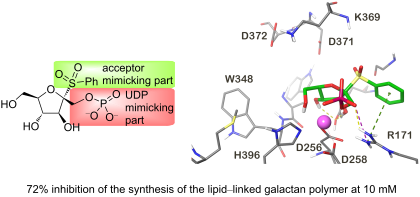
- fluorinated exo-glycal analogue of UDP-Galf in a radiometric assay with a glycolipid acceptor substrate and crude mycobacterial enzymes [31]. Therefore, we decided to examine compounds 1bα and 3a, representing the best and the worst inhibitors, respectively, according to the docking study, in the range of 1


Polarity effects in 4-fluoro- and 4-(trifluoromethyl)prolines
Beilstein J. Org. Chem. 2020, 16, 1837–1852, doi:10.3762/bjoc.16.151
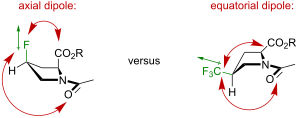
- chemically inert under most biologically relevant conditions. The presence of these groups adjacent to the proline structure helps to modulate the conformational landscape of the parent amino acid, and this effectively alters the folding of the peptide chain when an analogue is included in it as a residue
- complex structures: peptides and proteins. Results and Discussion Model compounds The study was originally set up following an assumption that a peptide containing a proline analogue would form a system of three dipoles. The peptide bond itself creates a strong dipole, with a direction that roughly aligns
- fluorine-containing substituent adds a new dipole to the system. A C–F dipole is estimated as 1.9 D, whereas a CF3-group dipole is about 2.4 D [60]. Thus, a proline analogue that contains these substituents would form a system of three mutually interacting dipoles (Figure 3). To mimic this situation, a


Pauson–Khand reaction of fluorinated compounds
Beilstein J. Org. Chem. 2020, 16, 1662–1682, doi:10.3762/bjoc.16.138
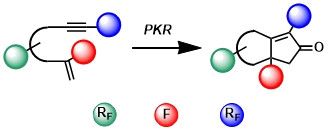
- steric or electronic nature of the other substituent. These results contrast with those obtained for non-fluorinated analogue (ethyl 2-butynoate) for which the expected regioisomer 60 was formed, bearing the methyl group at the α-position and the electron-withdrawing ester group in the β-position. These




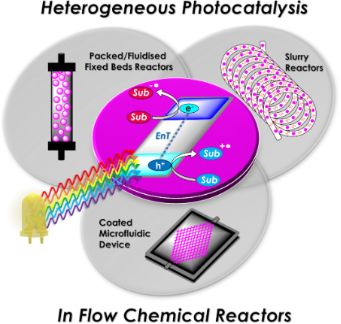
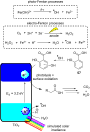
Heterogeneous photocatalysis in flow chemical reactors
Beilstein J. Org. Chem. 2020, 16, 1495–1549, doi:10.3762/bjoc.16.125








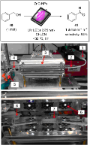

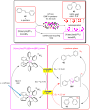

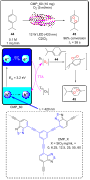

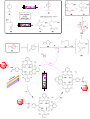



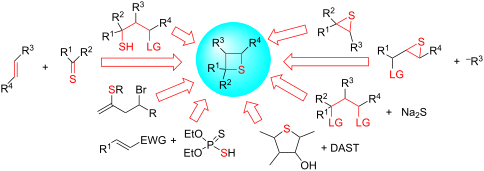
Recent synthesis of thietanes
Beilstein J. Org. Chem. 2020, 16, 1357–1410, doi:10.3762/bjoc.16.116
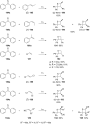
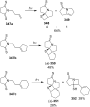
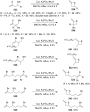
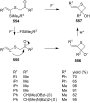
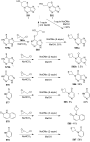
- as inhibitor of kinases, insecticides, and acaricides, its sulfur analogue, 6-amino-2-thiaspiro[3,3]heptane (28) was prepared from the cheap starting material 2,2-bis(bromomethyl)propane-1,3-diol (11). Compound 11 was converted into 3-(tert-butoxycarbonyl)-1,1-bis(hydroxymethyl)aminocyclobutane (25
- ). Following similar protocols, (S,S)-2,3-bis(benzoyloxymethyl)thietane (34) was synthesized from diethyl L-tartrate (32), which was further converted into thietanocin A (35), a sulfur analogue of oxetanocin A [39] (Scheme 7). The double displacement cyclic thioetherification strategy was also utilized for the
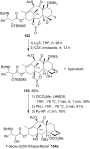
- succeeded in the synthesis of a 4’,4’-spirothietane-2’,N3-cycloadenosine 46 as a highly constrained analogue of 5’-deoxy-5’-methylthioadenosine. They first prepared tritosylate derivative 44 from D-glucose which was treated with KSAc to give the spirothietane derivative 45. The latter compound was further


















Fluorinated phenylalanines: synthesis and pharmaceutical applications
Beilstein J. Org. Chem. 2020, 16, 1022–1050, doi:10.3762/bjoc.16.91
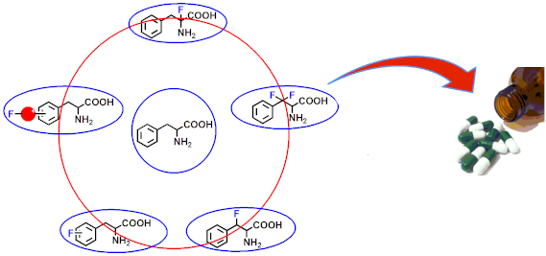
- , geometry, conformation, reactivity, and moreover the bioavailability of the analogue [1]. Fluorinated amino acids (FAAs) have considerable industrial and pharmaceutical potential [2]. Also, they have played an important role as enzyme inhibitors as well as therapeutic agents [3][4]. Moreover, they modulate
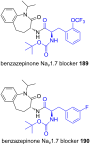
- analogue of sitagliptin which was developed for the same application [109][117], but compound 184 appears to have an improved activity [118]. Retagliptin showed efficacy in clinical trials and is now entering phase III studies. (R)-2,4,5-Trifluorophenylalanine 38b is used as a building block in the


Copper catalysis with redox-active ligands
Beilstein J. Org. Chem. 2020, 16, 858–870, doi:10.3762/bjoc.16.77
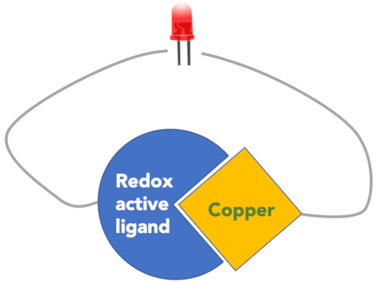
- copper complex 22 in as fast as two minutes, and therefore, it exhibits a strong increase in reactivity when compared to its unstrained analogue [40]. This example of a bioinspired small-molecule synthetic system combines two reactivity-enhancing features from metalloenzymes: entasis and redox cofactors


Efficient synthesis of dipeptide analogues of α-fluorinated β-aminophosphonates
Beilstein J. Org. Chem. 2020, 16, 756–762, doi:10.3762/bjoc.16.69
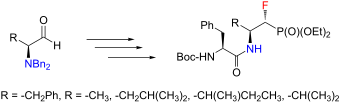
- of the product formation (88%) was observed, however, the reaction still required a long reation time. Finally, COMU [45] as a coupling reagent was applied. The model reaction took place with a yield of 92% after just two hours. COMU allowed to obtain the dipeptide analogue 15a not only with an
- ether under an argon atmosphere. The mixture was left overnight in a freezer. The next day, the precipitate was filtered off to give a white solid. Procedure for the synthesis of dipeptide analogues 15 DCC/HOBt conditions: The analogue 15a was prepared in a similar manner as described in [35]. To a


Design and synthesis of diazine-based panobinostat analogues for HDAC8 inhibition
Beilstein J. Org. Chem. 2020, 16, 628–637, doi:10.3762/bjoc.16.59
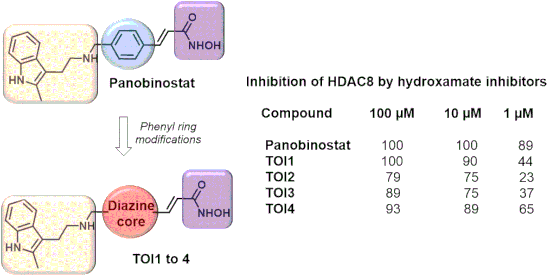
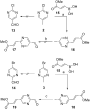
- building blocks for TOI1, TOI2, TOI3-rev and TOI4 were selected based on their ability to tether the indole amine and the zinc binding group in a para-relationship to each other. Initial efforts focused on synthesizing analogue TOI1 (Scheme 1). Acid 1 was converted to the corresponding methyl ester 5 via
- % and 51% yield, respectively, after C18 silica gel purification procedure using a methanol/water (1:1) solvent system. Finally, we focused our efforts towards the synthesis of the last analogue TOI4. From the above observations, we hypothesize that successful synthesis of TOI4 would rely on generating




Synthesis of triphenylene-fused phosphole oxides via C–H functionalizations
Beilstein J. Org. Chem. 2020, 16, 524–529, doi:10.3762/bjoc.16.48
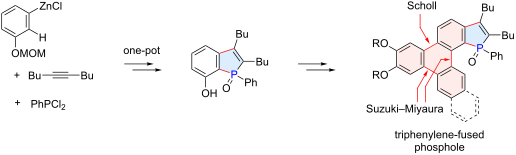
- , FeCl3, Cu(OTf)2, and AlCl3 failed to promote the cyclization of 7a to 8a. The PIFA/BF3·OEt2 system also promoted the Scholl reaction of terphenyl 7b bearing a methylenedioxy moiety with a comparable efficiency to afford 8b in 56% yield. Compound 8c, a naphthylene-linked analogue of 8a, also underwent



Rapid, two-pot procedure for the synthesis of dihydropyridinones; total synthesis of aza-goniothalamin
Beilstein J. Org. Chem. 2020, 16, 135–139, doi:10.3762/bjoc.16.15

- )-(+)-goniothalamin 2 and acylated aza-goniothalamin analogue 3 [14][15][16][17][18]. Extension of the two-pot methodology to include a variety of different aldehyde starting materials. One pot synthesis of benzyl carbamate 4 reported by Veenstra and co-workers [19]. Formation of diene 5 in 66% through a one pot



Potent hemithioindigo-based antimitotics photocontrol the microtubule cytoskeleton in cellulo
Beilstein J. Org. Chem. 2020, 16, 125–134, doi:10.3762/bjoc.16.14
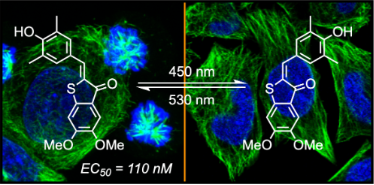
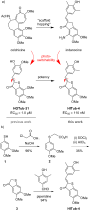
- colchicine or its analogue combretastatin A-4 and was bioactive, while the other isomer clashed with their SAR and was less active [18]. That approach of directly embedding a photoswitch motif inside the pharmacophore seemed to be more promising for photopharmacology than the synthetically more
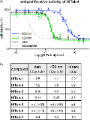
- ) delivered results equivalent to dark conditions (exclusively Z-configuration), to which 450 nm (lit conditions, ca. 70% E-configuration) gave the greatest difference in antiproliferative potencies. We began our studies with HITub-1. This is a HTI analogue of indanocine in which the indanocine amino function





Light-controllable dithienylethene-modified cyclic peptides: photoswitching the in vivo toxicity in zebrafish embryos
Beilstein J. Org. Chem. 2020, 16, 39–49, doi:10.3762/bjoc.16.6
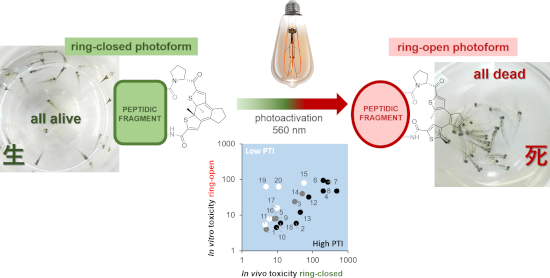
- photoswitchable analogue 2 in an allograft mouse model, the first in vivo photopharmacology application for a DAE-derived peptide as an anticancer agent has been demonstrated [29]. In order to optimize 2, we have recently performed a structure–activity relationship (SAR) study using a library of photoswitchable


Microwave-assisted synthesis of 2-substituted 4,5,6,7-tetrahydro-1,3-thiazepines from 4-aminobutanol
Beilstein J. Org. Chem. 2020, 16, 32–38, doi:10.3762/bjoc.16.5
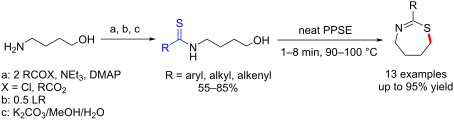
- prepared by a double displacement reaction between 2,6-dichlorothiobenzamide and 1,4-butylene dibromide [29]. In 1970, Mente prepared a dehydro analogue, namely 2-(4-chlorophenyl)-4,7-dihydro-1,3-thiazepine, via thermolysis of N-(4-chlorothiobenzoyl)-2-vinylaziridine [30]. No yields were reported for these


Starazo triple switches – synthesis of unsymmetrical 1,3,5-tris(arylazo)benzenes
Beilstein J. Org. Chem. 2020, 16, 22–31, doi:10.3762/bjoc.16.4
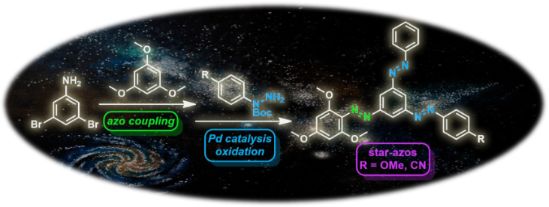
- using an aqueous ammonium sulfide solution to furnish aniline 6 in 65% yield [20]. After oxidation of 6 to its nitroso analogue 7 [21], a Baeyer–Mills reaction with aniline yielded the targeted azobenzene building block 8 in 87% yield (i.e., 53% yield over four steps). After the successful synthesis of





