Search results
Search for "binding site" in Full Text gives 186 result(s) in Beilstein Journal of Organic Chemistry.
Studies toward bivalent κ opioids derived from salvinorin A: heteromethylation of the furan ring reduces affinity
Beilstein J. Org. Chem. 2013, 9, 2916–2924, doi:10.3762/bjoc.9.328
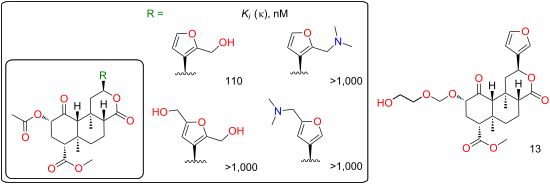
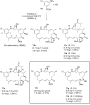
- ) derivatives [12]. Conclusion In conclusion, compelling evidence suggests that 1 binds to an allotopic pocket of κ-OR, leaving the classical opiate binding site largely unoccupied. This suggests the possibility of creating bivalent derivatives by linking these scaffolds, with the potential for dramatic


SF002-96-1, a new drimane sesquiterpene lactone from an Aspergillus species, inhibits survivin expression
Beilstein J. Org. Chem. 2013, 9, 2866–2876, doi:10.3762/bjoc.9.323
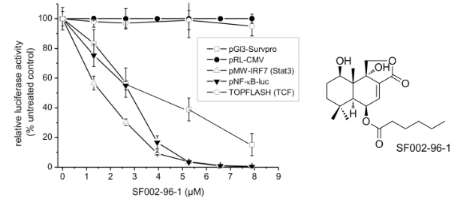
- reduction of Stat3 binding to all binding sites in the survivin promoter. ChIP experiments with primers comprising the suggested proximal NF-κB p65 binding site surrounding the transcriptional start site revealed a reduction of p65 binding after stimulation of NF-κB activity with 10 ng/mL TNF-α, 5 ng/mL IL
- bp). The primer sequences used for the NF-κB binding site within the survivin promoter were: NF-κB: forward primer, 5´-CTGCACGCGTTCTTTGA-3´; 5´-GCGGTGGTCCTTGAGA-3´ reverse primer (fragment size: 327 bp). The gapdh primer mixture was obtained from New England Biolabs, Frankfurt/M (SimpleChIP® Human




Biosynthesis of rare hexoses using microorganisms and related enzymes
Beilstein J. Org. Chem. 2013, 9, 2434–2445, doi:10.3762/bjoc.9.281
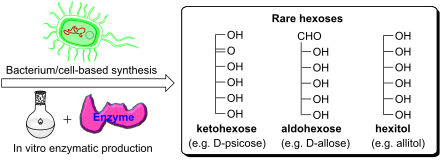
- residues in the active site, the metal coordinating site and the substrate-binding site of these enzymes (Figure 1) [37][38]. After all, the interconversion between D-fructose and D-psicose catalyzed by DTEase enzymes is an equilibrium process, thus large scale and high yield production of D-psicose as
- biocatalysts for industrial-scale applications. The active site in D-psicose 3-epimerase (DPEase) in the presence of D-fructose, showing the metal coordinating site and the substrate-binding site. The purple ball indicates the manganese(II) ion coordinating with key amino acid residues (Glu150, Asp183, His209


De novo synthesis of D- and L-fucosamine containing disaccharides
Beilstein J. Org. Chem. 2013, 9, 332–341, doi:10.3762/bjoc.9.38
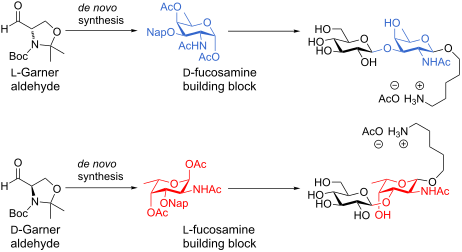
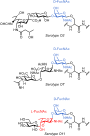
- bacterium. In 2001, the P. aeruginosa pilin O-linked glycans were found to be linear trisaccharides that are covalently attached to serine (Figure 1). The O-glycans contain a D-fucosamine residue at the protein-binding site. This unusual monosaccharide is not present in eukaryotes, and therefore may be used



Synthesis and testing of the first azobenzene mannobioside as photoswitchable ligand for the bacterial lectin FimH
Beilstein J. Org. Chem. 2013, 9, 223–233, doi:10.3762/bjoc.9.26
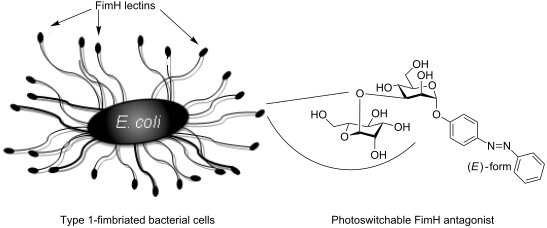
- computer-aided docking studies to get an idea of their interactions with the carbohydrate-recognition domain (CRD) of the lectin. Docking of azobenzene mannobioside 2 into the carbohydrate binding site of FimH To visualise complexation of the (E)- and (Z)-isomers of azobenzene mannobioside 2 within the CRD
- rim of the carbohydrate binding site of this lectin. Before minimisation of the ligands, the bond angle of the N=N double bond of the azobenzene moiety was manually set as 180° for (E)-2 and as 90° for (Z)-2 [30]. Then docking was performed holding the FimH CRD fixed whereas the ligands were allowed
- portion is complexed in the carbohydrate binding site, the first mannoside does not add significantly to the affinity and this is in accordance with other studies on the complexation of oligosaccharides by FimH [11]. However, this mannose ring acts as a spacer moiety, sticking out straight from the CRD



Efficient synthesis of phenylene-ethynylene rods and their use as rigid spacers in divalent inhibitors
Beilstein J. Org. Chem. 2013, 9, 215–222, doi:10.3762/bjoc.9.25

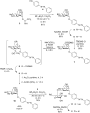
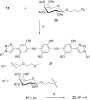
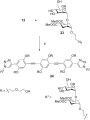
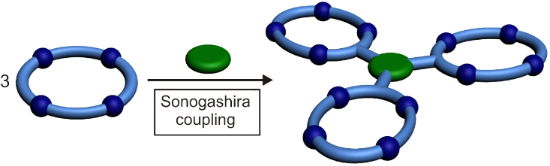
- about the binding site, such as its density, orientation and position. Furthermore, the rigidity of the rods described above can contribute to overcoming the entropic penalty of flexible multivalent scaffolds, thus improving the overall activity of the ligands. Schematic depiction of (a) a rigid


Development of peptidomimetic ligands of Pro-Leu-Gly-NH2 as allosteric modulators of the dopamine D2 receptor
Beilstein J. Org. Chem. 2013, 9, 204–214, doi:10.3762/bjoc.9.24
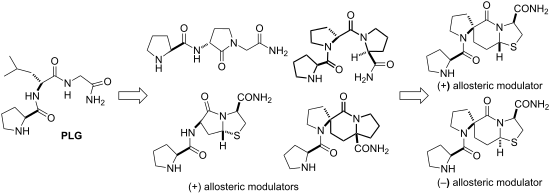
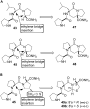
- modulatory binding site in a different manner than 2 and its analogues [33]. Possible support for such a hypothesis can be seen in the different activity profiles of α,α-disubstituted glycine analogues of PLG and the corresponding α,α-disubstituted derivatives of lactam PLG peptidomimetic 2 [35]. In addition
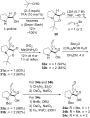
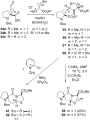
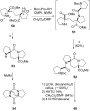
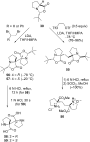
- changes when these ligands bound to the allosteric binding site. This in turn produced different conformational effects at the orthosteric site where the dopamine receptor agonists bind. To test this hypothesis, the syntheses of β-dimethyl derivatives of 29a, 29b, 49a, and 49b, i.e., spiro-bicyclic
- analogues of 2 in which lipophilic moieties were incorporated into the structure to mimic the isobutyl side chain of the leucyl residue of PLG yielded analogues 10–12 (Figure 2) with increased activity, suggesting that the lipophilic side chain was enhancing the binding of the compounds to the PLG binding




Influence of cyclodextrin on the solubility and the polymerization of (meth)acrylated Triton® X-100
Beilstein J. Org. Chem. 2012, 8, 2176–2183, doi:10.3762/bjoc.8.245
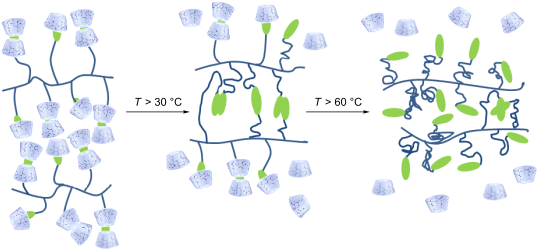
- Triton® X-100 are reported in literature. In our previous paper, the coexistence of a 1:1 and 2:1 complex with an extraordinary high (K1 = 1.71 × 10⁵ M−1) and a lower equilibrium constant (K2 = 260 M−1) was described [12]. Due to the fact that the tert-octyl group represents the preferred binding site of


Chemical modification allows phallotoxins and amatoxins to be used as tools in cell biology
Beilstein J. Org. Chem. 2012, 8, 2072–2084, doi:10.3762/bjoc.8.233
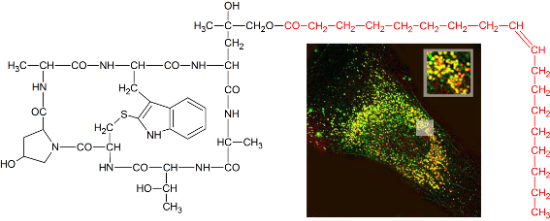
- the side chains in the small heterodet peptide ring are known to be involved in actin binding they were not used for derivatization. In the larger peptide ring, on the other hand, the dihydroxylated leucine moiety is juxtaposed to the actin binding site and thus appeared as most promising for




Peptides presenting the binding site of human CD4 for the HIV-1 envelope glycoprotein gp120
Beilstein J. Org. Chem. 2012, 8, 1858–1866, doi:10.3762/bjoc.8.214
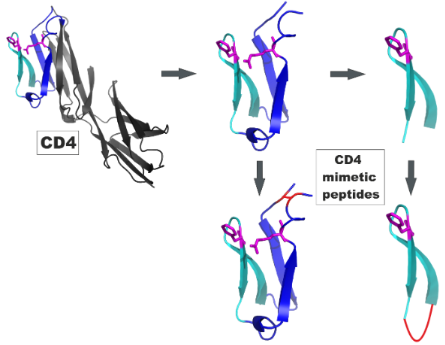
- Based on the structure of the HIV-1 glycoprotein gp120 in complex with its cellular receptor CD4, we have designed and synthesized peptides that mimic the binding site of CD4 for gp120. The ability of these peptides to bind to gp120 can be strongly enhanced by increasing their conformational stability
- -amino acids. Keywords: biomimetic synthesis; CD4; HIV entry; peptide; protein binding site; Introduction Synthetic molecules that have the ability to mimic binding and/or functional sites of proteins are useful tools for exploring and modulating protein function, as they interfere with binding events
- protein binding site mimics. We have previously developed strategies for the design and generation of scaffolded and assembled peptides to generate protein binding site mimics [1]. The interaction of the HIV-1 envelope glycoprotein gp120 with its cellular receptor CD4 is the first step in the process of


Mannose-decorated cyclodextrin vesicles: The interplay of multivalency and surface density in lectin–carbohydrate recognition
Beilstein J. Org. Chem. 2012, 8, 1543–1551, doi:10.3762/bjoc.8.175
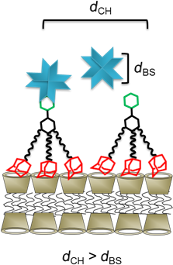
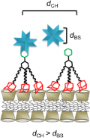
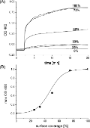
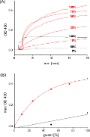
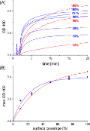
- observed around a mannose surface density of 50%: if the mannose density is reduced even further, the average distance of the mannose units on the vesicle surface is larger than the binding site separation of ConA, and hence multivalent interaction is no longer observed. The average distance between two
- cyclodextrins at the vesicle surface is approximately 2.2 nm [30]. The distance between two mannose molecules is expected to be the same when using a maximum surface coverage of the cyclodextrin host surface with guest 1. The binding site separation for ConA is 3.6 to 4.9 nm [21][22], which roughly corresponds
- surface (dCH) exceeds the binding-site separation of ConA (dBS) [21]. However, the surface density of mannose also decreases if the guest molecule occupies two or even three cyclodextrin cavities but yet carries only one mannose unit (Figure 7). In the case of divalent guest 2 (with two adamantane units




Synthesis of chiral sulfoximine-based thioureas and their application in asymmetric organocatalysis
Beilstein J. Org. Chem. 2012, 8, 1443–1451, doi:10.3762/bjoc.8.164
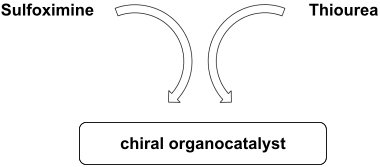
- the first strategy, because in structures such as (R)-9 the stereogenic center was rather close to the thiourea hydrogen bridge binding site. Scheme 3 summarizes our intended preparative approach towards (R)-9 via N-methyl-α-aminosulfoximine (R)-8, which unfortunately, remained unsuccessful. Heating
- likely serves as binding site for the substrate. Nevertheless, a remarkable enantiomeric ratio of 78:22 has already been achieved in the Biginelli reaction, which is known to be difficult to control. Thus, bringing the sulfonimidoyl group into closer proximity to the thiourea core might be beneficial for
- on the stereochemistry-determining path despite the fact that they were relatively close to the thiourea substrate binding site. Thus, reducing molecular flexibility by incorporation of plain arenes as linkers appears to be more important than conformational fixation through additional stereogenic


Unprecedented deoxygenation at C-7 of the ansamitocin core during mutasynthetic biotransformations
Beilstein J. Org. Chem. 2012, 8, 861–869, doi:10.3762/bjoc.8.96
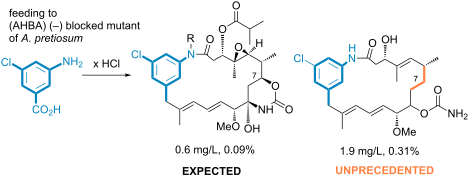
- to β-tubulin monomers at a site overlapping the vinca alkaloid binding site [9]. Recently, we disclosed several mutasynthetic studies aimed at the production of derivatives of ansamitocins 3–5 [10][11][12] as well as of geldanamycin (6), utilizing mutant strains of Actinosynnema pretiosum, the




High-affinity multivalent wheat germ agglutinin ligands by one-pot click reaction
Beilstein J. Org. Chem. 2012, 8, 819–826, doi:10.3762/bjoc.8.91
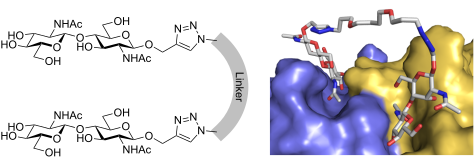
- of the triazole moieties as well as the central phenyl ring. This ring strain can be reduced by slightly pulling the GlcNAc residues directly attached to the linker out of the binding site, but at the expense of a less efficient multivalent binding of the two chitobiose entities. The chitobiose
- conformation. Ligand C2, and even more so ligand C3, possess very limited conformational freedom when adopting a chelating binding mode. Conformational changes within the linkers of C2 and C3 lead to forces that pull one or the other GlcNAc/chitobiose out of its binding site. This situation may increase the
- significantly increased conformational freedom. This is expected to facilitate binding in a chelating fashion at relatively low entropic costs. It is important to note that the third chitobiose unit of C6 cannot reach a third carbohydrate binding site of the WGA dimer. The closest distance to another binding




Synthetic glycopeptides and glycoproteins with applications in biological research
Beilstein J. Org. Chem. 2012, 8, 804–818, doi:10.3762/bjoc.8.90
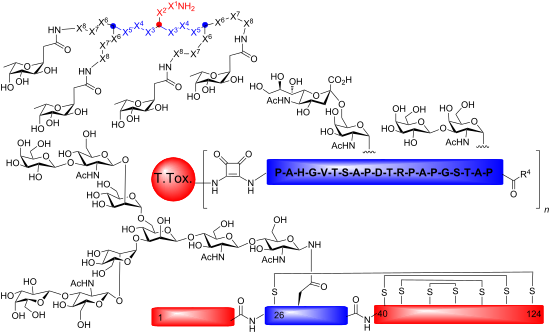
- on type 1 fimbriae is an attractive target for the inhibition of α-mannose-mediated cell adhesion [127][128][129][130][131]. Previous X-ray studies have proven that the FimH lectin has a monovalent binding site recognizing α-D-mannose [132][133]. In close proximity to the mannose-binding crevice, two


An easily accessible sulfated saccharide mimetic inhibits in vitro human tumor cell adhesion and angiogenesis of vascular endothelial cells
Beilstein J. Org. Chem. 2012, 8, 787–803, doi:10.3762/bjoc.8.89
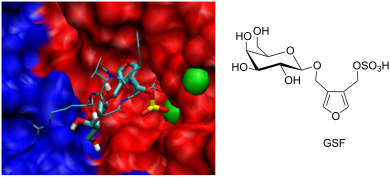
- , revealed specific docking of GSF to the same binding site as the natural peptidic ligands of this integrin. The sulfate in the molecule coordinated with one manganese ion in the binding site. These studies show that this chemically easily accessible molecule GSF, synthesized in three steps from 3,4-bis
- -docking experiments using the cyclic peptide Cilengitide® (cyclo-[RGDfN(Me)V]) [27] as a ligand. The orientation of the pentapeptide Cilengitide and its binding to the binding site formed by the α and β chains of αvβ3 reproduced the published X-ray structure with high accuracy. The method thus validated
- was then used to dock GSF in silico to the same surface area. This resulted in two binding sites. One site was identical to the binding site described for the RGD motif [28] of the cyclic peptide and a second binding site was located inside the β-propeller domain of the αv domain (Figure 4A). This


Synthesis of fluorinated maltose derivatives for monitoring protein interaction by 19F NMR
Beilstein J. Org. Chem. 2012, 8, 448–455, doi:10.3762/bjoc.8.51
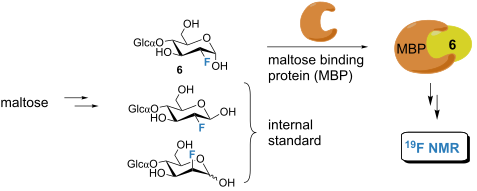
- eight α(1→4)-linked glucose (Glc) units with micromolar affinities [15][16]. X-ray structural data (PDB ID codes 1-DMB and 1ANF) demonstrated that the MBP (370 residues, Mr = 41 kDa) consists of two globular domains joined by a hinge-bending region, in which the ligand binding site is located in a cleft
- between the two domains. MBP exists in two different conformations: The ligand-free “open” form, exposing the binding site, and in the presence of a ligand, the “closed” form, trapping the ligand to provide contacts from both domains [17][18][19]. The number of protein–sugar hydrogen bonds associated with


Synthesis of multivalent host and guest molecules for the construction of multithreaded diamide pseudorotaxanes
Beilstein J. Org. Chem. 2012, 8, 234–245, doi:10.3762/bjoc.8.24
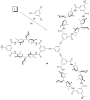
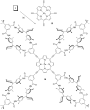
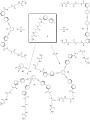
- amide coupling with 6 yielding binding site 2 in 73% yield. Since an excess of 7 was used and the 2’/6’-positions are sterically hindered, only monoiodination in the 4’-position was observed. This synthetic pathway thus gives reasonable overall yields. It should be mentioned that the diamide moiety
- polar aprotic solvent, such as acetone, acetonitrile, DMF or DMSO, which would solubilize the axles sufficiently well, would interfere strongly with pseudorotaxane formation. The tertiary amides are much more soluble and, therefore, appear to be the more appropriate binding site. However, the better


Fifty years of oxacalix[3]arenes: A review
Beilstein J. Org. Chem. 2012, 8, 201–226, doi:10.3762/bjoc.8.22
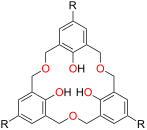
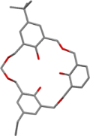
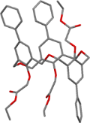
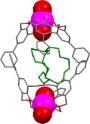
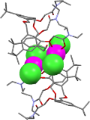
- conformations (cone and partial-cone), and a C3-symmetry [24]. This last feature can provide a suitable binding site for species that require trigonal-planar, tetrahedral or octahedral coordination environments. The flexibility of the macrocycles can allow them to establish ideal bond distances and angles to
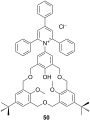
- ) methylene groups had a binding affinity for linear primary alkyl ammonium ions from n-BuNH3+ to n-HexNH3+. 3.2 Upper-rim derivatives Although the lower rim has many advantages as a binding site for guests, not least in the relative ease with which substituents can be attached, the upper rim can also












Thermodynamic and kinetic stabilization of divanadate in the monovanadate/divanadate equilibrium using a Zn-cyclene derivative: Towards a simple ATP synthase model
Beilstein J. Org. Chem. 2012, 8, 81–89, doi:10.3762/bjoc.8.8
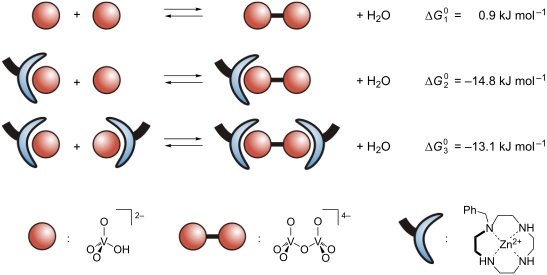
- artificial system driving endergonic condensations (Figure 1), we draw the conclusion that only one of the binding sites should provide metal coordination to the vanadate (or phosphate) and the other binding site should associate the nucleophilic anion by neutral hydrogen bonds. Similar effects obviously




Impact of the level of complexity in self-sorting: Fabrication of a supramolecular scalene triangle
Beilstein J. Org. Chem. 2011, 7, 1555–1561, doi:10.3762/bjoc.7.183
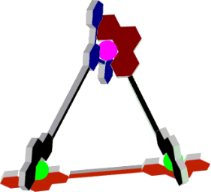
- groups available for coordination in addition to its two bisimine nitrogens. Thus, unit 1 may either act as a strong bidentate, tridentate or tetradentate binding site for zinc(II) ions, and there is no large thermodynamic difference between a [Zn(16)(27)]+-type connection and a [Zn(16)(47)]+-type link


Effects of anion complexation on the photoreactivity of bisureido- and bisthioureido-substituted dibenzobarrelene derivatives
Beilstein J. Org. Chem. 2011, 7, 278–289, doi:10.3762/bjoc.7.37
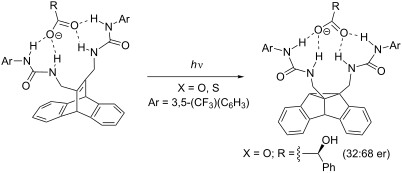
- ], liquid crystals [18], chiral crystals [19][20][21][22][23], or cyclodextrins (CDs) [24][25][26] in such a way that the chiral environment within the binding site has an influence on preferential reaction pathways, thus inducing stereoselective photoreactions. Along these lines, the di-π-methane (DPM




Fluorometric recognition of both dihydrogen phosphate and iodide by a new flexible anthracene linked benzimidazolium-based receptor
Beilstein J. Org. Chem. 2011, 7, 254–264, doi:10.3762/bjoc.7.34
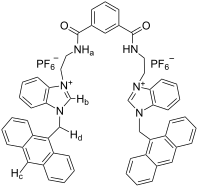
- one binding site is present for interaction. Under similar experimental conditions, the emission of 2 was only slightly changed. Figure 8 displays the change in emission of 2 upon addition of 1 equiv of the same anions in CH3CN. In the presence of excess H2PO4− ions, the change in emission of 2 was
- less compared to the case of 1 (see Supporting Information File 1). The quenching of emission of 1 upon complexation is attributed to the activation of a PET process occurring between the binding site and the excited state of anthracene. The Stern–Volmer plot in Figure 9 illustrates the quenching
- ][42][43][44][45]. Iodide binding induced quenching of emission is attributed to the i) complementarity in size of iodide with the pseudocavity formed by the receptor-binding site and ii) heavy atom effect of iodide, which is also true for Br−. But the small quenching of emission in the presence of Br


An easy assembled fluorescent sensor for dicarboxylates and acidic amino acids
Beilstein J. Org. Chem. 2011, 7, 75–81, doi:10.3762/bjoc.7.11
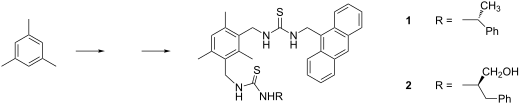
- guests, an additional binding site must be introduced. Thus, (S)-phenylalaninol (obtainable from L-phenylalanine) was reacted with isothiocyanate 4 to give sensor 2 in 40% yield. We envisaged that the additional alcohol functionality present in 2 could provide a binding site for the α-amino group of


Anthracene appended pyridinium amide–urea conjugate in selective fluorometric sensing of L-N-acetylvaline salt
Beilstein J. Org. Chem. 2010, 6, 1211–1218, doi:10.3762/bjoc.6.139

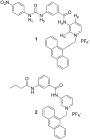
- to the charge–charge interaction and formation of unconventional hydrogen bonds with the anionic guests [27]. In order to explore this binding site for a wide range of substrates, especially for amino acid derivatives, we report here the design and synthesis of a new fluororeceptor 1 where anthracene
- is attached to the binding site through a covalent CH2 spacer to yield a photo induced electron transfer sensory system [28]. The receptor 1 shows effective binding of the tetrabutylammonium salt of L-N-acetylvaline by exhibiting significant change in emission. Complexation induced formation of an
- observation [20]. The different modes of emission (enhancing and quenching) of 1 in the presence of the different guests studied is believed to be due to the structural difference and hydrogen bonding abilities of the guests for which the PET process occurring between the amide-urea binding site and the