Search results
Search for "boron" in Full Text gives 268 result(s) in Beilstein Journal of Organic Chemistry. Showing first 200.
Synthesis and photophysical properties of novel benzophospholo[3,2-b]indole derivatives
Beilstein J. Org. Chem. 2017, 13, 2304–2309, doi:10.3762/bjoc.13.226
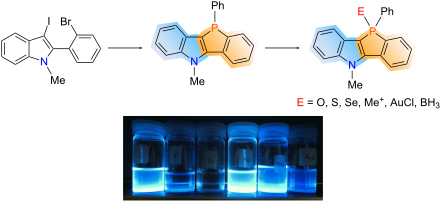
- -b]phosphole dioxides (Figure 1A) [25][26] and benzophosphole-fused tetracyclic heteroacenes, containing boron (B) [27][28][29], silicon (Si) [30], oxygen (O) [31], and sulfur (S) [32][33][34] (Figure 1B), were synthesized and their physical properties were studied. However, to the best of our
- NMR signals of gold and boron complexes 8 and 9 were observed at δ = 6.0 and 11.5 ppm, respectively. These results show that the electronic nature of the phosphorus atoms is similar to that of the oxidized species 4–7 (δ = 6.0–27.0 ppm). In the IR spectrum of 4 in KBr, a strong absorption for P=O
- electron-accepting properties. This red shift related to methylation of a phosphorus atom is in line with other earlier studies [10][18][33]. The fluorescence intensity of 7 (Ф = 67%) was as strong as that of phosphine oxide 4. The gold and boron complexes (8 and 9, respectively) showed contrasting


Synthesis and application of trifluoroethoxy-substituted phthalocyanines and subphthalocyanines
Beilstein J. Org. Chem. 2017, 13, 2273–2296, doi:10.3762/bjoc.13.224
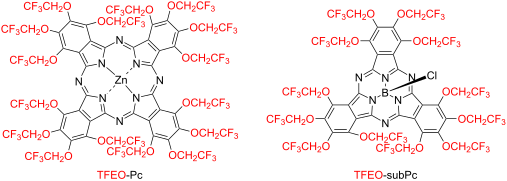
- composed of three isoindoline units. The only central element of subphthalocyanine is boron, and it has a ligand in the axial direction on the boron. Since subphthalocyanines have excellent spectroscopic properties and a unique three-dimensional structure, it is expected that they will be applied to
- solubility due to the influence of fluorine and are easy to handle, it is expected that various derivatives as well as TFEO-Pcs will be developed. TFEO-subPc is synthesized by cyclotrimerisation of tetrakis(trifluoroethoxy)phthalonitrile (2) in the presence of boron trichloride in p-xylene under reflux
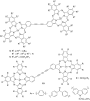
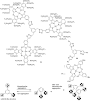
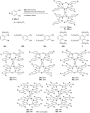
- synthesized by an unsymmetrical synthesis using diiodophthalonitrile 35 and trifluoroethoxyphthalonitrile 2, and then iodides were converted to cyano groups by a coupling reaction. Finally, dicyanophthalocyanine 37 was reacted with 2 in the presence of boron trichloride to obtain trifluoroethoxy-substituted








Curcuminoid–BF2 complexes: Synthesis, fluorescence and optimization of BF2 group cleavage
Beilstein J. Org. Chem. 2017, 13, 2264–2272, doi:10.3762/bjoc.13.223

- yields strongly decrease when employing other aldehydes [12]. This procedure also requires a rather extensive work-up including several extraction steps and chromatography [8]. A second, more recent approach first published by Rao et al. relies on boron trifluoride as the complexing agent [13]. The
- around −140 ppm, while 11B{1H} NMR signals appear as up to 3 ppm broad singlets at about +0.9 ppm. No coupling between 19F and 11B nuclei was observed because of the high quadrupole moment of the 11B nucleus. Due to the high relative mass difference between both naturally occurring boron isotopes
- solutions. All BF2 complexes show the expected tetrahedral coordination sphere around the boron atom and the all-trans geometry of the olefinic double bonds (Figure 1). Bond lengths and angles around the boron atom are in good accordance to values published for similar complexes [9]. One aromatic ring of 2f


Phosphonic acid: preparation and applications
Beilstein J. Org. Chem. 2017, 13, 2186–2213, doi:10.3762/bjoc.13.219
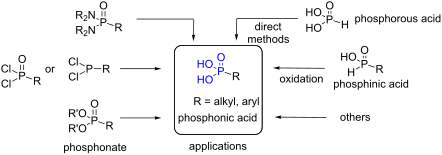
- side reactions is not due to bromotrimethylsilane but to the sensitivity of the product to acidic conditions that are induced by the acidity of the phosphonic acid functional group. 3.4. Dealkylation with boron reagents Dealkylation of dialkyl phosphonates could also be performed using C6H11BCl2 [201


Intramolecular glycosylation
Beilstein J. Org. Chem. 2017, 13, 2028–2048, doi:10.3762/bjoc.13.201
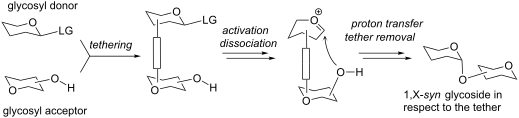
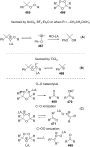
- reacted with 1,2-anhydro donor 80. It was assumed that this reaction proceeds via the oxacarbenium ion tethered to a tetracoordinated boronate ester. The subsequent glycosylation then proceeds regioselectively from the less-hindered boron–oxygen bond (see intermediate A). In this case, where gluco
- . Conversely, the galacto-configured boronic ester acceptor 82 was used, the α-(1→6)-linked product 83 was formed in 70% yield. Again, the regioselectivity of glycosylation is driven by the less-hindered boron–oxygen bond, which is from C-6 face in the case of galactose (intermediate B, Scheme 19). In the case


Chiral phase-transfer catalysis in the asymmetric α-heterofunctionalization of prochiral nucleophiles
Beilstein J. Org. Chem. 2017, 13, 1753–1769, doi:10.3762/bjoc.13.170
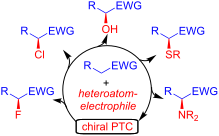
- be asymmetric α-phopshorylation approaches or the introduction of other heteroatoms (e.g., boron), which are all transformations that are without doubt important, but so far much less systematically addressed as most of the examples we showed herein. We are therefore convinced that the field of


The chemistry and biology of mycolactones
Beilstein J. Org. Chem. 2017, 13, 1596–1660, doi:10.3762/bjoc.13.159
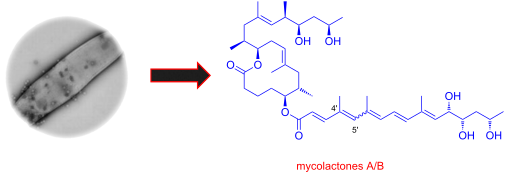
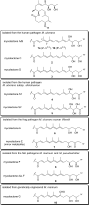
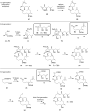
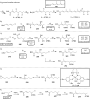
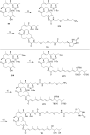
- against competing microorganisms was not the evolutionary driver for the emergence of the toxin. It is generally assumed in the literature that mycolactones reach their cellular targets by passive diffusion [91]. Based on competition experiments with the fluorescent, boron-dipyrromethene (BODIPY)-labeled









Total syntheses of the archazolids: an emerging class of novel anticancer drugs
Beilstein J. Org. Chem. 2017, 13, 1085–1098, doi:10.3762/bjoc.13.108
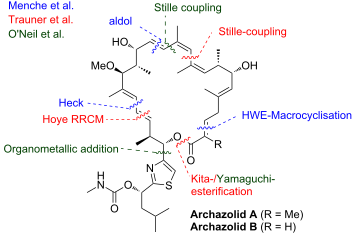
- a boron-mediated anti-aldol reaction [67] of lactate-derived ethyl ketone 13 with aldehyde 12, which in turn was available from aldehyde 9 by HWE olefination. This Paterson aldol reaction and related aldol reactions, which have been amply used by the Menche group [68][69][70], proceeded with
- ’ during thiazole formation on large scale, requiring an oxidation–reduction sequence (90%) in this case. Completion of the total synthesis After evaluation of several strategies, the assembly of the two northern fragments 4 and 5 could be realized by an aldol condensation, involving a boron-mediated aldol
- full stereochemistry in the first place. The various approaches discussed within this manuscript show the various tactics and strategies that may be employed in complex polyketide synthesis. Notable features of the total synthesis by the Menche group include the robustness of boron mediated aldol


Substitution of fluorine in M[C6F5BF3] with organolithium compounds: distinctions between O- and N-nucleophiles
Beilstein J. Org. Chem. 2017, 13, 703–713, doi:10.3762/bjoc.13.69

- Bu, the nucleophilic substitution of the fluorine atom at the para position to boron is the predominant route. When R = Ph, the ratio M[4-RC6F4BF3]/M[2-RC6F4BF3] is ca. 1:1. Substitution of the fluorine atom at the ortho position to boron is solely caused by the coordination of RLi via the lithium
- ]. Over the last 15 years, we reported the successful application of polyfluorinated organoborates K[RC6F4BF3], K[C6F5B(OMe)3] and K[CF2=CFBF3] as boron-containing reagents in the Pd-catalyzed cross-coupling reactions with C-electrophiles [22][23][24][25][26][27]. Nowadays a common approach to these
- compounds is based on the transformation of polyfluoroarenes under the action of appropriate reagents into the corresponding organometallic derivatives followed by treating them with suitable boron-containing electrophiles (Scheme 1) [28][29]. In order to further expand this powerful tool for the


Fluorescent carbon dots from mono- and polysaccharides: synthesis, properties and applications
Beilstein J. Org. Chem. 2017, 13, 675–693, doi:10.3762/bjoc.13.67
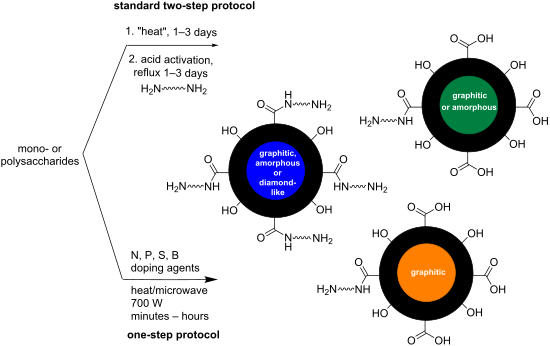
- to improve the PL properties of CDs, the use of boron as an additive, which is an electron-accepting element, has also been explored by Hao et al. [38]. The CDs were produced by the addition of boric acid (B(OH)3) into the hydrothermal carbonisation of glucose, using a Teflon autoclave at 180 °C for
- 12 h (Scheme 7). The resultant fluorescent nanoparticles had an average diameter of 4 nm and were negatively charged with ZP values of −40.7 mV. XPS and FTIR analysis confirmed the presence of B in the CD structure. Although, the addition of boron did not change the typical blue fluorescence profile


Continuous N-alkylation reactions of amino alcohols using γ-Al2O3 and supercritical CO2: unexpected formation of cyclic ureas and urethanes by reaction with CO2
Beilstein J. Org. Chem. 2017, 13, 329–337, doi:10.3762/bjoc.13.36
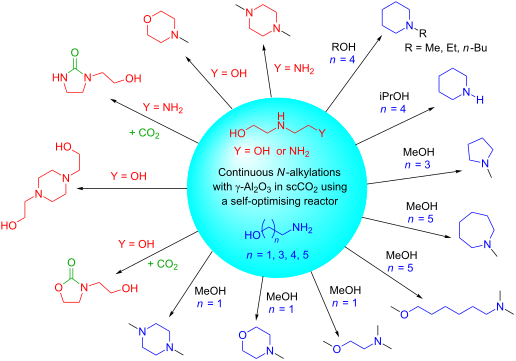
- ., boron salts from reductive amination [4]. Hydrogenation offers a greener approach but is often only applicable to simple substrates due to chemoselectivity issues. An approach that has received much attention recently is the concept of hydrogen borrowing catalysis [5][6][7][8][9][10][11][12][13][14][15


Solution-phase automated synthesis of an α-amino aldehyde as a versatile intermediate
Beilstein J. Org. Chem. 2017, 13, 106–110, doi:10.3762/bjoc.13.13
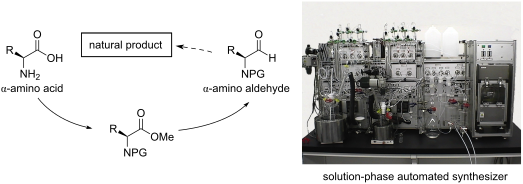
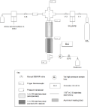
- ), to which a solution of 2,2-dimethoxypropane in dichloromethane and a solution of boron trifluoride·ethyl ether complex in dichloromethane were added. Originally, the respective solutions were loaded into the reagent reservoirs (RR1 and RR3). After stirring at 25 °C for 3 h, the reaction was quenched


cis-Diastereoselective synthesis of chroman-fused tetralins as B-ring-modified analogues of brazilin
Beilstein J. Org. Chem. 2016, 12, 2816–2822, doi:10.3762/bjoc.12.280

- under metal-free conditions and the operational simplicity render this transformation an attractive approach. Nevertheless, in an additional work, the angular –OH group of (±)-5k was reductively removed on treatment with Et3SiH and boron trifluoride etherate to get chroman-fused tetralin (±)-14 with the


Direct arylation catalysis with chloro[8-(dimesitylboryl)quinoline-κN]copper(I)
Beilstein J. Org. Chem. 2016, 12, 2757–2762, doi:10.3762/bjoc.12.272
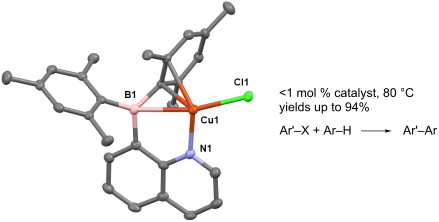
- ) intermediate may be well-stabilized by boron as a Z-type ligand, and the mesityl groups surrounding boron may favor the association of arenes for the deprotonation–metalation and the oxidative addition steps. Wang et al. proposed concerted metalation–deprotonation via a sigma bond metathesis involving a cyclic


Orthogonal protection of saccharide polyols through solvent-free one-pot sequences based on regioselective silylations
Beilstein J. Org. Chem. 2016, 12, 2748–2756, doi:10.3762/bjoc.12.271

- activation effect of boron complexes [33]. Over the last years, we have addressed our interest towards the development of solvent-free protocols aimed at regioselective protection of highly functionalized saccharide substrates. This effort led to a simple protocol for the selective benzylation of primary


Benzothiadiazole oligoene fatty acids: fluorescent dyes with large Stokes shifts
Beilstein J. Org. Chem. 2016, 12, 2739–2747, doi:10.3762/bjoc.12.270
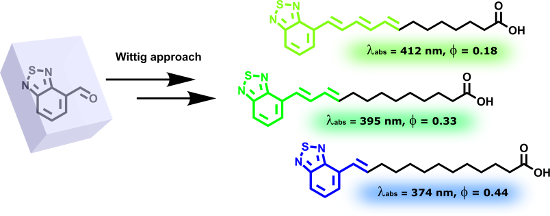
- as the carbohydrate part of glycolipids [7][8]. A further alternative is to render the lipid and especially the fatty acid part fluorescently active by the introduction of fluorescent moieties (Figure 1). Prominent examples in this area are NBD- (nitrobenzoxadiazole) [9][10], BODIPY- (boron


From betaines to anionic N-heterocyclic carbenes. Borane, gold, rhodium, and nickel complexes starting from an imidazoliumphenolate and its carbene tautomer
Beilstein J. Org. Chem. 2016, 12, 2673–2681, doi:10.3762/bjoc.12.264

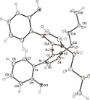
- (crystallographic numbering, cf. Figure 2: C9) is clearly detectable at δ = 9.22 ppm in DMSO-d6, while the boron and fluorine atoms give resonance frequencies at δ = −3.45 ppm, and δ = −133.91, −159.97, −165.18 ppm in the 11B NMR and 19F NMR spectra, respectively. A single crystal X-ray analysis of the borane




The in situ generation and reactive quench of diazonium compounds in the synthesis of azo compounds in microreactors
Beilstein J. Org. Chem. 2016, 12, 1987–2004, doi:10.3762/bjoc.12.186
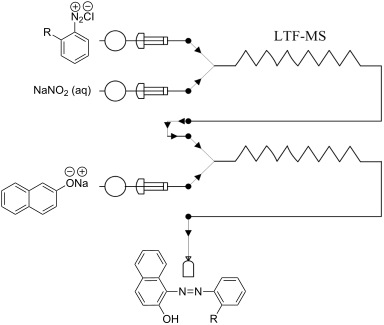
- -naphthol. The method boasts of shorter reaction times [4] with high yields (Scheme 2). Mirjalili et al. also used silica supported boron trifluoride and was able to carry out diazotization at room temperature [5] after they discovered that the diazonium salts obtained were stable at room temperature even
- temperature: Azo coupling reaction. PTSA-catalyzed diazotization and azo coupling reaction. Ferric hydrogen sulfate (FHS) catalyzed azo compound synthesis. Synthesis of azo compounds in the presence of silica supported boron trifluoride. Phase transfer catalyzed azo coupling of 5-methylresorcinol in


Rearrangements of organic peroxides and related processes
Beilstein J. Org. Chem. 2016, 12, 1647–1748, doi:10.3762/bjoc.12.162
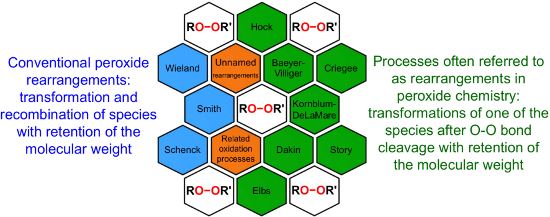
- theoretically studied mechanism of the oxidation reaction promoted by H2O2 and the Lewis acid BF3 [217][219]. In the first step, the hydrogen peroxide–boron trifluoride complex 8 reacts with ketone 9 to form adduct 10. The latter intermediate rearranges through transition state 11 into the tetrahedral
- after the reaction under oxygen atmosphere at 50 °C (Scheme 24) [252]. The boron-containing catalysts LiB(C6F5)4 or Ca[B(C6F5)4]2 were developed for the Baeyer–Villiger oxidation of ketones with aqueous H2O2 to give the lactones in high yields [253][254]. A regioselective Baeyer–Villiger oxidation of
- peroxide 115, which rearranges through an acid-catalyzed Baeyer–Villiger-type rearrangement into 116. Hydroxy-10H-acridin-9-ones 117 proved to be promising antipsoriatic agents [287]. The oxidation of aldimines 118a–f with m-chloroperbenzoic acid in the presence of boron trifluoride etherate produces













Catalytic Chan–Lam coupling using a ‘tube-in-tube’ reactor to deliver molecular oxygen as an oxidant
Beilstein J. Org. Chem. 2016, 12, 1598–1607, doi:10.3762/bjoc.12.156
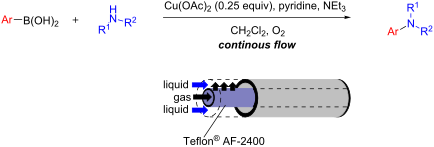
- favourable thermodynamics with an increase in the electropositive nature of boron, which in turn increases the rate of the transmetallation step. Changing the group at the 4-position of the phenylboronic acid gave good yields for both electron-rich (19, 79% yield) and electron-poor (33, 76% yield


A T-shape diphosphinoborane palladium(0) complex
Beilstein J. Org. Chem. 2016, 12, 1573–1576, doi:10.3762/bjoc.12.152
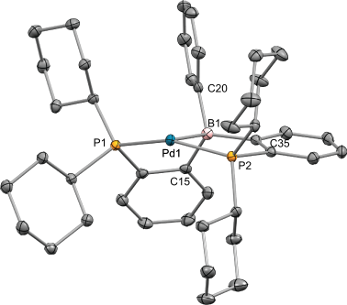
- diphospinoborane (o-PR2-C6H4)2BR’ ligand RDPBR’) has received considerable attention [1][2][3], with first catalytic applications emerging [4]. The acyclic boron group in these ligands can adopt a variety of coordination modes (Figure 1) [5]. The borane can act as a σ-acceptor ligand in case of η1-B coordination
- (e.g., 1 [6] and 2 [7]), or as a boron containing π-ligand adopting η2-B,C (3) [8] or η3-B,C,C coordination (4 and 5) [5][9][10]. Changes of the hapticity appear to have significant influence onto the reactivity of the coordinated transition metal towards substrates [8]. For zerovalent palladium
- solid-state structure of 9 displayed a slightly distorted T-shape geometry around the palladium center. A short Pd1–B1 distance of 2.243(2) Å (cf. complex 2: 2.194(3) Å) and a significant pyramidalization at the boron center (ΣBα = 341°) is observed, indicating a strong Pd(0)→B bond. The distance


Synthesis of highly functionalized 2,2'-bipyridines by cyclocondensation of β-ketoenamides – scope and limitations
Beilstein J. Org. Chem. 2016, 12, 1170–1177, doi:10.3762/bjoc.12.112
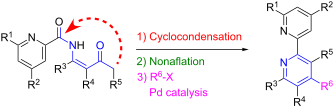
- oxidative coupling of acetylacetone 1a employing iodosylbenzene in the presence of boron trifluoride in methanol [41] followed by the standard amination procedure indeed furnished β-enaminoketone 2i in moderate yield (Scheme 3). This intermediate could be N-acylated via its potassium salt with activated




Scope and mechanism of the highly stereoselective metal-mediated domino aldol reactions of enolates with aldehydes
Beilstein J. Org. Chem. 2016, 12, 813–824, doi:10.3762/bjoc.12.80

- enolates (Ti [23], Zr [24], Si [25], and Sn [26]) and boron enolates [27] have adopted a considerable significance because of their high potential to control the stereochemical outcome of the bond formation [28][29][30]. However, the other group III metal enolates have been almost completely omitted over
- center: it should (a) exhibit Lewis acidity, (b) be sufficiently electropositive, and (c) display a sufficiently large ion radius so that the reaction cascade can take place in the periphery of the metal. The latter requirement is apparently prohibitive for a boron(III)-mediated reaction because the ion


Iridium/N-heterocyclic carbene-catalyzed C–H borylation of arenes by diisopropylaminoborane
Beilstein J. Org. Chem. 2016, 12, 654–661, doi:10.3762/bjoc.12.65

- C–H borylation of arenes has been widely used in organic synthesis because it allows the introduction of a versatile boron functionality directly onto simple, unfunctionalized arenes. We report herein the use of diisopropylaminoborane as a boron source in C–H borylation of arenes. An iridium(I
- (Scheme 1). The most commonly used boron sources are pinacolborane (HBpin, 1a) and bis(pinacolato)diboron (B2pin2, 1b), which form pinacol esters of arylboronic acids. Although the pinacol ester products prepared in these reactions are amenable to a range of transformations, their reactivity is generally
- arylboronic acid is synthetically useful because it can be readily deprotected with a dilute aqueous acid [20]. We envisioned that diisopropylaminoborane (1g) [21] could be a useful boron source because the resulting aminoborylated products are sufficiently labile to be converted into various boron


Self and directed assembly: people and molecules
Beilstein J. Org. Chem. 2016, 12, 391–405, doi:10.3762/bjoc.12.42
- using boron as a chiral catalyst was a good idea. We quickly came up with a research plan over a beer or two (Figure 13). Then on our return to the UK we quickly put these ideas into practice with the investigation of a “chiral boron reagent” formed between binol and trimethoxy borate for the Lewis acid
- catalyst of diastereoselective aza-Diels–Alder reactions [68] (Figure 14). While, the structure of the “chiral boron reagent” still remains unknown during our investigation of analogues we discovered a very interesting three-component self-assembly. Chiral binol, a chiral amine and 2-formylbenzeneboronic
- in 2002. (Left) Private photo taken in Osaka. (Right) Photo taken in Tokyo by Katsuhiko Ariga. Preparation of chiral boron reagent and use as catalyst for aza-Diels–Alder reactions. Chiral three component self-assembling system. Reaction of trimethylsilyl cyanide with tricarbonyl (η5-cyclohexadienyl