Search results
Search for "detection" in Full Text gives 544 result(s) in Beilstein Journal of Organic Chemistry. Showing first 200.
A smart deoxyribozyme-based fluorescent sensor for in vitro detection of androgen receptor mRNA
Beilstein J. Org. Chem. 2020, 16, 1135–1141, doi:10.3762/bjoc.16.100
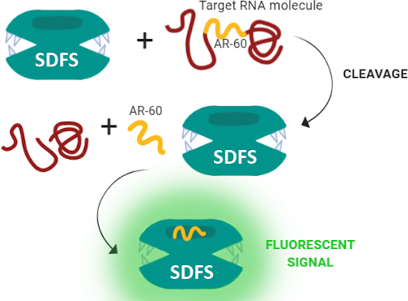
- types of compounds. It is most promising to develop simple and effective biosensors for the use in situations where traditional methods are not available due to their complexity and laboriousness. In this project, a novel smart deoxyribozyme-based fluorescent sensor for the detection of androgen
- mRNA molecule of the androgen receptor. The constructed sensor is easy to use, has high efficiency and selectivity for the RNA target, and can be reconstructed for the detection of various nucleic acid sequences due to its modular structure. Thus, similar biosensors may be useful for the differential
- electrode, covered by immobilizing enzyme glucose oxidase, for the detection of glucose [1]. A biosensor means a small molecular device that traditionally consists of a bioreceptor (enzyme, cell, aptamer, oligonucleotide, antibody, and other) for the specific recognition of the target molecule and a



Fluorinated phenylalanines: synthesis and pharmaceutical applications
Beilstein J. Org. Chem. 2020, 16, 1022–1050, doi:10.3762/bjoc.16.91
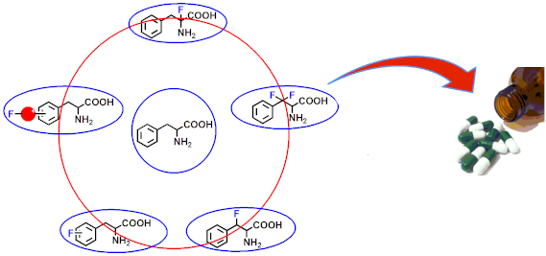
- , compared to, for example, magnetic resonance imaging (MRI). PET is particularly well-suited to differentiate neoplastic tissue from non-specific changes induced by chemotherapy treatments [85]. PET is particularly used for the early detection of tumors and metastases, and is an established tool for the
- used in PET due to its relatively long half-life (109 min). In this section we highlight two selected 18FPhe derivatives which are used for PET tumor detection. 4-Borono-2-[18F]fluoro-ᴅ,ʟ-phenylalanine ([18F]FBPA, 70), is a fluorinated derivative of the parent compound designed for boron neutron


Recent applications of porphyrins as photocatalysts in organic synthesis: batch and continuous flow approaches
Beilstein J. Org. Chem. 2020, 16, 917–955, doi:10.3762/bjoc.16.83
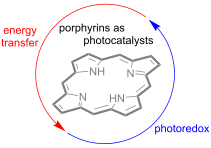
- the same authors using 2 mol % of a Ru complex as photocatalyst (44–88%) [24]. The mechanism proposed by the authors was supported by the detection of some reaction intermediates, and suggest that TPP works in both energy transfer and photoredox catalysis (Scheme 2). Subsequently, Gryko’s group






Cation-induced ring-opening and oxidation reaction of photoreluctant spirooxazine–quinolizinium conjugates
Beilstein J. Org. Chem. 2020, 16, 904–916, doi:10.3762/bjoc.16.82
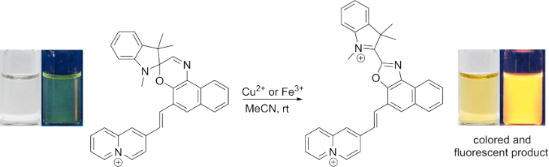
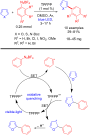
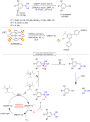
- formation of the respective oxidation product caused the development of a broad absorption band between 425 nm and 500 nm and a new emission band at λfl = 628 nm, so that it may be employed as a selective chemosensor or chemodosimeter for the colorimetric and fluorimetric detection of Cu2+ and Fe3
- for the development of photochromic chemosensors that allow the colorimetric or fluorimetric detection of particular analytes [5][29][35][36][37][38][39][40][41]. Furthermore, studies of such spiro derivatives [16][42][43], specifically spiroindolinonaphthoxazines [44][45][46][47], have shown that the
- cations also caused a fluorimetric response due to the developing orange emission at λfl = 628 nm so that 3a may be employed as a selective chemosensor or chemodosimeter for the colorimetric and fluorimetric detection of Cu2+ and Fe3+, respectively. As shown by NMR spectroscopic and mass spectrometric


Bipyrrole boomerangs via Pd-mediated tandem cyclization–oxygenation. Controlling reaction selectivity and electronic properties
Beilstein J. Org. Chem. 2020, 16, 895–903, doi:10.3762/bjoc.16.81
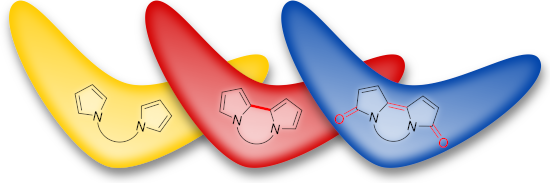
- by means of chiral HPLC with CD detection, leading to enantioenriched samples of some boomerangs. The enantiomers of cR2O were found to racemize very fast, thus it was not possible to separate them. The cR3X systems, which contain a 7-membered ring, showed a remarkably diverse behavior. Enantiomers




Aldehydes as powerful initiators for photochemical transformations
Beilstein J. Org. Chem. 2020, 16, 833–857, doi:10.3762/bjoc.16.76
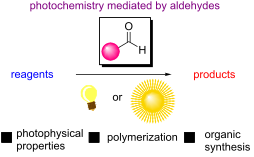
- . Moreover, the excited 4-anisaldehyde (98) underwent energy transfer over the addition to the double bond of the alkene, as no Paterno–Büchi cycloadducts were observed. Furthermore, the detection of the photolysis products of the alkyl halides mentioned above indicated the presence of triplet state 4






Design and synthesis of diazine-based panobinostat analogues for HDAC8 inhibition
Beilstein J. Org. Chem. 2020, 16, 628–637, doi:10.3762/bjoc.16.59
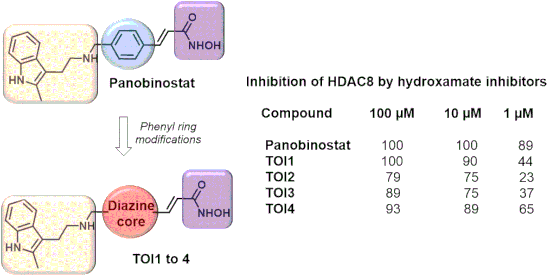
- dimethylformamide (DMF) were degassed in 20 L drums and passed through two sequential purification columns (activated alumina; molecular sieves for DMF) under a positive argon atmosphere. Thin-layer chromatography (TLC) was performed on SiO2-60 F254 aluminum plates with visualization by ultraviolet (UV) detection




A systematic review on silica-, carbon-, and magnetic materials-supported copper species as efficient heterogeneous nanocatalysts in “click” reactions
Beilstein J. Org. Chem. 2020, 16, 551–586, doi:10.3762/bjoc.16.52
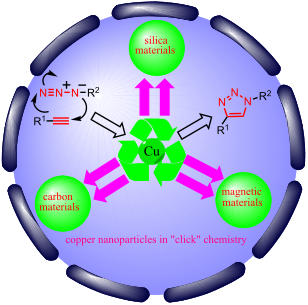
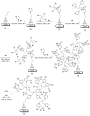
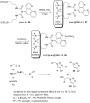
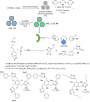
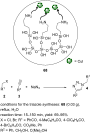
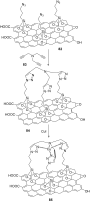
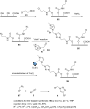
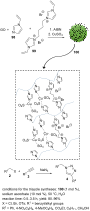
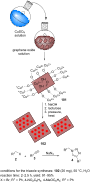
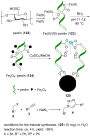
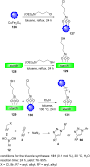
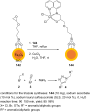
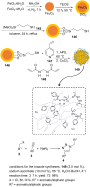
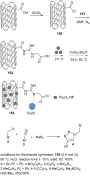
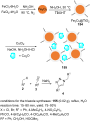
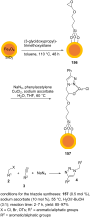
- delivery [93], and cancer detection [94]. In this regard, various functionalized MNPs were employed in diverse organic reactions, including Suzuki–Miyaura reactions, Sonogashira reactions, Ullmann coupling, hydrogenation reactions, oxidation reactions, hydroformylation reactions, and “click” reactions [89
















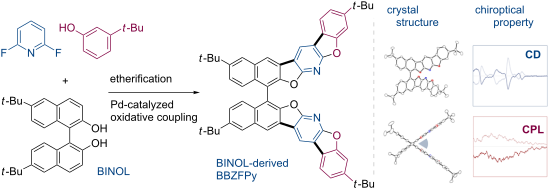
Synthesis and circularly polarized luminescence properties of BINOL-derived bisbenzofuro[2,3-b:3’,2’-e]pyridines (BBZFPys)
Beilstein J. Org. Chem. 2020, 16, 325–336, doi:10.3762/bjoc.16.32
- column, n-hexane/2-propanol 90:10, 1.0 mL/min, 40 °C; (S)-1: tR = 17.9 min, (R)-1: tR = 6.83 min, UV detection at 250.0 nm. Preparation of 2 To a 20 mL two-necked round-bottomed flask were added 1 (796 mg, 2.0 mmol) and Cs2CO3 (978 mg, 6.0 mmol). 2,6-Difluoropyridine (0.55 mL, 6.0 mmol) and DMF (10 mL
- ), 19F NMR (376 MHz, CDCl3) δ 69.06; HRMS–APCI (m/z): [M + H]+ calcd for C38H35F2N2O2, 589.2644; found, 589.2661. The enantiomeric purity was confirmed by HPLC analysis: CHIRAL ART Cellulose-SB column, n-hexane/chloroform 95:5, 1.0 mL/min, 40 °C; (S)-2: tR = 9.86 min, (R)-2: tR = 21.29 min, UV detection
- /chloroform 95:5, 1.0 mL/min, 40 °C; (S)-3a: tR = 7.25 min, (R)-3a: tR = 14.12 min, UV detection at 250.0 nm. Compound 3b: Synthesized similarly to 3a using 4-tert-butylphenol. Purified by silica gel column chromatography (eluent: hexane/EtOAc 4:1) and GPC to give the title compound as white solid; (S)-3b


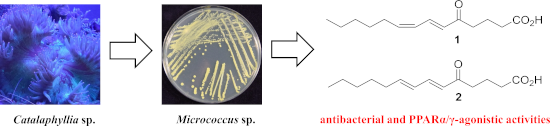
Two antibacterial and PPARα/γ-agonistic unsaturated keto fatty acids from a coral-associated actinomycete of the genus Micrococcus
Beilstein J. Org. Chem. 2020, 16, 297–304, doi:10.3762/bjoc.16.29
- concentrated to give 27.5 mg of semipure material. Final purification was achieved by preparative HPLC (Cosmosil Cholester, Nacalai Tesque Inc., 10 × 250 mm, 4 mL/min, UV detection at 290 nm) with an isocratic elution of MeCN/0.1% HCO2H (63:37) to afford 1 (3.7 mg, tR 14.2 min) and 2 (2.4 mg, tR 15.7 min). (6E


Understanding the role of active site residues in CotB2 catalysis using a cluster model
Beilstein J. Org. Chem. 2020, 16, 50–59, doi:10.3762/bjoc.16.7
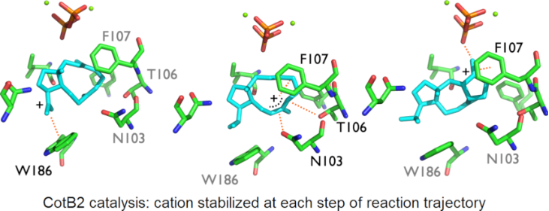
- decade, numerous interdisciplinary studies have addressed the chemical mechanism of CotB2 catalysis utilizing different detection and analysis methods. Meguro and co-workers [41] established the chemical mechanism for the formation of cyclooctatin using isotope labeling experiments (Scheme 1). Recently


Pigmentosins from Gibellula sp. as antibiofilm agents and a new glycosylated asperfuran from Cordyceps javanica
Beilstein J. Org. Chem. 2019, 15, 2968–2981, doi:10.3762/bjoc.15.293
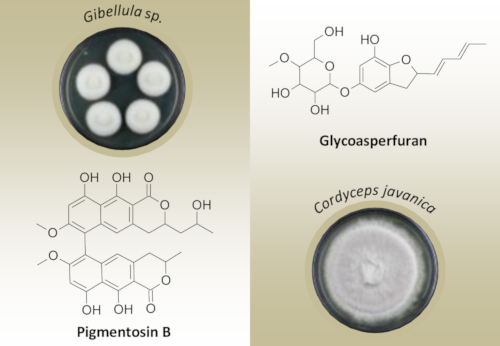
- metabolite profiles using analytical HPLC coupled with diode array detection and mass spectrometry (HPLC–DAD–MS) revealed that the production of pigmentosin B (2) was apparently specific for Gibellula sp., while the glycoasperfuran 3 was specific for C. javanica. Keywords: antibiofilm agents; natural
- 100% solvent B for 5 min, with a flow rate of 20 mL/min. Thereby, UV detection was performed at 210, 280, and 354 nm. Fractions were collected and pooled according to the observed peaks. The separation yielded two fractions including compound 1 (5.4 mg) and 2 (2.4 mg) at retention times tR 43–44 and


Chemical synthesis of tripeptide thioesters for the biotechnological incorporation into the myxobacterial secondary metabolite argyrin via mutasynthesis
Beilstein J. Org. Chem. 2019, 15, 2922–2929, doi:10.3762/bjoc.15.286
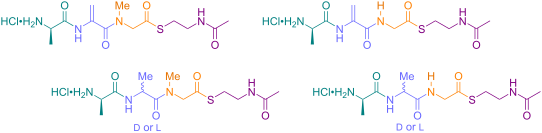
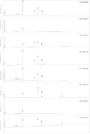
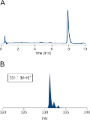
- phosphopantetheinyl arm of the peptide carrier protein (CP). Analysis of mutasynthon 14 obtained via the convergent synthetic route by HPLC on a HILIC stationary phase and UV detection (A) and mass spectrometry (B). Synthesis of tripeptide thioesters. Reagents and conditions: (a) SOCl2, EtOH, 78 °C; (b) IBCF, NMM



Bacterial terpene biosynthesis: challenges and opportunities for pathway engineering
Beilstein J. Org. Chem. 2019, 15, 2889–2906, doi:10.3762/bjoc.15.283
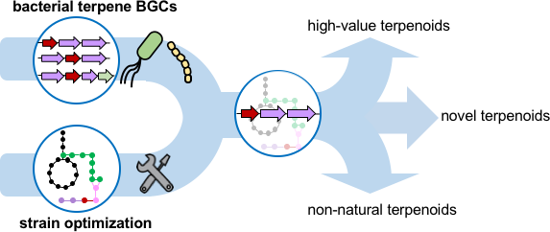
- NRPSs), bacterial TCs show only little overall sequence similarity [1]. The lack of conservation in primary sequence has slowed down our understanding of terpene cyclization and, as a result, hampered the development of efficient genome mining platforms for the detection of bacterial terpene BGCs
- , remain to be explored [152]. One major bottleneck in these studies is the lack of high-throughput screening tools for terpenoid production and characterization. Most terpenoids do not have any chromogenic groups and their detection still relies on liquid chromatography–mass spectrometry setups, limiting




Preparation of anthracene-based tetraperimidine hexafluorophosphate and selective recognition of chromium(III) ions
Beilstein J. Org. Chem. 2019, 15, 2847–2855, doi:10.3762/bjoc.15.278
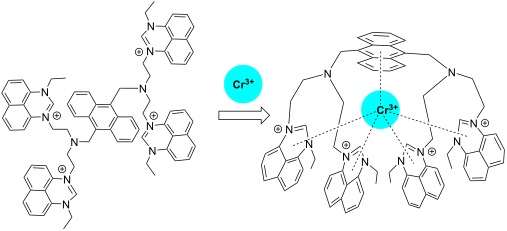
- ; chromium(III) ion; tetraperimidine; Introduction Fluorescent chemosensors are an attractive and efficient tool for the detection of metal ions in environmental and biological science because of their high sensitivity, selectivity, and simple usage [1][2][3][4][5][6][7][8]. Among metal ions, the detection
- autoimmune and cardiovascular diseases [11]. On the other hand, the excessive incorporation of chromium(III) is toxic to humans, and can cause cancer through the oxidation of DNA and some proteins [12][13][14]. Therefore, the detection of chromium(III) has a vital practical significance for human health
- monitoring. In recent years, some fluorescent chemosensors for the detection of chromium(III) have been developed [15][16][17][18][19][20][21][22][23]. Generally, chemosensors with fluorescence enhancement are more efficient than fluorescence turn-off chemosensors [24][25][26][27][28][29] because the


Design, synthesis and investigation of water-soluble hemi-indigo photoswitches for bioapplications
Beilstein J. Org. Chem. 2019, 15, 2822–2829, doi:10.3762/bjoc.15.275
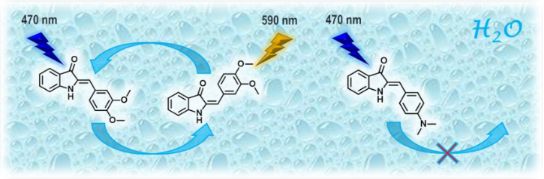
- aqueous media possessing valuable properties for bioapplications. Experimental Materials and equipment Reagents and solvents were obtained from commercial sources (Acros, Merck, Fischer) and used as received. Reactions were monitored on POLYGRAM® SIL G/UV254 (Macherey-Nagel) TLC plates with detection by


Skeletocutins M–Q: biologically active compounds from the fruiting bodies of the basidiomycete Skeletocutis sp. collected in Africa
Beilstein J. Org. Chem. 2019, 15, 2782–2789, doi:10.3762/bjoc.15.270

- of secondary metabolites for later comparison with herbarium specimens of other species by HPLC–diode array detection (HPLC–DAD)–MS. Surprisingly, we detected further members of the skeletocutin family that were not present in the cultures. The current paper is dedicated to the description of their
- , solvent A: H2O + 0.1% formic acid, solvent B: acetonitrile + 0.1% formic acid, elution gradient: 5% solvent B for 0.5 min, increasing solvent B to 100% within 19.5 min, 100% solvent B for 5 min, flow rate: 0.6 mL/min, UV–vis detection at λ = 200–600 nm) and ESI–TOF–MS analysis (maXis™ system, Bruker, scan
- ), respectively, were used as mobile phases (elution gradient: 50% solvent B, increasing solvent B to 100% within 60 min, 100% solvent B for 5 min, flow rate: 40 mL/min, UV–vis detection at 210, 254, and 350 nm). Eight fractions (F1–F8) were collected, in accordance with the observed signals. F1 was further


Diversity-oriented synthesis of spirothiazolidinediones and their biological evaluation
Beilstein J. Org. Chem. 2019, 15, 2774–2781, doi:10.3762/bjoc.15.269

- cytometry staining buffer (PBS without Ca2+and Mg2+, 2.5% FBS) and stained with 5 µL of 7-AAD staining solution for 15 minutes at room temperature in the dark. Samples were acquired on a NovoCyteTM 2000 Flow Cytometry System (ACEA) equipped with a 488 nm argon laser. Detection of 7-AAD emission was
- −), early apoptosis (annexin V+/PI−), late apoptosis (annexin V+/PI+), and necrosis (annexin V−/PI+). Apoptosis was quantified by the detection of phosphatidylserine surface exposure on apoptotic cells using an Alexa Fluor® 488 Annexin V/Dead Cell Apoptosis Kit. HEK293 cells were incubated with or without


Unexpected one-pot formation of the 1H-6a,8a-epiminotricyclopenta[a,c,e][8]annulene system from cyclopentanone, ammonia and dimethyl fumarate. Synthesis of highly strained polycyclic nitroxide and EPR study
Beilstein J. Org. Chem. 2019, 15, 2664–2670, doi:10.3762/bjoc.15.259

- -recovery technique with a π-pulse for inversion and a two-pulse ESE sequence for detection. The π-pulse lengths were nominally 20 ns. X-ray structure of compound 1 (one of the two enantiomers present in the crystal). A possible mechanism for the trans-position of the methyne hydrogens in the azepine ring


Arylisoquinoline-derived organoboron dyes with a triaryl skeleton show dual fluorescence
Beilstein J. Org. Chem. 2019, 15, 2612–2622, doi:10.3762/bjoc.15.254
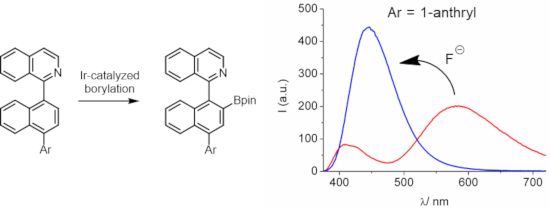
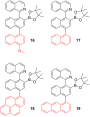
- observed. The formation of the fluoroboronate complexes was corroborated by the detection of the corresponding mass peaks (see Supporting Information File 1). In addition, 11B NMR spectra, for the example of dye 17, reveal that the boron changes from sp2 to sp3 hybridization on addition of 1 equiv F−; i.e



α,ß-Didehydrosuberoylanilide hydroxamic acid (DDSAHA) as precursor and possible analogue of the anticancer drug SAHA
Beilstein J. Org. Chem. 2019, 15, 2524–2533, doi:10.3762/bjoc.15.245

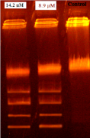
- was added per 100 mL gel solution for a final concentration of 0.5 μg/mL. Comet assays for detection of DNA damage of both control and 11b treated HeLa cells were detected by single cell gel electrophoresis. We isolated DNA of HeLa cells by a standardized salting out method according to Miller et al


Ultrafast processes triggered by one- and two-photon excitation of a photochromic and luminescent hydrazone
Beilstein J. Org. Chem. 2019, 15, 2438–2446, doi:10.3762/bjoc.15.236
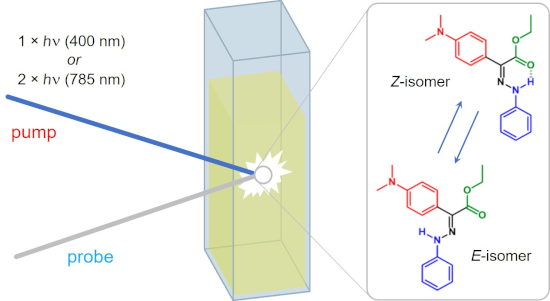
- 440–460 nm range (blue dots) and in the 500–520 nm range (red dots) of the same streak camera image. A double exponential fitting of the profile in the blue region results in a main component with a lifetime of 1.3 ps (at the limit of the detection of the system: 1.0 ps) accounting for 97% of the
- small portion of the fundamental laser output radiation on a 2 mm thick calcium fluoride window. Pump-probe delays were introduced by sending the probe beam through a motorized stage. Multichannel detection was achieved by sending the white light continuum after passing through the sample to a flat

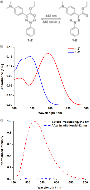


Targeted photoswitchable imaging of intracellular glutathione by a photochromic glycosheet sensor
Beilstein J. Org. Chem. 2019, 15, 2380–2389, doi:10.3762/bjoc.15.230
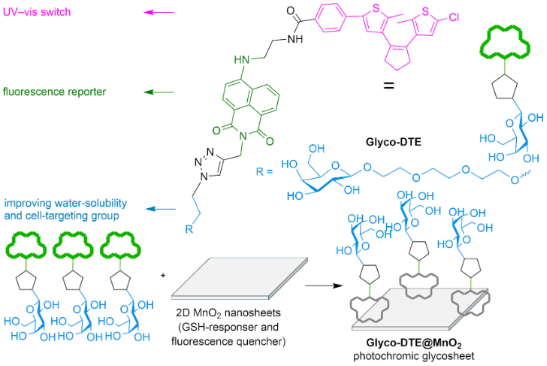
- recognition between β-D-galactoside and asialoglycoprotein receptor (ASGPr) on cell membranes. The dynamic fluorescence signals and excellent selectivity for detection and imaging of GSH ensure the precise determination of cell states, promoting its potential applications in future disease diagnosis and
- fluorescence spectroscopy. As shown in Figure S3A (Supporting Information File 1), GSH showed a distinct selectivity over other analytes, suggesting a specific GSH detection performance of Glyco-DTE@MnO2. A linear response of the normalized fluorescent intensity I/Imax at 535 nm within 0–0.4 mM GSH
- concentration range was determined (Supporting Information File 1, Figure S3B), where Imax represents the emission intensity before the addition of MnO2 and I is the emission intensity after the addition of GSH, through which the limit of detection (LOD) was calculated to be 0.99 μM. These results demonstrate



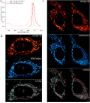
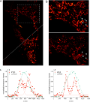
Synthesis of a dihalogenated pyridinyl silicon rhodamine for mitochondrial imaging by a halogen dance rearrangement
Beilstein J. Org. Chem. 2019, 15, 2333–2343, doi:10.3762/bjoc.15.226
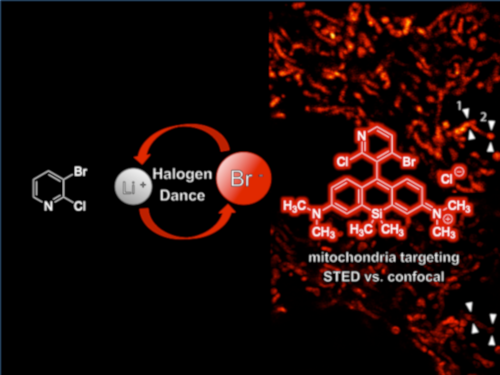
- highly interesting for precise medical imaging of diseases, the fluorescence modality can be utilized for medical interventions, such as fluorescence-guided surgery or sentinel lymph node detection or for histopathological analyses of biopsy material. To date, only two pyridinyl-substituted silicon



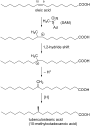
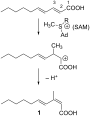
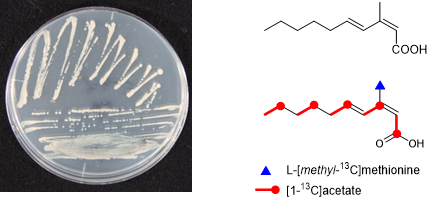
Isolation and biosynthesis of an unsaturated fatty acid with unusual methylation pattern from a coral-associated bacterium Microbulbifer sp.
Beilstein J. Org. Chem. 2019, 15, 2327–2332, doi:10.3762/bjoc.15.225
- EtOAc. The organic layer was dried over anhydrous Na2SO4, filtered, and concentrated to give a semi-pure material (21 mg). Final purification was achieved by preparative HPLC (Cosmosil Cholester 5 µm, 10 × 250 mm, 4 mL/min, UV detection at 254 nm) with an isocratic elution of MeCN/0.1% HCO2H solution