Search results
Search for "diameter" in Full Text gives 371 result(s) in Beilstein Journal of Organic Chemistry. Showing first 200.
Solvent-free copper-catalyzed click chemistry for the synthesis of N-heterocyclic hybrids based on quinoline and 1,2,3-triazole
Beilstein J. Org. Chem. 2017, 13, 2352–2363, doi:10.3762/bjoc.13.232
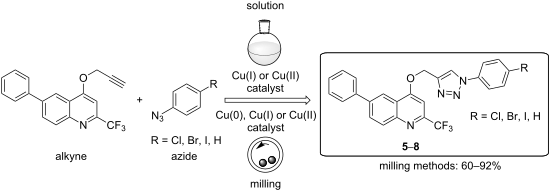
- derivatives 5–8 Method 2a: Compound 4 (80 mg, 0.24 mmol) and the corresponding aryl azide (0.49 mL, 0.24 mmol) were weighed in one half of the reaction vessel and the other half was filled with Cu(OAc)2 (2.24 mg, 0.05 equiv) and two 7 mm diameter stainless steel balls. The aryl azide solution was evaporated
- mmol), DIPEA (4.3 µL, 0.1 equiv) and acetic acid (1.5 µL, 0.1 equiv); the other half was filled with compound 4 (80 mg, 0.24 mmol) and CuI (1 mg, 4.9 mmol, 0.02 equiv), and two 7 mm diameter stainless steel balls (ball weight 1.3 g). The aryl azide solution was evaporated to dryness under vacuo, and



Structural diversity in the host–guest complexes of the antifolate pemetrexed with native cyclodextrins: gas phase, solution and solid state studies
Beilstein J. Org. Chem. 2017, 13, 2252–2263, doi:10.3762/bjoc.13.222

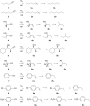
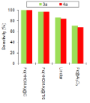
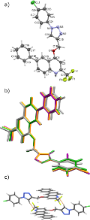
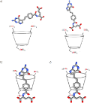
- the guest (a: from left to right): pemetrexed (PTX) and folic acid (FA), and host molecules with increasing diameter of macrocyclic cavity (b: from left to right: α-, β- and γ-CDs). Dissociation efficiency curves of three CDs/PTX complexes. The ions were collided with nitrogen (pressure ca. 2 × 10⁻⁵




The effect of milling frequency on a mechanochemical organic reaction monitored by in situ Raman spectroscopy
Beilstein J. Org. Chem. 2017, 13, 2160–2168, doi:10.3762/bjoc.13.216
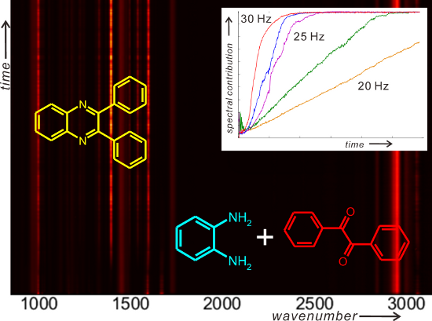
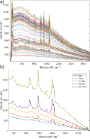
- mmol) with benzil (210 mg, 1.0 mmol) using a Retsch MM400 mixer mill operating at 30 Hz. The reaction mixture was placed in a 15 mL volume optically transparent poly(methyl metacrylate) (PMMA) jar, along with one zirconia ball of 10 mm diameter (ca. 3 grams weight). After 30 minutes milling, the
- from Alfa Aesar. Both were used without further purification. Milling reactions and characterization The double condensation was conducted by milling 210 mg of benzil (1.0 mmol) and 108 mg of o-phenylenediamine (1.0 mmol) with a single zirconia ball of 10 mm diameter (ca. 3 grams weight) in a 15 mL


Solid-state studies and antioxidant properties of the γ-cyclodextrin·fisetin inclusion compound
Beilstein J. Org. Chem. 2017, 13, 2138–2145, doi:10.3762/bjoc.13.212

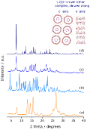
- continuous mode in the 3.5° ≤ 2θ ≤ 50° interval. TG studies were performed on a Shimadzu TGA-50 thermogravimetric analyzer, using a heating rate of 5 °C min−1, under air atmosphere, with a flow rate of 20 mL min−1. The sample holder was a 5 mm in diameter platinum plate and the sample mass was about 5 mg




Mechanochemical Knoevenagel condensation investigated in situ
Beilstein J. Org. Chem. 2017, 13, 2010–2014, doi:10.3762/bjoc.13.197
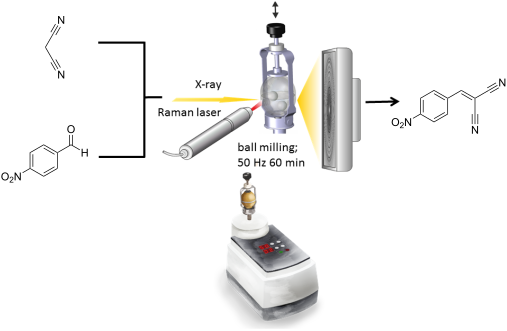
- quantities of the reactants p-nitrobenzaldehyde (800 mg, 5.29 mmol) and malononitrile 349.67 mg, 5.29 mmol) were weighed in milling jars (10 mL, stainless steel or Perspex). Two milling balls (stainless steel, 4 g, 10 mm diameter) were added to the reaction mixture. The reaction was performed in two


New bio-nanocomposites based on iron oxides and polysaccharides applied to oxidation and alkylation reactions
Beilstein J. Org. Chem. 2017, 13, 1982–1993, doi:10.3762/bjoc.13.194
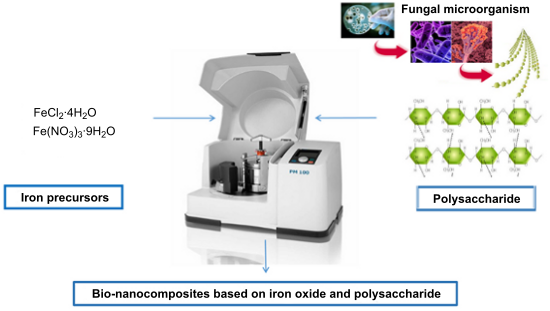
- basic probe molecules applying a pulse chromatographic titration methodology. The catalyst used (≈0.025 g) was fixed inside a tubular stainless steel microreactor (4 mm internal diameter) by Pyrex glass wool. A cyclohexane solution of titrant (0.989 M in PY and 0.686 M in DMPY, respectively) was


Influence of the milling parameters on the nucleophilic substitution reaction of activated β-cyclodextrins
Beilstein J. Org. Chem. 2017, 13, 1893–1899, doi:10.3762/bjoc.13.184
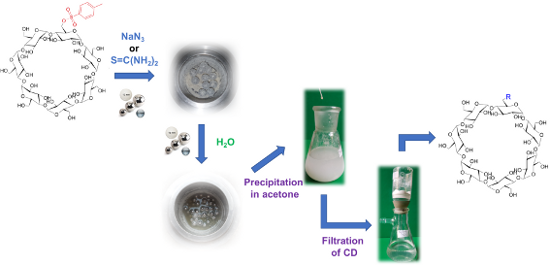
- the reactor, the nucleophilic substitution with NaN3 was performed using glass reactors 2 and 25 mL in volume and the same number of balls of equal size (30 balls of 1 mm in diameter). The experimental findings are summarized in Figure 1 and Supporting Information File 1, Table S1 entries 18 and 19
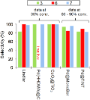
- zirconia balls of 12 mm in diameter (ø) for comparison). Values given on the graph bars indicate, respectively, the yield and the reaction time to achieve full conversion of the starting Ts-β-CD. Reaction time as a function of ball materials at 550 min−1 in glass vials of 25 mL: a) equal weight: 60 steel


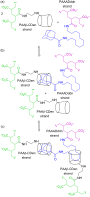
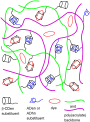
β-Cyclodextrin- and adamantyl-substituted poly(acrylate) self-assembling aqueous networks designed for controlled complexation and release of small molecules
Beilstein J. Org. Chem. 2017, 13, 1879–1892, doi:10.3762/bjoc.13.183
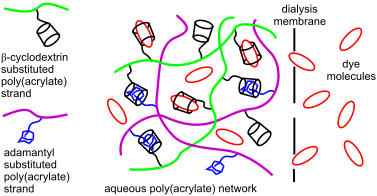
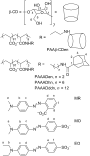
- two cases. All sample solutions were prepared in D2O Na2HPO4/KH2PO4 buffer solutions at pD 7.0 and I = 0.10 mol dm−3 and were equilibrated at the thermostated probe temperature of 298.2 ± 0.1 K for 30 min in 5 mm diameter NMR tubes prior to their spectra being recorded. Chemical shifts (δ, ppm) were

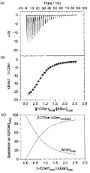
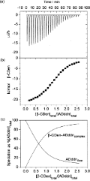



Selective enzymatic esterification of lignin model compounds in the ball mill
Beilstein J. Org. Chem. 2017, 13, 1788–1795, doi:10.3762/bjoc.13.173
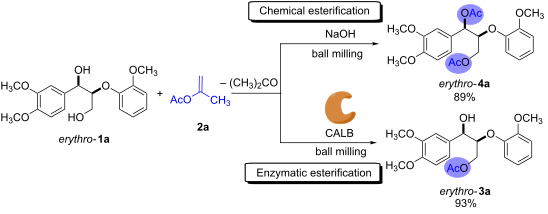
- diameter) [9], demonstrated to efficiently mediate the enzymatic kinetic resolution of secondary alcohols under solvent-free conditions in both mixer and planetary ball mills (Scheme 1b) [10]. Interestingly, this latter lipase (a commercial preparation known as Novozyme 345, hereinafter referred as CALB
- -1a with CALB in the ball mill A mixture of erythro-1a (50 mg, 0.15 mmol), acyl donor 2 (0.60 mmol) and CALB (30 mg of the immobilized enzyme) was milled for 2 h to 6 h at 30 Hz in a 10 mL ZrO2 milling jar loaded with 6 ZrO2 milling balls (5 mm in diameter). After the milling was stopped, the reaction
- erythro-1a with isopropenyl acetate (2a) in the ball mill. Reaction conditions: erythro-1a (50 mg, 0.15 mmol), 2a (0.60 mmol), CALB (30 mg of immobilized enzyme) or NaOH (12 mg, 0.30 mmol), 10 mL ZrO2 milling jar, 6 ZrO2 milling balls (5 mm in diameter). CALB-catalyzed esterification of lignin model



Mechanochemical enzymatic resolution of N-benzylated-β3-amino esters
Beilstein J. Org. Chem. 2017, 13, 1728–1734, doi:10.3762/bjoc.13.167

- CALB enzyme under high-speed ball-milling (HSBM) conditions as a method to obtain enantiopure N-benzylated-β3-amino acids (Scheme 1). Results and Discussion A racemic mixture of substrate rac-1a (82 mg, 1 equiv) was milled in an Agate jar (12 mm of diameter, 4.6 mL) with an Agate ball (6 mm of diameter


An effective Pd nanocatalyst in aqueous media: stilbene synthesis by Mizoroki–Heck coupling reaction under microwave irradiation
Beilstein J. Org. Chem. 2017, 13, 1717–1727, doi:10.3762/bjoc.13.166

- -Pd NPs of a mean diameter of 10 nm were obtained using a platinum electrode, characterized as previously reported, and used without additional purification [46][47]. In a previous work the PVP-Pd NPs synthesized using a vitreous carbon electrode were tested on the Mizoroki–Heck reaction with 4-iodo
- cycle was performed. The physical separation of NPs was carried out by centrifugation as previously reported [48]. The comparison of both TEM micrographs disclosed that the original PVP-Pd NPs [(9 ± 2) nm] clump to larger aggregates after the first catalytic cycle, providing NPs with a mean diameter of


A recursive microfluidic platform to explore the emergence of chemical evolution
Beilstein J. Org. Chem. 2017, 13, 1702–1709, doi:10.3762/bjoc.13.164
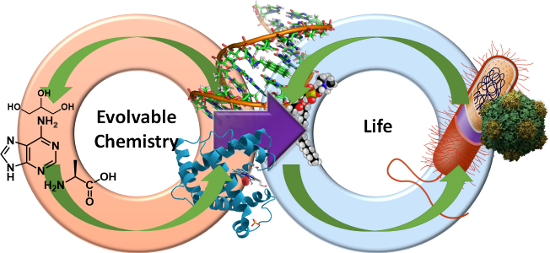
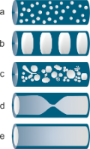
- neighbouring droplets. Size sorting is then used to select for droplets with a diameter (D) above a size threshold for droplets to be used in the next generation (f). Those droplets are recirculated into the next generation, replenished with fresh feedstock, and the process is repeated in an iterative fashion




Block copolymers from ionic liquids for the preparation of thin carbonaceous shells
Beilstein J. Org. Chem. 2017, 13, 1693–1701, doi:10.3762/bjoc.13.163
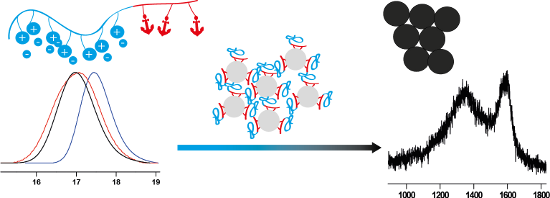
- 10% for the carbon coated particles (Figure 4a). The resulting particles were also characterized by transmission electron microscopy (TEM), and corresponding images are shown in Figure 6a and 6b. The average particle diameter is ≈8 nm. Figure 6b shows nanoparticles sheathed and connected through


Encaging palladium(0) in layered double hydroxide: A sustainable catalyst for solvent-free and ligand-free Heck reaction in a ball mill
Beilstein J. Org. Chem. 2017, 13, 1661–1668, doi:10.3762/bjoc.13.160
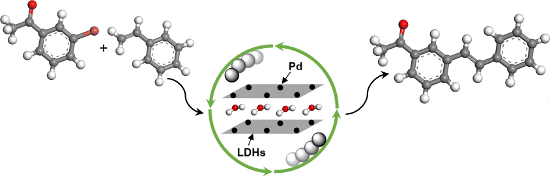
- of the milling-ball diameter is, the tendency of the product yield is similar under different filling degrees. A maximum yield (84%) was obtained by using 5 mm milling balls at 0.25 filling degree. In addition, the 14 mm milling balls exhibited the higher yields than 5 mm, 8 mm and 10 mm milling


Photocatalyzed synthesis of isochromanones and isobenzofuranones under batch and flow conditions
Beilstein J. Org. Chem. 2017, 13, 1456–1462, doi:10.3762/bjoc.13.143
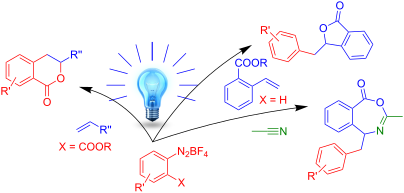
- atmosphere was not essential, we therefore decided to test our synthetic methodology with an in house-made flow apparatus. The reaction coil was formed with 1 m of FEP tubing (internal diameter 0.8 mm) wrapped around a glass cylinder. Irradiation was obtained with strips of blue LEDs attached inside a hollow


Mechanochemical synthesis of graphene oxide-supported transition metal catalysts for the oxidation of isoeugenol to vanillin
Beilstein J. Org. Chem. 2017, 13, 1439–1445, doi:10.3762/bjoc.13.141

- with a pore diameter of 39 nm and pore volume of 0.74 cm3 g−1 (Table 1). After the ball milling with metal precursors, the mesoporous structure of RGO was found to be partially collapsed as observed from BET isotherms in Figure 1b and c. BET surface areas of metal supported RGO materials consequently
- decreased, with increased pore diameter and pore volume as a consequence of the structure deterioration observed after milling. Additional macroporosity (interparticular) was created upon milling, which increased both pore diameter and volume. SEM results also support the observation from BET analysis. The
- for 24 h at 30 °C under vacuum (P0 < 10−2 Pa) and subsequently analyzed. Surface areas were calculated according to the BET (Brunauer–Emmet–Teller) equation. Mean pore size diameter and pore volumes were measured from porosimetry data by using the BJH (Barret–Joyner–Halenda) method. Wide-angle X-ray


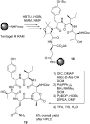
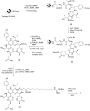
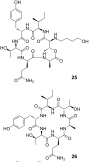
A new member of the fusaricidin family – structure elucidation and synthesis of fusaricidin E
Beilstein J. Org. Chem. 2017, 13, 1430–1438, doi:10.3762/bjoc.13.140
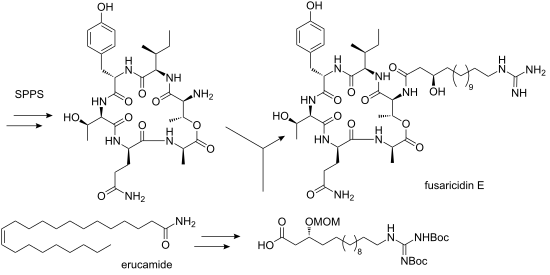
- phase was concentrated in vacuo again. This step was repeated until no further salt precipitates were visible. A portion of the extract (30 g) was dissolved in methanol and adsorbed to silica gel (Merck, K60, 70–230 mesh, 50 g), dried at 40 °C and applied onto silica gel (1 kg, column 10 cm diameter, 30



Mechanochemistry-assisted synthesis of hierarchical porous carbons applied as supercapacitors
Beilstein J. Org. Chem. 2017, 13, 1332–1341, doi:10.3762/bjoc.13.130
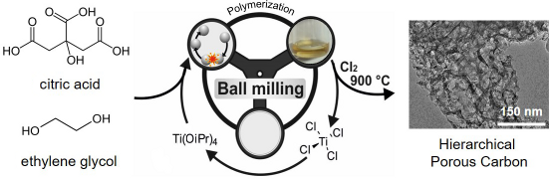
- average diameter of 8 nm (due to the removal of TiO2 nanodomains) (Figure 6, Equation 1). The mesopore diameter (Table 1 and Figure 6) aligns very well with the calculated domain size of TiO2 nanocrystals derived from the Scherrer equation. A more precisely evaluation of the hierarchical pore structure is
- pores. This process finally leads to a higher mesopore volume at the expense of a narrower pore-size distribution (Figure 6). The EG ratio does not impact the particle size of the TiO2 nanostructures and thus the pore-size distributions are similar for all investigated materials (average diameter of 8
- ZrO2 with a diameter of 15 mm were used. Afterwards, different amounts of EG are added and the mixture was ball-milled for another 5 min with 700 rpm. The molar ratio of CA and EG was varied from 1:3 to 1:1. For the liquid-assisted synthesis, 5 mL EtOH were added to the first grinding step. The


Kinetic analysis of mechanoradical formation during the mechanolysis of dextran and glycogen
Beilstein J. Org. Chem. 2017, 13, 1174–1183, doi:10.3762/bjoc.13.116
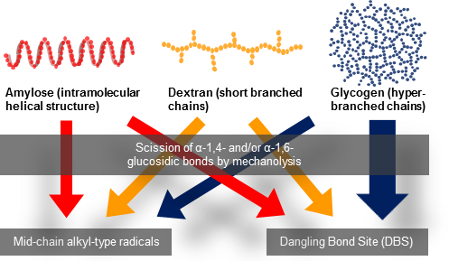
- samples mechanically fractured at room temperature were multicomponent. The radical concentration of Dx and Gly mechanoradicals gradually decreased during vibratory milling after reaching the maximum value. Although the molecular weight of Dx or the particle diameter of Gly steeply diminished until
- reaching the each maximum value of radical concentration, after that the molecular weight or the particle diameter slowly decreased. These results suggested that Dx and Gly mechanoradicals might be more unstable than amylose radicals possessing an intramolecular helical structure due to the branched
- difference of bonding type. The present paper focused on the polymer structure, such as helical (amylose), branched (Dx) and hyper-branched structure (Gly), to clarify the stability of component radicals depending on the polymer structure. Progressive changes in Dx molecular weight and Gly particle diameter


Glyco-gold nanoparticles: synthesis and applications
Beilstein J. Org. Chem. 2017, 13, 1008–1021, doi:10.3762/bjoc.13.100
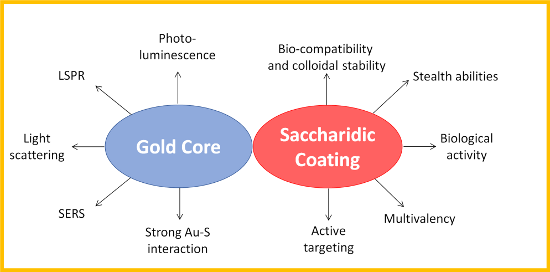
- diameter range can be obtained [4]. Moreover, this synthetic procedure allows to introduce different types of carbohydrates and other ligands (i.e., polyethylene chains, lipids, peptides, DNA, RNA or fluorescent dyes) in controlled ratios [4]. A modification of this technique consists in the application of
- ligand exchange protocol to introduce the thiolated saccharide molecules [20][21][22]. In this frame, the Turkevich method [23] is the most common protocol to produce citrate-capped spherical nanoparticles, with diameter size between 10 and 50 nm. Noteworthy, by employing surfactant or templating agents
- the gold Fermi wavelength, the nanoparticles acquire photoluminescence properties [31]. These small clusters typically present a diameter between 0.5 and 2 nm. When clusters are bigger, they do not present fluorescent emission but they show a localized surface plasmon resonance (LSPR) around 520 nm


Aggregation behaviour of a single-chain, phenylene-modified bolalipid and its miscibility with classical phospholipids
Beilstein J. Org. Chem. 2017, 13, 995–1007, doi:10.3762/bjoc.13.99
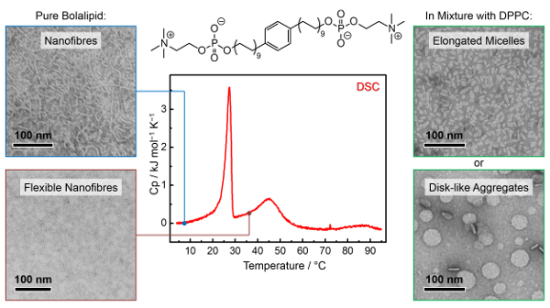
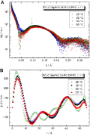
- function, pCS(r), has been obtained (Supporting Information File 1, Figure S1). This distribution function gives values of the diameter of cross section of ≈ 50–55 Å and an aggregation number Nagg of about 9 ± 1 bolalipid molecules per 1 nm length of cylinder at T = 4 °C. At 32 °C – a temperature between
- scale above 100 Å. It can be concluded that an increase of temperature from 4 °C to 32 °C shifts system from long and rigid fibres to flexible chains. Additionally, also the cross-sectional parameters of flexible chain changes, i.e., the diameter increases up to 70 Å (Supporting Information File 1
- , Figure S1) and Nagg slightly increases to 10 ± 1 bolalipid molecules per 1 nm length of flexible chain. At 60 °C, the scattering intensities at lowest q-range are typical for scattering from small globular objects such as micelles. Mean diameter D of these objects (q << 1/D) and p(r) has been obtained in



Automating multistep flow synthesis: approach and challenges in integrating chemistry, machines and logic
Beilstein J. Org. Chem. 2017, 13, 960–987, doi:10.3762/bjoc.13.97




Interactions between shape-persistent macromolecules as probed by AFM
Beilstein J. Org. Chem. 2017, 13, 938–951, doi:10.3762/bjoc.13.95
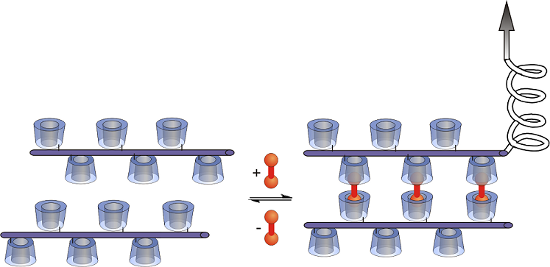
- unit of Lmon = 9.2 Å and the chemical composition C54H75NO35 (molecular weight 1298.17 g/mol). Rg,CS has been used to calculate the cross-section diameter of the homogeneous cylinder to be 30 Å. Scattering intensities do not change significantly with concentration indicating that the value of S(0) is






Expression, purification and structural analysis of functional GABA transporter 1 using the baculovirus expression system
Beilstein J. Org. Chem. 2017, 13, 874–882, doi:10.3762/bjoc.13.88
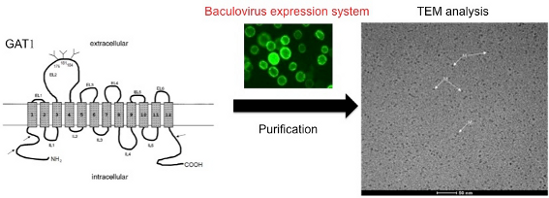
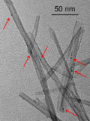
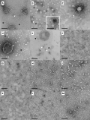
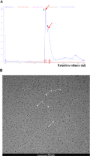
- hydrated state. After a BCA control, the fraction of peak 2 containing the larger amount of protein was characterized by cryo-TEM and showed a very monodisperse distribution of particles (Figure 5B) with a diameter in the 5–6 nm range, which might correspond to protein monomers. The peak 1 fraction
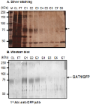
- : SE-FPLC fractions from 8.8 to 10.8 mL. Characterization of the GAT1/GFP fusion protein after SE-FPLC. (A) Elution profile of GAT1/GFP protein after SE-FPLC on a Superdex 200TM column. (B) Cryo-TEM image of fraction peak 2. Assumed monomeric GAT1/GFP fusion proteins (M, diameter = 5–6 nm) are



Continuous-flow processes for the catalytic partial hydrogenation reaction of alkynes
Beilstein J. Org. Chem. 2017, 13, 734–754, doi:10.3762/bjoc.13.73
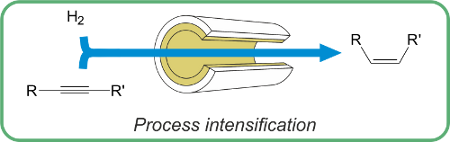
- hydrogenations are conveniently achieved under flow using fixed bed devices, wherein the size of the inner diameter of reactor channels distinguishes between micro (10–500 μm) or mesofluidic (500 μm up to several mm) reactors [79][80]. This size range may allow for the production of mg to tens of tons of target
- and will not be discussed. Capillary reactors (10–1000 μm internal diameter, 0.1–30 m length) are routinely used in the lab-scale synthesis due to the ease of operations, negligible heat effects and fast reactants mixing [84][85]. Issues may arise from miniaturization of the catalysts, where the most