


Search results
Search for "diastereomer" in Full Text gives 326 result(s) in Beilstein Journal of Organic Chemistry. Showing first 200.
An efficient synthesis of 1,6-anhydro-N-acetylmuramic acid from N-acetylglucosamine
Beilstein J. Org. Chem. 2017, 13, 2631–2636, doi:10.3762/bjoc.13.261

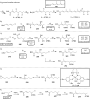
- File 1 for further details). Interestingly, when the alkylation of 12 was carried out using racemic 2-chloropropionic acid, a 3.3:1 mixture of diastereomers 13 and 14 was obtained, favouring the desired diastereomer 13 (Scheme 3). The diastereomers were separable by HPLC following trityl deprotection
- to 90 °C, 30 min; (d) trifluoroacetic acid, CHCl3, 0 °C to rt, 3 h. Synthesis of AnhydroMurNAc and diastereomer 5. Conditions: (a) (±)-2-chloropropionic acid, NaH, dioxane, 45 °C to 90 °C, 3 h; (b) trifluoroacetic acid, CHCl3, 0 °C to rt, 3 h. Supporting Information Supporting Information File 434


Synthesis of 1,3-cis-disubstituted sterically encumbered imidazolidinone organocatalysts
Beilstein J. Org. Chem. 2017, 13, 2577–2583, doi:10.3762/bjoc.13.254

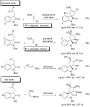
- change in selectivity was observed while using electron-withdrawing methyl amide 9d; the influence of the para-nitro substituent decreases the yield of the desired cis-diastereomer to only 12%. Utilization of non-aromatic methyl amides 9e and 9f, synthesized from L-norvaline and L-methionine methyl
- transformation (shown in Scheme 1b) delivered relatively high selectivity with imidazolidinones derived from L-phenylalanine this amino acid derivative was used as coupling partner. 1-Pyrene carbaldehyde 10b gave only a minor excess of the cis-diastereomer (S,S)-3b. For mesityl carbaldehyde 10c the desired
- isomer was obtained in 52% yield whereas the more sterically demanding aldehyde 10d led to a switch in the selectivity, giving the desired (S,S)-diastereomer in only 23% yield (Table 2). Conclusion We were able to synthesize 10 different imidazolidone-based organocatalysts with yields of the desired 1,3


Diastereoselective Mannich reactions of pseudo-C2-symmetric glutarimide with activated imines
Beilstein J. Org. Chem. 2017, 13, 2473–2477, doi:10.3762/bjoc.13.244
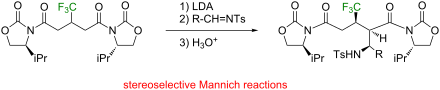
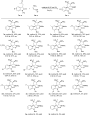
- 15 and 16). As described above, facile isolation of 3 was sometimes hampered by contamination of the substrate 1a and/or 4-toluenesulfonamide 5 which is noticed by the absence of isolated yields shown in brackets in Table 2. The configuration of the major diastereomer of 3a (Table 2, entry 1) was
- . Crystallographic analysis of the major diastereomer of 3a (some hydrogen atoms are omitted for clarity). Each color represents the following atoms: gray, carbon; white, hydrogen; blue, nitrogen; red, oxygen; green, fluorine; yellow, sulfur. Explanation of the construction of the main stereoisomers. Optimization of


A mechanochemical approach to access the proline–proline diketopiperazine framework
Beilstein J. Org. Chem. 2017, 13, 2169–2178, doi:10.3762/bjoc.13.217
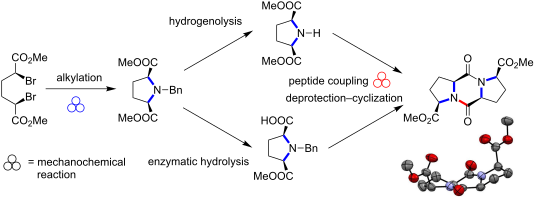
- selective and only one diastereomer was obtained, as supported by analytical data. X-ray analysis of the product confirmed the stereochemistry of the three chiral centres and the structure of 15a. To shed more light on the origin of the selectivity observed in the deprotection–cyclization transformation


Intramolecular glycosylation
Beilstein J. Org. Chem. 2017, 13, 2028–2048, doi:10.3762/bjoc.13.201
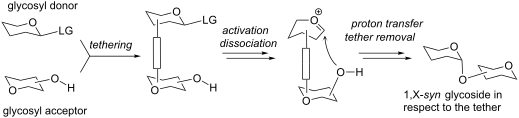
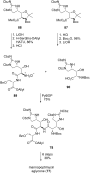
- was glycosylated in the presence of NIS/TfOH to afford tetrasaccharide 32 in 78% as a pure β-diastereomer [70]. Schmidt demonstrated the usefulness of xylylene tethers in application to the iterative synthesis of maltotriose [70]. In this application, the xylylene tether was used to link two glucose
- liberating the hydroxy group at C-4’ gave the tethered donor–acceptor combination 36. After the NIS/TfOH-promoted glycosylation the desired trisaccharide 37 was obtained in 75% yield as a pure α-linked diastereomer. The per-acetylated maltotriose target was obtained after palladium-catalyzed hydrogenation


Selective enzymatic esterification of lignin model compounds in the ball mill
Beilstein J. Org. Chem. 2017, 13, 1788–1795, doi:10.3762/bjoc.13.173
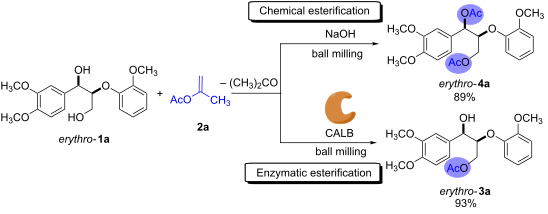
- milling time, analysis of the reaction mixture by 1H NMR spectroscopy showed no product formation. Moreover, under the standard reaction conditions, it was observed that the model compound threo-1b reacted slower in comparison to its diastereomer erythro-1a. After 2 h of milling, the product threo-3b was
- could be isolated in 89% yield (Scheme 3). On the other hand, its diastereomer threo-1d was much less reactive and only trace quantities of threo-3d could be isolated. This difference in reactivity, which follows the trend previously observed for the pair erythro-1a and threo-1b, could have stemmed from



The chemistry and biology of mycolactones
Beilstein J. Org. Chem. 2017, 13, 1596–1660, doi:10.3762/bjoc.13.159
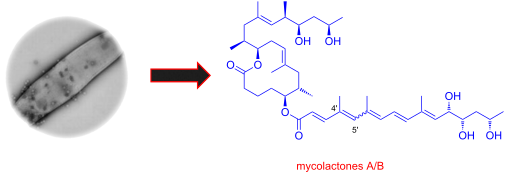
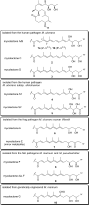
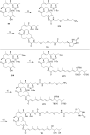
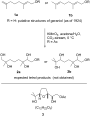
- known configuration. Intriguingly, salt water fish-infesting M. marinum produces a remote diastereomer [60] of mycolactone F (dia-mycolactone F, 9) that exhibits the regular configuration of the 1,3-diol motif at the end of the lower side chain [61]. Most recently, the Kishi laboratory isolated two new









Effect of uridine protecting groups on the diastereoselectivity of uridine-derived aldehyde 5’-alkynylation
Beilstein J. Org. Chem. 2017, 13, 1533–1541, doi:10.3762/bjoc.13.153

- these compounds and notably reported that TES was better than TMS for efficient separation of both isomers, resulting in an improved 42% yield for the isolated major diastereomer (5’R)-11ab [12]. Then, subsequent acidic hydrolysis afforded (5’R)-16 and (5’S)-16 and alkyne desilylation under basic
- ’S)-17 (Figure 3). As observed for compound 16, the H-1’ chemical shift is more shielded for (5’S)-17 isomer (doublet (3JH-1’-H-2’ = 6.0 Hz) at 5.98 ppm) than for the (5’R)-17 diastereomer (doublet (3JH-1’-H-2’ = 7.0 Hz) at 6.04 ppm). Similarly, the H-4’ chemical shift is more shielded for (5’S)-17
- isomer (triplet (3JH-4’-H-3’ = 3JH-4’-H-5’ = 3.5 Hz) at 4.03 ppm) than for the (5’R)-17 diastereomer (triplet (3JH-4’-H-3’ = 3JH-4’-H-5’ = 2.5 Hz) at 4.07 ppm). Moreover, chemical shifts for H-3’ (doublet of doublet (3JH3’-H2’ = 5.5 Hz, 3JH3’-H4’ = 2.5 Hz) at 4.30 ppm) and H-2’ (doublet of doublet (3JH2


Phenylsilane as an effective desulfinylation reagent
Beilstein J. Org. Chem. 2017, 13, 1513–1517, doi:10.3762/bjoc.13.150

- a continuation of our studies on asymmetric cyclopropanation of vinyl phosphonates using (S)-dimethylsulfonium(p-tolylsulfinyl)methylide and its further application. It was formed as a single diastereomer with full stereoselectivity. To determine the relative configuration of the obtained structure
- silane procedure led to the single diastereomer 7a. In this case determination of the relative configuration as trans was based on a high coupling constant 3JP-H = 17.0 Hz, which evidenced retention of configuration during the desulfinylation process (Scheme 2). The reaction conducted under solvent-free
- phenylsilane utilizing the procedure described above and afforded phenylacetate 8 as the only product. Methylation of 9 afforded product 10 with full stereoselectivity as the only diastereomer although the configuration of this center was not determined. Also in this case treatment with PhSiH3/KOH caused a


A speedy route to sterically encumbered, benzene-fused derivatives of privileged, naturally occurring hexahydropyrrolo[1,2-b]isoquinoline
Beilstein J. Org. Chem. 2017, 13, 1413–1424, doi:10.3762/bjoc.13.138
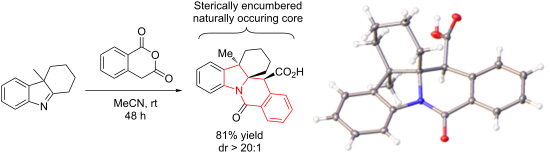
- temperature. As it also facilitated the isolation of the tetrahydroisoquinolonic acid product, it was chosen to study the CCR of 9a–t. The latter tend to precipitate in a pure form (often as a single diastereomer) from the reaction mixture and can be conveniently isolated by filtration. This prior observation
- major diastereomer was shown to possess the (RS,RS)-configuration (vide infra) and is referred to as ‘anti‘ throughout this article (considering orientation of carboxylic group relative to C11a–C12 bond of the five-membered ring); the minor, (RS,SR)-configured diastereomer is referred to as ‘syn
- ’ (Figure 4). A good to excellent yield of pure anti-diastereomer was obtained with 9a,b, 9d, 9j, 9l, 9n,o (Table 1, entries 1, 2, 4, 10, 12, 14 and 15) by simple filtration. We have also shown that in some of these cases (Table 1, entries 1 and 2) an additional quantity of anti- and/or syn-configured CCR


Construction of highly enantioenriched spirocyclopentaneoxindoles containing four consecutive stereocenters via thiourea-catalyzed asymmetric Michael–Henry cascade reactions
Beilstein J. Org. Chem. 2017, 13, 1342–1349, doi:10.3762/bjoc.13.131
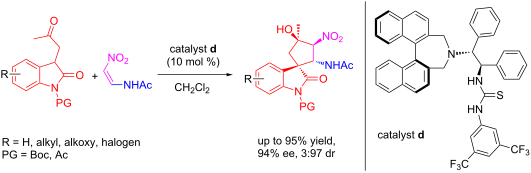
- chiral HPLC analysis of major diastereomer. The dr values were determined by 1H NMR analysis. Method A: with 10 mol % of d as a catalyst, −20 °C, 12 h. Method B: with 10 mol % of d as a catalyst, −10 °C, 24 h. A plausible mechanism. Optimization for the reaction conditionsa. Supporting Information



Strategies toward protecting group-free glycosylation through selective activation of the anomeric center
Beilstein J. Org. Chem. 2017, 13, 1239–1279, doi:10.3762/bjoc.13.123

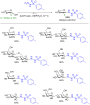
- ], and aryl thiols [75][76] can be formed in moderate to quantitative yield with the 1,2-trans diastereomer prevailing in all instances (Scheme 23) (also partially reviewed in Noguchi et al. [70]). The substrate scope was extensive in all instances and included successful glycosylation of up to
- to provide the 1,2-trans β-diastereomer. Only in pathway A, by direct nucleophilic displacement of the β-activated complex, does the minor α-diastereomer form. To demonstrate the potential utility of this methodology in labeling strategies, the Shoda group has also accessed fluorescent thioglycosides
- -alkynyl acceptors) or Et3SiH (alkynyl acceptors). In all cases the yields were very good and the stereoselectivity pretty good for the 1,2-cis glycoside diastereomer. The mechanism is thought to proceed through an initial hydrogenolysis of the benzyl groups to produce a reactive dihydroxytriazinyl




Total syntheses of the archazolids: an emerging class of novel anticancer drugs
Beilstein J. Org. Chem. 2017, 13, 1085–1098, doi:10.3762/bjoc.13.108
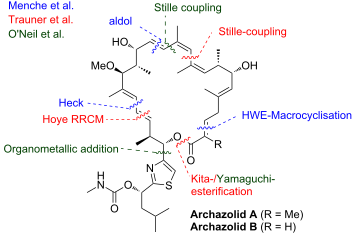
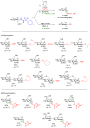
- coupling, acetate protection of the newly generated hydroxy group and DBU-mediated elimination. This three-step sequence proceeded as shown in Scheme 6 with excellent yields (94%) giving the triene 33 as a single diastereomer, which demonstrates the usefulness of aldol condensations in complex target
- alcohol 60. In this Δ5,6-trans-selective reaction the desired anti-diastereomer could be isolated in 85% with a dr of 6:1, which presumably arises from a chelation-controlled stereoselectivity [89]. The aldehyde 59 itself can be prepared in two steps from the corresponding Roche ester [90]. After


A concise and practical stereoselective synthesis of ipragliflozin L-proline
Beilstein J. Org. Chem. 2017, 13, 1064–1070, doi:10.3762/bjoc.13.105

- yield was 52% in three steps and the product purity was excellent. Two key diastereomers were prepared with efficient and direct access to the α-C-arylglucoside. Keywords: arylzinc derivative; β-C-arylglucoside; diastereomer impurity; ipragliflozin L-proline; stereoselective synthesis; Introduction
- was purified by recrystallization from methanol, and the desired product in 65.3% yield with HPLC purity 99.79% was obtained; the diastereomer 5’ was not detected. The protecting groups of 5 were removed in presence of sodium methoxide in refluxing methanol, and then recrystallized to give
- , 115.7, 73.1, 70.6, 68.4, 62.1, 38.7, 30.0, 27.0; MS (ES+) m/z: 763.44 [M + Na]+. Structure of ipragliflozin L-proline. Stereoselective synthesis of C-aryl glycoside by Lemarie. Stereoselective synthesis of β-C-arylglucoside 5. Synthesis of 1. Synthesis of diastereomer 6’ and 5’. Conditions for the


Phosphazene-catalyzed desymmetrization of cyclohexadienones by dithiane addition
Beilstein J. Org. Chem. 2017, 13, 762–767, doi:10.3762/bjoc.13.75

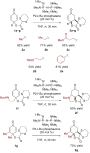
- nucleophilic group were appended to the para-quinol, it would be possible to construct a 5–6–5 fused ring system. Indeed, when R = CH2CH2NHBoc (1f), the desired tricyclic product 2f was obtained. In all cases only a single diastereomer was observed. In a substrate where a β-methyl group is present on the
- desymmetrizing intramolecular conjugate addition of a tethered dithiane moiety to para-cresol-derived cyclohexadienones. The substrates are easily accessible from cheap starting materials and the reaction provides functionalized bicyclic lactones as a single diastereomer. The products of the reaction were able




Unpredictable cycloisomerization of 1,11-dien-6-ynes by a common cobalt catalyst
Beilstein J. Org. Chem. 2017, 13, 639–643, doi:10.3762/bjoc.13.62
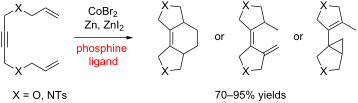
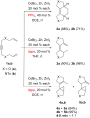
- diastereomer, however, it was not possible to unambiguously determine whether it was the cis- or the trans-isomer by NMR (including various correlation techniques) because of the high symmetry of both possible isomers. Attempts to grow crystals of 2c or its Br2 adduct for X-ray crystallography were also




Diastereoselective anodic hetero- and homo-coupling of menthol-, 8-methylmenthol- and 8-phenylmenthol-2-alkylmalonates
Beilstein J. Org. Chem. 2017, 13, 33–42, doi:10.3762/bjoc.13.5
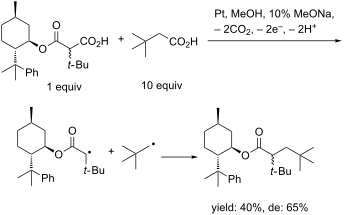
- 21–25 in 22–69% yield of two diastereomers, whereby one of the two diastereomers was formed in 5–65% diastereomeric excess (Scheme 3). Because of the low diastereomeric excess for compounds 21 and 22, the configuration of the major diastereomer was not determined. The configurations for the major
- diastereomers of 23–25 were obtained from crystal structure analyses and the correlation of the 13C NMR data. According to an X-ray analysis the minor diastereomer 23b has the configuration (S) at the new formed stereogenic center (Figure 2) [23]. The configuration of the new stereogenic centers in compounds 24
- and 25 were assigned on the basis of a characteristic down field shift in the 13C NMR of the carbonyl and the methine carbon atom in the major diastereomer (Table 1). The higher diastereomeric excess in compounds 24 and 25 obtained with 8-phenylmenthol (3) as auxiliary is attributed to an electronic




Biochemical and structural characterisation of the second oxidative crosslinking step during the biosynthesis of the glycopeptide antibiotic A47934
Beilstein J. Org. Chem. 2016, 12, 2849–2864, doi:10.3762/bjoc.12.284
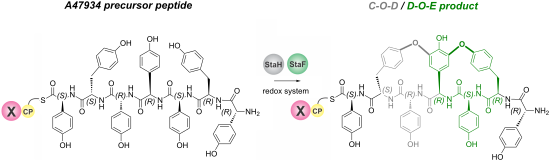
- preference for the incorrect peptide diastereomer under specific conditions [12]. These results provide hints of more stringent substrate specificity at later stages of the GPA cyclisation cascade and we hence investigated StaF activity against altered peptide substrates, including pekiskomycin- (Pek) and




New syntheses of (±)-tashiromine and (±)-epitashiromine via enaminone intermediates
Beilstein J. Org. Chem. 2016, 12, 2609–2613, doi:10.3762/bjoc.12.256

- products 12b–d were obtained as racemic mixtures of diastereomers in which, as expected, the major diastereomer resulted from cis addition of hydrogen across the double bond. This was confirmed in the case of the reduced ester 12b, which was obtained in a good yield of 72% and a diastereomeric ratio of 85


Enduracididine, a rare amino acid component of peptide antibiotics: Natural products and synthesis
Beilstein J. Org. Chem. 2016, 12, 2325–2342, doi:10.3762/bjoc.12.226
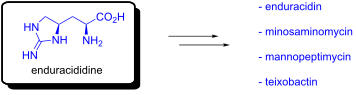
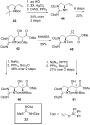
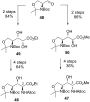
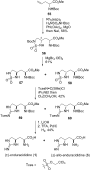
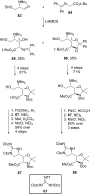
- on the stereoselective formation of aziridine 27. This key reaction proceeded from allylglycine 28 in 28% yield to give a 7:3 mixture in favour of the S,S diastereomer. Attempted optimisation of the yield and diastereoselectivity afforded no improvement. The synthesis continued with aziridine opening
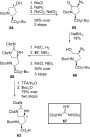
- protection, afforded protected β-hydroxyenduracididine 40. Alternatively, formation of epoxide 45 provided access to diastereomer 41. Synthesis of β-hydroxyenduracididine by Oberthür et al.: In 2014, Oberthür et al. reported a second generation synthesis of β-hydroxyenduracididine using a more concise route
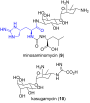
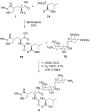
- 75. Coupling of 75 with amino sugar 76 and global deprotection afforded minosaminomycin (9) in three steps from enduracididine (1). It should be noted that the diastereomer (2R-isomer) of 9 was also synthesised starting from D-enduracididine. Biological testing of both compounds revealed that the 2R












An effective one-pot access to polynuclear dispiroheterocyclic structures comprising pyrrolidinyloxindole and imidazothiazolotriazine moieties via a 1,3-dipolar cycloaddition strategy
Beilstein J. Org. Chem. 2016, 12, 2240–2249, doi:10.3762/bjoc.12.216

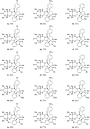
- diastereomer is obtained in good to high yields, although multiple (five) stereocenters are present in products 4. The possible approaches of the azomethine ylide are shown in Figure 8. The X-ray diffraction structures of 4c, 4e, and 4r reflect that the cycloaddition proceeds via an exo-transition state





Stereoselective synthesis of fused tetrahydroquinazolines through one-pot double [3 + 2] dipolar cycloadditions followed by [5 + 1] annulation
Beilstein J. Org. Chem. 2016, 12, 2204–2210, doi:10.3762/bjoc.12.211
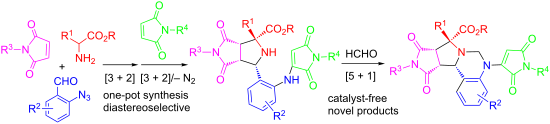
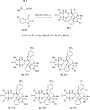
- , and MeCN as a solvent, the three-component reaction for 2a was completed under microwave heating at 115 °C for 25 min. Without work-up, the reaction mixture was directly reacted with 1.0 equiv of N-benzylmaleimide (6a) under microwave heating at 125 °C for 25 min to give 7a as a major diastereomer of
- a denitrogenation compound in 74% LC yield with a 39:1 dr (Table 1, entry 5). The diastereomer 7a was isolated in 65% yield by preparative chromatography. The stereochemistry of the final product was established during the first [3 + 2] cycloaddition of the azomethine ylide which has been well
- column to afford purified product 7 as a single diastereomer. General procedure for [5 + 1] annulation for the synthesis of products 1 To a solution of compound 7 (0.5 mmol), in 1.0 mL of 1,4-dioxane was added formaldehyde solution (16% in H2O, 1.5 mmol). The reaction mixture was heated at 110 °C for 3 h


Silica-supported sulfonic acids as recyclable catalyst for esterification of levulinic acid with stoichiometric amounts of alcohols
Beilstein J. Org. Chem. 2016, 12, 2173–2180, doi:10.3762/bjoc.12.207
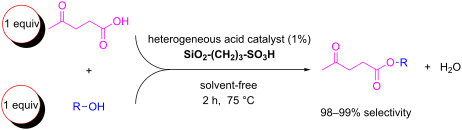
- alcohols as isopropanol and L-menthol. Despite their increased steric hindrance, very good results were obtained with a selectivity towards 3 >99% (Table 5; entries 3 and 4, 59 and 76% yield). In particular, it is important to underline that a single diastereomer of product 3d was formed (Table 4, entry 4



The direct oxidative diene cyclization and related reactions in natural product synthesis
Beilstein J. Org. Chem. 2016, 12, 2104–2123, doi:10.3762/bjoc.12.200
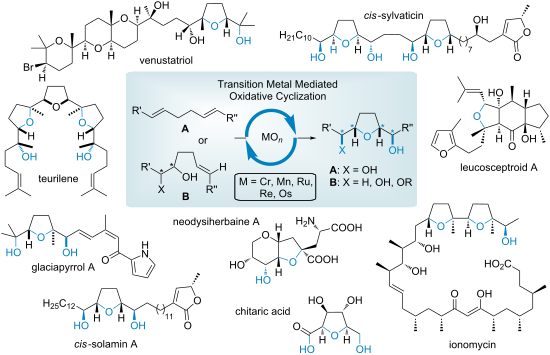
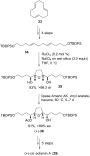
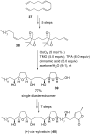
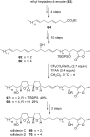
- diastereomer using a highly efficient and stereocontrolled synthetic strategy to construct the desired bis-THF ring building block 73 in two steps (Scheme 15) [120][121]. Thus, starting from commercially available trans-1,5,9-decatriene (71) a stereo- and positionselective Sharpless AD reaction [86][87][88









Diastereoselective synthesis of 3,4-dihydro-2H-pyran-4-carboxamides through an unusual regiospecific quasi-hydrolysis of a cyano group
Beilstein J. Org. Chem. 2016, 12, 2093–2098, doi:10.3762/bjoc.12.198

- aryl moieties to design the rare pyran-4-carboxamide molecules. Moreover, during the regio- and diastereoselective transformation a quasi-hydrolysis of only one of the cyano groups had occurred. As a result only one diastereomer of 3,4-dihydro-2H-pyran-4-carboxamides 2 was obtained (Table 1). The





