


Search results
Search for "enolate" in Full Text gives 278 result(s) in Beilstein Journal of Organic Chemistry. Showing first 200.
Ultrasound-promoted organocatalytic enamine–azide [3 + 2] cycloaddition reactions for the synthesis of ((arylselanyl)phenyl-1H-1,2,3-triazol-4-yl)ketones
Beilstein J. Org. Chem. 2017, 13, 694–702, doi:10.3762/bjoc.13.68
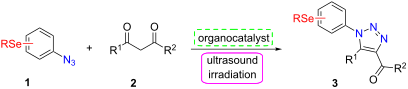
- have been used for this cycloaddition reaction [20][21][22][23][24][25][26][27][28][29]. Organocatalytic approaches based on β-enamine–azide or enolate–azide cycloadditions have been employed to synthesize 1,2,3-triazole scaffolds [30][31][32]. Depending on the organocatalyst employed, different
- carbonyl compounds could successfully generate an enamine or an enolate, and these species react as dipolarophiles with organic azides in organocatalyzed 1,3-dipolar cycloadditions. Our research group has demonstrated β-enamine–azide cycloaddition reactions for the synthesis of selenium-functionalized


Synthesis of 1-indanones with a broad range of biological activity
Beilstein J. Org. Chem. 2017, 13, 451–494, doi:10.3762/bjoc.13.48
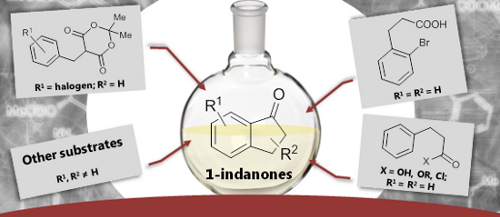
- -1,3-indanodiones 77 (Scheme 26). It has been found that the intermediate 79 underwent the Stetter reaction to form the enolate intermediate 80, which next was transformed to the intermediate 81 via aldol condensation. The release of NHC gave the β-hydroxy ketone 82, which was deprotonated to enolate


Polyketide stereocontrol: a study in chemical biology
Beilstein J. Org. Chem. 2017, 13, 348–371, doi:10.3762/bjoc.13.39
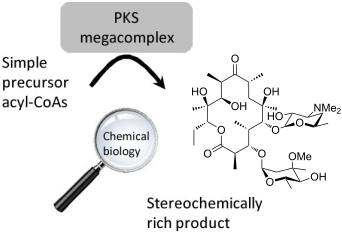
- biosynthetic cycle is KS-catalyzed chain extension. This reaction occurs by nucleophilic attack of an enolate generated by decarboxylation of an ACP-bound extender unit onto the starter unit or chain extension intermediate attached to the active site cysteine of the KS domain. The face of the enolate which is
- to yield the L-methyl. In mechanistic terms, epimerization involves removal of the C-2 proton and delivery of proton to C-2 from the opposite face of the resulting, planar enol/enolate intermediate. Monitoring by NMR of the rate of epimerization of a model C-3-ketoacyl ester (ethyl 2
- residues or alternatively abstraction by an available water molecule. The resulting enol/enolate could tautomerize spontaneously back to the original substrate or its epimer, with only the epimerized substrate possessing the required C-2 methyl stereochemistry for subsequent reduction. This epimer would




Diastereoselective anodic hetero- and homo-coupling of menthol-, 8-methylmenthol- and 8-phenylmenthol-2-alkylmalonates
Beilstein J. Org. Chem. 2017, 13, 33–42, doi:10.3762/bjoc.13.5
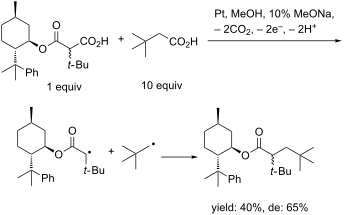
- the benzyl ester 19 with lithium diisopropylamide and quenching the enolate with carbon dioxide (Scheme 2a). Benzyl 2-tert-butylmalonate (6) was prepared in good yield using a method of Krapcho et al. [18], by double deprotonation of 3,3-dimethylbutyric acid (20) with LDA and quenching the dianion
- radical have been observed [35][36][37]. In contrast, hardly any side products of that kind were obtained using menthol related auxiliaries in anodic radical coupling reactions. Products analogous to these of the radical homo-coupling above can be obtained by auxiliary controlled oxidative enolate
- obtained by auxiliary controlled oxidative enolate coupling. However, this method often requires more expensive reagents, functional groups are frequently more sensible to the used reagents and an up-scale is more difficult to perform. On the other side anodic coupling of sodium carboxylates is easy and




Synthesis of polyhydroxylated decalins via two consecutive one-pot reactions: 1,4-addition/aldol reaction followed by RCM/syn-dihydroxylation
Beilstein J. Org. Chem. 2016, 12, 2602–2608, doi:10.3762/bjoc.12.255
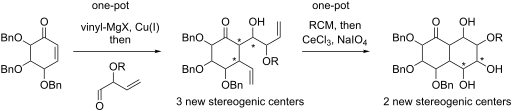
- . Then, the resulting enolate was approached by an aldehyde from the opposite side to the newly attached vinyl group. A similar stereochemical outcome of such transformation has been already reported [26][27][28][29][30][31][32][33]. Moreover, the addition of aldehyde gave rise to the anti aldol product


β-Amino functionalization of cinnamic Weinreb amides in ionic liquid
Beilstein J. Org. Chem. 2016, 12, 2372–2377, doi:10.3762/bjoc.12.231

- -amino carbonyl derivatives. Surprisingly, there have been only a few successful preparations for β-amino Weinreb amides to date. One of which is the addition of the enolate of commercially available N-methoxy-N-methylacetamide to sulfinimines to generate the corresponding N-sulfinyl β-amino Weinreb


Useful access to enantiomerically pure protected inositols from carbohydrates: the aldohexos-5-uloses route
Beilstein J. Org. Chem. 2016, 12, 2343–2350, doi:10.3762/bjoc.12.227

- an attempt to find an explanation of the stereochemical outcome of the reaction, we directed our attention toward the open-transition-state models. These have been proposed to explain the prevalent formation of syn products, irrespective of the enolate geometry [41], in aldol reactions performed in
- the absence of a coordinating metal center (for instance, in the case of tin and zirconium enolates, and of “naked” enolates generated from enolsilanes [42]). In the open-transition-state model, the enolate and the carbonyl group are orientated in an antiperiplanar fashion, maximazing the distance


Chiral ammonium betaine-catalyzed asymmetric Mannich-type reaction of oxindoles
Beilstein J. Org. Chem. 2016, 12, 2099–2103, doi:10.3762/bjoc.12.199
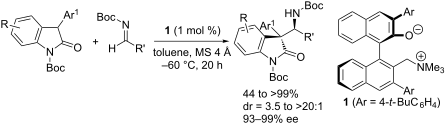
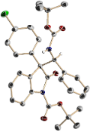
- straightforward method for accessing a wide array of chiral indoline skeletons [5][6][7][8]. The most common strategy in this approach is to utilize an oxindole enolate as a nucleophile, because facile deprotonation from the C-3 carbon is ensured by the inductive effect of the α-carbonyl group and by the enolate


Enantioconvergent catalysis
Beilstein J. Org. Chem. 2016, 12, 2038–2045, doi:10.3762/bjoc.12.192
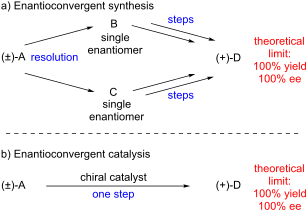
- carbon stereocenter to form achiral enolate intermediate 22. Since no kinetic resolution of the racemic starting material was observed, yields in excess of 90% with up to 92% ee could be obtained. In further studies, it was found that the putative enolate intermediate could also be trapped by a proton
- source to yield α-tertiary cycloalkanones in high ee (e.g., (±)-20 → (–)-24) [30]. Interestingly, in the reactions of certain substrates the enolate face functionalized by the electrophilic allyl group is opposite to the face functionalized by the proton (Scheme 5). This observation indicates that the
- two enantioconvergent reactions, though related, must proceed through substantially different mechanisms of enantioinduction. The differential reactivity demonstrated by the enolate intermediate 22 highlights the power of accessing different mechanistic pathways via stereoablative initiation. Examples


Rh-Catalyzed reductive Mannich-type reaction and its application towards the synthesis of (±)-ezetimibe
Beilstein J. Org. Chem. 2016, 12, 1608–1615, doi:10.3762/bjoc.12.157
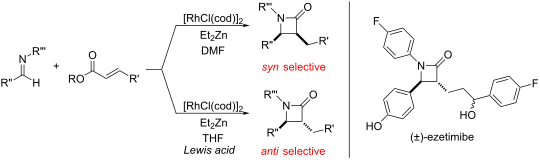
- Mannich-type reaction; rhodium–hydride; zinc enolate; Introduction The Mannich reaction is an important and classical C–C bond-forming reaction between an enolizable carbonyl compound and an imine to give the corresponding β-aminocarbonyl compound. For example, Shibasaki and his colleague reported the
- enolate 7 involved the 1,4-reduction of α,β-unsaturated ester 2 by 6 and the transmetalation with a zinc species to give the Reformatsky-type reagent Int A. This intermediate Int A reacts immediately with the imine to give the corresponding intermediate Int B. Subsequently, intramolecular cyclization of
- ). Furthermore, we reported in the previous paper that the configuration of the Int A species was identified as that of the E-enolate by the trapping procedure of tert-butyl acrylate (2k) with TMS-Cl. In addition, the same reaction gave only the syn-β-amino ester syn-4Ak in 86% and it was speculated that the


Development of chiral metal amides as highly reactive catalysts for asymmetric [3 + 2] cycloadditions
Beilstein J. Org. Chem. 2016, 12, 1447–1452, doi:10.3762/bjoc.12.140

- + 2] adducts in high yields with high selectivities. Notably, the chiral CuHMDS catalyst worked well with catalyst loadings of both 0.1 and 0.01 mol %. A proposed catalytic cycle is shown in Figure 1. Thus, the chiral CuHMDS deprotonates Schiff base 1a to generate the corresponding chiral Cu enolate B


Cyclisation mechanisms in the biosynthesis of ribosomally synthesised and post-translationally modified peptides
Beilstein J. Org. Chem. 2016, 12, 1250–1268, doi:10.3762/bjoc.12.120
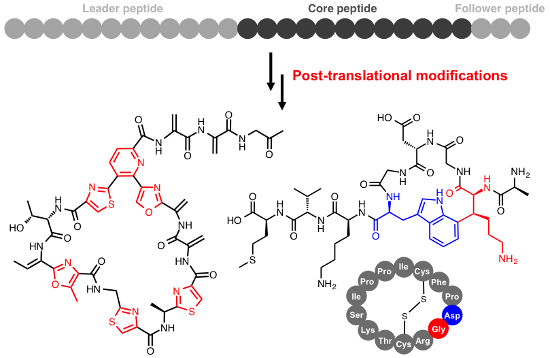
- acid (Figure 4C). This is formed by sequential Michael-type cyclisations [57][60], where a conventional lanthionine thioether is first formed by the attack of cysteine onto Dha. The resulting enolate then attacks another Dha residue to stereospecifically form the carbocycle (Figure 4D), and the





Stereoselective synthesis of tricyclic compounds by intramolecular palladium-catalyzed addition of aryl iodides to carbonyl groups
Beilstein J. Org. Chem. 2016, 12, 1236–1242, doi:10.3762/bjoc.12.118
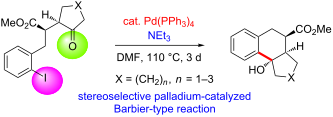
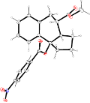
- intramolecular enolate arylation, a reaction that has been discovered by our group some years ago [11][12]. Apparently, under the reaction conditions a ketone enolate of 2 reacts with the iodoarene moiety to form the five-membered ring of 10. The configurational assignments of compounds 7 and 8 are in agreement
- groups [20][21]. Very extensive investigations with a variety of o-haloaniline derivatives as precursors have been reported by the group of Solé, Bonjoch and Fernández [22][23]. They also analyzed this reaction and the competing enolate arylation by computational studies [24][25] (for a review, see [26
- precursor compounds or elimination of water in the products. However, in general none of these byproducts has been isolated. For compound 2 the bulky isopropyl group slows down the addition to the carbonyl group and an enolate arylation was observed instead as major reaction pathway. Although the scope of




Conjugate addition–enantioselective protonation reactions
Beilstein J. Org. Chem. 2016, 12, 1203–1228, doi:10.3762/bjoc.12.116
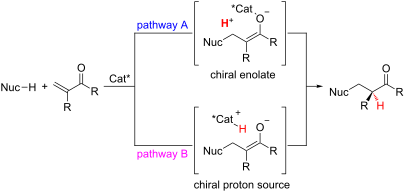
- are further classified according to whether catalysis is achieved with chiral Lewis acids, organocatalysts, or transition metals. Keywords: asymmetric catalysis; conjugate addition; enantioselective protonation; enolate; Introduction Due to their ubiquity in natural products and drugs, many
- researchers have developed methods for the stereoselective synthesis of tertiary carbon stereocenters. One aesthetically pleasing approach is the enantioselective protonation of prochiral enolates and enolate equivalents [1][2][3][4][5][6][7][8][9][10]. While an attractive strategy, the enantioselective
- stabilize the carbanion intermediate, also increases the stereocenter’s susceptibility to racemization under the reaction conditions. Moreover, enolate intermediates can adopt E- or Z-geometries that, upon protonation, generally lead to opposite stereoisomers. Because enantioselective protonation is a




Synthesis of 2-oxindoles via 'transition-metal-free' intramolecular dehydrogenative coupling (IDC) of sp2 C–H and sp3 C–H bonds
Beilstein J. Org. Chem. 2016, 12, 1153–1169, doi:10.3762/bjoc.12.111
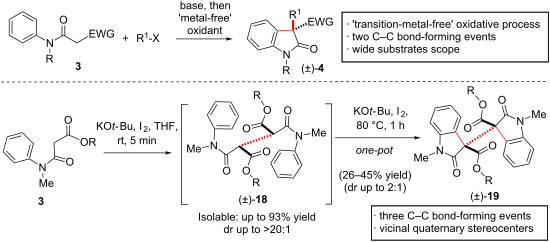
- as the presence of an o-halogen, an o-selenium, or an o-xanthate, respectively. One of the direct approaches to 2-oxindoles could be a one-electron oxidation of an amide enolate as shown in Scheme 1. Toward this end, in 2009, Kündig and co-workers have developed a novel route to 3,3-disubstituted-2
- to the phenyl ring. The α-carbonylalkyl radicals were formed by Cu(II)-mediated oxidation of the respective enolate precursors. In 2010, Yu and co-workers have reported the synthesis of 3-acetyloxindoles via Ag2O-mediated intramolecular oxidative coupling [45]. For the past few years, our group is





Towards the total synthesis of keramaphidin B
Beilstein J. Org. Chem. 2016, 12, 1096–1100, doi:10.3762/bjoc.12.104
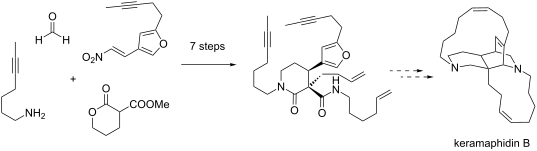
- -controlled Michael reaction remained present. Accordingly, we chose to probe reactivity and establish relative stereocontrol using a close model system comprising pronucleophile 8 and furanyl nitroolefin 11 (Scheme 1). The δ-valerolactone pronucleophile 8 was synthesised by the enolate acylation of δ



Efficient syntheses of climate relevant isoprene nitrates and (1R,5S)-(−)-myrtenol nitrate
Beilstein J. Org. Chem. 2016, 12, 1081–1095, doi:10.3762/bjoc.12.103

- chloroacetone in THF. It was important in establishing high yields of (E)-58 and (Z)-59 to use a syringe pump. This helped to minimise the number and amounts of side-products formed via, presumably, the enolate of chloroacetone which likely undergoes rapid secondary reactions. Subsequent work-up and


1H-Imidazol-4(5H)-ones and thiazol-4(5H)-ones as emerging pronucleophiles in asymmetric catalysis
Beilstein J. Org. Chem. 2016, 12, 918–936, doi:10.3762/bjoc.12.90
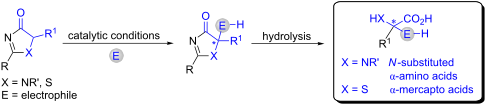
- ) and their analogues (Figure 1a) and oxazol-4-(5H)-ones and their thiazolone and imidazolone analogues (Figure 1b). These heterocycles show very interesting characteristics: i) easy deprotonation under soft enolization conditions (aromatic enolate formation); ii) the geometry of the resulting starting
- enolate or equivalent is fixed due to their cyclic nature, thus facilitating the control of the stereoselectivity; iii) they are substituted at the α-position of the carbonyl and therefore, after reaction with an electrophile, a tetrasubstituted stereocenter is created and, iv) the resulting adducts can
- ]. The main advantages of these pronucleophiles over the previous known templates are: i) the NR group can be installed in the heterocycle previous to the asymmetric reaction, ii) they are easily deprotonated under soft enolization conditions (aromatic enolate formation), and iii) unlike azlactones and








Scope and mechanism of the highly stereoselective metal-mediated domino aldol reactions of enolates with aldehydes
Beilstein J. Org. Chem. 2016, 12, 813–824, doi:10.3762/bjoc.12.80

- ; domino aldol; metal enolate; tetrahydropyran; Introduction Since its discovery in the late nineteenth century the aldol reaction has become one of the most powerful tools in the field of carbon–carbon bond formation [1][2][3][4][5]. It is widely used in the formation of many natural products [6][7][8][9
- benzaldehyde (3a: Ar = Ph) (Scheme 2). The enolate was generated from propiophenone by deprotonation with lithium diisopropylamide (LDA) at −40 °C in tetrahydrofuran (THF) and was subsequently reacted with 0.33 equivalents of MCl3 or 0.25 equivalents of MCl4, respectively. The resulting metal enolate was then
- . Additionally, there are alternating inter- and intramolecular hydrogen bonds between the hydroxy groups. Mechanistic aspects To shed light on the mechanism, the metal to enolate ratio was varied (Table 2), while keeping the optimum temperature for each metal as determined in the previous experiments. The


Asymmetric α-amination of 3-substituted oxindoles using chiral bifunctional phosphine catalysts
Beilstein J. Org. Chem. 2016, 12, 725–731, doi:10.3762/bjoc.12.72
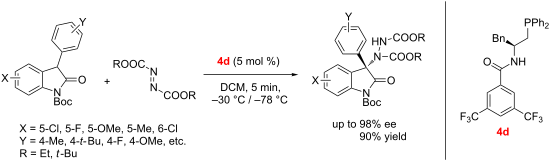
- product (Scheme 3). We propose that after deprotonation by the basic in situ generated zwitterion, the resultant enolate form of 3-aryloxindoles might interact with the catalyst by both hydrogen bonding as well as static interaction. The presence of the 3,5-CF3-substituted benzene ring may block the Re
- face of the enolate, driving the electrophile to attack from the Si face. Conclusion In summary, we have realized enantioselective α-aminations of 3-substitued oxindoles with azodicarboxylates by using amino acid-derived bifunctional phosphine catalysts. These reactions afford a variety of chiral 2


Biosynthesis of α-pyrones
Beilstein J. Org. Chem. 2016, 12, 571–588, doi:10.3762/bjoc.12.56
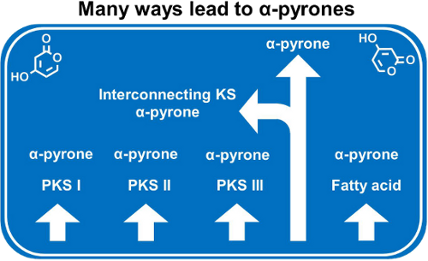
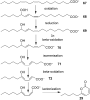
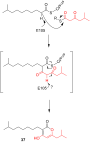
- catalytic cysteine. Subsequently, lactonization can take place. It is assumed that an enolate exists as an intermediate in the formation of the C–O bond [88]. Even though for both enzymes no experimental evidences for the chronological order of the two condensation reactions exist, it can be expected that






(Thio)urea-mediated synthesis of functionalized six-membered rings with multiple chiral centers
Beilstein J. Org. Chem. 2016, 12, 462–495, doi:10.3762/bjoc.12.48
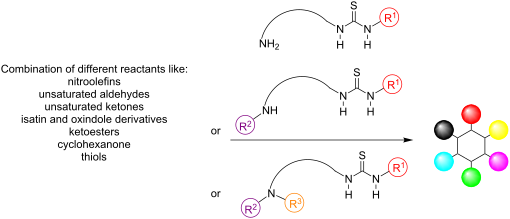
- resulting enolate is directed to the upper face of the 3-nitro-2H-chromene due to hydrogen bonding of the enolate with the ammonium cation. The thiourea moiety, firstly activates the 3-nitro-2H-chromene through two hydrogen bonds, making it more electrophilic (LUMO lowering effect) and secondly it orients
- it near the enolate. In 2011, You and co-workers described the intramolecular desymmetrization of cyclohexadienones 69 catalyzed by thiourea 71, derived from cinchonine to give a bicyclic system 70 containing two chiral centers, utilizing an aza-Michael reaction (Scheme 24) [34]. The reaction
- amine of the organocatalyst to provide an enolate, which in turn reacts with the Michael acceptor 111. Cascade/domino/tandem reactions producing six-membered rings initiated by Michael addition of activated methylenes and derivatives In 2004, Takemoto and co-workers demonstrated the enantioselective


Recent advances in N-heterocyclic carbene (NHC)-catalysed benzoin reactions
Beilstein J. Org. Chem. 2016, 12, 444–461, doi:10.3762/bjoc.12.47
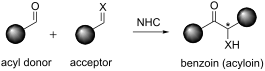
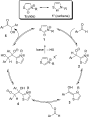
- -aminoketones 39 in high enantioselectivity [41]. Notably, the homoenolate or enolate reactivity of the NHC-enal adduct was not observed in this case. The presence of a tertiary alcohol functionality and the steric bulk of the NHC-precatalyst 40 were essential for the selective formation of the aza-benzoin
- afforded chiral quaternary aminooxindole derivatives. The NHC–enal adduct prefers to react via the acyl anion pathway and the competing homoenolate/enolate reactivity was not observed. The sterically non-congested, electron-deficient NHC-catalyst 42 presumably does not hinder bond formation at the catalyst



Cupreines and cupreidines: an established class of bifunctional cinchona organocatalysts
Beilstein J. Org. Chem. 2016, 12, 429–443, doi:10.3762/bjoc.12.46
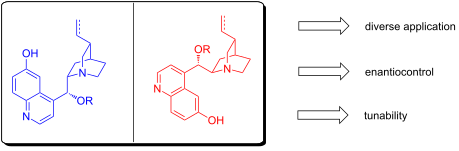
- a cinchona organocatalyst with a 6’-OH functionality came from Hatakeyama and co-workers in 1999 who demonstrated the use of β-ICPD in an asymmetric Morita–Baylis–Hillman (MBH) reaction [15][16][17][18] what is essentially an asymmetric C3-substituted ammonium enolate reaction (Scheme 1) [19][20
- processes, the tertiary amine adds into the conjugate ester as with the MBH reaction, but instead of the resulting C3-ammonium enolate reacting with an electrophile, an E1cB elimination of the carbonate occurs to generate another conjugated system. This can then undergo an attack by a Michael donor
- been developed by Frontier and co-worker using β-ICPD through a mechanism that is reminiscent of the MBH reaction (Scheme 7) [31]. In this process however, the tertiary amine adds to the conjugated system 25 in a 1,6-fashion to generate intermediate enolate 26. This undergoes a single bond rotation to


Organocatalytic asymmetric Henry reaction of 1H-pyrrole-2,3-diones with bifunctional amine-thiourea catalysts bearing multiple hydrogen-bond donors
Beilstein J. Org. Chem. 2016, 12, 295–300, doi:10.3762/bjoc.12.31
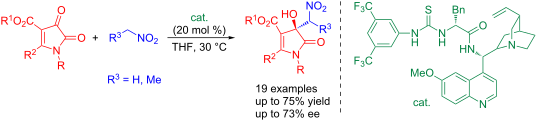
- mode of nitromethane with different electrophiles [14][17][39], we propose a possible model to explain the stereochemistry of this transformation. As shown in Figure 2, nitromethane is activated by the tertiary amine to form the nitro enolate. Simultaneously, the 1H-pyrrole-2,3-diones 1 are orientated
- by the multiple hydrogen bonds of the catalyst. Thus, the nitro enolate attacks the keto carbonyl group of 1H-pyrrole-2,3-diones (to the si-face) to furnish the corresponding product with S-configuration (Figure 2). Conclusion In conclusion, we have developed an asymmetric Henry reaction of 1H





