


Search results
Search for "glycol" in Full Text gives 282 result(s) in Beilstein Journal of Organic Chemistry. Showing first 200.
The direct oxidative diene cyclization and related reactions in natural product synthesis
Beilstein J. Org. Chem. 2016, 12, 2104–2123, doi:10.3762/bjoc.12.200
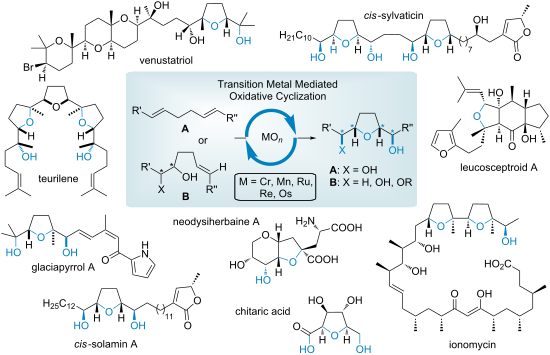
- reaction; cf. Scheme 3). In this case the diol and the metal oxide form a glycol ester intermediate which then undergoes an intramolecular oxidative addition to a remote double bond. Thereby, type B oxidative cyclizations converge to the same (or very similar) reactive intermediate as is passed through in
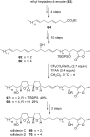
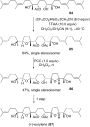
- succeeded in synthesizing cis-solamin A (29) utilizing a ruthenium tetroxide-catalyzed type A oxidative cyclization approach (Scheme 9) [80]. Silyl-protected dienediol 34, the oxidative cyclization precursor, was synthesized from all-trans-cyclododecatriene 33 in four steps including dihydroxylation, glycol









Ionic liquids as transesterification catalysts: applications for the synthesis of linear and cyclic organic carbonates
Beilstein J. Org. Chem. 2016, 12, 1911–1924, doi:10.3762/bjoc.12.181
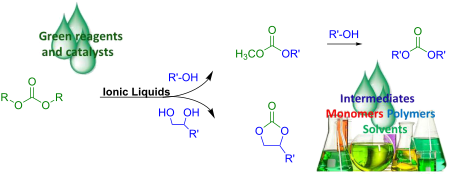
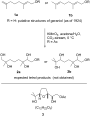
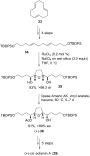
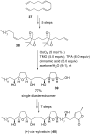
- phosphines and amines by dimethyl carbonate (Q = N, P). Bottom: anion metathesis of methyl carbonate onium salts. Synthesis of the acid polymeric IL. EGDMA: ethylene glycol dimethacrylate. The transesterification of sec-butyl acetate with MeOH catalyzed by some acidic imidazolium ILs. Top: phosgenation of


Cross-linked cyclodextrin-based material for treatment of metals and organic substances present in industrial discharge waters
Beilstein J. Org. Chem. 2016, 12, 1826–1838, doi:10.3762/bjoc.12.172
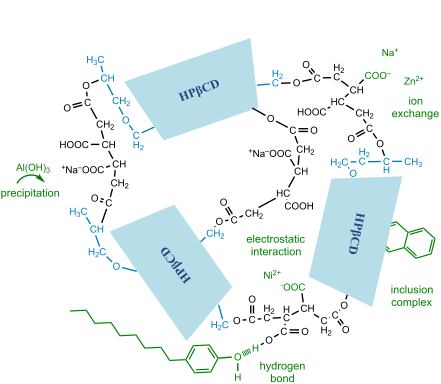
- for the use of carboxylic acids and pyromellitic dianhydride, respectively, as agents to cross-linking CDs. Other cross-linking agents such as epichlorohydrin, ethylene glycol diglycidyl ether, glutaraldehyde, benzoquinone or isocyanates can be also used [1][12]. The main objective of the study was to




Organic chemistry meets polymers, nanoscience, therapeutics and diagnostics
Beilstein J. Org. Chem. 2016, 12, 1638–1646, doi:10.3762/bjoc.12.161
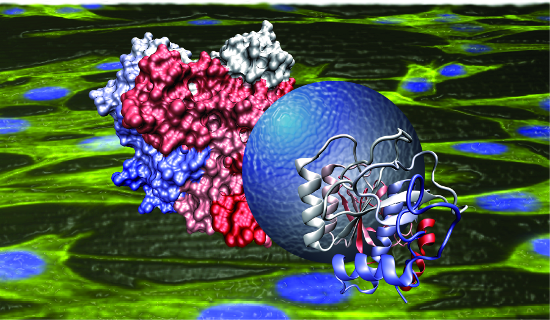
- the "tabula rasa" ligand [43], namely a ligand that features a hydrophobic interior for self-assembly, and a short tetra(ethylene glycol) layer to block interactions of the hydrophobic interiors with proteins [44]. These particles were indeed "blank" (but not as blank as our later zwitterionic “corona
- -free’ particles [45]), and behaved like high molecular weight poly(ethylene glycol) [46]. Once we appended simple anionic and cationic recognition elements to the surface these system bound proteins with high affinity [47] and some degree of selectivity [48]. What was surprising is that not only did




From N-vinylpyrrolidone anions to modified paraffin-like oligomers via double alkylation with 1,8-dibromooctane: access to covalent networks and oligomeric amines for dye attachment
Beilstein J. Org. Chem. 2016, 12, 1395–1400, doi:10.3762/bjoc.12.133

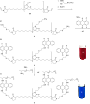
- poly(ethylene glycol) side chains. Keywords: double alkylation; modified N-vinylpyrrolidone; oligomeric anthraquinone dye; paraffin-like oligomer; radical thiol-ene click reaction; Introduction Poly(N-vinylpyrrolidone) (PVP) is established in daily life due to its high water solubility and
- Jeffamine® M 600 leads to blue-colored branched oligomer 6 with poly(ethylene glycol) side chains. The conducted reaction sequence is shown in Scheme 2. The quantitative conversion of the double bonds of oligomer 2a was verified by 1H NMR spectroscopy. As described above, the corresponding product 4 bears
- substituent of the attached anthraquinone moiety in 5 was replaced at elevated temperature with O-(2-aminopropyl)-O'-(2-methoxyethyl)propylene glycol (Jeffamine® M 600) yielding the branched blue-colored oligomeric dye 6. The deep blue color is a result of the presence of two amino groups in 1,4-position of



Towards potential nanoparticle contrast agents: Synthesis of new functionalized PEG bisphosphonates
Beilstein J. Org. Chem. 2016, 12, 1366–1371, doi:10.3762/bjoc.12.130

- is a procedure developed in our laboratory to introduce the bisphosphonate from acyl chloride and tris(trimethylsilyl)phosphite in one step. Keywords: bisphosphonate; Fe2O3 nanoparticle; polyethylene glycol derivatives; surface ligand synthesis; Introduction Numerous researchers are interested in


Application of Cu(I)-catalyzed azide–alkyne cycloaddition for the design and synthesis of sequence specific probes targeting double-stranded DNA
Beilstein J. Org. Chem. 2016, 12, 1348–1360, doi:10.3762/bjoc.12.128
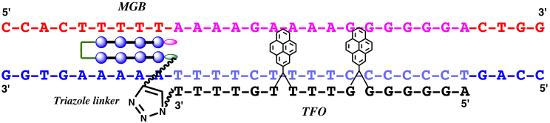
- atom in the chain, and 10 possessing several ethylene glycol moieties were used to increase the solubility of modified polyamides in water. Selection of the target DNA and design of TFOs and MGBs The polypurine tract of the HIV-1 provirus is a valuable target for MGB-TFO conjugates [35]. It has a 16-bp


Artificial Diels–Alderase based on the transmembrane protein FhuA
Beilstein J. Org. Chem. 2016, 12, 1314–1321, doi:10.3762/bjoc.12.124
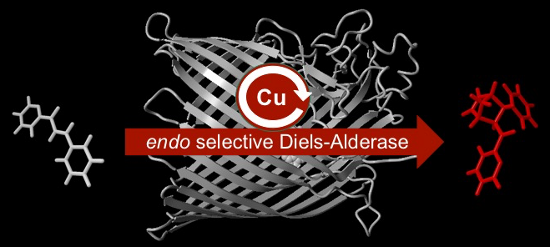
- (polyethylene-polyethylene glycol), SDS (sodium dodecyl sulfate), TEV (Tobacco Etch Virus), MALDI–TOF–MS (matrix-assisted laser desorption/ionisation and time-of-flight mass spectrometry), FhuAΔCVFtev (FhuA Δ1-159_C545_V548_F501_tev), CD (circular dichroism), ESI-MS (electrospray ionization-mass spectrometry


Synthesis of a deuterated probe for the confocal Raman microscopy imaging of squalenoyl nanomedicines
Beilstein J. Org. Chem. 2016, 12, 1127–1135, doi:10.3762/bjoc.12.109

- alcohol 18 (15%) and diol 17 (20%). This result could not by improved using reverse addition conditions (Scheme 2). Therefore, selective monoprotection of the dialdehyde 5 was next attempted. Unfortunately, treatment of the latter either with ethylene glycol or 2,2-dimethylpropandiol gave a mixture of di


Synthesis and in vitro cytotoxicity of acetylated 3-fluoro, 4-fluoro and 3,4-difluoro analogs of D-glucosamine and D-galactosamine
Beilstein J. Org. Chem. 2016, 12, 750–759, doi:10.3762/bjoc.12.75
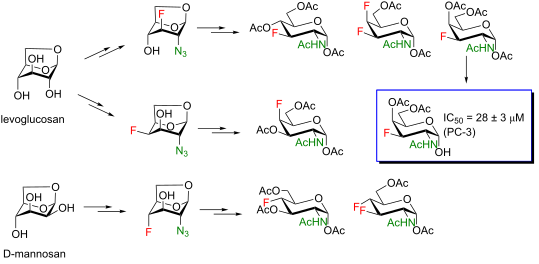
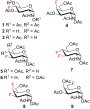
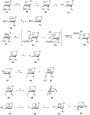
- in 18 on reaction with KHF2 in ethylene glycol [48][49] furnished the 4-fluoro derivative 26 (Scheme 3). The moderate yield of 26 (40–60%) can be attributed to the formation of the 4-O-(2-hydroxyethyl) derivative 27 arising from solvent participation, and to a partial decomposition (indicated by TLC





Creating molecular macrocycles for anion recognition
Beilstein J. Org. Chem. 2016, 12, 611–627, doi:10.3762/bjoc.12.60
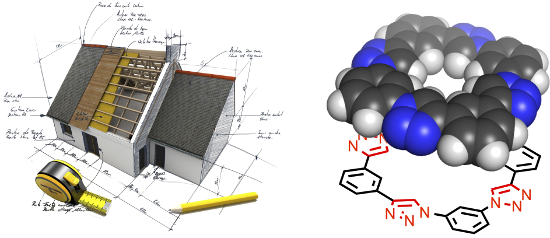
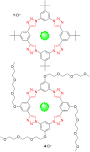
- salt binding to an aryl–triazole–glycol macrocycle (Figure 2, 12–15, and Figure 10) and examined the cooperativity using theory. We investigated NaClO4 and NaI (Figure 10b) experimentally and NaI, NaBr, NaCl theoretically. Theory is able to do things that are impossible in experiment (Figure 10c). As a




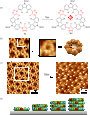


Optimized methods for preparation of 6I-(ω-sulfanyl-alkylene-sulfanyl)-β-cyclodextrin derivatives
Beilstein J. Org. Chem. 2016, 12, 349–352, doi:10.3762/bjoc.12.38
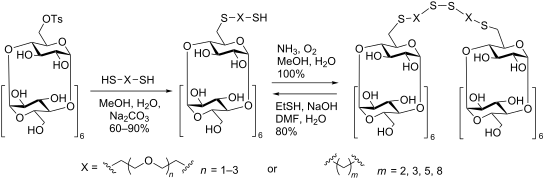
- and repeating units (ethylene glycol or methylene). The target compounds were characterized by IR, MS and NMR spectra. A simple method for their complete conversion to the corresponding disulfides as well as a method for the reduction of the disulfides back to the thiols is presented. Both, thiols and
- of the commonly used method [18]. The modification consisted in the repeated recrystallization from 50% water–methanol which yielded a very pure product with no interfering impurities (di- or tri-Ts-β-CD) or unreacted β-CD. The terminal sulfanyl groups were introduced to the oligoethylene glycol
- linkers using standard chemical transformations (Scheme 1). Oligoethylene glycol ditosylates 2a–c [19] were converted to S-acetyl dithiols 3a–c [20] and deacetylated to the oligoethylene glycol dithiols 4a–c using a procedure published for similar thiols [21]. Compounds 4 can be easily oxidized to


Aggregation behavior of amphiphilic cyclodextrins in a nonpolar solvent: evidence of large-scale structures by atomistic molecular dynamics simulations and solution studies
Beilstein J. Org. Chem. 2016, 12, 73–80, doi:10.3762/bjoc.12.8
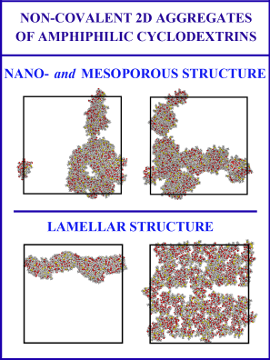
- applications [1][2]. In particular, the modification with thioalkyl chains in the primary rim and oligoethylene glycol chains in the secondary rim and, consequently, their hydrophobic–hydrophilic balance (Scheme 1) modulates the formation of differently sized and shaped nanoconstructs as membrane models for


Supramolecular polymer assembly in aqueous solution arising from cyclodextrin host–guest complexation
Beilstein J. Org. Chem. 2016, 12, 50–72, doi:10.3762/bjoc.12.7
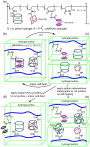
- , may be disrupted by cyclodextrin host–guest complexation of these substituents (Figure 2) [41][42][43][44][45][46][47][48][49]. Thus, in 1998, Zhang et al. reported that the viscosity of an aqueous solution of perfluorocarbon-substituted poly(ethylene glycol) was decreased through the addition of β-CD
- permeation chromatography and light scattering methods [48]. In 2002, Karlson et al. found that hydrophobic association among the hydrophobic substituents of substituted poly(ethylene glycol) was disrupted by host–guest complexation by methylated α-CD [42]; as was a similar association by the hydrophobic
- surfactants based on poly(ethylene glycol) to recover the hydrophobic associations in hydrophobically substituted alkali-soluble emulsion (HASE) polymers complexed by α-CD and β-CD [41]. (It should be noted that association occurs between hydrophobically substituted polymers in aqueous solution and that this


Recent advances in metathesis-derived polymers containing transition metals in the side chain
Beilstein J. Org. Chem. 2015, 11, 2747–2762, doi:10.3762/bjoc.11.296
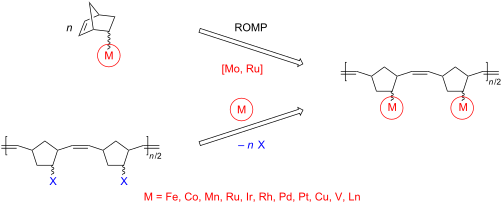
- biologically relevant type of new homopolymers (e.g., 2, Scheme 1) and block copolymers provided with amidoferrocenyl groups linked through a tetraethylene glycol side chain. These interesting metallopolymers were readily prepared through living ROMP initiated by the Grubbs 3rd generation catalyst which proved
- used to prepare modified Pt electrodes with high stability and good qualitative sensing of ATP2− anions. It was supposed that the triethylene glycol domains in the block copolymers favor the amidoferrocene–ATP interactions by encapsulation. Astruc assumed that during the recognition process different H
- corresponding monomers, appended to Ir bipyridine complexes, oligoethylene glycol and biotin entities, have been examined by fluorescence spectroscopy for their self-assembling behavior and biodetection capability (Scheme 15). In a very interesting work, Blechert, Buchmeiser and coworkers [61] copolymerized


Synthesis of bi- and bis-1,2,3-triazoles by copper-catalyzed Huisgen cycloaddition: A family of valuable products by click chemistry
Beilstein J. Org. Chem. 2015, 11, 2557–2576, doi:10.3762/bjoc.11.276
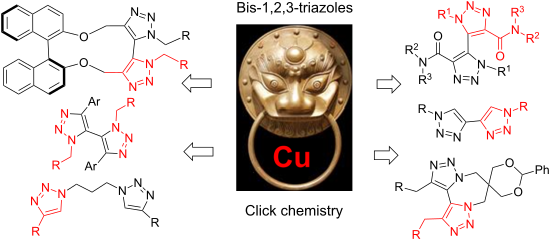
- ). The formation of triazole functional groups can work as a powerful auxochrome. In 2010, Bunz and co-workers used the TMS-protected diethynylbenzothiadiazoles 48 and 50 as the source of dialkynes. The CuAAC reaction was carried out with ethylene-glycol-functionalized azide 47 in the presence of CuSO4
- and sodium ascorbate, providing the benzo-thiadiazole-based bistriazole (49 and 51, Scheme 17) [37]. With the aid of the hydrophilic character of the ethylene glycol group, both of the bistriazoles can be endowed with water solubility, and can effectively bind Cu(II) and Ni(II) in water. The thiacalix


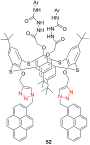


Aggregation behaviour of amphiphilic cyclodextrins: the nucleation stage by atomistic molecular dynamics simulations
Beilstein J. Org. Chem. 2015, 11, 2459–2473, doi:10.3762/bjoc.11.267
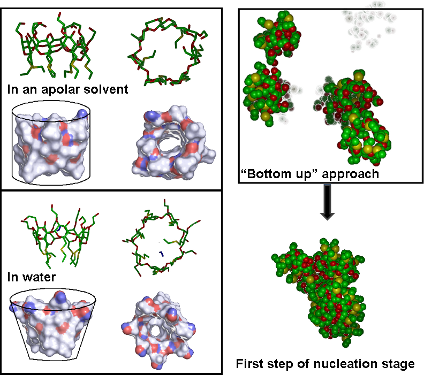
- report a theoretical study of the aggregation of a few amphiphilic cyclodextrins carrying hydrophobic thioalkyl groups and hydrophilic ethylene glycol moieties at opposite rims, focusing on the initial nucleation stage in an apolar solvent and in water. The study is based on atomistic molecular dynamics
- atoms) as a function of their distance from the atoms belonging to each of the two clusters of three molecules (see Figure 10). Structure of an aCD functionalized with hydrophobic thioalkyl C2 (R = C2H5) or C6 (R = C6H13) chains at the primary rim (hydrophobic H groups) and polar oligoethylene glycol


Size-controlled and redox-responsive supramolecular nanoparticles
Beilstein J. Org. Chem. 2015, 11, 2388–2399, doi:10.3762/bjoc.11.260
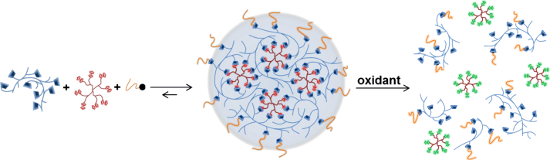
- . Davis et al. showed the formation of SNPs using attractive electrostatic interactions between positively charged β-cyclodextrin (CD)-containing polymers and negatively charged siRNA at the core [8]. Neutral adamantyl-grafted poly(ethylene glycol) (Ad-PEG) was incorporated at the surface to stabilize
- PAMAM (Fc8-PAMAM) dendrimer as the multivalent guest and a monovalent stabilizer. Different stabilizers were used such as: Ad-PEG, Fc-terminated poly(ethylene glycol) (Fc-PEG), methoxypoly(ethylene glycol) (mPEG), and Ad-tetraethylene glycol (Ad-TEG). The effect of the following parameters on the
- synthesized by a reaction of 1-(chlorocarbonyl)ferrocene with the terminal amino group of methoxypoly(ethylene glycol)amine (Mw = 5000 g/mol) in dichloromethane, using an excess of triethylamine as a base, followed by precipitation from diethyl ether. To evaluate the association constant of the Fc moiety with


Self-assemblies of γ-CDs with pentablock copolymers PMA-PPO-PEO-PPO-PMA and endcapping via atom transfer radical polymerization of 2-methacryloyloxyethyl phosphorylcholine
Beilstein J. Org. Chem. 2015, 11, 2267–2277, doi:10.3762/bjoc.11.247
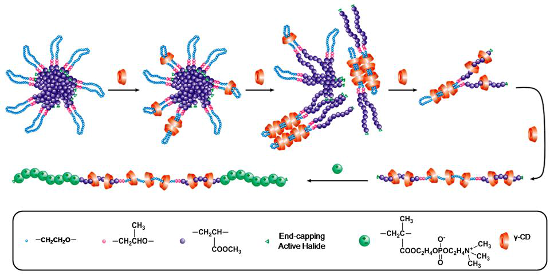
- inclusion complexation of α-CDs with poly(ethylene glycol) (PEG) [1], a great variety of polymers with different cross-sectional areas have been shown to thread CDs to create PPRs. For example, β-CDs are single-chain-stranded with poly(propylene glycol) (PPG) but not with PEG [2][3], and γ-CDs are not only


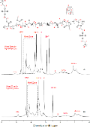


Synthesis, structure, and mechanical properties of silica nanocomposite polyrotaxane gels
Beilstein J. Org. Chem. 2015, 11, 2194–2201, doi:10.3762/bjoc.11.238
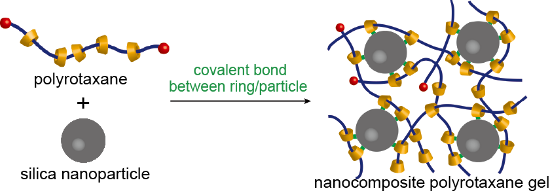
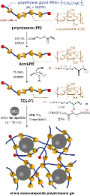
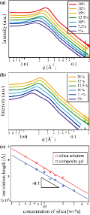
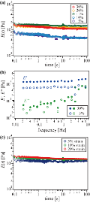
- progress. Experimental Materials Crude polyrotaxane consisting of polyethylene glycol (PEG, Mn = 32,000) and α-cyclodextrin (CD) were purchased from Advanced Softmaterials, Inc. The crude polyrotaxane was purified by repeated reprecipitation from its DMSO solution into deionized water. The obtained




C–H bond halogenation catalyzed or mediated by copper: an overview
Beilstein J. Org. Chem. 2015, 11, 2132–2144, doi:10.3762/bjoc.11.230
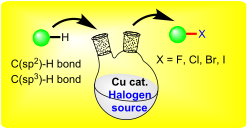
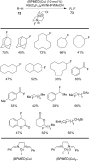
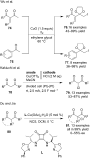
- methylketones 75 in the presence of molecular iodine, respectively. The tandem transformation of a carbonyl acetalization and a iodination in sustainable ethylene glycol under mild heating provided a practical approach in the synthesis of useful protected α-haloketones (Scheme 25). Recently, Kakiuchi and co




A new approach to ferrocene derived alkenes via copper-catalyzed olefination
Beilstein J. Org. Chem. 2015, 11, 2072–2078, doi:10.3762/bjoc.11.223
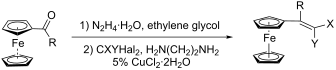
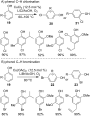
- N2H4·H2O, DMSO or EtOH as a solvent) the yields of the desired alkenes were not good enough. Better results were obtained in ethylene glycol with a 4-fold excess of N2H4·H2O (novel media just reported for COR [37]). In this case, target alkenes were isolated in up to 62% yield. Using C2-freons


Supramolecular chemistry: from aromatic foldamers to solution-phase supramolecular organic frameworks
Beilstein J. Org. Chem. 2015, 11, 2057–2071, doi:10.3762/bjoc.11.222
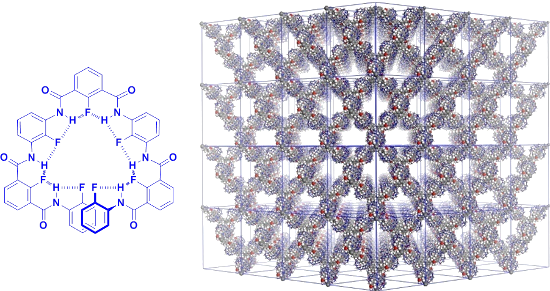
- acetonitrile. The stability of the complexes increased with the elongation of the ethylene glycol chains. Aromatic amide oligomers: extended secondary structures. Our students also tried to make use of hydrogen bonding to control the conformation of aromatic amide backbones. Previously, Hamilton [26], Gong [27


![[Graphic 1]](/bjoc/content/inline/1860-5397-11-222-i19.png?max-width=637&scale=1.18182) 16 and dynamic [2]catenane formed by compounds 17–19.
16 and dynamic [2]catenane formed by compounds 17–19.


Hexacoordinate Ru-based olefin metathesis catalysts with pH-responsive N-heterocyclic carbene (NHC) and N-donor ligands for ROMP reactions in non-aqueous, aqueous and emulsion conditions
Beilstein J. Org. Chem. 2015, 11, 1960–1972, doi:10.3762/bjoc.11.212
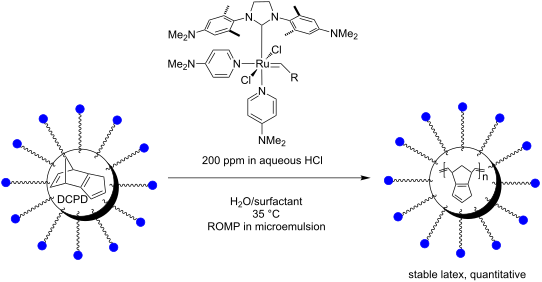
- monomer liquidity and polyethylene glycol (PEG) based Emulgin® B3 as surfactant which was previously vigorously stirred for 1 h and then further emulsified using a sonication probe for another 5 min establishing the microemulsion. The emulsion polymerization reactions were conducted at less favorable


Dicarboxylic esters: Useful tools for the biocatalyzed synthesis of hybrid compounds and polymers
Beilstein J. Org. Chem. 2015, 11, 1583–1595, doi:10.3762/bjoc.11.174

- . The formed diol was mixed with an equal molar amount of divinyl sebacate and lipase as a catalyst, after some time methoxypoly(ethylene glycol) was added to react with the remaining vinyl carboxylates to give an amphiphilic polymer. This product self-assembled into nanometer-scale-sized particles in
- telechelics in a one-pot polycondensation. The backbone of the telechelics was built from ethylene glycol and divinyl adipate. Specific degrees of polymerisation (4, 8 and 13) were reached by terminating the process with the addition of 2-hydroxyethyl methacrylate. Well-defined telechelics with more than 90





