Search results
Search for "hybrid" in Full Text gives 374 result(s) in Beilstein Journal of Organic Chemistry. Showing first 200.
Experimental and computational electrochemistry of quinazolinespirohexadienone molecular switches – differential electrochromic vs photochromic behavior
Beilstein J. Org. Chem. 2019, 15, 2473–2485, doi:10.3762/bjoc.15.240
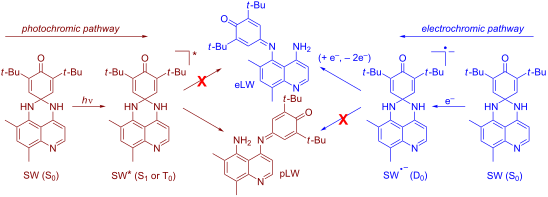
- node (dual Intel X5650 CPU, with 6 cores running at 2.66 GHz) using the Gaussian 09 [30] software package implemented through the WebMO [26] graphical user interface. Restricted open-shell Hartree-Fock (ROHF) theory [31] with the Becke 3, Lee, Yang, and Parr (B3LYP) hybrid functional [32][33][34] was




Combining the Ugi-azide multicomponent reaction and rhodium(III)-catalyzed annulation for the synthesis of tetrazole-isoquinolone/pyridone hybrids
Beilstein J. Org. Chem. 2019, 15, 2447–2457, doi:10.3762/bjoc.15.237

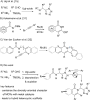
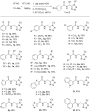
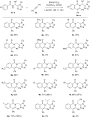
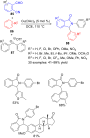
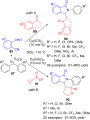
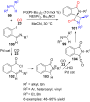
- rhodium(III)-catalyzed intermolecular annulation has been established for the preparation of tetrazole-isoquinolone/pyridone hybrids. Several N-acylaminomethyltetrazoles were reacted with arylacetylenes to form the hybrid products in moderate to very good yields. The method relies on the capacity of the
- , which has been considered of interest for medicinal chemistry applications [7][8]. In recent years, the preparation of hybrid heterocyclic scaffolds including the tetrazole ring (either fused or linked to other heterocycles) has rendered potent bioactive compounds [9][10][11][12][13], which confirms the
- incorporation of three different diversity-generating sites (Scheme 1A), a feature that has been exploited for the construction of libraries of tetrazole-based compounds with potential bioactivity [9][10][11][12][19]. A powerful approach for obtaining hybrid heterocyclic compounds including the tetrazole ring




Targeted photoswitchable imaging of intracellular glutathione by a photochromic glycosheet sensor
Beilstein J. Org. Chem. 2019, 15, 2380–2389, doi:10.3762/bjoc.15.230
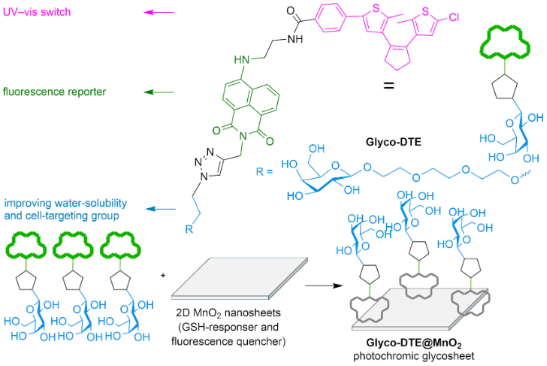
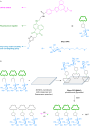
- integrate these functions into one molecule. By taking advantages of both redox-active/high loading features of two-dimensional (2D) manganese dioxide (MnO2) and dynamic fluorescence photoswitching of photochromic sensors, we here design a hybrid photochromic MnO2 glycosheet (Glyco-DTE@MnO2) to achieve the
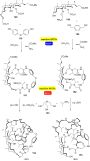
- design and further broaden the availability of photoswitchable biosensing, herein we report a glycosheet hybrid sensor (Glyco-DTE@MnO2) fabricated by 2D MnO2 nanosheets and dithienylethene fluorescence reporter (Glyco-DTE) to achieve cell-targeted photoswitchable imaging of intracellular GSH. As shown in
- as biosensing/imaging, bioactivity modulation, drug delivery, etc [23][24]. In our system, the Glyco-DTE@MnO2 hybrid sensor undergoes decomposition when encountering the overexpressed intracellular GSH in HepG2 cell lines, following the recovery of the photoswitchable fluorescence signal regulated by



Small anion-assisted electrochemical potential splitting in a new series of bistriarylamine derivatives: organic mixed valency across a urea bridge and zwitterionization
Beilstein J. Org. Chem. 2019, 15, 2277–2286, doi:10.3762/bjoc.15.220

- performed using the Gaussian09 software [63]. The three-parameterized Becke–Lee–Yang–Parr (B3LYP) hybrid exchange-correlation functional [64] was selected using the 6-31G(d) basis set for 1a and 1b with a restricted method and using the 6-311++G(d,p) basis set for the MV species with an unrestricted method


Aggregation-induced emission effect on turn-off fluorescent switching of a photochromic diarylethene
Beilstein J. Org. Chem. 2019, 15, 2204–2212, doi:10.3762/bjoc.15.217
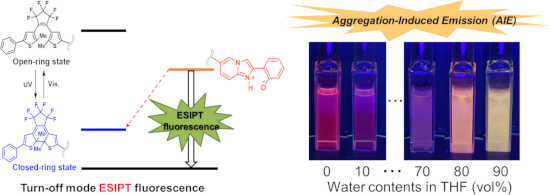
- subsequent TDDFT calculations. For the calculation of the fluorescence, the geometry optimizations were performed for the first excited state obtained by TDDFT. The hybrid B3LYP functional [33][34][35] was adopted to exchange-correlation term of DFT. The gaussian 6-31G(d,p) basis set was adopted to all


Azologization and repurposing of a hetero-stilbene-based kinase inhibitor: towards the design of photoswitchable sirtuin inhibitors
Beilstein J. Org. Chem. 2019, 15, 2170–2183, doi:10.3762/bjoc.15.214
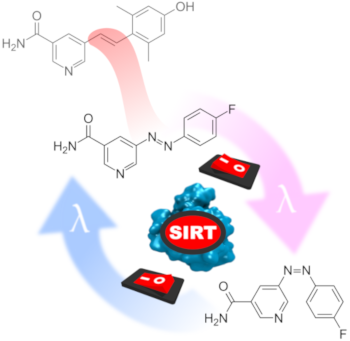
- SV(P) basis set [68][69]. The 10 lowest excitation energies and their oscillator strengths were computed using the SV(P) basis and the larger def2-TZVP basis set [69]. This was done using TDDFT with the hybrid approximation to the XC functional PBE0, CC2, and ADC(2) [51][52][53][70][71][72]. ADC(2


Fluorinated azobenzenes as supramolecular halogen-bonding building blocks
Beilstein J. Org. Chem. 2019, 15, 2013–2019, doi:10.3762/bjoc.15.197
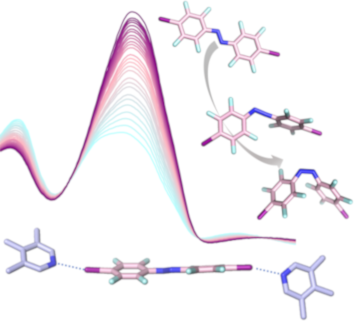
- help of quantum mechanical calculations involving a combination of low-cost implicit solvation models and hybrid density functionals when including dispersion corrections. Electrostatic potential map at different isodensity values (B3LYP/ def2/TZVP/DGZVP optimized geometries) with a) ρ = 0.0001, and b


Tautomerism as primary signaling mechanism in metal sensing: the case of amide group
Beilstein J. Org. Chem. 2019, 15, 1898–1906, doi:10.3762/bjoc.15.185
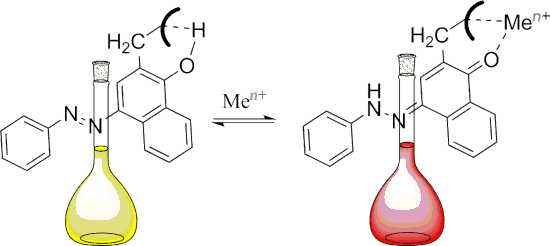
- still not appear even after 1024 scans. Theoretical calculations Quantum-chemical calculations were performed using the Gaussian 09 D.01 program suite [17]. The M06-2X functional [18][19] was used with the 6-31++G** basis set for the calculations. This fitted hybrid meta-GGA functional with 54% HF





Identification of optimal fluorescent probes for G-quadruplex nucleic acids through systematic exploration of mono- and distyryl dye libraries
Beilstein J. Org. Chem. 2019, 15, 1872–1889, doi:10.3762/bjoc.15.183
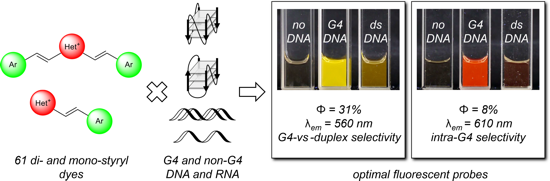
- and RNA structures The fluorimetric response of the dye library was investigated against a set of 14 diverse nucleic acid structures (Table 2), including ten G4-DNA structures of different topologies (parallel G4: c-kit2, 25CEB, c-kit87up, c-myc, c-src1; parallel dimer G4: c-myb; hybrid G4: 22AG, 46AG
- towards hybrid (22AG, 46AG) and antiparallel (HRAS) G4-DNA, whereas the second group (dyes 1s, 1u, 1v, 17a and 18a) shows fluorimetric selectivity for parallel G4-DNA forms (c-kit2, c-kit87up, c-myc). To verify the preferences of the dyes with respect to the conformation of the G4 analytes, we analysed
- this plot, PC1 (x axis) correlates with the overall light-up intensity observed for each dye with the tested targets. On the contrary, PC2 (y axis) correlates with the intra-G4 selectivity of each compound, with compounds selective for hybrid and antiparallel G4s locating in the lower part of the plot







Halide metathesis in overdrive: mechanochemical synthesis of a heterometallic group 1 allyl complex
Beilstein J. Org. Chem. 2019, 15, 1856–1863, doi:10.3762/bjoc.15.181
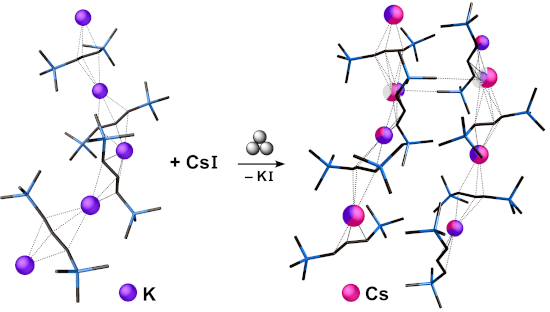
- this and several related points more quantitatively, various features of the K/Cs/[allyl]− system were modeled with DFT calculations, using the B3PW91 hybrid functional [27][28] with Grimme’s -D3 dispersion corrections (GD3BJ) [29]. A calculation on the simple model systems [K(C3H5)] and [Cs(C3H5


Functional panchromatic BODIPY dyes with near-infrared absorption: design, synthesis, characterization and use in dye-sensitized solar cells
Beilstein J. Org. Chem. 2019, 15, 1758–1768, doi:10.3762/bjoc.15.169
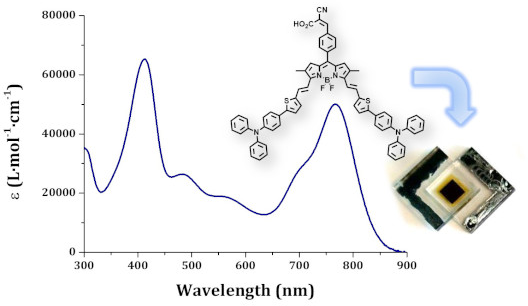
- organic counterpart, i.e., bulk heterojunction solar cells, or other hybrid PV technologies such as perovskite solar cells. DSSCs can display satisfactory power conversion efficiencies (PCE) in the range of 10 to 14% [1][2][3] but also a long-term stability when specific electrolytes based on ionic




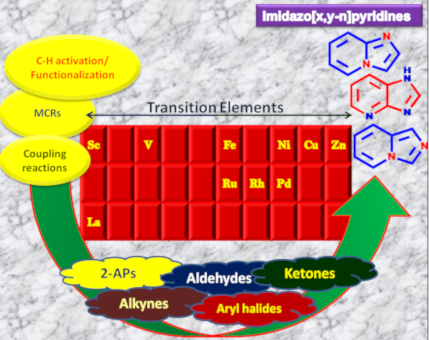
Recent advances on the transition-metal-catalyzed synthesis of imidazopyridines: an updated coverage
Beilstein J. Org. Chem. 2019, 15, 1612–1704, doi:10.3762/bjoc.15.165


Reversible end-to-end assembly of selectively functionalized gold nanorods by light-responsive arylazopyrazole–cyclodextrin interaction
Beilstein J. Org. Chem. 2019, 15, 1407–1415, doi:10.3762/bjoc.15.140
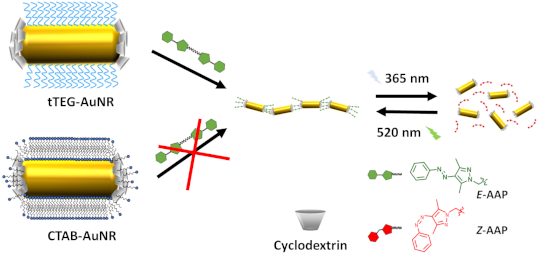
- –organic hybrid nanomaterials. Keywords: cyclodextrins; gold nanorods; host–guest chemistry; light-responsive materials; molecular switches; self-assembly; Introduction Metallic nanomaterials have received intense and interdisciplinary interest due to their unique optical [1], electronic [2][3] and
- linker molecule (dAAP) led to light-responsive reversible self-assembly of AuNR in an end-to-end manner as depicted in Scheme 1 to open up a novel strategy for the design of hybrid nanomaterials by supramolecular chemistry. Results and Discussion The AuNR (length: 58 nm, width: 25 nm, aspect-ratio: 2.3
- successful method for the fabrication of new hybrid nanomaterials by the application of light-responsive host–guest chemistry allowing for effective control over assembled and disassembled states of anisotropic nanoparticles over several cycles. Experimental Instrumentation and materials All chemicals were


Bambusuril analogs based on alternating glycoluril and xylylene units
Beilstein J. Org. Chem. 2019, 15, 1268–1274, doi:10.3762/bjoc.15.124
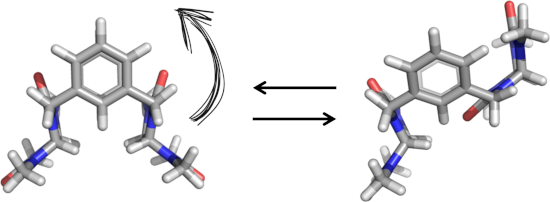
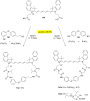
- which can interact with cationic, anionic or neutral guest molecules. Here we present the design and synthesis of a new hybrid macrocycle containing glycoluril and aromatic units. The reaction afforded a mixture of macrocyclic homologues from which a two-membered macrocycle was isolated as the main


Steroid diversification by multicomponent reactions
Beilstein J. Org. Chem. 2019, 15, 1236–1256, doi:10.3762/bjoc.15.121
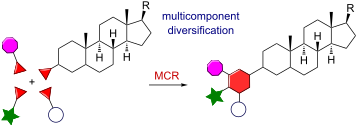
- displaying biological activities such as antimicrobial, antiviral and anti-inflammatory, among others. Scheme 3 exemplifies the reaction of cholestan-6-one 7 with 2-aminopyridine and phenyl isocyanide to afford the heterocycle–steroid hybrid 8 in good yield and diastereoselectivity, whereas different
- paraformaldehyde and benzyl isocyanide to form hybrid 11 in good yield. Similarly, the spirostanic lactone 12 was transformed into spirostanic acid 13 and amine 14, which were next ligated to alanine methyl ester and Boc-histidine leading to the amino acid–steroid conjugates 15 and 16, respectively. This approach
- bonds in one-pot, leading to a remarkably complex amino acid–steroid hybrid 27 in very good yield [29]. After the pioneering work of Wessjohann and co-workers, other groups relied on the functionalization of steroids with isocyanide groups for their subsequent derivatization by isocyanide-based MCRs



Mechanochemical synthesis of hyper-crosslinked polymers: influences on their pore structure and adsorption behaviour for organic vapors
Beilstein J. Org. Chem. 2019, 15, 1154–1161, doi:10.3762/bjoc.15.112
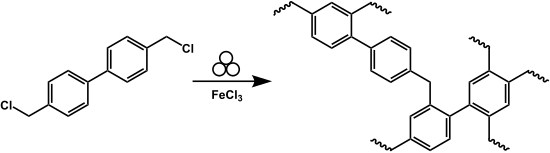
- variety of these materials [1]. While inorganic materials such as activated carbons, porous metal oxides, and zeolites have been investigated for decades, hybrid materials such as metal-organic frameworks [2], purely organic frameworks such as crystalline covalent-organic frameworks [3], and amorphous


Multicomponent reactions (MCRs): a useful access to the synthesis of benzo-fused γ-lactams
Beilstein J. Org. Chem. 2019, 15, 1065–1085, doi:10.3762/bjoc.15.104
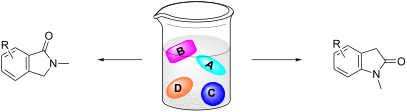
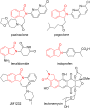
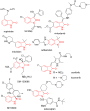
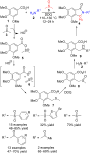
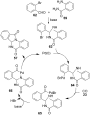
- ]. Besides, several hybrid molecules containing, inter alia the oxindole moiety, have been discovered and they demonstrated diverse therapeutic activities, for example, against breast [46] and colon cancer cells [47] and drug-resistant bacteria [48]. Among the many excellent recent reviews on the preparation










Catalytic asymmetric oxo-Diels–Alder reactions with chiral atropisomeric biphenyl diols
Beilstein J. Org. Chem. 2019, 15, 955–962, doi:10.3762/bjoc.15.92
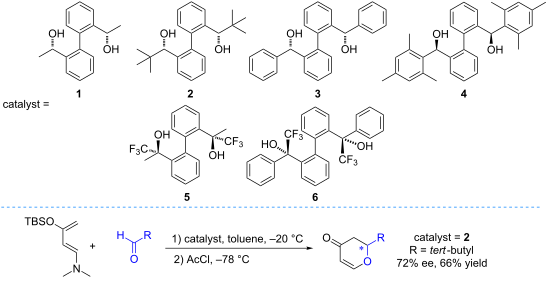
- supramolecular helices or dimers through intermolecular hydrogen bonding of two axially chiral biphenyl hybrid diols (1 and 2 in Scheme 1) which contain point chirality at the side arms and axial chirality at the biphenyl backbone [37]. We envisage the structural similarity and the ability of our scaffold to
- other biphenyl hybrid diols with different steric bulky substituents were incorporated (3 and 4). Since it is known that the catalyst acidity has significant influence on hydrogen-bond-catalyzed reactions [32], we also incorporated a CF3 group in our molecular scaffold to investigate how it would affect


Synthesis of (macro)heterocycles by consecutive/repetitive isocyanide-based multicomponent reactions
Beilstein J. Org. Chem. 2019, 15, 906–930, doi:10.3762/bjoc.15.88
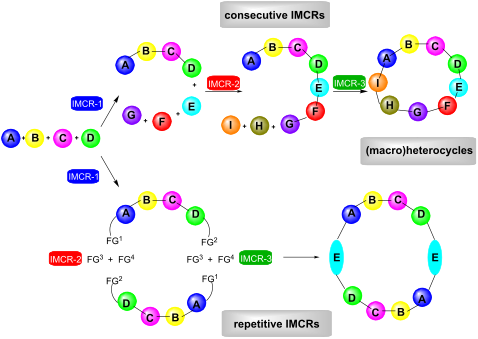
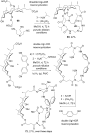
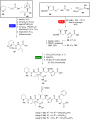
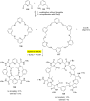
- approach provided the synthesis of steroid-biaryl ether hybrid macrocycles 117 and 118 with up to 68 members by the MiBs strategy. Another representative example of MiBs is the synthesis of the biaryl ether-containing macrocycles 123a–f (Scheme 23) [39]. The synthetic strategy involved the mixing of three
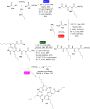
- [41] performed the first use of the diamine/diacid combination of bidirectional Ugi-MiBs in the synthesis of novel steroid–peptoid hybrid macrocycles. Scheme 25 shows two examples using this combination for the synthesis of cholane–peptoid hybrid macrocycles. Another application of the MiBs approach
- -based macrocyclization yielded steroid-aryl hybrid macroheterocycles 151 and 152, which after ester hydrolysis, acted as trifunctional building blocks for consecutive 3-fold Ugi-4CR-based macrocyclizations with triisocyanide 153. The cross-linked igloo-shaped skeletons of cages 154 and 155 were obtained









Azologization of serotonin 5-HT3 receptor antagonists
Beilstein J. Org. Chem. 2019, 15, 780–788, doi:10.3762/bjoc.15.74
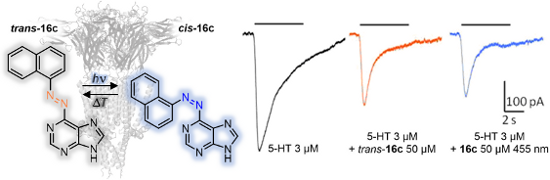
- hybrid biomolecule. In this context, various photochromic scaffolds including dithienylethenes, fulgi(mi)des, and azobenzenes are investigated [31][42]. The latter ones were already discovered in 1834 by E. Mitscherlich [43] but it took around another 100 years till G. S. Hartley [44] revealed their


Catalyst-free assembly of giant tris(heteroaryl)methanes: synthesis of novel pharmacophoric triads and model sterically crowded tris(heteroaryl/aryl)methyl cation salts
Beilstein J. Org. Chem. 2019, 15, 642–654, doi:10.3762/bjoc.15.60
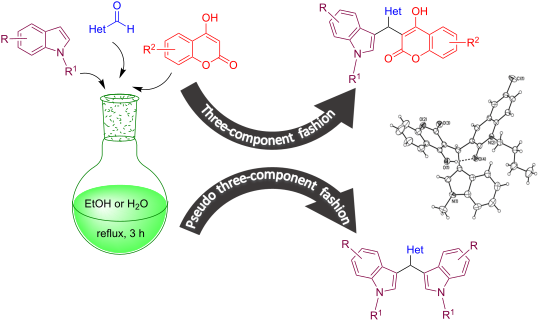
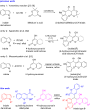
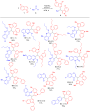
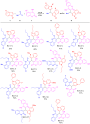
- a set of “privileged structural motifs” that are present in both synthetic and naturally occurring compounds of practical and biological interest [29][30][31][32][33][34][35][36]. Consequently, there have been many attempts to produce hybrid structures with interesting properties by combining two








Polyaminoazide mixtures for the synthesis of pH-responsive calixarene nanosponges
Beilstein J. Org. Chem. 2019, 15, 633–641, doi:10.3762/bjoc.15.59

- -sensitive functionalities in the highly hydrophobic nanoporous environment provided by the fully synthetic calixarene-based polymer, might open interesting perspectives for applicative purposes, in particular in the fields of organocatalysis and of hybrid organic-inorganic materials, such as in the emerging


Synthesis and fluorescent properties of N(9)-alkylated 2-amino-6-triazolylpurines and 7-deazapurines
Beilstein J. Org. Chem. 2019, 15, 474–489, doi:10.3762/bjoc.15.41
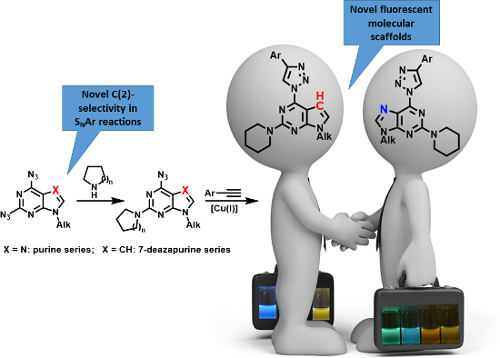
- , steepest descent algorithm) and systematic conformational analysis as implemented in Avogadro 1.1.1 software. The minimum energy conformers found by molecular mechanics were further optimized with the Gaussian 09 program package [57] by the means of DFT using B3LYP exchange–correlation hybrid functional





Aqueous olefin metathesis: recent developments and applications
Beilstein J. Org. Chem. 2019, 15, 445–468, doi:10.3762/bjoc.15.39
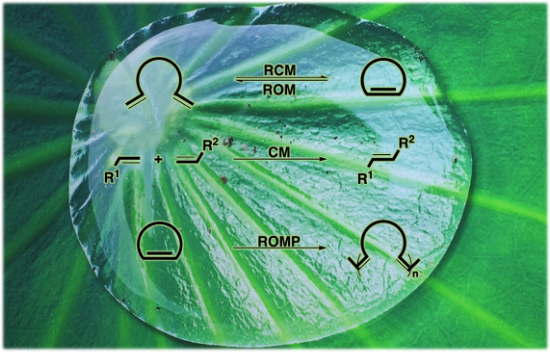
- shock protein from M. Jannaschii (MjHSP) [71]. The authors reported a HG-II-type catalyst modified on its NHC backbone with an α-bromoacetyl unit (68) that is reacted with the unique cysteine of the modified MjHSP variant (G41C) to afford ArM 4 (Scheme 15). The hybrid catalyst ArM 4 was then tested for
- (NB4exp). The coupling reaction in aqueous buffer at pH 7.5 finally affords ArM 5, ArM 6 and ArM 7, respectively (Scheme 16). The obtained hybrid catalysts were tested for the RCM with substrates 21 and 64 (Table 9). Overall, ArM 6 and ArM 7 are comparable and perform best in both reactions with 35
- % conversion of substrate 21 and quantitative conversion of substrate 64. The water-soluble catalyst 9 was compared to the hybrid catalysts, displaying a higher TON in the RCM of 21 (Table 9, entry 4). Interestingly, the activity of catalyst 9 is inhibited in the presence of NB4exp (Table 9, entries 5 and 10




Application of olefin metathesis in the synthesis of functionalized polyhedral oligomeric silsesquioxanes (POSS) and POSS-containing polymeric materials
Beilstein J. Org. Chem. 2019, 15, 310–332, doi:10.3762/bjoc.15.28
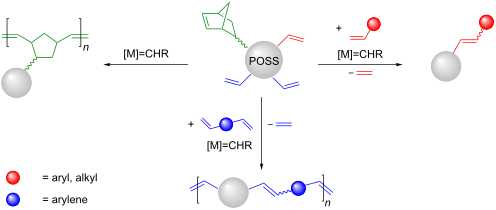
- edges, chemically bonded with eight different or similar organic substituents so that it represents a truly hybrid architecture. The cubic silsesquioxane unit is characterized by a three-dimensional nanoscopic size structure with approximate Si–Si distance equal to 0.5 nm and an approximate R–R distance
- to 11033 Da and polydispersity index (PDI) = 1.5. Ring-opening metathesis polymerization (ROMP) of POSS-functionalized monomers The chemistry of inorganic–organic hybrid materials has emerged as a fascinating new field of modern nanotechnology. The inclusion of POSS cages into the polymeric material
- are the subject of numerous reviews [30][31][32][33][34][35][36][37]. From among the methods for preparation of organic–inorganic hybrid materials, polymerization or copolymerization is particularly convenient to incorporate POSS units into polyolefins. Ring-opening metathesis polymerization (ROMP) is