


Search results
Search for "isopropyl" in Full Text gives 267 result(s) in Beilstein Journal of Organic Chemistry. Showing first 200.
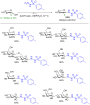
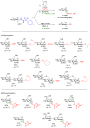
Strategies toward protecting group-free glycosylation through selective activation of the anomeric center
Beilstein J. Org. Chem. 2017, 13, 1239–1279, doi:10.3762/bjoc.13.123





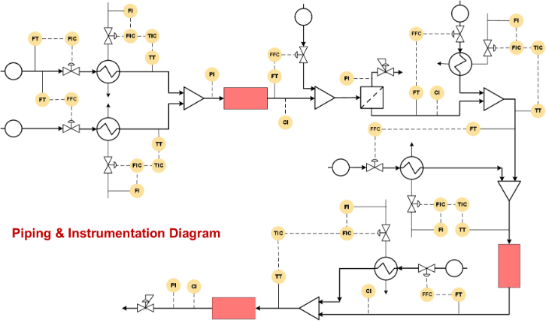
Automating multistep flow synthesis: approach and challenges in integrating chemistry, machines and logic
Beilstein J. Org. Chem. 2017, 13, 960–987, doi:10.3762/bjoc.13.97




Molecular-level architectural design using benzothiadiazole-based polymers for photovoltaic applications
Beilstein J. Org. Chem. 2017, 13, 863–873, doi:10.3762/bjoc.13.87

- substrates (Xinyan Technology Limited, Taiwan) were sequentially cleaned in deionized (DI) water with soap (Hellmanex III), DI water, isopropyl alcohol, acetone and water under sonication for ≈30 min each. The cleaned substrates were then dried with nitrogen gas. UV–ozone was performed on cleaned substrates



Transition-metal-catalyzed synthesis of phenols and aryl thiols
Beilstein J. Org. Chem. 2017, 13, 589–611, doi:10.3762/bjoc.13.58

- synthesized a series of novel imidazole-based phosphine ligands, and their effciency was carefully screened [23]. Among these ligands, the one with two isopropyl groups located at the phenyl ring (L3) was effective in converting aryl chlorides and bromides to the corresponding phenols in moderate to excellent
- facilitate C–H hydroxylation of benzoic acids and heteroarenes [55]. An amidation reaction between benzoic acid and 2-(pyridine-2-yl)isopropylamine gave N-(2-(pyridine-2-yl)isopropyl)benzamides, which could be hydroxylated at the ortho position in moderate to excellent yields. The reaction was promoted by a


Secondary metabolome and its defensive role in the aeolidoidean Phyllodesmium longicirrum, (Gastropoda, Heterobranchia, Nudibranchia)
Beilstein J. Org. Chem. 2017, 13, 502–519, doi:10.3762/bjoc.13.50
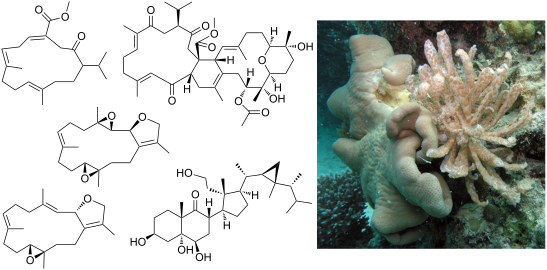
- attached carbons by a HSQC measurement, and afterwards the fragments of the molecule were elucidated using a COSY experiment. Thus, the COSY data showed correlations of the resonances H3-16, H3-17 and H-1 to H-15, forming an isopropyl moiety. Together with COSY correlations from H-1 over H2-14 to H2-13



Biosynthetic origin of butyrolactol A, an antifungal polyketide produced by a marine-derived Streptomyces
Beilstein J. Org. Chem. 2017, 13, 441–450, doi:10.3762/bjoc.13.47
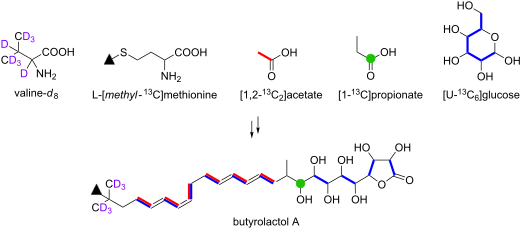
- system bearing a γ-lactone terminus constitutes the right half of the molecule. To date, no structurally related natural products are known except for its demethyl congener butyrolactol B that was also isolated from the same strain and has an isopropyl group instead of the tert-butyl terminus [9]. Very
- -27). The origin of the tert-butyl group in polyketide biosynthesis is still unknown, however, the tert-butyl functionality of bottromycin and polytheonamide was shown to be produced by radical C-methylation of the isopropyl group of valine [31][32]. By analogy, the tert-butyl portion of 1 was most
- experiments of isotope-labeled precursors in combination with the bioinformatics analysis of its biosynthetic genes. The overall result of labeling experiments is summarized in Figure 8. The tert-butyl group was shown to be derived from the C-methylated isopropyl group of valine. This is the first study that



Diastereoselective anodic hetero- and homo-coupling of menthol-, 8-methylmenthol- and 8-phenylmenthol-2-alkylmalonates
Beilstein J. Org. Chem. 2017, 13, 33–42, doi:10.3762/bjoc.13.5
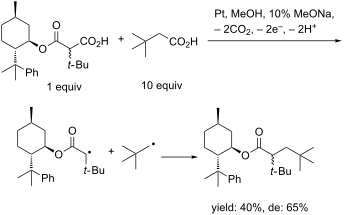
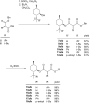
- preference for one diastereomer, depending on the substituent R (Scheme 3). With the tert-butyl group in 22a/b a higher selectivity was observed than with the isopropyl group in 21a/b. Still higher discrimination between both diastereomeric faces had been expected using a modified menthol with a phenyl group
- analogous coupling product was obtained with a selectivity of 65% de as well [15]. The selectivity decreases to 38% de for 24a/b with R = isopropyl. When 8-methylmenthol (2) was used, 23a/b was obtained with a moderate selectivity of 27% de, but a good yield of 69%. The facial selectivity for a single
- menthyl 2-tert-butyl and 2-isopropyl-4,4-dimethylpentanoates (21a/b–25a/b) with a chiral centre at C2 of the acid component. For that purpose, malonic half-esters with substituted menthols as chiral auxiliaries were prepared. The half-esters were electrochemically decarboxylated to alkyl radicals. In the




Chromium(II)-catalyzed enantioselective arylation of ketones
Beilstein J. Org. Chem. 2016, 12, 2771–2775, doi:10.3762/bjoc.12.275
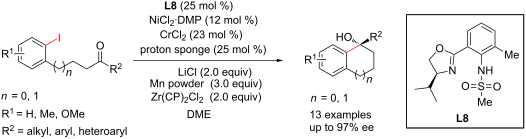
- ) was selected as the model reaction for optimization employing Kishi’s oxazoline/sulfonamides as the chiral ligands. A series of oxazoline/sulfonamide ligands (L1–L8) were tested and the results were summarized in Table 1. Four subgroups of R1 were studied (entries 1–4, Table 1) and isopropyl

Enduracididine, a rare amino acid component of peptide antibiotics: Natural products and synthesis
Beilstein J. Org. Chem. 2016, 12, 2325–2342, doi:10.3762/bjoc.12.226
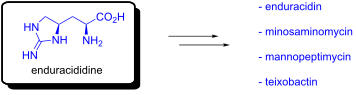
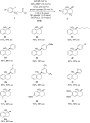
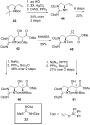
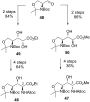
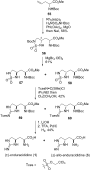
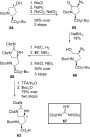
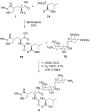
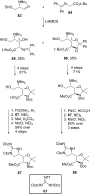
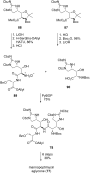
- addition of sodium iodide to afford the desired cyclic sulfonamide 54. For the synthesis of (±)-enduracididine (1) and (±)-allo-enduracididine (3), protected (±)-allylglycine 55 was treated with BocNHS(O)2NH2, MgO, Rh2(esp)2 and PhI(OAc)2 in isopropyl acetate followed by sodium iodide to afford cyclic












Experimental and theoretical investigations into the stability of cyclic aminals
Beilstein J. Org. Chem. 2016, 12, 2280–2292, doi:10.3762/bjoc.12.221
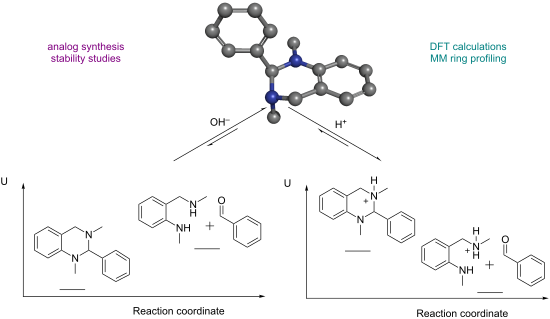
- tetrahydroquinazoline core (Scheme 4b). Thus, anthranilic acid was alkylated by reductive amination with acetone and NaBH4 in two steps to yield the isopropyl-substituted derivative 14. The derivative 14 and the commercially available N-phenylanthranilic acid were converted to amides 15a,b under standard conditions


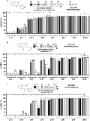

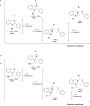


New furoisocoumarins and isocoumarins from the mangrove endophytic fungus Aspergillus sp. 085242
Beilstein J. Org. Chem. 2016, 12, 2077–2085, doi:10.3762/bjoc.12.196
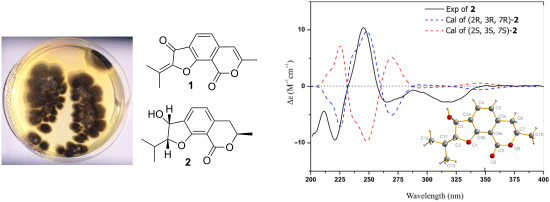
- the optical rotation of 3 with data reported for dihydrocoumarins [18], it was possible to assign the absolute configuration of C-7 as R. So, the structure of compound 3 was identified as (R)-2-isopropyl-7-methyl-6,7-dihydro-9H-furo[3,2-h]isochromen-9-one. Asperisocoumarin D (4) was isolated as a
- spectrum (Figure 5), allowed the definition of the absolute configuration at C-7 (R) of compound 4 [18]. Thus, the structure of compound 4 was identified as (R)-2-isopropyl-7-methyl-6,7-dihydro-9H-furo[3,2-h]isochromen-9-one. Asperisocoumarin E (5) was obtained as a pale yellow powder and the molecular
- planar structure as (2S,3S,7R)-6,9-dihydro-3-hydroxy-7-methyl-2-(1-methylethyl)-7H-furo[3,2-h][2]benzopyran-9(2H)-one, which was the intermediate of the syntheses of (−)-ustusorane D and (+)-penicisochroman B [8]. Asperisocoumarin C (3) and D (4) had the same structure as (R)-2-isopropyl-7-methyl-6,7


Experimental and theoretical investigations on the high-electron donor character of pyrido-annelated N-heterocyclic carbenes
Beilstein J. Org. Chem. 2016, 12, 1884–1896, doi:10.3762/bjoc.12.178
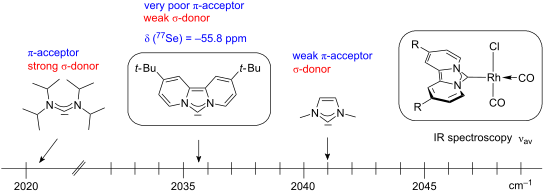
- calculated complexes although the differences are smaller between Ia-Rh, 2a, II-Rh and III-Rh (Table 2) than observed experimentally. The complex with the isopropyl acyclic carbene Ia-Rh shows its unique electron donating effect also in the calculations. The smaller differences found for the calculated CO
- -Rh bearing the isopropyl substituted carbene Ia, the steric hindrance of the N-isopropyl substituents causes an even larger N–C–N angle. This leads to a further reduction of the s-character and thus an increased σ-donor character that explains the pronounced shift to smaller wavenumbers. According to


Practical synthetic strategies towards lipophilic 6-iodotetrahydroquinolines and -dihydroquinolines
Beilstein J. Org. Chem. 2016, 12, 1851–1862, doi:10.3762/bjoc.12.174

- reduced to the iodinated THQ 14 (see Supporting Information File 1 for crystal structure) using borane·dimethyl sulphide complex. A slight molar excess of the reducing agent causes de-iodination to give 10 in small quantities. N-Alkylation with highly lipophilic alkyl groups such as an isopropyl was next
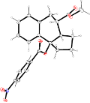
- isopropylation, and only around 40% of the starting material 13 was converted. Interestingly, the major product from the reaction was the O-iPr imine 15b as indicated by a low field 1H chemical shift of the isopropyl proton (5.39 ppm), and later confirmed by X-ray crystallography (the crystal structure is shown
- . Absorption spectrum was recorded at 10 μM. Emission spectrum was recorded at 100 nM, with excitation at 318 nm. Proposed retrosynthesis scheme to access N-isopropyl-THQ 2. Synthesis of THQ 3 by initial N-alkylations, followed by PPA-mediated cyclisation. Bromination of 3 and attempted halogen exchange of the


Mechanistic investigations on six bacterial terpene cyclases
Beilstein J. Org. Chem. 2016, 12, 1839–1850, doi:10.3762/bjoc.12.173
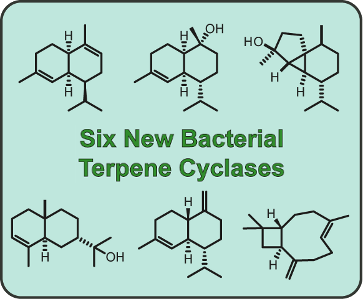
- between the isopropyl group and H-6. The optical rotary power of [α]D22 = −44.9 (c 0.15, CH2Cl2) proved that (1R,6S,7S)-(−)-1 from S. viridochromogenes is the opposite enantiomer as in vetiver oil ([α]D = +120) [38], while it is identical to the compound obtained by acid-catalysed rearrangement of (+)-α


3,6-Carbazole vs 2,7-carbazole: A comparative study of hole-transporting polymeric materials for inorganic–organic hybrid perovskite solar cells
Beilstein J. Org. Chem. 2016, 12, 1401–1409, doi:10.3762/bjoc.12.134
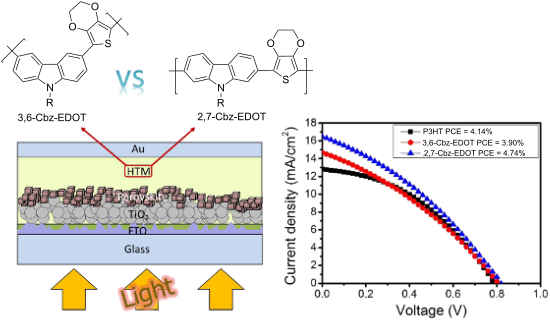
- oxide (FTO)-coated glass substrates (20 Ω per square) were patterned to fabricate the solar cells. These substrates were successively washed by ultrasonication in water, acetone, and isopropyl alcohol for 10 min each, and then dried in a stream of dry air. The washed substrates were further treated with


The EIMS fragmentation mechanisms of the sesquiterpenes corvol ethers A and B, epi-cubebol and isodauc-8-en-11-ol
Beilstein J. Org. Chem. 2016, 12, 1380–1394, doi:10.3762/bjoc.12.132
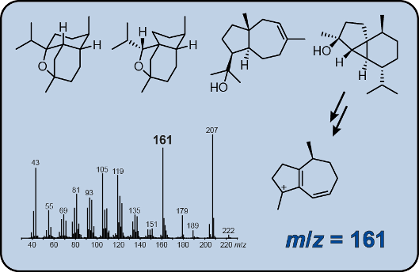
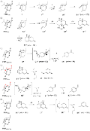
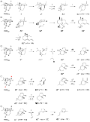
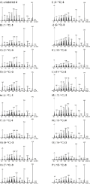
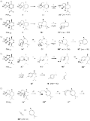
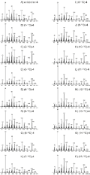
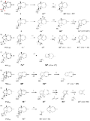
- impact ionisation of 1 with loss of one electron from the oxygen lone pairs to 1+·, followed by α-cleavage with loss of the isopropyl group to A1+. This cation may ring-open to the cation B1+. The PMA161 shows that the fragment ion m/z = 161 is made up from the same part of the carbon backbone of 1
- = 179 by loss of the isopropyl group C11–C12–C13 (Scheme 3A). This is explainable by electron impact ionisation of 2 with loss of an electron from an oxygen lone pair to 2+· and subsequent α-cleavage to A2+ that may stabilise by ring opening to B2+. The PMA161 indicates that the fragment ion m/z = 161
- electron impact ionisation of 3 at the hydroxy function to 3a+·, followed by α-cleavage of C15. PMA179 indicates a formation of the fragment ion m/z = 179 by loss of the isopropyl group C11–C12–C13 of 3 (Scheme 4B). Usually in sesquiterpene alcohols the electron impact ionisation proceeds with loss of an


On the mechanism of imine elimination from Fischer tungsten carbene complexes
Beilstein J. Org. Chem. 2016, 12, 1322–1333, doi:10.3762/bjoc.12.125
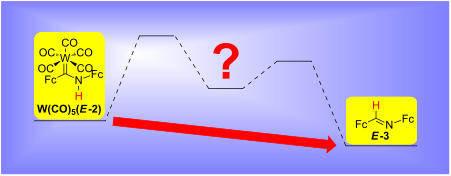
- related pentacarbonyl complexes of bis[di(isopropyl)amino]carbene 10 [49] M(CO)5(10) (M = Cr, Mo, W) readily decarbonylate at room temperature to give the tetracarbonyl complexes M(CO)4(κC,κN-10) with a side-on coordinated carbene ligand (Scheme 1e) [50][51][52]. Under CO atmosphere, the molybdenum and




Stereoselective synthesis of tricyclic compounds by intramolecular palladium-catalyzed addition of aryl iodides to carbonyl groups
Beilstein J. Org. Chem. 2016, 12, 1236–1242, doi:10.3762/bjoc.12.118
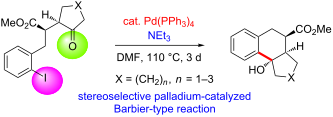
- configurational assignment is ambiguous in this case, the NMR data and the fact that no γ-lactone is formed strongly support the trans-arrangement of the two functional groups as depicted. Under similar conditions (5 mol % Pd(PPh3)4, 90 °C, 3 d) the isopropyl-substituted ketone 2 furnished a mixture of the
- related trans-compound 8 (11%) together with the de-iodinated product 9 (25%) and the indane derivative 10 as major component (62%). The C–C coupling reaction to 8 seems to be hindered in this case, probably due to the steric bulk of the isopropyl group. The formation of indane derivative 10 occurs by an
- precursor compounds or elimination of water in the products. However, in general none of these byproducts has been isolated. For compound 2 the bulky isopropyl group slows down the addition to the carbonyl group and an enolate arylation was observed instead as major reaction pathway. Although the scope of




Conjugate addition–enantioselective protonation reactions
Beilstein J. Org. Chem. 2016, 12, 1203–1228, doi:10.3762/bjoc.12.116
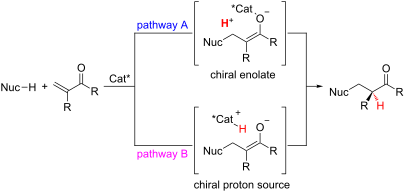
- the reactivity of the more hindered acrylate substrates (e.g., R2 = Bn) and when R2 was phenyl or isopropyl no reactivity was observed. Substituted benzoxazoles were also effective with 4-methylbenzoxazole being a preferred substrate. The authors proposed that substitution at the 4-position disfavored
- high yield and enantioselectivity for both α-alkyl and α-aryl conjugate addition acceptors. Alkyl substrates reacted smoothly at 25 °C (90–98% yield, 90:10 to 95.5-4.5 er) even when R was a more sterically demanding isopropyl or cyclohexyl group. Aryl substrates required lower reaction temperatures and
- isopropyl group and a pendent methyl ester. Generally, the azetidine nitroalkenes provided the 1,2-nitrothioacetates in higher yields and enantioselectivity (81–99% yield, 95:5 to 98:2 er). The oxetane and N-Boc azetidine nitroalkenes were activated toward conjugate addition by the release of ring-strain




NeoPHOX – a structurally tunable ligand system for asymmetric catalysis
Beilstein J. Org. Chem. 2016, 12, 1185–1195, doi:10.3762/bjoc.12.114
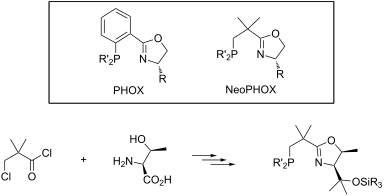
- precursor. An option, which had been previously used in the development of PHOX ligands [23][24][25][26][27], is to replace the tert-butyl group by an isopropyl group and at the same time introducing two bulky substituents at C(5) (see Figure 3). Ligands of this type are accessible from valine, which is
- much less expensive than tert-leucine. The steric hindrance exerted by the geminal substituents at C(5) is expected to direct the isopropyl methyl groups toward the coordination sphere, creating a steric environment which resembles that of a tert-butyloxazoline ligand. To test the viability of this


Cationic Pd(II)-catalyzed C–H activation/cross-coupling reactions at room temperature: synthetic and mechanistic studies
Beilstein J. Org. Chem. 2016, 12, 1040–1064, doi:10.3762/bjoc.12.99
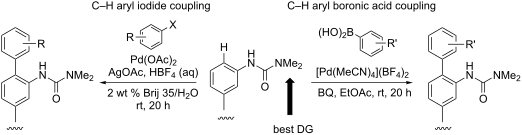
- . Although the combination of acetanilide together with a palladium(II) catalyst lead to the corresponding palladacycle, as reported by Tremont [172], in the presence of 2a, Pd(OAc)2, HBF4 and AgOAc at room temperature, acetyl or isopropyl anilides afford essentially no product. Only after heating to 50 °C


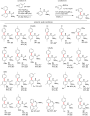


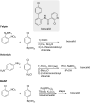


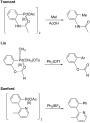
A modular approach to neutral P,N-ligands: synthesis and coordination chemistry
Beilstein J. Org. Chem. 2016, 12, 846–853, doi:10.3762/bjoc.12.83
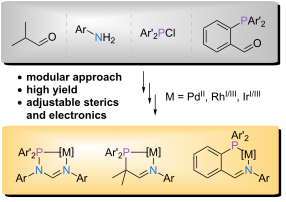
- demanding 2,6-di(isopropyl)phenyl group as the N-aryl substituent induced only slight structural changes (complexes of ligand 2a vs 2b), mostly in the orientation of the phenyl rings of the phosphorus donor and the position of the cyclooctadiene co-ligand. To further explore the binding properties of the P


Diastereoselective synthesis of new O-alkylated and C-branched inositols and their corresponding fluoro analogues
Beilstein J. Org. Chem. 2016, 12, 353–361, doi:10.3762/bjoc.12.39

- benzylated myo-2-inosose 7 in isopropyl alcohol at room temperature to give a mixture of the myo- and scyllo-inositol diastereoisomers myo-8 and scyllo-8. The mixture was separated by column chromatography to afford the pure myo- and scyllo-inositol derivatives in 58% and 30% yields, respectively. The


Cascade alkylarylation of substituted N-allylbenzamides for the construction of dihydroisoquinolin-1(2H)-ones and isoquinoline-1,3(2H,4H)-diones
Beilstein J. Org. Chem. 2016, 12, 301–308, doi:10.3762/bjoc.12.32

- % yield. It should be noted that the reactions of substrates bearing disubstituted aromatic rings were possible but resulted in lower yield (5fa and 5ga). On the other hand, the variation of the substituent on the nitrogen atom has also been examined. In the cases of N-ethyl (4h), N-isopropyl (4i), and N


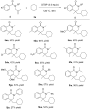

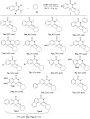


Organocatalytic asymmetric Henry reaction of 1H-pyrrole-2,3-diones with bifunctional amine-thiourea catalysts bearing multiple hydrogen-bond donors
Beilstein J. Org. Chem. 2016, 12, 295–300, doi:10.3762/bjoc.12.31
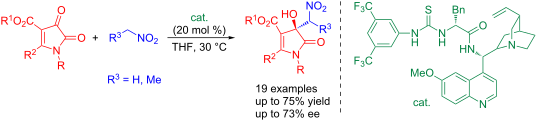
- 1H-pyrrole-2,3-diones 1 and the substrate concentration were investigated. The results are summarized in Table 2. It was found that an isopropyl group furnished a better yield and ee value than a benzyl group (Table 2, entry 2 vs entry 1). Changing the isopropyl group to a methyl group decreased the





