Search results
Search for "multicomponent" in Full Text gives 344 result(s) in Beilstein Journal of Organic Chemistry. Showing first 200.
Recent advances on the transition-metal-catalyzed synthesis of imidazopyridines: an updated coverage
Beilstein J. Org. Chem. 2019, 15, 1612–1704, doi:10.3762/bjoc.15.165
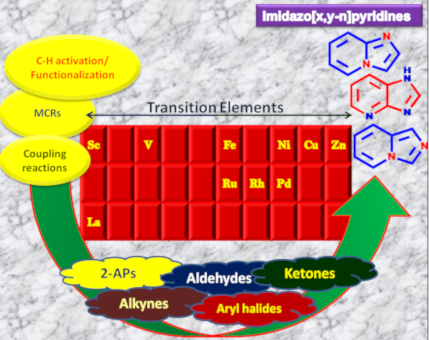
- Gagandeep Kour Reen Ashok Kumar Pratibha Sharma School of Chemical Sciences, Devi Ahilya University, Indore, (M. P.), India 10.3762/bjoc.15.165 Abstract A comprehensive account of recent advances in the synthesis of imidazopyridines, assisted through transition-metal-catalyzed multicomponent
- development and (ii) for the modifications needed thereof in the R&D sector. Keywords: C–H activation/functionalization; coupling reactions; imidazopyridines; multicomponent reactions; transition metal catalysis; Introduction The structural diversity and biological importance of nitrogen-containing
- organic reactions. In the syntheses of IPs, various forms of copper viz., salts, complexes, MOFs, oxides, and nanoparticles (NPs) have been used as the catalytic system in both multicomponent reactions (MCRs) as well as derivatization methodologies. The role of palladium in synthetic chemistry Pd


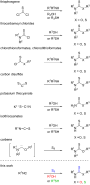
A novel three-component reaction between isocyanides, alcohols or thiols and elemental sulfur: a mild, catalyst-free approach towards O-thiocarbamates and dithiocarbamates
Beilstein J. Org. Chem. 2019, 15, 1523–1533, doi:10.3762/bjoc.15.155
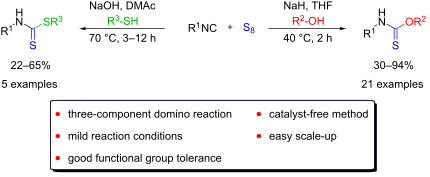
- Andras Gyorgy Nemeth Gyorgy Miklos Keseru Peter Abranyi-Balogh Hungarian Academy of Sciences, Research Centre for Natural Sciences, Institute of Organic Chemistry, Medicinal Chemistry Research Group, 1519 Budapest, POB 286, Hungary 10.3762/bjoc.15.155 Abstract A new multicomponent reaction has
- ; multicomponent reaction; one-pot; thiocarbamate; Introduction O-Thiocarbamates belong to a class of important biologically active molecules, used mainly as fungicides [1][2][3] in agricultural and pharmaceutical fields. In particular, recently antitumor [4], anesthetic [5] and enzyme inhibitory effects were
- yield [70]. In certain cases, sulfur can be trapped by in situ generated carbenes to afford O-thiocarbamates [71][72]. Thioureas and S-thiocarbamates are also accessible through multicomponent reactions starting from isocyanides and sulfur [73][74][75]. The cumbersome synthesis of isothiocyanates from




A heteroditopic macrocycle as organocatalytic nanoreactor for pyrroloacridinone synthesis in water
Beilstein J. Org. Chem. 2019, 15, 1505–1514, doi:10.3762/bjoc.15.152
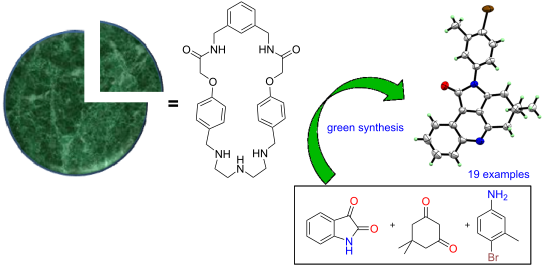
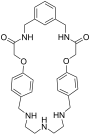
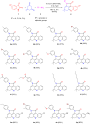
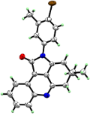
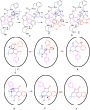
- nanoreactor which is a single molecule as catalyst in the earliest steps of the mechanistic pathway (Figure 6). This multicomponent reaction is expected to comprise a series of condensations and subsequent ring-closure cascade reactions (Scheme 3). To demonstrate the mechanistic pathway, dimedone (2), isatin






Efficiency Effsyn of complex syntheses as multicomponent reactions, its algorithm and calculations based on concrete criteria
Beilstein J. Org. Chem. 2019, 15, 1425–1433, doi:10.3762/bjoc.15.142
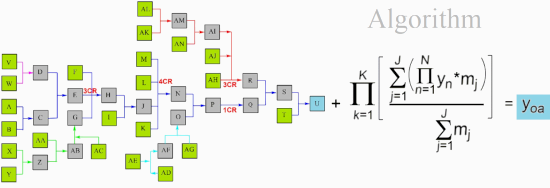
- synthesis, notably multicomponent reactions (MCRs). An algorithm has been developed to precisely evaluate even highly complex syntheses with regards to their synthesis efficiency Effsyn as a tool for strict compliance with green chemistry requirements, and for economic progress. The mathematical operations
- are highly suitable for electronic data processing (EDP). This algorithm is also suitable as a basis for fair cost assessment of complex chemical syntheses. Keywords: efficiency; efficiency algorithm; multicomponent; overall yield; synthesis algorithm; synthesis efficiency; synthesis evaluation
- synthesis steps yn (Equation 1). An extreme example for the impact of the overall yield is the tropinone synthesis by Willstätter (yoa = 0.75%) [7][8] compared to the Robinson–Schöpf synthesis (yoa = 90%) [9][10]) using a double Mannich reaction, a multicomponent reaction (MCR) [11][12][13]. The Mannich-3CR



Selective detection of DABCO using a supramolecular interconversion as fluorescence reporter
Beilstein J. Org. Chem. 2019, 15, 1371–1378, doi:10.3762/bjoc.15.137
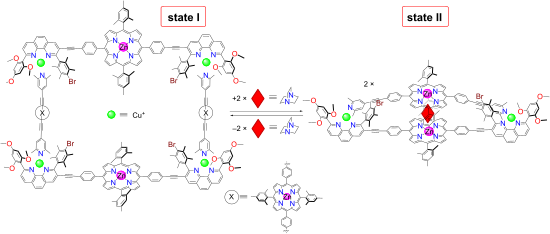
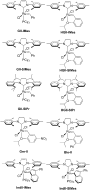
- -component rectangle [Cu4(1)2(2)2]4+ and the four-component sandwich complex [Cu2(1)(2)(4)]2+ is triggered by inclusion and release of DABCO (4). The fully reversible and clean switching between two multicomponent supramolecular architectures can be monitored by fluorescence changes at the zinc porphyrin
- compounds. Keywords: copper; detection; fluorescence; interconversion; macrocycles; self-assembly; self-sorting; zinc porphyrin; Introduction Since dynamic multicomponent supramolecular structures are nowadays abundant [1][2], the weak intercomponent binding [3][4][5][6][7][8][9] is often instrumentalized
- supramolecules, such as rectangle 5 and sandwich 6 (Figure 1), as well as their responsiveness to a variety of potential guests. Despite the topological simplicity of the assemblies involved, their multicomponent arrangements require perfect heteroleptic control. Conceptually, the process shown in Scheme 1 is a


One-pot activation–alkynylation–cyclization synthesis of 1,5-diacyl-5-hydroxypyrazolines in a consecutive three-component fashion
Beilstein J. Org. Chem. 2019, 15, 1360–1370, doi:10.3762/bjoc.15.136
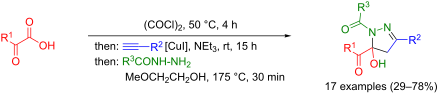
- -hydroxypyrazolines in moderate to good yields. The structures were unambiguously corroborated by comprehensive NMR spectroscopy and X-ray structure analyses of selected derivatives. Keywords: activation; alkynylation; C–C coupling; copper; cyclization; multicomponent reactions; Introduction Pyrazoles [1][2] and
- ] specifically have been published employing a cyclizing addition of an acylhydrazone to the carbonyl group as a ring-forming reaction [32][33][34][35][36][37][38][39][40], their diversity-oriented one-pot synthesis in a multicomponent approach has remained unexplored to date. In the course of our program
- directed to develop multicomponent syntheses of heterocycles by transition-metal catalysis [41][42] we conceptualized catalytic entries to alkynones and alkynediones as suitable intermediates in addition–cyclocondensation syntheses of numerous heterocycles, which can indeed be prepared by consecutive


Doebner-type pyrazolopyridine carboxylic acids in an Ugi four-component reaction
Beilstein J. Org. Chem. 2019, 15, 1281–1288, doi:10.3762/bjoc.15.126
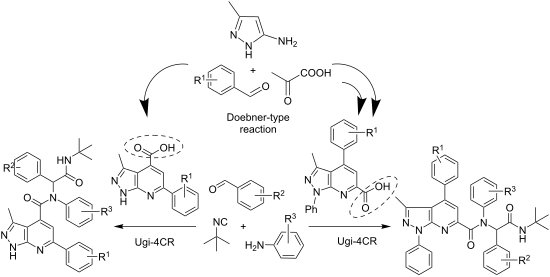
- , Kharkiv, Ukraine Peoples' Friendship University of Russia, Miklukho-Maklya str., 6, 117198, Moscow, Russia 10.3762/bjoc.15.126 Abstract Substituted 1H-pyrazolo[3,4-b]pyridine-4- and 1H-pyrazolo[3,4-b]pyridine-6-carboxamides have been synthetized through a Doebner–Ugi multicomponent reaction sequence in a
- convergent and versatile manner using diversity generation strategies: combination of two multicomponent reactions and conditions-based divergence strategy. The target products contain as pharmacophores pyrazolopyridine and peptidomimetic moieties with four points of diversity introduced from readily
- compounds characterized by several important features, e.g., molecular complexity and diversity at different levels, high variability and easy accessibility from relatively simple reagents. These challenges can be overcome by using multicomponent reactions (MCRs) but also other strategies can be applied in


Steroid diversification by multicomponent reactions
Beilstein J. Org. Chem. 2019, 15, 1236–1256, doi:10.3762/bjoc.15.121
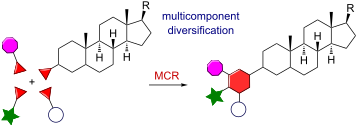
- structural diversification of steroids by means of multicomponent reactions (MCRs) have significantly increased over the last decade. This review covers the most relevant strategies dealing with the use of steroidal substrates in MCRs, including the synthesis of steroidal heterocycles and macrocycles as well
- supramolecular chemistry applications. Keywords: conjugation; heterocycles; macrocycles; multicomponent reactions; steroids; Review 1 Introduction The utilization of multicomponent reactions (MCRs) [1] for the derivatization of biomolecules has continuously grown over the last years. These diversity-oriented
- has been demonstrated by Alonso et. al. [26] with the development of a multicomponent approach to obtain 4-azasteroids using an intramolecular Ugi-4CR between a bifunctional steroidal ketoacid and different amines and isocyanides. Because of the poor reactivity of the steroidal ketone, the Ugi-4CR had



Ugi reaction-derived prolyl peptide catalysts grafted on the renewable polymer polyfurfuryl alcohol for applications in heterogeneous enamine catalysis
Beilstein J. Org. Chem. 2019, 15, 1210–1216, doi:10.3762/bjoc.15.118
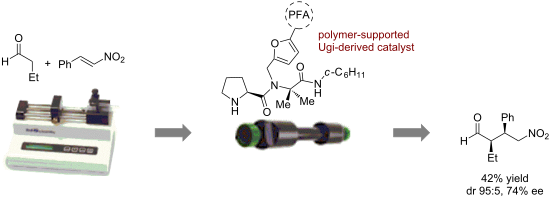
- Abstract The multicomponent synthesis of prolyl pseudo-peptide catalysts using the Ugi reaction with furfurylamines or isocyanides is described. The incorporation of such a polymerizable furan handle enabled the subsequent polymerization of the peptide catalyst with furfuryl alcohol, thus rendering
- asymmetric Michael addition of n-butanal to β-nitrostyrene that was used as a model reaction. This work supports the potential of multicomponent reactions towards the assembly of catalysts and their simultaneous functionalization for immobilization. Keywords: flow chemistry; heterogeneous catalysis
- ; multicomponent reactions; organocatalysis; polyfurfuryl alcohol; Introduction The immobilization of secondary amine-based catalysts onto organic polymers and silica gel has emerged as an effective strategy that combines the power of heterogeneous and organocatalysis [1][2][3]. Asymmetric catalysis using polymer


Insertion of [1.1.1]propellane into aromatic disulfides
Beilstein J. Org. Chem. 2019, 15, 1172–1180, doi:10.3762/bjoc.15.114
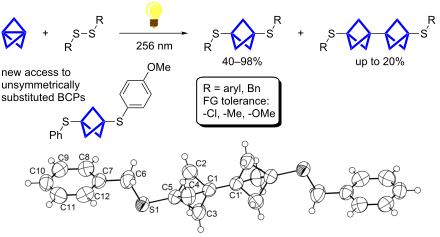
- -catalyzed reaction, which can easily be converted to the corresponding amine [19]. An alternative approach by Baran et al. installs the BCP late-stage at a secondary aliphatic amine via the corresponding turbo-amide [20][21]. Uchiyama et al. investigated the reaction mechanism of a radical multicomponent


Multicomponent reactions (MCRs): a useful access to the synthesis of benzo-fused γ-lactams
Beilstein J. Org. Chem. 2019, 15, 1065–1085, doi:10.3762/bjoc.15.104
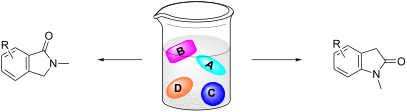
- Benzo-fused γ-lactam rings such as isoindolin-2-ones and 2-oxindoles are part of the structure of many pharmaceutically active molecules. They can be often synthesized by means of multicomponent approaches and recent contributions in this field are summarized in this review. Clear advantages of these
- methods include the efficiency in saving raw materials and working time. However, there is still a need of new catalytic systems to allow the enantioselective preparation of these heterocycles by multicomponent reactions. Keywords: indolin-2-ones; isoindolinones; γ-lactams; multicomponent reactions; 2
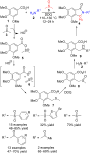
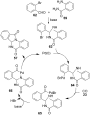
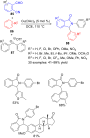
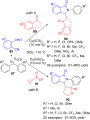
- of heterocycles by multicomponent reactions (MCRs) [49][50][51][52][53][54][55], the synthesis of three- and four-membered heterocycles through MCRs has been reviewed recently [56], and taking into account the increasing amount of procedures developed in the last years for the preparation of








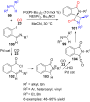


A three-component, Zn(OTf)2-mediated entry into trisubstituted 2-aminoimidazoles
Beilstein J. Org. Chem. 2019, 15, 1061–1064, doi:10.3762/bjoc.15.103
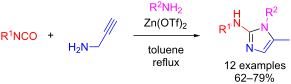
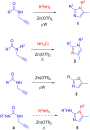
- propargylureas (leading to 2-imidazolones) and extend the range of Lewis acid-catalyzed azole syntheses based on N-carbonyl propargylamines. Keywords: alkyne hydroamination; cyclocondensation; Lewis acid catalysis; multicomponent reactions; propargylurea; Introduction The pioneering publications of Beller and
- delight, the three-component format led to only a slightly lower yield of 5a (62%). Viewing this as a worthy toll for the convenience of multicomponent chemistry, we proceeded investigating the scope of the newly established synthesis of trisubstituted 2-aminoimidazoles 5 (Figure 2). As it is evident from



Novel (2-amino-4-arylimidazolyl)propanoic acids and pyrrolo[1,2-c]imidazoles via the domino reactions of 2-amino-4-arylimidazoles with carbonyl and methylene active compounds
Beilstein J. Org. Chem. 2019, 15, 1032–1045, doi:10.3762/bjoc.15.101
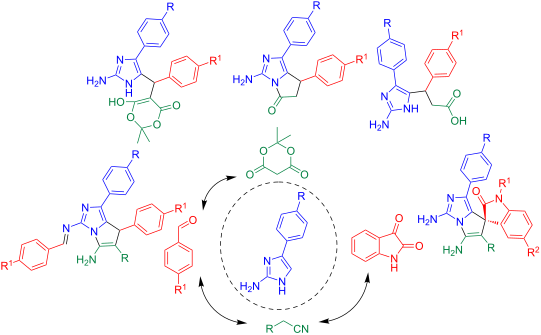
- considered as the analogues of both 3,3’-spirooxindole and 2-aminoimidazole marine sponge alkaloids. Keywords: 2-amino-4-arylimidazole; (2-amino-4-arylimidazolyl)propanoic acid; isatin; Meldrum’s acid; multicomponent reactions; pyrrolo[1,2-c]imidazole; 3,3’-spirooxindoles; Introduction Heterocyclic
- that mimic the core structure of marine alkaloids due to the presence of several reaction centres, which allow their further chemical modification. In the present work we disclose our results on the multicomponent reactions between 2-amino-4-arylimidazoles, aromatic aldehydes or isatins and cyclic or


Synthesis of (macro)heterocycles by consecutive/repetitive isocyanide-based multicomponent reactions
Beilstein J. Org. Chem. 2019, 15, 906–930, doi:10.3762/bjoc.15.88
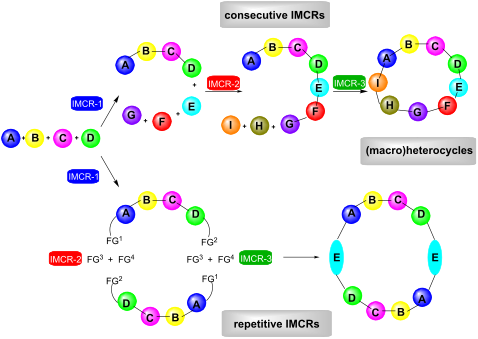
- Angelica de Fatima S. Barreto Carlos Kleber Z. Andrade Universidade de Brasília, Instituto de Química, Laboratório de Química Metodológica e Orgânica Sintética (LaQMOS), 70910-970 Brasília-DF, Brazil 10.3762/bjoc.15.88 Abstract Isocyanide-based multicomponent reactions are a versatile tool in the
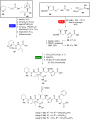
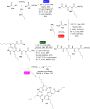
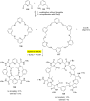
- synthesis of heterocycles. This review describes recently developed approaches based on the combination of consecutive or repetitive isocyanide-based multicomponent reactions for the synthesis of structurally diverse heterocycles. These strategies have also allowed the synthesis of a plethora of
- macroheterocycles in a reduced number of steps. Keywords: consecutive/repetitive multicomponent reactions; isocyanide; isocyanide-based multicomponent reactions; (macro)heterocycles; Passerini reaction; Ugi reaction; Introduction Isocyanide (isonitrile) chemistry was first described by Lieke in 1859 [1] and forms









Mechanochemistry of supramolecules
Beilstein J. Org. Chem. 2019, 15, 881–900, doi:10.3762/bjoc.15.86
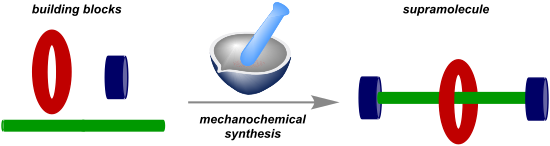
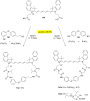
- conventional materials [75][76]. The systems chemistry approach may give easy access to new structures or functional materials simply by controlling the inputs of a multicomponent system. The concept of self-sorting [77][78][79] and subcomponent self-assembly approach [80] are well-developed methods being
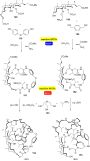
- prepared simultaneously in a one-pot reaction starting from 38 components (Figure 15). In 2015, Mal and co-workers described a multicomponent Biginelli [85] reaction following a subcomponent synthesis under mechanochemical conditions. They have developed a method in which dihydropyrimidone synthesis was
- -component [Fe(CD3)]2+ 28. a) Subcomponent synthesis of catalyst and reagent and b) followed by multicomponent reaction for synthesis of dihydropyrimidones. A dynamic combinatorial library (DCL) could be self-sorted to two distinct products. Mechanochemical synthesis of dynamic covalent systems via


Efficient synthesis of pyrazolopyridines containing a chromane backbone through domino reaction
Beilstein J. Org. Chem. 2019, 15, 874–880, doi:10.3762/bjoc.15.85

- new fused heterocyclic backbones has always been a major challenge in the field of organic synthesis [1][2][3]. Multicomponent reactions (MCRs) and domino reactions are known as efficient synthetic approaches for the synthesis of complex molecules [4][5][6]. Domino reactions have been defined by
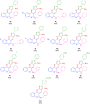
- (1.2 mmol), malononitile (1.2 mmol), Et3N (40 mmol %) in 3 mL ethanol at room temperature for 8–12 h. Structures of synthesized compounds 5a–d. Synthesis of pyrazolopyridines containing chromone 4a–m through a multicomponent reaction. The proposed mechanism for the synthesis of pyrazolopyridines




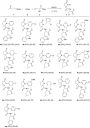
Synthesis of a novel category of pseudo-peptides using an Ugi three-component reaction of levulinic acid as bifunctional substrate, amines, and amino acid-based isocyanides
Beilstein J. Org. Chem. 2019, 15, 852–857, doi:10.3762/bjoc.15.82
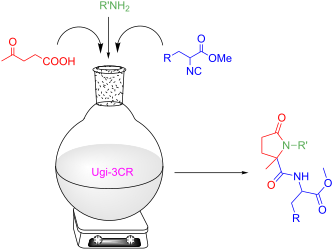
- ; multicomponent; pseudo-peptides; Ugi reaction; Introduction The multistep synthesis of complex molecules normally requires a large number of repetitive synthetic operations, such as extraction, separation, chromatography and other purification steps. These disadvantages encouraged chemists to synthesize complex
- molecules using multicomponent reactions (MCRs). MCRs transform three or more starting materials into a single product in an atom- and step-economical way in diversity- and target-oriented syntheses in modern organic synthesis. In addition, MCRs are characterized by high yields, time efficiency, low waste
- Ugi condensation reaction in order to keep the multicomponent sequence as short as possible which makes it less complicated [13][14][15][16][17]. Levulinic acid or 4-oxopentanoic acid, is an organic compound which is classified as a ketoacid. It can be easily prepared in industrial scale and low price




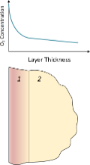
Synthesis of polydicyclopentadiene using the Cp2TiCl2/Et2AlCl catalytic system and thin-layer oxidation of the polymer in air
Beilstein J. Org. Chem. 2019, 15, 733–745, doi:10.3762/bjoc.15.69
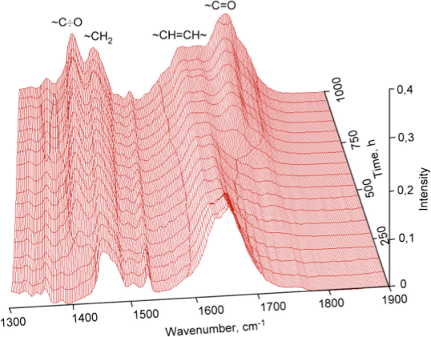
- Abstract The polymerization process of dicyclopentadiene using a multicomponent catalytic system based on bis(cyclopentadienyl)titanium dichloride and diethylaluminum chloride was studied. It was demonstrated that the application of an excess of the aluminum component leads to the formation of stable




Synthesis of 2H-furo[2,3-c]pyrazole ring systems through silver(I) ion-mediated ring-closure reaction
Beilstein J. Org. Chem. 2019, 15, 679–684, doi:10.3762/bjoc.15.62

- -inflammatory [5], and antidiabetic agents [6]. The numerous known methods for the preparation of these compounds are generally based on multicomponent reactions of an aromatic aldehyde, a β-keto ester, a hydrazine and malononitrile [7]. In a similar reaction using a pyridinium ylide instead of malononitrile


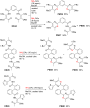
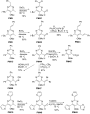
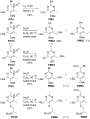
The LANCA three-component reaction to highly substituted β-ketoenamides – versatile intermediates for the synthesis of functionalized pyridine, pyrimidine, oxazole and quinoxaline derivatives
Beilstein J. Org. Chem. 2019, 15, 655–678, doi:10.3762/bjoc.15.61
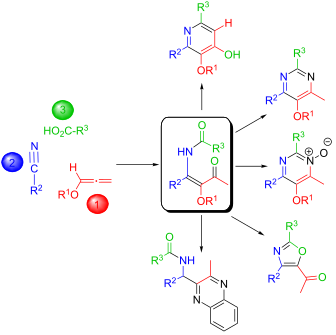
- reactions are possible. Keywords: allenes; condensations; multicomponent reactions; oxazoles; pyrimidines; quinoxalines; Introduction Multicomponent reactions are known to create unique product skeletons in an atom economic, efficient and time saving fashion. In many cases, compounds bearing functional
- groups of relatively high energy level with the potential of multiple reactivity are employed, for instance nitriles, isonitriles or alkynes [1][2][3][4][5][6][7][8][9]. Not surprisingly, simple or functionalized allenes have also been used in multicomponent processes and – dependent on the substitution






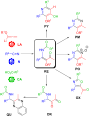
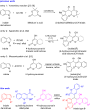
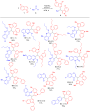
Catalyst-free assembly of giant tris(heteroaryl)methanes: synthesis of novel pharmacophoric triads and model sterically crowded tris(heteroaryl/aryl)methyl cation salts
Beilstein J. Org. Chem. 2019, 15, 642–654, doi:10.3762/bjoc.15.60
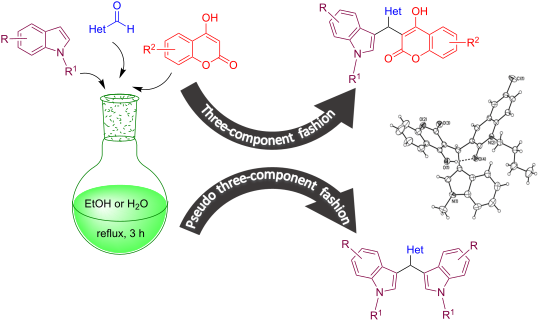
- /HPF6 and studied by NMR and by DFT and GIAO-DFT. Keywords: model heteroarylmethylium salts; multicomponent; one-pot catalyst-free assembly; pharmacophoric triads; three-component synthesis; tris(heteroaryl)methanes; Yonemitsu-type reaction; Introduction During the last few decades multicomponent








Selectivity in multiple multicomponent reactions: types and synthetic applications
Beilstein J. Org. Chem. 2019, 15, 521–534, doi:10.3762/bjoc.15.46
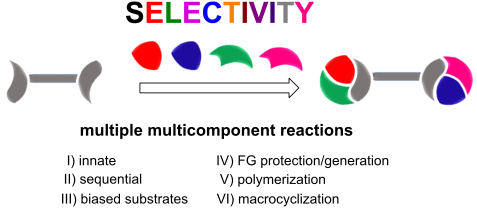
- of Bologna, Via Belmeloro, 6, 40126, Bologna, Italy 10.3762/bjoc.15.46 Abstract Multiple multicomponent reactions reach an unparalleled level of connectivity, leading to highly complex adducts. Usually, only one type of transformation involving the same set of reactants takes place. However, in some
- occasions this is not the case. Selectivity issues then arise, and different scenarios are analyzed. The structural pattern of the reactants, the reaction design and the experimental conditions are the critical factors dictating selectivity in these processes. Keywords: isocyanides; multicomponent
- reactions; reaction discovery; selectivity; Introduction Organic synthesis has become fundamental in science and technology, affecting many aspects of our lives. Therefore, there is a big need for the optimized preparation of a variety of compounds [1][2][3]. In this context, multicomponent reactions (MCRs




Design of indole- and MCR-based macrocycles as p53-MDM2 antagonists
Beilstein J. Org. Chem. 2019, 15, 513–520, doi:10.3762/bjoc.15.45
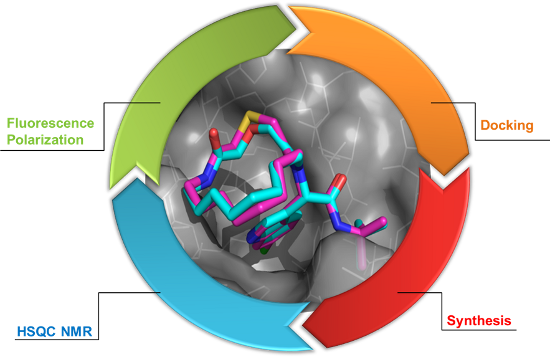
- for p53-MDM2 inhibition by fluorescence polarization and 1H,15N HSQC NMR measurements confirm MDM2 binding. Keywords: 1H,15N HSQC NMR; indole; macrocycles; multicomponent; p53-MDM2; Ugi reaction; Introduction Macrocycles are the chemical entities that are consisting of a 12-membered or even bigger
- ][12]. For this reason a great effort is ongoing to utilize multicomponent reactions for the synthesis of macrocycles [8][13][14][15][16][17][18][19][20][21][22][23][24][25]. The p53 protein is a well-studied protein which has a leading role in protecting our organism from cancer. It was found that



Thiol-free chemoenzymatic synthesis of β-ketosulfides
Beilstein J. Org. Chem. 2019, 15, 378–387, doi:10.3762/bjoc.15.34
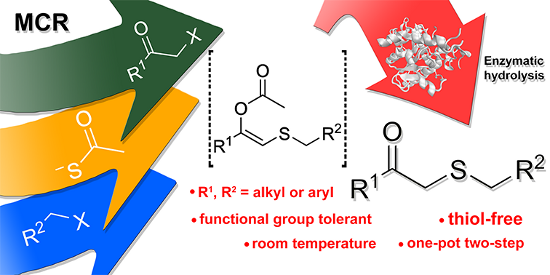
- Orgánica, Facultad de Química, Bioquímica y Farmacia, UNSL. Chacabuco y Pedernera, San Luis, 5700, Argentina 10.3762/bjoc.15.34 Abstract A preparation of β-ketosulfides avoiding the use of thiols is described. The combination of a multicomponent reaction and a lipase-catalysed hydrolysis has been
- developed in order to obtain high chemical diversity employing a single sulfur donor. This methodology for the selective synthesis of a set of β-ketosulfides is performed under mild conditions and can be set up in one-pot two-step and on a gram-scale. Keywords: ketosulfides; lipase; multicomponent
- role as precursors in the synthesis of bioactive compounds [13][26][27], substrates for multicomponent reactions [28], and lately, have successfully been applied in polymer photodecoration [29][30]. They can easily be reduced into chiral hydroxy derivatives [31] and properly oxidised at sulfur to


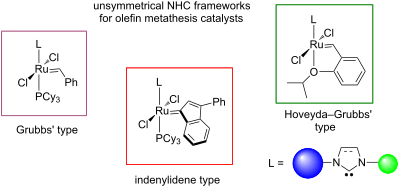
Ruthenium-based olefin metathesis catalysts with monodentate unsymmetrical NHC ligands
Beilstein J. Org. Chem. 2018, 14, 3122–3149, doi:10.3762/bjoc.14.292
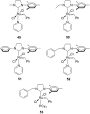
- metathesis of 96 (Table 4, entries 8 and 9, respectively). Indeed, the one-step multicomponent synthesis of unsaturated unsymmetrical NHCs could provide a cost-effective alternative to the multistep synthesis of their saturated counterparts [36]. The catalyst 85 was identified as the catalyst of choice for