


Search results
Search for "multistep" in Full Text gives 297 result(s) in Beilstein Journal of Organic Chemistry. Showing first 200.
β-Hydroxy sulfides and their syntheses
Beilstein J. Org. Chem. 2018, 14, 1668–1692, doi:10.3762/bjoc.14.143
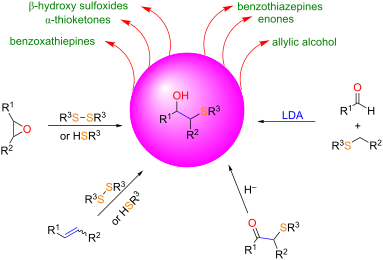
- good yields of products and remarkable regioselectivity in most cases are obtained. Devan et al. reported a one-pot, multistep tetrathiomolybdate-assisted epoxide ring opening with masked thiolates and selenoates [60]. Treatment of epoxides with in situ-generated disulfides in the presence of


Heterogeneous acidic catalysts for the tetrahydropyranylation of alcohols and phenols in green ethereal solvents
Beilstein J. Org. Chem. 2018, 14, 1655–1659, doi:10.3762/bjoc.14.141

- employed reactions is a challenge in contemporary organic chemistry. We applied such an approach to the synthesis and further conversion of tetrahydropyranyl ethers, an important class of compounds widely employed in multistep syntheses. Several alcohols and phenols were almost quantitatively converted
- one-pot reaction conditions. Keywords: green chemistry; green solvents; heterogeneous catalysts; multistep reactions; tetrahydropyranylation; Introduction Due to their general stability to a wide range of reagents and ease of removal, tetrahydropyranyl (THP) ethers are widely employed in multistep


Phosphoramidite building blocks with protected nitroxides for the synthesis of spin-labeled DNA and RNA
Beilstein J. Org. Chem. 2018, 14, 1563–1569, doi:10.3762/bjoc.14.133
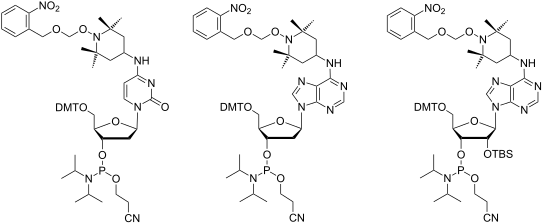
- obtained by phosphitylation in ample quantity (Scheme 2). Inosine derivatives protected with TOM in 2’-position are accessible but only by a multistep procedure [45]. We therefore decided to synthesize the corresponding 2’-O-TBS building block instead (Scheme 3). Starting compound 17 was prepared in a



One hundred years of benzotropone chemistry
Beilstein J. Org. Chem. 2018, 14, 1120–1180, doi:10.3762/bjoc.14.98
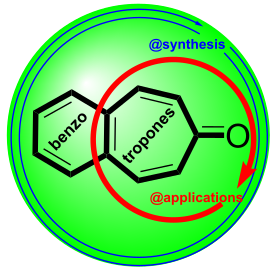
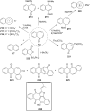
- the dibromides 24 and 25 are the result of the addition of HBr, which is formed under the reaction conditions. 2.1.2. Multistep synthesis of 4,5-benzotropone (11): The first multistep synthesis for 4,5-benzotropone (11) is the original procedure described by Thiele, Schneider, and Weitz, which
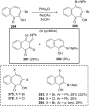
- rather than the 1,2-double bond to 1-methoxynaphthalene (310). The position of the halogen substituent in 311 and 312 was also determined by the cycloadducts 320 and 321 between 5-halo-2,3-benzotropones and maleic anhydride (Figure 14) [185][187]. 6.1.2. Multistep synthesis via dihalocarbene addition: As
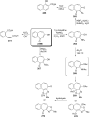
- shown in Scheme 6, the synthesis of the bicyclic ring 33 from the dichlorocarbene adduct of oxobenzonorbornadiene 31 has also been reported by Ranken’s group in two steps [53]. Hydrolysis of 33 in water under acidic conditions led to 2-chlorobenzotropone 309 in 20% yield (Scheme 53) [53]. A multistep








Cross-coupling of dissimilar ketone enolates via enolonium species to afford non-symmetrical 1,4-diketones
Beilstein J. Org. Chem. 2018, 14, 992–997, doi:10.3762/bjoc.14.84
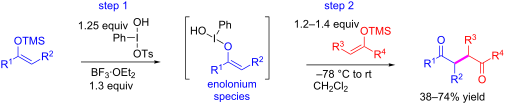
- -membered heterocycles such as thiophenes, furans, and pyrroles. Consequently, numerous multistep approaches to unsymmetrical 1,4-dicarbonyl compounds involving, e.g., SN2-type displacements [1] or highly functionalized substrates such as β-ketoesters [2][3] or β-ketosulfones [4] have been developed



Nanoreactors for green catalysis
Beilstein J. Org. Chem. 2018, 14, 716–733, doi:10.3762/bjoc.14.61
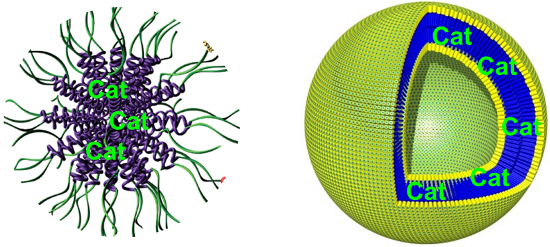
- sustainability and elegancy. Utilizing catalytic nanoreactors for greener reactions, for facilitating multistep synthetic pathways in one-pot procedures, is imperative with far-reaching implications in the field. This review is focused on the applications of some of the most used nanoreactors in catalysis
- membrane attracts hydrophobic substrates and brings them in proximity to the membrane-bound catalyst, leading to faster reaction rates. The presence of multicompartments in one system is interesting from a catalysis point of view as multistep cascades using incompatible catalysts can be achieved in one
- , the system was recycled for at least 9 times without any loss in enzymatic activity. Polymersomes have proven to be very useful for the performance of multistep catalytic conversions, in particular with enzymes [81]. Voit et al. studied the use of cross-linked pH sensitive polymersomes for the


Heterogeneous Pd catalysts as emulsifiers in Pickering emulsions for integrated multistep synthesis in flow chemistry
Beilstein J. Org. Chem. 2018, 14, 648–658, doi:10.3762/bjoc.14.52
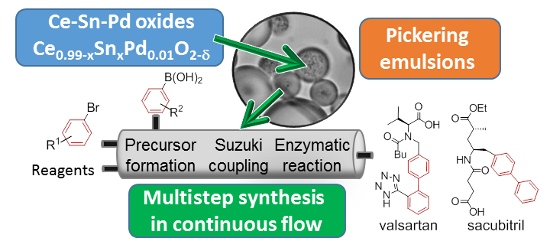
- . Keywords: compartmentalisation; heterogeneous catalysis; multistep flow chemistry; palladium; Pickering emulsions; Introduction Palladium (Pd) catalysis has been established as a key component in the toolbox of organic chemists. Reactions that are catalysed by palladium benefit from the remarkable
- on the planned realisation of the integrated multistep continuous flow synthesis of valsartan and sacubitril within the frame of the ONE-FLOW project is given. The compounds are well known as APIs in a combination drug for the treatment of hypertension and chronic heart failure (Entresto®, Novartis
- is also suitable for the multistep synthesis of 1 and 2. Therefore, the so-called plug & play reactor, a versatile device featuring both exchangeable reaction segments and modules for heating/cooling and mixing [38], was employed to test the activity and stability of the catalysts in continuous flow





High-yielding continuous-flow synthesis of antimalarial drug hydroxychloroquine
Beilstein J. Org. Chem. 2018, 14, 583–592, doi:10.3762/bjoc.14.45
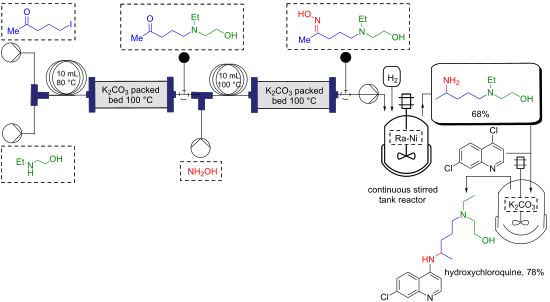
- multistep preparations of highly-complex natural products and APIs [10][11][12][13][14][15][16][17][18][19]. Advantages include precise control of key reaction parameters such as heat and pressure, improved heat and mass transfer capabilities for better thermal control, enhanced selection of kinetically


Continuous multistep synthesis of 2-(azidomethyl)oxazoles
Beilstein J. Org. Chem. 2018, 14, 506–514, doi:10.3762/bjoc.14.36
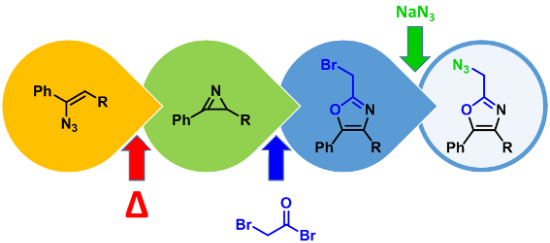
- with unstable intermediates or reagents can be overcome with the use of continuous-flow chemistry. Continuous-flow processing has demonstrated to be an ideal tool for the development of uninterrupted multistep reactions [35][36][37]. The integration of several sequential steps can be readily achieved



Latest development in the synthesis of ursodeoxycholic acid (UDCA): a critical review
Beilstein J. Org. Chem. 2018, 14, 470–483, doi:10.3762/bjoc.14.33
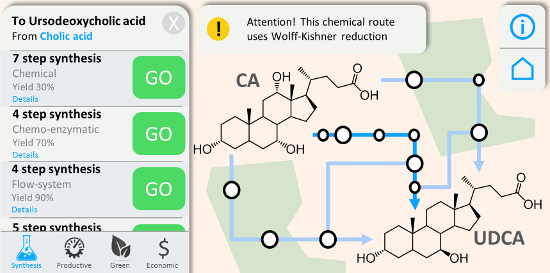
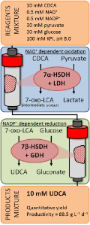
- for this multistep synthesis will be discussed. Review Precursor availability Bile acids The most important active ingredients of bile are the bile acids. Together with their salts, they allow the emulsification of lipids, a fundamental step for their absorption and digestion. Bile acids are 24-carbon
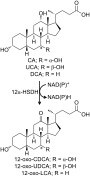
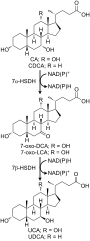
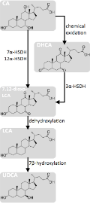
- in this review. C12 Dehydroxylation Chemical dehydroxylation UDCA can be obtained by a multistep chemical synthesis starting from CA. Two main steps are involved: the dehydroxylation at C12 and the epimerization of the 7-OH group. In order to achieve chemical dehydroxylation, firstly CA has to be



One-pot sequential synthesis of tetrasubstituted thiophenes via sulfur ylide-like intermediates
Beilstein J. Org. Chem. 2018, 14, 243–252, doi:10.3762/bjoc.14.16
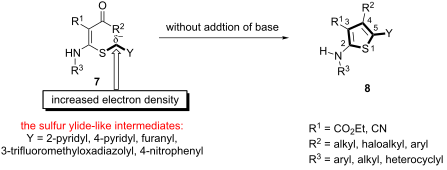
- tetrasubstituted thiophenes via the intramolecular cyclization of S-alkylated heterocyclic–aryl dithioesters [56]. However, these approaches are limited by the multistep synthesis (Figure 2A) [54][55] and the complicated dithioester preparation (Figure 2B) [56]. In general, tetrasubstituted thiophenes have


Transition-metal-free [3 + 3] annulation of indol-2-ylmethyl carbanions to nitroarenes. A novel synthesis of indolo[3,2-b]quinolines (quindolines)
Beilstein J. Org. Chem. 2018, 14, 194–202, doi:10.3762/bjoc.14.14
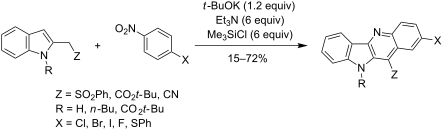
- as anticancer agents [1][6][7] (Figure 1). Synthetic strategies towards indolo[3,2-b]quinolines have been reviewed [8]. These methodologies usually employ multistep procedures. Selected starting materials applicable to the synthesis of indolo[3,2-b]quinolines are presented in Scheme 1. Bis(2
- -nitrobenzyl)malonate upon treatment with sodium hydroxide undergoes a multistep transformation resulting in 11-hydroxyindolo[3,2-b]quinoline-5-N-oxide (a) [9]. This approach is based on the first synthesis of the indolo[3,2-b]quinoline framework by Fichter and Boehringer in 1906 [10]. Indoxyl [11] and N,O
- (e) [15] and palladium(II) acetate-mediated oxidative cyclization of 3-(phenylamino)quinoline (f) afford quindoline [16]. Some of these syntheses require harsh conditions and multistep procedures. Another drawback of some of the known methodologies is the use of transition metal catalysts for the


Gram-scale preparation of negative-type liquid crystals with a CF2CF2-carbocycle unit via an improved short-step synthetic protocol
Beilstein J. Org. Chem. 2018, 14, 148–154, doi:10.3762/bjoc.14.10
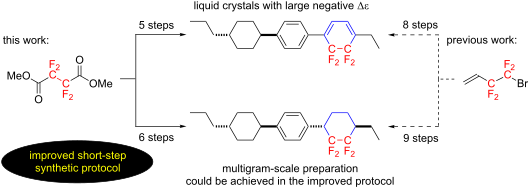
- (VA)-type display materials. In spite of their valuable utility, synthetic procedures for generating the aforementioned CF2CF2-containing LC molecules inevitably require a multistep protocol, viz. eight steps for 1 and nine steps for 2, which is a substantial drawback for the practical application of


Stereochemical outcomes of C–F activation reactions of benzyl fluoride
Beilstein J. Org. Chem. 2018, 14, 106–113, doi:10.3762/bjoc.14.6
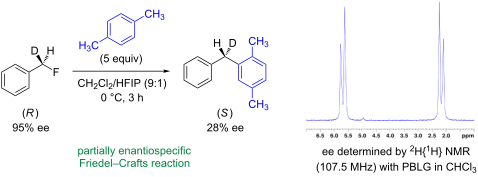
- carbon–halogen bond known [1]. Its low reactivity, in comparison to other C–X bonds, means that it is inert to all but the most harsh reaction conditions, and fluorine can generally be carried through multistep syntheses without concern over side reactions (the exception being SNAr reactions). In recent
- years, there has been an increasing interest in C–F bond activation [2], with a view to using organic bound fluoride as a leaving group in substitution reactions that typically require more activated leaving groups. Such an approach could circumvent the requirement for protecting groups in multistep


Synthetic mRNA capping
Beilstein J. Org. Chem. 2017, 13, 2819–2832, doi:10.3762/bjoc.13.274
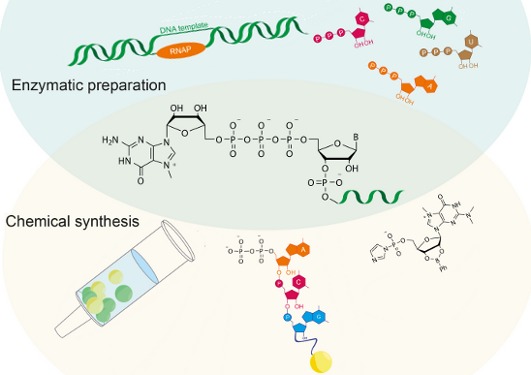
- multistep preparation of the triphosphate bridge, the Sekine group presented a synthetic route to RNA bearing a 5′-terminal TMG-capped pyrophosphate linkage on solid support. Since pyrophosphate formation is easier than triphosphate formation, this route resulted in higher coupling yields. Whether this RNA



CF3SO2X (X = Na, Cl) as reagents for trifluoromethylation, trifluoromethylsulfenyl-, -sulfinyl- and -sulfonylation. Part 1: Use of CF3SO2Na
Beilstein J. Org. Chem. 2017, 13, 2764–2799, doi:10.3762/bjoc.13.272
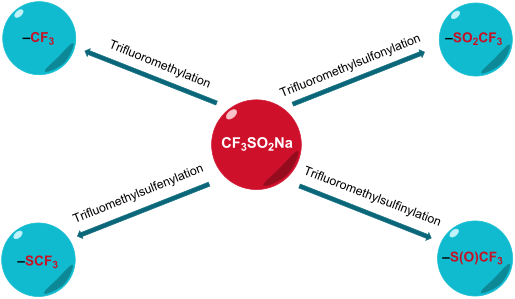
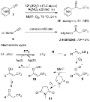
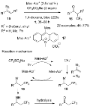
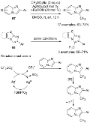
- . For the iodination step, the authors proposed that the β-CF3 alkyl radical was intercepted by I2, which was formed by a multistep redox process from I2O5. In continuation of this work, the same research group described the bromotrifluoromethylation of alkenes under similar reaction conditions but
- 29b) [51]. A single-electron oxidative free-radical process was ascertained for the generation of CF3•. From enynes, the iodination step was realised by I2, which was formed by a multistep redox process from I2O5. The intramolecular carbotrifluoromethylations of alkenes from acrylamides and






















Preparation and isolation of isobenzofuran
Beilstein J. Org. Chem. 2017, 13, 2659–2662, doi:10.3762/bjoc.13.263

- vacuum pyrolysis and multistep syntheses of the precursors. The alternative way to synthesize IBF (1) is 1,4-elimination of 1,3-dihydro-1-methoxyisobenzofuran (7, DMIBF), which provides access to IBF (1) at ambient temperature [18]. Three methods have been published to prepare 7 (DMIBF). Reduction of


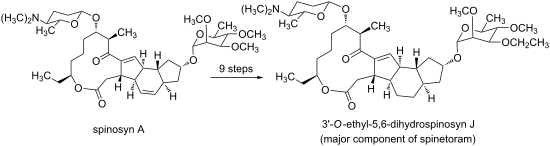
A semisynthesis of 3'-O-ethyl-5,6-dihydrospinosyn J based on the spinosyn A aglycone
Beilstein J. Org. Chem. 2017, 13, 2603–2609, doi:10.3762/bjoc.13.257
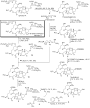
- aglycone and D-forosamine are complicated. Therefore, the aglycone and D-forosamine are obtained through a two-step hydrolysis process in our work. Preparation of 3-O-ethyl-2,4-di-O-methylrhamnose 3-O-Ethyl-2,4-di-O-methylrhamnose was synthesized from commercial rhamnose via a multistep process (Scheme 4


Consecutive hydrazino-Ugi-azide reactions: synthesis of acylhydrazines bearing 1,5-disubstituted tetrazoles
Beilstein J. Org. Chem. 2017, 13, 2596–2602, doi:10.3762/bjoc.13.256

- -amide bond. Furthermore, they can be used to pre-organize the amide bonds of peptides [9]. Most methods for the synthesis of tetrazoles have limitations that include multistep syntheses of starting materials and/or the use of expensive reagents. The most commonly used synthesis of 1,5-disubstituted


A concise flow synthesis of indole-3-carboxylic ester and its derivatisation to an auxin mimic
Beilstein J. Org. Chem. 2017, 13, 2549–2560, doi:10.3762/bjoc.13.251
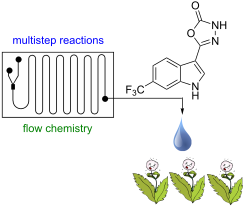
- chemistry; heterocycle; hydrogenation; indole; multistep; Introduction Indoles are amongst the most important bioactive heterocyclic structures being commonly encountered in the amino acid tryptophan (1), the related neurotransmitter serotonin (2) as well as numerous complex alkaloid natural products and
- precursors in a multistep sequence prior to indole ring formation [7]. In order to address these potential shortcomings we set out to develop a benign process relying on inexpensive substrates and non-toxic reagents that would rapidly deliver the desired indole in a readily scalable and continuous fashion


Exploring mechanochemistry to turn organic bio-relevant molecules into metal-organic frameworks: a short review
Beilstein J. Org. Chem. 2017, 13, 2416–2427, doi:10.3762/bjoc.13.239
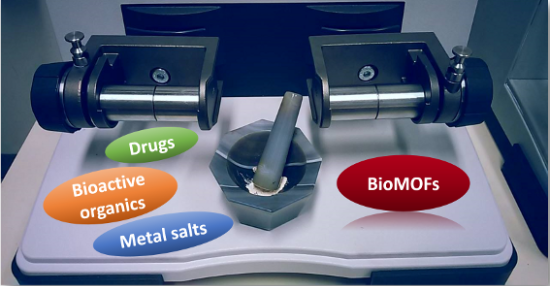
- bioactive molecules is achieved by degradation of the framework, ii) no multistep synthesis is required as the molecules are part of the matrix itself, iii) synergetic effects between the active molecule and the metal may be explored, and iv) co-delivery of drugs is possible if a porous network is built




Synthesis, effect of substituents on the regiochemistry and equilibrium studies of tetrazolo[1,5-a]pyrimidine/2-azidopyrimidines
Beilstein J. Org. Chem. 2017, 13, 2396–2407, doi:10.3762/bjoc.13.237

- formed from 5-aminotetrazole, such as 1,3-binucleophile synthons, have not been sufficiently discussed [17]. Today, several existing methods are known to have several disadvantages, including long reaction time, the use of harmful solvents, and multistep synthesis [18][19]. Moreover, researchers in the


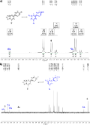
![[Graphic 9]](/bjoc/content/inline/1860-5397-13-237-i9.svg?max-width=637&scale=1.18182) 4d equilibrium in DMSO-d6 at 25 °C.
4d equilibrium in DMSO-d6 at 25 °C.


Dialkyl dicyanofumarates and dicyanomaleates as versatile building blocks for synthetic organic chemistry and mechanistic studies
Beilstein J. Org. Chem. 2017, 13, 2235–2251, doi:10.3762/bjoc.13.221
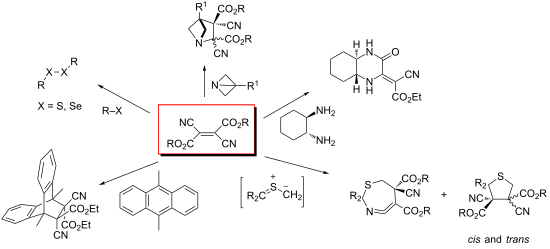
- dicyanofumarates and maleates as highly functionalized electron-deficient dipolarophiles, dienophiles and Michael acceptors is summarized. The importance for the studies on reaction mechanisms of cycloadditions is demonstrated. Multistep reactions with 1,2-diamines and β-aminoalcohols leading to diverse five- and
- exploration in mechanistic studies of their reactions. Similar to TCNE, these compounds are also attractive Michael acceptors with numerous applications for multistep reactions leading to heterocyclic products. The chemistry of E-1 and Z-1 has not been reviewed, and the goal of the present survey is to
- dimethyl 2,3-bis(hydroxyiminomethyl)fumarate with (CF3CO)2O in dioxane in the presence of pyridine at 0–10 °C [13]. The starting material was prepared in a multistep reaction from methyl β-nitropropanoate. An efficient method for the preparation of E-1b comprises the multistep reaction of dialkylselenonium


Main group mechanochemistry
Beilstein J. Org. Chem. 2017, 13, 2068–2077, doi:10.3762/bjoc.13.204
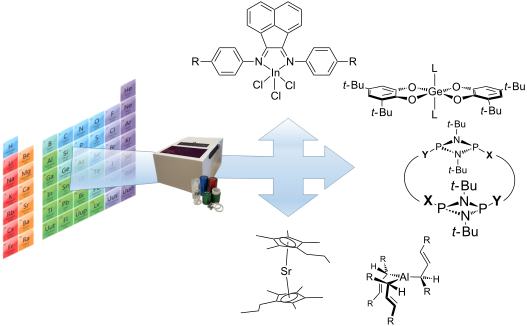
- methods (see Scheme 3).· Also noteworthy is the multistep solvent-free mechanochemical route to indium(III) complexes featuring aryl bis(imino)acenaphthene (Ar-BIAN) ligands [84]. Ar-BIAN ligands are versatile π-acceptors and have been widely employed for catalysis. These ligands are typically synthesised
- completion. A rare example of a one-pot multistep ball milling reaction is the case of an electron-rich aniline derivative that produced 4 in good yield without the need for ligand isolation. Previously reported examples typically employ “preformed” ligands and metal complexes [68][86], raising the
- orthogonality of multistep mechanochemical synthesis and widening its applicability. A significant example of the transformative potential of mechanochemistry is its ability to produce metal complexes directly from bulk metal or metal oxides [66]. Within this context, the LAG synthesis of germanes (GeR4


Intramolecular glycosylation
Beilstein J. Org. Chem. 2017, 13, 2028–2048, doi:10.3762/bjoc.13.201
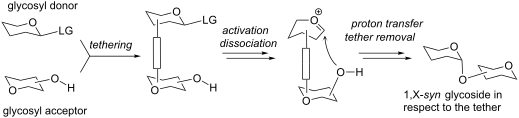
- has also made these methodologies more attractive for use in more complicated multistep syntheses. Despite the advancements made, there are still no definitive rules on why small changes may affect the stereochemical outcomes so dramatically. There is a greater need to study the underlying concepts





