


Search results
Search for "antimicrobial" in Full Text gives 325 result(s) in Beilstein Journal of Organic Chemistry. Showing first 200.
Synthesis of pyrrolidine-based hamamelitannin analogues as quorum sensing inhibitors in Staphylococcus aureus
Beilstein J. Org. Chem. 2018, 14, 2822–2828, doi:10.3762/bjoc.14.260
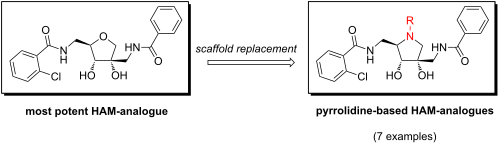
- , Foodborne Toxin Detection & Prevention Research Unit, Agricultural Research Service, United States Department of Agriculture, Albany, CA 94710, USA 10.3762/bjoc.14.260 Abstract Interfering with bacterial cell-to-cell communication is a promising strategy to combat antimicrobial resistance. The natural
- ; quorum sensing; Staphylococcus aureus; Introduction Antimicrobial resistance is rapidly becoming a global threat [1][2]. It is estimated that worldwide, at least 700 000 people die every year from drug-resistant strains of common bacterial infections. Strategies to deal with the global antimicrobial


Synthesis of a tyrosinase inhibitor by consecutive ethenolysis and cross-metathesis of crude cashew nutshell liquid
Beilstein J. Org. Chem. 2018, 14, 2737–2744, doi:10.3762/bjoc.14.252
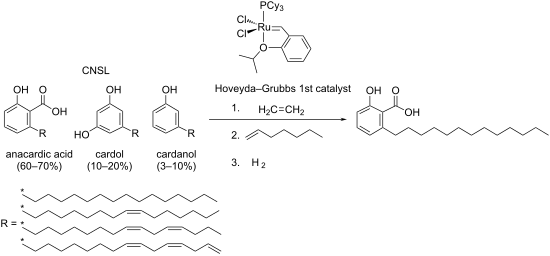
- display a broad range of biological activities such as antimicrobial [23], antioxidant [24], molluscicidal [25] and antiplaque [26]. Ginkgolic acids, structurally closely related analogues of anacardic acid, have been reported to exhibit tyrosinase inhibitory activity [27]. We herein report a concise


The design and synthesis of an antibacterial phenothiazine–siderophore conjugate
Beilstein J. Org. Chem. 2018, 14, 2646–2650, doi:10.3762/bjoc.14.242
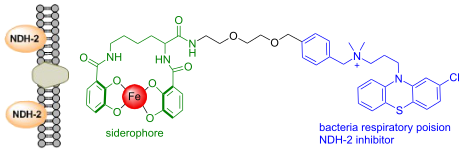
- ]. Phenothiazines are a privileged scaffold in drug discovery most noted for their use as antipsychotic drugs including chlorpromazine, trifluoperazine, and thioridazine. However, such drugs have also long been noted for their significant antimicrobial activity particularly against Staphylococcus aureus and


Targeting the Pseudomonas quinolone signal quorum sensing system for the discovery of novel anti-infective pathoblockers
Beilstein J. Org. Chem. 2018, 14, 2627–2645, doi:10.3762/bjoc.14.241
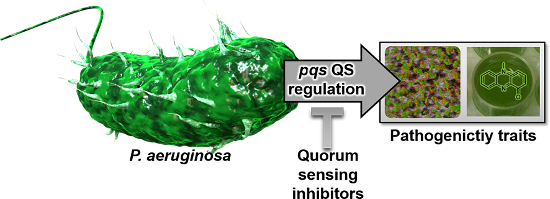
- recent years, attempts to raise public awareness on antimicrobial resistance (AMR) and the large threat that it poses towards modern health standards have been made [1]. It is an alarming notion that at an increasing rate of available treatment options proves ineffective in eradicating bacterial
- disruption of the Pseudomonas quinolone signal quorum sensing system (pqs QS). Review Antimicrobial resistance and clinical relevance of Pseudomonas aeruginosa P. aeruginosa is one of the threatening ESKAPE pathogens and has regularly been attributed with the label ‘superbug’ [11]. In 2017, the World Health


Pathoblockers or antivirulence drugs as a new option for the treatment of bacterial infections
Beilstein J. Org. Chem. 2018, 14, 2607–2617, doi:10.3762/bjoc.14.239
- -Braunschweig, Germany Department of Pharmacy, Saarland University, Saarbrücken, Germany 10.3762/bjoc.14.239 Abstract The rapid development of antimicrobial resistance is threatening mankind to such an extent that the World Health Organization expects more deaths from infections than from cancer in 2050 if
- . Keywords: antimicrobial resistance; bacterial adhesins; bacterial toxins; pathoblockers; quorum sensing; Review 1. Antimicrobial resistance crisis for bacterial infections The current crisis caused by antimicrobial resistance [1][2] demands new strategies to fight infections. Antibiotics have served as
- pioneering review by Clatworthy et al. in 2007, entitled ‘Targeting virulence: a new paradigm for antimicrobial therapy’ [8], which has been cited approximately 800 times. In sharp contrast to traditional antibiotics that kill or impair bacterial viability, this new approach aims to disarm the pathogen




Gold-catalyzed post-Ugi alkyne hydroarylation for the synthesis of 2-quinolones
Beilstein J. Org. Chem. 2018, 14, 2572–2579, doi:10.3762/bjoc.14.234
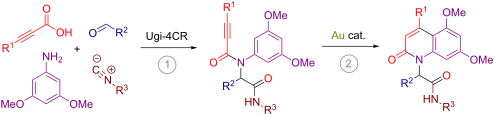
- derivatives, 2-quinolone and 4-quinolone, are the core structural elements of many natural products and pharmaceutical agents [1][2][3]. In particular, 2-quinolone derivatives show a broad range of biological activities including antiviral [4][5][6][7], antimicrobial [8][9], antiparasitic [10][11], anti


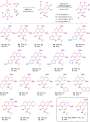
Synthesis of dihydroquinazolines from 2-aminobenzylamine: N3-aryl derivatives with electron-withdrawing groups
Beilstein J. Org. Chem. 2018, 14, 2510–2519, doi:10.3762/bjoc.14.227

- antimicrobial [3] and antifungal properties [4]. In addition, antiparasitic activity has been studied for some members of this family as inhibitors of trypanothione reductase [5], an essential enzyme of the kinetoplastid Trypanosoma brucei. Their activity as selective T-type calcium channel blockers [6][7][8][9


Synthesis of a leopolic acid-inspired tetramic acid with antimicrobial activity against multidrug-resistant bacteria
Beilstein J. Org. Chem. 2018, 14, 2482–2487, doi:10.3762/bjoc.14.224
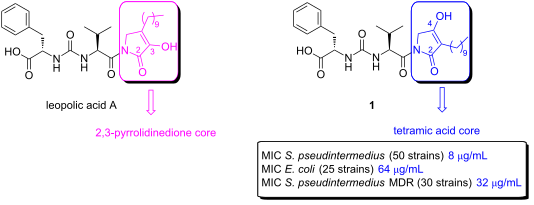
- class of antibacterial agents active also against resistant strains. Keywords: antimicrobial activity; multidrug-resistant bacteria; natural products; synthesis; tetramic acid; Introduction The treatment of bacterial infections by antibiotics is widely regarded as one of the major achievements of the
- 20th century. However, the continued emergence of multidrug-resistant bacteria, mainly due to the abuse of antimicrobial molecules (e.g., for treatment of bacterial skin diseases [1]), emphasises the urgent need for novel antibiotic families. In this regard, natural products are privileged compounds
- hand, we finally accomplished the N-acylation reaction using n-BuLi in THF at −60 °C [15] in 60% yield. Removal of both protecting groups by catalytic hydrogenation, gave the desired compound 1 in 72% yield (Scheme 3). Compound 1 was subjected to a preliminary study to evaluate the antimicrobial


Synthesis of indolo[1,2-c]quinazolines from 2-alkynylaniline derivatives through Pd-catalyzed indole formation/cyclization with N,N-dimethylformamide dimethyl acetal
Beilstein J. Org. Chem. 2018, 14, 2411–2417, doi:10.3762/bjoc.14.218
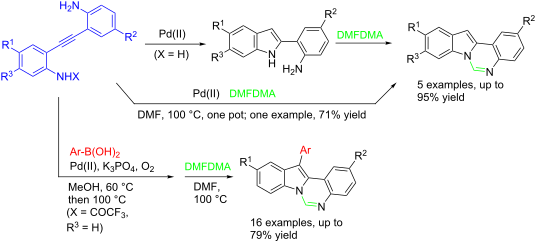
- ]quinazolines were synthesized and exhibited good antimicrobial as well as notable antifungal activities [9][10][11]. Since the isolation of hinckdentine A, an unusual marine alkaloid from the bryozoan Hincksinoflustra denticulata collected off the eastern coast of Tasmania [12][13], indolo[1,2-c]quinazolines


Investigation of the electrophilic reactivity of the biologically active marine sesquiterpenoid onchidal and model compounds
Beilstein J. Org. Chem. 2018, 14, 2229–2235, doi:10.3762/bjoc.14.197

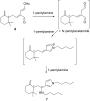
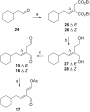
- terpenoid natural products containing the 1,4-dialdehyde moiety have been isolated from sources such as fungi, algae, sponges and molluscs [1]. Many of these natural products exhibit biological activity, ranging from anti-inflammatory to antimicrobial and antifeedant activities [1]. The prototypical






Natural and redesigned wasp venom peptides with selective antitumoral activity
Beilstein J. Org. Chem. 2018, 14, 1693–1703, doi:10.3762/bjoc.14.144
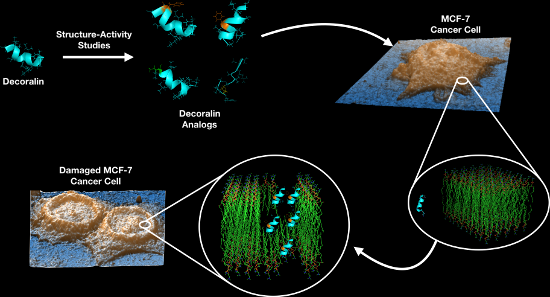
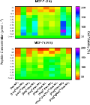
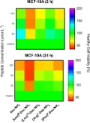
- show that both a natural antimicrobial peptide (AMP) derived from wasp venom (decoralin, Dec-NH2), and its synthetic variants generated via peptide design, display potent activity against cancer cells. We tested the derivatives at increasing doses and observed anticancer activity at concentrations as
- and to avoid toxicity towards normal host cells. Antimicrobial peptides (AMPs) are produced by the innate immune system of virtually every organism on Earth. These agents represent promising anticancer candidates since, in addition to their activity vs bacteria [1], viruses, parasites [2][3][4][5][6
- ][7][8], and fungi [1][9][10], they can kill cancer cells [11]. So far, >2,500 AMPs have been described in the literature and only ≈10% of those are known to exhibit anticancer activity, according to the Antimicrobial Peptide Database (http://aps.unmc.edu/AP/main.php). In total, there are around 600




Lanyamycin, a macrolide antibiotic from Sorangium cellulosum, strain Soce 481 (Myxobacteria)
Beilstein J. Org. Chem. 2018, 14, 1554–1562, doi:10.3762/bjoc.14.132
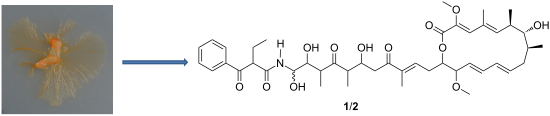
- and the human nasopharyngeal cell line KB3 with IC50 values of 3.1 and 1.5 μM, respectively, and also suppressed the growth of the Gram-positive bacterium Micrococcus luteus. Keywords: antimicrobial; HCV; lanyamycin; macrolide; Sorangium cellulosum; Introduction Viral hepatitis (HCV) has recently
- of actions [2]. Myxobacteria have emerged as a productive source of antiviral and antimicrobial molecules with unique structures and novel modes of action [3]. The potential of myxobacteria as source of anti-invectives may be illustrated by phenoxan, phenalamide A1, thiangazole and aetheramide A, all
- , nematodes, insects, immunosuppressant or with antitumor activities [12][13][14][15]. Therefore, lanyamycin (1/2) was tested in our screening panel against bacteria, fungi, mammalian cell cultures and for antiviral activity against HCV in human liver cells. Lanyamycin (1/2) was analyzed for antimicrobial


Two new 2-alkylquinolones, inhibitory to the fish skin ulcer pathogen Tenacibaculum maritimum, produced by a rhizobacterium of the genus Burkholderia sp.
Beilstein J. Org. Chem. 2018, 14, 1446–1451, doi:10.3762/bjoc.14.122
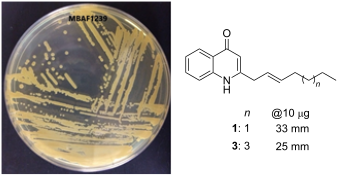
- -1 Yanagido, Gifu 501-1193, Japan 10.3762/bjoc.14.122 Abstract Exploration of rhizobacteria of the genus Burkholderia as an under-tapped resource of bioactive molecules resulted in the isolation of two new antimicrobial 2-alkyl-4-quinolones. (E)-2-(Hept-2-en-1-yl)quinolin-4(1H)-one (1) and (E)-2
- inhibited the growth of the marine bacterium Tenacibaculum maritimum, an etiological agent of skin ulcers in marine fish, offering new opportunities to develop antibacterial drugs for fish farming. Keywords: antimicrobial; Burkholderia; quinolone; skin ulcer; Tenacibaculum maritimum; Findings Bacteria of
- antibiotic producers (as of Jan. 20, 2018). As part of our program to further explore this unique pharmacological resource, rhizobacteria of the genus Burkholderia were collected and tested for the production of antimicrobial metabolites against a panel of plant and animal pathogens consisting of 4 bacteria


Design and biological characterization of novel cell-penetrating peptides preferentially targeting cell nuclei and subnuclear regions
Beilstein J. Org. Chem. 2018, 14, 1378–1388, doi:10.3762/bjoc.14.116
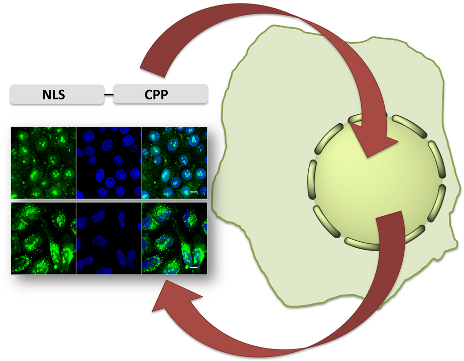
- C-terminal aa of the cationic antimicrobial peptide CAP18 [18]. When it comes in contact with lipid membranes, it forms a helical structure, probably supporting membrane interaction [19]. However, the main uptake mechanism that was observed followed endocytotic processes, although we have seen that



Recyclable hypervalent-iodine-mediated solid-phase peptide synthesis and cyclic peptide synthesis
Beilstein J. Org. Chem. 2018, 14, 1112–1119, doi:10.3762/bjoc.14.97
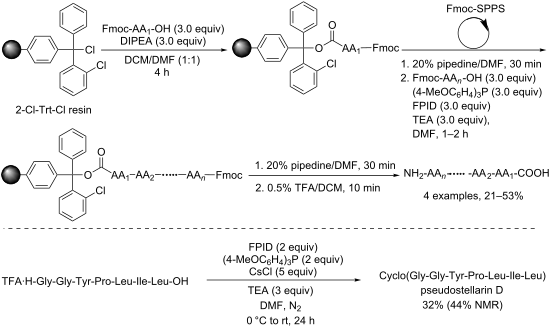
- 1999, Belagali and co-workers further evaluated the antimicrobial, anti-inflammatory and anthelmintic activities of pseudostellarin D [38]. As for the synthesis of pseudostellarin D, the existing methods utilized the active ester method to complete the cyclization of the linear peptide precursor with


An overview of recent advances in duplex DNA recognition by small molecules
Beilstein J. Org. Chem. 2018, 14, 1051–1086, doi:10.3762/bjoc.14.93
- shown to bind A·T-rich regions preferentially. The compounds containing branched N-alkylpyrrole, hydrophobic N-terminal amide, and especially C-isopropylthiazole (thiazotropsin A as shown in the Figure 4) showed significant antimicrobial activity against MRSA and Candida albicans strains. Thiazotropsin
- , including quinolyl and benzoyl derivatives, and alkenes as linkers in order to investigate their antimicrobial properties [58][59]. One of these structural analogs, MGB-BP-3 (Figure 4), containing a stilbene like fragment as head group and two N-methylpyrroles attached to an aminoethylmorpholine as tail
- group, was found to be extremely potent (MIC values in the range of 0.5–13 μg mL−1) against several strains of S. aureus, both methicillin-sensitive and resistant strains. High antimicrobial activity, shown by this drug, was due to the presence of a hydrophobic head group with a hydrogen-bonding






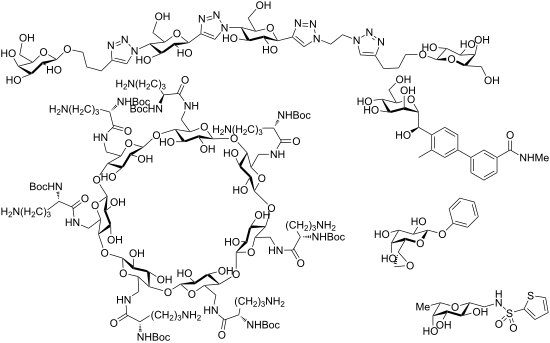
Synthesis of a sucrose-based macrocycle with unsymmetrical monosaccharides "arms"
Beilstein J. Org. Chem. 2018, 14, 634–641, doi:10.3762/bjoc.14.50

- demonstrate antimicrobial and antitumor activities [26][27]. Results and Discussion Recently, we have prepared sucrose-based macrocyclic derivative 4 in which the terminal positions of this disaccharide (C6 and C6’) are connected via a long polyhydroxylated bridge [28]. In this model study, both terminal


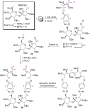
Continuous multistep synthesis of 2-(azidomethyl)oxazoles
Beilstein J. Org. Chem. 2018, 14, 506–514, doi:10.3762/bjoc.14.36
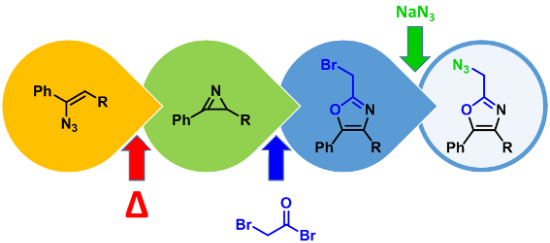
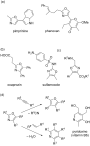
- antibiotic or antimicrobial properties such as pimprinine [4] or phenoxan [5] (Figure 1a). Also many synthetic active pharmaceutical ingredients (API) contain the oxazole as an active moiety [1][2][3]. Oxaprozin, for example, is an important non-narcotic, non-steroidal anti-inflammatory drug [6][7



Synthesis of fluoro-functionalized diaryl-λ3-iodonium salts and their cytotoxicity against human lymphoma U937 cells
Beilstein J. Org. Chem. 2018, 14, 364–372, doi:10.3762/bjoc.14.24
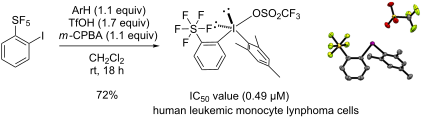
- only fragmented reports on the biological activity of diaryliodonium salts [44][45][46][47][48][49]. Goldstein et al. [45] and Doroshow et al. [46] reported that some diaryliodonium salts show effective antimicrobial and NOX inhibitor activity, respectively. Several aryliodonium salts, aryliodonium


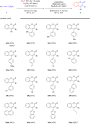
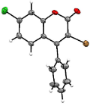
One-pot preparation of 4-aryl-3-bromocoumarins from 4-aryl-2-propynoic acids with diaryliodonium salts, TBAB, and Na2S2O8
Beilstein J. Org. Chem. 2018, 14, 345–353, doi:10.3762/bjoc.14.22
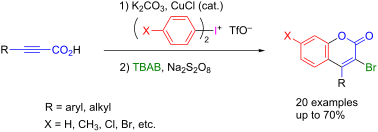
- coumarins arises from the fact that the coumarin skeleton is present in many natural products extracted from plants [1][2][3] and some of them show potent pharmacological activities, such as antidepressant [4], antimicrobial [5][6], antioxidants [7][8], anti-inflammatory [9][10], antinociceptive [11




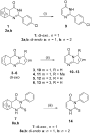
Continuous-flow retro-Diels–Alder reaction: an efficient method for the preparation of pyrimidinone derivatives
Beilstein J. Org. Chem. 2018, 14, 318–324, doi:10.3762/bjoc.14.20
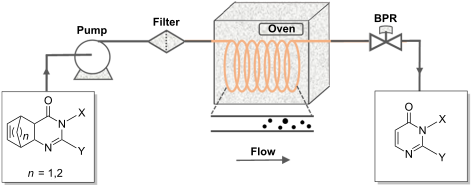
- antibiotics [41]. Our aim in the present study was to synthesize functionalized pyrimidinone systems through rDA reactions. Many of these products are of high importance in drug design due to their diverse biological properties including antimicrobial, antiviral, antioxidant and antitumor activities. In



Recent advances on organic blue thermally activated delayed fluorescence (TADF) emitters for organic light-emitting diodes (OLEDs)
Beilstein J. Org. Chem. 2018, 14, 282–308, doi:10.3762/bjoc.14.18
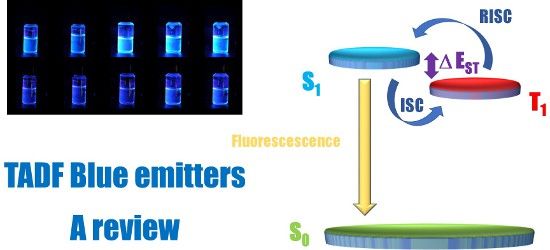
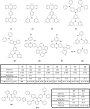
- applications of phenoxathiin dioxide ranged from antimicrobial activity [67] to the use as inhibitor for Hepatitis C virus infection [68]. Here, in the context of OLEDs, Lee et al. reported two blue TADF emitters, P1 and P2 (see Figure 10), containing a phenoxaphosphine oxide or a phenoxathiin dioxide acceptor




5-Aminopyrazole as precursor in design and synthesis of fused pyrazoloazines
Beilstein J. Org. Chem. 2018, 14, 203–242, doi:10.3762/bjoc.14.15
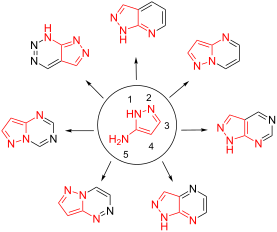
- pharmacological activities such as: anticancer [1][2], anti-inflammatory [3][4], antioxidant [5], antibacterial [6][7][8], analgesic [9], antiviral [10][11], antimicrobial [12][13], antifungal [6], antiglycemic [14], antiamoebic [15] and antidepressive [16][17]. Considering the immense biological properties
- environments. All the synthesized compounds were reported as good antimicrobial agents. Recently the reaction of β-ketoesters 81 as in the three-component reaction with 5-aminopyrazoles 16 and substituted salicylic aldehydes 83 was also studied by Fan et al. [69]. An extensive survey of catalysts and solvents
- effects is associated with pyrazolo[3,4-d]pyrimidines. They are known to exhibit antiviral [111][112], pesticidal [113], anti-inflammatory [114], antimicrobial [115][116][117], antileukemic [118], antitumor [114][119][120], pan-RAF inhibiting [121], tyrosine kinase RET inhibiting [122], CNS [123


Volatiles from the tropical ascomycete Daldinia clavata (Hypoxylaceae, Xylariales)
Beilstein J. Org. Chem. 2018, 14, 135–147, doi:10.3762/bjoc.14.9
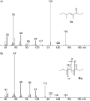
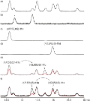
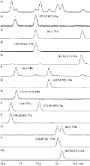
- natural product is 6-nonyl-2H-pyran-2-one. The antimicrobial and cytotoxic effects of the synthetic volatiles are also reported. Keywords: enantioselective synthesis; gas chromatography; mass spectrometry; natural products; volatiles; Introduction A large variety of volatile organic compounds from
- -4-chromanone (12) and 5-hydroxy-2-methyl-4-chromanone (13) were tentatively identified from their mass spectra. Compound 13, which exhibits antimicrobial activity, was previously isolated from various species of Daldinia [16][19][20][21][22] and several endophytic fungi, the latter of which have
- products so far. Biological characterisation of compounds Three of the volatile metabolites identified from D. clavata (compounds 9, 14 and 17) were evaluated for antimicrobial and cytotoxic activities using a standard panel of fungi and bacteria, as well as the murine cell line L929 (Table 3). The 2








Aminomethylation/hydrogenolysis as an alternative to direct methylation of metalated isoquinolines – a novel total synthesis of the alkaloid 7-hydroxy-6-methoxy-1-methylisoquinoline
Beilstein J. Org. Chem. 2018, 14, 130–134, doi:10.3762/bjoc.14.8
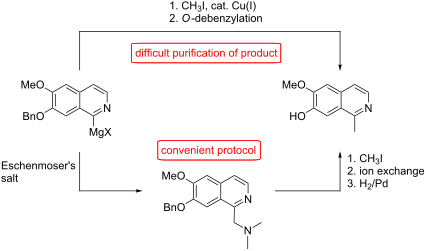
- considerable relevance in drug development, since it is found in both complex [1] and “simple” alkaloids (variously substituted derivatives of the native isoquinoline) isolated from different plants [2], and antiviral and antimicrobial activities have been found for numerous isoquinoline alkaloids [3]. Further





