Search results
Search for "lactone" in Full Text gives 294 result(s) in Beilstein Journal of Organic Chemistry. Showing first 200.
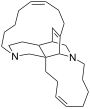
Towards the total synthesis of keramaphidin B
Beilstein J. Org. Chem. 2016, 12, 1096–1100, doi:10.3762/bjoc.12.104
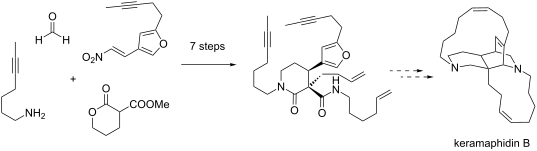
- favoured attack at the more reactive δ-lactone carbonyl instead of that of the methyl ester. Pleasingly, this was indeed realised at the next stage; performing a nitro-Mannich lactamisation cascade on 13 with formaldehyde and butylamine in methanol afforded lactam 15 in 63% yield, possessing the



The synthesis of functionalized bridged polycycles via C–H bond insertion
Beilstein J. Org. Chem. 2016, 12, 985–999, doi:10.3762/bjoc.12.97
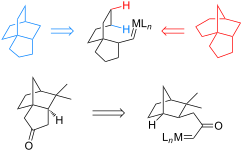
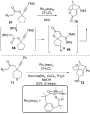
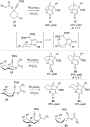
- the ring flip and transannular insertion by an axially disposed ketocarbene into an axial C–H bond. Magnus noted that 46 bears a striking resemblance to the bridged polycyclic lactone core of irroratin and proposed that this method could be used for its synthesis. The discovery by Du Bois that







Marine-derived myxobacteria of the suborder Nannocystineae: An underexplored source of structurally intriguing and biologically active metabolites
Beilstein J. Org. Chem. 2016, 12, 969–984, doi:10.3762/bjoc.12.96
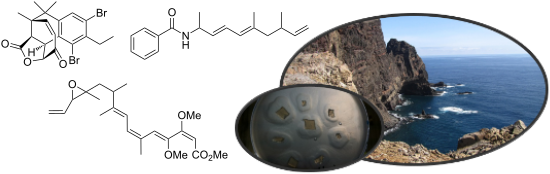
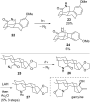
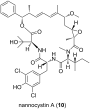
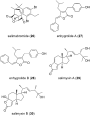
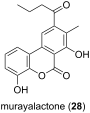
- of the molecule. However, the complete natural product has not yet been synthesized [61]. The enhygrolide group of compounds comprises enhygrolide A (27) and B (28). These molecules resemble cyanobacteria-derived metabolites, known as nostoclides and cyanobacterin, which also have a γ-lactone-moiety
- testing, revealed that the lactone moiety and the configuration of the methoxyacrylate partial structure are crucial for antifungal activity. The latter structural motif is well known from a range of antifungal compounds produced by fungi and myxobacteria, e.g., the strobilurins and the melithiazols [67






1H-Imidazol-4(5H)-ones and thiazol-4(5H)-ones as emerging pronucleophiles in asymmetric catalysis
Beilstein J. Org. Chem. 2016, 12, 918–936, doi:10.3762/bjoc.12.90
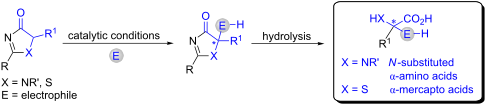
- therapeutical candidates because of their high lipophilicity and membrane permeability [44][51]. A major catalytic entry to α,α-disubstituted (quaternary) amino acids is the α-functionalization of an appropriate template as, for instance, an α-imino ester or lactone, followed by hydrolysis [49][52][53]; but




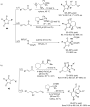


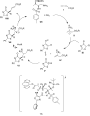


Enantioselective carbenoid insertion into C(sp3)–H bonds
Beilstein J. Org. Chem. 2016, 12, 882–902, doi:10.3762/bjoc.12.87
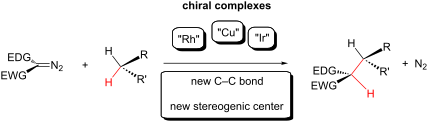
- synthesis of (−)-maoecrystal V [63]. During this study, the authors observed an unexpected result when ortho–halosubstituted diazo compounds were used. Here the formation of a β-lactone by the carbenoid insertion into the C(sp3)–H bond of the alkyl substituent of the alkoxy moiety of the ester (Scheme 21


Indenopyrans – synthesis and photoluminescence properties
Beilstein J. Org. Chem. 2016, 12, 825–834, doi:10.3762/bjoc.12.81

- constants, typically observed for geminal protons. Noteworthy, in case of isomer 3''b, the specific methylene protons connected to the enol-lactone moiety display more deshielded signals than those of isomer 2''b (Figure 2). Once the 1,4-disubstituted indenopyrone derivatives were synthesized and their
- time, most of the isomer 2'a was recovered and traces of derivative 4a could only be detected in the NMR spectrum. Using the same procedure, the enol-lactone isomeric mixture 2'c/3'c was subjected to the dehydrogenation reaction yielding the regioisomers 4c and 5c (Scheme 2). The 1H NMR spectrum
- revealed the formation of the fully oxidized derivative 6c in small amounts that could not be isolated. However, silica gel column chromatography of the reaction mixture allowed the recovery of the starting enol-lactone derivative 2'c in 50% yield. The 1H NMR spectra of α-pyrones 4c and 5c (Figure S4



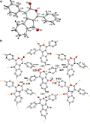
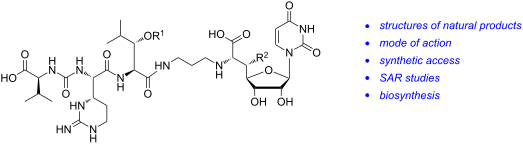
Muraymycin nucleoside-peptide antibiotics: uridine-derived natural products as lead structures for the development of novel antibacterial agents
Beilstein J. Org. Chem. 2016, 12, 769–795, doi:10.3762/bjoc.12.77
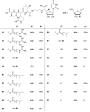
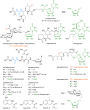
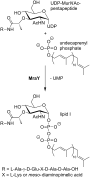
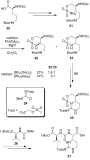
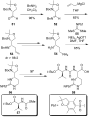
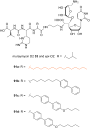
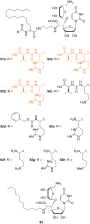
- muraymycins (Scheme 5) [98]. A fully protected ureidomuraymycidine tripeptide was prepared through lactone opening followed by urea formation and a final Mitsunobu ring closure as key steps. A Strecker reaction of the benzylimine 34 followed by several steps afforded the alcohol 35. A thermal lactonisation as
- a first key step of the synthesis led to a 1:1 mixture of the two epimers 36 and 37, and the undesired lactone 37 could be epimerised and converted into 36 by treatment with DBU [98]. Epimerisation and simultaneous lactone opening could be achieved in another key step using L-valine tert-butyl ester













Three new trixane glycosides obtained from the leaves of Jungia sellowii Less. using centrifugal partition chromatography
Beilstein J. Org. Chem. 2016, 12, 674–683, doi:10.3762/bjoc.12.68

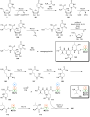
- supported by the theoretical calculation using time-dependent density functional theory. Thus, two Cotton Effects (CE) from the n→π* transition of the α,β-unsaturated lactone were revealed at 225 and 275 nm with alternative signs (Figure 5). The aforementioned data in conjunction to the absolute
- similar interactions with H-1 (δ 1.72) and H-9 (δ 1.56, 1.67). The absolute configuration of 2 was determined to be 2R, 3S, 6S, 7R, and 10S by ECD analysis. As compound 1, two Cotton Effects (CE) from the n→π* transition of the α,β-unsaturated lactone were revealed at 225 and 275 nm with alternative signs
- leukemic cell lines HL60, JURKAT and REH at 15 μM. Conclusion The chemical study of the leaves of J. sellowii led to the isolation and characterization of three new sesquiterpene glycosides, including the first report of trixane lactone glycosides. Liquid–liquid partition and CPC proved to be a very useful


Supported bifunctional thioureas as recoverable and reusable catalysts for enantioselective nitro-Michael reactions
Beilstein J. Org. Chem. 2016, 12, 628–635, doi:10.3762/bjoc.12.61
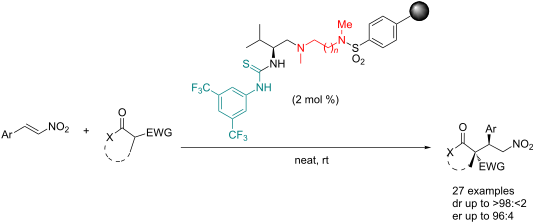
- -lactone (3e) with nitrostyrene derivatives 1a–d (Scheme 3 and Table 3). The electronic nature of the nitroolefins only affects the yield and the reaction time, being longer as the donating effect of the substituent increases, but maintaining good diastereoselectivity and excellent enantioselectivity for
- much more slowly than cyclopentanone derivative 3a (Table 3, entries 5, 6, and 8), although the reaction time could be reduced from 96 h to 10 h in the reaction of 1a with 3b by increasing the catalyst loading from 2 mol % to 5 mol % (Table 3, entry 7). It is also noteworthy that 2-acetyl-γ-lactone (3e


Biosynthesis of α-pyrones
Beilstein J. Org. Chem. 2016, 12, 571–588, doi:10.3762/bjoc.12.56
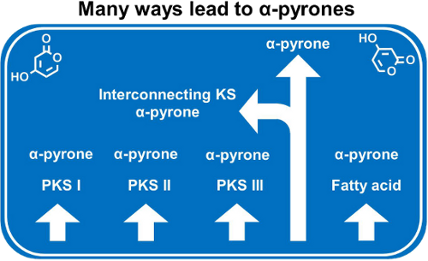
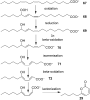
- cyclic unsaturated ester is present in a large number of natural products, and molecules containing α-pyrones can be found in all three kingdoms of life. Additionally α-pyrones, especially the structurally simple ones, i.e., triacetic acid lactone (2) and tetraacetic acid lactone (3) (Figure 1
- applied to A. thaliana, and the growth and defense reactions were verified. A. thaliana pre-exposed to 29 showed significantly reduced symptoms when challenged with B. cinerea and Alternaria brassicicola [36]. Beside the examples of simple substituted α-pyrone derivatives, such as triacetic acid lactone
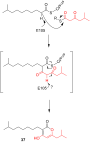
- (2), tetraacetic acid lactone (3), and 6-pentyl-2-pyrone (29) also more complex systems, e.g., bufalin (31) [38], fusapyrones (32,33) [39], or the α-pyrone antibiotics corallopyronins (34,35) [40] and myxopyronins (36,37) [41], exist in the group of monocyclic α-pyrones (Figure 7). The bufadienolides






New synthetic strategies for xanthene-dye-appended cyclodextrins
Beilstein J. Org. Chem. 2016, 12, 537–548, doi:10.3762/bjoc.12.53
- careful analysis of the spectrum in Figure 4 concerns the asymmetry of the molecule. The proton spectrum of the rhodamine B both in lactone (Supporting Information File 1, Figure S5) and HCl form (Supporting Information File 1, Figure S6) shows only one kind of signal for the alkyl groups (CH3 and CH2 in
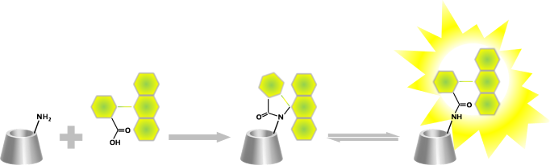
- of the preferred conformation assumed by Rho-β-CD in solution. These data, together with the results presented by Wang et al. [25] about the crystal structure of rhodamine B in lactone form, allowed us to propose the model shown in Figure 6 for the intermolecular inclusion mode of Rho-β-CD. This
- Information File 1, Figure S15 the IR spectra of Rho-β-CD, rhodamine B in acidic form (Rho∙HCl) and rhodamine B in lactone form (Rho-B lactone) are shown. The analysis of the spectra unambiguously proved that the fluorophore in Rho-β-CD is in lactam form. The frequency at 1755.9 cm−1 in the IR spectrum of Rho


Regiodefined synthesis of brominated hydroxyanthraquinones related to proisocrinins
Beilstein J. Org. Chem. 2016, 12, 531–536, doi:10.3762/bjoc.12.52
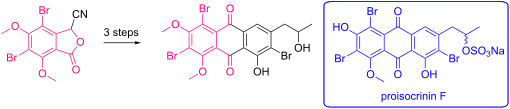
- anthraquinone moiety in 31. Second synthetic route Keeping in view the problems of functionalization of the aldehyde group in 31, we contemplated the use of already homologated cyclohexenone 36 as the acceptor. Bicyclic lactone 33 [45] was treated with DIBAL-H to afford lactol 34 in 85% yield [46]. Treatment of


Synthesis and reactivity of aliphatic sulfur pentafluorides from substituted (pentafluorosulfanyl)benzenes
Beilstein J. Org. Chem. 2016, 12, 110–116, doi:10.3762/bjoc.12.12
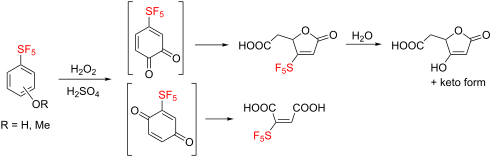
- good stability at ambient temperature in a strongly acidic and oxidizing environment. However, lactone 3 was found to be unstable in water or in aqueous base. Monitoring a solution of 3 in D2O by 1H and 19F NMR spectroscopy showed a gradual disappearance of the SF5 signal. After 55 h at ambient
- lactone 3 remained unaffected. At 80 °C the formation of levulinic acid derivative 18 was observed together with unidentified byproducts. Under elevated temperature (100 °C and above) the product of HF and SF4 elimination, (E)-4-oxopent-2-enoic acid (19) [28] formed (Scheme 7). In a preparative experiment
- . 19F NMR yields are given. Synthesis of para-benzoquinone 12 and oxidation to maleic acid 4. 19F NMR yields are shown, in parentheses isolated yields. Catalytic hydrogenation and Diels–Alder reaction of benzoquinone 12. Decomposition of 3 in water. Formation of acids 5, 18 and 19 from lactone 3


Synthesis of Xenia diterpenoids and related metabolites isolated from marine organisms
Beilstein J. Org. Chem. 2015, 11, 2521–2539, doi:10.3762/bjoc.11.273
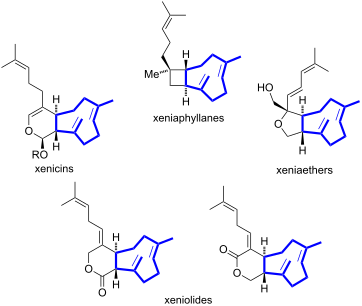
- subfamilies: the xenicins (containing an 11-oxabicyclo[7.4.0]tridecane ring system with an acetal functionality) [2], the xeniolides (containing an 11-oxabicyclo[7.4.0]tridecane ring system with a lactone functionality) [3] and the xeniaphyllanes (with a bicyclo[7.2.0]undecane ring system) [4]. Later, an
- . Addition of lithium acetylide 41 to the keto group led to acetal 42. Hydrogenation of the triple bond under basic conditions resulted in cleavage of the acetal and ring closure to the corresponding lactol which was oxidized with chromic acid to furnish γ-lactone 43. An ensuing Dieckmann condensation [32
- afforded lactone 64. For the introduction of the side chain, the enolate derived from lactone 64 was treated with 1-bromo-4-methylpent-2-ene, giving a 1:6 mixture of coraxeniolide A (10) and its epimer 65. By equilibration with triazabicyclodecene (TBD), the ratio of 10:65 could be inverted to 3:1. In







Recent highlights in biosynthesis research using stable isotopes
Beilstein J. Org. Chem. 2015, 11, 2493–2508, doi:10.3762/bjoc.11.271
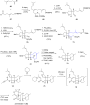
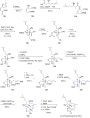
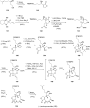
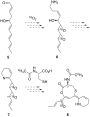
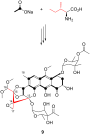
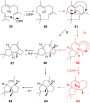
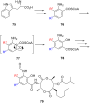
- malonyl moiety to the α,β-unsaturated thioester bound to the keto-synthase domain (KS). After this reaction, the polyketide chain is bound to the KS and the acyl carrier protein (ACP). The following lactonization to generate the δ-lactone structure in 4 can either proceed via nucleophilic attack of the δ
- branching module. NMR experiments on the ACP-bound product unambiguously showed the labeled 13C signals in the linear polyketide chain and not in the lactone ring, thus supporting mechanism A. Therefore, this labeling experiment took an important role on the road to a better understanding of this unusual









Convenient preparation of high molecular weight poly(dimethylsiloxane) using thermally latent NHC-catalysis: a structure-activity correlation
Beilstein J. Org. Chem. 2015, 11, 2261–2266, doi:10.3762/bjoc.11.246
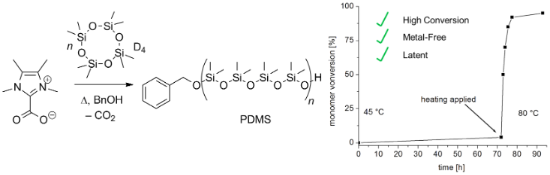
- (Scheme 2), often preferred by the six-membered NHCs [7][8][9][17], seems clearly disfavoured. In the absence of BnOH, it is therefore reasonable to assume zwitterionic propagation, in analogy to recent findings for NHC-mediated lactone polymerization [33]. The insoluble material received by the action of


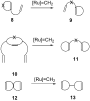
Recent applications of ring-rearrangement metathesis in organic synthesis
Beilstein J. Org. Chem. 2015, 11, 1833–1864, doi:10.3762/bjoc.11.199
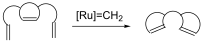
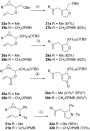
- 28a,b) in excellent yields (82–92%). Involvement of acrylates 29a,b delivered lactones 30a,b in moderate yields (30a 41%, 30b 50%) upon treatment with catalyst 2 in dichloromethane at reflux conditions. However, 29a generated lactone 30a in 65% yield when the metathesis was performed using Grela’s
- catalyst 1 delivered lactone 51 as a mixture of isomers (3:1) in 37% yield. When the substrate was modified as in 52, the RCM product was not formed; however, compound 52 gave the ring-opened product with ethylene (24) in low yield. Further, the ROM homodimer was obtained in 17% yield in the presence of
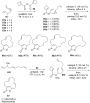
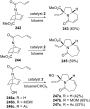
- 90% yield (Scheme 31). Ghosh and Maity [35][36] reported a stereoselective route to functionalized tricyclic system present in umbellactal (153) via a RRM protocol starting with intricate norbornene derivatives. The tricyclic anhydride 154 was reduced to lactone 155 using sodium borohydride and then










Nitro-Grela-type complexes containing iodides – robust and selective catalysts for olefin metathesis under challenging conditions
Beilstein J. Org. Chem. 2015, 11, 1823–1832, doi:10.3762/bjoc.11.198
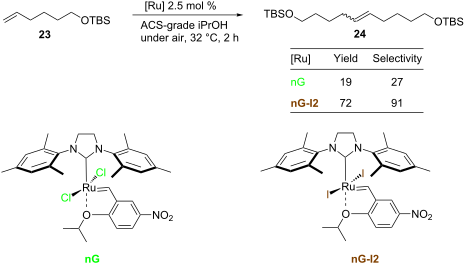
- 5 mM concentration; the catalysts were added in 10 portions with 7 minutes intervals. The 16-membered lactone 19 was synthesized with the catalyst loading of 0.3 mol % (Table 3, entries 1–4). The highest yield (91%) along with good selectivity (93%) was obtained with nG-I2 while only a 54% yield and


Preparation of conjugated dienoates with Bestmann ylide: Towards the synthesis of zampanolide and dactylolide using a facile linchpin approach
Beilstein J. Org. Chem. 2015, 11, 1815–1822, doi:10.3762/bjoc.11.197

- couplings with a Bestmann ylide linchpin have enabled direct lactone and lactam synthesis [12][13][14][15], including the preparation of macrolactones [16][17][18]. An extension of this methodology to γ-hydroxyenone substrates allows the preparation of α-alkylidene-γ-butyrolactones through tandem acylation


Dicarboxylic esters: Useful tools for the biocatalyzed synthesis of hybrid compounds and polymers
Beilstein J. Org. Chem. 2015, 11, 1583–1595, doi:10.3762/bjoc.11.174

- ´-dithiodipropionic acid dimethyl ester in combination with pentadecalactone and 1,4-butandiol (Figure 8) [57]. When MeO-PEG-OH was used as chain terminator amphiphilic copolymers were formed. The hydrophobicity of the polymer could easily be changed by the content of the lactone. The copolymers had low toxicity and


Tandem cross enyne metathesis (CEYM)–intramolecular Diels–Alder reaction (IMDAR). An easy entry to linear bicyclic scaffolds
Beilstein J. Org. Chem. 2015, 11, 1486–1493, doi:10.3762/bjoc.11.161
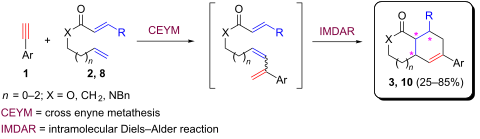
- performed by heating 1.0 equiv of phenylacetylene (1a) and 3.0 equiv of diolefinic ester 2a in toluene in the presence of second generation Hoveyda–Grubbs catalyst [Ru-II]. After 6 hours at 90 °C, bicyclic lactone 3a was obtained in 25% yield (Table 1, entry 1), together with lactone 4a (15%, arising from
- Ru-II catalyst) were applied to other aromatic alkynes 1 and dienes 2, affording a new family of linear carbocycles and heterocycles 3 in moderate yields (Table 2). Bicyclic lactone 3a, ketone 3b and lactam 3c were obtained in moderate yields following the tandem CEYM-IMDAR protocol (Table 2, entries


Structure and conformational analysis of spiroketals from 6-O-methyl-9(E)-hydroxyiminoerythronolide A
Beilstein J. Org. Chem. 2015, 11, 1447–1457, doi:10.3762/bjoc.11.157
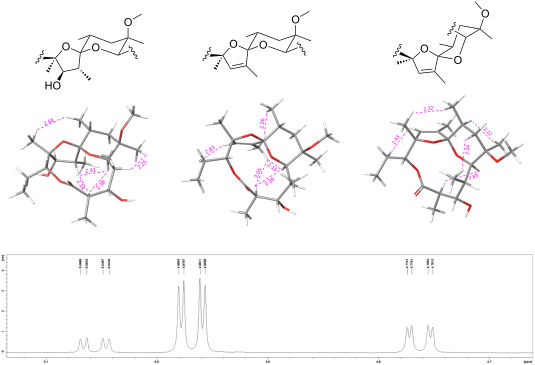
- Park, Harlow, CM19 5AW, United Kingdom 10.3762/bjoc.11.157 Abstract Three novel spiroketals were prepared by a one-pot transformation of 6-O-methyl-9(E)-hydroxyiminoerythronolide A. We present the formation of a [4.5]spiroketal moiety within the macrolide lactone ring, but also the unexpected
- ; spiroketal; Introduction Macrolide antibiotics are natural or semi-synthetic products of polyketide origin, containing one or more desoxy sugars attached to a macrocyclic lactone aglycon. This large and structurally diverse category of compounds has traditionally been divided into classes based on the




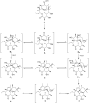
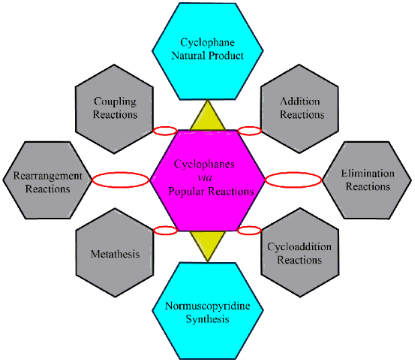
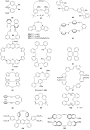
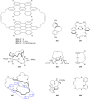
Selected synthetic strategies to cyclophanes
Beilstein J. Org. Chem. 2015, 11, 1274–1331, doi:10.3762/bjoc.11.142






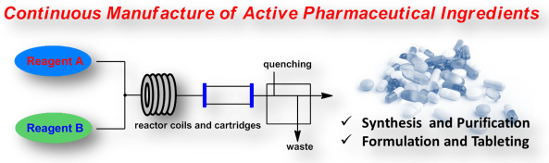
The synthesis of active pharmaceutical ingredients (APIs) using continuous flow chemistry
Beilstein J. Org. Chem. 2015, 11, 1194–1219, doi:10.3762/bjoc.11.134


Chemoselective O-acylation of hydroxyamino acids and amino alcohols under acidic reaction conditions: History, scope and applications
Beilstein J. Org. Chem. 2015, 11, 446–468, doi:10.3762/bjoc.11.51
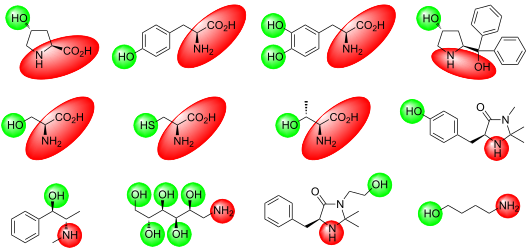
- anhydride under heating, followed by hydrolysis in dilute hydrochloric acid, gives cis-4-hydroxy-D-proline·HCl via an N-acetylated lactone [73], a product that can be acylated directly in the same manner as the natural hydroxyproline (Scheme 14) [48][74]. In addition to acrylic proline monomers [48], the O