


Search results
Search for "macrocycle" in Full Text gives 208 result(s) in Beilstein Journal of Organic Chemistry. Showing first 200.
From porphyrin benzylphosphoramidate conjugates to the catalytic hydrogenation of 5,10,15,20-tetrakis(pentafluorophenyl)porphyrin
- Marcos C. de Souza,
- Leandro F. Pedrosa,
- Géssica S. Cazagrande,
- Vitor F. Ferreira,
- Maria G. P. M. S. Neves and
- José A. S. Cavaleiro
Beilstein J. Org. Chem. 2014, 10, 628–633, doi:10.3762/bjoc.10.54
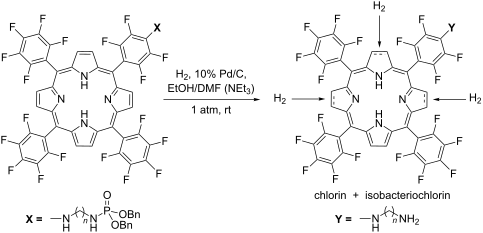
- substitution was promoted by microwave irradiation in N-methyl-2-pyrrolidinone. Attempts to remove the benzyl groups of the phosphoramidate moiety by hydrogenolysis with 10% Pd/C led to the cleavage of the P–N bond and the reduction of the macrocycle to hydroporphyrin-type derivatives. The extent of the effect
- reduction of the macrocycle, thereby affording chlorin and other derivatives (Scheme 1). Considering the importance of TPPF20 as a template for further functionalizations [7] and the better suitability of chlorins for PDT compared to porphyrins due to their enhanced red-shifted Q bands [2], we decided to
- analysis (UV–vis, MS, 31P NMR and 1H NMR) of the crude mixture allowed to consider the loss of the dibenzylphosphoryl group [–P(O)(OBn)2] and the reduction of the macrocycle core. This chemical transformation on the macrocycle core was easily detected from the electronic spectrum of the crude mixtures

Graphical Abstract

Scheme 1: Synthesis of porphyrin aminoalkylphosphoramidates 1a–c, and of chlorin (TPCF20) and isobacteriochlo...

Figure 1: UV–vis spectrum (CHCl3) of the crude mixture obtained from the hydrogenation of 1a and 1b over 10% ...

Figure 2: Main products from the hydrogenation of TPPF20 with 10% Pd/C. Comparative UV–vis spectra of isolate...
New sesquiterpene hydroquinones from the Caribbean sponge Aka coralliphagum
- Qun Göthel and
- Matthias Köck
Beilstein J. Org. Chem. 2014, 10, 613–621, doi:10.3762/bjoc.10.52
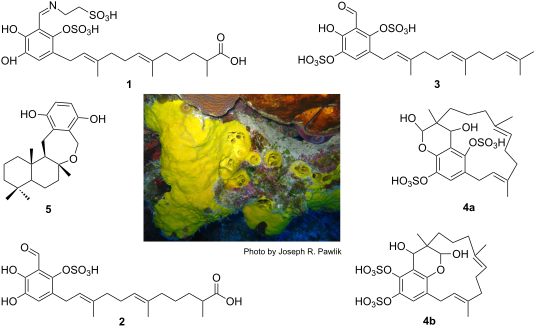
- not be unambiguously assigned, the constitutional isomers with respect to the position of the oxygen bridge 4a and 4b (Figure 1) are in accordance with the NMR data. This is the first compound isolated from this sponge which contains a macrocycle. Moreover, this macrocycle could probably be formed by
- unambiguous. Due to the flexibility of the macrocycle of 4 it was not possible to analyse the conformation of the pyrane. Therefore, the configurations at the centers C-1, C-2, and C-22 could not be assigned. Further investigations are hindered by the fact that compound 4 easily degrades. The HRMS-ESI

Graphical Abstract

Figure 1: Structures of the new compounds siphonodictyals E1–E4 (1–4) and cyclosiphonodictyol A (5) isolated ...

Figure 2: Structures of the related known compounds siphonodictyal B1 (6), siphonodictyal B2 (7), siphonodict...

Figure 3: Selected 1H,13C-HMBC correlations (H → C) and 1H,1H-COSY correlation (bold line) observed for sipho...

Figure 4: Selected 1H,13C-HMBC correlations (H → C) observed for siphonodictyal E2 (2).

Figure 5: Possible constitutions for the aromatic moieties of siphonodictyals E2 (2) and E3 (3) (sum over all...

Figure 6: Selected 1H,13C-HMBC correlations (H → C) observed for siphonodictyal E4 (4a).

Figure 7: Proposed biogenesis of 4a starting from the hypothetical precursor 3-ox with an acyclic sesquiterpe...

Figure 8: Hypothetical biogenesis of the bicyclic sesquiterpenoid moiety from the acyclic precursor of the si...
Isocyanide-based multicomponent reactions towards cyclic constrained peptidomimetics
- Gijs Koopmanschap,
- Eelco Ruijter and
- Romano V.A. Orru
Beilstein J. Org. Chem. 2014, 10, 544–598, doi:10.3762/bjoc.10.50


Graphical Abstract

Scheme 1: The proposed mechanism of the Passerini reaction.

Scheme 2: The PADAM-strategy to α-hydroxy-β-amino amide derivatives 7. An additional oxidation provides α-ket...

Scheme 3: The general accepted Ugi-mechanism.

Scheme 4: Three commonly applied Ugi/cyclization approaches. a) UDC-process, b) UAC-sequence, c) UDAC-combina...

Scheme 5: Ugi reaction that involves the condensation of Armstrong’s convertible isocyanide.

Scheme 6: Mechanism of the U-4C-3CR towards bicyclic β-lactams.

Scheme 7: The Ugi 4C-3CR towards oxabicyclo β-lactams.

Scheme 8: Ugi MCR between an enantiopure monoterpene based β-amino acid, aldehyde and isocyanide resulting in...

Scheme 9: General MCR for β-lactams in water.

Scheme 10: a) Ugi reaction for β-lactam-linked peptidomimetics. b) Varying the β-amino acid resulted in β-lact...

Scheme 11: Ugi-4CR followed by a Pd-catalyzed Sn2 cyclization.

Scheme 12: Ugi-3CR of dipeptide mimics from 2-substituted pyrrolines.

Scheme 13: Joullié–Ugi reaction towards 2,5-disubstituted pyrrolidines.

Scheme 14: Further elaboration of the Ugi-scaffold towards bicyclic systems.

Scheme 15: Dihydroxyproline derivatives from an Ugi reaction.

Scheme 16: Diastereoselective Ugi reaction described by Banfi and co-workers.

Scheme 17: Similar Ugi reaction as in Scheme 16 but with different acids and two chiral isocyanides.

Scheme 18: Highly diastereoselective synthesis of pyrrolidine-dipeptoids via a MAO-N/MCR-procedure.

Scheme 19: MAO-N/MCR-approach towards the hepatitis C drug telaprevir.

Scheme 20: Enantioselective MAO-U-3CR procedure starting from chiral pyrroline 64.

Scheme 21: Synthesis of γ-lactams via an UDC-sequence.

Scheme 22: Utilizing bifunctional groups to provide bicyclic γ-lactam-ketopiperazines.

Scheme 23: The Ugi reaction provided both γ- as δ-lactams depending on which inputs were used.

Scheme 24: The sequential Ugi/RCM with olefinic substrates provided bicyclic lactams.

Scheme 25: a) The structural and dipole similarities of the triazole unit with the amide bond. b) The copper-c...

Scheme 26: The Ugi/Click sequence provided triazole based peptidomimetics.

Scheme 27: The Ugi/Click reaction as described by Nanajdenko.

Scheme 28: The Ugi/Click-approach by Pramitha and Bahulayan.

Scheme 29: The Ugi/Click-combination by Niu et al.

Scheme 30: Triazole linked peptidomimetics obtained from two separate MCRs and a sequential Click reaction.

Scheme 31: Copper-free synthesis of triazoles via two MCRs in one-pot.

Scheme 32: The sequential Ugi/Paal–Knorr reaction to afford pyrazoles.

Scheme 33: An intramolecular Paal–Knorr condensation provided under basic conditions pyrazolones.

Scheme 34: Similar cyclization performed under acidic conditions provided pyrazolones without the trifluoroace...

Scheme 35: The Ugi-4CR towards 2,4-disubstituted thiazoles.

Scheme 36: Solid phase approach towards thiazoles.

Scheme 37: Reaction mechanism of formation of thiazole peptidomimetics containing an additional β-lactam moiet...

Scheme 38: The synthesis of the trisubstituted thiazoles could be either performed via an Ugi reaction with pr...

Scheme 39: Performing the Ugi reaction with DMB-protected isocyanide gave access to either oxazoles or thiazol...

Scheme 40: Ugi/cyclization-approach towards 2,5-disubstituted thiazoles. The Ugi reaction was performed with d...

Scheme 41: Further derivatization of the thiazole scaffold.

Scheme 42: Three-step procedure towards the natural product bacillamide C.

Scheme 43: Ugi-4CR to oxazoles reported by Zhu and co-workers.

Scheme 44: Ugi-based synthesis of oxazole-containing peptidomimetics.

Scheme 45: TMNS3 based Ugi reaction for peptidomimics containing a tetrazole.

Scheme 46: Catalytic cycle of the enantioselective Passerini reaction towards tetrazole-based peptidomimetics.

Scheme 47: Tetrazole-based peptidomimetics via an Ugi reaction and a subsequent sigmatropic rearrangement.

Scheme 48: Resin-bound Ugi-approach towards tetrazole-based peptidomimetics.

Scheme 49: Ugi/cyclization approach towards γ/δ/ε-lactam tetrazoles.

Scheme 50: Ugi-3CR to pipecolic acid-based peptidomimetics.

Scheme 51: Staudinger–Aza-Wittig/Ugi-approach towards pipecolic acid peptidomimetics.

Figure 1: The three structural isomers of diketopiperazines. The 2,5-DKP isomer is most common.

Scheme 52: UDC-approach to obtain 2,5-DKPs, either using Armstrong’s isocyanide or via ethylglyoxalate.

Scheme 53: a) Ugi reaction in water gave either 2,5-DKP structures or spiro compounds. b) The Ugi reaction in ...

Scheme 54: Solid-phase approach towards diketopiperazines.

Scheme 55: UDAC-approach towards DKPs.

Scheme 56: The intermediate amide is activated as leaving group by acid and microwave assisted organic synthes...

Scheme 57: UDC-procedure towards active oxytocin inhibitors.

Scheme 58: An improved stereoselective MCR-approach towards the oxytocin inhibitor.

Scheme 59: The less common Ugi reaction towards DKPs, involving a Sn2-substitution.

Figure 2: Spatial similarities between a natural β-turn conformation and a DKP based β-turn mimetic [158].

Scheme 60: Ugi-based syntheses of bicyclic DKPs. The amine component is derived from a coupling between (R)-N-...

Scheme 61: Ugi-based synthesis of β-turn and γ-turn mimetics.

Figure 3: Isocyanide substituted 3,4-dihydropyridin-2-ones, dihydropyridines and the Freidinger lactams. Bio-...

Scheme 62: The mechanism of the 4-CR towards 3,4-dihydropyridine-2-ones 212.

Scheme 63: a) Multiple MCR-approach to provide DHP-peptidomimetic in two-steps. b) A one-pot 6-CR providing th...

Scheme 64: The MCR–alkylation–MCR procedure to obtain either tetrapeptoids or depsipeptides.

Scheme 65: U-3CR/cyclization employing semicarbazone as imine component gave triazine based peptidomimetics.

Scheme 66: 4CR towards triazinane-diones.

Scheme 67: The MCR–alkylation–IMCR-sequence described by our group towards triazinane dione-based peptidomimet...

Scheme 68: Ugi-4CR approaches followed by a cyclization to thiomorpholin-ones (a) and pyrrolidines (b).

Scheme 69: UDC-approach for benzodiazepinones.

Scheme 70: Ugi/Mitsunobu sequence to BDPs.

Scheme 71: A UDAC-approach to BDPs with convertible isocyanides. The corresponding amide is cleaved by microwa...

Scheme 72: microwave assisted post condensation Ugi reaction.

Scheme 73: Benzodiazepinones synthesized via the post-condensation Ugi/ Staudinger–Aza-Wittig cyclization.

Scheme 74: Two Ugi/cyclization approaches utilizing chiral carboxylic acids. Reaction (a) provided the product...

Scheme 75: The mechanism of the Gewald-3CR includes three base-catalysed steps involving first a Knoevnagel–Co...

Scheme 76: Two structural 1,4-thienodiazepine-2,5-dione isomers by U-4CR/cyclization.

Scheme 77: Tetrazole-based diazepinones by UDC-procedure.

Scheme 78: Tetrazole-based BDPs via a sequential Ugi/hydrolysis/coupling.

Scheme 79: MCR synthesis of three different tricyclic BPDs.

Scheme 80: Two similar approaches both involving an Ugi reaction and a Mitsunobu cyclization.

Scheme 81: Mitsunobu–Ugi-approach towards dihydro-1,4-benzoxazepines.

Scheme 82: Ugi reaction towards hetero-aryl fused 5-oxo-1,4-oxazepines.

Scheme 83: a) Ugi/RCM-approach towards nine-membered peptidomimetics b) Sequential peptide-coupling, deprotect...

Scheme 84: Ugi-based synthesis towards cyclic RGD-pentapeptides.

Scheme 85: Ugi/MCR-approach towards 12–15 membered macrocycles.

Scheme 86: Stereoselective Ugi/RCM approach towards 16-membered macrocycles.

Scheme 87: Passerini/RCM-sequence to 22-membered macrocycles.

Scheme 88: UDAC-approach towards 12–18-membered depsipeptides.

Figure 4: Enopeptin A with its more active derivative ADEP-4.

Scheme 89: a) The Joullié–Ugi-approach towards ADEP-4 derivatives b) Ugi-approach for the α,α-dimethylated der...

Scheme 90: Ugi–Click-strategy for 15-membered macrocyclic glyco-peptidomimetics.

Scheme 91: Ugi/Click combinations provided macrocycles containing both a triazole and an oxazole moiety.

Scheme 92: a) A solution-phase procedure towards macrocycles. b) Alternative solid-phase synthesis as was repo...

Scheme 93: Ugi/cyclization towards cyclophane based macrocycles.

Scheme 94: PADAM-strategy towards eurystatin A.

Scheme 95: PADAM-approach for cyclotheanamide.

Scheme 96: A triple MCR-approach affording RGD-pentapeptoids.

Scheme 97: Ugi-MiBs-approach towards peptoid macrocycles.

Scheme 98: Passerini-based MiB approaches towards macrocycles 345 and 346.

Scheme 99: Macrocyclic peptide formation by the use of amphoteric aziridine-based aldehydes.
The Flögel-three-component reaction with dicarboxylic acids – an approach to bis(β-alkoxy-β-ketoenamides) for the synthesis of complex pyridine and pyrimidine derivatives
- Mrinal K. Bera,
- Moisés Domínguez,
- Paul Hommes and
- Hans-Ulrich Reissig
Beilstein J. Org. Chem. 2014, 10, 394–404, doi:10.3762/bjoc.10.37
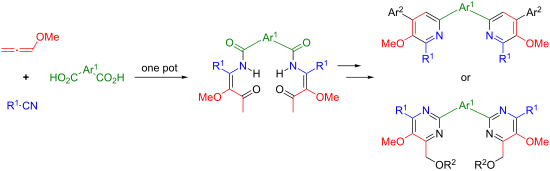
- between the two isomers. According to TLC and NMR spectroscopy, macrocycle 34 was isolated as a single compound. Due to the symmetry of 34 no couplings of the olefinic protons in its 1H NMR spectrum can be observed. Thus at this stage, we were unable to assign the configuration of the double bond. In lack
- determined. DFT calculations using the B3LYP method with the basis sets 6-31(d) or 6-31G(d,p) both gave a ΔEZ-E value of 16.4 kJ/mol. This energy difference may be attributed to the strain of the macrocycle and higher torsion angles between the central benzene unit and the pyrimidine rings for the Z-isomer
- , 168.4 (4 s, Py), 169.3 (s, CONH), 199.8 (s, C=O) ppm; ESI–TOF (m/z): [M + Na]+ calcd for C32H34N3NaO4, 552.2833; found, 552.2844. Optimized geometries of (a) E-configured and (b) Z-configured macrocycle 34 at B3LYP/6-31G(d,p) level. The numbers represent the calculated torsion angles between the

Graphical Abstract

Scheme 1: Flögel-three-component reaction of lithiated alkoxyallenes, nitriles and carboxylic acids providing...

Scheme 2: Synthesis of bis(β-ketoenamides) 13–15 by three-component reactions of lithiated methoxyallene 8 wi...

Scheme 3: Cyclocondensations of β-ketoenamides 13 and 14 to 4-hydroxypyridines 16, 18a and 18b, their subsequ...

Scheme 4: Cyclocondensations of β-ketoenamides 13–15 with ammonium acetate to bis(pyrimidine) derivatives 23a...

Scheme 5: Conversion of mono-pyrimidine derivative 24b into unsymmetrically substituted biphenylen-bridged py...

Scheme 6: Condensation of β-ketoenamides 14 and 20 with hydroxylamine hydrochloride to pyridine-N-oxides 28 a...

Scheme 7: Riley oxidation of bis(pyrimidine) derivative 23a and conversion of diol 32a into macrocycle 34.

Figure 1: Optimized geometries of (a) E-configured and (b) Z-configured macrocycle 34 at B3LYP/6-31G(d,p) lev...

Scheme 8: Dihydroxylation of the macrocyclic olefin 34 to diol 35 and subsequent esterification to the bis-(R...
New tridecapeptides of the theonellapeptolide family from the Indonesian sponge Theonella swinhoei
- Annamaria Sinisi,
- Barbara Calcinai,
- Carlo Cerrano,
- Henny A. Dien,
- Angela Zampella,
- Claudio D’Amore,
- Barbara Renga,
- Stefano Fiorucci and
- Orazio Taglialatela-Scafati
Beilstein J. Org. Chem. 2013, 9, 1643–1651, doi:10.3762/bjoc.9.188
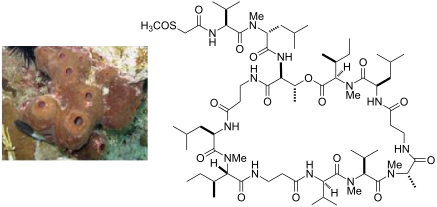
- aliphatic amino acids; ii) the abundance of N-methylated residues and iii) the presence of a macrocycle made up by more than ten amino acids. Only a few theonellapeptolides have been tested for immunosuppressive activity and they revealed a moderate potency [25]. In general, the potential bioactivity of

Graphical Abstract

Figure 1: Structure of the known compound theonellapeptolide Id (1).

Figure 2: Structures of sulfinyltheonellapeptolide (2) and theonellapeptolide If (3).

Figure 3: COSY and key HMBC correlations (left) and MS/MS fragmentations of 2 and its ring-opened methanolysi...
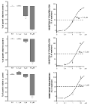
Figure 4: Antiproliferative activity of theonellapeptolides 1–3 on hepatic carcinoma cell line. The MTT assay...
A reductive coupling strategy towards ripostatin A
- Kristin D. Schleicher and
- Timothy F. Jamison
Beilstein J. Org. Chem. 2013, 9, 1533–1550, doi:10.3762/bjoc.9.175
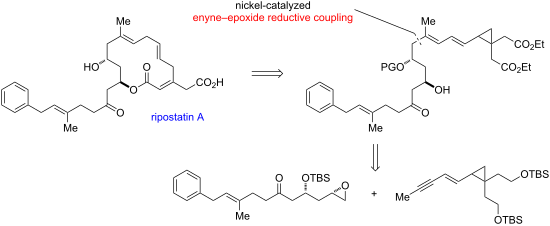
- Prusov extended their synthetic method to syntheses of 15-deoxyripostatin A, and later ripostatin A itself [9]. All of these approaches to the ripostatins share several key features: use of ring-closing metathesis to form the 14-membered macrocycle, preceded by one or more Stille couplings to generate

Graphical Abstract

Figure 1: Structures of the ripostatins.

Figure 2: Retrosynthesis of ripostatin A.

Scheme 1: Nickel-catalyzed reductive coupling of alkynes and epoxides.

Figure 3: Proposed retrosynthesis of ripostatin A featuring enyne–epoxide reductive coupling and rearrangemen...

Scheme 2: Potential transition states and stereochemical outcomes for a concerted 1,5-hydrogen rearrangement.

Scheme 3: Rearrangements of vinylcyclopropanes to acylic 1,4-dienes.

Scheme 4: Synthesis of cyclopropyl enyne.

Scheme 5: Synthesis of model epoxide for investigation of the nickel-catalyzed coupling reaction.

Scheme 6: Nickel-catalyzed enyne–epoxide reductive coupling reaction.

Scheme 7: Proposed mechanism for the nickel-catalyzed coupling reaction of alkynes or enynes with epoxides.

Scheme 8: Regioselectivity changes in reductive couplings of alkynes and 3-oxygenated epoxides.

Scheme 9: Enyne reductive coupling with 1,2-epoxyoctane.

Figure 4: Initial retrosynthesis of the epoxide fragment by using dithiane coupling.

Scheme 10: Synthesis of dithiane by Claisen rearrangement.

Scheme 11: Deuterium labeling reveals that the allylic/benzylic site is most acidic.

Scheme 12: Oxy-Michael addition to δ-hydroxy-α,β-enones.

Figure 5: Revised retrosynthesis of epoxide 5.

Scheme 13: Synthesis of functionalized ketone by oxy-Michael addition.

Figure 6: Retrosynthesis by using iodocylization to introduce the epoxide.

Scheme 14: Synthesis of ketone 57 using thiazolidinethione chiral auxiliary.

Figure 7: Retrosynthesis involving decarboxylation of a β-ketoester.

Scheme 15: Synthesis of β-ketoester 61.

Scheme 16: Decarboxylation of 61 under Krapcho conditions.

Scheme 17: Improved synthesis of 63 and attempted iodocyclization.

Figure 8: Retrosynthesis utilizing Rychnovsky’s cyanohydrin acetonide methodology.

Scheme 18: Synthesis of cyanohydrin acetonide and attempted alkylation with epoxide.

Scheme 19: Allylation of acetonide and conversion to aldehyde.

Scheme 20: Synthesis of the epoxide precursor by an aldol−decarboxylation sequence.
Synthesis of skeletally diverse alkaloid-like molecules: exploitation of metathesis substrates assembled from triplets of building blocks
- Sushil K. Maurya,
- Mark Dow,
- Stuart Warriner and
- Adam Nelson
Beilstein J. Org. Chem. 2013, 9, 775–785, doi:10.3762/bjoc.9.88
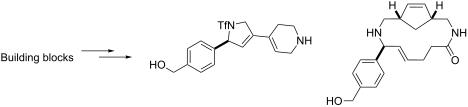
- cyclopentene did not participate in the metathesis reaction, and the bridged macrocycle 53 was obtained in low yield. We have previously observed the formation of macrocyclic metathesis products in similar metathesis cascade reactions [14]. The formation of the cyclopropanes 46 and 47 as byproducts in the

Graphical Abstract

Scheme 1: Illustrative examples of a synthetic approach to natural-product-like molecules with over eighty mo...

Scheme 2: Overview of the proposed synthetic approach. FDIPES = diisopropyl(3,3,4,4,5,5,6,6,7,7,8,8,9,9,10,10...

Figure 1: Structures of building blocks used in this study. Panel A: fluorous-tagged initiating building bloc...

Scheme 3: Synthesis of the initiating building blocks 6a and 6b. TBD = 1,5,7-triazabicyclo[4.4.0]dec-5-ene.

Scheme 4: Synthesis of the initiating building block 7.

Scheme 5: Fate of the metathesis reaction of the substrate 32.
Synthesis of meso-substituted dihydro-1,3-oxazinoporphyrins
- Satyasheel Sharma and
- Mahendra Nath
Beilstein J. Org. Chem. 2013, 9, 496–502, doi:10.3762/bjoc.9.53

- Satyasheel Sharma Mahendra Nath Department of Chemistry, University of Delhi, Delhi 110 007, India 10.3762/bjoc.9.53 Abstract Novel dihydro-1,3-oxazinoporphyrins and naphtho[e]bis(dihydro-1,3-oxazinoporphyrin) derivatives, in which the porphyrin macrocycle is covalently linked to the dihydro-1,3

Graphical Abstract

Scheme 1: Synthesis of dihydro-1,3-benzoxazinoporphyrins.

Scheme 2: Synthesis of dihydro-1,3-naphthoxazinoporphyrins.

Scheme 3: Synthesis of naphtho[e]bis(dihydro-1,3-oxazinoporphyrin) derivatives.

Figure 1: (a) Electronic absorption spectra of free-base porphyrins 6, 8, 14, 16 and 18 in CHCl3 at 298 K. (b...
Inclusion of the insecticide fenitrothion in dimethylated-β-cyclodextrin: unusual guest disorder in the solid state and efficient retardation of the hydrolysis rate of the complexed guest in alkaline solution
- Dyanne L. Cruickshank,
- Natalia M. Rougier,
- Raquel V. Vico,
- Susan A. Bourne,
- Elba I. Buján,
- Mino R. Caira and
- Rita H. de Rossi
Beilstein J. Org. Chem. 2013, 9, 106–117, doi:10.3762/bjoc.9.14
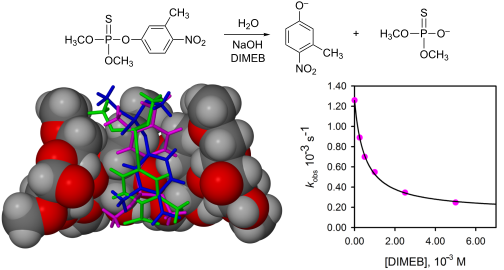
- methylated host analogue TRIMEB, where the primary methoxy groups typically act as a “lid”, sealing that side of the macrocycle. In the DIMEB·1 complex, there is thus no distinct “boundary” separating the guest molecules within the cavity of host molecule A from those within host molecule B. The tilt angles

Graphical Abstract

Figure 1: Chemical structure of fenitrothion (1).

Figure 2: Representative TGA (top) and DSC (bottom) traces for DIMEB·1.
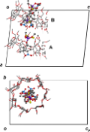
Figure 3: The asymmetric unit in DIMEB•1 viewed along [010] (top) and [100] (bottom). H atoms are omitted for...

Figure 4: The host molecules in the asymmetric unit of DIMEB·1 with the labelling of both residues and atoms ...

Figure 5: The rotamers of 1 occupying the cavity of host molecule A. Common atoms have labels with suffix A, ...

Figure 6: Stereoview of the three disordered guest components that occupy the cavity of host molecule B. Gues...

Figure 7: Space-filling diagrams showing the relative orientations of guest molecules within the cavities of ...

Figure 8: Packing diagrams of the DIMEB·1 structure, viewed along [100] (left) and [010] (right). The symmetr...
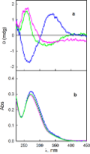
Figure 9: Induced circular dichroism (a) and UV–vis (b) spectra of 1 in the presence of β-CD (10 mM, green), ...

Scheme 1: Reaction of fenitrothion in basic media.

Figure 10: Plot of kobs versus [DIMEB] for the hydrolysis reaction of fenitrothion with HO– at different conce...

Scheme 2: Mechanism of the hydrolysis reaction of 1 mediated by DIMEB.
The chemistry of bisallenes
- Henning Hopf and
- Georgios Markopoulos
Beilstein J. Org. Chem. 2012, 8, 1936–1998, doi:10.3762/bjoc.8.225
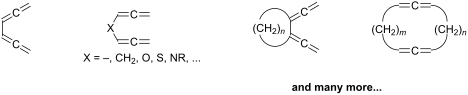

Graphical Abstract

Figure 1: Loschmidt’s structure proposal for benzene (1) (Scheme 181 from [3]) and the corresponding modern stru...

Figure 2: The first isolated bisallenes.

Figure 3: Carbon skeletons of selected bisallenes discussed in this review.

Scheme 1: The preparation of 1,2,4,5-hexatetraene (2).

Scheme 2: The preparation of a conjugated bisallene by the DMS-protocol.

Scheme 3: Preparation of the 3-deuterio- and 3,4-dideuterio derivatives of 24.

Scheme 4: A versatile method to prepare alkylated conjugated bisallenes and other allenes.

Scheme 5: A preparation of 3,4-dimethyl-1,2,4,5-hexatetraene (38).

Scheme 6: A (C6 + 0)-approach to 1,2,4,5-hexatetraene (2).

Scheme 7: The preparation of a fully alkylated bisallenes from a 2,4-hexadiyne-1,6-diol diacetate.

Scheme 8: The preparation of the first phenyl-substituted conjugated bisallenes 3 and 4.

Scheme 9: Selective hydrogenation of [5]cumulenes to conjugated bisallenes: another (C6 + 0)-route.

Scheme 10: Aryl-substituted conjugated bisallenes by a (C3 + C3)-approach.

Scheme 11: Hexaphenyl-1,2,4,5-hexatetraene (59) by a (C3 + C3)-approach.

Scheme 12: An allenation route to conjugated bisallenes.

Scheme 13: The preparation of 3,4-difunctionalized conjugated bisallenes.

Scheme 14: Problems during the preparation of sulfur-substituted conjugated bisallenes.

Scheme 15: The preparation of 3,4-dibromo bisallenes.

Scheme 16: Generation of allenolates by an oxy-Cope rearrangement.

Scheme 17: A linear trimerization of alkynes to conjugated bisallenes: a (C2 + C2 + C2)-protocol.

Scheme 18: Preparation of a TMS-substituted conjugated bisallene by a C3-dimerization route.

Scheme 19: A bis(trimethylsilyl)bisallene by a C3-coupling protocol.

Scheme 20: The rearrangement of highly substituted benzene derivatives into their conjugated bisallenic isomer...

Scheme 21: From fully substituted benzene derivatives to fully substituted bisallenes.

Scheme 22: From a bicyclopropenyl to a conjugated bisallene derivative.

Scheme 23: The conversion of a bismethylenecyclobutene into a conjugated bisallene.

Scheme 24: The preparation of monofunctionalized bisallenes.

Scheme 25: Preparation of bisallene diols and their cyclization to dihydrofurans.

Scheme 26: A 3,4-difunctionalized conjugated bisallene by a C3-coupling process.

Scheme 27: Preparation of a bisallenic diketone by a coupling reaction.

Scheme 28: Sulfur and selenium-substituted bisallenes by a [2.3]sigmatropic rearrangement.

Scheme 29: The biallenylation of azetidinones.

Scheme 30: The preparation of a fully ferrocenylated conjugated bisallene.

Scheme 31: The first isomerization of a 1,5-hexadiyne to a 1,2,4,5-hexatetraene.

Scheme 32: The preparation of alkynyl-substituted bisallenes by a C3-dimerization protocol.

Scheme 33: Preparation of another completely ferrocenylated bisallene.

Scheme 34: The cyclization of 1,5-hexadiyne (129) to 3,4-bismethylenecyclobutene (130) via 1,2,4,5-hexatetraen...
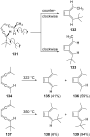
Scheme 35: Stereochemistry of the thermal cyclization of bisallenes to bismethylenecyclobutenes.

Scheme 36: Bisallene→bismethylenecyclobutene ring closures in the solid state.

Scheme 37: A bisallene cyclization/dimerization reaction.

Scheme 38: A selection of Diels–Alder additions of 1,2,4,5-hexatetraene with various double-bond dienophiles.

Scheme 39: The stereochemistry of the [2 + 4] cycloaddition to conjugated bisallenes.

Scheme 40: Preparation of azetidinone derivatives from conjugated bisallenes.

Scheme 41: Cycloaddition of heterodienophiles to a conjugated bisallene.

Scheme 42: Addition of triple-bond dienophiles to conjugated bisallenes.

Scheme 43: Sulfur dioxide addition to conjugated bisallenes.

Scheme 44: The addition of a germylene to a conjugated bisallene.

Scheme 45: Trapping of conjugated bisallenes with phosphinidenes.

Scheme 46: The cyclopropanantion of 1,2,4,5-hexatetraene (2).

Scheme 47: Photochemical reactions involving conjugated bisallenes.

Scheme 48: Base-catalyzed isomerizations of conjugated bisallenes.

Scheme 49: Ionic additions to a conjugated bisallene.

Scheme 50: Oxidation reactions of a conjugated bisallene.
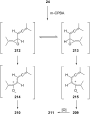
Scheme 51: The mechanism of oxidation of the bisallene 24.

Scheme 52: CuCl-catalyzed cyclization of 1,2,4,5-hexatetraene (2).

Scheme 53: The conversion of conjugated bisallenes into cyclopentenones.

Scheme 54: Oligomerization of a conjugated bisallene by nickel catalysts.
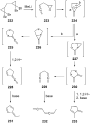
Scheme 55: Generation of 1,2,5,6-heptatetraene (229) as a reaction intermediate.

Scheme 56: The preparation of a stable derivative of 1,2,5,6-heptatetraene.

Scheme 57: A bisallene with a carbonyl group as a spacer element.

Scheme 58: The first preparation of 1,2,6,7-octatetraene (242).

Scheme 59: Preparation of 1,2,6,7-octatetraenes by (C4 + C4)-coupling of enynes.

Scheme 60: Preparation of 1,2,6,7-octatetraenes by (C4 + C4)-coupling of homoallenyl bromides.

Scheme 61: Preparation of 1,2,6,7-octatetraenes by alkylation of propargylic substrates.

Scheme 62: Preparation of two highly functionalized 1,2,6,7-octatetraenes.

Scheme 63: Preparation of several higher α,ω-bisallenes.

Scheme 64: Preparation of different alkyl derivatives of α,ω-bisallenes.

Scheme 65: The preparation of functionalized 1,2,7,8-nonatetraene derivatives.

Scheme 66: Preparation of functionalized α,ω-bisallenes.

Scheme 67: The preparation of an α,ω-bisallene by direct homologation of an α,ω-bisalkyne.

Scheme 68: The gas-phase pyrolysis of 4,4-dimethyl-1,2,5,6-heptatetraene (237).
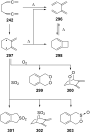
Scheme 69: Gas-phase pyrolysis of 1,2,6,7-octatetraene (242).

Scheme 70: The cyclopropanation of 1,2,6,7-octatetraene (242).

Scheme 71: Intramolecular cyclization of 1,2,6,7-octatetraene derivatives.

Scheme 72: The gas-phase pyrolysis of 1,2,7,8-nonatetraene (265) and 1,2,8,9-decatetraene (266).

Scheme 73: Rh-catalyzed cyclization of a functionalized 1,2,7,8-nonatetraene.

Scheme 74: A triple cyclization involving two different allenic substrates.

Scheme 75: Bicyclization of keto derivatives of 1,2,7,8-nonatetraene.

Scheme 76: The preparation of complex organic compounds from functionalized bisallenes.

Scheme 77: Cycloisomerization of an α,ω-bisallene containing a C9 tether.

Scheme 78: Organoborane polymers from α,ω-bisallenes.

Scheme 79: Preparation of trans- (337) and cis-1,2,4,6,7-octapentaene (341).

Scheme 80: The preparation of 4-methylene-1,2,5,6-heptatetraene (349).

Scheme 81: The preparation of acetylenic bisallenes.

Scheme 82: The preparation of derivatives of hydrocarbon 351.

Scheme 83: The construction of macrocyclic alleno-acetylenes.

Scheme 84: Preparation and reactions of 4,5-bismethylene-1,2,6,7-octatetraene (365).

Scheme 85: Preparation of 1,2-bis(propadienyl)benzene (370).

Scheme 86: The preparation of 1,4-bis(propadienyl)benzene (376).

Scheme 87: The preparation of aromatic and heteroaromatic bisallenes by metal-mediated coupling reactions.

Scheme 88: Double cyclization of an aromatic bisallene.

Scheme 89: Preparation of an allenic [15]paracyclophane by a ring-closing metathesis reaction of an aromatic α...

Scheme 90: Preparation of a macrocyclic ring system containing 1,4-bis(propadienyl)benzene units.

Scheme 91: Preparation of copolymers from 1,4-bis(propadienyl)benzene (376).

Scheme 92: A boration/copolymerization sequence of an aromatic bisallene and an aromatic bisacetylene.

Scheme 93: Formation of a layered aromatic bisallene.

Figure 4: The first members of the semicyclic bisallene series.

Scheme 94: Preparation of the first bis(vinylidene)cyclobutane derivative.
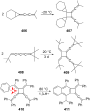
Scheme 95: Dimerization of strain-activated cumulenes to bis(vinylidene)cyclobutanes.

Scheme 96: Photodimerization of two fully substituted butatrienes in the solid state.

Scheme 97: Preparation of the two parent bis(vinylidene)cyclobutanes.

Scheme 98: The preparation of 1,3-bis(vinylidene)cyclopentane and its thermal isomerization.

Scheme 99: The preparation of the isomeric bis(vinylidene)cyclohexanes.

Scheme 100: Bi- and tricyclic conjugated bisallenes.
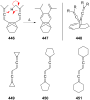
Scheme 101: A selection of polycyclic bisallenes.

Scheme 102: The first endocyclic bisallenes.

Figure 5: The stereochemistry of 1,2,6,7-cyclodecatetraene.

Scheme 103: The preparation of several endocyclic bisallenes.

Scheme 104: Synthesis of diastereomeric derivatives of 1,2,6,7-cyclodecatetraene.

Scheme 105: Preparation of a derivative of 1,2,8,9-cyclotetradecatetraene.

Scheme 106: The preparation of keto derivatives of cyclic bisallenes.

Scheme 107: The preparation of cyclic biscumulenic ring systems.

Scheme 108: Cyclic bisallenes in natural- and non-natural-product chemistry.

Scheme 109: The preparation of iron carbonyl complexes from cyclic bisallenes.

Figure 6: A selection of unknown exocyclic bisallenes that should have interesting chemical properties.

Scheme 110: The thermal isomerization of 1,2-diethynylcyclopropanes and -cyclobutanes.

Scheme 111: Intermediate generation of a cyclooctapentaene.

Scheme 112: Attempted preparation of a cyclodecahexaene.

Scheme 113: The thermal isomerization of 1,5,9-cyclododecatriyne (511) into [6]radialene (514).

Scheme 114: An isomerization involving a diketone derived from a conjugated bisallene.

Scheme 115: Typical reaction modes of heteroorganic bisallenes.

Scheme 116: Generation and thermal behavior of acyclic hetero-organic bisallenes.

Scheme 117: Generation of bis(propadienyl)thioether.

Scheme 118: The preparation of a bisallenic sulfone and its thermal isomerization.

Scheme 119: Bromination of the bisallenic sulfone 535.

Scheme 120: Metalation/hydrolysis of the bisallenic sulfone 535.

Scheme 121: Aromatic compounds from hetero bisallenes.

Scheme 122: Isomerization/cyclization of bispropargylic ethers.

Scheme 123: The preparation of novel aromatic systems by base-catalyzed isomerization of bispropargyl ethers.

Scheme 124: The isomerization of bisacetylenic thioethers to bicyclic thiophenes.

Scheme 125: Aromatization of macrocyclic bispropargylic sulfides.

Scheme 126: Preparation of ansa-compounds from macrocyclic bispropargyl thioethers.

Scheme 127: Alternate route for cyclization of a heterorganic bisallene.
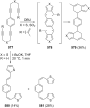
Scheme 128: Multiple isomerization/cyclization of “double” bispropargylic thioethers.

Scheme 129: Preparation of a bisallenyl disulfide and its subsequent bicyclization.

Scheme 130: Thermal cyclization of a bisallenyl thiosulfonate.

Scheme 131: Some reactions of heteroorganic bisallenes with two sulfur atoms.

Scheme 132: Further methods for the preparation of heteroorganic bisallenes.

Scheme 133: Cyclization reactions of heteroorganic bisallenes.

Scheme 134: Thermal cycloadditions of bisallenic tertiary amines.

Scheme 135: Cyclization of a bisallenic tertiary amine in the presence of a transition-metal catalyst.

Scheme 136: A Pauson–Khand reaction of a bisallenic ether.

Scheme 137: Formation of a 2:1adduct from two allenic substrates.

Scheme 138: A ring-forming silastannylation of a bisallenic tertiary amine.

Scheme 139: A three-component cyclization involving a heterorganic bisallene.

Scheme 140: Atom-economic construction of a complex organic framework from a heterorganic α,ω-bisallene.
Polysiloxane ionic liquids as good solvents for β-cyclodextrin-polydimethylsiloxane polyrotaxane structures
- Narcisa Marangoci,
- Rodinel Ardeleanu,
- Laura Ursu,
- Constanta Ibanescu,
- Maricel Danu,
- Mariana Pinteala and
- Bogdan C. Simionescu
Beilstein J. Org. Chem. 2012, 8, 1610–1618, doi:10.3762/bjoc.8.184
- macrocycle from slipping out [13][14][15][16][17][18][19][20][21][22]. Unfortunately, the properties and mechanisms of CD-polymer polyrotaxanes have been rarely evaluated due to a lack of good solvents. In general, the CD-polymer polyrotaxanes are soluble only in DMSO and aqueous sodium hydroxide solution

Graphical Abstract

Scheme 1: Synthesis of PDMS-Im/Br ionic liquid.

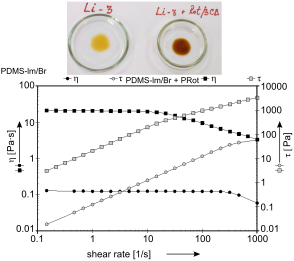
Figure 1: Appearance of (A) pure PDMS-Im/Br ionic liquid; (B) PDMS-Im/Br ionic liquid containing 1 wt % PRot.

Figure 2: Wet-STEM images at 30 kV in bright field mode of: PDMS-Im/Br ionic liquid (A,B) and mixture of PDMS...

Figure 3: Amplitude sweep results for PDMS-Im/Br and PDMS-Im/Br+PRot at 25 °C.

Figure 4: Storage (G’) and loss (G”) moduli dependence on frequency for PDMS-Im/Br and PDMS-Im/Br+PRot at 25 ...

Figure 5: Storage (G’) and loss (G”) moduli dependence on temperature for PDMS-Im/Br and PDMS-Im/Br+PRot.

Figure 6: Flow curves for PDMS-Im/Br and PDMS-Im/Br + PRot at 25 °C.

Figure 7: Temperature dependence of flow curves for PDMS-Im/Br ionic liquid.

Figure 8: Temperature dependence of flow curves for PDMS-Im/Br+PRot.

Figure 9: DSC second heating curves of: (1) PDMS-Im/Br ionic liquid, (2) mixture of PDMS-Im/Br with Prot and ...
Synthesis and characterization of low-molecular-weight π-conjugated polymers covered by persilylated β-cyclodextrin
- Aurica Farcas,
- Ana-Maria Resmerita,
- Andreea Stefanache,
- Mihaela Balan and
- Valeria Harabagiu
Beilstein J. Org. Chem. 2012, 8, 1505–1514, doi:10.3762/bjoc.8.170
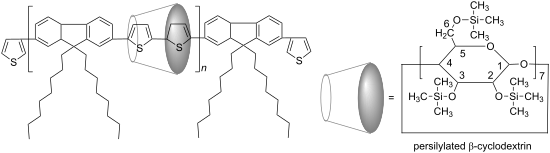
- interactions; bulky groups (also known as stoppers) are attached at the ends of the axle to prevent dethreading of the host. In the past few years many authors have demonstrated that the encapsulation of conjugated polymers into macrocycle cavities plays an important role in the construction of diverse
- agreement with the proposed structures. The coverage of the rotaxane copolymer with the macrocycle, i.e., the average number of PS-βCD macrocycles per repeating unit [23], was determined from the NMR spectral analysis and was calculated from the ratio of the integrated area of the peak assigned to the H
- [5][29][31][34], can be assigned to the contribution from the structure of the PS-βCD macrocycle, which provides a deeper insight into the blocking effect of silylated groups on the cross-coupling reaction. In order to obtain higher-molecular-weight polyrotaxanes the optimal reaction time has to be

Graphical Abstract
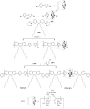
Scheme 1: Synthesis of PDOF-BT and PDOF-BTc copolymers.

Figure 1: 1H NMR spectrum (CDCl3) of the BTc inclusion complex.

Figure 2: FTIR spectra (KBr pellet) of PDOF-BT (A) and PDOF-BTc (B) copolymers.

Figure 3: 1H NMR spectrum of PDOF-BT copolymer (CDCl3).

Figure 4: 1H NMR spectrum of PDOF-BTc copolymer (CDCl3).

Figure 5: DSC curves of BTc and PDOF-BTc from second-heating DSC measurements.

Figure 6: Thermogravimetric curves (TG) for BTc, PDOF-BT, and PDOF-BTc compounds.

Figure 7: High-resolution tapping-mode AFM images and cross-section plots (along the solid line in the images...
A macrolactonization approach to the total synthesis of the antimicrobial cyclic depsipeptide LI-F04a and diastereoisomeric analogues
- James R. Cochrane,
- Dong Hee Yoon,
- Christopher S. P. McErlean and
- Katrina A. Jolliffe
Beilstein J. Org. Chem. 2012, 8, 1344–1351, doi:10.3762/bjoc.8.154
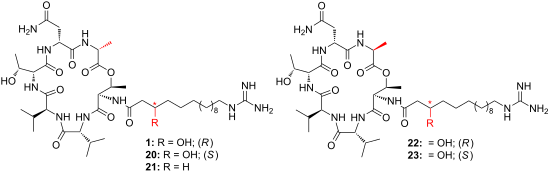
- antifungal activity against any of the species tested. This suggests that the conformation of the cyclic peptide core is important in determining the antifungal activity of these compounds, since inversion of the stereocentre of one of the amino acids in the macrocycle is expected to result in a

Graphical Abstract
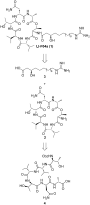
Scheme 1: Retrosynthetic strategy.

Scheme 2: Macrolactonization reactions of seco acids 5 and 6 (for reagents and yields see Table 1 and Table 2).

Figure 1: Analytical HPLC traces of linear peptides. (a) Compound 9 (retention time = 31.5 min); (b) Compound ...
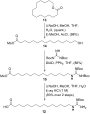
Scheme 3: Synthesis of the dehydroxy side chain 12.

Scheme 4: Synthesis of LI-F04a (1) and analogues 20–23.

Figure 2: Structures and lowest-energy conformers of 24 (left) and 25 (right) obtained using Macromodel. Hydr...
Similarity analysis, synthesis, and bioassay of antibacterial cyclic peptidomimetics
- Workalemahu M. Berhanu,
- Mohamed A. Ibrahim,
- Girinath G. Pillai,
- Alexander A. Oliferenko,
- Levan Khelashvili,
- Farukh Jabeen,
- Bushra Mirza,
- Farzana Latif Ansari,
- Ihsan ul-Haq,
- Said A. El-Feky and
- Alan R. Katritzky
Beilstein J. Org. Chem. 2012, 8, 1146–1160, doi:10.3762/bjoc.8.128
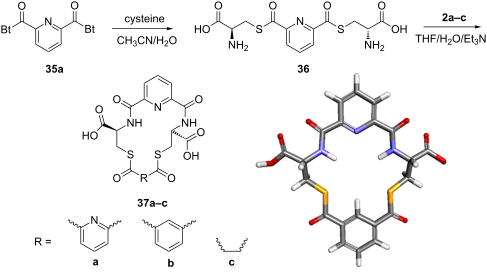
- enantiomeric recognition [22][23]. Incorporation of amino acids in abiotic anion receptors can lead to systems that mimic the anion coordination properties of anion-binding proteins [24]. Introduction of cysteine subunits into a macrocycle facilitates receptor synthesis and allows control of the relative
- bis(S-acylcysteine) 36 forming the pyridine–cysteine-containing macrocycle 40 in 70% yield (Scheme 3, see Supporting Information File 1 for experimental details). Bioassay Screening for antibacterial activity was performed for two cyclic peptidomimetics belonging to scaffold 37, namely 37a and 37b
- -containing macrocycle 39. Structures of cyclic peptides with their MIC values. Antibacterial activity in vitro. Supporting Information Supporting Information File 314: Experimental details, characterization data of synthesized compounds and antibacterial testing protocol. Acknowledgements We thank the

Graphical Abstract

Figure 1: Molecular-descriptor-based cluster analysis; single-linkage Euclidean distances. Clustering of comp...

Scheme 1: Preparation of dicarboxylic benzotriazole derivatives.

Scheme 2: Preparation of pyridine-based cysteine-containing macrocycles.

Scheme 3: Preparation of pyridine–cysteine-containing macrocycle 39.
Toward unidirectional switches: 2-(2-Hydroxyphenyl)pyridine and 2-(2-methoxyphenyl)pyridine derivatives as pH-triggered pivots
- Christina Tepper and
- Gebhard Haberhauer
Beilstein J. Org. Chem. 2012, 8, 977–985, doi:10.3762/bjoc.8.110
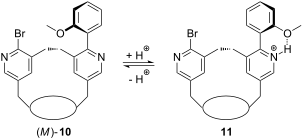
- 150° are transformed into diastereomers that are different in energy. In order to receive diastereomeric derivatives of 2-(2-hydroxyphenyl)-3-methylpyridine (6) and 2-(2-methoxyphenyl)-3-methylpyridine (7) we intended to insert these units into a chiral macrocycle. Therefore, we used the macrobicyclus

Graphical Abstract
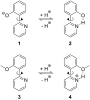
Scheme 1: Principle of the switching mechanism of 2-(2-hydroxyphenyl)pyridine (2) and 2-(2-methoxyphenyl)pyri...
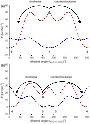
Figure 1: (a) Calculated energy profiles of the pyridine derivatives 1 (blue) and 2 (red) in relation to the ...

Scheme 2: Principle of the switching mechanism of 2-(2-hydroxyphenyl)-3-methylpyridine (6) and 2-(2-methoxyph...
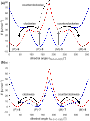
Figure 2: (a) Calculated energy profiles of the 3-methylpyridine derivatives 5 (blue) and 6 (red) in relation...

Figure 3: UV spectral change of phenolate 5 (blue) in dichloromethane (c = 5.6 × 10⁻⁵ M) at 20 °C upon additi...

Figure 4: UV spectral change of 3-methylpyridine 7 (blue) in dichloromethane (c = 5.6 × 10⁻⁵ M) at 20 °C upon...

Figure 5: HOMO (left) and LUMO (right) of the 3-methylpyridine 7 calculated by using B3LYP/6-31G*.

Scheme 3: Synthesis of the methoxyphenylpyridine switch 10 and the hydroxypyridine switch 12; reaction condit...
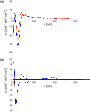
Figure 6: (a) CD spectral change of pyridine switch 13 (blue) in dichloromethane (c = 5.6 × 10⁻⁵ M) at 20 °C ...
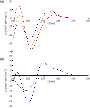
Figure 7: (a) CD spectral change of pyridine switch 10 (blue) in dichloromethane (c = 5.6 × 10⁻⁵ M) at 20 °C ...
Synthesis and anion recognition properties of shape-persistent binaphthyl-containing chiral macrocyclic amides
- Marco Caricato,
- Nerea Jordana Leza,
- Claudia Gargiulli,
- Giuseppe Gattuso,
- Daniele Dondi and
- Dario Pasini
Beilstein J. Org. Chem. 2012, 8, 967–976, doi:10.3762/bjoc.8.109
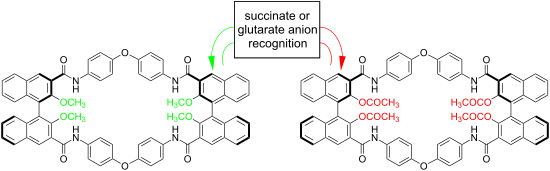
- ][28][29][30], we have reported on the design, synthesis and characterization of a rigid, optically active tetraamidic macrocycle with recognition capabilities towards anions (Figure 1) [31]. In fact, macrocycle (R,R)-1 could be obtained efficiently (62% in the macrocyclization step) through a
- sequential, convergent methodology. It is a 32-membered macrocycle whose cyclic backbone is composed exclusively of sp2-hybridized carbon and nitrogen atoms. An additional internal rigidification of the macrocyclic cavity is given by the presence of stable, six-membered intramolecular hydrogen bonds between
- the protected (in the form of methyl ether) phenol moieties in the 2,2' positions and the NH protons of the amide functionalities in the neighboring 3,3' positions of the binaphthyl units. Macrocycle (R,R)-1 showed modest binding affinities towards carboxylate anions, yet detectable binding of proper

Graphical Abstract

Figure 1: Structure of the macrocycle (R,R)-1 (top), and synthetic strategies for the production of novel ami...
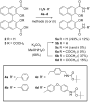
Scheme 1: Reagents and conditions: (i) SOCl2, CHCl3 or (COCl)2, DMF, CH2Cl2 then amine, Et3N, CH2Cl2 or (ii) ...

Scheme 2: Structure and synthesis of the macrocycles discussed in this paper.
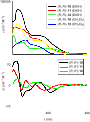
Figure 2: UV and CD (EtOH) spectra of macrocycles (R,R)-10, (R,R)-11 and (R,R)-12 in the range 220–400 nm.

Figure 3: Minimized molecular structures of (from top left to bottom left, clockwise): (R,R)-10, (R,R)-11, (R,...

Figure 4: Aromatic region of the 1H NMR (CDCl3, 500 MHz, 25 °C) spectra of macrocycle (R,R)-12 (2.8 mM, botto...
Synthesis of functionalized macrocyclic derivatives of trioxabicyclo[3.3.0]nonadiene
- Sabine Leber,
- Gert Kollenz and
- Curt Wentrup
Beilstein J. Org. Chem. 2012, 8, 738–743, doi:10.3762/bjoc.8.83

- macrocycle does not take place. Conclusion The difficulty of reduction of the nitro compounds, in particular the 1,2,3-trisubstituted compound 11, as well as the conversion of only one of the bisdioxine units in 8 to a tetraoxaadamantane suggests that these macrocycles provide steric protection of the
- functional groups. The cavity in 8 is obviously large enough to permit the formation of one tetraoxaadamantane unit, but this will reduce the available space, with the consequence that the attack by a water molecule on the second bisdioxine unit from the concave inside of the macrocycle does not take place
- ); the NMR spectra were assigned on the basis of comparison with standard data compilations; LC–MS (CH2Cl2) m/z: 271; Anal. calcd for C12H17NO6: C, 53.13; H, 6.32; N, 5.16; found: C, 53.30; H, 6.43; N, 5.10. Bis(2-nitro-1,4-phenylene)macrocycle 8: A sample of diacid dichloride 3 (500 mg, 1.05 mmol) was

Graphical Abstract

Scheme 1: Synthesis of macrocyclic bisdioxine derivatives (R,S-form of 4 and S-form of 5 shown; see Supporting Information File 1 for deta...

Scheme 2: Synthesis of the 1,2,4-trisubstituted aryl derivatives.

Scheme 3: Synthesis of the 1,2,3-trisubstituted aryl derivatives.

Scheme 4: Synthesis of the tetraoxaadamantane derivative 14.
Self-assembly of Ru4 and Ru8 assemblies by coordination using organometallic Ru(II)2 precursors: Synthesis, characterization and properties
- Sankarasekaran Shanmugaraju,
- Dipak Samanta and
- Partha Sarathi Mukherjee
Beilstein J. Org. Chem. 2012, 8, 313–322, doi:10.3762/bjoc.8.34
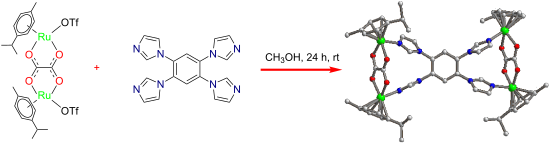
- salts in high yields and were characterized fully by multinuclear (1H, 13C and 19F) NMR, infrared (IR) and electrospray ionization mass spectrometry (ESIMS). In addition, the molecular structure of macrocycle 2a was established unequivocally by single-crystal X-ray diffraction analysis and adopts a
- -C6H2O4)4(L)2(η6-p-cymene)8](O3SCF3)8 (2c), respectively in quantitative yields [L = 1,2,4,5-tetrakis(imidazol-1-yl)benzene]. The final assemblies were characterized by multinuclear (1H, 13C and 19F) NMR, IR and ESIMS analyses. The molecular structure of tetranuclear macrocycle 2a was determined by single
- a methanolic solution of 2a at room temperature. Macrocycle 2a was crystallized in a tetragonal crystal system with I41/a space group having sixteen formula units per unit cell. A perspective view of the macrocycle 2a is depicted in Figure 3 with atom numbering, and its selected bond parameters are

Graphical Abstract

Scheme 1: Possible octanuclear prism and tetranuclear macrocycle resulting from the combination of a tetraden...

Scheme 2: Formation of the tetranuclear complexes (2a and 2b) upon the reaction of Ru(II)2 based acceptors 1a...

Figure 1: 1H (left) and 19F (right) NMR spectra of tetranuclear macrocycle 2a recorded in CD2Cl2–CD3OD with p...

Figure 2: ESIMS spectrum of the macrocycle 2a recorded in acetonitrile. Inset: Experimentally observed isotop...

Figure 3: A ball and stick representation of 2a with atom numbering. Color code: Ru = green; O = red; N = blu...

Scheme 3: Formation of an octanuclear macrocycle 2c upon reaction of Ru(II)2-based acceptors 1c with imidazol...

Figure 4: 1H (left) and 19F (right) NMR spectrum of the macrocycle 2c recorded in CD3CN with the peak assignm...

Figure 5: Side (left) and top (right) view of the energy-minimized structures of the octanuclear macrocycle 2c...

Figure 6: UV–vis absorption spectrum (left) of macrocycles (2a–2c) recorded in CH3CN at 298 K, and cyclic vol...
A ferrocene redox-active triazolium macrocycle that binds and senses chloride
- Nicholas G. White and
- Paul D. Beer
Beilstein J. Org. Chem. 2012, 8, 246–252, doi:10.3762/bjoc.8.25
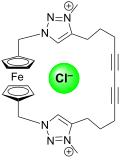
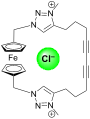
- Nicholas G. White Paul D. Beer Chemistry Research Laboratory, Mansfield Road, Oxford, OX1 3TA, United Kingdom 10.3762/bjoc.8.25 Abstract A ferrocene bis(triazole) macrocycle was synthesised in good yield by the Eglinton coupling of an acyclic bis(alkyne) precursor and characterised in the solid
- state by X-ray crystallography. Alkylation gives the corresponding triazolium macrocycle, which binds chloride and benzoate strongly in CD3CN solution through favourable charge-assisted C–H···anion interactions, as evidenced by 1H NMR titration experiments. Preliminary electrochemical studies reveal
- that the redox-active macrocycle is capable of sensing chloride in CH3CN solution. Keywords: anion binding; C–H···anion interactions; electrochemistry; ferrocene; triazolium; Introduction The copper(I)-catalysed cycloaddition of alkynes and azides (CuAAC) [1][2] to give the 1,2,3-triazole group is
Graphical Abstract

Scheme 1: Synthesis of bis(triazole) macrocycle 3 and tetra(triazole) macrocycle 4. Conditions and reagents: ...

Scheme 2: Synthesis of bis(triazolium) macrocycle, 5. Conditions and reagents: (i) (a) (Me3O)(BF4), CH2Cl2, (...

Figure 1: Solid-state structure of 3 (left) and 4 (right). Hydrogen atoms omitted for clarity, ellipsoids are...

Figure 2: 1H NMR spectra of 5·2PF6 after the addition of 0, 1.0, 2.0 and 5.0 equiv of TBA·Cl (500 MHz, 293 K,...

Figure 3: Titration data (solid points) and fitted binding isotherms (curves) monitoring the triazolium proto...

Figure 4: CV of 5·2PF6 upon the addition of TBA·Cl (electrolyte: 0.1 M TBA·PF6/CH3CN, [5·2PF6] = 0.50 mM, 293...
Synthesis of multivalent host and guest molecules for the construction of multithreaded diamide pseudorotaxanes
- Nora L. Löw,
- Egor V. Dzyuba,
- Boris Brusilowskij,
- Lena Kaufmann,
- Elisa Franzmann,
- Wolfgang Maison,
- Emily Brandt,
- Daniel Aicher,
- Arno Wiehe and
- Christoph A. Schalley
Beilstein J. Org. Chem. 2012, 8, 234–245, doi:10.3762/bjoc.8.24
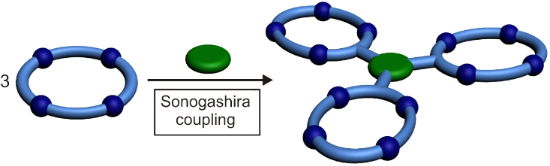
- Berlin, Germany 10.3762/bjoc.8.24 Abstract A series of di-, tri- and tetravalent axles and wheels for the synthesis of pseudorotaxanes bearing the tetralactam macrocycle/diamide axle binding motif was prepared. Starting from iodinated monovalent precursors, Sonogashira cross-coupling reactions were
- view of previous theoretical calculations on amide/tetralactam macrocycle complexes [111], which show that simple amide axles dethread in the gas phase because of a favourable entropy term arising from the increase in particle number upon complex dissociation. This entropic contribution overcompensates
- . Equipping our wheels with better solubilizing groups and using diketopiperazine axles should therefore help us to go beyond the limitations encountered in the present study. Hunter/Vögtle-type tetralactam macrocycle 1 bearing an iodo substituent at one of the isophthaloyl groups, and the diamide axle piece

Graphical Abstract

Figure 1: Hunter/Vögtle-type tetralactam macrocycle 1 bearing an iodo substituent at one of the isophthaloyl ...

Scheme 1: Synthesis of the monovalent diamide axle 2, which was used for Sonogashira coupling to the appropri...

Scheme 2: Synthesis of divalent wheels from TLM 1: (a), (b) (Ph3P)2PdCl2, CuI, PPh3, NEt3, DMF, 25 °C, 24 h, ...
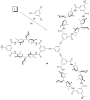
Scheme 3: Synthesis of trivalent wheel 14 from TLM 1: (a) (Ph3P)2PdCl2, CuI, PPh3, NEt3, DMF, 25 °C, 24 h, 40...
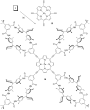
Scheme 4: (a) Pd2(dba)3, AsPh3, NEt3, DMF, 120 °C, 12 h, 7% (16).
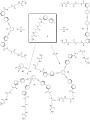
Scheme 5: Synthesis of a series of multivalent guests starting from the axle 2. (a), (b), (c), (d): Pd2(dba)3...
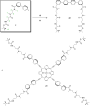
Scheme 6: Synthesis of the tetravalent axle 23 and its divalent side product: (a) Pd2(dba)3, AsPh3, NEt3, DMF...
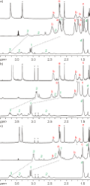
Figure 2: Aliphatic regions of the 1H NMR spectra (CD2Cl2, 500 MHz, 298 K, 2.3 mM) of (a) 10 (top), 17@10 (ce...
Fifty years of oxacalix[3]arenes: A review
- Kevin Cottet,
- Paula M. Marcos and
- Peter J. Cragg
Beilstein J. Org. Chem. 2012, 8, 201–226, doi:10.3762/bjoc.8.22
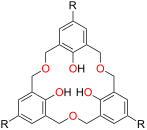
- -substituted phenol; however, in host–guest chemistry an asymmetric macrocycle can provide a site for enantioselective molecular recognition. In the case of p-tert-butylcalix[n]arenes the tert-butyl substituent can be removed, as mentioned previously, through a retro-Friedel–Crafts acylation, and replaced by
- inversion in CDCl3 was <38 kJ mol−1, in contrast with 66 kJ mol−1 for the calix[4]arene analogue. To freeze the oxacalix[3]arene conformer, through-the-annulus rotation must be prevented. This can be achieved by the introduction of sufficiently large groups on the lower rim of the macrocycle. Upper-rim
- (19). In 2001, Yamato reported an oxacalix[3]arene with pendant pyridines linked by amide bonds [34]. The intramolecular hydrogen bonds between neighbouring amide groups enforced a flattened-cone conformer for the macrocycle, which prevented binding to both metal cations and, to a large extent, alkyl

Graphical Abstract

Figure 1: Calixarenes and expanded calixarenes: p-tert-Butylcalix[4]arene (1), p-tert-butyldihomooxacalix[4]a...

Figure 2: Conventional nomenclature for oxacalix[n]arenes.

Scheme 1: Synthesis of oxacalix[3]arenes: (i) Formaldehyde (37% aq), NaOH (aq), 1,4-dioxane; glacial acetic a...

Figure 3: p-tert-Butyloctahomotetraoxacalix[4]arene (4a) [16].

Figure 4: X-ray crystal structure of 3a showing phenolic hydrogen bonding (IUCr ID AS0508) [17].

Scheme 2: Stepwise synthesis of asymmetric oxacalix[3]arenes: (i) MOMCl, Adogen®464; (ii) 2,2-dimethoxypropan...
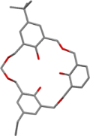
Figure 5: X-ray crystal structure of heptahomotetraoxacalix[3]arene 5 (CCDC ID 166088) [21].

Scheme 3: Oxacalix[3]arene synthesis by reductive coupling: (i) Me3SiOTf, Et3SiH, CH2Cl2; R1, R2 = I, Br, ben...

Scheme 4: Oxacalix[3]naphthalene: (i) HClO4 (aq), wet CHCl3 (R = tert-butyl, 6a, H, 6b) [20].

Figure 6: Conformers of 3a.

Scheme 5: Origin of the 25:75 cone:partial-cone statistical distribution of O-substituted oxacalix[3]arenes (p...

Scheme 6: Synthesis of alkyl ethers 7–10: (i) Alkyl halide, NaH, DMF [24].

Scheme 7: Synthesis of a pyridyl derivative 11a: (i) Picolyl chloride hydrochloride, NaH, DMF [26,27].

Figure 7: X-ray crystal structure of partial-cone 11a (CCDC ID 150580) [26].

Scheme 8: Lower-rim ethyl ester synthesis: (i) Ethyl bromoacetate, NaH, t-BuOK or alkali metal carbonate, THF...

Scheme 9: Forming chiral receptor 13: (i) Ethyl bromoacetate, NaH, THF; (ii) NaOH, H2O/1,4-dioxane; (iii) S-P...
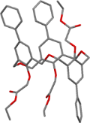
Figure 8: X-ray crystal structure of 16 (IUCr ID PA1110) [32].

Scheme 10: Lower rim N,N-diethylamide 17a: (i) N,N-Diethylchloroacetamide, NaH, t-BuOK or alkali metal carbona...

Scheme 11: Capping the lower rim: (i) N,N-Diethylchloroacetamide, NaH, THF; (ii) NaOH, H2O/1,4-dioxane; (iii) ...

Figure 9: X-ray crystal structure of 18 (CCDC ID 142599) [33].

Scheme 12: Extending the lower rim: (i) Glycine methyl ester, HOBt, dicyclohexycarbodiimide (DCC), CH2Cl2; (ii...

Scheme 13: Synthesis of N-hydroxypyrazinone derivative 23: (i) 1-[3-(Dimethylamino)propyl]-3-ethylcarbodiimide...

Scheme 14: Synthesis of 24: (i) 1-Adamantyl bromomethyl ketone, NaH, THF [39].

Scheme 15: Synthesis of 25 and 26: (i) (Diphenylphosphino)methyl tosylate, NaH, toluene; (ii) phenylsilane, to...

Figure 10: X-ray crystal structure of 27 in the partial-cone conformer (CCDC ID SUP 90399) [41].

Scheme 16: Synthesis of strapped oxacalix[3]arene derivatives 28 and 29: (i) N,N’-Bis(chloroacetyl)-1,2-ethyle...

Figure 11: A chiral oxacalix[3]arene [45].

Figure 12: X-ray crystal structure of asymmetric oxacalix[3]arene 30 incorporating t-Bu, iPr and Et groups (CC...

Scheme 17: Reactions of an oxacalix[3]arene incorporating an upper-rim Br atom with (i) Pd(OAc)2, PPh3, HCO2H,...

Scheme 18: Synthesis of acid 39: (i) NaOH, EtOH/H2O, HCl (aq) [47].

Figure 13: Two forms of dimeric oxacalix[3]arene 40 [47].

Scheme 19: Capping the upper rim: (i) t-BuLi, THF, −78 °C; (ii) NaBH4, THF/EtOH; (iii) 1,3,5-tris(bromomethyl)...

Figure 14: Oxacalix[3]arene capsules 46 and 47 formed through coordination chemistry [52,53].

Figure 15: X-ray crystal structure of the 3b-vanadyl complex (CCDC ID 240185) [57].

Scheme 20: Effect of Ti(IV)/SiO2 on 3a: (i) Ti(OiPr)4, toluene; (ii) triphenylsilanol, toluene; (iii) partiall...

Figure 16: X-ray crystal structures of oxacalix[3]arene complexes with rhenium: 3b∙Re(CO)3 (CCDC ID 620981, le...

Figure 17: X-ray crystal structure of the La2·3a2 complex (CSD ID TIXXUT) [60].

Figure 18: X-ray crystal structures of [3a∙UO2]− with a cavity-bound cation (CCDC ID 135575, left) and without...
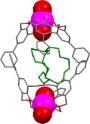
Figure 19: X-ray crystal structure of a supramolecule comprising two [3g·UO2]− complexes that encapsulate a di...

Figure 20: X-ray crystal structure of oxacalix[3]arene 49 capable of chiral selectivity (CSD ID HIGMUF) [65].
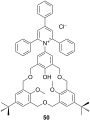
Figure 21: The structure of derivative 50 incorporating a Reichardt dye [66].

Figure 22: Phosphorylated oxacalix[3]arene complexes with transition metals: (Left to right) 26∙Au, 26∙Mo(CO)3...
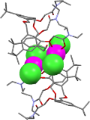
Figure 23: X-ray crystal structure of [17a·HgCl2]2 (CCDC ID 168653) [69].

Figure 24: X-ray crystal structures of 3f with C60 (CCDC ID 182801, left) [76] and a 1,4-bis(9-fluorenyl) C60 deri...

Figure 25: X-Ray crystal structure of 3i and 6a encapsulating C60 (CCDC ID 102473 and 166077) [23,79].
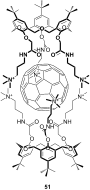
Figure 26: A C60 complexing cationic oxacalix[3]arene 51 [81].

Figure 27: An oxacalix[3]arene-C60 self-associating system 53 [87].

Scheme 21: Synthesis of fluorescent pyrene derivative 55: (i) Propargyl bromide, acetone; (ii) CuI, 1-azidomet...

Scheme 22: Synthesis of responsive rhodamine derivative 57: (i) DCC, CH2Cl2 [91].

Scheme 23: Synthesis of nitrobenzyl derivative 58: (i) 1-Bromo-4-nitrobenzyl acetate, K2CO3, refluxing acetone...

Figure 28: X-ray crystal structure of [Na2∙17a](PF6)2 (CCDC ID 116656) [97].
Binding of group 15 and group 16 oxides by a concave host containing an isophthalamide unit
- Jens Eckelmann,
- Vittorio Saggiomo,
- Svenja Fischmann and
- Ulrich Lüning
Beilstein J. Org. Chem. 2012, 8, 11–17, doi:10.3762/bjoc.8.2
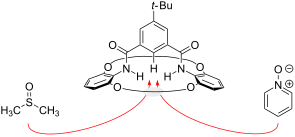
- Jens Eckelmann Vittorio Saggiomo Svenja Fischmann Ulrich Luning Otto-Diels-Institut für Organische Chemie, Christian-Albrechts-Universität zu Kiel, Olshausenstr. 40, D-24098 Kiel, Germany 10.3762/bjoc.8.2 Abstract A bi-macrocycle with an incorporated isophthalamide substructure was synthesized by
- ; macrocycle; molecular recognition; Introduction In the last decade, isophthalamide derivatives have become attractive neutral hosts as anion receptors [1][2]. Some of these derivatives show a high selectivity for one anion over others [3]. Isophthalamide units have also been incorporated into macrocycles [4
- ][14][15]. The preorganization and the exact shape of the “lampshade” determine the selectivity and the difference in binding of various guests. Results and Discussion Synthesis Besides the desired bi-macrocycle 1, isophthalamide 2 was synthesized in order to compare the binding properties of a non

Graphical Abstract

Figure 1: Bi-macrocyclic concave host 1 and its non-macrocyclic model 2.

Scheme 1: Synthetic scheme for the syntheses of concave host 1 and non-macrocyclic derivative 2. a) Et3N, THF...

Figure 2: Expansion of a part of the 1H NMR spectra (200 MHz, 298 K) of pure 1 and 2 in CD2Cl2 (bottom) and a...

Figure 3: Normalized 1H NMR CIS (see text) for concave host 1 with different anionic and neutral guests. The ...

Figure 4: Normalized 1H NMR CIS (see text) for concave host 2 with different anionic and neutral guests. The ...
The allylic chalcogen effect in olefin metathesis
- Yuya A. Lin and
- Benjamin G. Davis
Beilstein J. Org. Chem. 2010, 6, 1219–1228, doi:10.3762/bjoc.6.140
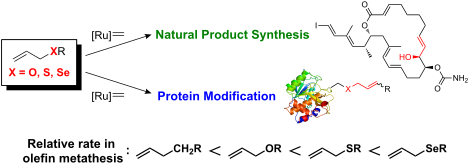
- . Pertinent examples have also emerged during target syntheses. In the synthesis of palmerolide A analogues by Nicolaou and co-workers, compounds 8a and 9a were found to undergo smooth macrocyclization via RCM, whereas 10a, lacking the allylic hydroxy group, failed to form the desired macrocycle under the
- . Plausible explanation for chemoselective CM of diene 16 [25]. a) Efficient cross-metathesis of S-allylcysteine [17]. b) Comparison of relative reactivity between allylic heteroatom derivatives. a) Macrocycle synthesis by carbonyl-relayed RCM. b) Putative complex in carbonyl-relayed RCM [33]. a) Sulfur

Graphical Abstract

Scheme 1: a) Variation of olefin metathesis: CM = cross-metathesis; RCM = ring-closing metathesis; ROM = ring...

Figure 1: Allylic hydroxy activation in RCM [19].

Figure 2: Possible complexes generated through preassociation of allylic alcohol with ruthenium.

Scheme 2: The influence of different OR groups on ring size-selectivity [21].

Scheme 3: Synthesis of palmerolide A precursors by Nicolaou et al. illustrates enhancement by an allylic hydr...

Scheme 4: a) Acceleration of ring-closing enyne metathesis by the allylic hydroxy group [23]. b) Proposed mode of...

Scheme 5: a) Effect of the hydroxy group on the rate and steroselectivity of ROCM [24]. b) Proposed H-bonded ruth...

Scheme 6: Plausible explanation for chemoselective CM of diene 16 [25].

Scheme 7: a) Efficient cross-metathesis of S-allylcysteine [17]. b) Comparison of relative reactivity between all...

Scheme 8: a) Macrocycle synthesis by carbonyl-relayed RCM. b) Putative complex in carbonyl-relayed RCM [33].

Scheme 9: a) Sulfur assisted cross-metathesis [17]. b) Putative unproductive chelates for larger ring sizes gener...

Scheme 10: Functionalization of Mukaiyama aldol product by CM in aqueous media [37].

Scheme 11: Comparison of reactivity between allyl sulfides and allyl selenides in aqueous cross-metathesis [38].

Scheme 12: Ring-closing metathesis on a protein [18].

Scheme 13: Expanded substrate scope of cross-metathesis on proteins [38].
Molecular recognition of organic ammonium ions in solution using synthetic receptors
- Andreas Späth and
- Burkhard König
Beilstein J. Org. Chem. 2010, 6, No. 32, doi:10.3762/bjoc.6.32
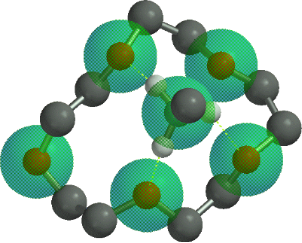
- , or azacrown ethers 8, with a certain number of nitrogen atoms instead of oxygen in the macrocycle. A combination of both, triaza crown ether, with alternating nitrogen and oxygen atoms in the ring (8b), can be employed to enhance the selectivity for ammonium ions in comparison to potassium ions. It
- salts with binding affinities Kass up to 4.8 × 10⁵ M−1 in CH2Cl2 with 0.25% CH3OH. The bpy-crown macrocycle with n = 1, reflecting the pseudo 18-crown-6 type structure, exhibited the best properties and the highest enantioselectivity towards the S-enantiomer of phenylglycine methyl ester hydrochloride
- for the potassium salt of S-Phe. The cavity of the macrocycle plays an important role in recognition: A dibenzo substitution on the diazacrown ether may close the cavity due to steric hindrance of the arene units on the ring and the resulting π–π-interaction between the two aromatic moieties on the

Graphical Abstract

Figure 1: Biologically important amines and quaternary ammonium salts: histamine (1), dopamine (2) and acetyl...

Figure 2: Crown ether 18-crown-6.

Figure 3: Conformations of 18-crown-6 (4) in solvents of different polarity.

Figure 4: Binding topologies of the ammonium ion depending on the crown ring size.
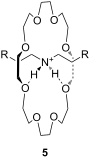
Figure 5: A “pseudorotaxane” structure consisting of 24-crown-8 and a secondary ammonium ion (5); R = Ph.

Figure 6: Typical examples of azacrown ethers, cryptands and related aza macrocycles.

Figure 7: Binding of ammonium to azacrown ethers and cryptands [111-113].

Figure 8: A 19-crown-6-ether with decalino blocking groups (11) and a thiazole-dibenzo-18-crown-6-ether (12).

Figure 9: 1,3-Bis(6-oxopyridazin-1-yl)propane derivatives 13 and 14 by Campayo et al.

Figure 10: Fluorescent azacrown-PET-sensors based on coumarin.

Figure 11: Two different pyridino-cryptands (17 and 18) compared to a pyridino-crown (19); chiral ammonium ion...

Figure 12: Pyridino-18-crown-6 ligand (21), a similar acridino-18-crown-6 ligand (22) and a structurally relat...

Figure 13: Ciral pyridine-azacrown ether receptors 24.

Figure 14: Chiral 15-crown-5 receptors 26 and an analogue 18-crown-6 ligand 27 derived from amino alcohols.

Figure 15: C2-symmetric chiral 18-crown-6 amino alcohol derivatives 28 and related macrocycles.

Figure 16: Macrocycles with diamide-diester groups (30).

Figure 17: C2-symmetric chiral aza-18-crown-6 ethers (31) with phenethylamine residues.

Figure 18: Chiral C-pivot p-methoxy-phenoxy-lariat ethers.

Figure 19: Chiral lariat crown ether 34.

Figure 20: Sucrose-based chiral crown ether receptors 36.
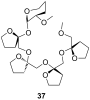
Figure 21: Permethylated fructooligosaccharide 37 showing induced-fit chiral recognition.

Figure 22: Biphenanthryl-18-crown-6 derivative 38.

Figure 23: Chiral lariat crown ethers derived from binol by Fuji et al.

Figure 24: Chiral phenolic crown ether 41 with “aryl chiral barriers” and guest amines.
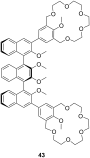
Figure 25: Chiral bis-crown receptor 43 with a meso-ternaphthalene backbone.

Figure 26: Chromogenic pH-dependent bis-crown chemosensor 44 for diamines.

Figure 27: Triamine guests for binding to receptor 44.

Figure 28: Chiral bis-crown phenolphthalein chemosensors 46.

Figure 29: Crown ether amino acid 47.

Figure 30: Luminescent receptor 48 for bis-alkylammonium guests.

Figure 31: Luminescent CEAA (49a), a bis-CEAA receptor for amino acids (49b) and the structure of lysine bindi...

Figure 32: Luminescent CEAA tripeptide for binding small peptides.

Figure 33: Bis crown ether 51a self assembles co-operatively with C60-ammonium ion 51b.

Figure 34: Triptycene-based macrotricyclic dibenzo-[24]-crown-8 ether host 52 and guests.

Figure 35: Copper imido diacetic acid azacrown receptor 53a and the suggested His-Lys binding motif; a copper ...

Figure 36: Urea (54) and thiourea (55) benzo crown receptor for transport and extraction of amino acids.

Figure 37: Crown pyryliums ion receptors 56 for amino acids.

Figure 38: Ditopic sulfonamide bridged crown ether receptor 57.

Figure 39: Luminescent peptide receptor 58.

Figure 40: Luminescent receptor 59 for the detection of D-glucosamine hydrochloride in water/ethanol and lumin...

Figure 41: Guanidinium azacrown receptor 61 for simple amino acids and ditopic receptor 62 with crown ether an...

Figure 42: Chiral bicyclic guanidinium azacrown receptor 63 and similar receptor 64 for the enantioselective t...

Figure 43: Receptors for zwitterionic species based on luminescent CEAAs.

Figure 44: 1,10-Azacrown ethers with sugar podand arms and the anticancer agent busulfan.

Figure 45: Benzo-18-crown-6 modified β-cyclodextrin 69 and β-cyclodextrin functionalized with diaza-18-crown-6...

Figure 46: Receptors for colorimetric detection of primary and secondary ammonium ions.

Figure 47: Porphyrine-crown-receptors 72.

Figure 48: Porphyrin-crown ether conjugate 73 and fullerene-ammonium ion guest 74.

Figure 49: Calix[4]arene (75a), homooxocalix[4]arene (75b) and resorcin[4]arene (75c) compared (R = H, alkyl c...

Figure 50: Calix[4]arene and ammonium ion guest (R = H, alkyl, OAcyl etc.), possible binding sites; A: co-ordi...

Figure 51: Typical guests for studies with calixarenes and related molecules.
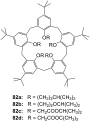
Figure 52: Lower rim modified p-tert-butylcalix[5]arenes 82.

Figure 53: The first example of a water soluble calixarene.

Figure 54: Sulfonated water soluble calix[n]arenes that bind ammonium ions.
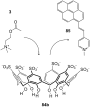
Figure 55: Displacement assay for acetylcholine (3) with a sulfonato-calix[6]arene (84b).

Figure 56: Amino acid inclusion in p-sulfonatocalix[4]arene (84a).

Figure 57: Calixarene receptor family 86 with upper and lower rim functionalization.

Figure 58: Calix[6]arenes 87 with one carboxylic acid functionality.
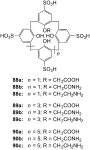
Figure 59: Sulfonated calix[n]arenes with mono-substitution at the lower rim systematically studied on their r...

Figure 60: Cyclotetrachromotropylene host (91) and its binding to lysine (81c).

Figure 61: Calixarenes 92 and 93 with phosphonic acids groups.

Figure 62: Calix[4]arene tetraphosphonic acid (94a) and a double bridged analogue (94b).
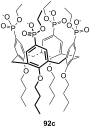
Figure 63: Calix[4]arene tetraphosphonic acid ester (92c) for surface recognition experiments.

Figure 64: Calixarene receptors 95 with α-aminophosphonate groups.

Figure 65: A bridged homocalix[3]arene 95 and a distally bridged homocalix[4]crown 96.

Figure 66: Homocalix[3]arene ammonium ion receptor 97a and the Reichardt’s dye (97b) for colorimetric assays.

Figure 67: Chromogenic diazo-bridged calix[4]arene 98.

Figure 68: Calixarene receptor 99 by Huang et al.
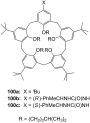
Figure 69: Calixarenes 100 reported by Parisi et al.

Figure 70: Guest molecules for inclusion in calixarenes 100: DAP × 2 HCl (101a), APA (101b) and Lys-OMe × 2 HC...

Figure 71: Different N-linked peptido-calixarenes open and with glycol chain bridges.

Figure 72: (S)-1,1′-Bi-2-naphthol calixarene derivative 104 published by Kubo et al.

Figure 73: A chiral ammonium-ion receptor 105 based on the calix[4]arene skeleton.

Figure 74: R-/S-phenylalaninol functionalized calix[6]arenes 106a and 106b.

Figure 75: Capped homocalix[3]arene ammonium ion receptor 107.

Figure 76: Two C3 symmetric capped calix[6]arenes 108 and 109.

Figure 77: Phosphorous-containing rigidified calix[6]arene 110.

Figure 78: Calix[6]azacryptand 111.

Figure 79: Further substituted calix[6]azacryptands 112.

Figure 80: Resorcin[4]arene (75c) and the cavitands (113).

Figure 81: Tetrasulfonatomethylcalix[4]resorcinarene (114).
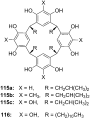
Figure 82: Resorcin[4]arenes (115a/b) and pyrogallo[4]arenes (115c, 116).
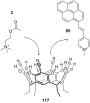
Figure 83: Displacement assay for acetylcholine (3) with tetracyanoresorcin[4]arene (117).

Figure 84: Tetramethoxy resorcinarene mono-crown-5 (118).

Figure 85: Components of a resorcinarene based displacement assay for ammonium ions.

Figure 86: Chiral basket resorcin[4]arenas 121.

Figure 87: Resorcinarenes with deeper cavitand structure (122).

Figure 88: Resorcinarene with partially open deeper cavitand structure (123).
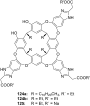
Figure 89: Water-stabilized deep cavitands with partially structure (124, 125).
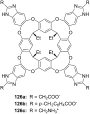
Figure 90: Charged cavitands 126 for tetralkylammonium ions.

Figure 91: Ditopic calix[4]arene receptor 127 capped with glycol chains.

Figure 92: A calix[5]arene dimer for diammonium salt recognition.

Figure 93: Calixarene parts 92c and 129 for the formation molecular capsules.
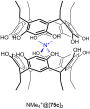
Figure 94: Encapsulation of a quaternary ammonium cation by two resorcin[4]arene molecules (NMe4+@[75c]2 × Cl−...

Figure 95: Encapsulation of a quaternary ammonium cation by six resorcin[4]arene molecules (NMe3D+@[130]6 × Cl−...

Figure 96: Structure and schematic of cucurbit[6]uril (CB[6], 131a).
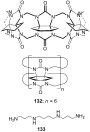
Figure 97: Cyclohexanocucurbit[6]uril (CB′[6], 132) and the guest molecule spermine (133).

Figure 98: α,α,δ,δ-Tetramethylcucurbit[6]uril (134).

Figure 99: Structure of the cucurbituril-phthalhydrazide analogue 135.

Figure 100: Organic cavities for the displacement assay for amine differentiation.

Figure 101: Displacement assay methodology for diammonium- and related guests involving cucurbiturils and some ...

Figure 102: Nor-seco-Cucurbituril (±)-bis-ns-CB[6] (140) and guest molecules.

Figure 103: The cucurbit[6]uril based complexes 141 for chiral discrimination.
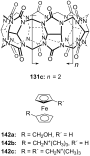
Figure 104: Cucurbit[7]uril (131c) and its ferrocene guests (142) opposed.

Figure 105: Cucurbit[7]uril (131c) guest inclusion and representative guests.

Figure 106: Cucurbit[7]uril (131c) binding to succinylcholine (145) and different bis-ammonium and bis-phosphon...

Figure 107: Paraquat-cucurbit[8]uril complex 149.
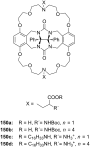
Figure 108: Gluconuril-based ammonium receptors 150.
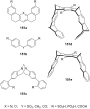
Figure 109: Examples of clefts (151a), tweezers (151b, 151c, 151d) and clips (151e).

Figure 110: Kemp’s triacid (152a), on example of Rebek’s receptors (152b) and guests.

Figure 111: Amino acid receptor (154) by Rebek et al.

Figure 112: Hexagonal lattice designed hosts by Bell et al.

Figure 113: Bell’s amidinium receptor (156) and the amidinium ion (157).
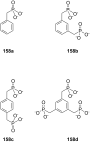
Figure 114: Aromatic phosphonic acids.

Figure 115: Xylene phosphonates 159 and 160a/b for recognition of amines and amino alcohols.
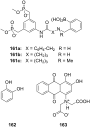
Figure 116: Bisphosphonate recognition motif 161 for a colorimetric assay with alizarin complexone (163) for ca...

Figure 117: Bisphosphonate/phosphate clip 164 and bisphosphonate cleft 165.

Figure 118: N-Methylpyrazine 166a, N-methylnicotinamide iodide (166b) and NAD+ (166c).

Figure 119: Bisphosphate cavitands.
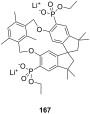
Figure 120: Bisphosphonate 167 of Schrader and Finocchiaro.
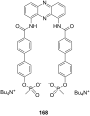
Figure 121: Tweezer 168 for noradrenaline (80b).

Figure 122: Different tripods and heparin (170).
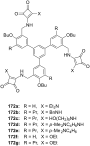
Figure 123: Squaramide based receptors 172.
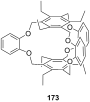
Figure 124: Cage like NH4+ receptor 173 of Kim et al.

Figure 125: Ammonium receptors 174 of Chin et al.

Figure 126: 2-Oxazolin-based ammonium receptors 175a–d and 176 by Ahn et al.

Figure 127: Racemic guest molecules 177.

Figure 128: Tripods based on a imidazole containing macrocycle (178) and the guest molecules employed in the st...

Figure 129: Ammonium ion receptor 180.

Figure 130: Tetraoxa[3.3.3.3]paracyclophanes 181 and a cyclophanic tetraester (182).

Figure 131: Peptidic bridged paraquat-cyclophane.
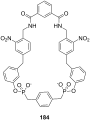
Figure 132: Shape-selective noradrenaline host.

Figure 133: Receptor 185 for binding of noradrenaline on surface layers from Schrader et al.

Figure 134: Tetraphosphonate receptor for binding of noradrenaline.

Figure 135: Tetraphosphonate 187 of Schrader and Finocchiaro.

Figure 136: Zinc-Porphyrin ammonium-ion receptors 188 and 189 of Mizutani et al.
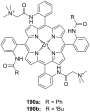
Figure 137: Zinc porphyrin receptor 190.

Figure 138: Zinc porphyrin receptors 191 capable of amino acid binding.

Figure 139: Zinc-porphyrins with amino acid side chains for stereoinduction.

Figure 140: Bis-zinc-bis-porphyrin based on Tröger’s base 193.

Figure 141: BINAP-zinc-prophyrin derivative 194 and it’s guests.

Figure 142: Bisaryl-linked-zinc-porphyrin receptors.
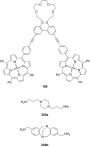
Figure 143: Bis-zinc-porphyrin 199 for diamine recognition and guests.

Figure 144: Bis-zinc-porphyrin crown ether 201.

Figure 145: Bis-zinc-porphyrin 202 for stereodiscrimination (L = large substituent; S = small substituent).

Figure 146: Bis-zinc-porphyrin[3]rotaxane and its copper complex and guests.

Figure 147: Dien-bipyridyl ligand 206 for co-ordination of two metal atoms.

Figure 148: The ligand and corresponding tetradentate co-complex 207 serving as enantioselective receptor for a...

Figure 149: Bis(oxazoline)–copper(II) complex 208 for the recognition of amino acids in aqueous solution.

Figure 150: Zinc-salen-complexes 209 for the recognition tertiary amines.

Figure 151: Bis(oxazoline)–copper(II) 211 for the recognition of amino acids in aqueous solution.

Figure 152: Zn(II)-complex of a C2 terpyridine crown ether.

Figure 153: Displacement assay and receptor for aspartate over glutamate.

Figure 154: Chiral complex 214 for a colorimetric displacement assay for amino acids.

Figure 155: Metal complex receptor 215 with tripeptide side arms.

Figure 156: A sandwich complex 216 and its displaceable dye 217.

Figure 157: Lanthanide complexes 218–220 for amino acid recognition.
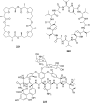
Figure 158: Nonactin (221), valinomycin (222) and vancomycin (223).

Figure 159: Monesin (224a) and a chiral analogue for enantiodiscrimination of ammonium guests (224b).

Figure 160: Chiral podands (226) compared to pentaglyme-dimethylether (225) and 18-crown-6 (4).

Figure 161: Lasalocid A (228).

Figure 162: Lasalocid derivatives (230) of Sessler et al.

Figure 163: The Coporphyrin I tetraanion (231).

Figure 164: Linear and cyclic peptides for ammonium ion recognition.

Figure 165: Cyclic and bicyclic depsipeptides for ammonium ion recognition.
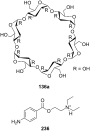
Figure 166: α-Cyclodextrin (136a) and novocaine (236).
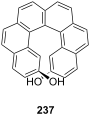
Figure 167: Helical diol receptor 237 by Reetz and Sostmann.

Figure 168: Ammonium binding spherand by Cram et al. (238a) and the cyclic[6]metaphenylacetylene 238b in compar...

Figure 169: Receptor for peptide backbone and ammonium binding (239).

Figure 170: Anion sensor principle with 3-hydroxy-2-naphthanilide of Jiang et al.

Figure 171: 7-bromo-3-hydroxy-N-(2-hydroxyphenyl)naphthalene 2-carboxamide (241) and its amine binding.

Figure 172: Naturally occurring catechins with affinity to quaternary ammonium ions.

Figure 173: Spiropyran (244) and merocyanine form (244a) of the amino acid receptors of Fuji et al.

Figure 174: Coumarin aldehyde (245) and its iminium species with amino acid bound (245a) by Glass et al.
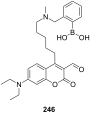
Figure 175: Coumarin aldehyde appended with boronic acid.

Figure 176: Quinolone aldehyde dimers by Glass et al.

Figure 177: Chromogenic ammonium ion receptors with trifluoroacetophenone recognition motifs.

Figure 178: Chromogenic ammonium ion receptor with trifluoroacetophenone recognition motif bound on different m...
(Pseudo)amide-linked oligosaccharide mimetics: molecular recognition and supramolecular properties
- José L. Jiménez Blanco,
- Fernando Ortega-Caballero,
- Carmen Ortiz Mellet and
- José M. García Fernández
Beilstein J. Org. Chem. 2010, 6, No. 20, doi:10.3762/bjoc.6.20
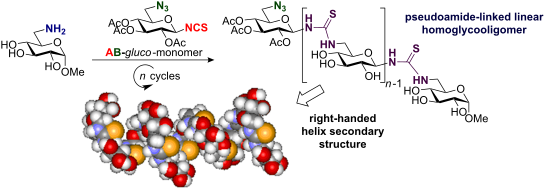
- alternating α,α-trehalose motifs and semi-rigid thiourea segments (cyclotrehalans, CTs) [77][78][79][88][89]. Molecular diversity was introduced at the inter-saccharide connectors by exploiting the chemistry of macrocyclic carbodiimides [77][78][79][88][89] as well as by varying the size of the macrocycle

Graphical Abstract

Figure 1: Schematic representation of sugar aminoacids (SAAs) and (pseudo)amide oligosaccharide mimetics.

Figure 2: Natural SAAs structures and natural nucleosidic antibiotics.

Scheme 1: Synthetic route to the target amide-linked sialooligomers. (a) Fmoc-Cl, NaHCO3, H2O, dioxane, 0 °C....

Figure 3: The general structure of glycoamino acids and their corresponding oligomers.

Figure 4: Conformational analysis of the β(1→2)-amide-linked glucooligomer 9.

Figure 5: Short oligomeric chains of C-glycosyl D-arabino THF amino acid oligomers.

Figure 6: (A) Stereoview of the minimized structure of compound 16 (produced by a 500 ps simulation) that mos...

Figure 7: Structures of linear oxetane-β- and δ-SAA homo-oligomers 19–20.

Figure 8: 10-Membered ring H-bonds in compound 21 consistent with NMR and modelling investigations.

Figure 9: General structure of carbopeptoid-oligonucleotide conjugates.

Figure 10: Protected derivatives of 2,6-diamino-2,6-dideoxy-β-D-glucopyranosyl carboxylic acid 22 and 23.

Figure 11: Cyclic homo-oligomers containing glucopyranoid-SAAs.

Scheme 2: Strategy for solid-phase synthesis of cyclic trimers and tetramers containing pyranoid δ-SAAs.

Figure 12: Cyclic tetramers of L-rhamno- and D-gulo-configured oxetane-SAAs.

Figure 13: Aminoglycosidic antibiotics of the glycocinnamoylspermidine family.

Scheme 3: Synthesis of (thio)trehazoline, via triflate, from β-hydroxy(thio)urea.

Figure 14: Approaches to access pseudoamide-type oligosaccharide mimics.

Figure 15: Calystegine B2 analogues 38 and 39 with urea-linked disaccharide structure.

Figure 16: Rotameric equilibrium shift of 40 by formation of a bidentate hydrogen bond.

Figure 17: Nucleotide analogues with thiourea and S-methylisothiouronium linkers.

Scheme 4: Retrosynthetic approach to synthesize thiourea-linked glycooligomers.

Figure 18: Rotameric equilibria for β-(1→6)-thiourea-linked glucodimer 41.

Figure 19: Schematic representation of (a) cyclodextrin (CDs) and (b) cyclotrehalan (CTs) family members.

Scheme 5: Synthesis of guanidine-linked pseudodisaccharides via carbodiimide.

Figure 20: β(1→6)-Guanidine-linked pseudodi- and pseudotrisaccharides 47 and 48.

Scheme 6: Synthesis of N-benzylguanidine-linked CT2 50.

Figure 21: Structure of RNG and DNG.

Figure 22: Preparation of Fmoc-guanidinium derivatives.

Figure 23: Structures of the homo-oligomeric RNG derivatives 51–55.
Figure 24: Phosphoramidite building block 56.

Figure 25: Structures of DNGs 57–65.
Figure 26: Structure of the phosphoramidite building block 66.



