


Search results
Search for "microscopy" in Full Text gives 317 result(s) in Beilstein Journal of Organic Chemistry. Showing first 200.
Computational methods in drug discovery
Beilstein J. Org. Chem. 2016, 12, 2694–2718, doi:10.3762/bjoc.12.267
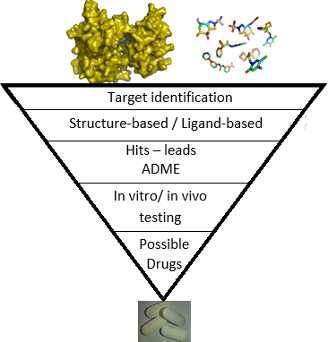
- , cryo-electron microscopy (cryoEM) has experienced a ‘resolution revolution’, leading to an increasing number of near-atomic resolution structures [18]. Experimental methods such as X-ray crystallography and NMR spectroscopy are associated with cost and time constraints, and are also limited by



Synthesis of three-dimensional porous hyper-crosslinked polymers via thiol–yne reaction
Beilstein J. Org. Chem. 2016, 12, 2570–2576, doi:10.3762/bjoc.12.252
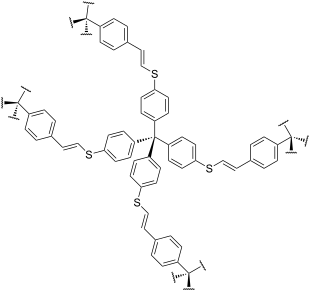
- crosslinking reaction conditions. The obtained HCPs showed BET surface areas up to 650 m²/g and are insoluble in common organic solvents. The characterisation of the networks was performed using IR spectroscopy, elemental analysis, thermogravimetric analysis (TGA), scanning electron microscopy (SEM), powder X



Effects of solvent additive on “s-shaped” curves in solution-processed small molecule solar cells
Beilstein J. Org. Chem. 2016, 12, 2543–2555, doi:10.3762/bjoc.12.249
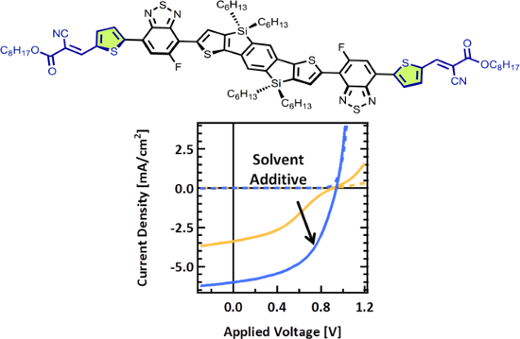
- -on” orientation adopted by p-SIDT(FBTTh2)2 [40], demonstrating how sensitive molecular self-assembly can be to relatively small molecular design choices. However, consistent with previous reports of related molecules, DIO does seem to improve crystallinity. Atomic force microscopy (AFM) topography


A self-assembled cyclodextrin nanocarrier for photoreactive squaraine
Beilstein J. Org. Chem. 2016, 12, 2535–2542, doi:10.3762/bjoc.12.248
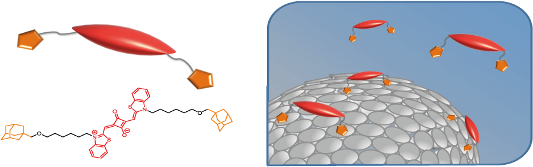
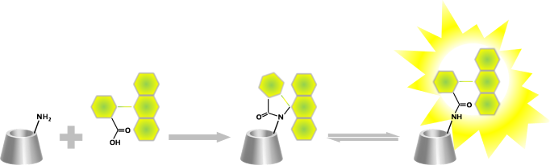
- cyclodextrin vesicle surface. The supramolecular immobilization was monitored by using fluorescence spectroscopy and microscopy and the photochemistry of the squaraine was investigated by using absorption spectroscopy. Keywords: cyclodextrin; host–guest chemistry; photodynamic therapy; self-assembly
- amphiphilic cyclodextrins were formed by electroformation [35]. The obtained vesicles have a size of several micrometers and are thus directly visible by fluorescence microscopy. AdSq were added to a solution of the GUVs and immobilization of the molecules was examined with confocal fluorescence spectroscopy
- . The images taken show GUVs with a red luminescent membrane due to the squaraines bound to the GUV surface (Figure 4). Thus, fluorescence microscopy provided direct evidence for the immobilization of AdSq on the CDV. After the immobilization of AdSq on the surface of CDV was demonstrated, we




Inhibition of peptide aggregation by means of enzymatic phosphorylation
Beilstein J. Org. Chem. 2016, 12, 2462–2470, doi:10.3762/bjoc.12.240
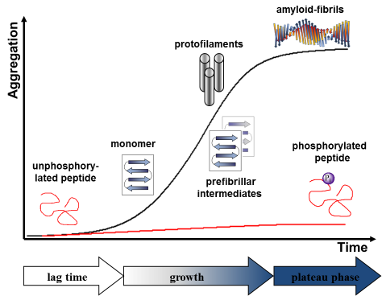
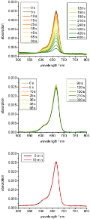
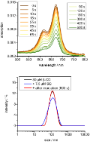
- and normalized to the starting value at t = 5 min of one. The shown plots represent an average of three independent measurements. Transmission electron microscopy Peptides, prepared as for CD spectroscopy measurements, were examined after 24 hours. Aliquots (6 µL) of the corresponding solution were


High performance p-type molecular electron donors for OPV applications via alkylthiophene catenation chromophore extension
Beilstein J. Org. Chem. 2016, 12, 2298–2314, doi:10.3762/bjoc.12.223
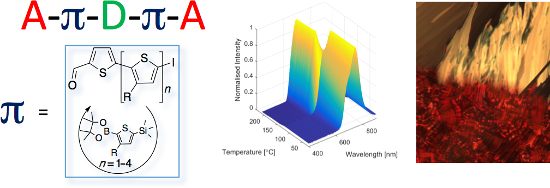
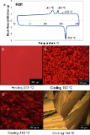
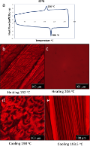
- optical microscopy (POM). POM was utilized in conjunction with a heating platform to directly observe these phase transitions and elucidate thin film structure. On heating at 10 °C·min−1 BQR shows a single phase transition to the isotropic melt at 202 °C, while on cooling we have identified an initial




Practical synthetic strategies towards lipophilic 6-iodotetrahydroquinolines and -dihydroquinolines
Beilstein J. Org. Chem. 2016, 12, 1851–1862, doi:10.3762/bjoc.12.174

- range from the classic Skraup–Doebner–von Miller syntheses, to catalytic and asymmetric methods [2][3][4]. We required a straightforward synthesis of THQs and DHQs for the synthesis of a library of biocompatible fluorophores with the potential to be used in fluorescence microscopy applications. The


Effect of the π-conjugation length on the properties and photovoltaic performance of A–π–D–π–A type oligothiophenes with a 4,8-bis(thienyl)benzo[1,2-b:4,5-b′]dithiophene core
Beilstein J. Org. Chem. 2016, 12, 1788–1797, doi:10.3762/bjoc.12.169
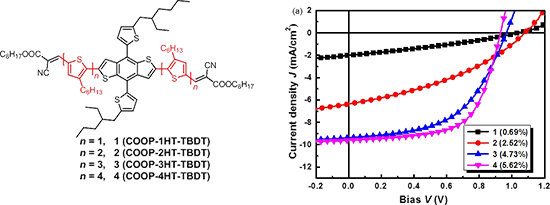
- best performance for cells based on COOP-capped BDT derivatives [21][22][23][35][36][37]. Surface morphology of the blended films The surface morphology of the COOP-nHT-TBDT:PC61BM films was scrutinized with atomic force microscopy (AFM). Figure 4 depicts the topological images of the blended films



Synthesis and characterization of benzodithiophene and benzotriazole-based polymers for photovoltaic applications
Beilstein J. Org. Chem. 2016, 12, 1629–1637, doi:10.3762/bjoc.12.160
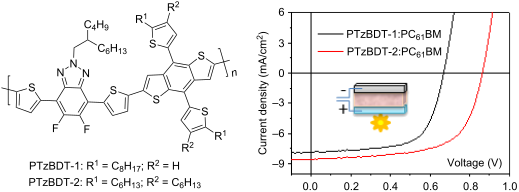
- force microscopy (AFM) images, recorded directly on tested devices, were taken with a Solver Pro (NT-934 MDT) scanning probe microscope in tapping mode. UV–visible absorption spectra of the pristine PTzBDT-1 and PTzBDT-2 (A) in chlorobenzene and chloroform, respectively and thin film processed from


Synthesis of a deuterated probe for the confocal Raman microscopy imaging of squalenoyl nanomedicines
Beilstein J. Org. Chem. 2016, 12, 1127–1135, doi:10.3762/bjoc.12.109

- temperature 37 °C) for about 3–5 minutes. Evaporation was continued till the weight of the contents decreased to 0.8–0.9 g. Then, the volume of the suspension in the flask was made-up to 1.0 g using either 5% dextrose solution or milli-Q water. The colloidal dispersions were stored at 4 °C. Raman microscopy
- measurements. Confocal Raman microscopy measurements were performed with a WITec alpha 300R+ (WITec GmbH, Ulm, Germany). The excitation source was a diode laser with a wavelength of 532 nm adjusted to a power of 40 mW before the objective. A confocal pinhole of 50 μm rejected signals from out-of-focus regions


Separation and identification of indene–C70 bisadduct isomers
Beilstein J. Org. Chem. 2016, 12, 903–911, doi:10.3762/bjoc.12.88
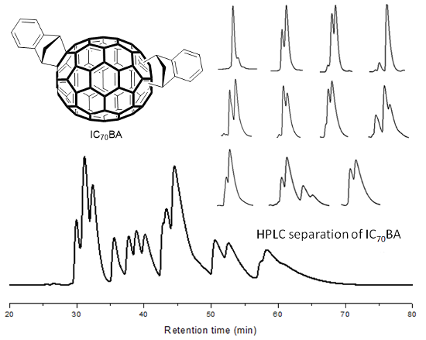
- continuous interpenetrating networks. Some indications on the degree of phase separation can be obtained in tapping mode atomic force microscopy (AFM) experiments (see Supporting Information File 1 for experimental details). Both height and phase AFM images suggested unfavourable phase separation for blend




Syntheses of dibenzo[d,d']benzo[2,1-b:3,4-b']difuran derivatives and their application to organic field-effect transistors
Beilstein J. Org. Chem. 2016, 12, 805–812, doi:10.3762/bjoc.12.79
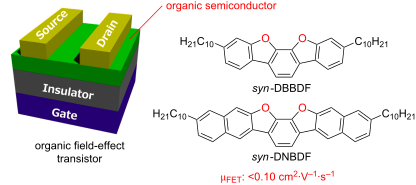
- anti-DNBDF derivatives [39]. Analysis of thin films The vapor-deposited thin films of syn-DBBDF 5 and syn-DNBDF 6 were analyzed by X-ray diffraction (XRD) and atomic force microscopy (AFM). Figure 6 shows the out-of-plane XRD pattern and an AFM image of the thin film of syn-DNBDF 6 on the HMDS-treated


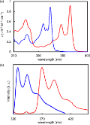


Creating molecular macrocycles for anion recognition
Beilstein J. Org. Chem. 2016, 12, 611–627, doi:10.3762/bjoc.12.60
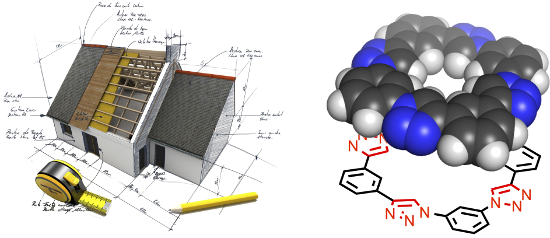
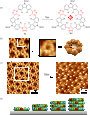
- microscopy (STM) imaging. Their shape persistence makes them ideal for the study of structure–property relationships to enable deep understanding of anion recognition phenomena. The identification of 1,2,3-triazoles as linkers, ligands and building blocks. The synthetic creation of macrocycles sets the scene


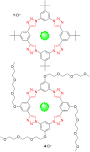




New synthetic strategies for xanthene-dye-appended cyclodextrins
Beilstein J. Org. Chem. 2016, 12, 537–548, doi:10.3762/bjoc.12.53
- representatives of this class are fluorescein and rhodamine (Figure 1), which have been applied as chemosensors [4] and have been widely exploited in various areas such as cell biology, microscopy, biotechnology, and ophthalmology due to their versatile photophysical properties. However, the chemical modification
- of this evergreen class of dyes is still an ongoing process [5][6]. Fluorescein is the most widely used fluorescent probe in biological applications and in particular for covalently labeling proteins. Rhodamine derivatives are robust dyes that find application as fluorophores for microscopy, in cell


Enabling technologies and green processes in cyclodextrin chemistry
Beilstein J. Org. Chem. 2016, 12, 278–294, doi:10.3762/bjoc.12.30
- entrance via confocal laser scanning microscopy [30]. Several types of dye moiety/CD derivatives have been suggested as "switch on" or "switch off" fluorescent chemical sensors. In these systems, the complexation with a guest molecule allows to enhance or decrease the fluorescence intensity. Two water



A journey in bioinspired supramolecular chemistry: from molecular tweezers to small molecules that target myotonic dystrophy
Beilstein J. Org. Chem. 2016, 12, 125–138, doi:10.3762/bjoc.12.14
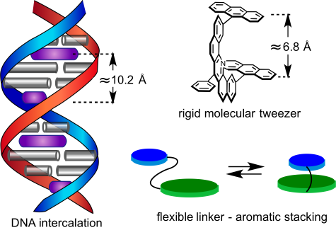
- ]. Thus, compound 28 (Figure 9b) was prepared and found to inhibit formation of the MBNL-CUGexp nuclear foci in DM1 model cells. Indeed, it was possible to follow live cells and watch the foci dissolve in real time using time-lapse confocal microscopy [77]. The logical next step was increasing affinity


Synthesis and photophysical characteristics of polyfluorene polyrotaxanes
Beilstein J. Org. Chem. 2015, 11, 2677–2688, doi:10.3762/bjoc.11.288
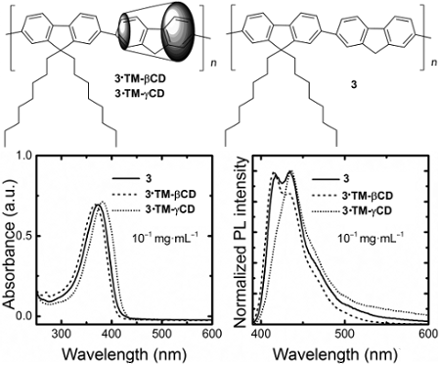
- phenomenon represents a significant contribution of TM-βCD high coverage. To further explore the effect of the TM-βCD and TM-γCD encapsulations, the surface topography of the copolymers was also investigated by atomic force microscopy (AFM) analysis. Some representative images obtained for the non-rotaxane 3


Inclusion complexes of 2-methoxyestradiol with dimethylated and permethylated β-cyclodextrins: models for cyclodextrin–steroid interaction
Beilstein J. Org. Chem. 2015, 11, 2616–2630, doi:10.3762/bjoc.11.281
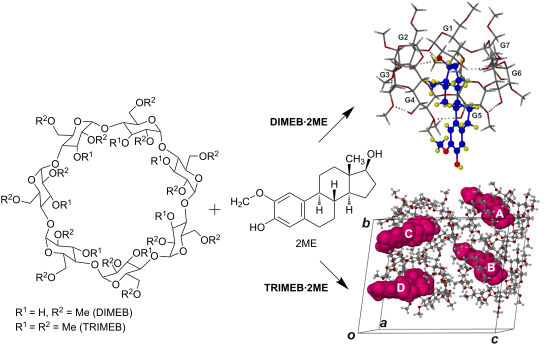
- either undergo significant shifts or be masked by broad bands of the hosts RAMEB and HPBCD in the spectra of the materials prepared by kneading. Preparation and preliminary characterization of crystalline inclusion complexes between 2ME and the hosts DIMEB and TRIMEB Hot stage microscopy (HSM) was





Smart molecules for imaging, sensing and health (SMITH)
Beilstein J. Org. Chem. 2015, 11, 2540–2548, doi:10.3762/bjoc.11.274
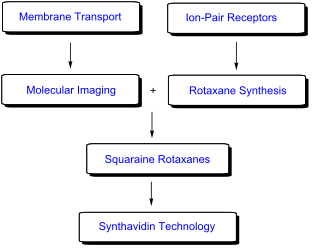
- microscopy and flow cytometry methods for preclinical research [13][14][15][16] (Figure 2). Many of these fluorescent probes are used as imaging reagents to quantify the level of cell death in a range of biomedical samples [17]. We also developed some nuclear isotopic labeled probes for in vivo imaging of
- conjugated with targeting ligands, and bioimaging studies have shown that they enable fluorescence microscopy and mesoscale imaging of diverse biomedical targets such as tumors, infection, bone, cell death, and brown adipose tissue [37][38] (Figure 3). Several of these molecular probes are commercially


Size-controlled and redox-responsive supramolecular nanoparticles
Beilstein J. Org. Chem. 2015, 11, 2388–2399, doi:10.3762/bjoc.11.260
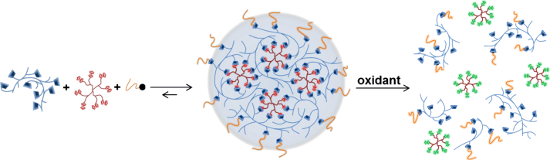
- ). Equipment Dynamic light scattering (DLS) Hydrodynamic diameters and zeta potentials were measured on a Zetasizer NanoZS (Malvern Instrument Ltd, Malvern, United Kingdom) at 20 °C, with a laser wavelength of 633 nm and a scattering angle of 173°. High resolution scanning electron microscopy (HR-SEM) All SEM


Preparation of Pickering emulsions through interfacial adsorption by soft cyclodextrin nanogels
Beilstein J. Org. Chem. 2015, 11, 2355–2364, doi:10.3762/bjoc.11.257
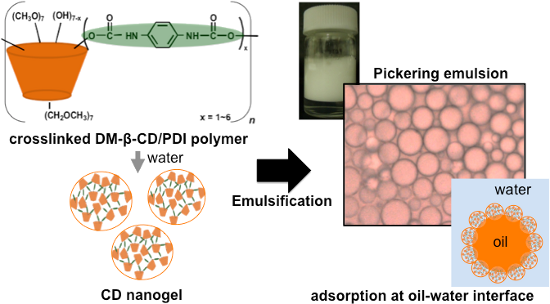
- particle size of the primary CD nanogel and the appearance of a new peak at a larger diameter (120 nm) may be due to the self-assembly of the primary CD nanogels at 0.1 wt % concentration in water. The scanning electron microscopy (SEM) measurement was carried out in order to observe the self-assembled
- nanogel structures. Prior to the observation, the CD nanogel was immediately frozen, using liquid nitrogen, and freeze-dried. The diameters of the spherical particles range from 50 to 100 nm (Figure 3B), confirming the formation of self-assembled CD nanogels in water. The transmission electron microscopy
- be noted that reducing a volume ratio of oil (Φoil = 0.3) does not result in a phase separation for either oil (data not shown). Optical microscopy observation confirmed the presence of dispersed oil droplets for both O/W emulsions as shown in Figure 4C (for n-dodecane) and 4D (for toluene). The


Urethane tetrathiafulvalene derivatives: synthesis, self-assembly and electrochemical properties
Beilstein J. Org. Chem. 2015, 11, 2343–2349, doi:10.3762/bjoc.11.255
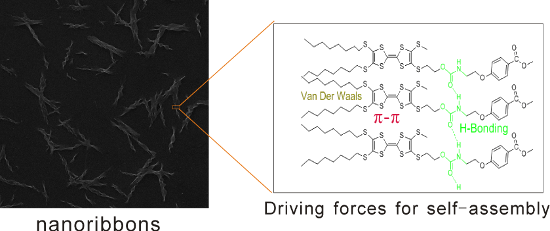
- microscopy (SEM) and X-ray diffraction (XRD), which showed that the self-assembly ability of T1 was better than that of T2. The results revealed that more urethane groups in a molecule did not necessarily instigate self-assembly. UV–vis and FTIR spectra were measured to explore noncovalent interactions. The






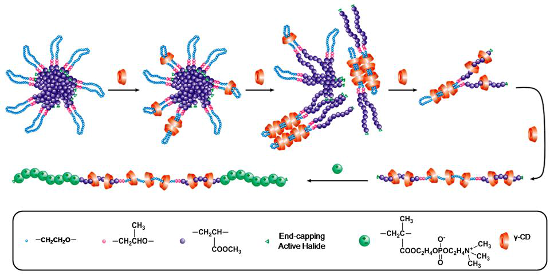
Self-assemblies of γ-CDs with pentablock copolymers PMA-PPO-PEO-PPO-PMA and endcapping via atom transfer radical polymerization of 2-methacryloyloxyethyl phosphorylcholine
Beilstein J. Org. Chem. 2015, 11, 2267–2277, doi:10.3762/bjoc.11.247
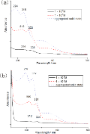
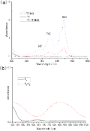
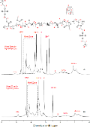
- calorimeter with a scanning temperature range from 20–80 °C at a scanning rate of 10 °C/min. The transmission electron microscopy image was observed using a JEM 1200EX (JEOL) transmission electron microscope operating at 120 KV. Photographs of the formation of a PEP100M15CD hydrogel. WXRD patterns of γ-CD (A




Cholesterol lowering effects of mono-lactose-appended β-cyclodextrin in Niemann–Pick type C disease-like HepG2 cells
Beilstein J. Org. Chem. 2015, 11, 2079–2086, doi:10.3762/bjoc.11.224
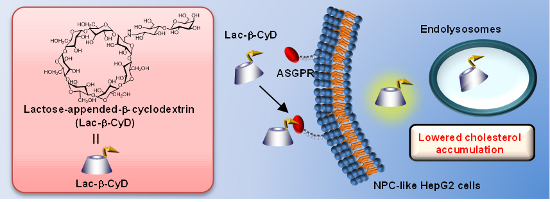
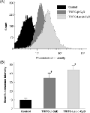
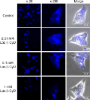
- -Lac-β-CyD was found to be associated with U18666A-treated HepG2 cells, higher than TRITC-β-CyD, which is lacking the lactose moiety (Figure 4A,B). Next, we examined the intracellular distribution of TRITC-Lac-β-CyD by confocal laser scanning microscopy (Figure 5). It should be noted that cellular
- fluorescence derived from TRITC and LysoTracker® in U18666A-treated HepG2 cells was detected by confocal laser scanning microscopy. The fluorescence intensities were determined by a BZ-II analyzer (Keyence, Osaka, Japan). Intracellular distribution of cholesterol U18666A-treated HepG2 cells (5 × 10⁴ cells/35




Profluorescent substrates for the screening of olefin metathesis catalysts
Beilstein J. Org. Chem. 2015, 11, 1886–1892, doi:10.3762/bjoc.11.203
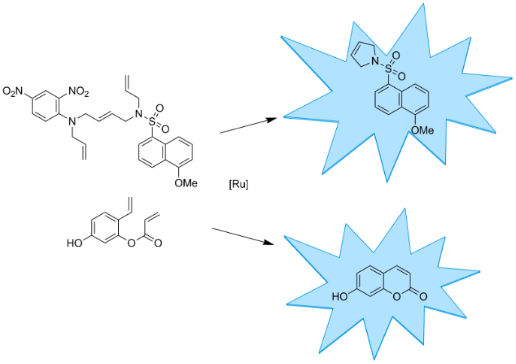
- and fluorescence showed good agreement. These profluorescent substrates could be prototypes for more complex structures that could find applications in ring-closing metathesis for biological applications by fluorescence microscopy. Experimental General Methods: The 1H and 13C NMR spectra were recorded





