Search results
Search for "distribution" in Full Text gives 595 result(s) in Beilstein Journal of Organic Chemistry. Showing first 200.
Amino acid-based surfactants: sustainable synthesis and antimicrobial mechanisms
Beilstein J. Org. Chem. 2026, 22, 1067–1085, doi:10.3762/bjoc.22.85
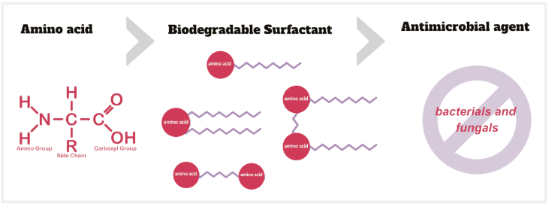
- to optimize the charge distribution and bioactivity [57][72]. Representing the most sophisticated architecture, these surfactants exhibit exceptional performance metrics: CMC values 100–1000 times lower than monomeric surfactants; thermal stability up to 300 °C [70] and MIC values reported as low as


Synthesis of novel 1,2,4-oxadiazole-isoxazoline hybrids and their in silico potential with adenosine receptors
Beilstein J. Org. Chem. 2026, 22, 1033–1047, doi:10.3762/bjoc.22.82
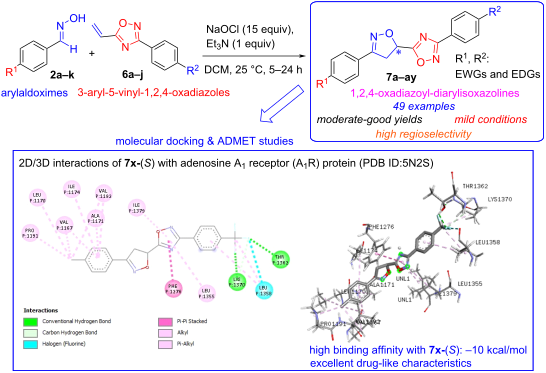
- , and 7aw) was performed using the SwissADME online tool [84] to evaluate their absorption, distribution, metabolism, excretion, and toxicity profiles. All selected derivatives complied with Lipinski’s Rule of Five, suggesting favorable drug-likeness and potential for good oral bioavailability. In
- addition, the compounds were predicted to exhibit high gastrointestinal (GI) absorption, indicating a strong likelihood of efficient uptake into systemic circulation following oral administration. Lipophilicity, a key determinant of ADME behavior influencing membrane permeability and distribution, was also


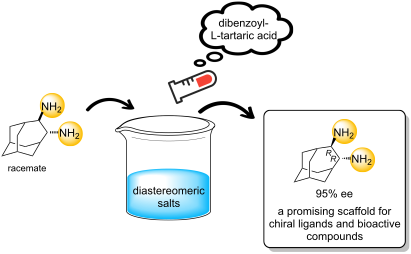
Synthesis and optical resolution of 4,5-diaminohomoadamantane: a promising scaffold for chiral ligands and bioactive compounds
Beilstein J. Org. Chem. 2026, 22, 1013–1022, doi:10.3762/bjoc.22.80
- optimization and optical rotation calculations of the chosen conformations were performed using DFT method with the CAM-B3LYP functional and the 6-311G++(2d,2p) basis set with solvation by CH2Cl2 in SMD model. The distribution of conformations was calculated on the basis of their relative energy with respect


The role of spacer length and flexibility in peptide self-assembly
Beilstein J. Org. Chem. 2026, 22, 986–996, doi:10.3762/bjoc.22.77
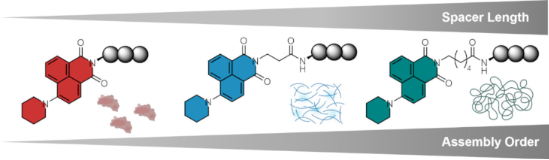
- depicting the distribution of assembly sizes for C6-Nap-ICA 6, C3-Nap-ICA 7, and C0-Nap-ICA 8 (all at 100 µM) in PBS (50 mM, pH 7.4, 1% TFE) after 24 h incubation at room temperature. The sizes were determined using fluorescence microscopy, n = 21. D) Fluorescence microscopy images of C6-Nap-ICA 6, C3-Nap


Synthesis of heterocycles based on azomethine ylides from α-amino acids (or amines) and carbonyl compounds
Beilstein J. Org. Chem. 2026, 22, 705–741, doi:10.3762/bjoc.22.55
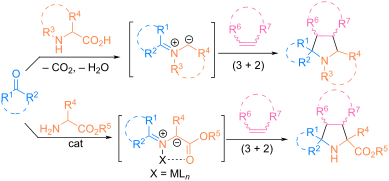
- density distribution between the C2 and C4 positions following deprotonation. An aryl group located at the α-position (C2) greater facilitates the resulting negative charge delocalization, thereby reducing electron density at C2 relative to C4. Consequently, this stabilized carbanion directs the formation


Advantages of PROTACs in achieving selective degradation of homologous protein families
Beilstein J. Org. Chem. 2026, 22, 628–661, doi:10.3762/bjoc.22.49
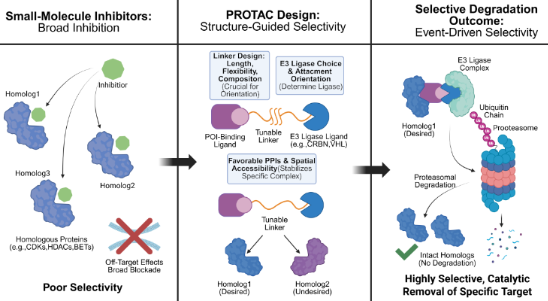
- isoform-specific selectivity. Furthermore, we examine the influence of PPIs, a factor increasingly recognized for its critical contribution to the refined selectivity of PROTACs. The review also explores potential selectivity variations arising from the spatial distribution of ubiquitination-accessible









Experimental and DFT studies on the regioselective methanolysis of 5-azido-9-oxabicyclo[6.1.0]nonan-4-yl 4-nitrobenzoate isomers
Beilstein J. Org. Chem. 2026, 22, 547–556, doi:10.3762/bjoc.22.40
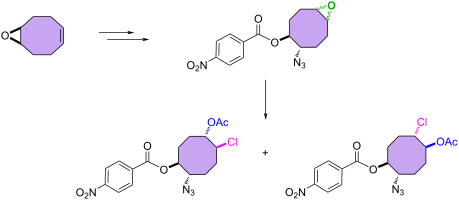
- ideal gauche values and the absence of severely over-twisted dihedrals indicate a relatively low-strain conformation. In contrast, epoxide 9b exhibits a more distorted dihedral distribution, including a strongly twisted dihedral (≈90°) together with unevenly distributed gauche and near-planar torsions


Synthesis of a HDAC inhibitor–nanogold probe for cryo-EM visualization in class I HDAC co-repressor complexes
Beilstein J. Org. Chem. 2026, 22, 480–485, doi:10.3762/bjoc.22.35
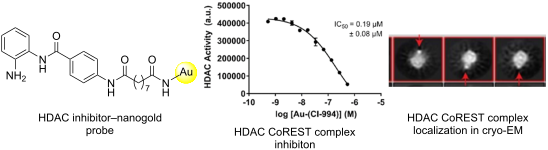
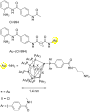
- distribution, were evenly dispersed across the grid, and showed no signs of aggregation. These studies confirmed the suitability of Au–(CI-994) probe for structural studies with the CoREST complex. The HDAC inhibitor–nanogold probe localizes with the CoREST complex in cryo-EM To stabilize the HDAC1-LSD1-CoREST



Synthesis and anti-cancer activity of naphthalimide–organylselanyl conjugates
Beilstein J. Org. Chem. 2026, 22, 416–435, doi:10.3762/bjoc.22.29
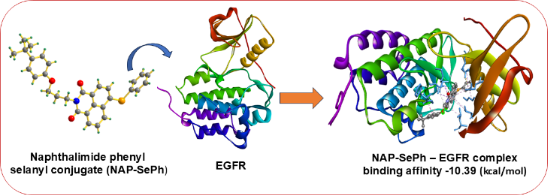
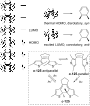
- geometries of compounds 7 and 8 were used to compute the frontier molecular orbitals (FMOs), the highest occupied molecular orbital (HOMO) and the lowest unoccupied molecular orbital (LUMO) [58]. The FMO analysis, as shown in Figure 4, provides insight into the electronic distribution and the HOMO–LUMO
- character for (C1) and (C2), with a Mulliken charge value of 0.597 for compound 7, and for compound 8, (C1) and (C2) are 0.598 and 0.599. This electron charge distribution clearly indicates that the nitrogen atom has a more negative character than oxygen and selenium. Still, the oxygen atom has a
- analysis provides vital insights into the electronic characteristics of atoms within a molecule [61]. In the MEP maps, the colour distribution follows the order blue, green, and red, representing increasing electrostatic potential. The blue regions correspond to more electropositive areas, while the red


Design, synthesis and biological evaluation of 2,5-diaryloxazolo[4,5-d]pyrimidin-7-ylamines as selective cytotoxic agents against HeLa cells
Beilstein J. Org. Chem. 2026, 22, 390–398, doi:10.3762/bjoc.22.27

- compounds was anywhere near the activity of paclitaxel against HeLa cells (SI = 2733.50). ADMET analysis ADMET (absorption, distribution, metabolism, excretion, toxicity) analysis performed among active in vitro anticancer compounds allows to identify the most promising agents to be sent to further stages


Spirobarbiturates with a pyrrolizidine moiety: synthesis, structure and biological evaluation
Beilstein J. Org. Chem. 2026, 22, 274–288, doi:10.3762/bjoc.22.20
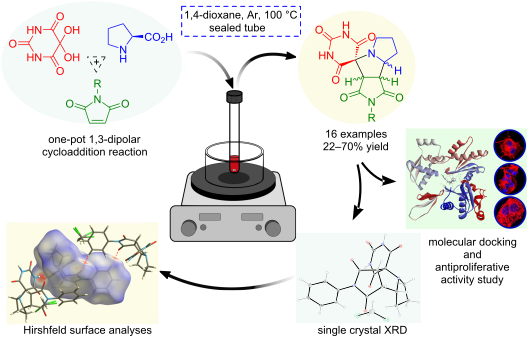
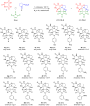
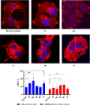
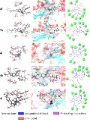
- properties: absorption, distribution, metabolism, excretion, and toxicity. In this paper, these were evaluated in silico using an online resource accessible via https://preadmet.webservice.bmdrc.org/. The following ADME descriptors were selected: blood-brain barrier permeability (BBB), human intestinal




Configuration–packing synergy enabling integrated crystalline-state RTP and amorphous-state TADF
Beilstein J. Org. Chem. 2026, 22, 224–236, doi:10.3762/bjoc.22.16
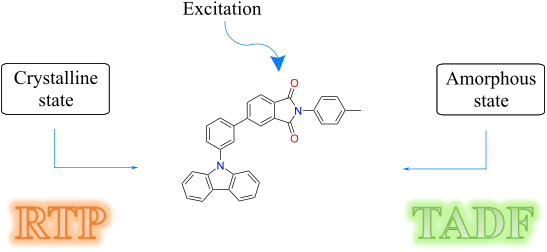
- , 478.1682. a) Single-crystal structure of 1, b) HOMO distribution calculated on the crystallographic geometry, and c) LUMO distribution calculated on the crystallographic geometry. Photophysical properties of 1 in solvents of varying polarity: a) UV–vis absorption spectra and b) fluorescence emission


Improved synthesis and physicochemical characterization of the selective serotonin 2A receptor agonist 25CN-NBOH
Beilstein J. Org. Chem. 2026, 22, 175–184, doi:10.3762/bjoc.22.11
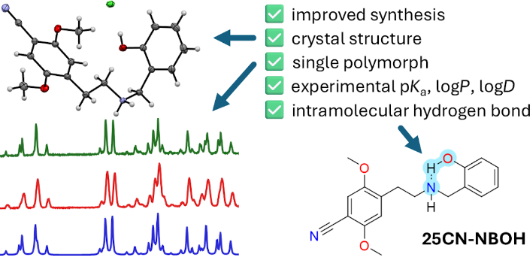
- species distribution curves for 1 were plotted (Figure 5). This is reflected by logD at different pH values (Table 1). At pH 5, the protonated species dominates, with logD = −0.76. At pH 7.4, approximately 90% will be present in the protonated form, alongside 10% of the neutral species (see Figure 5
- in ultrapure water. The stability of 1 was assessed based on peak areas. The experiment was performed in triplicate. Distribution coefficients The pH-dependent octanol/buffer distribution coefficients of 1 were determined at 25 ± 0.5 °C using the following buffers: 50 mM sodium citrate (pH 5.00, I
- h in a temperature-controlled incubator at 25 °C. The concentration of 1 in the buffer solution before and after partitioning, ci and cw, respectively, was determined by HPLC, from which distribution coefficients, D, were calculated according to where Vw and Vo are the volume of the buffer solution


Symmetrical D–π–A–π–D indanone dyes: a new design for nonlinear optics and cyanide detection
Beilstein J. Org. Chem. 2026, 22, 131–142, doi:10.3762/bjoc.22.6
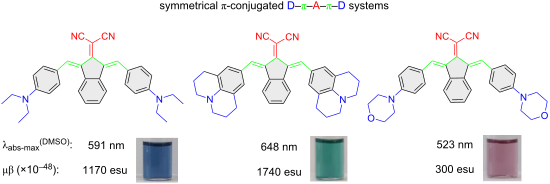
- distribution is located at the donor groups and slightly at the dicyanovinylene unit in the HOMO. The distribution in the HOMO−1 mainly is over the donor groups (Figure 7 and Figure S17, Supporting Information File 1). The LUMO is delocalized over the dicyanovinylene unit and slightly over the indanone group


Reactivity umpolung of the cycloheptatriene core in hexa(methoxycarbonyl)cycloheptatriene
Beilstein J. Org. Chem. 2026, 22, 64–70, doi:10.3762/bjoc.22.2
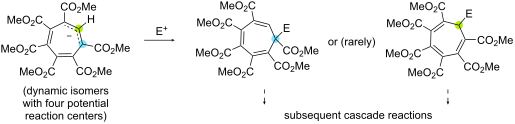
- isomer of anion 2 we analyzed the structure of its highest occupied molecular orbital (HOMO) and the distribution of the electrophilic Fukui function (f–) [28] – the difference in electron density between the anion and the derived radical by abstraction of one electron (Figure 2). Both approaches
- revealed that the α-position is most nucleophilic. Notably, anion 1 demonstrated similar HOMO and Fukui function distribution (see Supporting Information File 1), however, all positions would lead to the very same products. The potassium salt of anion 2 was generated in an acetonitrile solution from hexa


Synthesis and applications of alkenyl chlorides (vinyl chlorides): a review
Beilstein J. Org. Chem. 2026, 22, 1–63, doi:10.3762/bjoc.22.1
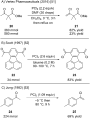
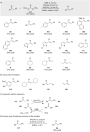
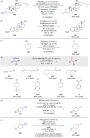
- -methylcyclohexanone (54), this reagent markedly alters the product distribution compared to PCl5 [63] (Scheme 11B). However, since the reaction conditions differ significantly, it remains unclear whether the product distribution is driven by the reagent itself or by the reaction conditions employed. In 2007, Prati























Synthesis and characterization of a isothiouronium-calix[4]arene derivative: self-assembly and anticancer activity
Beilstein J. Org. Chem. 2025, 21, 2535–2541, doi:10.3762/bjoc.21.195
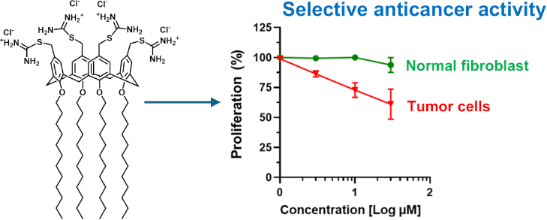
- of compound 3 in DMSO-d6 (400.13 MHz, 297 K). Intensity-weighted mean hydrodynamic diameter (left), and zeta potential distribution (right) of compound 3 (1 mg/mL water), after vortex and sonication. Antiproliferative effects by compound 3 and its chemical precursor 1. A) Results on proliferative


Pentacyclic aromatic heterocycles from Pd-catalyzed annulation of 1,5-diaryl-1,2,3-triazoles
Beilstein J. Org. Chem. 2025, 21, 2524–2534, doi:10.3762/bjoc.21.194
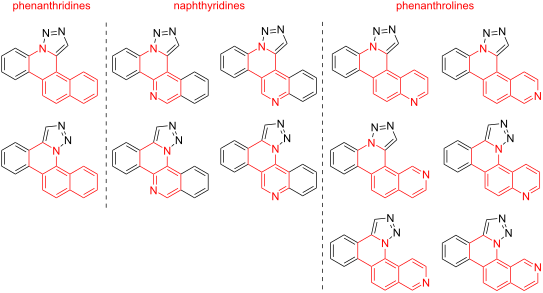
- orientation, the distribution of nitrogen atom centers within the ring system appears essential for eliciting bioactivity. Orientation of isoquinoline and N3-triazole subunit nitrogen atoms is identical between 17 and 35 as well as between 18 and 36. In contrast, 34 showed toxicity towards Gram-positive


The high potential of methyl laurate as a recyclable competitor to conventional toxic solvents in [3 + 2] cycloaddition reactions
Beilstein J. Org. Chem. 2025, 21, 2389–2415, doi:10.3762/bjoc.21.184
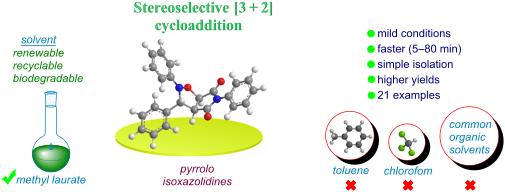
- space is shown in Figure 8a. The distribution of these selected solvents with other organic solvents in the 3D Hansen solubility space is determined by three Hansen solubility parameters (HSPs): dispersion (δD), polarity (δP), and hydrogen bonding (δH). As is well established, information about their
- aromatic aldehydes exhibit a Z-configuration [112][113] and it appears that endo-coupling of the Z-configured C,N-diphenylnitrone with maleimide is more favorable. Indeed, the distribution of the cis/trans product is also found to be significantly influenced by the nature of the substituents present in the
- synthetic methods for cycloaddition reactions. In this study, a series of natural organic compounds from diverse classes and an acetonide [129] derivative were selected for investigation, with a focus on their potential catalytic effects in relation to the alteration of cis/trans product distribution under






Pathway economy in cyclization of 1,n-enynes
Beilstein J. Org. Chem. 2025, 21, 2260–2282, doi:10.3762/bjoc.21.173
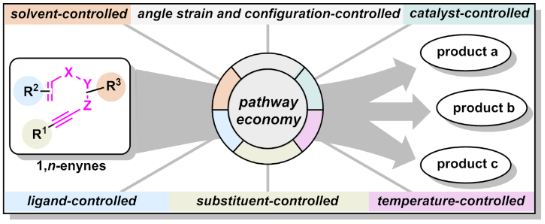
- regulatory role in chemical transformations, exerting kinetic modulation through solvation effects on activation barriers and reaction rates, dictating thermodynamic equilibria that govern product distribution, and enabling precise reaction pathway regulation via selective stabilization of critical


A m-quaterphenyl probe for absolute configurational assignments of primary and secondary amines
Beilstein J. Org. Chem. 2025, 21, 2211–2219, doi:10.3762/bjoc.21.168
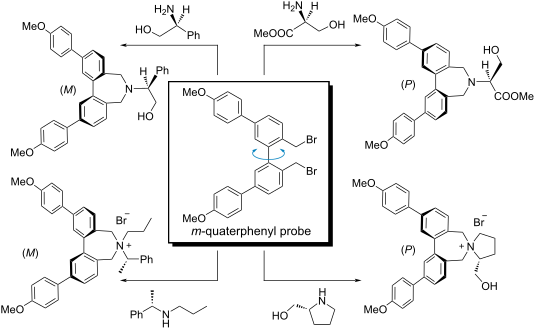
- a P twist. Based on a Boltzmann distribution analysis (T = 298 K), the relative populations of the P and M conformers in (S)-3a were determined to be 48:52. (Table S3 in Supporting Information File 1). In contrast, the P conformers were found to predominate in (S)-3b (Figure S21 and Table S4 in
- described above, the C6–C1–C1'–C6' dihedral angles in all conformers of (S)-3a–g and (R)-3h were approximately constant (plus or minus ca. 42 degree). The range of distribution of the angles was also small, ranging from +39.8 to +43.9 degrees, or −40.2 to −45.8 degrees (Figure 5). In the solid state of (S
- )-3a–g and (R)-3h using MMFF. All local minimum conformers were then optimized with DFT using the B3LYP/6-31G* model [47]. The lower energy conformers with relative energies ranging from 0.0 to 10.0 kJ/mol were selected. By the Bolzmann distribution based on the energy difference of the conformers at


Solar thermal fuels: azobenzene as a cyclic photon–heat transduction platform
Beilstein J. Org. Chem. 2025, 21, 2036–2047, doi:10.3762/bjoc.21.159
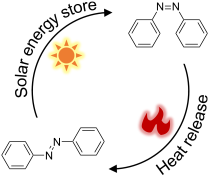
- significant photothermal energy storage capacity of 430 J/g (Figure 5c). This study presents potential implications for energy distribution and utilization in domestic consumer applications, and for photothermal-assisted insulation strategies. Azobenzene small molecule derivative solar thermal fuels





Understanding the origin of stereoselectivity in the photochemical denitrogenation of 2,3-diazabicyclo[2.2.1]heptene and its derivatives with non-adiabatic molecular dynamics
Beilstein J. Org. Chem. 2025, 21, 2007–2020, doi:10.3762/bjoc.21.156
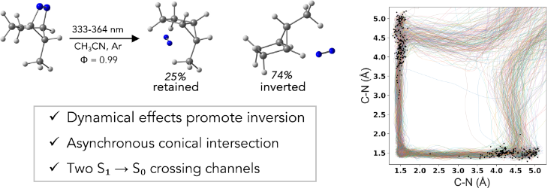
- surface hopping (FSSH) [92][93] to investigate the photochemical pathways of compounds 1, 3, and 5 along the potential energy surfaces (PESs) of both ground and three excited states. The initial nuclear positions and velocities were sampled based on the Wigner distribution [108] at 300 K. All quantum


Systematic pore lipophilization to enhance the efficiency of an amine-based MOF catalyst in the solvent-free Knoevenagel reaction
Beilstein J. Org. Chem. 2025, 21, 1854–1863, doi:10.3762/bjoc.21.144
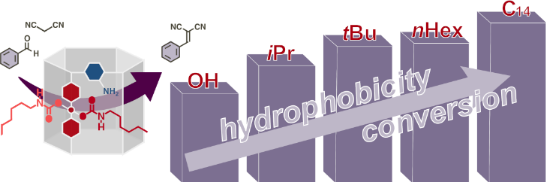
- extent of alkyl grafting, the –CH2– content in the pores of KSU-1n-Hex and KSU-1C14 is still greater than for KSU-1iPr and KSU-1t-Bu, assuming a uniform distribution of alkyl chains. Additionally, although the introduction of large alkyl substituents in a MOF is associated with a reduction in pore
- distribution of intermediate versus product during the reaction. Both these behaviors, increased efficiency and different intermediate:product distributions, call to mind the effect of lipophilic pockets in enzyme catalysis, and they offer a view to the possibilities that can be achieved in enzyme-inspired


Photoswitches beyond azobenzene: a beginner’s guide
Beilstein J. Org. Chem. 2025, 21, 1808–1853, doi:10.3762/bjoc.21.143
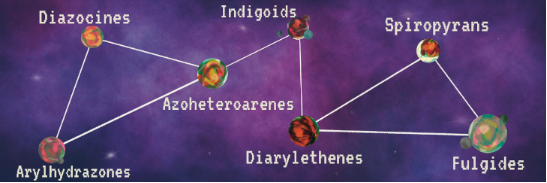
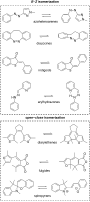
- two isomers do not overlap, only one isomer is excited by the irradiation wavelength, enriching the other isomer until an equilibrium is reached. This equilibrium is called a photostationary state (PSS) [1]. The isomeric distribution at equilibrium can also be called photostationary distribution (PSD
- ). It must be noted, though, that in literature both PSS and PSD are used to indicate the photostationary distribution [2]. We will use the PSS notation throughout the review. Often, the two absorption spectra overlap, and both isomers are excited to different extents at the same time. The extent of