Search results
Search for "lipid" in Full Text gives 159 result(s) in Beilstein Journal of Organic Chemistry.
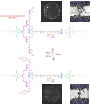
Controlled supramolecular assemblies of luminescent tridentate cyclometalated alkynylgold(III) amphiphiles in aqueous media
Beilstein J. Org. Chem. 2026, 22, 1097–1106, doi:10.3762/bjoc.22.88
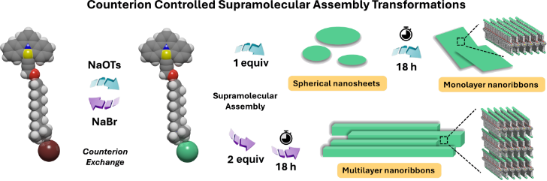
- Supramolecular assemblies in natural systems, such as lipid bilayers and protein complexes, play essential roles in maintaining proper biological functions [1][2][3]. These natural structures have inspired developments of artificial supramolecular systems that offer structural diversity through delicate designed


Amino acid-based surfactants: sustainable synthesis and antimicrobial mechanisms
Beilstein J. Org. Chem. 2026, 22, 1067–1085, doi:10.3762/bjoc.22.85
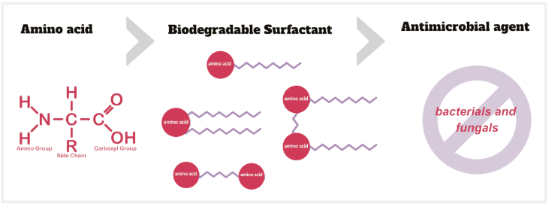
- -spectrum effects, including antibiofilm and antifungal properties [24]. Notably, these compounds also disrupt microbial membranes via lytic or non-lytic mechanisms (e.g., pore formation, lipid extraction, or inhibition of essential enzymes like ATP synthases) [25][26][27][28]. The antimicrobial activity
- can be explained by their cationic charge and amphipathic structure [21][22]. This configuration allows these compounds to give rise to electrostatic and hydrophobic interactions with the cell membranes of microorganisms, which are mainly formed by a lipid bilayer [23]. The studies on the
- to have directly a great antimicrobial activity at the membrane level [19][21]. The effect is closely related to the structural characteristics and amphiphilic molecular properties dependent on the type of amino acid and lipid chain used in the synthesis of the surfactant [3][21]. Using the search


Design, synthesis, and biological evaluation of FXR/ASK1 dual-target modulators
Beilstein J. Org. Chem. 2026, 22, 771–781, doi:10.3762/bjoc.22.59
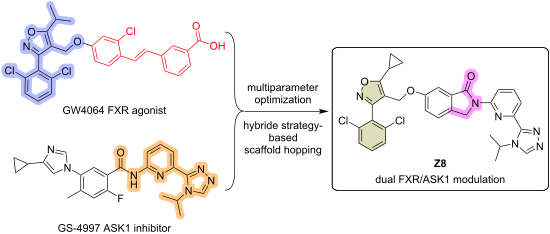
- . Compound Z8, which acts on both targets, was found to more potently reduce intracellular lipid droplet accumulation in OA-treated HepG2 cells than the FXR agonist GW4064 and the ASK1 inhibitor selonsertib (GS-4997). Keywords: ASK1 inhibitors; FXR agonists; FXR/ASK1 dual-target modulators; MASH
- of the designed dual-target modulators identified 17 compounds that inhibited ASK1 (Figure 2). Among the compounds examined, Z8 demonstrated the greatest potency, exhibiting an inhibition rate of 84.59% at a concentration of 10 μM. Lipid-modifying activity In light of the prevalence of the reduction
- of lipid levels as a therapeutic objective in MASH, the present study sought to evaluate the lipid-modifying potential of modulators Z8 and Z30. Utilizing an in vitro model of oleic acid (OA)-induced steatosis in HepG2 cells, the study evaluated the effects of these compounds on hepatic lipid


Improved synthesis and physicochemical characterization of the selective serotonin 2A receptor agonist 25CN-NBOH
Beilstein J. Org. Chem. 2026, 22, 175–184, doi:10.3762/bjoc.22.11
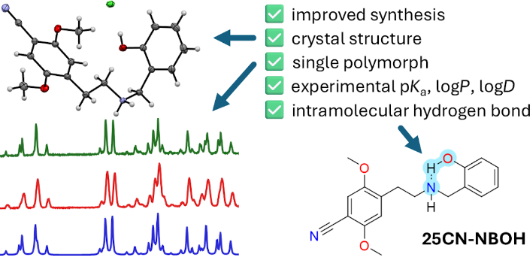
- must, upon entry into a more hydrophobic environment, such as a lipid bilayer, be able to shed its solvation sphere. This desolvation step can happen more readily when the molecule is able to form an IMHB instead of being strongly coordinated to the solvent. Moreover, an internally hydrogen-bonded


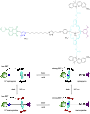
Effect of a photoswitchable rotaxane on membrane permeabilization across lipid compositions
Beilstein J. Org. Chem. 2025, 21, 2498–2512, doi:10.3762/bjoc.21.192
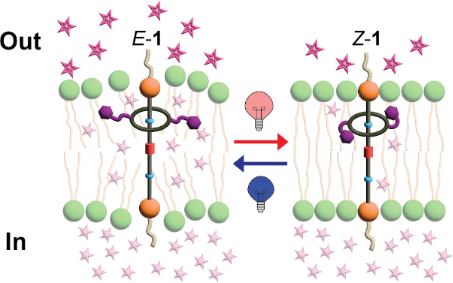
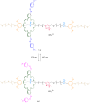
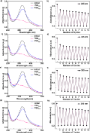
- modulate membrane permeability in large unilamellar vesicles (LUVs) of varying lipid compositions. Upon photoisomerization, the rotaxane significantly enhanced the release of the hydrophilic dye sulforhodamine B in vesicles composed of EYPC/Chol 8:2, with release increasing from 29% (non-irradiated) to 59
- photochemical process occurs, which triggers the release from only the vesicles containing EYPC. These findings underscore the significance of both the physical and chemical properties of the bilayer in enabling effective light-triggered cargo release through rotaxane activation. Keywords: lipid membrane
- ; membrane fluidity; membrane permeability; photoswitchable rotaxane; Introduction Lipid membranes play a vital role in biology by acting as protective barriers for cells and organelles while regulating the passage of substances. Additionally, their structure and dynamics influence the activity of membrane




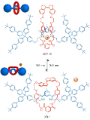
Rotaxanes with integrated photoswitches: design principles, functional behavior, and emerging applications
Beilstein J. Org. Chem. 2025, 21, 2345–2366, doi:10.3762/bjoc.21.179
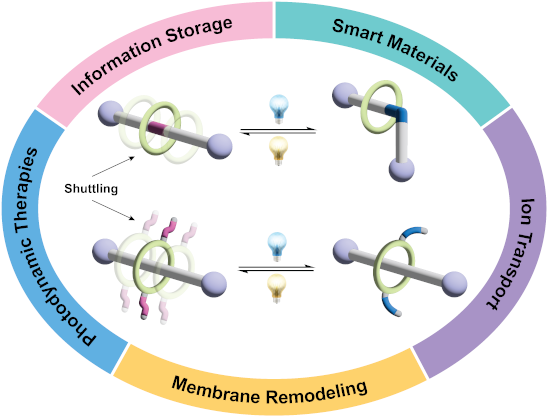
- ring appended to it, capable of capturing K+ ions (Figure 6) [51]. The authors demonstrated that this rotaxane can be incorporated into model lipid bilayers and mediate K+ ion transport across membranes through the shuttling motion of the macrocycle. In its trans configuration, the azobenzene allows
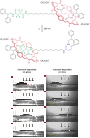
- shuttling motion along a 3.2 nm axle between two BAA recognition sites in acetonitrile solution. The behavior of this rotaxane was investigated in lipid bilayers of large and giant vesicles. Remarkably, the photoisomerization of the azobenzene units enabled modulation of the rotaxane's interaction with the
- lipid membrane, leading to reversible changes in giant lipid vesicles. In the trans isomer, the membrane tension decreased, resulting in deformation and pronounced membrane undulations. Isomerization to the cis form increased membrane tension, causing vesicle contraction. Molecular dynamics simulations





Thiadiazino-indole, thiadiazino-carbazole and benzothiadiazino-carbazole dioxides: synthesis, physicochemical and early ADME characterization of representatives of new tri-, tetra- and pentacyclic ring systems and their intermediates
Beilstein J. Org. Chem. 2025, 21, 2220–2233, doi:10.3762/bjoc.21.169
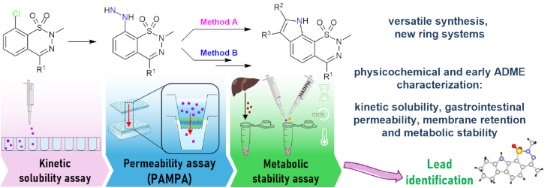
- -phosphatidylcholine (16 mg) and cholesterol (4 mg) in a solvent mixture of chloroform, hexane and dodecane (5/70/25 vol %). Each well of the PAMPA donor plate (MAIPNTR, PVDF membrane, Merck KGaA, Darmstadt, Germany) was coated with 5 μL lipid solution. Thereafter the donor plate was fitted into the acceptor plate


Asymmetric total synthesis of tricyclic prostaglandin D2 metabolite methyl ester via oxidative radical cyclization
Beilstein J. Org. Chem. 2025, 21, 1964–1972, doi:10.3762/bjoc.21.152
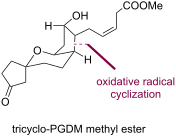
- synthesis of tricyclic-PGDM methyl ester in 9 steps and 8% overall yield. Keywords: asymmetric total synthesis; oxidative radical cyclization; tricyclic prostaglandin D2 metabolite methyl ester; Introduction Prostaglandins (PGs), a family of hormone-like lipid compounds, are ubiquitous natural products



Dicarboxylate recognition based on ultracycle hosts through cooperative hydrogen bonding and anion–π interactions
Beilstein J. Org. Chem. 2025, 21, 884–889, doi:10.3762/bjoc.21.72
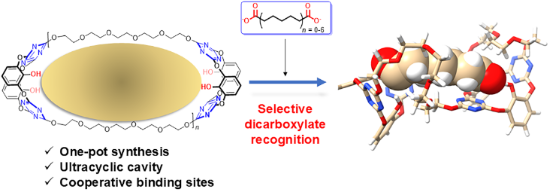
- than 50 atoms in the macrocyclic skeleton are denoted as ultracycles [1]. These very large macrocycles are prevalent in nature and exhibit unique functions. For instance, the archaeal lipid GDGT-0 enables archaea to thrive in extreme environments [2]; cycloamyloses enhance the stability of drug


Chemical glycobiology
Beilstein J. Org. Chem. 2025, 21, 8–9, doi:10.3762/bjoc.21.2
- glycan assembly [9]. Target-directed synthetic strategies are being developed by Reihill et al. [10] and Karak et al. [11], exploring the syntheses of the linker-displaying, sulfated TF disaccharide and lipid II analogues, respectively. The direct application of synthetic glycans is shown by Fan et al
Multicomponent reactions driving the discovery and optimization of agents targeting central nervous system pathologies
Beilstein J. Org. Chem. 2024, 20, 3151–3173, doi:10.3762/bjoc.20.261

- biomolecules like DNA and lipids. Lipid peroxidation and membrane disruption can cause random cross-linking, resulting in cell death and the fragmentation of proteins and enzymes. Elevated concentrations of reactive oxygen species (ROS) from various molecular processes contribute to the oxidation of proteins




Chemical structure metagenomics of microbial natural products: surveying nonribosomal peptides and beyond
Beilstein J. Org. Chem. 2024, 20, 3050–3060, doi:10.3762/bjoc.20.253
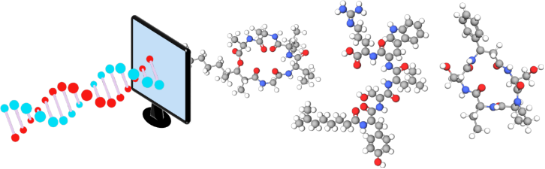
- of action (MOA) (e.g., membrane lysis and depolarization) [30][34] and specific MOA (e.g., dysregulation of ClpP protease [33], inhibition of topoisomerase I/II [36][68], blocking lipid II transport by flippase [29], sequestration of cell wall biosynthetic intermediate C55-(di)phosphate, etc.) [35


Interaction of a pyrene derivative with cationic [60]fullerene in phospholipid membranes and its effects on photodynamic actions
Beilstein J. Org. Chem. 2024, 20, 2732–2738, doi:10.3762/bjoc.20.231
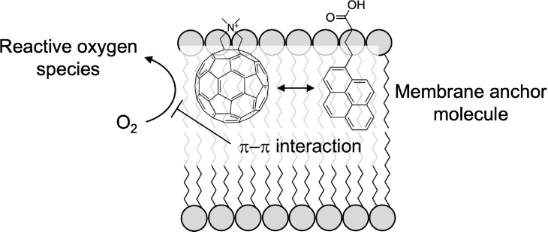
- likely to localize near the surface of the lipid bilayer of catC60-lip than the C60 in C60-lip [14]. Similarly, the incorporation of PyBA into the pre-prepared liposomes was tested by zeta potential analysis (–15 mV) and differential scanning calorimetry analysis (Figure 2b), showing a clear dose
- °C to prepare the lipid films. The lipid films were then dried overnight in vacuo. Then, the films were hydrated with PBS(–) (137 mM NaCl, 2.68 mM KCl, 8.1 mM Na2HPO4, 1.47 mM KH2PO4) so that the theoretical value of DMPC concentration was 3 mg/mL, and the resulting suspension was sonicated at 30 °C
- until the lipid membrane had completely peeled off from the flask. To remove free catC60 and C60, the resulting suspension was centrifuged at 20,000g at room temperature for 10 min. The supernatant was collected and subjected to more than 20 extrusions using a Mini-Extruder equipped with a 100 nm-pore


The scent gland composition of the Mangshan pit viper, Protobothrops mangshanensis
Beilstein J. Org. Chem. 2024, 20, 2644–2654, doi:10.3762/bjoc.20.222
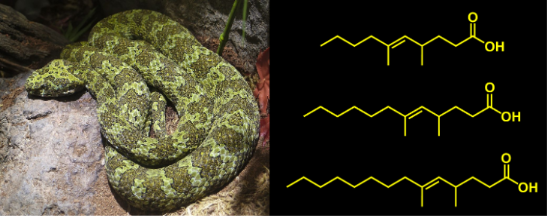
- various lipid classes including sterols, triacylglycerols, and common fatty acid methyl esters [15]. Mass spectrometric analysis of the lipid content of crotalines, mainly the Western Diamondback Rattlesnake (C. atrox), confirmed the presence of cholesterol [3][6][11][16], fatty acids [11], fatty amides
- secretions of other snakes and reptiles. The most abundant compound cholesterol is a ubiquitous lipid in reptile skin and glands [2]. 1-O-Hexadecylglycerol is the second most abundant SGS component. Such ether lipids have previously been reported from the crotaline Crotalus atrox [6] or the phyton Loxocemus


Synthesis, electrochemical properties, and antioxidant activity of sterically hindered catechols with 1,3,4-oxadiazole, 1,2,4-triazole, thiazole or pyridine fragments
Beilstein J. Org. Chem. 2024, 20, 2378–2391, doi:10.3762/bjoc.20.202
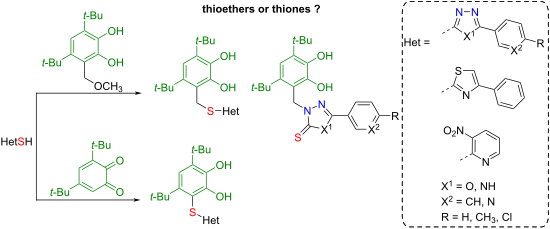
- antioxidant properties were determined using the reaction with synthetic radicals, the cupric reducing antioxidant capacity assay, the inhibition process of superoxide radical anion formation by xanthine oxidase, and the process of lipid peroxidation of rat liver (Wistar) homogenates in vitro. Keywords
- -thiazolyl (34.0 ± 0.10 μM). Compound 1 was the least effective in this test (81.10 ± 1.86 μM) as in the case of the methods described above. We have previously shown that catechol thioethers can act as anti- or prooxidants on lipid peroxidation processes in vitro depending on a functional group or a
- heterocycle substitute at the sulfur atom [49][50][54]. Non-enzymatic process of the rat (Wistar) liver homogenate lipid peroxidation (LP) in the presence of additives of target compounds 1–9 was studied in vitro. The concentration of the carbonyl compounds forming in the reaction of the lipid peroxidation




Understanding X-ray-induced isomerisation in photoswitchable surfactant assemblies
Beilstein J. Org. Chem. 2024, 20, 2005–2015, doi:10.3762/bjoc.20.176
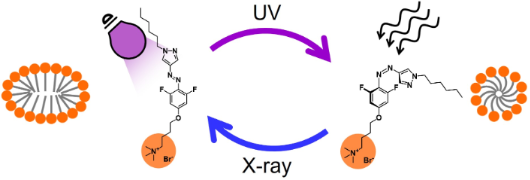
- lipid tail length in the Z isomer [26]. Notably, these authors observed that the X-rays themselves also induced Z–E isomerisation in Azo-lipids, which they attributed to the X-ray radiolysis of water, which produces radicals and reactive species that can catalyse Z–E conversion [27]. This effect was


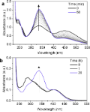

Allostreptopyrroles A–E, β-alkylpyrrole derivatives from an actinomycete Allostreptomyces sp. RD068384
Beilstein J. Org. Chem. 2024, 20, 1981–1987, doi:10.3762/bjoc.20.174
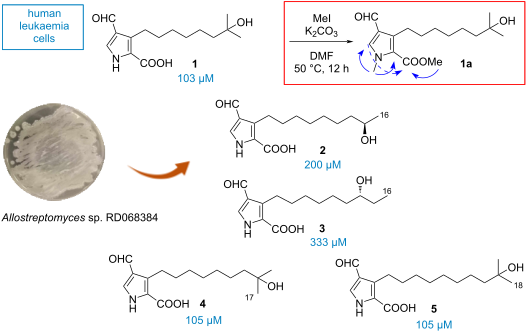
- substitution patterns are different (Figure 1). Natural alkylpyrroles were shown to have cytotoxicity [27], antidiabetic activity [28], anti-lipid peroxidation [12], in vivo antihypoxic activity [12], and antibacterial activity [15]. Though not impressive in cytotoxicity and tyrosinase-inhibitory evaluations


Discovery of antimicrobial peptides clostrisin and cellulosin from Clostridium: insights into their structures, co-localized biosynthetic gene clusters, and antibiotic activity
Beilstein J. Org. Chem. 2024, 20, 1800–1816, doi:10.3762/bjoc.20.159
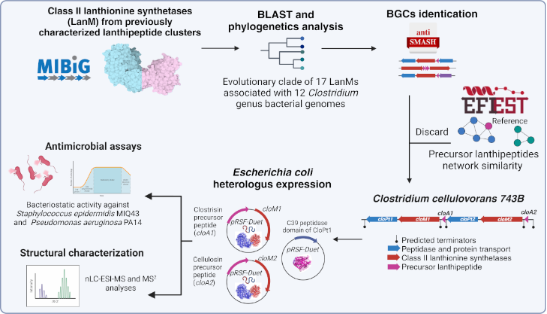
- Mycobacterium tuberculosis. The effects of some of these peptides are attributed to their affinity for the lipid II component of Gram-positive bacterial cell walls [25]. Additionally, there have been reports of lantibiotics such as CMB001 displaying activity against resistant Gram-negative bacteria, including




Synthesis of new representatives of A3B-type carboranylporphyrins based on meso-tetra(pentafluorophenyl)porphyrin transformations
Beilstein J. Org. Chem. 2024, 20, 767–776, doi:10.3762/bjoc.20.70
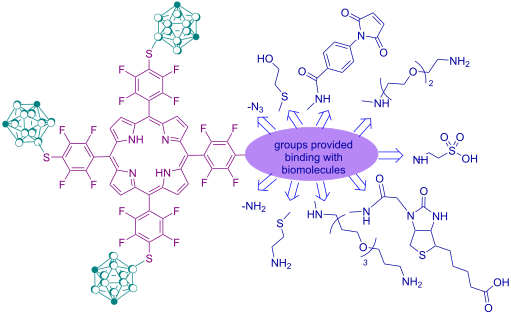
- properties and to modify the profile of biological activity due to optimum fluorine lipophylic properties, and enhanced interaction with lipid membranes [12][13][14]. Pentafluorophenyl-substituted porphyrin systems are especially useful for the connection of various functionalities capable for coupling with



Chemoenzymatic synthesis of macrocyclic peptides and polyketides via thioesterase-catalyzed macrocyclization
Beilstein J. Org. Chem. 2024, 20, 721–733, doi:10.3762/bjoc.20.66
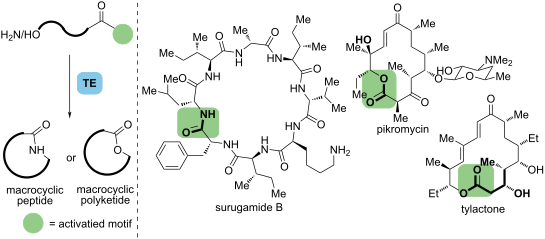
- brevis [27], can penetrate the lipid phase of a Gram-positive inner cell membrane [28][29]. Despite exhibiting high antimicrobial activity, this compound also disrupts the membranes of higher mammalian cells, as evidenced by their pronounced hemolytic activity [30]. Establishing a concise and diverse
- developed to address this challenge to produce daptomycin and its derivatives. These approaches include biosynthetic [49], chemoenzymatic [50], solid-phase [51], and solution-phase methods [52], but most only encompass modifications of the lipid chain and specific amino acid mutations. Learning from the


Switchable molecular tweezers: design and applications
Beilstein J. Org. Chem. 2024, 20, 504–539, doi:10.3762/bjoc.20.45
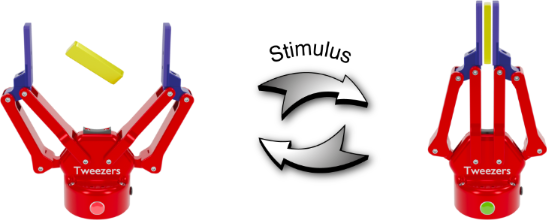
- arms, can encapsulate planar aromatic molecules, making this system promising for drug delivery. The advancement of pH-switchable molecular tweezers laid the groundwork for the development of switchable lipids [20]. When such lipids are incorporated in lipid vesicles, they provide means for controlled




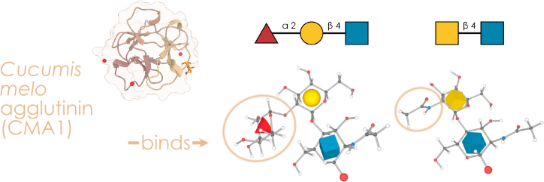
Elucidating the glycan-binding specificity and structure of Cucumis melo agglutinin, a new R-type lectin
Beilstein J. Org. Chem. 2024, 20, 306–320, doi:10.3762/bjoc.20.31
- lipid-linked glycans. Then the detecting solution composed of anti-polyHistidine (Sigma-Aldrich, Merck, SAB4200620) and biotin anti-mouse IgG (Sigma-Aldrich, Merck, B7264) antibodies (10 µg/mL, precomplexed in a ratio of 1:1) was overlaid onto the arrays for 1 h. The final detection was with a 30 min



Optimizations of lipid II synthesis: an essential glycolipid precursor in bacterial cell wall synthesis and a validated antibiotic target
Beilstein J. Org. Chem. 2024, 20, 220–227, doi:10.3762/bjoc.20.22
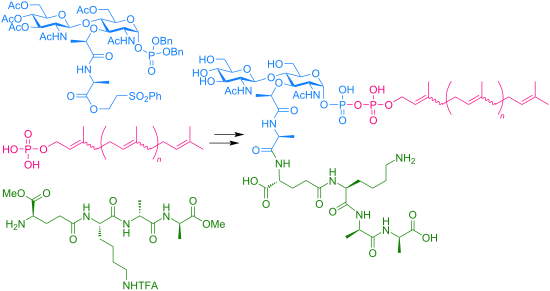
- Milandip Karak Cian R. Cloonan Brad R. Baker Rachel V. K. Cochrane Stephen A. Cochrane School of Chemistry and Chemical Engineering, Queen's University Belfast, David Keir Building, Stranmillis Road, Belfast, BT9 5AG, UK 10.3762/bjoc.20.22 Abstract Lipid II is an essential glycolipid found in
- bacteria. Accessing this valuable cell wall precursor is important both for studying cell wall synthesis and for studying/identifying novel antimicrobial compounds. Herein, we describe optimizations to the modular chemical synthesis of lipid II and unnatural analogues. In particular, the glycosylation step
- analogues through the incorporation of alternative building blocks at different stages of synthesis. Keywords: chemical glycosylation; lipid II; peptidoglycan; polyprenyls; total synthesis; Introduction Lipid II (Figure 1) is an essential bacterial glycolipid involved in peptidoglycan biosynthesis [1]. It


Cyclodextrins permeabilize DPPC liposome membranes: a focus on cholesterol content, cyclodextrin type, and concentration
Beilstein J. Org. Chem. 2023, 19, 1570–1579, doi:10.3762/bjoc.19.115
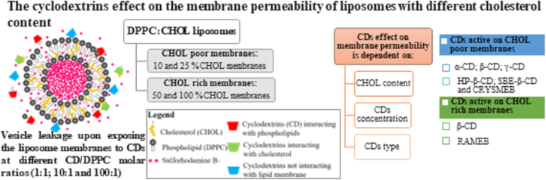
- , France, Unité de Chimie Environnementale et Interactions sur le Vivant (UCEIV, UR 4492), SFR Condorcet FR CNRS 3417, Université du Littoral Côte d'Opale, 145 Av. M.Schumann, 9140 Dunkirk, France 10.3762/bjoc.19.115 Abstract Cyclodextrins (CDs) are known for their ability to extract lipid components from
- permeability [8]. They are even able to extract the lipid membrane components leading the membrane to lose its integrity [8]. This behavior was attributed to the hemolytic activity of CDs previously observed on erythrocytes and other cell membranes [9]. Numerous reports highlighting the CDs-mediated lipid
- not considered in the literature despite the remarkable effect of CHOL on the stability of the lipid bilayer. In fact, CHOL can greatly modulate the membrane permeability: a previous work showed that increasing the CHOL content in the membrane results in a decrease in the membrane permeability in a


Synthesis of ether lipids: natural compounds and analogues
Beilstein J. Org. Chem. 2023, 19, 1299–1369, doi:10.3762/bjoc.19.96
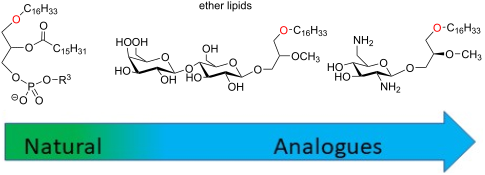
- with the development of edelfosine (an anticancer drug). More recently, ohmline, a glyco glycero ether lipid that modulates selectively SK3 ion channels and reduces in vivo the occurrence of bone metastases, and other glyco glycero ether also identified as GAEL (glycosylated antitumor ether lipids
- ) that exhibit promising anticancer properties renew the interest in this class of compounds. Indeed, ether lipid represent a new and promising class of compounds featuring the capacity to modulate selectively the activity of some membrane proteins or, for other compounds, feature antiproliferative
- compounds. Keywords: amphiphiles; edelfosine; GAEL; glycerol lipids; glycolipids; ohmline; plasmalogen; Introduction Ether lipids (ELs) are natural compounds that feature a glycerol unit linked with an ether function to an alkyl (alkyl acyl ether lipid) or alkenyl (plasmalogen) lipid chain. For the