Search results
Search for "quaternary centers" in Full Text gives 29 result(s) in Beilstein Journal of Organic Chemistry.
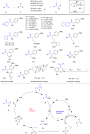
Visible-light-driven NHC and organophotoredox dual catalysis for the synthesis of carbonyl compounds
Beilstein J. Org. Chem. 2025, 21, 2584–2603, doi:10.3762/bjoc.21.200
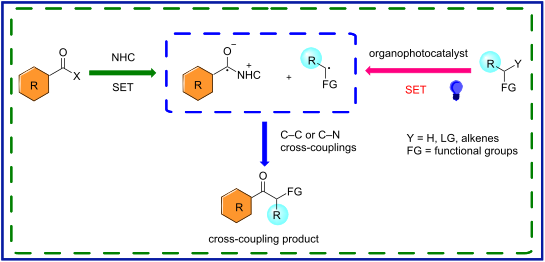
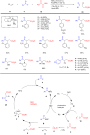
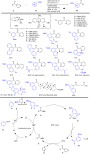
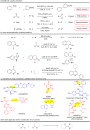
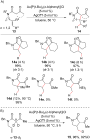
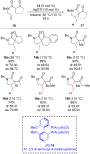
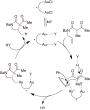
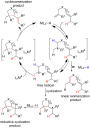
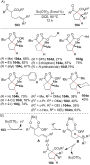
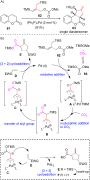
- , and aryloxymethyl potassium trifluoroborate salt 10 under mild conditions. The described catalytic system exhibited broad functional group tolerance and efficiently employed terminal alkenes 11 to generate quaternary centers adjacent to the carbonyl group. The key step in this organocatalytic process

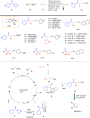




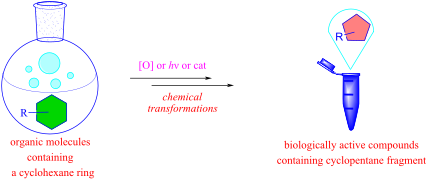
Transformation of the cyclohexane ring to the cyclopentane fragment of biologically active compounds
Beilstein J. Org. Chem. 2025, 21, 2416–2446, doi:10.3762/bjoc.21.185
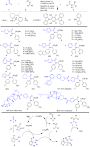
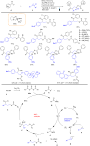
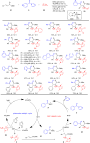
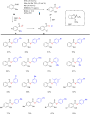
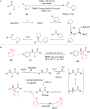
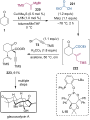
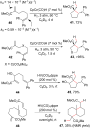
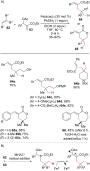
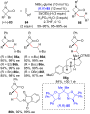
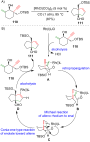
- [52] achieved high regioselectivity and stereospecific construction of contiguous all-carbon quaternary centers through an oxidative ring contraction of cyclic α-formyl ketones by the action of H2O2. This reaction is easy to perform, environmentally friendly, and does not require expensive catalysts


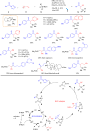
Recent advances in Norrish–Yang cyclization and dicarbonyl photoredox reactions for natural product synthesis
Beilstein J. Org. Chem. 2025, 21, 2315–2333, doi:10.3762/bjoc.21.177
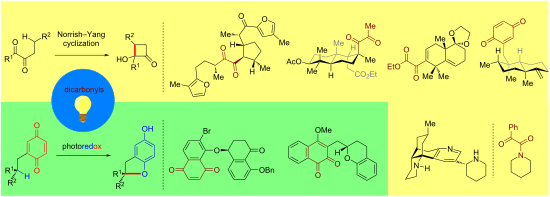
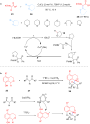
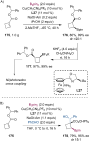
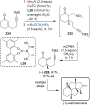
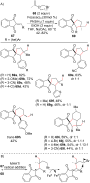
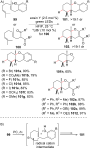
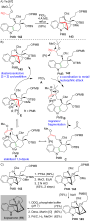
- stereochemical inversion of the Norrish–Yang reaction. This achieved efficient construction of benzofuranone-based 4,5-spirocycles with contiguous all-carbon quaternary centers, offering a conformational regulation protocol for stereocontrol in complex polycyclic systems. 1.3 Avarane-type meroterpenoids In 2024




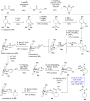


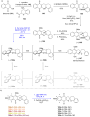

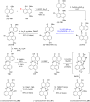
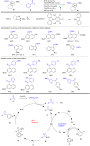
Enantioselective radical chemistry: a bright future ahead
Beilstein J. Org. Chem. 2025, 21, 2283–2296, doi:10.3762/bjoc.21.174
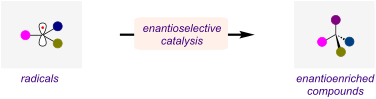
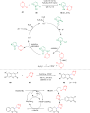
- single process that established five new carbon–carbon bonds and nine contiguous stereocenters, including four all-carbon quaternary centers (Scheme 3). Transition-metal-catalyzed radical reactions Recent advances in enantioselective radical reactions catalyzed by base metals (e.g., Fe, Co, Ni, Mn
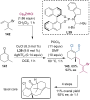
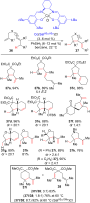
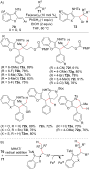
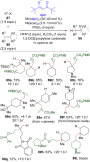
- . Melchiorre and co-workers reported a dual catalytic system that involves photoredox and chiral organocatalysts for the construction of all-carbon quaternary centers. The authors studied radical additions to β,β-disubstituted cyclic enones (Scheme 7) [29]. The dual catalytic system of tetrabutylammonium
- developed, allowing for the asymmetric construction of C(sp3)–C(sp3), C(sp3)–C(sp2), and C(sp3)–C(sp) bonds and challenging motifs such as vicinal stereocenters and all-carbon quaternary centers. A diverse range of chiral catalysts has been employed to achieve enantioselectivity, including Lewis acids


The application of desymmetric enantioselective reduction of cyclic 1,3-dicarbonyl compounds in the total synthesis of terpenoid and alkaloid natural products
Beilstein J. Org. Chem. 2025, 21, 2085–2102, doi:10.3762/bjoc.21.164
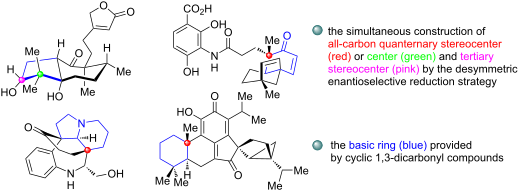
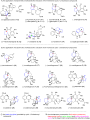
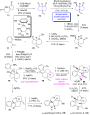
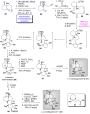
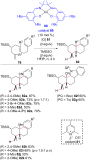
- quaternary centers isolated from Penicillium cylopium and exhibit various biological properties [68]. The intriguing structure and interesting biological properties have attracted continued synthetic attention [69][70][71]. In a 2023 report, the group of Lee and Han adopted an early-stage desymmetric







Bioinspired total syntheses of natural products: a personal adventure
Beilstein J. Org. Chem. 2025, 21, 2048–2061, doi:10.3762/bjoc.21.160
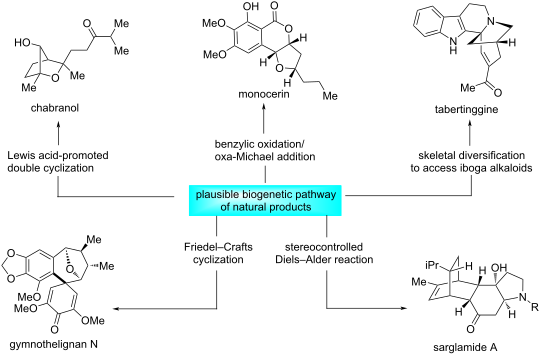
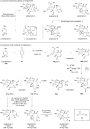
- against P-388 (mouse lymphocytic leukemia). Attracted by the novel bridged structure and in order to further determine the structure, particularly the absolute configurations, we explored the total synthesis of chabranol [19]. Structurally, this molecule contains an oxa-[2.2.1] bridge, with two quaternary
- centers including one at the bridgehead position. To establish a proper strategy for total synthesis, we could, somehow, design its retrosynthetic analysis through diverse approaches to construct such a bicyclic skeleton. However, inspired by the biomimetic polycyclization of terpenoids, we sought to



Copper catalysis: a constantly evolving field
Beilstein J. Org. Chem. 2025, 21, 1477–1479, doi:10.3762/bjoc.21.109
- allenes with diisobutylaluminum hydride, which is followed by the allylation with p-toluenesulfonyl cyanide in a regio- and stereoselective manner. They propose a new way to access accessing acyclic β,γ-unsaturated nitriles with α-all-carbon quaternary centers. In the process, they managed to achieve a
Regioselective formal hydrocyanation of allenes: synthesis of β,γ-unsaturated nitriles with α-all-carbon quaternary centers
Beilstein J. Org. Chem. 2025, 21, 800–806, doi:10.3762/bjoc.21.63
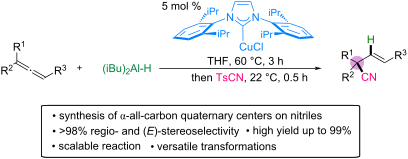
- by the regio- and stereoselective allylation with p-toluenesulfonyl cyanide. The proposed methodology is efficient for accessing acyclic β,γ-unsaturated nitriles with α-all-carbon quaternary centers and achieves yields up to 99% and excellent regio- and E-selectivity. The reaction proceeds under mild
- catalysis; hydrocyanation; regioselectivity; tosyl cyanide; Introduction Acyclic nitriles that incorporate α-all-carbon quaternary centers are highly valuable structural motifs typically found in natural products, biologically active compounds, and synthetic pharmaceuticals [1][2][3][4][5]. These compounds
- quaternary centers that contain functional groups is challenging mainly because of their sterically demanding property [9][10][11]. In this context, the incorporation of cyano groups at the quaternary carbon centers is promising for the development of versatile acyclic all-carbon quaternary stereocenters




Electrophotochemical metal-catalyzed synthesis of alkylnitriles from simple aliphatic carboxylic acids
Beilstein J. Org. Chem. 2024, 20, 1497–1503, doi:10.3762/bjoc.20.133
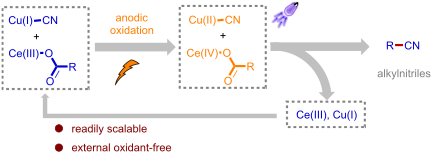
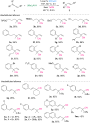
- intermediates in organic synthesis for the construction of all-carbon-substituted quaternary centers (Figure 1A). However, conventional methods for the synthesis of tertiary alkylnitriles such as direct functionalization of alkylnitriles [10] and hydrocyanation of alkenes [11][12][13][14] are typically hindered


Non-noble metal-catalyzed cross-dehydrogenation coupling (CDC) involving ether α-C(sp3)–H to construct C–C bonds
Beilstein J. Org. Chem. 2023, 19, 1259–1288, doi:10.3762/bjoc.19.94
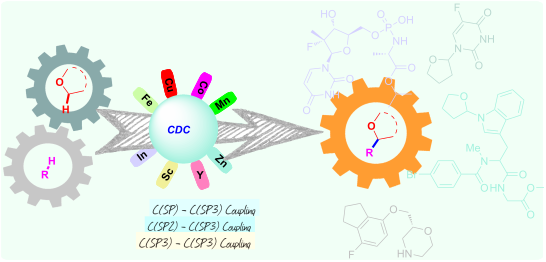
- synthesis of compounds with quaternary centers and natural products with high structural complexity. In 2014, Li et al. reported a CuCl2-catalyzed cross-dehydrogenation coupling reaction of C(sp3)–H bonds adjacent to an ether oxygen and the C(sp3)–H bonds at the α-position of a carbonyl functionality in the






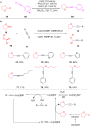


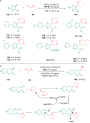


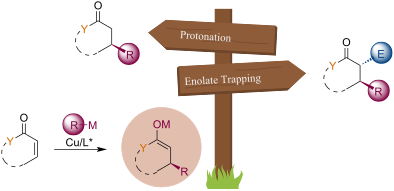
Enolates ambushed – asymmetric tandem conjugate addition and subsequent enolate trapping with conventional and less traditional electrophiles
Beilstein J. Org. Chem. 2023, 19, 593–634, doi:10.3762/bjoc.19.44
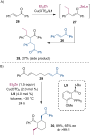
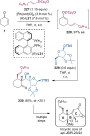
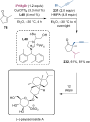
- of a synthetic chemist, the most remarkable feature of this structure is the highly substituted cyclopropane ring incorporating two all-carbon quaternary centers, while the whole structure contains 7 stereocenters. Xu et al. recently demonstrated their 13-step total synthesis of (−)-peyssonnoside A









1,4-Dithianes: attractive C2-building blocks for the synthesis of complex molecular architectures
Beilstein J. Org. Chem. 2023, 19, 115–132, doi:10.3762/bjoc.19.12
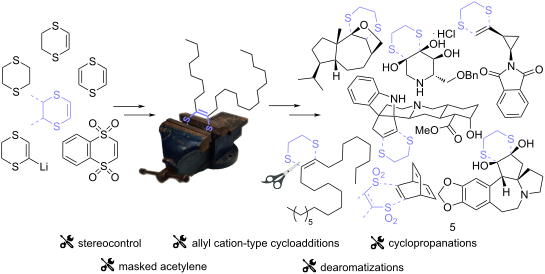
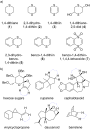
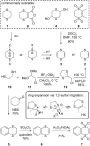
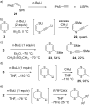
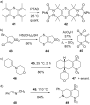
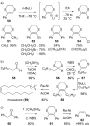
- quaternary centers is tackled by the direct cycloaddition of allyl cation 90 across a tetrasubstituted olefin 95, at the same time elaborating the cyclopentane core of this natural product. The completion of this short synthesis also nicely showcases the use of dihydrodithiinmethanol 90 as a synthetic











Synthetic study toward the diterpenoid aberrarone
Beilstein J. Org. Chem. 2022, 18, 1625–1628, doi:10.3762/bjoc.18.173
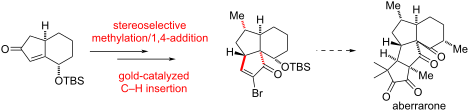
- the 6-5-5 tricyclic skeleton includes the mediation of Nagata reagent for constructing the C1 all-carbon quaternary centers and gold-catalyzed cyclopentenone synthesis through C–H insertion. Keywords: aberrarone; C–H insertion; gold; Pauson–Khand; total synthesis; Introduction Marine natural
- , including two all-carbon quaternary centers, together with the non-enolizable cyclic α-diketone moiety collectively render aberrarone as an attractive but challenging synthetic target. Its congener elisabanolide (2) with a lactone in the D ring shows their potential biosynthetic relationship [2]. These


Methodologies for the synthesis of quaternary carbon centers via hydroalkylation of unactivated olefins: twenty years of advances
Beilstein J. Org. Chem. 2021, 17, 1565–1590, doi:10.3762/bjoc.17.112
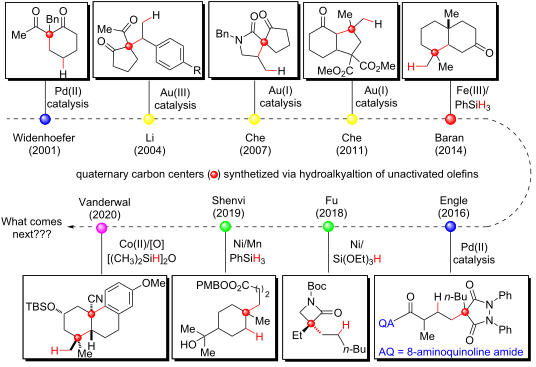
- as precursors of nucleophilic radical species in metal hydride hydrogen atom transfer reactions. This unique reactivity, combined with the wide availability of olefins as starting materials and the success reported in the construction of all-carbon C(sp3) quaternary centers, makes hydroalkylation
- ) [6], and the presence of all-carbon quaternary centers (Figure 1). The all-carbon quaternary center motif represents a challenge in modern organic synthesis due to the inherent steric issues associated with the formation of these particular C(sp3)–C(sp3) bonds [7][8][9][10][11][12][13]. A glimpse of
- of a double bond by increasing the Fsp3 with the concomitant formation of carbon quaternary centers. Olefins are desirable starting materials, as they are usually low-cost and stable chemicals that are readily available from natural sources (e.g., terpenes [3][4][5]) or from industrial processes (e.g













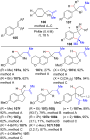
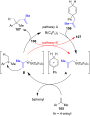
All-carbon [3 + 2] cycloaddition in natural product synthesis
Beilstein J. Org. Chem. 2020, 16, 3015–3031, doi:10.3762/bjoc.16.251
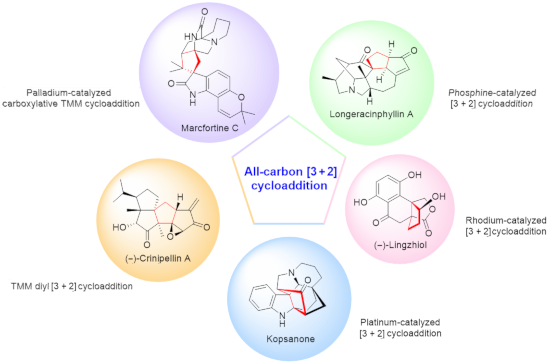
- -carbon quaternary centers in a single step and has been demonstrated in the synthesis of complex natural products. In this review, we present the development of all-carbon [3 + 2] cycloadditions and illustrate their application in natural product synthesis reported in the last decade covering 2011–2020
- , the all-carbon [3 + 2] cycloaddition can forge vicinal all-carbon quaternary centers [12] in a single-step operation and provides a direct access to various substituted five-membered carbocycles. These characteristics make the all-carbon [3 + 2] cycloaddition an appealing method and/or strategy in the
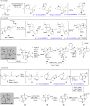
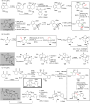
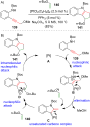
- % yield, which possesses three contiguous stereocenters with vicinal all-carbon quaternary centers. (Scheme 11A). According to the proposed mechanism, coordination of the triple bond of 142 to the electrophilic platinum complex A followed by intramolecular nucleophilic attack by the methoxy group gives







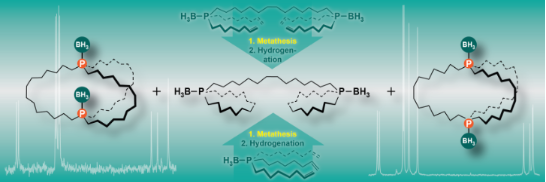
Non-metal-templated approaches to bis(borane) derivatives of macrocyclic dibridgehead diphosphines via alkene metathesis
Beilstein J. Org. Chem. 2018, 14, 2354–2365, doi:10.3762/bjoc.14.211
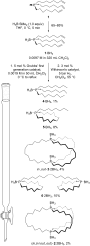
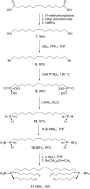
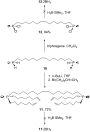
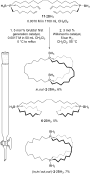
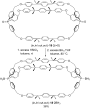
- dialkyl effect associated with the quaternary centers [52]. Finally, it should be noted that a number of alkene containing phosphine boranes have been employed in metathesis reactions [53][54]. In particular, the tetraalkenyl diphosphine diborane 19·2BH3 in Scheme 10 represents a downsized version of 11






Enantioconvergent catalysis
Beilstein J. Org. Chem. 2016, 12, 2038–2045, doi:10.3762/bjoc.12.192
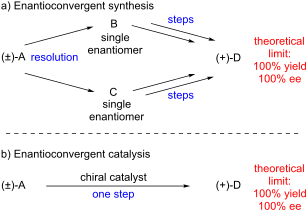
- stereoablative approach (Scheme 3) [22][23]. Deprotonation and elimination of the halide in oxindole (±)-8 leads to achiral azaxylylene intermediate 11, which is trapped with malonate nucleophiles to form all-carbon quaternary centers. The overall transformation is unusual since oxindoles are typically


Bridgehead vicinal diallylation of norbornene derivatives and extension to propellane derivatives via ring-closing metathesis
Beilstein J. Org. Chem. 2016, 12, 1877–1883, doi:10.3762/bjoc.12.177

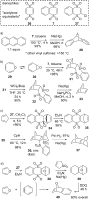
- ring-closing metathesis (RCM) [24][25][26][27][28][29][30][31][32]. Whereas, the diallyl derivative 2 can be derived from a readily available Diels–Alder (DA) adduct 3 through an allylation sequence. Results and Discussion Installation of two C–C bonds to generate quaternary centers in a


Synthesis of 2-oxindoles via 'transition-metal-free' intramolecular dehydrogenative coupling (IDC) of sp2 C–H and sp3 C–H bonds
Beilstein J. Org. Chem. 2016, 12, 1153–1169, doi:10.3762/bjoc.12.111
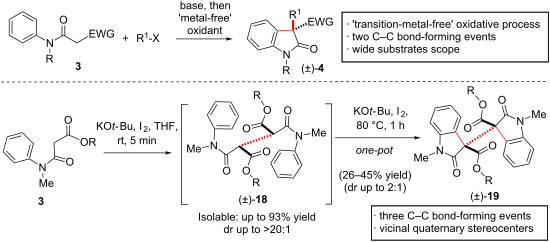
- shows that formation of a stabilized tertiary radical probably facilitates the IDC process for the syntheses of 2-oxindoles. However, if a tertiary radical is responsible for the oxidative process, then one would realize the formation of dimeric 2-oxindoles sharing vicinal all-carbon quaternary centers



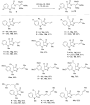


Modular synthesis of the pyrimidine core of the manzacidins by divergent Tsuji–Trost coupling
Beilstein J. Org. Chem. 2016, 12, 1111–1121, doi:10.3762/bjoc.12.107
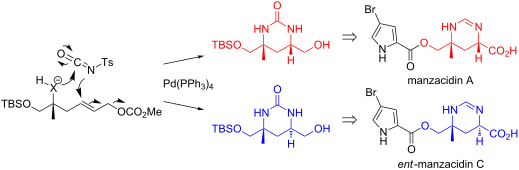
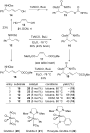
- features in a variety of potent natural products and bioactive agents [1][2][3][4][5]. As exemplified by the marine natural products manzazidins A and C [2][3][4][5], they may be characterized by diverse configurations, including synthetically challenging quaternary centers. Owing to their pronounced



Cupreines and cupreidines: an established class of bifunctional cinchona organocatalysts
Beilstein J. Org. Chem. 2016, 12, 429–443, doi:10.3762/bjoc.12.46
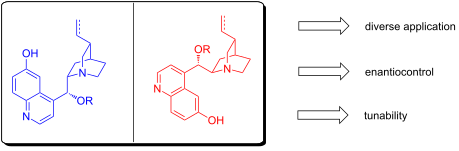
- processes Asymmetric oxidative coupling All carbon quaternary centers are prevalent in both natural and pharmaceutical compounds, but rank amongst the hardest to synthesize in a stereoselective manner. Dixon and co-workers have addressed this through the development of an asymmetric organocatalytic


Anionic sigmatropic-electrocyclic-Chugaev cascades: accessing 12-aryl-5-(methylthiocarbonylthio)tetracenes and a related anthra[2,3-b]thiophene
Beilstein J. Org. Chem. 2015, 11, 273–279, doi:10.3762/bjoc.11.31
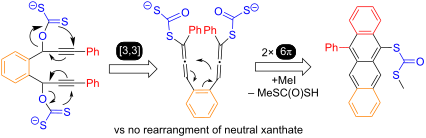
- resulting in the broad uninformative NMR spectra in the cascade byproducts. The structure of 15 is unremarkable except for the presence of a highly elongated C–C bond (1.63 Å) brought on through the steric congestion of the adjacent quaternary centers. A similar situation has been reported [29]. The use of


Formal total syntheses of classic natural product target molecules via palladium-catalyzed enantioselective alkylation
Beilstein J. Org. Chem. 2014, 10, 2501–2512, doi:10.3762/bjoc.10.261

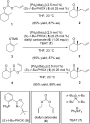
- quaternary centers, two of which are stereogenic. Being a hydrocarbon, (−)-thujopsene (10) has few natural handles for retrosynthetic analysis. Inspired by the complexity of this relatively small natural product, several total syntheses of racemic 10 have been reported [25][26][27][28][29] along with at
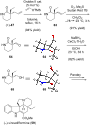
- quaternary centers. The medicinal relevance and structural complexity of vincadifformine have led to a large number of total syntheses [98][99][100][101][102][103][104], including several enantioselective examples [105][106][107][108]. Recently, Pandey reported a highly efficient synthesis of




Chiral phosphines in nucleophilic organocatalysis
Beilstein J. Org. Chem. 2014, 10, 2089–2121, doi:10.3762/bjoc.10.218
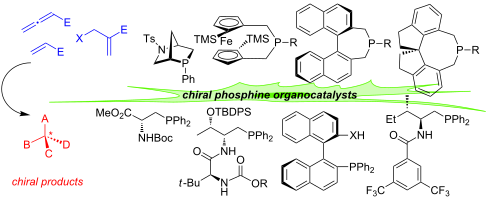
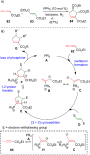
- activated isatin-based alkenes (Scheme 39) [76]. The reactions, performed in chloroform in the presence of molecular sieves at room temperature, provided biologically important 3-spirocyclopentene-2-oxindoles with two contiguous quaternary centers in very high yields and with good enantioselectivities; they


Synthesis of the B-seco limonoid core scaffold
Beilstein J. Org. Chem. 2014, 10, 194–208, doi:10.3762/bjoc.10.15
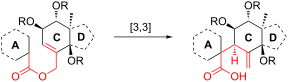
- quaternary centers at the ring junction. We decided to start the sequence with known enone 15 [39] and intended to construct the all-carbon quaternary center at C13 by substrate controlled α-functionalization. The second quaternary center at C14 might be established by 1,2-addition and finally, ring-closing