Search results
Search for "shuttling" in Full Text gives 27 result(s) in Beilstein Journal of Organic Chemistry.
Electrochemical reduction of unsaturated carbon–carbon bonds via 3d transition-metal catalysis
Beilstein J. Org. Chem. 2026, 22, 955–981, doi:10.3762/bjoc.22.75
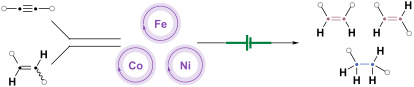
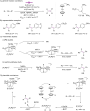
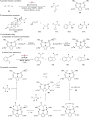
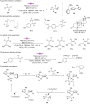
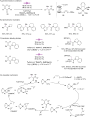
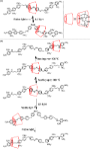
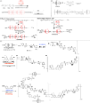
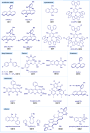
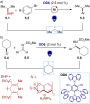
- experiments failed to produce cyclized products, arguing against the presence of long-lived radical intermediates and instead supporting a concerted HAT manifold (Scheme 11C, ii). Notably, this mechanism is hydride-free, operating through reversible ligand-based N–H storage and direct hydrogen-atom shuttling








Effect of a photoswitchable rotaxane on membrane permeabilization across lipid compositions
Beilstein J. Org. Chem. 2025, 21, 2498–2512, doi:10.3762/bjoc.21.192
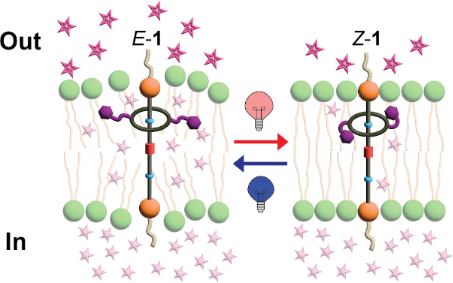
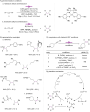
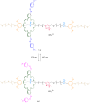
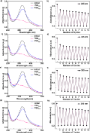
- bilayers through the shuttling of the macrocycle carrying the ions or through a relay mechanism [10][11]. In one example, the isomerization of an azobenzene photoswitch incorporated into the axle was used to modulate the shuttling rate of the macrocycle and, consequently, the efficiency of potassium ion




Rotaxanes with integrated photoswitches: design principles, functional behavior, and emerging applications
Beilstein J. Org. Chem. 2025, 21, 2345–2366, doi:10.3762/bjoc.21.179
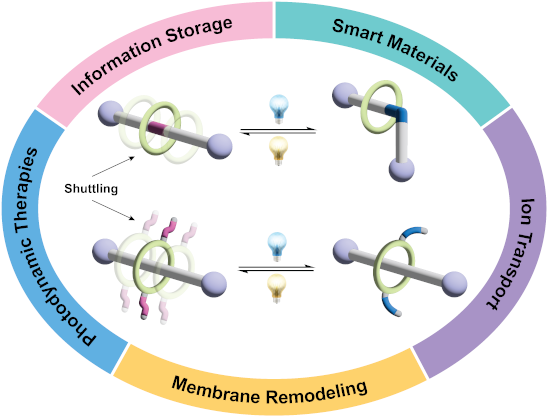
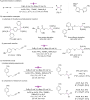
- shuttling dynamics. In this review, we discuss key examples of photoswitchable rotaxanes, organized according to the position of the photoswitch, either embedded in the axle or incorporated into the macrocycle. We examine the major classes of photoswitches used, including their switching mechanisms and the
- increasingly require rethinking and developing new structural designs that incorporate more efficient and advanced photoswitches to fully realize their potential. Keywords: macrocycle; photoisomerization; photoswitches; rotaxanes; shuttling; Introduction Harnessing light energy to control intra- and
- regulating the macrocycle’s position and, when appropriate, its shuttling rate. This section highlights representative examples featuring the most widely used photoswitches. Acridane Acridane photoswitching involves its photoheterolysis, generating a positively charged acridinium and an alkoxide, typically a





Cyclodextrin-based rotaxanes for polymer materials: challenge on simultaneous realization of inexpensive production and defined structures
Beilstein J. Org. Chem. 2024, 20, 3026–3049, doi:10.3762/bjoc.20.252
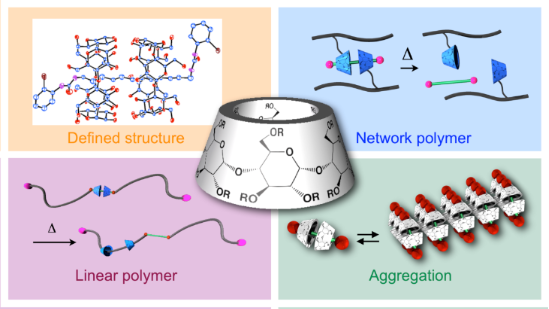
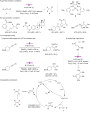
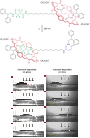
- 9C) [47]. Regarding the methoxy substituent, no inclusion formation was observed in the [2]rotaxane framework, whereas a shuttling motion of the wheel was observed on the axle moiety, indicating that a different stabilization effect was exerted based on the axle-end structures (Figure 9D). Such a






Copper-catalyzed yne-allylic substitutions: concept and recent developments
Beilstein J. Org. Chem. 2024, 20, 2739–2775, doi:10.3762/bjoc.20.232
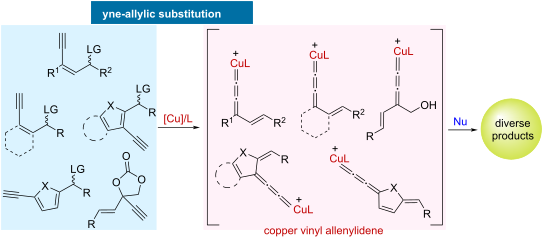
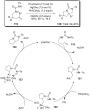
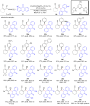
- shuttling (Scheme 53, 51a–k). Furthermore, they established a Cu-catalyzed asymmetric multicomponent reaction for yne-allylic substitution, seamlessly integrating 13C-labeled CO2 into enantiomerically pure products (Scheme 54, 51a, 51c, 51f, 51g). This methodology enabled the synthesis of diverse, high
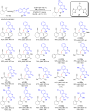
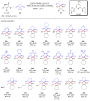
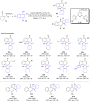
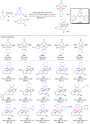
- arylpyrroles. Construction of chiral arylpyrroles with 1,2-di-axial chirality. Proposed mechanism. CO2 shuttling in yne-allylic substitution. CO2 fixing in yne-allylic substitution. Proposed mechanism. Funding This work was supported by the National Natural Science Foundation of China (Nos. 22071242 and













gem-Difluorination of carbon–carbon triple bonds using Brønsted acid/Bu4NBF4 or electrogenerated acid
Beilstein J. Org. Chem. 2024, 20, 2261–2269, doi:10.3762/bjoc.20.194
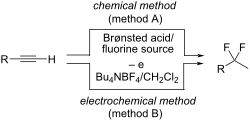
- HF is still inevitable [40][41]. Quite recently, Crimmin and co-workers reported gem-difluorination by shuttling between fluoroalkanes and alkynes, in which catalytic HF played a key role [42]. In the course of our study on the fluorination reaction, we have envisioned that the combination of a



Discovery of unguisin J, a new cyclic peptide from Aspergillus heteromorphus CBS 117.55, and phylogeny-based bioinformatic analysis of UngA NRPS domains
Beilstein J. Org. Chem. 2024, 20, 321–330, doi:10.3762/bjoc.20.32
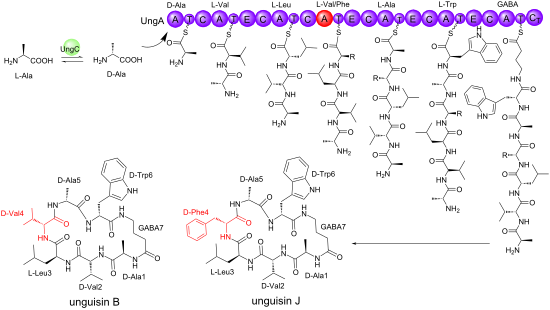
- of several catalytic domains organized into modules. Typically, a module possesses an adenylation (A) domain for selecting and activating amino- or keto acids, a thiolation (T) domain for shuttling intermediates between catalytic domains, and a condensation (C) domain that catalyzes amide or ester


Perspectives on push–pull chromophores derived from click-type [2 + 2] cycloaddition–retroelectrocyclization reactions of electron-rich alkynes and electron-deficient alkenes
Beilstein J. Org. Chem. 2024, 20, 125–154, doi:10.3762/bjoc.20.13
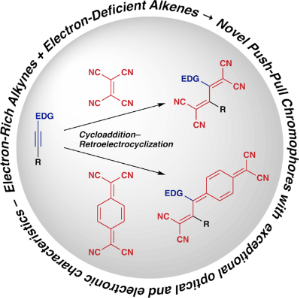
- precursor 42 and macrocycle 43, followed by an additional reaction of the alkyne moiety with TCNQ [120]. Rotaxane 46 terminated using push–pull chromophores, which exhibited a solvent-driven molecular shuttling phenomenon, was synthesized from the thread precursor 45 using a clipping approach; however, the
- chain in dimethyl sulfoxide. Furthermore, the solvent-driven shuttling motion of the macrocycle was observed to exert a discernible effect on the aggregation of the amphiphilic molecular system. In particular, changing the solvent led to the generation of interlaced nanofibers, perforated capsules, and


Enabling artificial photosynthesis systems with molecular recycling: A review of photo- and electrochemical methods for regenerating organic sacrificial electron donors
Beilstein J. Org. Chem. 2023, 19, 1198–1215, doi:10.3762/bjoc.19.88
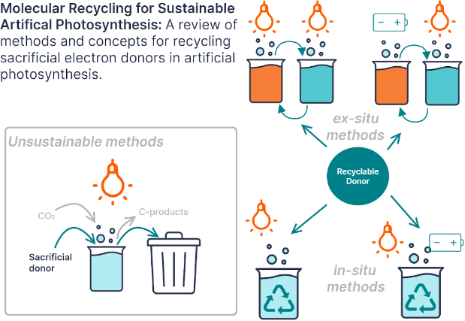
- employ redox mediators can use compounds such as cobalt bipyridine complexes which undergo fast reversible electron transfer reactions [2][4][8]. Z-schemes require a steady state concentration of both oxidized and reduced redox mediator species to allow an efficient shuttling of electrons between
- reduction consumed the sacrificial donor methanol to form formic acid and formaldehyde [56]. This system is interesting for a number of reasons. Rather than intermediate redox mediators shuttling charge between two photocatalytic assemblies, Ishitani, Domen, and co-workers covalently connected the catalytic


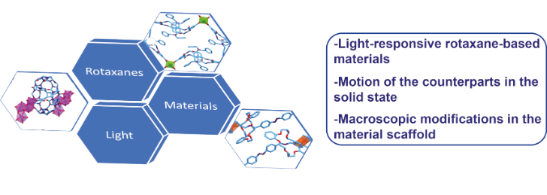
Light-responsive rotaxane-based materials: inducing motion in the solid state
Beilstein J. Org. Chem. 2023, 19, 873–880, doi:10.3762/bjoc.19.64
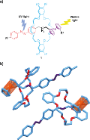
- supramolecular gels (Figure 2a) [52]. Upon irradiation using a UV-light-emitting diode (LED) and a visible LED as sources, the reversible cleavage of the trithiocarbonate stoppers was accomplished, thus allowing the dethreading [53] of the wheels to take place by the shuttling of the macrocycles along the thread
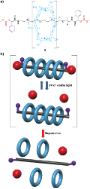
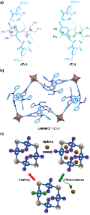
- counterparts upon light irradiation. In the highlighted polymeric example, a light input photodegrades the stoppers, allowing the dethreading process through the shuttling of the macrocycle along the linear component. The highlighted examples of MOFs include two different types of motion: (i) a different

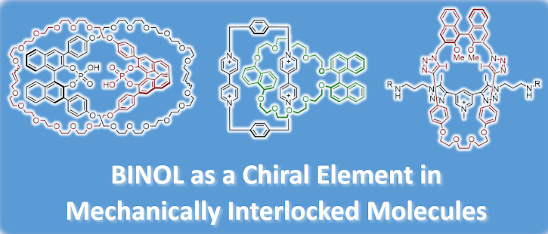
BINOL as a chiral element in mechanically interlocked molecules
Beilstein J. Org. Chem. 2022, 18, 508–523, doi:10.3762/bjoc.18.53
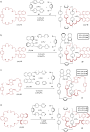
- the axle, placing it away from the polymer backbone. By N-acylation of the ammonium group, a shuttling of the macrocycle towards the ester moiety is achieved, placing the chiral information of the macrocycle in closer proximity to the polymer backbone (polymers 33). The influence of the chiral BINOL




Photocatalysis with organic dyes: facile access to reactive intermediates for synthesis
Beilstein J. Org. Chem. 2020, 16, 1163–1187, doi:10.3762/bjoc.16.103
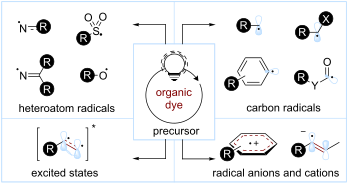
- excited state of the photocatalyst engages in SET or energy transfer events with suitable cocatalysts for hydrogen shuttling, such as thiols. This results in the formation of active species that promote the H abstraction from the substrates. MacMillan exploited this strategy for the deuteration and





Copper catalysis with redox-active ligands
Beilstein J. Org. Chem. 2020, 16, 858–870, doi:10.3762/bjoc.16.77
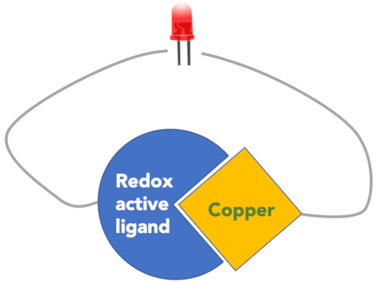
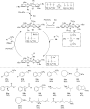
- a neighboring tyrosine radical ligand for the shuttling of overall two protons and two electrons. This peculiar mechanism is enabled by transient storage of electronic density on the tyrosine ligands and perfectly illustrates the central role of ancillary pro-radical ligands in biological systems


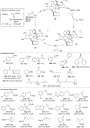
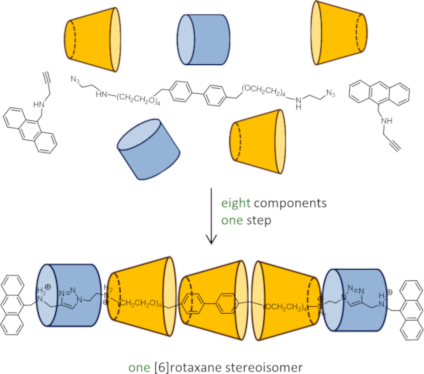
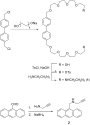
Synthesis of a [6]rotaxane with singly threaded γ-cyclodextrins as a single stereoisomer
Beilstein J. Org. Chem. 2019, 15, 1829–1837, doi:10.3762/bjoc.15.177
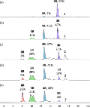
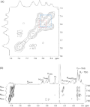
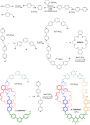
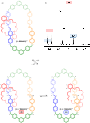
- three γ-CD in 6R. Partial (a) COSY spectrum (500 MHz, D2O, 298 K) and (b) NOESY (500 MHz, D2O, 298 K) of 4R showing the HBPh protons respectively as two paired of coupled signals and their NOE cross peaks with the H2 and H3 protons. Possible structures of 5R assuming no fast shuttling of the γ-CD along





Olefin metathesis in multiblock copolymer synthesis
Beilstein J. Org. Chem. 2019, 15, 218–235, doi:10.3762/bjoc.15.21

- multiblock copolymers with respect to self-assembly. In recent years, it was demonstrated that such polymers can be prepared with many of the available techniques, including polycondensation [28], chain-shuttling polymerization [29], copper-mediated radical polymerization [30][31][32], reversible addition






Tetrathiafulvalene – a redox-switchable building block to control motion in mechanically interlocked molecules
Beilstein J. Org. Chem. 2018, 14, 2163–2185, doi:10.3762/bjoc.14.190
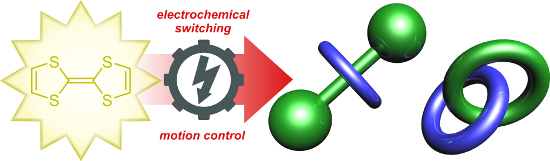
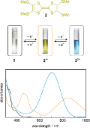
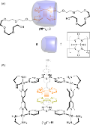
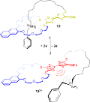
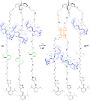
- site. Chemical oxidation to the dication TTF2+ triggers a translational motion of the wheel towards the 1,5-dihydroxynaphthalene station (green) as shown by UV–vis and 2D NMR experiments. Chemical reduction with zinc powder restored the spectroscopic properties of the starting state and back-shuttling
- consists of a symmetric axle molecule in which both axle halves bear a TTF and a hydroxynaphthalene station. In the unswitched state, each TTF station is encircled by a wheel. Oxidation of the TTF units then induces shuttling motions towards the inner hydroxynaphthalene stations, which significantly











A switchable [2]rotaxane with two active alkenyl groups
Beilstein J. Org. Chem. 2018, 14, 2074–2081, doi:10.3762/bjoc.14.181
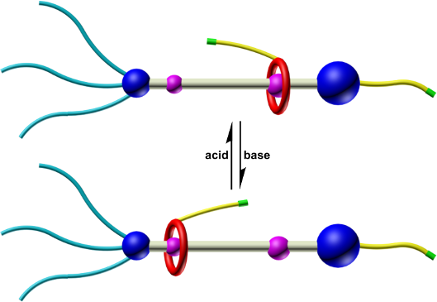
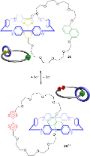
- and thiol functional groups. The reversible shuttling movement of the macrocycle between two different recognition sites on the molecular thread can be driven by external acid and base. This kind of rotaxane bearing functional groups provides a powerful platform for preparing stimuli-responsive
- design, synthesis, characterization and shuttling motion of a [2]rotaxane R1, which is modified with two naked alkenyl bonds. In this [2]rotaxane, a functional dibenzo-24-crown-8 (DB24C8) macrocycle is interlocked with an flexible chain and could perform reversible shuttling between two different
- the presence of Grubbs’ catalyst and thiol groups irradiated by UV light. Besides, the shuttling movement of the DB24C8 macrocyclic ring was confirmed by 1H NMR spectroscopy. Results and Discussion The structures of the two states of [2]rotaxane R1 are shown in Scheme 1. In the target structure [2


A pyridinium/anilinium [2]catenane that operates as an acid–base driven optical switch
Beilstein J. Org. Chem. 2018, 14, 1908–1916, doi:10.3762/bjoc.14.165
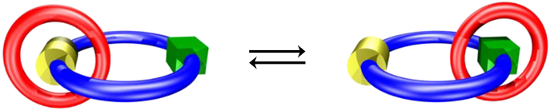
- DB24C8 ring resides solely at the bis(pyridinium)ethane site and changes to colorless when the crown ether is shuttling (i.e., circumrotating) back and forth between the two recognition sites thus optically signalling the onset of the shuttling dynamics. Keywords: catenane; mechanically interlocked
- prefers to occupy the bis(pyridinium)ethane site over the benzylanilinium site and that shuttling between the two sites is slow on the NMR timescale under these experimental conditions. Addition of base (NEt3) returns the system to its original state and the process can be cycled by repeated addition of
- crown resides solely on the bis(pyridinium)ethane site for [8DB24C8]6+ but, when the [2]catenane does not absorb in the UV–visible region yielding a colorless solution this means the crown ether must be shuttling (i.e., circumrotating) back and forth between the two co-conformations, A and B, of [8


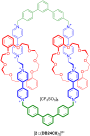
![[Graphic 3]](/bjoc/content/inline/1860-5397-14-165-i4.svg?max-width=637&scale=0.827274) DB24C8]6+ containing benzylanilinium and bis(pyridinium)ethane...
DB24C8]6+ containing benzylanilinium and bis(pyridinium)ethane...


Phosphodiester models for cleavage of nucleic acids
Beilstein J. Org. Chem. 2018, 14, 803–837, doi:10.3762/bjoc.14.68
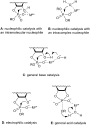
- reduce electron density in their vicinity, inductively through bonds and electrostatically through space, or they may serve as weak general acids. The guanidine group may additionally participate in proton shuttling through various tautomeric forms [75] and the amino group through bifurcated H-bonds. The
- truncated version of 6, bearing only one anchoring side-arm [79]. The βlg = −0.7 was of the same order of magnitude as the one, −0.59, reported for the pH- and buffer-independent cleavage, where water molecules mediate the proton shuttling. Cooperative catalysis by two guanidine groups has been demonstrated



Strategies in megasynthase engineering – fatty acid synthases (FAS) as model proteins
Beilstein J. Org. Chem. 2017, 13, 1204–1211, doi:10.3762/bjoc.13.119
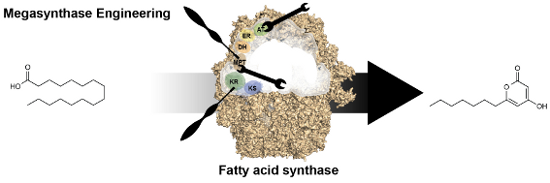
- of an E. coli cell of 2.5 µm [3][22], copy numbers account for molar concentrations of about 0.007 to 0.016 mM. Substrate shuttling FA and PK syntheses generally rely on ACP that shuttles substrates and intermediates as covalently bound cargo between active sites [23]. In FAS and PKS (type I
- ) megasynthases, ACP are embedded as domains in the large polypeptide chains (Figure 2a and b). Held in the compartment, ACP hinders the loss of the covalently attached acyl moiety, realizing high substrate concentrations. In addition to intramodular substrate shuttling, ACP is also responsible for the
- duplication has been ranked as a rather late event during the course of evolution [25]. In the light of the key role of ACP in substrate shuttling, multiple ACP domains might be beneficial in increasing the substrate concentration at which type I synthesis is performed [26][27]. The conformationally more


Facile synthesis of a 3-deazaadenosine phosphoramidite for RNA solid-phase synthesis
Beilstein J. Org. Chem. 2016, 12, 2556–2562, doi:10.3762/bjoc.12.250

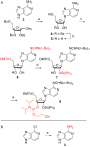
- plays a dominant role in catalysis [3][4][5]. Also for the pistol ribozyme, evidence exists that an adenine-N3 in the active site is significant for the cleavage activity, most likely by 5’-O-leaving group stabilization through proton shuttling [6][7]. Another example for a specific role of an adenine


On the mechanism of imine elimination from Fischer tungsten carbene complexes
Beilstein J. Org. Chem. 2016, 12, 1322–1333, doi:10.3762/bjoc.12.125
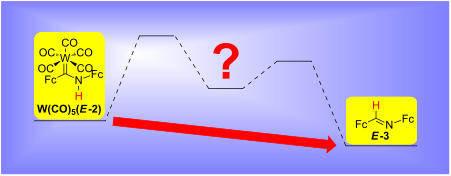
- /reductive elimination pathway shuttling the hydrogen atom from the nitrogen atom via the W atom to the carbene carbon atom. This pathway is unfeasible for homologous chromium complexes and explains the resistance of Cr(CO)5(E-2) towards thermal E-3 formation. A base-assisted pathway for imine formation is




Synthesis of an organic-soluble π-conjugated [3]rotaxane via rotation of glucopyranose units in permethylated β-cyclodextrin
Beilstein J. Org. Chem. 2014, 10, 2800–2808, doi:10.3762/bjoc.10.297

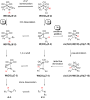
- randomly present because of shuttling of CDs along the π-conjugated chain and remnant water molecules; these affect the charge-transport ability and are disadvantageous for the use of these IMWs as electronic materials. Therefore, we decided to use permethylated cyclodextrin (PMCD) provided by


Substitution effect and effect of axle’s flexibility at (pseudo-)rotaxanes
Beilstein J. Org. Chem. 2014, 10, 1299–1307, doi:10.3762/bjoc.10.131
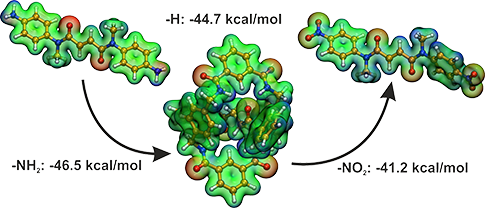
- for the understanding and the development of rotaxanes. Zerbetto et al. showed that the shuttling motion can be separated from the other degrees of freedom, and that the effective coordinate of the motion can be described as a double-minimum potential [18]. The co-conformer stability for rotaxane
- based molecular shuttles was investigated by means of molecular modeling [19]. The Peyerimhoff group has carried out an in depth study of the rotaxane formation [20]. A later study investigated the shuttling motion of the wheel as a one-dimensional translation, together with the influence of the Kohn
- –Sham frontier orbitals of wheel and axle upon conductivity and electron tunneling along the rotaxane [21]. A quantum chemical shuttling motion study of rotaxane-based molecular switching devices has revealed how the modification of the redox states of both entities results in changes of the


New developments in gold-catalyzed manipulation of inactivated alkenes
Beilstein J. Org. Chem. 2013, 9, 2586–2614, doi:10.3762/bjoc.9.294
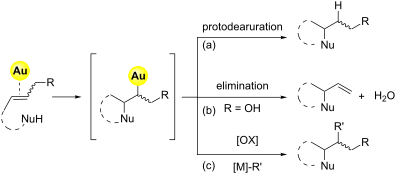
- indole ring, the counterion facilitated the elimination of water (103) by shuttling one proton atom, from the indolyl ring to the leaving hydroxy group. The proposed catalytic cycle accounted also for the observed stereochemistry of the product 100 (R) when the chiral binuclear gold complex (R)-DTBM-MeO