


Flow carbonylation of sterically hindered ortho-substituted iodoarenes
- Carl J. Mallia,
- Gary C. Walter and
- Ian R. Baxendale
Beilstein J. Org. Chem. 2016, 12, 1503–1511, doi:10.3762/bjoc.12.147
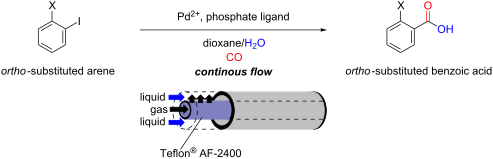

Graphical Abstract

Figure 1: Steric interactions of the carbon monoxide coordination to the aryl complex intermediate.

Figure 2: A) molecular structure of complex 1; B) ball and stick representation of X-ray structure; C) ball a...

Figure 3: Reverse “tube-in-tube” reactor.

Scheme 1: Comparison of plug flow reactor carbonylation (left) and “tube-in-tube” reactor carbonylation (righ...

Scheme 2: Schematic diagram of the flow process.

Figure 4: Phosphine ligands used for the ortho-carbonylation reaction.

Scheme 3: The batch carbonylation of 2-chloro-1-iodobenzene in conventional lab (top) and using a Parr autocl...

Scheme 4: Structures of ortho-substituted carboxylic acids prepared via a continuous flow hydroxy-carbonylati...

Scheme 5: Flow carbonylation of 2-iodonaphtalene.

Figure 5: X-ray structure of substrate 33.

Scheme 6: Scale up synthesis of 2-chloro-4-fluorobenzoic acid (20).
Biosynthesis of oxygen and nitrogen-containing heterocycles in polyketides
- Franziska Hemmerling and
- Frank Hahn
Beilstein J. Org. Chem. 2016, 12, 1512–1550, doi:10.3762/bjoc.12.148
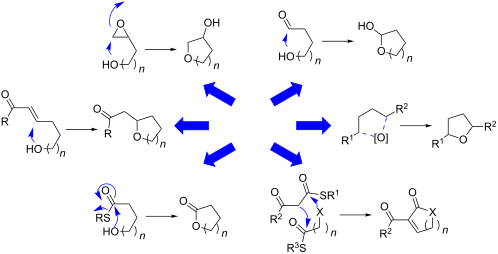

Graphical Abstract

Scheme 1: Schematic description of the cyclisation reaction catalysed by TE domains. In most cases, the nucle...

Scheme 2: Mechanisms for the formation of oxygen heterocycles. The degree of substitution can differ from tha...

Scheme 3: Pyran-ring formation in pederin (24) biosynthesis. Incubation of recombinant PedPS7 with substrate ...

Scheme 4: The domain AmbDH3 from ambruticin biosynthesis catalyses the dehydration of 25 and subsequent cycli...

Scheme 5: SalBIII catalyses dehydration of 29 and subsequent cyclisation to tetrahydropyran 30 [18].

Figure 1: All pyranonaphtoquinones contain either the naphtha[2,3-c]pyran-5,10-dione (32) or the regioisomeri...

Scheme 6: Pyran-ring formation in actinorhodin (34) biosynthesis. DNPA: 4-dihydro-9-hydroxy-1-methyl-10-oxo-3H...

Scheme 7: Pyran formation in granaticin (36) biosynthesis. DNPA: 4-dihydro-9-hydroxy-1-methyl-10-oxo-3H-napht...

Scheme 8: Pyran formation in alnumycin (37) biosynthesis. Adapted from [21].

Scheme 9: Biosynthesis of pseudomonic acid A (61). The pyran ring is initially formed in 57 after dehydrogena...

Scheme 10: Epoxidation–cyclisation leads to the formation of the tetrahydropyran ring in the western part of t...

Scheme 11: a) Nonactin (70) is formed from heterodimers of (−)(+)-dimeric nonactic acid and (+)(−)-dimeric non...

Figure 2: Pamamycins (73) are macrodiolide antibiotics containing three tetrahydrofuran moieties, which are a...

Scheme 12: A PS domain homolog in oocydin A (76) biosynthesis is proposed to catalyse furan formation via an o...

Scheme 13: Mechanism of oxidation–furan cyclisation by AurH, which converts (+)-deoxyaureothin (77) into (+)-a...

Scheme 14: Leupyrrin A2 (80) and the proposed biosynthesis of its furylidene moiety [69,70].

Scheme 15: Asperfuranone (93) biosynthesis, adapted from [75].
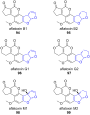
Figure 3: The four major aflatoxins produced by Aspergilli are the types B1, B2, G1 and G2 (94–97). In the di...

Scheme 16: Overview on aflatoxin B1 (94) biosynthesis. HOMST = 11-hydroxy-O-methylsterigmatocystin [78,79,82-106].

Scheme 17: A zipper mechanism leads to the formation of oxygen heterocycles in monensin biosynthesis [109-111].

Scheme 18: Formation of the 2,6-dioxabicyclo[3.2.1]octane (DBO) ring system in aurovertin B (118) biosynthesis ...

Figure 4: Structures of the epoxide-containing polyketides epothilone A (119) and oleandomycin (120) [123-125].

Scheme 19: Structures of phoslactomycin B (121) (a) and jerangolid A (122) (b). The heterocycle-forming steps ...

Scheme 20: a) Structures of rhizoxin (130) and cycloheximide (131). Model for the formation of δ-lactones (b) ...

Scheme 21: EncM catalyses a dual oxidation sequence and following processing of the highly reactive intermedia...

Figure 5: Mesomeric structures of tetronates [138,139].

Figure 6: Structures of tetronates for which gene clusters have been sequenced. The tetronate moiety is shown...
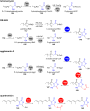
Scheme 22: Conserved steps for formation and processing in several 3-acyl-tetronate biosynthetic pathways were...

Scheme 23: In versipelostatin A (153) biosynthesis, VstJ is a candidate enzyme for catalysing the [4 + 2] cycl...

Scheme 24: a) Structures of some thiotetronate antibiotics. b) Biosynthesis of thiolactomycin (165) as propose...

Scheme 25: Aureusidine synthase (AS) catalyses phenolic oxidation and conjugate addition of chalcones leading ...

Scheme 26: a) Oxidative cyclisation is a key step in the biosynthesis of spirobenzofuranes 189, 192 and 193. b...

Scheme 27: A bicyclisation mechanism forms a β-lactone and a pyrrolidinone and removes the precursor from the ...

Scheme 28: Spontaneous cyclisation leads to off-loading of ebelactone A (201) from the PKS machinery [163].

Scheme 29: Mechanisms for the formation of nitrogen heterocycles.

Scheme 30: Biosynthesis of highly substituted α-pyridinones. a) Feeding experiments confirmed the polyketide o...

Scheme 31: Acridone synthase (ACS) catalyses the formation of 1,3-dihydroxy-N-methylacridone (224) by condensa...

Scheme 32: A Dieckmann condensation leads to the formation of a 3-acyl-4-hydroxypyridin-2-one 227 and removes ...

Scheme 33: a) Biosynthesis of the pyridinone tenellin (234). b) A radical mechanism was proposed for the ring-...

Scheme 34: a) Oxazole-containing PKS–NRPS-derived natural products oxazolomycin (244) and conglobatin (245). b...

Scheme 35: Structure of tetramic acids 251 (a) and major tautomers of 3-acyltetramic acids 252a–d (b). Adapted...

Scheme 36: Equisetin biosynthesis. R*: terminal reductive domain. Adapted from [202].

Scheme 37: a) Polyketides for which a similar biosynthetic logic was suggested. b) Pseurotin A (256) biosynthe...

Figure 7: Representative examples of PTMs with varying ring sizes and oxidation patterns [205,206].

Scheme 38: Ikarugamycin biosynthesis. Adapted from [209-211].

Scheme 39: Tetramate formation in pyrroindomycin aglycone (279) biosynthesis [213-215].

Scheme 40: Dieckmann cyclases catalyse tetramate or 2-pyridone formation in the biosynthesis of, for example, ...
Enantioselective addition of diphenyl phosphonate to ketimines derived from isatins catalyzed by binaphthyl-modified organocatalysts
- Hee Seung Jang,
- Yubin Kim and
- Dae Young Kim
Beilstein J. Org. Chem. 2016, 12, 1551–1556, doi:10.3762/bjoc.12.149
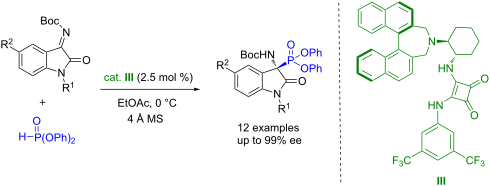

Graphical Abstract

Figure 1: Structure of chiral bifunctional organocatalysts.

Figure 2: Proposed stereochemical model.

Scheme 1: Gram scale addition of ketimine 1a and diphenyl phosphonate (2).
Methylpalladium complexes with pyrimidine-functionalized N-heterocyclic carbene ligands
- Dirk Meyer and
- Thomas Strassner
Beilstein J. Org. Chem. 2016, 12, 1557–1565, doi:10.3762/bjoc.12.150
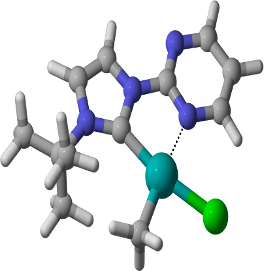

Graphical Abstract

Scheme 1: Synthesis of the monomethylpalladium(II) complexes 9–11 (in DCM) and 12 (in CH3CN).

Figure 1: Possible isomers.

Figure 2: ORTEP [39] style plot of complex 9 in the solid state. Thermal ellipsoids are given at the 50% probabil...

Figure 3: ORTEP [39] style plot of complex 12 in the solid state. Thermal ellipsoids are drawn at the 50% probabi...

Scheme 2: Synthesis of complex 13.

Figure 4: ORTEP [39] style plot of complex 13 in the solid state. Thermal ellipsoids are drawn at the 50% probabi...

Scheme 3: Possible pathways of methyl trifluoroacetate formation starting from complex 13.

Scheme 4: Synthesis of complex 14 by conversion of complex 13 with iodobenzene bistrifluoroacetate.

Scheme 5: Synthesis of the [((pym)^(NHC-R))PdII(CH3)2] complex 15.
Dinuclear thiazolylidene copper complex as highly active catalyst for azid–alkyne cycloadditions
- Anne L. Schöffler,
- Ata Makarem,
- Frank Rominger and
- Bernd F. Straub
Beilstein J. Org. Chem. 2016, 12, 1566–1572, doi:10.3762/bjoc.12.151
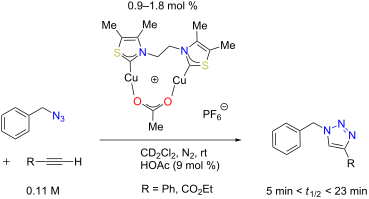

Graphical Abstract

Scheme 1: Disfavored mononuclear pathway and favored dinuclear pathway in the CuAAC click reaction, according...

Figure 1: Ball-and-stick model [42,43] of a single crystal X-ray structure of hexafluorophosphate salt 1b (CCDC 1472...

Scheme 2: Synthesis of dinuclear copper complex 2.

Figure 2: Time-conversion-diagram of the CuAAC reaction of benzyl azide with either phenylacetylene or ethyl ...
A T-shape diphosphinoborane palladium(0) complex
- Patrick Steinhoff and
- Michael E. Tauchert
Beilstein J. Org. Chem. 2016, 12, 1573–1576, doi:10.3762/bjoc.12.152
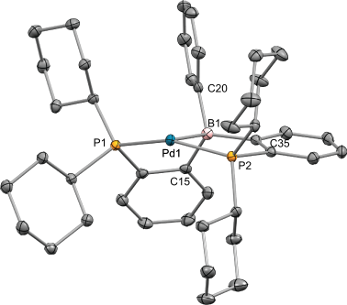

Graphical Abstract

Figure 1: Selected M→B coordination modes 1–5 [6-10] and Hofmann’s Rucaphos complex 6 [11].

Scheme 1: Synthesis of diphosphinoborane CyDPBPh and complex 9.

Figure 2: Thermal ellipsoid plots of complex 9 at the 50% probability level. H atoms and one molecule of hexa...
One-pot synthesis of 4′-alkyl-4-cyanobiaryls on the basis of the terephthalonitrile dianion and neutral aromatic nitrile cross-coupling
- Roman Yu. Peshkov,
- Elena V. Panteleeva,
- Wang Chunyan,
- Evgeny V. Tretyakov and
- Vitalij D. Shteingarts
Beilstein J. Org. Chem. 2016, 12, 1577–1584, doi:10.3762/bjoc.12.153


Graphical Abstract

Scheme 1: The main synthetic approaches to alkylcyanobiphenyls.

Scheme 2: Para-cyanophenylation of substituted benzonitriles 2 by dianion 12− with the formation of a long-li...

Scheme 3: para-Cyanophenylation of 1-cyanonaphthalene 5i by dianion 12− with subsequent butylation providing ...
Cp2TiCl/D2O/Mn, a formidable reagent for the deuteration of organic compounds
- Antonio Rosales and
- Ignacio Rodríguez-García
Beilstein J. Org. Chem. 2016, 12, 1585–1589, doi:10.3762/bjoc.12.154
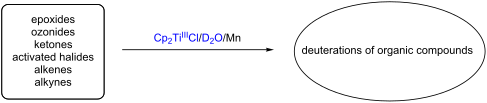

Graphical Abstract

Scheme 1: Formation of reaction intermediates susceptible of being reduced by Cp2TiCl/Mn/D2O.

Scheme 2: Proposed reduction of radicals via hydrolysis of an organometalic alkyl-TiIV or as DAT.

Scheme 3: Examples of deuterations of organic compounds using Cp2TiCl/D2O/Mn. aSubstoichiometric amount of Cp2...
On the cause of low thermal stability of ethyl halodiazoacetates
- Magnus Mortén,
- Martin Hennum and
- Tore Bonge-Hansen
Beilstein J. Org. Chem. 2016, 12, 1590–1597, doi:10.3762/bjoc.12.155


Graphical Abstract

Figure 1: Relative stability and nucleophilicity of non-stabilized (R = H, alkyl) diazo compounds (left) and ...

Scheme 1: Synthesis of ethyl halodiazoacetates [11].

Figure 2: a) The decay of 2b in toluene-d8 at 35 °C. b) The plot of log(Δ[2b]) vs time.

Scheme 2: Proposed rate determining step for the thermal decomposition of 2a–c.
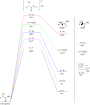
Figure 3: Transition-state energies (kcal/mol) for the release of N2 and formation of the singlet carbenes. T...

Figure 4: Thermal stability of 1 and 2a–c, and the α-substituents’ contribution to π-donation.

Figure 5: NBO atomic charges and IR stretching frequencies calculated [21] and experimentally recorded for 1 and ...

Figure 6: NBO atomic charges of the singlet carbenes from 1 and 2a,b, and d.

Figure 7: Relative thermal stability of halodiazoacetates (red color).

Figure 8: Relative nucleophilicity of halodiazoacetates (red color).
Catalytic Chan–Lam coupling using a ‘tube-in-tube’ reactor to deliver molecular oxygen as an oxidant
- Carl J. Mallia,
- Paul M. Burton,
- Alexander M. R. Smith,
- Gary C. Walter and
- Ian R. Baxendale
Beilstein J. Org. Chem. 2016, 12, 1598–1607, doi:10.3762/bjoc.12.156
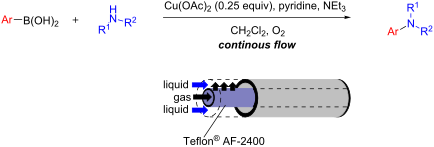

Graphical Abstract

Scheme 1: Comparison of early C–N and C–O coupling reactions.

Figure 1: General flow scheme for catalytic Chan–Lam reaction.

Figure 2: Observed trend for the effect of changing oxygen pressure on the NMR yield of 19.

Figure 3: Comparison of 1H NMR spectra of non-purified (top) and QP-DMA purified (bottom) continuous flow syn...

Scheme 2: Scope of the catalytic Chan–Lam reaction in continuous flow.

Scheme 3: Syntheses of substrate 39.

Figure 4: NOESY NMR spectrum for 30 with the characteristic NOESY signal encircled.

Figure 5: NOESY NMR spectrum for 33 with the characteristic NOESY signal encircled.

Figure 6: NOESY NMR spectrum for 35 with the characteristic NOESY signal encircled.

Figure 7: Substrates that gave no products in flow.

Scheme 4: Scale-up procedure for 19.
Rh-Catalyzed reductive Mannich-type reaction and its application towards the synthesis of (±)-ezetimibe
- Motoyuki Isoda,
- Kazuyuki Sato,
- Yurika Kunugi,
- Satsuki Tokonishi,
- Atsushi Tarui,
- Masaaki Omote,
- Hideki Minami and
- Akira Ando
Beilstein J. Org. Chem. 2016, 12, 1608–1615, doi:10.3762/bjoc.12.157
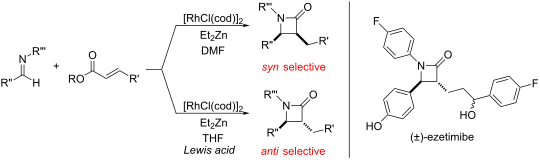

Graphical Abstract

Scheme 1: The synthesis of syn-β-lactams using a reductive Mannich-type reaction.

Scheme 2: Previous results using β-substituted α,β-unsaturated esters.

Scheme 3: A new synthetic route for ezetimibe.

Figure 1: Plausible mechanism for the Rh-catalyzed reductive Mannich-type reaction.

Scheme 4: Effect of the Lewis acid addition.

Figure 2: Reaction of 2k and 1A and the configuration of Int A.

Scheme 5: Transition-state model without Lewis acid.

Scheme 6: Transition-state model with Lewis acid.
Experimental and theoretical insights in the alkene–arene intramolecular π-stacking interaction
- Valeria Corne,
- Ariel M. Sarotti,
- Carmen Ramirez de Arellano,
- Rolando A. Spanevello and
- Alejandra G. Suárez
Beilstein J. Org. Chem. 2016, 12, 1616–1623, doi:10.3762/bjoc.12.158

Graphical Abstract

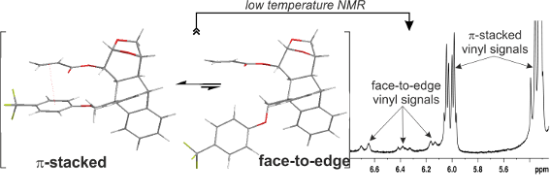
Figure 1: Intramolecular aryl–vinyl π-stacking interaction of a levoglucosenone derivative.

Scheme 1: Synthesis of acrylates 6a,b.

Figure 2: Vinyl region of the 1H NMR spectra of 6a–d in CDCl3 at 300 K.

Figure 3: Vinylic region of the low temperatures 1H NMR spectra of 6a in CDCl3.
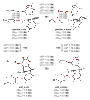
Figure 4: M06-2X/6-31+G(d) Gibbs free energy profiles (in kcal/mol) computed for the conformational equilibri...

Scheme 2: Complexes between methyl acrylate (7) and representative anisole derivatives.

Figure 5: Comparison of the M06-2X/6-31+G(d) energy profiles (in kcal/mol) computed for 6d and 6b (in grey).

Figure 6: X-ray thermal ellipsoid plot of 6a (50% probability level) showing the labeling scheme (hydrogen an...
Total synthesis of leopolic acid A, a natural 2,3-pyrrolidinedione with antimicrobial activity
- Atul A. Dhavan,
- Rahul D. Kaduskar,
- Loana Musso,
- Leonardo Scaglioni,
- Piera Anna Martino and
- Sabrina Dallavalle
Beilstein J. Org. Chem. 2016, 12, 1624–1628, doi:10.3762/bjoc.12.159


Graphical Abstract

Figure 1: Structure of leopolic acid A.

Scheme 1: Synthesis of leopolic acid A. Reagents and conditions: a) p-methoxybenzylamine, EtOH, rt, 12 h, 98%...
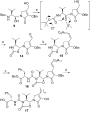
Scheme 2: Synthesis of compound 17. Reagents and conditions: a) Oxalyl chloride, DMSO, CH2Cl2, TEA, −78 °C to...
Synthesis and characterization of benzodithiophene and benzotriazole-based polymers for photovoltaic applications
- Desta Gedefaw,
- Marta Tessarolo,
- Margherita Bolognesi,
- Mario Prosa,
- Renee Kroon,
- Wenliu Zhuang,
- Patrik Henriksson,
- Kim Bini,
- Ergang Wang,
- Michele Muccini,
- Mirko Seri and
- Mats R. Andersson
Beilstein J. Org. Chem. 2016, 12, 1629–1637, doi:10.3762/bjoc.12.160

Graphical Abstract

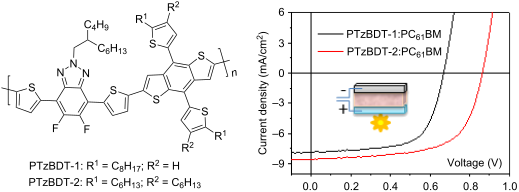
Scheme 1: Stille cross coupling reaction for the synthesis of PTzBDT-1 and PTzBDT-2.

Figure 1: UV–visible absorption spectra of the pristine PTzBDT-1 and PTzBDT-2 (A) in chlorobenzene and chloro...

Figure 2: Square wave voltamogramme of PTzBDT-1 and PTzBDT-2.

Figure 3: J–V plots, measured under standard illumination (AM1.5G, 100 mW/cm2), of PTzBDT-1: PC61BM and PTzBD...

Figure 4: A) UV–vis absorption spectra and, B) EQE plots of optimized PTzBDT-1/PTzBDT-2:PC61BM based devices.

Figure 5: AFM images (size: 5 µm × 5 µm) of: A) 1:2 (wt/wt) PTzBDT-1:PC61BM (RMS of ~1.5 nm) and, B) 1:1 (wt/...
Organic chemistry meets polymers, nanoscience, therapeutics and diagnostics
- Vincent M. Rotello
Beilstein J. Org. Chem. 2016, 12, 1638–1646, doi:10.3762/bjoc.12.161
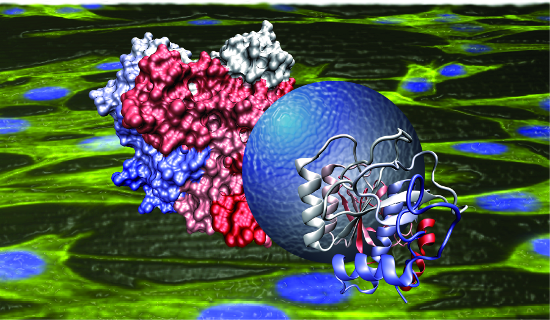

Graphical Abstract

Figure 1: Flavoenzyme model system for determining the role of aromatic stacking in flavin redox processes. R...
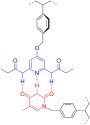
Figure 2: Recognition element-functionalized polymers for 'plug and play' modification and self-assembly.

Figure 3: Recognition-mediated assembly of nanoparticle–polymer constructs. Reproduced from [24].

Figure 4: Cytosolic delivery of GFP to cells using nanoparticle-stabilized nanocapsules. Adapted with permiss...

Figure 5: Rapid determination of therapeutic mechanisms using three-channel nanoparticle fluorescent protein ...
Rearrangements of organic peroxides and related processes
- Ivan A. Yaremenko,
- Vera A. Vil’,
- Dmitry V. Demchuk and
- Alexander O. Terent’ev
Beilstein J. Org. Chem. 2016, 12, 1647–1748, doi:10.3762/bjoc.12.162
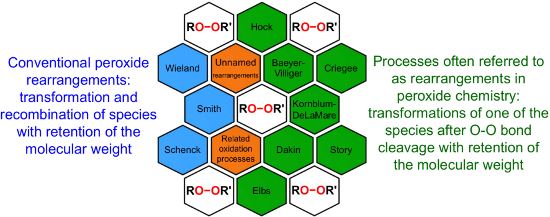

Graphical Abstract
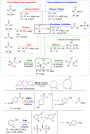
Figure 1: The named transformations considered in this review.

Scheme 1: The Baeyer–Villiger oxidation.

Scheme 2: The general mechanism of the peracid-promoted Baeyer–Villiger oxidation.

Scheme 3: General mechanism of the Lewis acid-catalyzed Baeyer–Villiger rearrangement.

Scheme 4: The theoretically studied mechanism of the BV oxidation reaction promoted by H2O2 and the Lewis aci...

Scheme 5: Proton movements in the transition states of the Baeyer–Villiger oxidation.

Scheme 6: The dependence of the course of the Baeyer–Villiger oxidation on the type of O–O-bond cleavage in t...
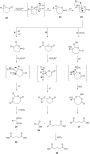
Scheme 7: The acid-catalyzed Baeyer–Villiger oxidation of cyclic epoxy ketones 22.

Scheme 8: Oxidation of isophorone oxide 29.

Scheme 9: Synthesis of acyl phosphate 32 from acyl phosphonate 31.

Scheme 10: Synthesis of aflatoxin B2 (36).

Scheme 11: The Baeyer–Villiger rearrangement of ketones 37 to lactones 38.

Scheme 12: Synthesis of 3,4-dimethoxybenzoic acid (40) via Baeyer–Villiger oxidation.

Scheme 13: Oxone transforms α,β-unsaturated ketones 43 into vinyl acetates 44.

Scheme 14: The Baeyer–Villiger oxidation of ketones 45 using diaryl diselenide and hydrogen peroxide.

Scheme 15: Baeyer–Villiger oxidation of (E)-2-methylenecyclobutanones.

Scheme 16: Oxidation of β-ionone (56) by H2O2/(BnSe)2 with formation of (E)-2-(2,6,6-trimethylcyclohex-1-en-1-...

Scheme 17: The mechanism of oxidation of ketones 58a–f by hydrogen peroxide in the presence of arsonated polys...

Scheme 18: Oxidation of ketone (58b) by H2O2 to 6-methylcaprolactone (59b) catalyzed by Pt complex 66·BF4.

Scheme 19: Oxidation of ketones 67 with H2O2 in the presence of [(dppb}Pt(µ-OH)]22+.

Scheme 20: The mechanism of oxidation of ketones 67 in the presence of [(dppb}Pt(µ-OH)]22+ and H2O2.

Scheme 21: Oxidation of benzaldehydes 69 in the presence of the H2O2/MeReO3 system.

Scheme 22: Oxidation of acetophenones 72 in the presence of the H2O2/MeReO3 system.

Scheme 23: Baeyer–Villiger oxidation of 2-adamantanone (45c) in the presence of Sn-containing mesoporous silic...

Scheme 24: Aerobic Baeyer–Villiger oxidation of ketones 76 using metal-free carbon.

Scheme 25: A regioselective Baeyer-Villiger oxidation of functionalized cyclohexenones 78 into a dihydrooxepin...

Scheme 26: The oxidation of aldehydes and ketones 80 by H2O2 catalyzed by Co4HP2Mo15V3O62.

Scheme 27: The cleavage of ketones 82 with hydrogen peroxide in alkaline solution.

Scheme 28: Oxidation of ketones 85 to esters 86 with H2O2–urea in the presence of KHCO3.

Scheme 29: Mechanism of the asymmetric oxidation of cyclopentane-1,2-dione 87a with the Ti(OiPr)4/(+)DET/t-BuO...

Scheme 30: The oxidation of cis-4-tert-butyl-2-fluorocyclohexanone (93) with m-chloroperbenzoic acid.

Scheme 31: The mechanism of the asymmetric oxidation of 3-substituted cyclobutanone 96a in the presence of chi...

Scheme 32: Enantioselective Baeyer–Villiger oxidation of cyclic ketones 98.

Scheme 33: Regio- and enantioselective Baeyer–Villiger oxidation of cyclic ketones 101.

Scheme 34: The proposed mechanism of the Baeyer–Villiger oxidation of acetal 105f.

Scheme 35: Synthesis of hydroxy-10H-acridin-9-one 117 from tetramethoxyanthracene 114.

Scheme 36: The Baeyer–Villiger oxidation of the fully substituted pyrrole 120.

Scheme 37: The Criegee rearrangement.

Scheme 38: The mechanism of the Criegee reaction of a peracid with a tertiary alcohol 122.

Scheme 39: Criegee rearrangement of decaline ethylperoxoate 127 into ketal 128.

Scheme 40: The ionic cleavage of 2-methoxy-2-propyl perester 129.

Scheme 41: The Criegee rearrangement of α-methoxy hydroperoxide 136.
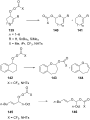
Scheme 42: Synthesis of enol esters and acetals via the Criegee rearrangement.

Scheme 43: Proposed mechanism of the transformation of 1-hydroperoxy-2-oxabicycloalkanones 147a–d.

Scheme 44: Transformation of 3-hydroxy-1,2-dioxolanes 151 into diketone derivatives 152.

Scheme 45: Criegee rearrangement of peroxide 153 with the mono-, di-, and tri-O-insertion.

Scheme 46: The sequential Criegee rearrangements of adamantanes 157a,b.

Scheme 47: Synthesis of diaryl carbonates 160a–d from triarylmethanols 159a–d through successive oxygen insert...

Scheme 48: The synthesis of sesquiterpenes 162 from ketone 161 with a Criegee rearrangement as one key step.

Scheme 49: Synthesis of trans-hydrindan derivatives 164, 165.

Scheme 50: The Hock rearrangement.

Scheme 51: The general scheme of the cumene process.

Scheme 52: The Hock rearrangement of aliphatic hydroperoxides.
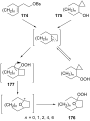
Scheme 53: The mechanism of solvolysis of brosylates 174a–c and spiro cyclopropyl carbinols 175a–c in THF/H2O2....

Scheme 54: The fragmentation mechanism of hydroperoxy acetals 178 to esters 179.

Scheme 55: The acid-catalyzed rearrangement of phenylcyclopentyl hydroperoxide 181.

Scheme 56: The peroxidation of tertiary alcohols in the presence of a catalytic amount of acid.

Scheme 57: The acid-catalyzed reaction of bicyclic secondary alcohols 192 with hydrogen peroxide.

Scheme 58: The photooxidation of 5,6-disubstituted 3,4-dihydro-2H-pyrans 196.

Scheme 59: The oxidation of tertiary alcohols 200a–g, 203a,b, and 206.

Scheme 60: Transformation of functional peroxide 209 leading to 2,3-disubstitued furans 210 in one step.

Scheme 61: The synthesis of carbazoles 213 via peroxide rearrangement.

Scheme 62: The construction of C–N bonds using the Hock rearrangement.

Scheme 63: The synthesis of moiety 218 from 217 which is a structural motif in the antitumor–antibiotic of CC-...

Scheme 64: The in vivo oxidation steps of cholesterol (219) by singlet oxygen.

Scheme 65: The proposed mechanism of the rearrangement of cholesterol-5α-OOH 220.

Scheme 66: Photochemical route to artemisinin via Hock rearrangement of 223.

Scheme 67: The Kornblum–DeLaMare rearrangement.

Scheme 68: Kornblum–DeLaMare transformation of 1-phenylethyl tert-butyl peroxide (225).

Scheme 69: The synthesis 4-hydroxyenones 230 from peroxide 229.

Scheme 70: The Kornblum–DeLaMare rearrangement of peroxide 232.

Scheme 71: The reduction of peroxide 234.

Scheme 72: The Kornblum–DeLaMare rearrangement of endoperoxide 236.

Scheme 73: The rearrangement of peroxide 238 under Kornblum–DeLaMare conditions.

Scheme 74: The proposed mechanism of rearrangement of peroxide 238.

Scheme 75: The Kornblum–DeLaMare rearrangement of peroxides 242a,b.

Scheme 76: The base-catalyzed rearrangements of bicyclic endoperoxides having electron-withdrawing substituent...

Scheme 77: The base-catalyzed rearrangements of bicyclic endoperoxides 249a,b having electron-donating substit...

Scheme 78: The base-catalyzed rearrangements of bridge-head substituted bicyclic endoperoxides 251a,b.

Scheme 79: The Kornblum–DeLaMare rearrangement of hydroperoxide 253.

Scheme 80: Synthesis of β-hydroxy hydroperoxide 254 from endoperoxide 253.

Scheme 81: The amine-catalyzed rearrangement of bicyclic endoperoxide 263.

Scheme 82: The base-catalyzed rearrangement of meso-endoperoxide 268 into 269.

Scheme 83: The photooxidation of 271 and subsequent Kornblum–DeLaMare reaction.

Scheme 84: The Kornblum–DeLaMare rearrangement as one step in the oxidation reaction of enamines.

Scheme 85: The Kornblum–DeLaMare rearrangement of 3,5-dihydro-1,2-dioxenes 284, 1,2-dioxanes 286, and tert-but...

Scheme 86: The Kornblum–DeLaMare rearrangement of epoxy dioxanes 290a–d.

Scheme 87: Rearrangement of prostaglandin H2 292.

Scheme 88: The synthesis of epicoccin G (297).

Scheme 89: The Kornblum–DeLaMare rearrangement used in the synthesis of phomactin A.

Scheme 90: The Kornblum–DeLaMare rearrangement in the synthesis of 3H-quinazolin-4-one 303.

Scheme 91: The Kornblum–DeLaMare rearrangement in the synthesis of dolabriferol (308).

Scheme 92: Sequential transformation of 3-substituted 2-pyridones 309 into 3-hydroxypyridine-2,6-diones 311 in...

Scheme 93: The Kornblum–DeLaMare rearrangement of peroxide 312 into hydroxy enone 313.

Scheme 94: The Kornblum–DeLaMare rearrangement in the synthesis of polyfunctionalized carbonyl compounds 317.

Scheme 95: The Kornblum–DeLaMare rearrangement in the synthesis of (Z)-β-perfluoroalkylenaminones 320.

Scheme 96: The Kornblum–DeLaMare rearrangement in the synthesis of γ-ketoester 322.

Scheme 97: The Kornblum–DeLaMare rearrangement in the synthesis of diterpenoids 326 and 328.

Scheme 98: The synthesis of natural products hainanolidol (331) and harringtonolide (332) from peroxide 329.

Scheme 99: The synthesis of trans-fused butyrolactones 339 and 340.

Scheme 100: The synthesis of leucosceptroid C (343) and leucosceptroid P (344) via the Kornblum–DeLaMare rearra...

Scheme 101: The Dakin oxidation of arylaldehydes or acetophenones.

Scheme 102: The mechanism of the Dakin oxidation.

Scheme 103: A solvent-free Dakin reaction of aromatic aldehydes 356.

Scheme 104: The organocatalytic Dakin oxidation of electron-rich arylaldehydes 358.

Scheme 105: The Dakin oxidation of electron-rich arylaldehydes 361.

Scheme 106: The Dakin oxidation of arylaldehydes 358 in water extract of banana (WEB).

Scheme 107: A one-pot approach towards indolo[2,1-b]quinazolines 364 from indole-3-carbaldehydes 363 through th...

Scheme 108: The synthesis of phenols 367a–c from benzaldehydes 366a-c via acid-catalyzed Dakin oxidation.

Scheme 109: Possible transformation paths of the highly polarized boric acid coordinated H2O2–aldehyde adduct 3...

Scheme 110: The Elbs oxidation of phenols 375 to hydroquinones.

Scheme 111: The mechanism of the Elbs persulfate oxidation of phenols 375 affording p-hydroquinones 376.

Scheme 112: Oxidation of 2-pyridones 380 under Elbs persulfate oxidation conditions.

Scheme 113: Synthesis of 3-hydroxy-4-pyridone (384) via an Elbs oxidation of 4-pyridone (382).

Scheme 114: The Schenck rearrangement.

Scheme 115: The Smith rearrangement.

Scheme 116: Three main pathways of the Schenck rearrangement.

Scheme 117: The isomerization of hydroperoxides 388 and 389.

Scheme 118: Trapping of dioxacyclopentyl radical 392 by oxygen.

Scheme 119: The hypothetical mechanism of the Schenck rearrangement of peroxide 394.

Scheme 120: The autoxidation of oleic acid (397) with the use of labeled isotope 18O2.

Scheme 121: The rearrangement of 18O-labeled hydroperoxide 400 under an atmosphere of 16O2.

Scheme 122: The rearrangement of the oleate-derived allylic hydroperoxides (S)-421 and (R)-425.

Scheme 123: Mechanisms of Schenck and Smith rearrangements.

Scheme 124: The rearrangement and cyclization of 433.

Scheme 125: The Wieland rearrangement.

Scheme 126: The rearrangement of bis(triphenylsilyl) 439 or bis(triphenylgermyl) 441 peroxides.

Scheme 127: The oxidative transformation of cyclic ketones.

Scheme 128: The hydroxylation of cyclohexene (447) in the presence of tungstic acid.

Scheme 129: The oxidation of cyclohexene (447) under the action of hydrogen peroxide.

Scheme 130: The reaction of butenylacetylacetone 455 with hydrogen peroxide.

Scheme 131: The oxidation of bridged 1,2,4,5-tetraoxanes.

Scheme 132: The proposed mechanism for the oxidation of bridged 1,2,4,5-tetraoxanes.

Scheme 133: The rearrangement of ozonides.

Scheme 134: The acid-catalyzed oxidative rearrangement of malondialdehydes 462 under the action of H2O2.
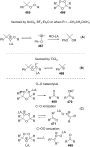
Scheme 135: Pathways of the Lewis acid-catalyzed cleavage of dialkyl peroxides 465 and ozonides 466.

Scheme 136: The mechanism of the transformation of (tert-butyldioxy)cyclohexanedienones 472.

Scheme 137: The synthesis of Vitamin K3 from 472a.

Scheme 138: Proposed mechanism for the transformation of 478d into silylated endoperoxide 479d.

Scheme 139: The rearrangement of hydroperoxide 485 to form diketone 486.

Scheme 140: The base-catalyzed rearrangement of cyclic peroxides 488a–g.

Scheme 141: Synthesis of chiral epoxides and aldols from peroxy hemiketals 491.

Scheme 142: The multistep transformation of (R)-carvone (494) to endoperoxides 496a–e.

Scheme 143: The decomposition of anthracene endoperoxide 499.

Scheme 144: Synthesis of esters 503 from aldehydes 501 via rearrangement of peroxides 502.

Scheme 145: Two possible paths for the base-promoted decomposition of α-azidoperoxides 502.

Scheme 146: The Story decomposition of cyclic diperoxide 506a.

Scheme 147: The Story decomposition of cyclic triperoxide 506b.

Scheme 148: The thermal rearrangement of endoperoxides A into diepoxides B.

Scheme 149: The transformation of peroxide 510 in the synthesis of stemolide (511).

Scheme 150: The possible mechanism of the rearrangement of endoperoxide 261g.

Scheme 151: The photooxidation of indene 517.

Scheme 152: The isomerization of ascaridole (523).

Scheme 153: The isomerization of peroxide 525.

Scheme 154: The thermal transformation of endoperoxide 355.

Scheme 155: The photooxidation of cyclopentadiene (529) at a temperature higher than 0 °C.

Scheme 156: The thermal rearrangement of endoperoxides 538a,b.

Scheme 157: The transformation of peroxides 541.

Scheme 158: The thermal rearrangements of strained cyclic peroxides.

Scheme 159: The thermal rearrangement of diacyl peroxide 551 in the synthesis of C4-epi-lomaiviticin B core 553....

Scheme 160: The 1O2 oxidation of tryptophan (554) and rearrangement of dioxetane intermediate 555.

Scheme 161: The Fe(II)-promoted cleavage of aryl-substituted bicyclic peroxides.

Scheme 162: The proposed mechanism of the Fe(II)-promoted rearrangement of 557a–c.

Scheme 163: The reaction of dioxolane 563 with Fe(II) sulfate.

Scheme 164: Fe(II)-promoted rearrangement of 1,2-dioxane 565.

Scheme 165: Fe(II) cysteinate-promoted rearrangement of 1,2-dioxolane 568.

Scheme 166: The transformation of 1,2-dioxanes 572a–c under the action of FeCl2.

Scheme 167: Fe(II) cysteinate-promoted transformation of tetraoxane 574.

Scheme 168: The CoTPP-catalyzed transformation of bicyclic endoperoxides 600a–d.

Scheme 169: The CoTPP-catalyzed transformation of epoxy-1,2-dioxanes.

Scheme 170: The Ru(II)-catalyzed reactions of 1,4-endoperoxide 261g.

Scheme 171: The Ru(II)-catalyzed transformation as a key step in the synthesis of elyiapyrone A (610) from 1,4-...

Scheme 172: Peroxides with antimalarial activity.

Scheme 173: The interaction of iron ions with artemisinin (616).

Scheme 174: The interaction of FeCl2 with 1,2-dioxanes 623, 624.

Scheme 175: The mechanism of reaction 623 and 624 with Fe(II)Cl2.

Scheme 176: The reaction of bicyclic natural endoperoxides G3-factors 631–633 with FeSO4.

Scheme 177: The transformation of terpene cardamom peroxide 639.
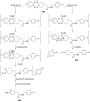
Scheme 178: The different ways of the cleavage of tetraoxane 643.

Scheme 179: The LC–MS analysis of interaction of tetraoxane 646 with iron(II)heme 647.

Scheme 180: The rearrangement of 3,6-epidioxy-1,10-bisaboladiene (EDBD, 649).

Scheme 181: Easily oxidized substrates.

Scheme 182: Biopathway of synthesis of prostaglandins.

Scheme 183: The reduction and rearrangements of isoprostanes.

Scheme 184: The partial mechanism for linoleate 658 oxidation.

Scheme 185: The transformation of lipid hydroperoxide.

Scheme 186: The acid-catalyzed cleavage of the product from free-radical oxidation of cholesterol (667).

Scheme 187: Two pathways of catechols oxidation.

Scheme 188: Criegee-like or Hock-like rearrangement of the intermediate hydroperoxide 675 in dioxygenase enzyme...

Scheme 189: Carotinoides 679 cleavage by carotenoid cleavage dioxygenases.
Amidofluorene-appended lower rim 1,3-diconjugate of calix[4]arene: synthesis, characterization and highly selective sensor for Cu2+
- Rahman Hosseinzadeh,
- Mohammad Nemati,
- Reza Zadmard and
- Maryam Mohadjerani
Beilstein J. Org. Chem. 2016, 12, 1749–1757, doi:10.3762/bjoc.12.163


Graphical Abstract
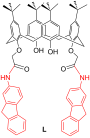
Scheme 1: Fluorene appended 1,3-diconjugate of calix[4]arene.

Scheme 2: Synthesis route of fluorene-appended amido-linked 1,3-diconjugate of calix[4]arene L.

Figure 1: Absorption spectra of L (1.0 × 10⁻⁵ M) and its complexes with different metals (10 equiv) in MeCN.

Figure 2: Color changes of receptor L upon addition of 10 equiv of various metal ions as their perchlorate sa...

Figure 3: Influence of the addition of increasing amounts (0–100 equiv) of Cu2+ on the absorption spectra of L...

Figure 4: Fluorescence spectra of L (1.0 × 10⁻⁵ M) in MeCN upon addition of different metal ions (10 equiv) w...

Figure 5: (a) Fluorescence spectra (1.0 × 10⁻⁵ M) of L recorded upon the addition of copper ion (0–5 equiv) i...

Figure 6: Fluorescence intensity of L (1.0 × 10⁻⁵ M) upon the addition of 10 equiv Cu2+ in the presence of 10...
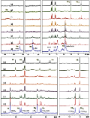
Figure 7: 1 H NMR (400 MHz, CD3CN) spectra of L upon addition of (a) 0.0 equiv, (b) 0.2 equiv, (c) 0.4 equiv,...
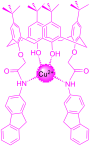
Scheme 3: A proposed binding mode between L and Cu2+.
TMSBr-mediated solvent- and work-up-free synthesis of α-2-deoxyglycosides from glycals
- Mei-Yuan Hsu,
- Yi-Pei Liu,
- Sarah Lam,
- Su-Ching Lin and
- Cheng-Chung Wang
Beilstein J. Org. Chem. 2016, 12, 1758–1764, doi:10.3762/bjoc.12.164


Graphical Abstract

Scheme 1: Iterative synthesis of trisaccharide 66.

Scheme 2: Proposed mechanisms for TMSBr-mediated synthesis of 2-deoxyglycosides in the presence of TPPO.
Synthesis of the C8’-epimeric thymine pyranosyl amino acid core of amipurimycin
- Pramod R. Markad,
- Navanath Kumbhar and
- Dilip D. Dhavale
Beilstein J. Org. Chem. 2016, 12, 1765–1771, doi:10.3762/bjoc.12.165
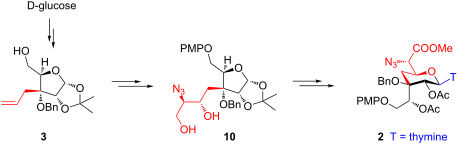

Graphical Abstract

Figure 1: Antifungal antibiotic amipurimycin (1).

Scheme 1: Retrosynthesis of 2.
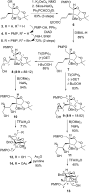
Scheme 2: Synthesis of 1,3-anhydrosugar 12 and 13.

Scheme 3: Formation of 2,7-dioxabicyclo[3.2.1]octane 12/13.

Figure 2: Conformational analysis of 13 and 14.

Figure 3: Geometrically optimized conformation of 12 and 13 respectively by DFT study.
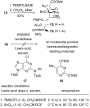
Scheme 4: Glycosylation of 16.

Scheme 5: Glycosylation attempt by changing protections.

Scheme 6: Synthesis of nucleoside 2.
Three-component synthesis of highly functionalized aziridines containing a peptide side chain and their one-step transformation into β-functionalized α-ketoamides
- Lena Huck,
- Juan F. González,
- Elena de la Cuesta and
- J. Carlos Menéndez
Beilstein J. Org. Chem. 2016, 12, 1772–1777, doi:10.3762/bjoc.12.166

Graphical Abstract

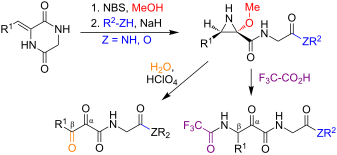
Scheme 1: Summary of the work described in this paper.

Scheme 2: Synthesis of aziridines 2.

Figure 1: NOE effects in compound 2f.
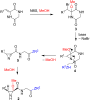
Scheme 3: Mechanistic proposal accounting for the chemo- and diastereoselective formation of aziridines 2.

Scheme 4: Transformation of aziridines 2 into β-trifluoroacetamido-α-ketoamides 6.
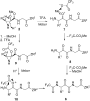
Scheme 5: Two mechanistic proposals explaining the formation of compounds 6.
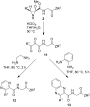
Scheme 6: Transformation of aziridines 2 into vicinal tricarbonyl compounds 11 and transformation of the latt...

Scheme 7: Mechanistic proposal for the transformation of aziridines 2 into compounds 11.
Sustainable catalysis
- Nicholas J. Turner
Beilstein J. Org. Chem. 2016, 12, 1778–1779, doi:10.3762/bjoc.12.167
Synthesis of pyrrolo[2,1-f][1,2,4]triazin-4(3H)-ones: Rearrangement of pyrrolo[1,2-d][1,3,4]oxadiazines and regioselective intramolecular cyclization of 1,2-biscarbamoyl-substituted 1H-pyrroles
- Kkonnip Son and
- Seong Jun Park
Beilstein J. Org. Chem. 2016, 12, 1780–1787, doi:10.3762/bjoc.12.168
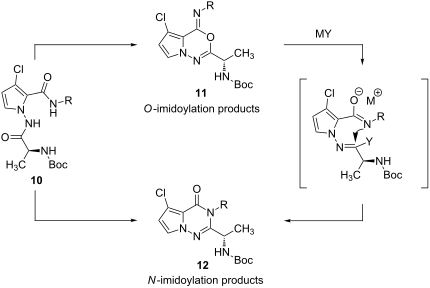

Graphical Abstract

Figure 1: Bioactive pyrrolo[2,1-f][1,2,4]triazin-4(3H)-ones [1-12].

Figure 2: General synthetic routes to pyrrolotriazinones [3-6,8,9,11].

Scheme 1: Synthesis of pyrrolotriazinones 9 and 12 [9,10,18].

Scheme 2: Synthesis of aminopyrrolocarbamate 10.

Figure 3: Probable mechanism for the synthesis of triazinone 12a.

Figure 4: The results of 13C NMR and IR studies.
Effect of the π-conjugation length on the properties and photovoltaic performance of A–π–D–π–A type oligothiophenes with a 4,8-bis(thienyl)benzo[1,2-b:4,5-b′]dithiophene core
- Ni Yin,
- Lilei Wang,
- Yi Lin,
- Jinduo Yi,
- Lingpeng Yan,
- Junyan Dou,
- Hai-Bo Yang,
- Xin Zhao and
- Chang-Qi Ma
Beilstein J. Org. Chem. 2016, 12, 1788–1797, doi:10.3762/bjoc.12.169
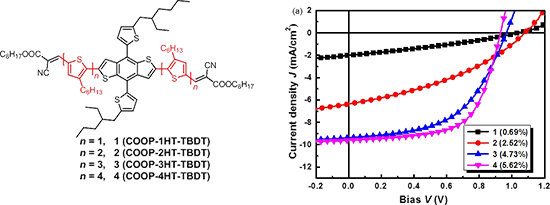

Graphical Abstract
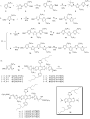
Scheme 1: Synthetic route to compounds 1–4 with BDT core. Reagents and conditions: i) [Pd2(dba)3]·CHCl3, HP(t-...

Figure 1: UV−vis absorption spectra of COOP-nHT-TBDTs 1–4 (a) in chloroform solution (5.0 × 10⁻⁵ mol·L-1) and...

Figure 2: (a) Cyclic voltammograms of 1–4 measured in CH2Cl2 solution (1.0 × 10⁻³ mol·L−1) with 0.1 mol·L−1 Bu...

Figure 3: (a) J–V curves of the best COOP-nHT-TBDT:PC61BM solar cells; (b) EQE spectra of the corresponding c...

Figure 4: AFM height images of COOP-nHT-TBDT:PC61BM blended films: (a) 1, 1:0.6 (w/w); (b) 2, 1:0.6 (w/w); (c...

Figure 5: J–V curves of COOP-nHT-TBDT:PC61BM-based hole-only devices.

Figure 6: (a) VOC, (b) JSC, (c) FF, and (d) PCE decay of the COOP-nHT-TBDT:PC61BM solar cells. Note all these...
A flow reactor setup for photochemistry of biphasic gas/liquid reactions
- Josef Schachtner,
- Patrick Bayer and
- Axel Jacobi von Wangelin
Beilstein J. Org. Chem. 2016, 12, 1798–1811, doi:10.3762/bjoc.12.170
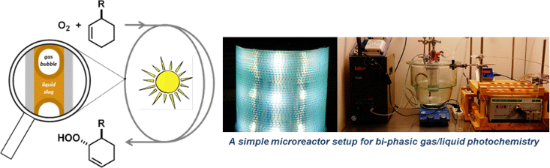

Graphical Abstract

Figure 1: The challenge of mixing the three dispersed entities gas, liquid, and light for photochemical appli...

Scheme 1: Mutual interdependencies of critical reaction and reactor parameters.

Scheme 2: Blueprint of the home-built microflow photoreactor; schematic illustration of the reactor setup wit...

Figure 2: Total absorbance of methylene blue solutions in acetonitrile according to the Beer-Lambert law: Eλ ...

Figure 3: Red (λmax = 633 nm), blue (λmax = 448 nm), green (λmax = 520 nm) and white (λmax = 620 nm) LEDs mou...

Figure 4: Overlap of absorption spectrum of methylene blue in acetonitrile and emission spectra of reasonably...

Figure 5: Emission spectra of different LEDs; red (λmax = 633 nm), blue (λmax = 448 nm), green (λmax = 520 nm...

Scheme 3: Slug flow conditions of two-phase gas-liquid mixtures. Photograph of a slug flow of a solution of m...

Figure 6: Photograph of the operating flow reactor, irradiated with white LEDs, filled with a solution of met...

Scheme 4: Schematic illustration of a reactor tube (length l, inner diameter d) and pressure gradient Δp acco...

Scheme 5: Reaction types of organic molecules with singlet oxygen.

Figure 7: Home-made flow reactor and peripheral devices for photochemical reactions at light/liquid/gas inter...

Scheme 6: Photooxygenation of N-methyl-1,2,3,6-tetrahydrophthalimide and reductive work-up to alcohol 3a.

Figure 8: Conversion vs methylene blue sensitizer concentration. Reactions at constant flow rates in acetonit...

Figure 9: Reaction progress at different residence times in flow and batch reactions. Flow: reactions at diff...

Scheme 7: Oxidation of N-methyl-1,2,3,6-tetrahydro-3-acetamidophthalimide and reductive work-up to alcohol 3b....



