

Search results
Search for "evolution" in Full Text gives 705 result(s) in Beilstein Journal of Nanotechnology. Showing first 200.
Safe and sustainable by design with ML/AI: A transformative approach to advancing nanotechnology
Beilstein J. Nanotechnol. 2026, 17, 176–185, doi:10.3762/bjnano.17.11
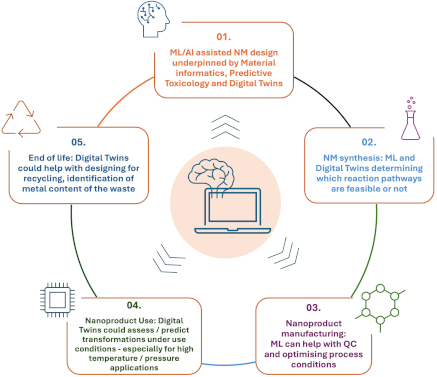
- materials before producing them. This perspective article highlights how ML and AI are driving the evolution of SSbD in nanotechnology, focussing on predictive toxicology, materials informatics, lifecycle analysis, and the pivotal role of digital twins. It also explores current challenges, emerging


From shield to spear: Charge-reversible nanocarriers in overcoming cancer therapy barriers
Beilstein J. Nanotechnol. 2026, 17, 159–175, doi:10.3762/bjnano.17.10
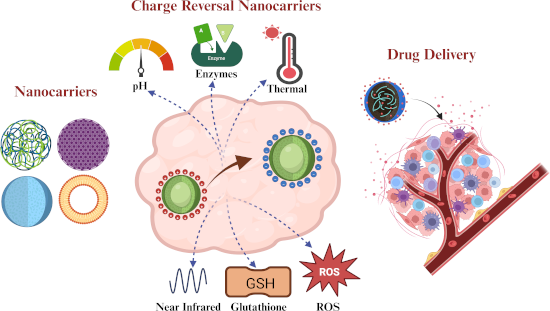
- therapy, targeted therapy, and immunotherapy modalities that enable more precise and personalized cancer management [7]. In parallel, complementary strategies such as photodynamic therapy and hyperthermia further enhance treatment effectiveness, collectively reflecting the ongoing evolution of cancer


Influence of surface characteristics on the in vitro stability and cell uptake of nanoliposomes for brain delivery
Beilstein J. Nanotechnol. 2026, 17, 139–158, doi:10.3762/bjnano.17.9
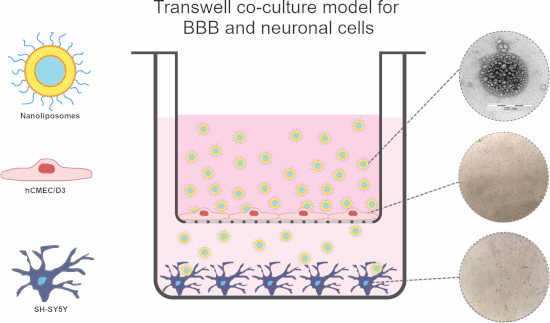
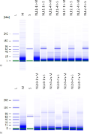
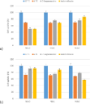
- evolution of physicochemical characteristics and surface properties of NLs in biorelevant media. Additionally, in order to point out the influence of specific characteristics on the brain targeting potential of these formulations, we investigated interactions between NLs and blood–brain barrier (BBB, hCMEC
- the internalization pathway and intracellular trafficking [17]. In contrast, this study focuses on the evolution of physicochemical and surface properties of NLs in biorelevant media depending on the different amount of PEG onto NLs surface, thus correlating these findings with the cell




Functional surface engineering for cultural heritage protection: the role of superhydrophobic and superoleophobic coatings – a comprehensive review
Beilstein J. Nanotechnol. 2026, 17, 63–96, doi:10.3762/bjnano.17.6
- early evolution of the techniques to protect metal-based sculptures are represented by, again, natural-derived materials like waxes (beeswax among all) and mixtures of wax and resins [19]. However, when wooden sculptures or paintings were considered, linseed oil was applied to prevent cracking and




Microscopic study of the intermediate mixed state in intertype superconductors
Beilstein J. Nanotechnol. 2026, 17, 57–62, doi:10.3762/bjnano.17.5
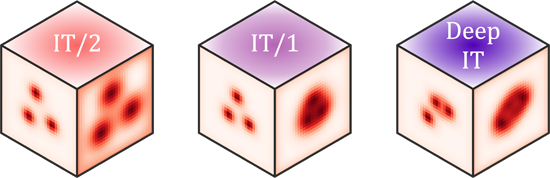
- range 0 < T < Tc and investigate the evolution of few-vortex states as the system changes between type-I and type-II regimes. Our results show that the key qualitative features of the IT superconductivity persist throughout this range; however, the IT domain gradually narrows as the temperature
- study of three-vortex configurations presented here. Conclusion This work presents a fully microscopic analysis of the intermediate mixed state in IT superconductors between the type-I and type-II regimes. Using self-consistent Bogoliubov–de Gennes simulations, we traced the evolution of vortex


Subdigital integumentary microstructure in Cyrtodactylus (Squamata: Gekkota): do those lineages with incipiently expressed toepads exclusively exhibit adhesive setae?
Beilstein J. Nanotechnol. 2026, 17, 38–56, doi:10.3762/bjnano.17.4
- Philipp Ginal Yannick Ecker Timothy Higham L. Lee Grismer Benjamin Wipfler Dennis Rodder Anthony Russell Jendrian Riedel Leibniz Institute for the Analysis of Biodiversity Change – Museum Koenig Bonn, Bonn, Germany Department of Evolution, Ecology, and Organismal Biology, University of California
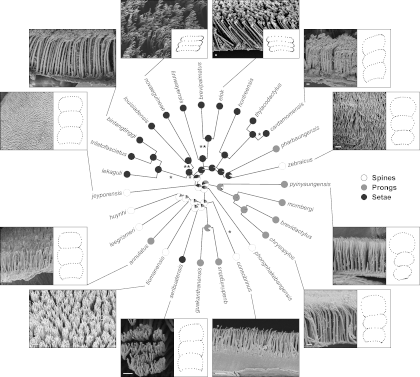
- , making it a promising candidate for studying toepad evolution. We investigated the subdigital microstructures of 27 Cyrtodactylus species occupying a wide range of habitats, and exhibiting a spectrum of subdigital morphology, from the presence of the ancestral condition of small, rounded scales to the
- hypothesis. Most transitions to incipient toepads occurred within this clade, consistent with hypothesis 1, and we reveal that the evolution of setae likely preceded that of broadened scales. Although microstructure types did not significantly correlate with ecotype, specific morphometric traits varied


Chiral plasmonic nanostructures fabricated with circularly polarized light
Beilstein J. Nanotechnol. 2025, 16, 2245–2264, doi:10.3762/bjnano.16.154
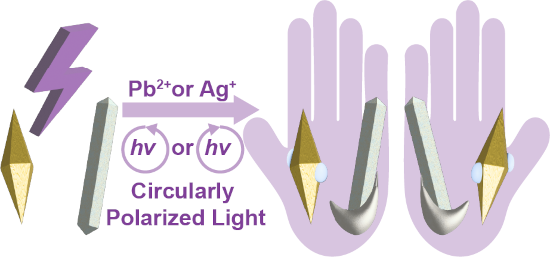
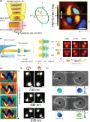
- different cPNSs synthesized using this method. Section 3 will discuss universal metrics to characterize cPNSs. Furthermore, Section 4 will examine the roles of cPNSs in various applications. Finally, we will share insights into future directions for cPNSs fabricated using CPL. Review 1 Evolution of chiral
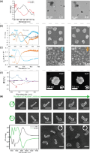
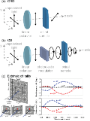
- growth of Ag was observed under CPL without CTAB passivation. The structural evolution of the chiral AgNRs is shown in the top two rows of Figure 4e. The nanostructures obtained with CPL of opposite handedness are clear enantiomorphs of each other at each stage. Intense CD signals were collected from





Missing links in nanomaterials research impacting productivity and perceptions
Beilstein J. Nanotechnol. 2025, 16, 2168–2176, doi:10.3762/bjnano.16.149
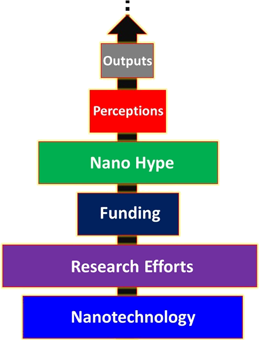
- of the most important achievements in the history of science. The influence of nanomaterials research goes beyond academic curiosity. It has triggered the evolution of microscopic and analytical techniques to visualize matter at unprecedented spatial and temporal resolution, to the point where we can
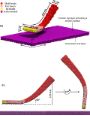
Molecular and mechanical insights into gecko seta adhesion: multiscale simulations combining molecular dynamics and the finite element method
Beilstein J. Nanotechnol. 2025, 16, 2055–2076, doi:10.3762/bjnano.16.141






Laser ablation in liquids for shape-tailored synthesis of nanomaterials: status and challenges
Beilstein J. Nanotechnol. 2025, 16, 1963–1997, doi:10.3762/bjnano.16.137
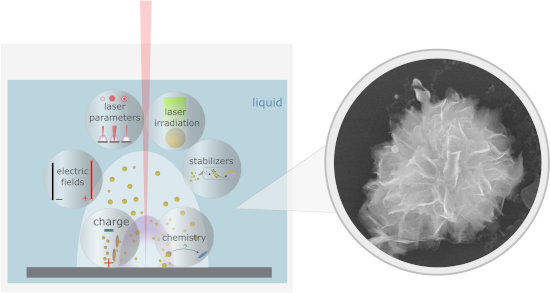
- shown below. However, obtaining the information on spatial and temporal evolution of transient laser-induced plasma represents a challenge due to the short plasma lifetime. 1.1 Plasma formation and propagation In a widely accepted mechanism of PLAL, the formation of NPs occurs via two major processes
- generation of shockwaves and formation of cavitation bubbles, which typically have a lifetime of several microseconds. During its evolution, the cavitation bubble expands to reach the equilibrium with the confining liquid, after which the shrinking stage begins, which involves the ablated material moving
- influencing the mechanisms of NP formation and growth at the subsequent stages of laser ablation, including the generation of shockwaves, cavitation bubble dynamics, and NP evolution after the release into the colloidal solution. The excessive charge at their surface ensures repulsion and stability of the NP




Mechanical property measurements enabled by short-term Fourier-transform of atomic force microscopy thermal deflection analysis
Beilstein J. Nanotechnol. 2025, 16, 1952–1962, doi:10.3762/bjnano.16.136
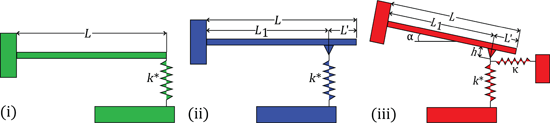
- AFM experiments on well-characterized surfaces, such as highly ordered pyrolytic graphite (HOPG), using silicon cantilevers with integrated probes. To examine the time evolution of the AFM cantilever’s oscillatory modes during an experiment, STFTs, rather than wavelet transforms, of the thermal motion
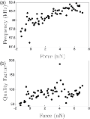
- calculated Fourier transform, was carefully chosen to ensure that β in Equation 2 was much larger than 1 [22]: Fitting of the first resonant peak of the cantilever in contact with the surface during the force-versus-distance measurement thus provides the evolution of the f1, Q1, and D1 values as functions of




Evaluating metal-organic precursors for focused ion beam-induced deposition through solid-layer decomposition analysis
Beilstein J. Nanotechnol. 2025, 16, 1942–1951, doi:10.3762/bjnano.16.135
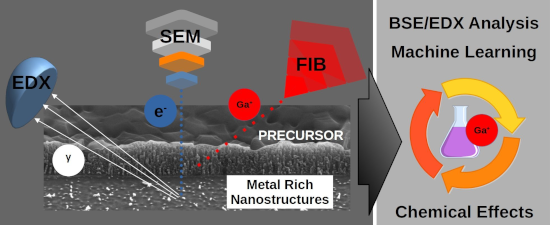
- spectra before (black) and after sublimation on a silicon wafer (blue) for the compounds 1–4 (p = 10−2 mbar). (a) SEM BSE morphology evolution studies of precursor 4 layer decomposition during gallium FIB irradiation experiments. (b) SEM BSE intensity (proportional to the atomic number Z) changes of the


Programmable soliton dynamics in all-Josephson-junction logic cells and networks
Beilstein J. Nanotechnol. 2025, 16, 1883–1893, doi:10.3762/bjnano.16.131
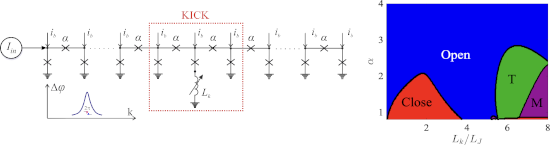
- soliton passage. The Josephson phase is plotted against the integer node index k, whereas the current is plotted at the midpoint index k + 0.5 to represent the junction between nodes k and k + 1, see Figure 1a. Temporal evolution of Josephson phase asymmetry in a soliton diode: (a) initial state; (b


Further insights into the thermodynamics of linear carbon chains for temperatures ranging from 13 to 300 K
Beilstein J. Nanotechnol. 2025, 16, 1818–1825, doi:10.3762/bjnano.16.125
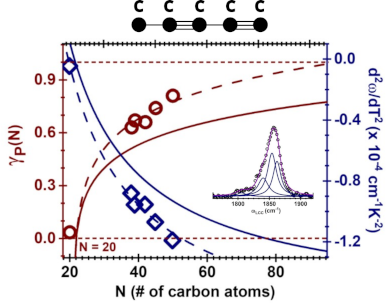
- . Our analysis follows the same protocols described in reference [30]: the temperature evolution of the longitudinal optical phonon (so-called C-band), which is Raman active with frequencies (ωLCC) around 1850 cm−1, is thoroughly tracked and ωLCC is used to indirectly access important thermodynamic
- Raman spectra as well as the independent evolution as a function of temperature of the Raman bands from CNT and LCC (see Figure 1 and Figure S1 in Supporting Information File 1) suggest that the interaction between distinct LCC, and LCC and CNT are not strong enough to affect their electronic and phonon
- temperature, ωLCC is dependent on the chain length (i.e., N-dependent) as well (see Figure 3b). This is an expected behavior since the size of the chain affects the bond length alternation (BLA) strength of the polyynes. Figure 2a shows the evolution of ωLCC with T, and again, it is noteworthy that no matter


![[Graphic 23]](/bjnano/content/inline/2190-4286-16-125-i25.svg?max-width=637&scale=1.18182)
Advances of aptamers in esophageal cancer diagnosis, treatment and drug delivery
Beilstein J. Nanotechnol. 2025, 16, 1734–1750, doi:10.3762/bjnano.16.121

- obstacles to their safe application. Hence, ongoing research explores strategies to optimize the solubility and targeting ability of anti-EC drugs, and aptamers [25] represent a distinct class of molecular tools. Aptamers are small nucleotide or peptide sequences screened by “systematic evolution of ligands
- evolution of ligands by SELEX; (3) validate binding affinity and functional modulation in vitro and in vivo models; and (4) elucidate the underlying molecular mechanisms (Figure 4). At present, significant progress has been made in peptide aptamers targeting SOX2 protein or its binding partner, aptamers


Ambient pressure XPS at MAX IV
Beilstein J. Nanotechnol. 2025, 16, 1677–1694, doi:10.3762/bjnano.16.118

- surface composition and the catalyst selectivity by observing the gas phase (with a slightly retracted sample). The time evolution of NO and N2 taken from curve fits of the N 1s gas phase spectra (Figure 7D) is shown in (Figure 7F) while the evolution of the dominant surface adsorbate taken from curve
- application is photocatalytic water splitting for green hydrogen production. Urpelainen and colleagues clarified the mechanisms of photocatalytic hydrogen evolution reaction (HER) in a new prospective model system, the Ni@NiO/NiCO3 photocatalyst, under dark and illuminated conditions at 1 mbar of H2O [45
- -and-pull” systems. While flow cells are ideal for large currents and gas evolution, dip-and-pull cells, whilst more compromised from an electrochemical cell perspective, are more flexible and compatible with well-defined materials such as single crystals or layered structures [64]. Here, we outline





Bioinspired polypropylene-based functionally graded materials and metamaterials modeling the mistletoe–host interface
Beilstein J. Nanotechnol. 2025, 16, 1592–1606, doi:10.3762/bjnano.16.113
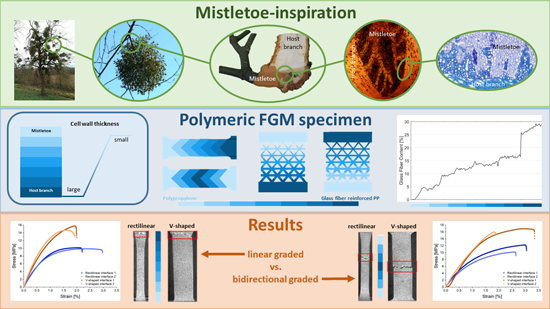
- [23], with its diverse plant and animal systems having developed over millions of years during the course of evolution. As such, the kingdom Plantae offers a wide range of functional principles that can be used as a source of bioinspiration to increase longevity and damage control potential [1][4


Few-photon microwave fields for superconducting transmon-based qudit control
Beilstein J. Nanotechnol. 2025, 16, 1580–1591, doi:10.3762/bjnano.16.112
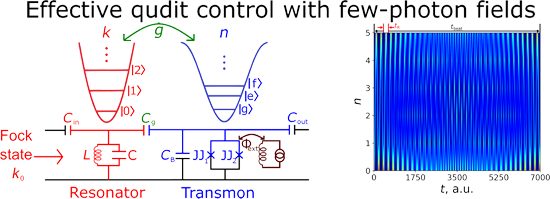
- transmon (a slightly nonlinear oscillator) is quite close to the equidistant one; however, a number of widely used theoretical models describing its evolution in an external electromagnetic field (the Jaynes–Cummings model) do not take into account the high-lying energy levels of the artificial atom, nor
- photons, k0) enters the resonator [37][38][39][40][41][42] with variable frequency detuning Δω between the resonator and the artificial atom. The time evolution of the quantum state of the transmon qudit, the populations of its eigenstates, and the number n of excitations induced in the superconducting
- , taking into account the nonlinearity [6]: where -EC/12 is the nonlinearity parameter and is the plasma frequency of the transmon. The first term in the Hamiltonian describes a free linear evolution of the photon operators, characterized by their oscillations in time in the Heisenberg representation. The


Transient electronics for sustainability: Emerging technologies and future directions
Beilstein J. Nanotechnol. 2025, 16, 1545–1556, doi:10.3762/bjnano.16.109
- and actively regulating aqueous environments, further expanding the functional scope of bioresorbable electronics. Looking ahead, the evolution of protective barriers toward intelligent interfaces that can sense, control, or even manipulate aqueous environments may further extend the applicability of


Influence of laser beam profile on morphology and optical properties of silicon nanoparticles formed by laser ablation in liquid
Beilstein J. Nanotechnol. 2025, 16, 1533–1544, doi:10.3762/bjnano.16.108
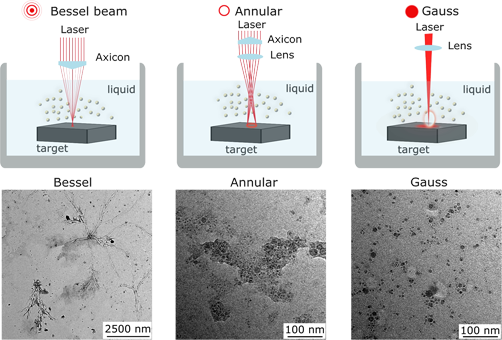
- -uniform energy distribution, which will affect plasma generation and confinement, the hydrodynamic trajectory of the ejected target material and pressure relaxation, as well as plasma and cavitation bubble propagation and temporal evolution. In the case of a Bessel beam, the focusing with an axicon
- influence CB evolution. These parameters strongly affect size and morphology of the forming NPs. In general, the dynamics of the CBs [38] is described by a modified Rayleigh–Plesset equation [39], which considers the pressure and size of CBs depending on parameters of both liquid (surface tension, density
- , viscosity, and temperature) and laser (pulse duration, fluence, and beam shape). A change of the incident beam pattern will therefore change the temperature and pressure inside the CBs and influence the bubble oscillations. We consider that the formation, evolution, and collapse of CBs are influenced by the


Laser processing in liquids: insights into nanocolloid generation and thin film integration for energy, photonic, and sensing applications
Beilstein J. Nanotechnol. 2025, 16, 1428–1498, doi:10.3762/bjnano.16.104
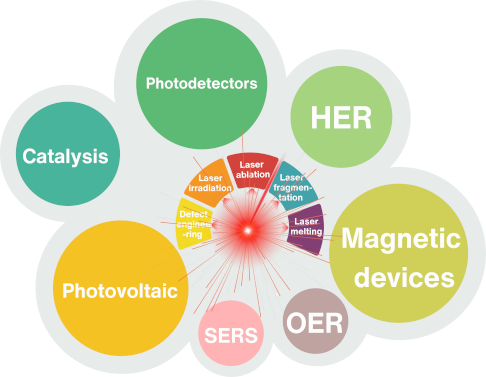
- , electrochemical/photoelectrochemical sensors, hydrogen/oxygen evolution, SERS sensors and other types of devices reported so far. The last section explains the challenges and further scope of these devices from laser-generated nanocolloids. Keywords: HER/OER/water splitting; laser synthesis of nanomaterials
- foundational understanding, without investigating the extensive details that other reviews have already explored. The fundamental chemical and physical aspects of pulsed laser ablation (PLA) processes, with a focus on the evolution of material from the target to the deposited film, were explained by Ashfold et






The role of biochar in combating microplastic pollution: a bibliometric analysis in environmental contexts
Beilstein J. Nanotechnol. 2025, 16, 1401–1416, doi:10.3762/bjnano.16.102
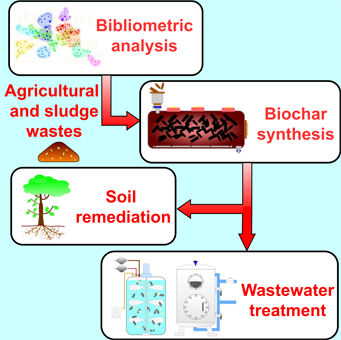
- evolution of research fields [27]. Bibliometric data were collected from the “Web of Science” (WOS) database to ensure comprehensive coverage and avoid the omission of relevant articles indexed in only one source. The data collection spanned January 2017 to December 2024, with the search process initiated
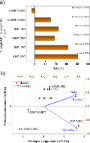
- composition, MPs, rice biochar, enrichment, dissolved organic carbon, and modified biochar. As depicted in Figure 3a, the clustering and proximity of these items indicate frequent co-citation among the publications. Their temporal evolution is visualized in Figure 3b, while Figure 3c shows the frequency and



Parylene-coated platinum nanowire electrodes for biomolecular sensing applications
Beilstein J. Nanotechnol. 2025, 16, 1392–1400, doi:10.3762/bjnano.16.101
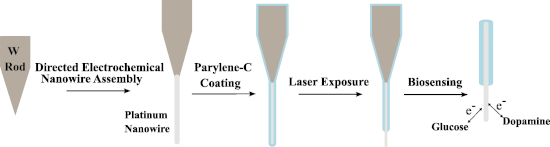
- ]. After 100 years of evolution, electrodes have become ubiquitous across numerous industries including medical diagnostics, food safety, agricultural and environmental monitoring, bioprocess management, and more [2]. Despite the differences in design and function, all electrodes share similar requirements


Enhancing the photoelectrochemical performance of BiOI-derived BiVO4 films by controlled-intensity current electrodeposition
Beilstein J. Nanotechnol. 2025, 16, 1289–1301, doi:10.3762/bjnano.16.94
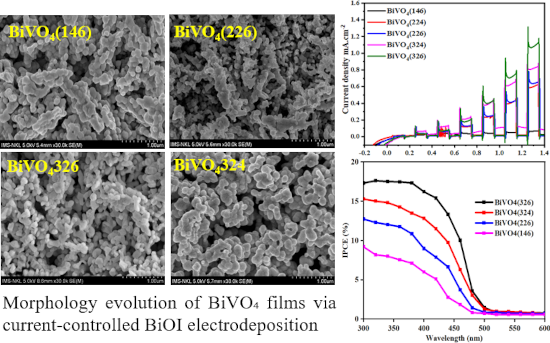
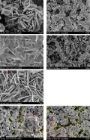
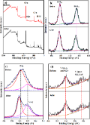
- microscopy (FESEM) images highlighted the evolution of the surface morphology under different fabrication conditions. The transition from two-dimensional plate-like BiOI crystals to three-dimensional BiVO4 particles was accompanied by the formation of submicrometer-scale voids, indicative of grain growth and
- perfectly follow the crystallite size evolution. For instance, BiVO4(326) exhibits the largest crystallite size (≈40 nm) but has smaller surface particle aggregates (200–300 nm) than BiVO4(324). This mismatch arises because the particles observed via SEM are often composed of multiple crystalline grains



Hydrogels and nanogels: effectiveness in dermal applications
Beilstein J. Nanotechnol. 2025, 16, 1216–1233, doi:10.3762/bjnano.16.90
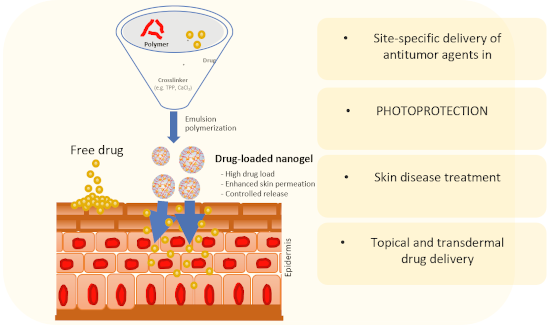
- have emerged as promising alternatives for various medical purposes, including skin [7], nasal [4], and eye [8] applications. The evolution of ocular contact lenses, for example, has benefited from the development of hydrogels [9][10]. Hydrogels can be described as cross-linked polymeric networks