Search results
Search for "XRD" in Full Text gives 586 result(s) in Beilstein Journal of Nanotechnology. Showing first 200.
Nanoarchitectonics with cetrimonium bromide on metal nanoparticles for linker-free detection of toxic metal ions and catalytic degradation of 4-nitrophenol
Beilstein J. Nanotechnol. 2024, 15, 1312–1332, doi:10.3762/bjnano.15.106
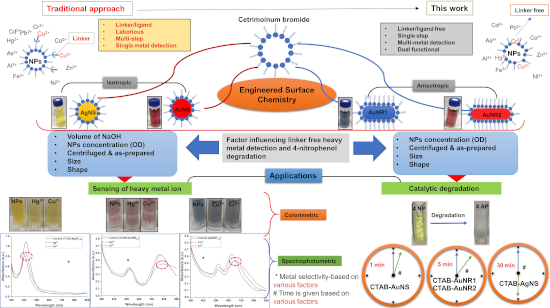
- average size of the nanoparticles was calculated using ImageJ software (USA). The crystal structure of CTAB-capped gold and silver nanoparticles was determined using XRD (Rigaku Smartlab, Japan) in a 2θ range of 35° to 80°. The nanoparticle solutions were air-dried, and the obtained powders (20 mg) were
- , surface capping, and linker molecules are required to degrade 4-nitrophenol. Therefore, this study analyzed the impact of size, shape, metal type, and nanoparticle concentration on converting 4-nitrophenol to 4-aminophenol. Characterization of CTAB-capped nanoparticles UV–vis, DLS, Zeta, FTIR, XRD, and
- TEM analyses Physicochemical characterization was performed using optical spectroscopy, DLS, FTIR, XRD, and TEM analyses. Figure 2a shows the synthesized isotropic silver and gold nanospheres with plasmon bands at 410 nm (AgNS) and 525 nm (AuNS). The anisotropic tunable gold nanorods with longitudinal




Mn-doped ZnO nanopowders prepared by sol–gel and microwave-assisted sol–gel methods and their photocatalytic properties
Beilstein J. Nanotechnol. 2024, 15, 1283–1296, doi:10.3762/bjnano.15.104
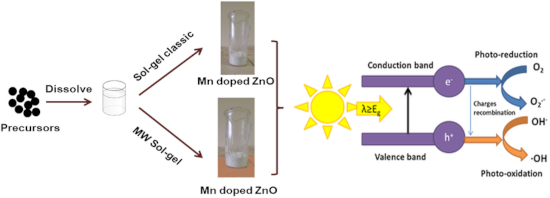
- crystallization, consistent with the results from XRD and SEM analyses. Additionally, bands at 3437 and 1613 cm−1 correspond to the vibrational modes of hydroxy groups (OH) bonded to the surface of the ZnO powders. X-ray diffraction The crystalline structure of the samples thermally treated at 500 °C was analyzed
- using X-ray diffraction (XRD). The resulting XRD patterns, shown in Figure 6a, indicate that the samples are polycrystalline and single-phase. This single phase corresponds well to the data from ICDD file no. 36-1451 of zincite ZnO. ZnO has a wurtzite-type structure and crystallizes in the hexagonal P63
- 10 and 20 kV in high vacuum mode. X-ray diffraction (XRD) measurements were carried out using an Ultima IV diffractometer (Rigaku Corp., Japan) equipped with parallel beam optics, using Cu Kα radiation (λ = 1.5418 Å) at 40 kV and 30 mA over the 2θ range of 25–80° at a scanning rate of 2°/min with a


The role of a tantalum interlayer in enhancing the properties of Fe3O4 thin films
Beilstein J. Nanotechnol. 2024, 15, 1253–1259, doi:10.3762/bjnano.15.101
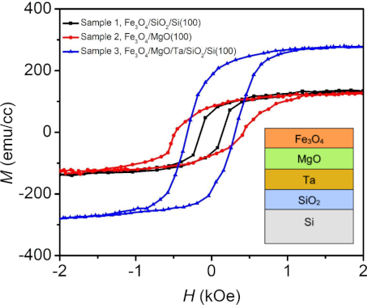
- films on three different types of substrates, namely an amorphous SiO2/Si(100) substrate, a single crystal MgO(100) substrate, and a buffer layer consisting of MgO/Ta/SiO2/Si(100). The properties of Fe3O4 thin films were analyzed using atomic force microscopy (AFM), X-ray diffractometry (XRD), and
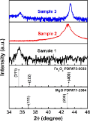
- [24][25]. Besides, there was nearly no oxygen diffusion from the Fe3O4 film into the MgO layer, resulting in higher crystallinity and improved grain size as seen in the XRD patterns. Surface properties obtained from Figure 1 are summarized in Table 1. The crystal structures of the Fe3O4 samples on
- different substrates were investigated with XRD measurements, and the corresponding diffraction patterns are depicted in Figure 2. The Fe3O4 sample grown on the SiO2/Si(100) substrate exhibits a single Fe3O4(311) peak located at 35.5° (black line), while the one deposited on MgO(100) exhibits the Fe3O4(400


Enhanced catalytic reduction through in situ synthesized gold nanoparticles embedded in glucosamine/alginate nanocomposites
Beilstein J. Nanotechnol. 2024, 15, 1227–1237, doi:10.3762/bjnano.15.99
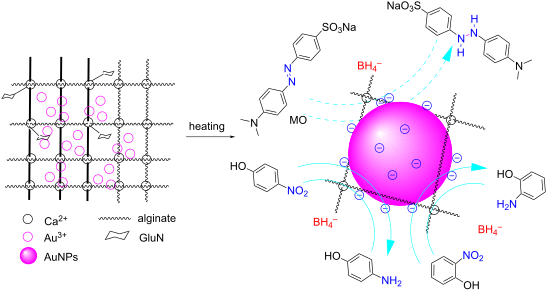
- synthesizing gold nanoparticles (AuNPs) within a glucosamine/alginate (GluN/Alg) nanocomposite via an ionotropic gelation mechanism in aqueous environment. The resulting nanocomposite, AuNPs@GluN/Alg, underwent thorough characterization using UV–vis, EDX, FTIR, SEM, TEM, SAED, and XRD analyses. The spherical
- microscopy (TEM) and selected area electron diffraction (SAED) were carried out using a JEOL JEM-2100 instrument. Crystal structure characterizations of AuNPs were carried out via XRD diffraction. Zeta potential and dynamic light scattering (DLS) measurements were carried out on gel solutions (1.0 mg·mL−1
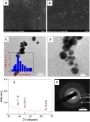
- the initial mass), suggesting the presence of inorganic components within the nanocomposite. SEM and TEM analyses were performed to determine the morphology, and XRD and SAED patterns were used to evaluate the crystalline structure of AuNPs@GluN/Alg, as illustrated in Figure 4. The SEM images show




Photocatalytic methane oxidation over a TiO2/SiNWs p–n junction catalyst at room temperature
Beilstein J. Nanotechnol. 2024, 15, 1132–1141, doi:10.3762/bjnano.15.92
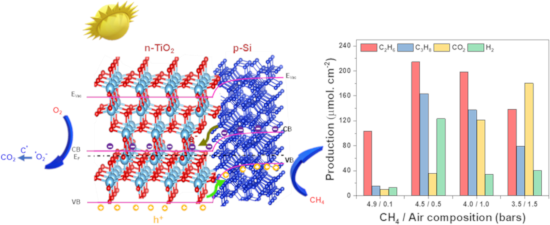
- respective limitations. This study offers new insights into the design of an efficient system for OCM. Results and Discussion Structural and morphological properties For understanding the crystalline structure of TiO2 and SiNWs, X-ray diffraction patterns were recorded as displayed in Figure 1. The XRD
- 146 cm−1, and (ii) the TO phonon mode of Si (Figure 4b) [47][48][49]. Consequently, the combined surface-sensitive Raman and bulk-sensitive XRD results reveal that the n-type TiO2 coating layer on p-type SiNWs does not influence the crystalline structure. Photocatalytic OCM The photocatalytic OCM
- properties of as-synthesized samples were analyzed using an X-ray diffraction system (XRD, Rigaku, SmartLab) with a 2θ range of 20–80° and a field-emission scanning electron microscope (FE-SEM, Hitachi, S-4700). The absorption properties of the thin films were analyzed using a diffuse reflectance UV–vis


Facile synthesis of Fe-based metal–organic frameworks from Fe2O3 nanoparticles and their application for CO2/N2 separation
Beilstein J. Nanotechnol. 2024, 15, 897–908, doi:10.3762/bjnano.15.74
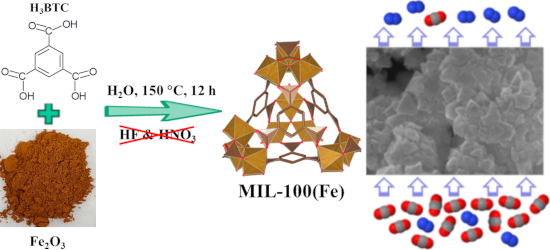
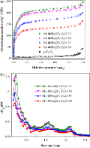
- concentration was incrementally introduced into the reaction system to control the quality of the as-prepared samples. As shown in Figure 2, reflections of crystalline Fe2O3 were detected in the p-Fe2O3 XRD pattern, which are in absolute agreement with the simulated data, including the (220) and (311) planes in
- the examined region (JCPDS 39-1346). After the Fe2O3 nanoparticles underwent a highly conditional reaction, the characteristic peaks of MIL-100(Fe) were verified in the XRD profiles of the as-prepared M-100Fe@Fe2O3 samples. The XRD data of the reference MIL-100(Fe) sample and the simulated data from
- MIL-100(Fe) crystals in the prepared M-100Fe@Fe2O3 samples increases in the following order: M-100Fe@Fe2O3#0.90 < M-100Fe@Fe2O3#1.35 < M-100Fe@Fe2O3#1.80 < M-100Fe@Fe2O3#2.25. This result aligns well with the XRD data shown in Figure 2. Figure 4 exhibits ATR-FTIR spectra of Fe2O3, MIL-100(Fe), and as





Intermixing of MoS2 and WS2 photocatalysts toward methylene blue photodegradation
Beilstein J. Nanotechnol. 2024, 15, 817–829, doi:10.3762/bjnano.15.68
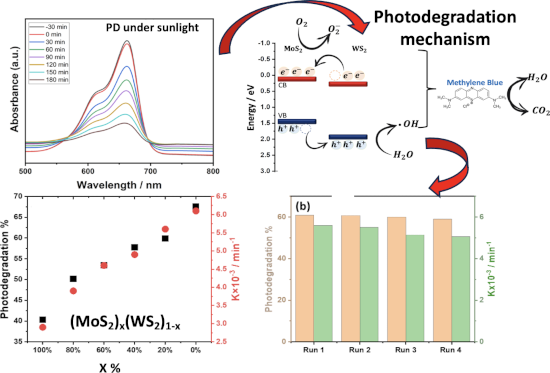
- , the positions of the E12g and A1g vibrational modes in the composite sample did not exhibit any noticeable shifts compared to the observed peaks in individual samples as reported in previous studies [26]. The X-ray diffraction (XRD) diagram shown in Figure 2a exhibits the diffraction peaks at 14.25
- , respectively. The XRD diagram depicted in Figure 2c reveals the combination of peaks arising from both 2H-MoS2 and 2H-WS2, confirming the successful intermixing of the MoS2/WS2 composite. The sharp shape of the diffraction peaks suggests a very good crystallinity of the fabricated materials. The recurring
- additional peaks observed in all XRD diagrams at ≈37° and ≈69° positions are due to the silicon substrate. The X-ray photoelectron spectroscopy (XPS) survey scans and high-resolution scans for all samples are presented in Figure 3a–j. All XPS analyses were first calibrated using the C 1s peak of carbon at


Effect of repeating hydrothermal growth processes and rapid thermal annealing on CuO thin film properties
Beilstein J. Nanotechnol. 2024, 15, 743–754, doi:10.3762/bjnano.15.62
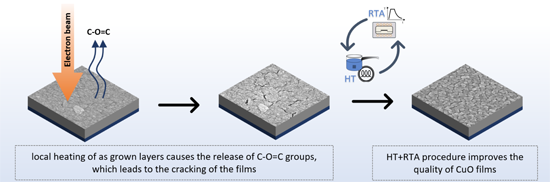
- procedure. It demonstrates homogeneity without a notable dominance of hills or valleys. The structural properties of the CuO films were evaluated using XRD and Raman spectroscopy. The XRD diffractograms (Figure 4A) exhibit well-defined reflections that correspond to the polycrystalline monoclinic structure
- thin films. Consequently, it has a favorable impact on both electrical and thermal stability. Moreover, as evidenced by XRD and Raman spectroscopy analyses, the sequencing enhances the crystal quality of the films, which remain free from other copper compound phases regardless of the preparation




Simultaneous electrochemical determination of uric acid and hypoxanthine at a TiO2/graphene quantum dot-modified electrode
Beilstein J. Nanotechnol. 2024, 15, 719–732, doi:10.3762/bjnano.15.60
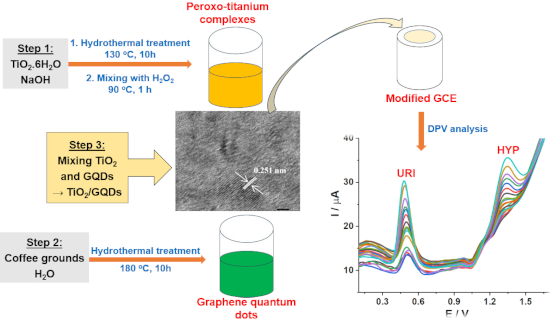
- complexes presents an absorption band at 240 nm. The combination of titanium complexes with GQDs resulted in higher adsorption λmax values. XRD patterns of the obtained samples in suspension form are presented in Figure 2. The XRD patterns of TiO2 and TiO2/GQDs suspensions show broad peaks of TiO2 at 2θ
- = 26°, corresponding to the (101) plane of the anatase phase (JCPDS file 73-1764) (Figure 2a). As the XRD measurements were made in liquids instead of solid powders, the diffraction peaks are found to be broad and weak. The diffraction peaks of the GQDs at 2θ = 30.4° can be assigned to the (002) plane
- of graphene. The broad nature of the diffraction peak is due to the structure of GQDs containing only few layers of graphene sheets [27]. The XRD pattern of TiO2/GQDs in solid form (dried at 100 °C for 3 h) exhibits characteristic peaks of anatase at 2θ = 25.6°, 38.1°, and 48.3°, corresponding to the


Elastic modulus of β-Ga2O3 nanowires measured by resonance and three-point bending techniques
Beilstein J. Nanotechnol. 2024, 15, 704–712, doi:10.3762/bjnano.15.58
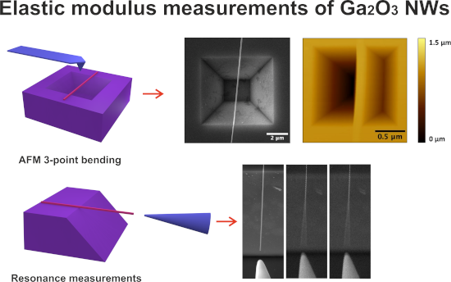
- -Ga2O3 NW synthesis methods and detailed post-examination of their mechanical properties before considering their application in future nanoscale devices. Results For structural analysis of the as-grown NW arrays on Si(100)/SiO2 substrates, X-ray diffraction (XRD) measurements were conducted. The marked
- information on the crystalline structure of NWs. Fast Fourier transformation was performed on the obtained TEM images to determine crystalline orientations. The structure was also analysed using XRD on a Rigaku MiniFlex 600 X-ray powder diffractometer. The measurements were conducted in Bragg–Brentano θ/2θ


Gold nanomakura: nanoarchitectonics and their photothermal response in association with carrageenan hydrogels
Beilstein J. Nanotechnol. 2024, 15, 678–693, doi:10.3762/bjnano.15.56
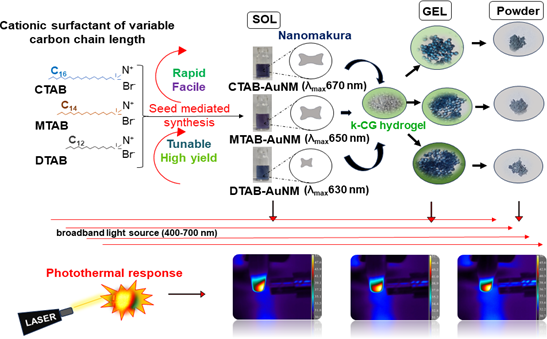
- diffraction (XRD), and FTIR, respectively, to establish physicochemical properties of the synthesized nanomaterials. Results Synthesis, optical spectroscopy, and zeta potential Anisotropic gold nanoparticles of makura shape were synthesized using seed-mediated approach as shown in Figure 1a. The Au seeds were
- shown in Figure 5a [25]. We also observed no peaks in the region of (1500–2000) cm−1, which suggested that there were no double bonds formed such as C=C, C=O and C=N. The crystallinity of synthesized anisotropic gold nanoparticles with surfactants of different carbon tail lengths was explored using XRD
- nanomakura shape was determined by the surfactant capping, clearly indicating the effect of carbon tail length. The breaking of symmetry was due to a gradual decrease in micelle density on the edges giving the shape of a pillow as shown in Figure 6 The highest intensity of {111} observed in the XRD






Exfoliation of titanium nitride using a non-thermal plasma process
Beilstein J. Nanotechnol. 2024, 15, 631–637, doi:10.3762/bjnano.15.53
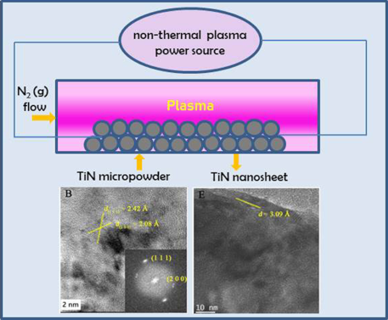
- microscope operating at 200 kV. X-ray diffraction (XRD) analysis was conducted using a diffractometer (Miniflex II) with Cu Kα radiation over a 2θ range of 20–90°, with a scan speed of 2° per minute. Furthermore, Raman spectra were obtained using a spectrometer (Horiba Scientific MacroRam Raman) equipped
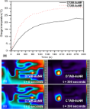
- with a 785 nm laser source. These analytical techniques provided comprehensive insights into the structure and properties of the synthesized TiN nanosheets. Results and Discussion Figure 2 shows the XRD patterns of both the bulk material and the TiN powder obtained from the non-thermal plasma process
- . The XRD pattern for cubic TiN, as compared to JCPDS # 87-0633, displays characteristic peaks at approximately 37°, 43°, 62°, 74°, and 78°. In contrast, the TiN processed by non-thermal plasma exhibited small shifts towards less positive values in the 2θ angles for the (111), (200), (220), (311), and



Radiofrequency enhances drug release from responsive nanoflowers for hepatocellular carcinoma therapy
Beilstein J. Nanotechnol. 2024, 15, 569–579, doi:10.3762/bjnano.15.49
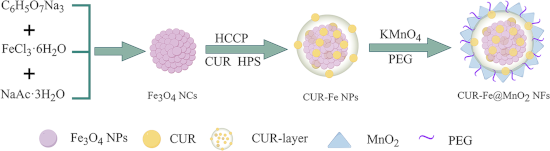
- substituted by O–H. Additionally, other characteristic absorption peaks of CUR and HPS were retained. These findings confirmed the successful synthesis of CUR-Fe@MnO2 NFs. According to the X-ray diffraction (XRD) pattern (Figure 2g), the 2θ diffraction peaks at 30.1° (220), 35.4° (311), 37.0° (222), 43.1
- ° (400), 53.4° (422), 56.9° (511), and 62.7° (440) are consistent with the face-centered cubic structure of Fe3O4 (PDF#19-0629). The XRD pattern of CUR shows amorphous halos at about 20° to 30°. New broad amorphous halos of greater intensity appeared at approximately 20° to 30°, indicating the presence
- , respectively). f) FTIR spectra of HCCP, CUR, HPS, and the CUR-Fe@MnO2 NFs. g) XRD patterns of the Fe3O4 NCs, curcumin, CUR-Fe NPs, and CUR-Fe@MnO2 NFs. h) Hysteresis loop of the Fe3O4 NCs and CUR-Fe@MnO2 NFs, indicating that they were superparamagnetic. a) T1/T2-mapping MR imaging of CUR-Fe@MnO2 NFs at pH 5.0


Aero-ZnS prepared by physical vapor transport on three-dimensional networks of sacrificial ZnO microtetrapods
Beilstein J. Nanotechnol. 2024, 15, 490–499, doi:10.3762/bjnano.15.44
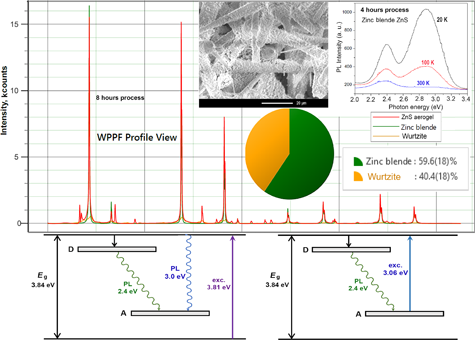
- produced material is investigated by scanning electron microscopy (SEM), while its crystalline and optical qualities are assessed by X-ray diffraction (XRD) analysis and photoluminescence (PL) spectroscopy, respectively. We demonstrate possibilities for controlling the composition and the crystallographic
- sensor applications. Keywords: aeromaterial; crystallographic structure; luminescence; physical vapor transport; scanning electron microscopy (SEM); X-ray diffraction (XRD); Introduction Porous materials represent a class of solid-state networks widely used in adsorptive and photocatalytic removal of
- preserved; however, the surface of their arms became more granulated, as shown in Figure 1b. The XRD analysis of the sample produced in the 4 h procedure shows that it consists of two phases (Figure 2a). The reflexes are indexed to a cubic zinc blende ZnS phase according to the JCPDS cards no. 772100 and no



Photocatalytic degradation of methylene blue under visible light by cobalt ferrite nanoparticles/graphene quantum dots
Beilstein J. Nanotechnol. 2024, 15, 475–489, doi:10.3762/bjnano.15.43
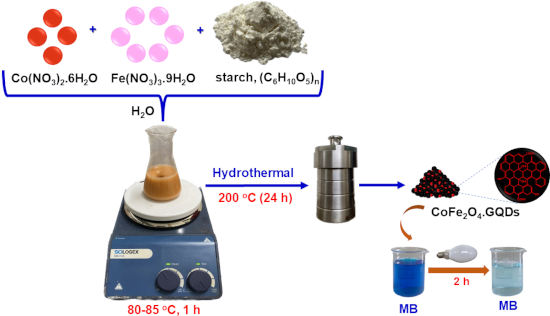
- benzoquinone (C6H4O2) was provided by Sigma-Aldrich, USA. Sodium hydroxide (NaOH, ≥96%) and hydrogen chloride (HCl, 38%) were purchased from Xilong, China. Instruments X-ray diffraction (XRD) patterns were recorded by using a D8 Advance (Bruker, Germany) with Cu Kα radiation (λ = 0.154 nm). Fourier-transform
- Discussion Materials characterisation The XRD patterns of cobalt ferrite with decreasing Fe/Co molar ratio from 2 to 0.5 are presented in Figure 1a. The XRD patterns of CF confirm that cobalt ferrite has a spinel structure, and all main peaks correspond to the standard pattern of bulk CoFe2O4 (JCPDS 00-022
- -1086). It is notable that the XRD pattern of cobalt ferrite with the initial Fe/Co ratio of 2 (stoichiometric ratio) exhibits the diffraction of iron oxides at 2θ of 24.2°, 33.2°, 40.8°, and 49.6° (JCPDS no. 33-0664). This means that a part of cobalt ions goes to the liquid phase during synthesis




Potential of a deep eutectic solvent in silver nanoparticle fabrication for antibiotic residue detection
Beilstein J. Nanotechnol. 2024, 15, 426–434, doi:10.3762/bjnano.15.38
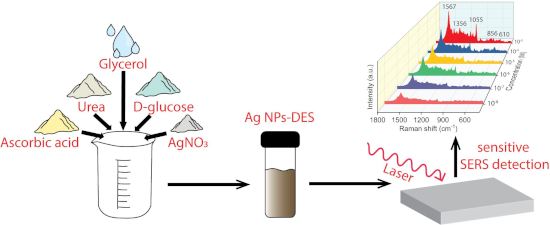
- used as reducing agent. The synthesis protocol is summarily presented in Figure 1. Also, to characterize our material, UV–vis and XRD measurements were carried out. Figure 2A shows the broad adsorption band indicating the high number of excitons [38] on the surface of Ag NPs due to SPR. The SPR peak is
- located at 390 nm, which is suitable for SERS applications with 532 nm laser excitation. Besides, the shape of the UV–vis spectrum is in accordance with Mie scattering theory calculations, as reported in [39], proving the existence of Ag NPs in the solution. Moreover, the XRD pattern of the thin film
- -focus light element from Bruker, UK, were used. Raman spectra were collected with a XploRA ONE spectroscope (HORIBA, Japan), with a laser wavelength of 532 nm, 1 mW power, and an accumulation number of 60. Schematic of the Ag NPs-DES synthesis. (A) UV–vis spectrum of the Ag NPs-DES solution. (B) XRD


Controllable physicochemical properties of WOx thin films grown under glancing angle
Beilstein J. Nanotechnol. 2024, 15, 350–359, doi:10.3762/bjnano.15.31
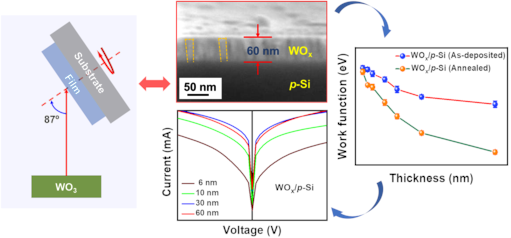
- bias voltage was applied to the p-Si substrates, whereas the WOx films were kept grounded. The crystallinity of the WOx films was examined using X-ray diffraction (XRD) (Bruker) under Bragg–Brentano geometry (θ–2θ) in an angular window of 2θ = 20° to 80°. The chemical composition of the WOx films was
- crystallinity after vacuum annealing might also play a role in determining the work function [45]. XRD measurements were carried out on the 60 nm thick film to investigate any possible change in the crystallinity due to vacuum annealing. The XRD data (Figure 5) of a 60 nm-thick NS-WOx film reveals an amorphous
- revealed from the XRD studies, as-deposited NS-WOx films are amorphous in nature, whereas post-growth vacuum-annealed (at 673 K for 1 h) films show an amorphous-to-crystalline structural phase transition. XPS analysis confirms an increasing concentration of defect density in the form of oxygen vacancies




Vinorelbine-loaded multifunctional magnetic nanoparticles as anticancer drug delivery systems: synthesis, characterization, and in vitro release study
Beilstein J. Nanotechnol. 2024, 15, 256–269, doi:10.3762/bjnano.15.24
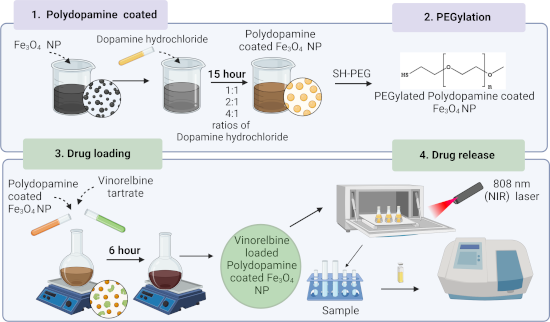
- -resolution analytical electron microscope (FE-SEM, Thermo Scientific, Apreo 2S LoVac) and a scanning transmission electron microscope (STEM, Phillips XL, 30 ESEM-FEG/EDAX) operating at 120 kV acceleration voltage. The structure of the nanoparticles was analyzed by X-ray diffraction (XRD, PANalytical, Xpert
- between peak broadening and particle size in X-ray analysis. In this equation, the symbols D, K, λ, β, and θ represent the particle size, Scherrer shape factor (here 0.89), X-ray wavelength (0.15418 nm), half-maximum width, and diffraction angle, respectively [43]. Using the X-ray diffraction (XRD
- ) spectrum and Equation 5, the particle size of Fe3O4 NPs was calculated and determined to be 18 nm on average. X-ray patterns showing the distribution of Fe3O4 NPs in their uncoated state are shown in Figure 2a. XRD analysis reveals the presence of seven distinct peaks at 30.13°, 35.48°, 43.12°, 53.6


Modification of graphene oxide and its effect on properties of natural rubber/graphene oxide nanocomposites
Beilstein J. Nanotechnol. 2024, 15, 168–179, doi:10.3762/bjnano.15.16
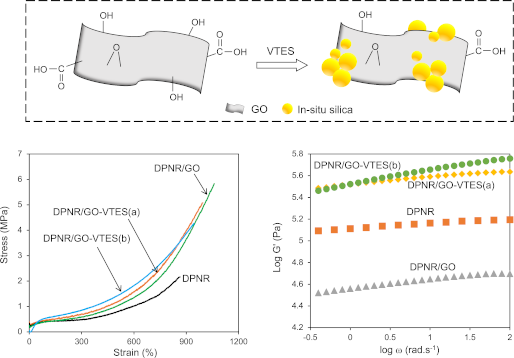
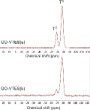
- characterized by X-ray diffraction (XRD), Fourier-transform infrared spectroscopy, contact angle, thermal gravimetric analysis, and scanning electron microscopy. The XRD results showed the appearance of an amorphous region of silica particles at a diffraction angle of 22°. The formation of silica was
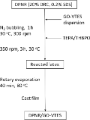
- conditions to determine the ideal condition to modify GO for grafting onto NR. The GO-VTES products were characterized using X-ray diffraction (XRD), contact angle, 29Si NMR, Fourier-transform infrared spectroscopy (FTIR), and morphology analysis. The GO-VTES was expected to improve the mechanical properties
- the attachment of the sample to the measuring system. The frequency-dependent measurement was performed at an initial strain of 1% and at an angular frequency of 0.1–100 rad/s at 30 °C. The number of data points collected was 31. Results and Discussion Characterization of GO-VTES XRD Figure 3 shows






Assessing phytotoxicity and tolerance levels of ZnO nanoparticles on Raphanus sativus: implications for widespread adoptions
Beilstein J. Nanotechnol. 2024, 15, 115–125, doi:10.3762/bjnano.15.11

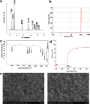
- levels, thereby being identified as a Zn-tolerant species, ultimately releasing an excess amount of Zn into the environment. Results ZnO NPs characterization Wet chemical synthesis yielded 7.012 g of ZnO NPs, disregarding the sample loss during the synthesis. The XRD pattern corresponds to the hexagonal


Berberine-loaded polylactic acid nanofiber scaffold as a drug delivery system: The relationship between chemical characteristics, drug-release behavior, and antibacterial efficiency
Beilstein J. Nanotechnol. 2024, 15, 71–82, doi:10.3762/bjnano.15.7

- separation during the electrospinning process [17][38][39], leading to the formation of a BBR-rich phase on the surface of nanofibers. The crystallinity of the PLA pellet and electrospun nanofiber scaffolds were examined by X-ray diffraction (XRD) analysis (Figure 3B). The XRD pattern of the PLA pellet shows
- diffraction peaks at 2θ of 16.7, 19.2, and 22.4° associated to a crystalline α-form orthorhombic structure (card number 00-054-1917, Diffract Plus 2005), while the weak diffraction peaks at 28.9 and 30.9° were characteristic of the β-form trigonal structure [40]. The XRD pattern of the PLA nanofibers formed
- collector, the rearrangement of the polymer chains into lamellar packing was limited, resulting in domination of the amorphous region in PLA nanofibers [41]. The XRD patterns of BBR drug-loaded PLA nanofiber scaffolds exhibit a distinct peak similar to that of the PLA nanofiber scaffold without the


Properties of tin oxide films grown by atomic layer deposition from tin tetraiodide and ozone
Beilstein J. Nanotechnol. 2023, 14, 1085–1092, doi:10.3762/bjnano.14.89
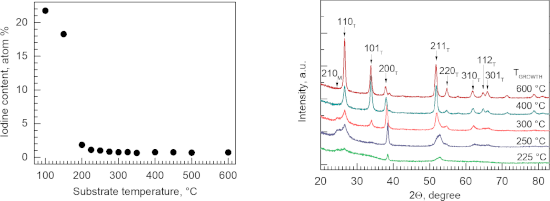
- were carried out starting from 100 °C; however, XRD patterns from the films deposited at the lowest temperatures of 100–200 °C are not depicted in Figure 8 since the films grown at 225 °C were the first that revealed distinguishable reflections. The latter likely means that a significant portion of the


Experimental investigation of usage of POE lubricants with Al2O3, graphene or CNT nanoparticles in a refrigeration compressor
Beilstein J. Nanotechnol. 2023, 14, 1041–1058, doi:10.3762/bjnano.14.86
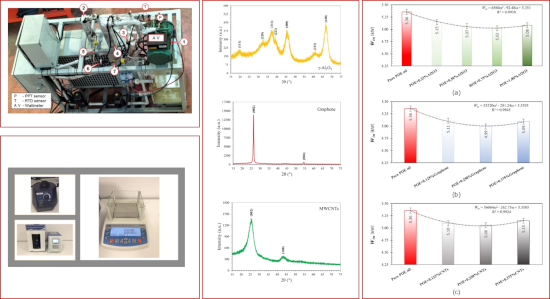
- (XRD) analyses were performed. Characterization of Al2O3 nanoparticles The morphological features of the Al2O3 nanoparticles were investigated with the help of FE-SEM micrograph (Figure 2a). It is seen that the Al2O3 nanoparticles exhibit amorphous nature. Thus, it can be stated that the particle size
- from impurities. This provides strong evidence of the purity of the Al2O3 nanoparticles employed in the study. Also, it was seen that the EDS analysis result agrees with previous studies [22]. The crystalline properties of Al2O3 nanoparticle were determined by XRD analysis. All peaks were measured by
- XRD and compared with previous studies [23][24] in the literature. The XRD patterns of the Al2O3 nanoparticle samples were recorded in the range 2θ (15°–75°) at room temperature. The XRD pattern of γ-Al2O3 is shown in Figure 3. The diffraction pattern of γ-Al2O3 shows strong peaks at angle (2θ) of





A visible-light photodetector based on heterojunctions between CuO nanoparticles and ZnO nanorods
Beilstein J. Nanotechnol. 2023, 14, 1018–1027, doi:10.3762/bjnano.14.84
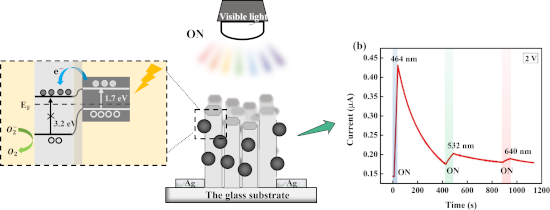
- . The energy-dispersive X-ray spectroscopy (EDS) results in Figure 1c show Zn, Cu, and O, which indicates the presence of ZnO and CuO. No further impurities were found. The results from X-ray diffractometry (XRD) and UV–vis absorption spectroscopy confirm that the nanoparticles covering the surfaces and
- edges of ZnO NRs are CuO NPs. Figure 2a shows XRD patterns of pure ZnO NRs (black line) and CuO NPs sprayed over ZnO NRs (red line) samples. The black line shows diffraction peaks at 2θ = 31.85°, 34.51°, 36.31°, 47.61°, and 62.89°, which correspond to the (100), (002), (101), (102), and (103) planes of
- hexagonal ZnO, similar to data from JCPDS-36-1451 and results reported before [39][40]. Additional peaks at 2θ = 35.90° and 39.14° appear in the XRD pattern of CuO NPs/ZnO NRs, while the original peaks of ZnO remain unchanged. These peaks were assigned to the () and (111) planes of CuO, consistent with


Exploring internal structures and properties of terpolymer fibers via real-space characterizations
Beilstein J. Nanotechnol. 2023, 14, 1004–1017, doi:10.3762/bjnano.14.83

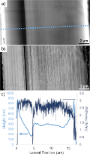
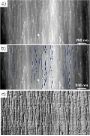
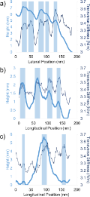
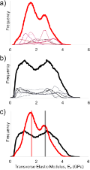
- , this distinction in fundamental chemistry has significant implications for the structures and properties of the resulting fibers. To date, structure–property characterizations of Technora® in the literature have primarily focused on (i) X-ray diffraction (XRD), (ii) nuclear magnetic resonance (NMR
- ) spectroscopy, and (iii) fiber tensile properties. Interestingly, although Technora® is noncrystalline, it can be effectively modeled through XRD as a paracrystalline material such as Kevlar®. Within this framework, the Technora® paracrystalline distortion parameter, a measure of crystalline “sinuosity”, was
- lower (i.e., indicated better alignment) than in all Kevlar® classes explored in a study by Wu and Blackwell [3]. In characterizing the lateral molecular organization in Technora® from XRD, the researchers carefully noted that the broad lateral apparent crystallite “peak” in Technora® was likely not a