

Search results
Search for "biomedical" in Full Text gives 395 result(s) in Beilstein Journal of Nanotechnology. Showing first 200.
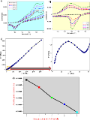
Nanoscale capacitance spectroscopy based on multifrequency electrostatic force microscopy
Beilstein J. Nanotechnol. 2025, 16, 637–651, doi:10.3762/bjnano.16.49
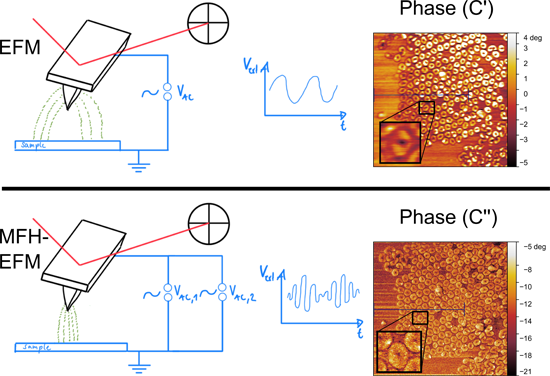
- ; quantitative force spectroscopy; scanning capacitance force microscopy; Introduction Technological progress in fields including electronics, energy storage, photonics, and biomedical devices would not have been possible without the development of new materials. Progress in these areas requires a detailed




Polyurethane/silk fibroin-based electrospun membranes for wound healing and skin substitute applications
Beilstein J. Nanotechnol. 2025, 16, 591–612, doi:10.3762/bjnano.16.46
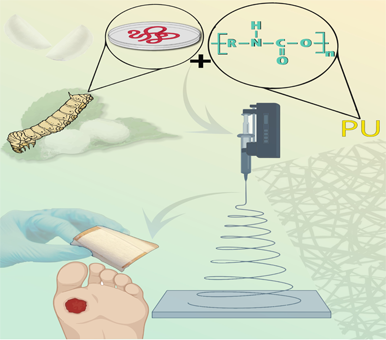
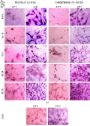
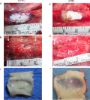
- 37610, Pakistan 10.3762/bjnano.16.46 Abstract The importance of electrospun membranes for biomedical applications has increased, especially when it comes to skin regeneration and wound healing. This review presents the production and applications of electrospun membranes based on polyurethane (PU) and
- silk fibroin (SF) and highlights their benefits as a skin substitute. This review also highlights the electrospinning technique used to prepare nanofibers for these biomedical applications. Silk, well-known for its excellent biocompatibility, biodegradability, structural properties, and low immunogenic
- response, is extensively investigated by addressing its molecular structure, composition, and medical uses. PU is a candidate for potential biomedical applications because of its strength, flexibility, biocompatibility, cell-adhesive properties, and high resistance to biodegradation. PU combined with silk



Nanomaterials in targeting amyloid-β oligomers: current advances and future directions for Alzheimer's disease diagnosis and therapy
Beilstein J. Nanotechnol. 2025, 16, 561–580, doi:10.3762/bjnano.16.44
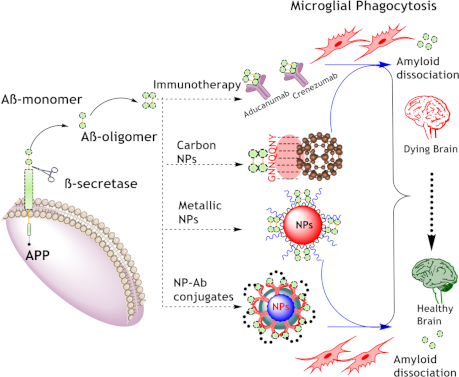
- physicochemical properties, diverse structural forms, and potential applications in combating NDs. The unique characteristics of CNMs, including their hydrophobic surfaces and variable dimensions, enable them to interact effectively with biomolecules, making them valuable tools in biomedical research and
- valuable candidates for various biomedical applications such as diagnosis, therapeutics, and drug delivery. The efficacy of these NPs is closely linked to their pharmacokinetic properties. The biodistribution, safety profile, and clearance mechanism of NPs plays a critical role in the clinical application


Functionalized gold nanoflowers on carbon screen-printed electrodes: an electrochemical platform for biosensing hemagglutinin protein of influenza A H1N1 virus
Beilstein J. Nanotechnol. 2025, 16, 540–550, doi:10.3762/bjnano.16.42
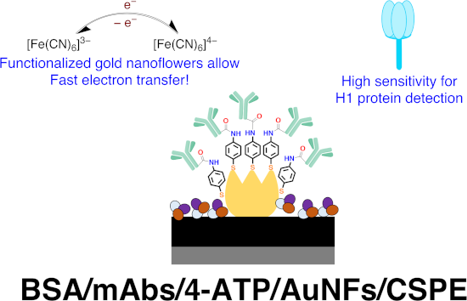
- Manouchehri Doulabi Gemma Mestres Masood Kamali-Moghaddam Division of Biomedical Engineering, Department of Materials Science and Engineering, Uppsala University, Uppsala, Sweden Department of Immunology, Genetics and Pathology, Science for Life Laboratory, Uppsala University, Uppsala, Sweden 10.3762/bjnano


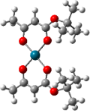
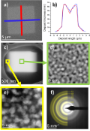
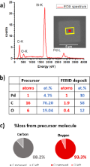
Electron beam-based direct writing of nanostructures using a palladium β-ketoesterate complex
Beilstein J. Nanotechnol. 2025, 16, 530–539, doi:10.3762/bjnano.16.41
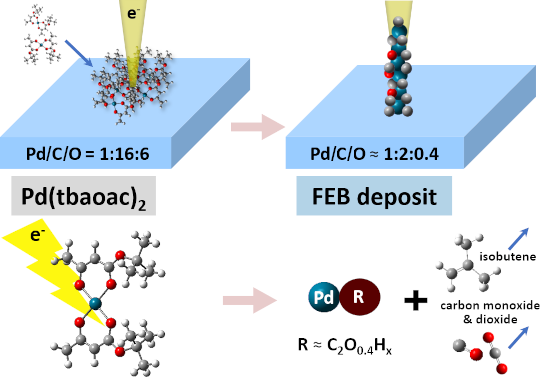
- applications [32][33][34], palladium is an important metal as it is the optimal material to make metallic contacts with CNTs [35]. Palladium nanoparticles are also being explored for biomedical applications and sensors [36]. Therefore, Pd nanoprinting via FEBID could emerge as a key technique for creating


Synthetic-polymer-assisted antisense oligonucleotide delivery: targeted approaches for precision disease treatment
Beilstein J. Nanotechnol. 2025, 16, 435–463, doi:10.3762/bjnano.16.34
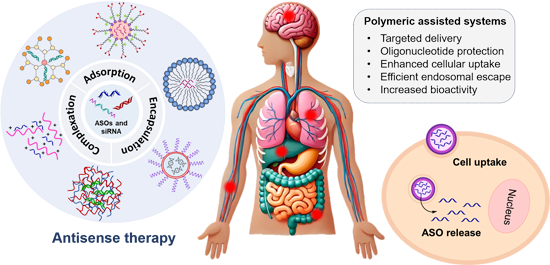
- its characteristic amphipathic guanidinium group, PLR has been frequently used in biomedical applications, particularly as a carrier for nucleic acid delivery [91]. Moreover, its strong cationic nature allows it to effectively bind to negatively charged molecules, facilitating cellular uptake through


Size control of nanoparticles synthesized by pulsed laser ablation in liquids using donut-shaped beams
Beilstein J. Nanotechnol. 2025, 16, 407–417, doi:10.3762/bjnano.16.31
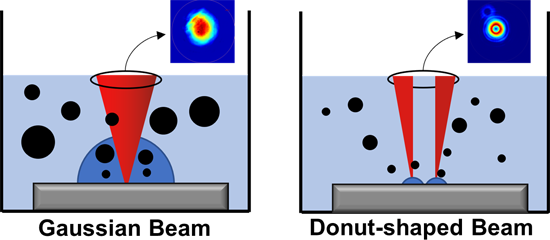
- the size, requiring a monodisperse or at least monomodal size distribution. As an example, gold NPs with a narrow particle size distribution achieve a higher detection sensitivity in sensing applications [9]. Besides, NP size is critical for biomedical applications, where deviations from the optimum


Development of a mucoadhesive drug delivery system and its interaction with gastric cells
Beilstein J. Nanotechnol. 2025, 16, 371–384, doi:10.3762/bjnano.16.28
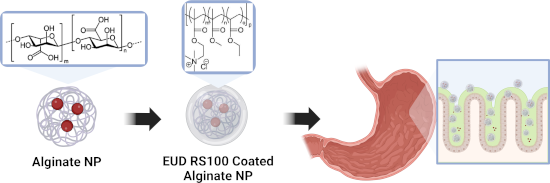
- concluded that EudAlg nanoparticles do not significantly affect the viability of AGS cell (Figure 4A). Internalization of nanoparticles When nanoparticles are designed for biomedical applications, two important properties to be considered are toxicity and cellular uptake. The cellular uptake of


Pulsed laser in liquid grafting of gold nanoparticle–carbon support composites
Beilstein J. Nanotechnol. 2025, 16, 349–361, doi:10.3762/bjnano.16.26
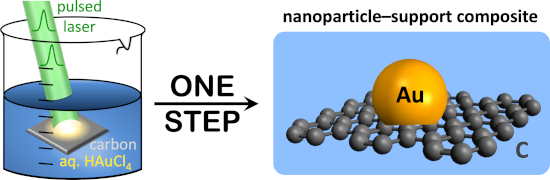
- , catalysis, sensing, and biomedical fields. Conclusion Pulsed laser grafting of gold nanoparticle–carbon fiber paper composites presents a significant advancement in electrode design for electrocatalytic applications. Our novel one-step aqueous pulsed laser grafting process enables the fabrication of


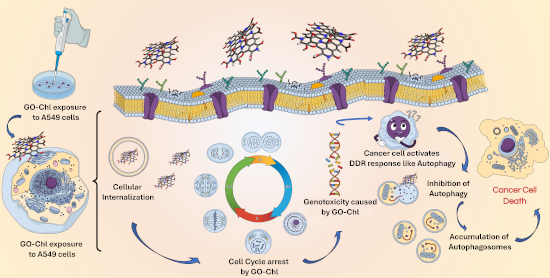
Graphene oxide–chloroquine conjugate induces DNA damage in A549 lung cancer cells through autophagy modulation
Beilstein J. Nanotechnol. 2025, 16, 316–332, doi:10.3762/bjnano.16.24
- Education, Shiksha Sadan, Sector-5, Panchkula-134114, India CSIR-Indian Institute of Toxicology Research (CSIR-IITR), 31, Mahatma Gandhi Marg, Lucknow-226001, India Department of Biomedical, Industrial & Human Factors Engineering, Wright State University, Dayton, Ohio 45435, United States 10.3762/bjnano



Enhancing mechanical properties of chitosan/PVA electrospun nanofibers: a comprehensive review
Beilstein J. Nanotechnol. 2025, 16, 286–307, doi:10.3762/bjnano.16.22
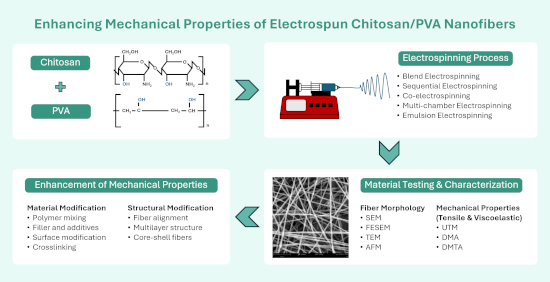
- Department of Chemical Engineering, Faculty of Engineering, University of Malaya, 50603 Kuala Lumpur, Malaysia 10.3762/bjnano.16.22 Abstract This review examines strategies to enhance the mechanical properties of chitosan/polyvinyl alcohol (PVA) electrospun nanofibers, recognized for their biomedical and
- evaluate mechanical properties and provides a comparative analysis of different enhancement approaches. Applications in biomedical and industrial contexts are explored, showcasing the versatility and innovation potential of these nanofibers. Finally, current challenges are addressed, and future research
- sensitive compounds [3]. Electrospun nanofibers exhibit a large surface area, high porosity, and small pore size, making them useful for a wide range of applications, as shown in Figure 1. Chitosan/polyvinyl alcohol (PVA) electrospun nanofibers have many applications, including water treatment, biomedical


Nanocarriers and macrophage interaction: from a potential hurdle to an alternative therapeutic strategy
Beilstein J. Nanotechnol. 2025, 16, 97–118, doi:10.3762/bjnano.16.10
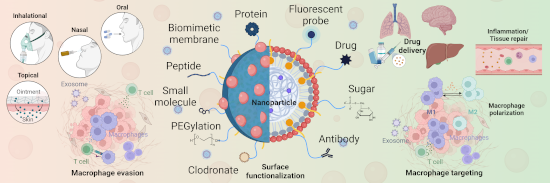
- transport across membranes, and extend circulation times. These advantages could reduce the negative effects of off-target drug accumulation and improve the release to the disease sites compared to current delivery systems [6]. Despite the expected applications in the biomedical field, the journey of NPs


Characterization of ZnO nanoparticles synthesized using probiotic Lactiplantibacillus plantarum GP258
Beilstein J. Nanotechnol. 2025, 16, 78–89, doi:10.3762/bjnano.16.8
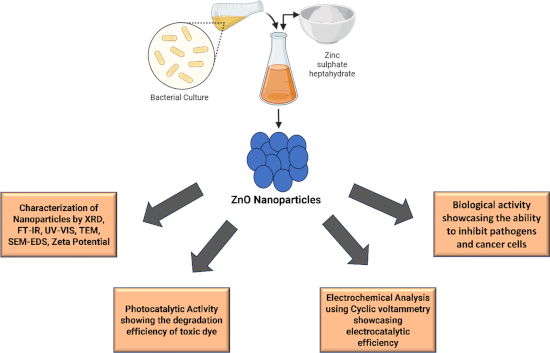
- biomedical applications. This work reports on the green synthesis of ZnO NPs employing lactic acid bacteria (LAB) as capping and reducing agents to produce biocompatible NPs for use in pharmaceutical and biological applications [3][4][5]. LAB are Gram-positive, catalase-negative, and non-pathogenic bacteria
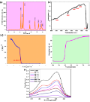
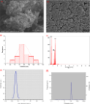
- , suggesting their potential utility in environmental contexts and as biomedical coatings. Conclusion This work effectively proved the use of native lactic acid bacteria as capping and reducing agents in the green synthesis of ZnO NPs. The NPs exhibited potential structural, optical, and biological qualities



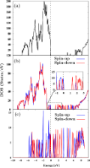
Theoretical study of the electronic and optical properties of a composite formed by the zeolite NaA and a magnetite cluster
Beilstein J. Nanotechnol. 2025, 16, 44–53, doi:10.3762/bjnano.16.5
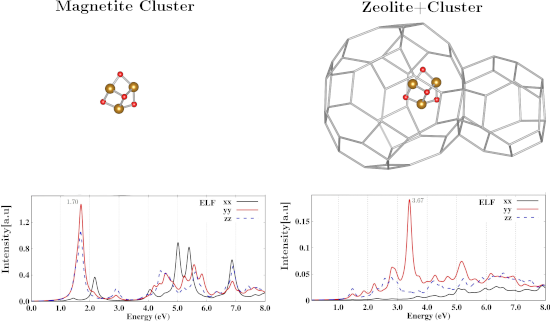
- ], heavy metal removal [11][12], sensor technologies [13][14][15][16], and biomedical applications [17]. Nanoscale materials represent a thriving field of research with a wide range of potential applications. Today, it is generally recognized that properties like hardness, reactivity, toxicity, and optical




Fabrication of hafnium-based nanoparticles and nanostructures using picosecond laser ablation
Beilstein J. Nanotechnol. 2024, 15, 1639–1653, doi:10.3762/bjnano.15.129
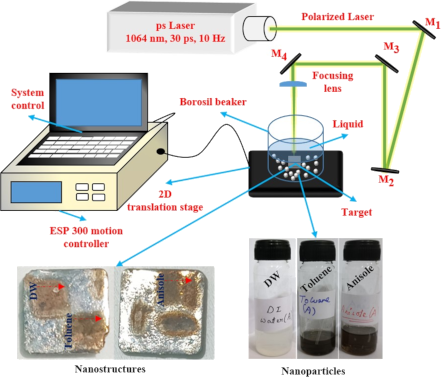
- them to be used in high-temperature alloys and ceramics. Hf compounds are widely used in microelectronics because of their high dielectricity values [2]. In recent years, NPs derived from Hf have gained significant interest in biomedical fields because of their superior optical and thermal properties




Natural nanofibers embedded in the seed mucilage envelope: composite hydrogels with specific adhesive and frictional properties
Beilstein J. Nanotechnol. 2024, 15, 1603–1618, doi:10.3762/bjnano.15.126
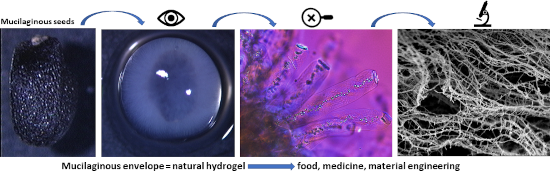
- ], or to animal bodies, promoting epizoochory [31][32][33]. These distinct physical features make mucilage also an important substrate for pharmaceutical, biomedical, and food industries [11][15][19][20][21]. Here, we briefly review the basic composition and structure of mucilage, its frictional and
- ], on monomer and cross-linking concentrations, and on the type of substrate surface [88]. Hydrogels with their low friction are crucial in biomedical applications or for drug delivery [38][83][86][88]. The diaspore mucilage is regarded as a natural hydrogel [38] because of its capacity to absorb water


Liver-targeting iron oxide nanoparticles and their complexes with plant extracts for biocompatibility
Beilstein J. Nanotechnol. 2024, 15, 1593–1602, doi:10.3762/bjnano.15.125
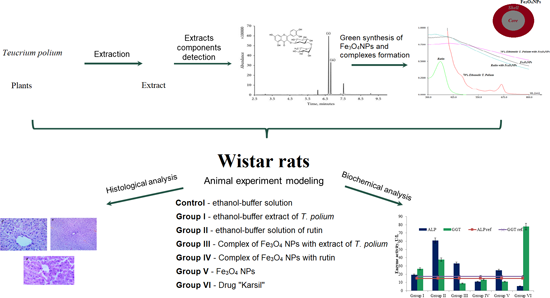
- (Fe3O4 NPs) are widely used in many biomedical applications (e.g., bioimaging, drug delivery, biosensors, diagnostics, and theranostics). However, the use of NPs does not preclude the possibility of selective toxicity and undesirable effects, including accumulation in tissues and direct interaction with
- challenges associated with human health. Nanotechnology offers great opportunities in medicine because of the physicochemical properties at the nanoscale. There are efforts to apply unique quantum phenomena at the nanoscale in the fields of medicine, biomedical sciences, bioengineering, food technology
- interdisciplinary approach is to integrate advances in biotechnology, nanomaterials, biomedical robotics, and genetic engineering into the broader field of nanomedicine. On a larger scale, the application of nanotechnology in medicine enhances efficiency, accelerates processes, and improves functional performance


Integrating high-performance computing, machine learning, data management workflows, and infrastructures for multiscale simulations and nanomaterials technologies
Beilstein J. Nanotechnol. 2024, 15, 1498–1521, doi:10.3762/bjnano.15.119



Polymer lipid hybrid nanoparticles for phytochemical delivery: challenges, progress, and future prospects
Beilstein J. Nanotechnol. 2024, 15, 1473–1497, doi:10.3762/bjnano.15.118
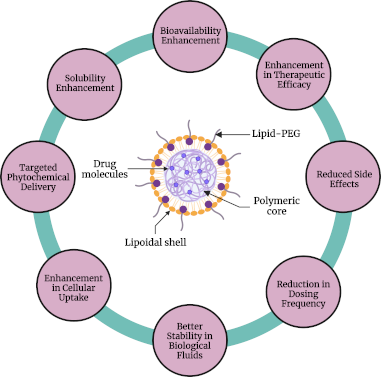
- hybrid nanoparticles (PLHNPs) have emerged as a novel delivery system that combines the advantages of both polymeric and lipid-based nanoparticles to overcome these challenges. This review explores the potential of PLHNPs to enhance the delivery and efficacy of phytochemicals for biomedical applications
- challenges ahead and prospects of PLHNPs regarding their widespread use in clinical settings. Overall, PLHNPs hold strong potential for the effective delivery of phytochemicals for biomedical applications. As per the findings from pre-clinical studies, this may offer a promising strategy for managing various
- advantageous for chronic conditions requiring long-term treatment, such as cancer, cardiovascular diseases, and neurodegenerative disorders [22][23]. This review aims to discuss the ability of PLHNPs to improve the therapeutic delivery of phytochemicals for biomedical applications. In this review, we discuss


Various CVD-grown ZnO nanostructures for nanodevices and interdisciplinary applications
Beilstein J. Nanotechnol. 2024, 15, 1390–1399, doi:10.3762/bjnano.15.112
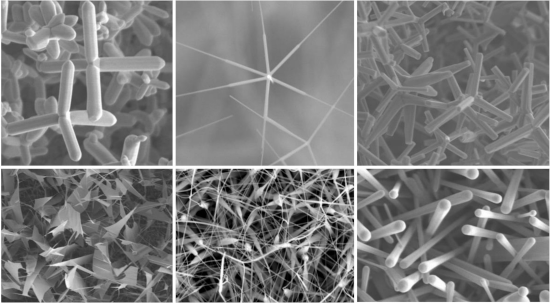
- results prove that ZnO exhibits many novel nanostructures that can foster the development of next-generation optoelectronic nanodevices and new applications in biological and biomedical fields. Keywords: chemical vapour deposition; electron microscopy; Raman and photoluminescent spectra; ZnO
- DMSs, these nanostructures will be beneficial to the development of new ZnO-based materials for photocatalytic [25], biomedical [26], gas sensing [27][28], and flexible electronic/optoelectronic applications [29][30]. They are usually fabricated by chemical vapour deposition (CVD) or solid-vapour phase
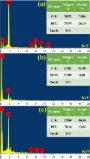
- nanodevices. They also have potential applications in biological, biomedical, and environmental fields. A representative EDX spectrum recorded from ZnO nanorods showing the presence of Zn and O in the product. SEM micrographs of some nanostructures: (a, b) rods (R1 and R2), (c) matches or drumsticks (M), (d



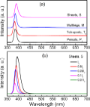
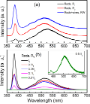
Nanoarchitectonics with cetrimonium bromide on metal nanoparticles for linker-free detection of toxic metal ions and catalytic degradation of 4-nitrophenol
Beilstein J. Nanotechnol. 2024, 15, 1312–1332, doi:10.3762/bjnano.15.106
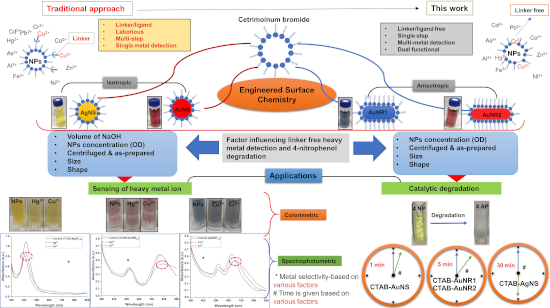
- high strength to nanoparticles, the use of such nanoparticles is limited in sensing, catalysis, and biomedical applications because of post-synthesis functionalization, morphology, and toxicity [6][7][8]. CTAB is a resilient molecule on the nanoparticle surface because of its micellar structure and




AI-assisted models to predict chemotherapy drugs modified with C60 fullerene derivatives
Beilstein J. Nanotechnol. 2024, 15, 1170–1188, doi:10.3762/bjnano.15.95
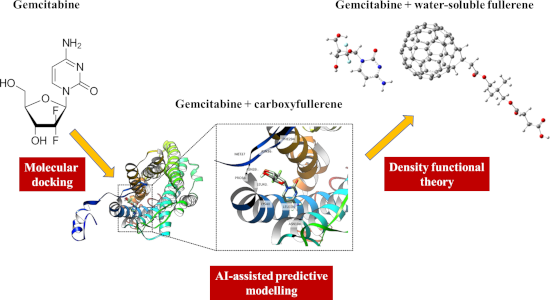
- is also possible to modify pristine fullerenes by adding polar functional groups (e.g., –COOH, –OH, or –NH2), to improve water solubility, antioxidant properties, and even biological activity [25]. For instance, polyhydroxy fullerenes (PHFs) exhibit properties suitable for biomedical applications


Introducing third-generation periodic table descriptors for nano-qRASTR modeling of zebrafish toxicity of metal oxide nanoparticles
Beilstein J. Nanotechnol. 2024, 15, 1142–1152, doi:10.3762/bjnano.15.93
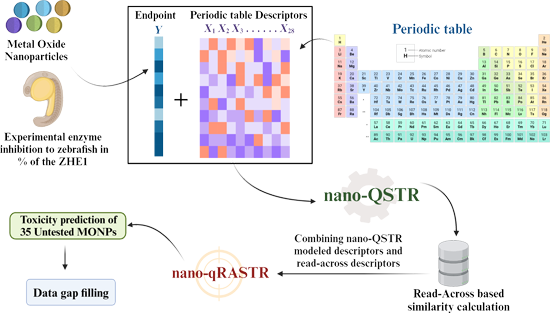
- newly created MONPs, particularly those used in biomedical applications, necessitates the implementation of safety-by-design strategies for these materials. The potential to lower development timeframes, costs associated with experiments, and late-stage attrition, in addition to ethical, societal, and


Recent updates in applications of nanomedicine for the treatment of hepatic fibrosis
Beilstein J. Nanotechnol. 2024, 15, 1105–1116, doi:10.3762/bjnano.15.89
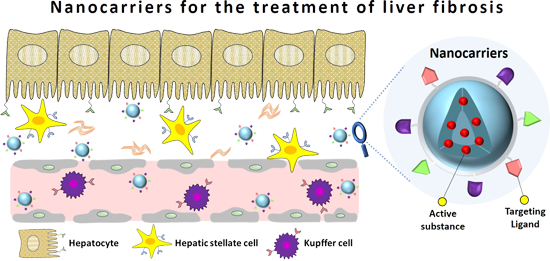
- targeting; hepatic fibrosis; nanocarriers; nanomedicine; passive targeting; Introduction Over the last three decades, we have witnessed tremendous progress in the field of nanomedicine through the preparation of a vast number of nanoscale (bio)materials. Nanomedicine itself is defined as the biomedical


Unveiling the potential of alginate-based nanomaterials in sensing technology and smart delivery applications
Beilstein J. Nanotechnol. 2024, 15, 1077–1104, doi:10.3762/bjnano.15.88
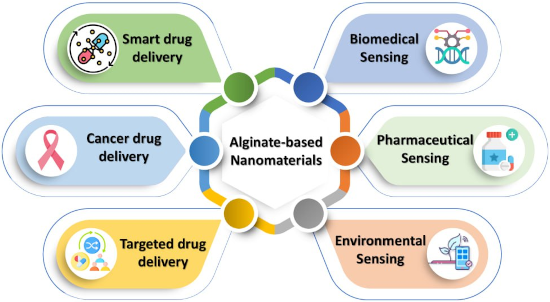
- . Current biomedical and pharmaceutical science has one focus on developing nanoparticle-based sensors, especially biopolymeric nanoparticles. Alginate is a widely used biopolymer in a variety of applications. The hydrogel-forming characteristic, the chemical structure with hydroxy and carboxylate moieties
- , biocompatibility, biodegradability, and water solubility of alginate have expanded opportunities in material and biomedical sciences. Recently, research on alginate-based nanoparticles and their applications has begun. These materials are gaining popularity because of their wide usage potential in the biomedical
- discussed, including drug delivery and environmental sensing applications for humidity, heavy metals, and hydrogen peroxide. Moreover, biomedical sensing applications of alginate-based nanoparticles regarding various analytes such as glucose, cancer cells, pharmaceutical drugs, and human motion will also be