


Search results
Search for "composite" in Full Text gives 514 result(s) in Beilstein Journal of Nanotechnology. Showing first 200.
TiO2 immobilized on 2D mordenite: effect of hydrolysis conditions on structural, textural, and optical characteristics of the nanocomposites
Beilstein J. Nanotechnol. 2025, 16, 128–140, doi:10.3762/bjnano.16.12
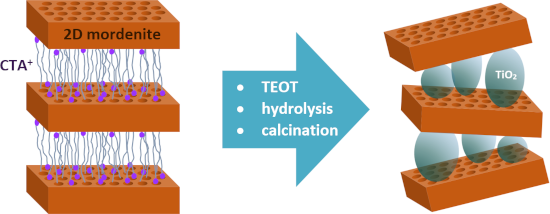
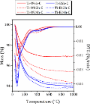
- that direct synthesis of TiO2 in mesoporous silica or zeolites provides strong immobilization of TiO2 nanoparticles through Ti–O–Si bonding [21][22][23]. Previously, we reported the results of the trial synthesis of a new TiO2/2D mordenite nanocomposite [28]. The material was obtained from a composite
- A series of pillared TiO2/2D mordenite nanocomposites were successfully synthetized from the initial lamellar CTAB/2D mordenite by introducing TEOT, hydrolyzing the resulting composite in either water or 70% ethanol solution with hydrolysis reaction times of 6, 12, and 24 h, and subsequent



Theoretical study of the electronic and optical properties of a composite formed by the zeolite NaA and a magnetite cluster
Beilstein J. Nanotechnol. 2025, 16, 44–53, doi:10.3762/bjnano.16.5
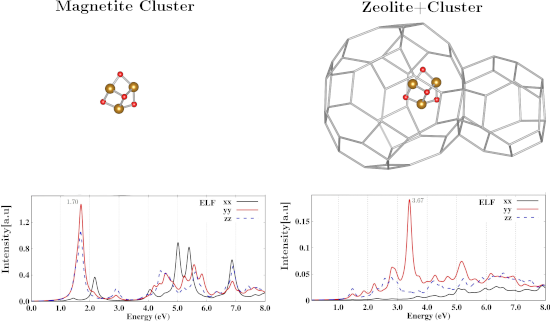
- Investigación Científica y Tecnológica A.C., Camino a la Presa San José 2055, Col. Lomas 4, San Luis Potosí, S.L.P. 78216, México 10.3762/bjnano.16.5 Abstract The electronic and optical properties of a composite created by introducing a magnetite cluster into NaA zeolite have been investigated in this work
- using DFT calculations. The results obtained indicate that the electronic and optical properties of the composite are enhanced because of the cluster. However, the properties exhibited by the cluster outside the zeolite differ from those it presents when it is part of the composite. It is noteworthy
- that the composite exhibits magnetic properties of a half-semiconductor and a strong optical response within the visible and ultraviolet regions of the spectrum. Keywords: magnetic cluster; NaA zeolite; optical properties; Introduction Zeolites are crystalline materials made up of aluminosilicates




Natural nanofibers embedded in the seed mucilage envelope: composite hydrogels with specific adhesive and frictional properties
Beilstein J. Nanotechnol. 2024, 15, 1603–1618, doi:10.3762/bjnano.15.126


Liver-targeting iron oxide nanoparticles and their complexes with plant extracts for biocompatibility
Beilstein J. Nanotechnol. 2024, 15, 1593–1602, doi:10.3762/bjnano.15.125
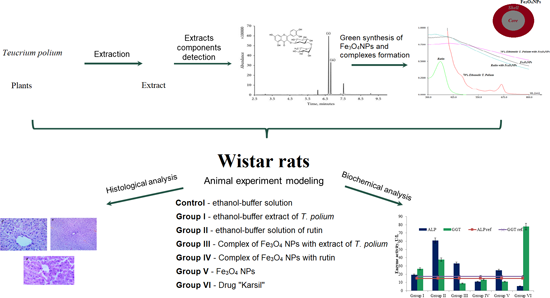
- applications. Spectral analysis of the composite of Fe3O4 NPs with 70% ethanol extract of T. polium in our previous studies revealed the formation of a complex with leveling of peaks characteristic of the extract and a hypochromic shift in the Fe3O4 NPs absorption spectrum [50]. The results of the impact of


Electrochemical nanostructured CuBTC/FeBTC MOF composite sensor for enrofloxacin detection
Beilstein J. Nanotechnol. 2024, 15, 1522–1535, doi:10.3762/bjnano.15.120
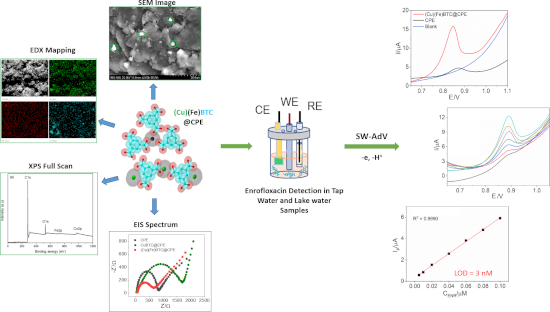
- Polymer and Composite Materials, Ho Chi Minh City University of Technology, Vietnam National University, Ho Chi Minh City, 70000, Vietnam Center for High Technology Research and Development, Vietnam Academy of Science and Technology, 18 Hoang Quoc Viet Street, Cau Giay District, Ha Noi, Vietnam 10.3762
- electrochemical detection ability than pristine MOFs. For example, Wang et al. developed a MOF/TiO2 composite to quantify chlorogenic acid in a range from 0.01 to 1.00 μM with a low LOD of 7 nM [30]. Utilizing carbon-based materials can provide not only enhanced electron transfer but also catalytic functions for
- the MOFs. A sensor for simultaneously detecting hydroquinone and catechol in water using a Cu-MOF–graphene composite was developed by Li and colleagues. Measurement ranges beginning at 1.0 × 10⁻⁶ and 1.0 × 10⁻³ M were achieved, with LODs of 5.9 × 10⁻⁷ M and 3.3 × 10⁻⁷ M for hydroquinone and catechol






Effect of radiation-induced vacancy saturation on the first-order phase transformation in nanoparticles: insights from a model
Beilstein J. Nanotechnol. 2024, 15, 1453–1472, doi:10.3762/bjnano.15.117
- Aram Shirinyan Yuriy Bilogorodskyy “Laboratory of composite materials for nuclear-hydrogen energy”, Department of nuclear-physical research, Institute of Applied Physics of National Academy of Sciences of Ukraine (Sumy), room 606, building 3, Nauki avenue, 46, 03028, Kyiv - 28, Ukraine 10.3762
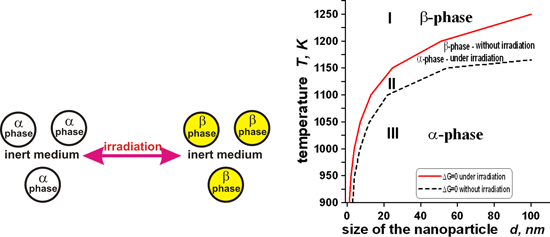
- in an inert environment, can be considered highly dispersed composite materials (HDCMs). HDCMs exhibit potential for the use under conditions of high temperatures and radiation exposure, making them promising materials for new-generation modular nuclear reactors, advanced charge storage applications


Enhanced catalytic reduction through in situ synthesized gold nanoparticles embedded in glucosamine/alginate nanocomposites
Beilstein J. Nanotechnol. 2024, 15, 1227–1237, doi:10.3762/bjnano.15.99
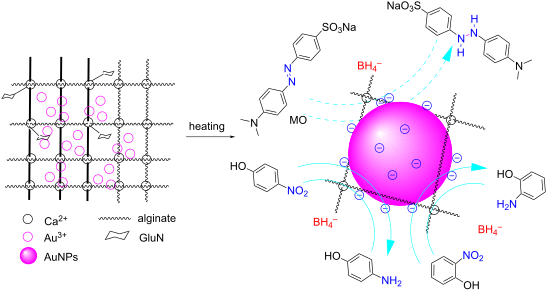
- g·mL−1). The reduction process was initiated through heating the mixture and visually confirmed by a change in color of the reaction mixture indicating the formation of AuNPs on the GluN/Alg composite. UV–vis spectroscopy within the range of 300 to 600 nm was employed to monitor this process
- ) using a nanoPartica Horiba SZ-100 instrument. Thermal analysis through thermogravimetry (TGA) was performed using a LabSys evo S60/58988 Thermoanalyzer (Setaram, France). The oven-dried powder of both blank nanocomposite GluN/Alg and synthesized composite AuNPs@GluN/Alg underwent heating from 30 to 800
- within the composite. The highly negative zeta potentials of both nanocomposites indicated their high stability in the aqueous solution. The functional groups present in the nanocomposite were identified through FTIR spectroscopy, with the blank nanocomposite serving as a reference for the analysis of




Photocatalytic methane oxidation over a TiO2/SiNWs p–n junction catalyst at room temperature
Beilstein J. Nanotechnol. 2024, 15, 1132–1141, doi:10.3762/bjnano.15.92
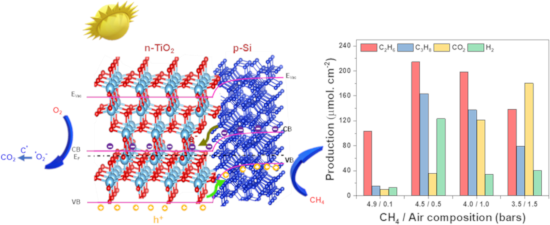
- formed at the interface have emerged, which effectively force charge carriers to move in opposite directions and hinder recombination [31][32][33]. Very recently, Cu2O/BiVO4, Ag2O/Bi12O17Cl2 and CuFe2O4/Bi4Ti3O12 composite powders have shown improved efficiencies in water treatment based on p–n
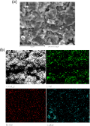
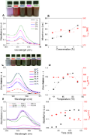
- phase (JCPDS No.27-1402) [40][41]. In the case of the as-synthesized composite, the favored growth of TiO2(101) on the surface of p-Si NWs has been noticed [42]. The minor (112), (200), (105), and (211) peaks at 2θ = 38.2°, 48.5°, 53.3°, and 55.1° indicate the formation of anatase TiO2 (JCPDS No.21-1272
- ). Although the TiO2/Si composite did not achieve the best results compared to other photocatalysts, it remains a viable option for methane oxidation processes. In order to investigate the individual effects of p-type SiNWs and TiO2 layer on the photocatalytic OCM efficiency, comparable samples were


Unveiling the potential of alginate-based nanomaterials in sensing technology and smart delivery applications
Beilstein J. Nanotechnol. 2024, 15, 1077–1104, doi:10.3762/bjnano.15.88

- -based composite nanoparticles, which provides a comprehensive overview of nanoparticles and their uses, especially in sensing applications (Figure 2). Moreover, characterization techniques of biopolymeric nanoparticles and their importance for drug delivery and sensing methods will be reviewed. In
- kilohertz. Another alginate-based humidity sensor is carbonized lignin-loaded sodium alginate (CL/SA). The CL/SA composite film provided extremely high sensitivity, low hysteresis, and consistent repeatability throughout a wide relative humidity range of 11–97%. Furthermore, the CL/SA sensor allowed for
- measuring human breathing. According to the results, CL/SA composite is a good humidity-sensitive material [125]. However, further research is needed to fully understand and optimize the properties of alginate-based nanoparticles for environmental sensing. Future studies should focus on optimizing the


Interface properties of nanostructured carbon-coated biological implants: an overview
Beilstein J. Nanotechnol. 2024, 15, 1041–1053, doi:10.3762/bjnano.15.85
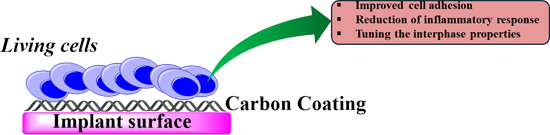
- Young’s modulus of 100% and 156%, reaching 60 MPa and 0.52 GPa, respectively, after coating. CNTs are generally used to reinforce the bulk of composite-based implants [136] or added to polymeric films [135]. Interestingly, they can be mixed with hydroxyapatite in order to magnify the compatibility with



Beyond biomimicry – next generation applications of bioinspired adhesives from microfluidics to composites
Beilstein J. Nanotechnol. 2024, 15, 965–976, doi:10.3762/bjnano.15.79
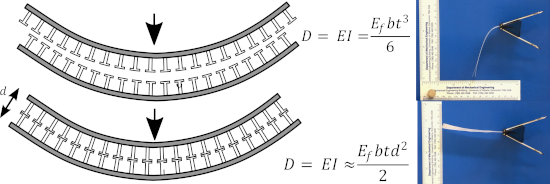
- degree of controllability or even its ability to self-support under gravitational loads; thus, there is a major interest in stiffness-tunable materials for soft robotic systems [15]. This stiffness tuning in many cases relies on the temporary bonding of composite layers or materials to change effective
- in fact be best suited as the internal surface of a composite material sparked a new and exciting research direction for soft robotics and adaptable composites. The reasons to use these materials as an internal rather than an external surface can be broadly categorized as follows: Uniform contact
- surfaces: Unlike a gecko, the adhesive materials do not need to be overdesigned for potentially touching dirty, rough, wet surfaces but can always be in contact with an ideally suited surface. No contaminants: When contained within a composite, these adhesives can be almost entirely free of contaminants


Electrospun nanofibers: building blocks for the repair of bone tissue
Beilstein J. Nanotechnol. 2024, 15, 941–953, doi:10.3762/bjnano.15.77
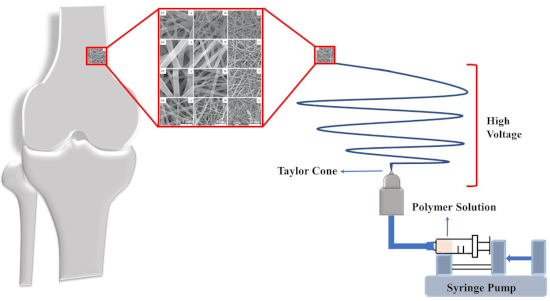
- surrounding muscle tissue as well. It plays an important role in bone growth and fracture healing [18][19]. The composition of bone tissue Any bone in the body has both an organic and inorganic composite structure. The composition of extracellular bone matrix can be estimated as approximately 60–65% organic


A review on the structural characterization of nanomaterials for nano-QSAR models
Beilstein J. Nanotechnol. 2024, 15, 854–866, doi:10.3762/bjnano.15.71
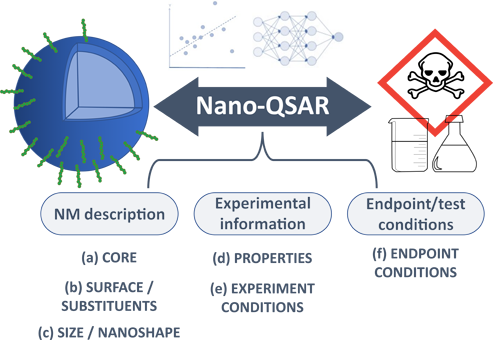
- , which can be classified according to their chemical composition in inorganic, carbon-based, organic, and composite NMs (Figure 4). In organic molecules, a wide range of descriptors are obtained from the topology of the molecule, arising from the rich variety of structural motifs that can be found and


Intermixing of MoS2 and WS2 photocatalysts toward methylene blue photodegradation
Beilstein J. Nanotechnol. 2024, 15, 817–829, doi:10.3762/bjnano.15.68
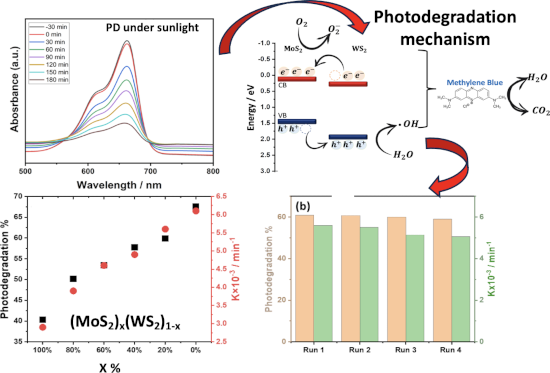
- several cycles. This finding underscores the advantageous outcomes of intermixing WS2 and MoS2, shedding light on the development of an efficient and enduring photocatalyst for visible-light-driven photodegradation of methylene blue. Keywords: methylene blue; MoS2/WS2 composite; photocatalysis
- , with over 99% degradation of MB achieved within 60 min under visible light exposure by using 10 mg of the catalyst to degrade 10 mg/L of MB [22]. Other works have shown that the MoS2–ZnO composite achieved 97% of MB photodegradation in ≈30 min under visible irradiation by using 250 mg/L of the catalyst
- 410 cm−1, respectively, for MoS2, 350 cm−1. It can be further resolved into two sub-peaks at 324 cm−1 and 351 cm−1, corresponding to the 2LA(M) and E12g modes, the A1g mode at 420 cm−1 for WS2, and the presence of combined vibration modes for the composite MoS2/WS2 as shown in Figure 1. Interestingly


Electrospun polysuccinimide scaffolds containing different salts as potential wound dressing material
Beilstein J. Nanotechnol. 2024, 15, 781–796, doi:10.3762/bjnano.15.65
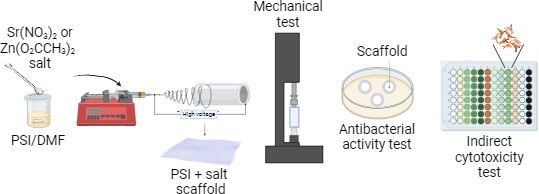
- easily linked to the polymer or distributed to them in the same solvent; thus, a multicomponent composite system can be generated. Based on the parameters mentioned above, wound-dressing application is one of the most relevant research areas for these systems [7]. An effective wound dressing should
- ][37]. This study aimed to create a two-component polymer-composite scaffold as a potential wound dressing material by electrospinning, using antibacterial salts (Zn(O2CCH3)2 or Sr(NO3)2) in addition to PSI. We performed the following experiments: physical and chemical characterization of the fibers by
- note that the Kruskal–Wallis test shows significant differences between groups when not only the medians and variances differ but also when the shape of the distribution is different. According to another survey where another polymer composite (polyacrylonitrile/polyvinylidene fluoride) containing



Simultaneous electrochemical determination of uric acid and hypoxanthine at a TiO2/graphene quantum dot-modified electrode
Beilstein J. Nanotechnol. 2024, 15, 719–732, doi:10.3762/bjnano.15.60
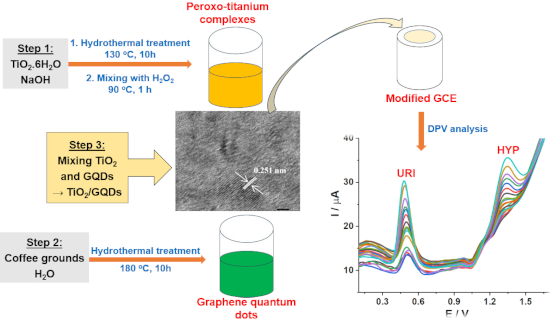
- composite (TiO2/GQDs) obtained by in situ synthesis of GQDs, derived from coffee grounds, and peroxo titanium complexes was used as electrode modifier in the simultaneous electrochemical determination of uric acid and hypoxanthine. The TiO2/GQDs material was characterized by photoluminescence, X-ray
- nm that consist of fine nanoparticles (Figure 3a), while that of GQDs shows fine spherical particles around 3–5 nm with high depression. In the composite sample, TiO2 nanoparticles of around 100 nm can be seen to be highly dispersed in the GQDs matrix (Figure 3c). The TiO2 particles in TiO2/GQDs in


Aero-ZnS prepared by physical vapor transport on three-dimensional networks of sacrificial ZnO microtetrapods
Beilstein J. Nanotechnol. 2024, 15, 490–499, doi:10.3762/bjnano.15.44
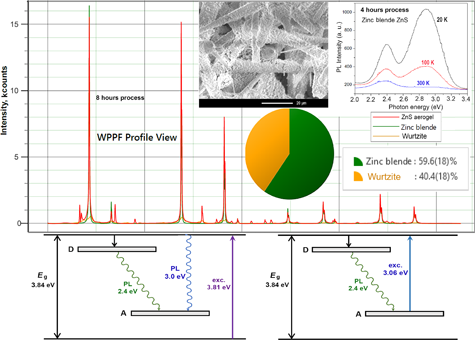
- ], and hybrid composite [26][27] materials. Aeromaterials have been prepared on the basis of sacrificial nano/microstructured templates. Nanofibrillated cellulose has been used as a sacrificial template for the preparation of inorganic nanotube networks, such as titanium dioxide, zinc oxide, and aluminum



Photocatalytic degradation of methylene blue under visible light by cobalt ferrite nanoparticles/graphene quantum dots
Beilstein J. Nanotechnol. 2024, 15, 475–489, doi:10.3762/bjnano.15.43
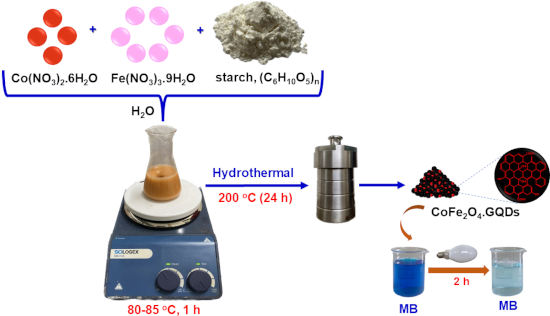
- CoFe2O4/GQDs composite material was placed in flasks sealed with aluminium foil and containing 20 mL of 10 ppm MB solution at pH 3–11, adjusted with 0.01 M HCl or 0.01 M NaOH. After 60 min of adsorption and photodegradation, the tubes were placed in a photocatalytic cabinet for illumination for 120 min
- that the resulting composite can enhance the absorption capacity [11]. This observation is an agreement with previous works [11]. In addition, a slight shift of the PL emission peak is also observed because of the blue shift in the UV–vis spectrum, which is consistent with their bigger bandgap energy




On the mechanism of piezoresistance in nanocrystalline graphite
Beilstein J. Nanotechnol. 2024, 15, 376–384, doi:10.3762/bjnano.15.34
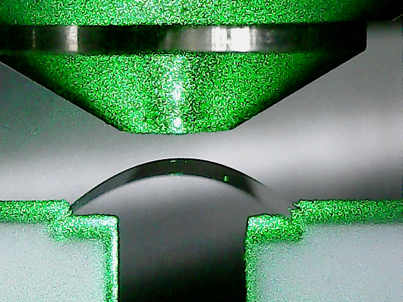
- strain within the grains remains constant even though the externally applied strain increased to ca. 0.4%. In an attempt to model piezoresistance in NCG, we have used the tunneling + destruction model for composite materials [24]: The model with five free parameters was fitted to the data as shown in
- tunneling distance, d. The model has been used to explain the piezoresistance for several composite materials [29][30]. Zhao et al. [24] used the model to explain the piezoresistance in nanographene films, although the material is comparable to ours and not a composite material in the original sense. NCG


Modification of graphene oxide and its effect on properties of natural rubber/graphene oxide nanocomposites
Beilstein J. Nanotechnol. 2024, 15, 168–179, doi:10.3762/bjnano.15.16
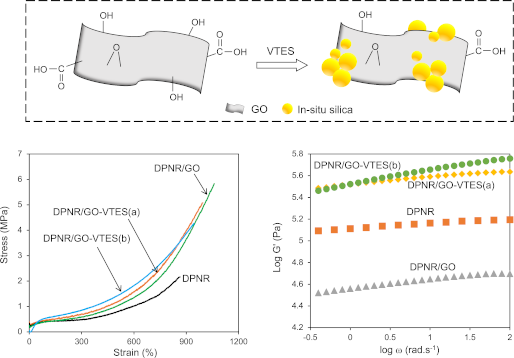
- also attracted significant interest. This material with exceptionally high specific surface area, high mechanical properties, and high thermal conductivity is expected to prepare high-performance rubber composites [21][22][23]. In our recent work [24], we successfully designed a DPNR/GO composite by
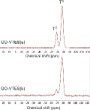
- of NR composite. The usage of GO-VTES may be suitable for the preparation of NR composites for tire applications as the composite may reduce water permeability and enhance the abrasion resistance of commercial products [30]. Experimental Materials The natural rubber used in this work is high-ammonia
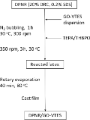
- until neutral. The collected solid was entirely dried in an oven at 50 °C to obtain the final GO-VTES(a) and GO-VTES(b). Preparation of DPNR/GO-VTES composite The DPNR/GO-VTES composite was prepared via graft copolymerization technique using TEPA/TBHPO redox initiators, similar to our previous work [24







Enhanced feedback performance in off-resonance AFM modes through pulse train sampling
Beilstein J. Nanotechnol. 2024, 15, 134–143, doi:10.3762/bjnano.15.13

- values can be selected (Figure 2C-i.). However, in the case of composite samples consisting of different materials, using a reference curve taken on one material would create problems when imaging a second material, since different materials exhibit different force curves for the same maximum force


Influence of conductive carbon and MnCo2O4 on morphological and electrical properties of hydrogels for electrochemical energy conversion
Beilstein J. Nanotechnol. 2024, 15, 57–70, doi:10.3762/bjnano.15.6
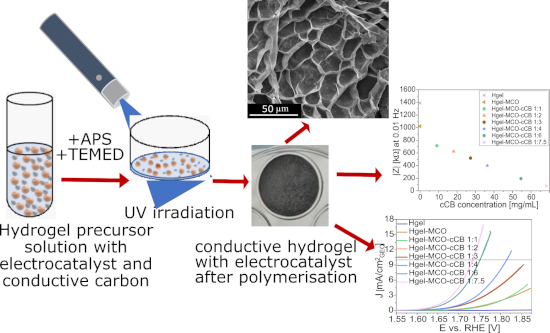
- composite acted as an electrocatalyst in the oxygen evolution reaction. Morphological studies confirmed that the added particles were incorporated and, in the case of a higher concentration of cCB particles, also bound to the surface of the structure of the hydrogel matrix. The produced composite materials
- , drugs, metal nanoparticles, metal oxide nanoparticles, carbon nanotubes, or biomolecules. This is a very important advantage that opens ways of designing composite hydrogels with various properties and applications such as biomedical [8][9][10], biosensors [11][12][13], wearable electronics [14][15][16
- particles of the MnCo2O4 electrocatalyst and conductive carbon in a PNIPAAm hydrogel precursor solution, which was then subjected to polymerisation. As a result, a hydrogel composite was created in a single-stage synthesis process. In addition, the applied methodology allowed us to avoid the need to use


Fluorescent bioinspired albumin/polydopamine nanoparticles and their interactions with Escherichia coli cells
Beilstein J. Nanotechnol. 2023, 14, 1208–1224, doi:10.3762/bjnano.14.100

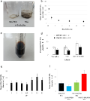
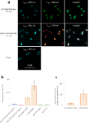
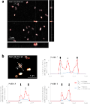
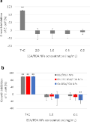
- emission related to the bacterial cells. Eight different types of samples were prepared, which are described in Table 2. Molecules of (a) lysine (K) and (b) glutamate (E). (c) Interactions between dopamine and KE sequence. (d) Possible structures of protein (grey)/polydopamine (black) composite particles



Properties of tin oxide films grown by atomic layer deposition from tin tetraiodide and ozone
Beilstein J. Nanotechnol. 2023, 14, 1085–1092, doi:10.3762/bjnano.14.89
- nanocomposite layer. ZrO2–SnO2 stacked layers have been shown to perform as mechanically elastic and magnetizable films [6]. SnO2-coated carbon nanotubes have been studied as catalysts [7] and ZnO–SnO2 as functional composite in Li-ion batteries [8]. A recent review article from 2022 lists 27 different


Nanoarchitectonics of photothermal materials to enhance the sensitivity of lateral flow assays
Beilstein J. Nanotechnol. 2023, 14, 988–1003, doi:10.3762/bjnano.14.82
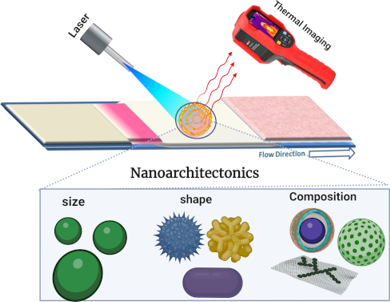
- because of their remarkable ability to absorb light across a broad spectrum and their high PCE. The main classes of photothermal carbon-based nanomaterials are carbon nanotubes, graphene-based nanomaterials, carbon quantum dots, and carbon-based composite materials. Among these, carbon nanotubes have the
- nanoparticles in the composite can increase the light absorption through surface plasmon resonance. Hence, graphene-based multifunctional nanocomposite materials could be employed as promising photothermal agents [44]. Polymer-based nanomaterials: Because of high biocompatibility, high PCE, and facile synthesis
- ]. The photothermal properties can also be enhanced by optimizing the elemental composition of the nanomaterials [44]. Generally, nanocomposite materials are developed by incorporating two or more compounds in a single particle, resulting in enhanced physicochemical properties of the final composite





