Search results
Search for "dynamic" in Full Text gives 816 result(s) in Beilstein Journal of Nanotechnology. Showing first 200.
Soft materials nanoarchitectonics: liquid crystals, polymers, gels, biomaterials, and others
Beilstein J. Nanotechnol. 2025, 16, 1025–1067, doi:10.3762/bjnano.16.77
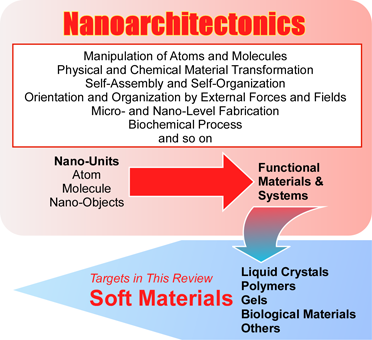
- substantial molecular amplification, the surface is occasionally designated a “command surface” or “command layer”. Furthermore, other dynamic optical functions are being investigated, including photomechanical motion utilizing block copolymer monolayers, morphological switching, photoinduced mass transfer
- represented examples, these materials possess flexible structures while exhibiting physical properties based on an ordered structure. Additionally, they are advantageous for expressing diverse dynamic physical properties, including stimuli responsiveness and carrier mobility. Liquid crystals and plastic
- any unreacted sites on the SAM, thereby ensuring maximum repeat coverage on a dynamic and statistical basis. This nanoarchitectonics approach enables the assembly of polymer arrays on substrates with uniform sub-nanometer morphology, ultrahigh modulus, and high conductivity. The optical and electrical






Multifunctional properties of bio-poly(butylene succinate) reinforced with multiwalled carbon nanotubes
Beilstein J. Nanotechnol. 2025, 16, 1014–1024, doi:10.3762/bjnano.16.76
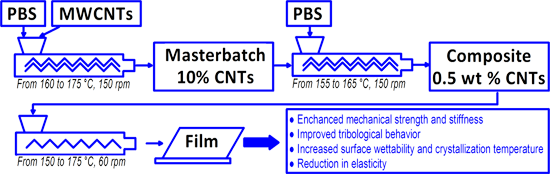
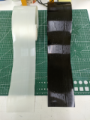
- and water absorption of PBS; however, it significantly influences surface wettability and tribological properties (Table 3). The dynamic and static coefficients of friction for the PBS/CNT_0.5 nanocomposite are 1.7 and 1.3–1.7 times lower, respectively, than those of the pure PBS. The surface
- – Determination of Wetting Tension”. The tests were conducted on the smooth side of the PBS and PBS/CNT_0.5 films. Dynamic (µD) and static (µS) coefficients of friction tests were conducted using the TIRAtest 27025 testing machine (TIRA Maschinenbau GmbH, Schalkau, Germany), equipped with a specialized attachment



A calix[4]arene-based supramolecular nanoassembly targeting cancer cells and triggering the release of nitric oxide with green light
Beilstein J. Nanotechnol. 2025, 16, 1003–1013, doi:10.3762/bjnano.16.75
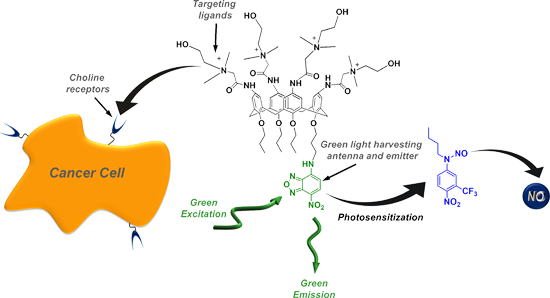
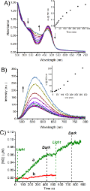
- typical features of the ABF chromophore [55][56][57][58][59][62][63][64] with a maximum at ca. 480 nm (Figure 1A). However, dynamic light scattering (DLS) measurements evidenced that, in line with its amphiphilic character, compound 1 is not present in the monomeric form but as nanoaggregates ca. 180 nm
- equation: Dynamic light scattering measurements were performed on a ZetaSizer NanoZS90 (Malvern Instrument, UK), equipped with a 633 nm laser, at a scattering angle of 90° and at 25 °C. In a manner analogous to [70], photolysis experiments were performed by irradiating the samples in solution in a


Time-resolved probing of laser-induced nanostructuring processes in liquids
Beilstein J. Nanotechnol. 2025, 16, 968–1002, doi:10.3762/bjnano.16.74
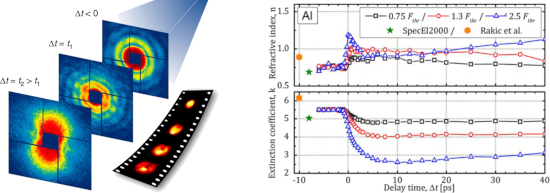
- offers the advantage of studying non-equilibrium phase transitions without relying on a priori models. In pump–probe imaging experiments, specimens are excited using femtosecond optical laser pulses and subsequently imaged at defined time delays to capture their dynamic responses. This method is
- a photocathode-based ultrashort electron pulse generator into a lab-based electron microscope, dynamic imaging of single specimens via pump–probe electron microscopy became possible. For instance, a spin state transition in the metal–organic framework Fe(pyrazine)Pt(CN)4 NPs was induced by
- nanosecond laser pulses, resulting in a high- to low-spin transition accompanied by morphological deformations coupled with lattice dynamics. Femtosecond X-ray laser pulses from X-ray free-electron lasers (XFELs) have further revolutionized dynamic X-ray imaging. Coherent diffraction imaging (CDI) [68][69


Shape, membrane morphology, and morphodynamic response of metabolically active human mitochondria revealed by scanning ion conductance microscopy
Beilstein J. Nanotechnol. 2025, 16, 951–967, doi:10.3762/bjnano.16.73
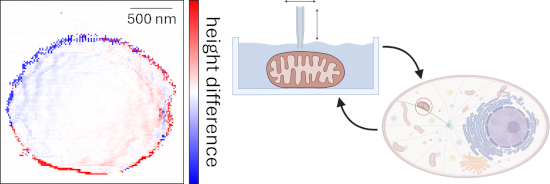
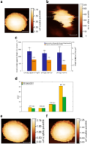
- studied as isolated compartments but as components of a highly dynamic network. This mitochondrial network undergoes constant restructuring through processes of fusion and fission and interacts extensively with other organelles. Mitochondria are moved along the cytoskeleton and undergo fusion and fission
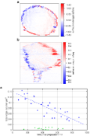
- this work, we employ SICM to investigate the shape, dynamics, and nanomorphology of metabolically active, isolated mitochondria, with a specific focus on the outer mitochondrial membrane. Furthermore, we identify and characterise two distinct dynamic effects observed in time-dependent topography data



Insights into the electronic and atomic structures of cerium oxide-based ultrathin films and nanostructures using high-brilliance light sources
Beilstein J. Nanotechnol. 2025, 16, 860–871, doi:10.3762/bjnano.16.65
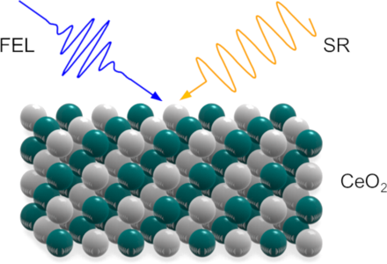
- light sources, such as synchrotrons and free-electron lasers, allow researchers to probe the structural, electronic, and dynamic properties of functional materials at an unprecedented level of detail. Techniques like X-ray photoelectron spectroscopy and X-ray absorption spectroscopy, can reveal atomic
- perspectives offered by the ultrahigh brilliance and ultrashort free-electron laser pulses for dynamic studies of the processes that take place upon photoexcitation are discussed. Keywords: cerium oxide; free-electron lasers; thin films; X-ray absorption spectroscopy; X-ray photoelectron spectroscopy
- dynamic processes occurring for example upon photoexcitation. Among transition metal oxides, cerium oxide (or ceria) has unique redox properties, linked to the relative stability of Ce cations in the 4+ and 3+ oxidation states, which make the material highly effective in automotive catalysts and in the


Changes of structural, magnetic and spectroscopic properties of microencapsulated iron sucrose nanoparticles in saline
Beilstein J. Nanotechnol. 2025, 16, 762–784, doi:10.3762/bjnano.16.59
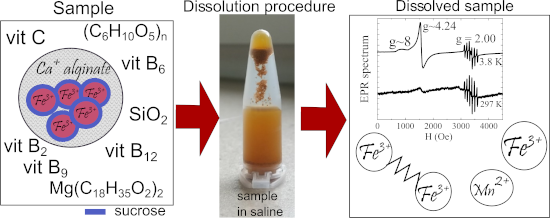
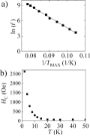
- , there is no doubt that they are consistent with each other, as in both cases there are no signs of Fe-containing phases. Magnetic studies (dc and ac) results and analysis Undissolved sample FS0 The results of static and dynamic temperature magnetic measurements of the FS0 sample are presented in Figure





Serum heat inactivation diminishes ApoE-mediated uptake of D-Lin-MC3-DMA lipid nanoparticles
Beilstein J. Nanotechnol. 2025, 16, 740–748, doi:10.3762/bjnano.16.57
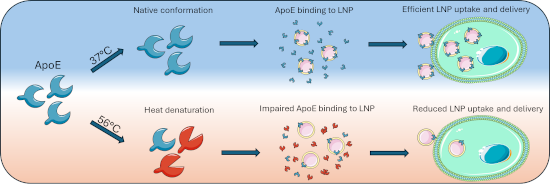
- Slide-A-Lyzer, MWCO 20,000, 0.5–3 mL, dark, 4 °C). LNP stocks were stored at 4 °C in the dark. LNP characterization The hydrodynamic diameter of LNPs was determined via dynamic light scattering (DLS). LNP stocks were diluted 1:20 in PBS and analyzed at 25 °C using a ZetaSizer Nano ZS 90 (Malvern


High-temperature epitaxial growth of tantalum nitride thin films on MgO: structural evolution and potential for SQUID applications
Beilstein J. Nanotechnol. 2025, 16, 690–699, doi:10.3762/bjnano.16.53
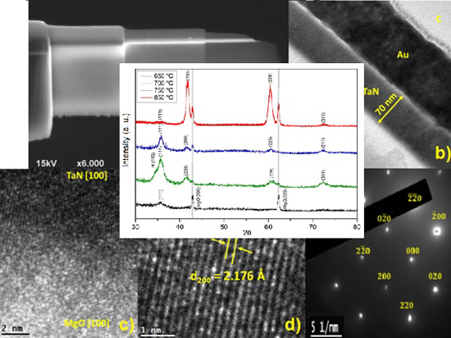
- the displacement of O2, effectively reducing the incorporation of O₂ within the thin films. The interaction between a laser-generated plume and the surrounding background gas is a dynamic and complex process significantly influenced by the background gas pressure. Understanding these interactions is


Colloidal few layered graphene–tannic acid preserves the biocompatibility of periodontal ligament cells
Beilstein J. Nanotechnol. 2025, 16, 664–677, doi:10.3762/bjnano.16.51
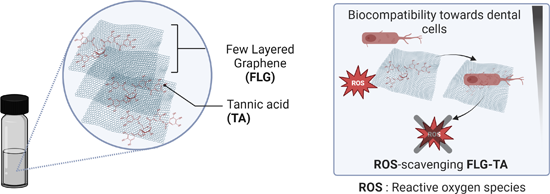
- determination of the size distribution was attempted by means of dynamic light scattering but was unsuccessful owing to the lack of transparency of the suspensions even after strong dilution. The TEM images also reveal visible granules atop the layers (Figure 1D,E). Additional analysis of these granules (Figure




Nanoscale capacitance spectroscopy based on multifrequency electrostatic force microscopy
Beilstein J. Nanotechnol. 2025, 16, 637–651, doi:10.3762/bjnano.16.49
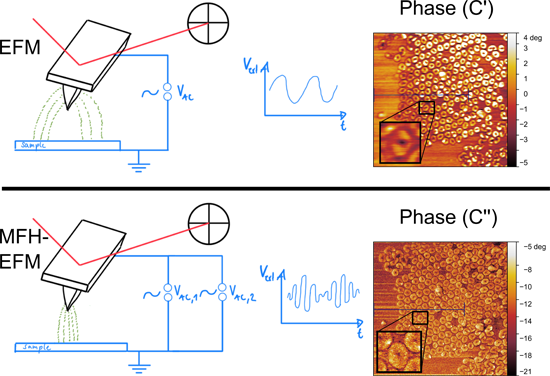
- gradients are changing periodically. This periodic fluctuation of the capacitance gradient adds an additional dynamic component to Equations Equation 3–Equation 5. Using a Fourier expansion for the capacitance gradient yields [18]: By inserting Equation 6 into Equations Equation 3–Equation 5, we find that




A formulation containing Cymbopogon flexuosus essential oil: improvement of biochemical parameters and oxidative stress in diabetic rats
Beilstein J. Nanotechnol. 2025, 16, 617–636, doi:10.3762/bjnano.16.48
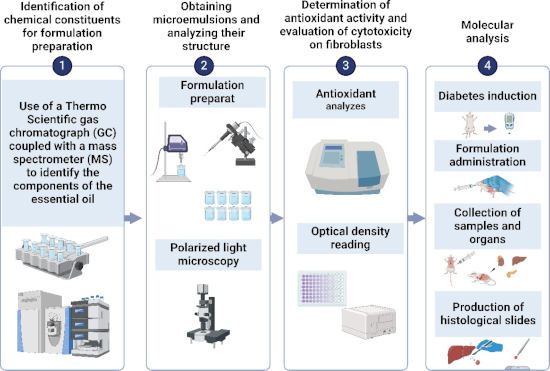
- characterizing nanostructured systems such as MEs, including droplet size, optical properties, and rheological profile. M7-EOCF therefore underwent tests to investigate these parameters. First, the M7-EOCF sample was analyzed by dynamic light scattering, which showed that the system had an average hydrodynamic
- indicate that, despite the significant damage observed in the MET group, there are signs of tissue regeneration, showing a dynamic balance between inflammatory aggression and the liver’s reparative response. Histopathological analysis of the CONTROL group (Figure 13) revealed less inflammation and vascular
- determined by dynamic light scattering using Zetasizer Nano ZS equipment (Malvern Instruments, UK). For this purpose, about 1,000 μL of the sample, undiluted and at a temperature of 25 °C, were inserted into a cuvette suitable for carrying out the measurements [8]. The optical properties of the samples were




Nanomaterials in targeting amyloid-β oligomers: current advances and future directions for Alzheimer's disease diagnosis and therapy
Beilstein J. Nanotechnol. 2025, 16, 561–580, doi:10.3762/bjnano.16.44
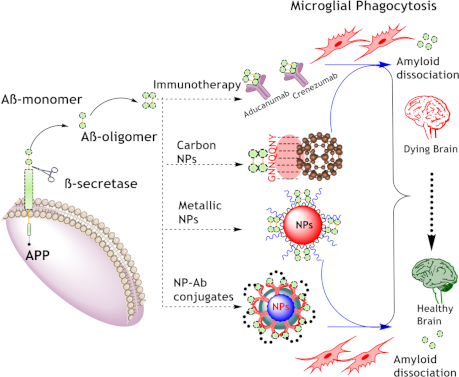
- exist in equilibrium with monomeric and fibrillar forms. This dynamic nature poses a challenge for therapies that rely on specific binding, as the target may change rapidly in response to environmental factors or therapeutic intervention. As a result, the predominant strategies for targeting AβOs have


Effect of additives on the synthesis efficiency of nanoparticles by laser-induced reduction
Beilstein J. Nanotechnol. 2025, 16, 464–472, doi:10.3762/bjnano.16.35
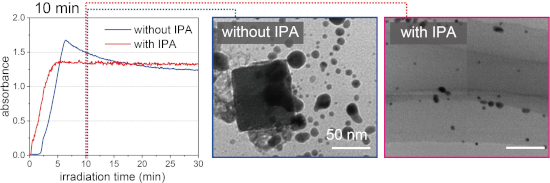
- . However, in the solution with a concentration of 1.0 × 10⁻² mol/dm3, an increase in absorbance was observed in the long wavelength region of the absorption spectrum. Therefore, we evaluated the dispersion state of nanoparticles using dynamic light scattering (DLS) measurements. The obtained particle size


Quantification of lead through rod-shaped silver-doped zinc oxide nanoparticles using an electrochemical approach
Beilstein J. Nanotechnol. 2025, 16, 422–434, doi:10.3762/bjnano.16.33
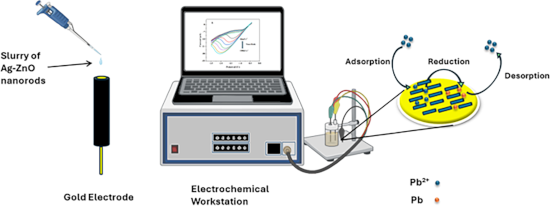
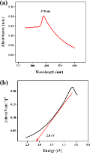
- NRs were studied using dynamic light scattering analysis, and their zeta potential was determined. Figure 5 represents the zeta potential of Ag@ZnO NRs. The samples were collected in the liquid state and the Ag@ZnO NRs zeta potential of ≈30 mV accounts for the stability of the nanoparticles in water




Biomimetics and bioinspired surfaces: from nature to theory and applications
Beilstein J. Nanotechnol. 2025, 16, 418–421, doi:10.3762/bjnano.16.32
- materials, the work proposes focusing on re-engineering applications to enhance manufacturing processes and improve the performance of biomimetic adhesives, thereby pushing the boundaries of this dynamic field further. Overall, this thematic issue serves as an original resource of novel approaches and data

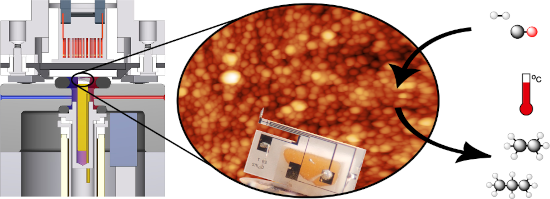
ReactorAFM/STM – dynamic reactions on surfaces at elevated temperature and atmospheric pressure
Beilstein J. Nanotechnol. 2025, 16, 397–406, doi:10.3762/bjnano.16.30


Engineered PEG–PCL nanoparticles enable sensitive and selective detection of sodium dodecyl sulfate: a qualitative and quantitative analysis
Beilstein J. Nanotechnol. 2025, 16, 385–396, doi:10.3762/bjnano.16.29
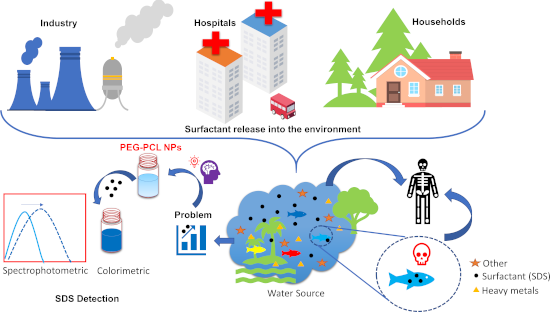
- precipitation step is essential for purifying the nanoparticles and achieving a stable, solid-state product that can be easily collected and dried. Finally, the synthesized PEG–PCL NPs are characterized to assess their size and uniformity. Dynamic light scattering (DLS) techniques measure the average particle
- . Dynamic light scattering measurements revealed that the average hydrodynamic radius of the PEG–PCL NPs was 229.5 nm, confirming their nanoscale dimensions. This finding aligns with previously reported studies that detail the properties of PEG–PCL NPs in similar applications [29]. The polydispersity index


Development of a mucoadhesive drug delivery system and its interaction with gastric cells
Beilstein J. Nanotechnol. 2025, 16, 371–384, doi:10.3762/bjnano.16.28
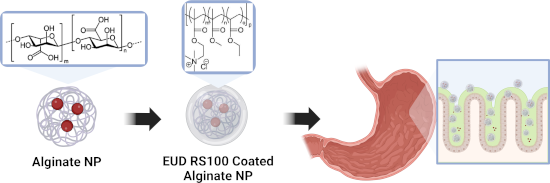
- nanoparticles is a dynamic process where both endocytosis and exocytosis are involved. The uptake also depends on the concentration of nanoparticles and the duration of the process. Studies conducted with the AGS cell line revealed that nanoparticle internalization generally reaches a plateau within the first 2
- potential distributions The size of Alg and EudAlg nanoparticles were analyzed by dynamic light scattering (Malvern Zetasizer Nano-ZS) at 25 °C. The nanoparticles were suspended in ddH2O; for each sample, three measurements were performed, twelve runs each, to obtain the distributions. Disposable


Enhancing mechanical properties of chitosan/PVA electrospun nanofibers: a comprehensive review
Beilstein J. Nanotechnol. 2025, 16, 286–307, doi:10.3762/bjnano.16.22
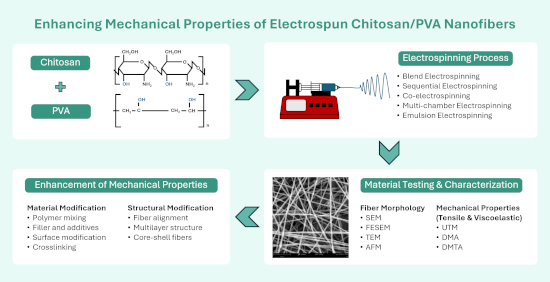
- Viscoelasticity is another property relevant to nanofibers, which combines both elastic and viscous responses to deformation. Viscoelastic properties, including storage modulus and loss modulus, can be tested using dynamic mechanical analysis (DMA) or dynamic mechanical thermal analysis (DMTA). This technique
- as the additional parameter [140]. The presence of chitosan in PVA membranes is expected to increase the storage modulus because of the higher stiffness of chitosan chains compared to PVA chains, as reported from DMA tests by Parparita and coworkers [141]. Koosha et al. [59] measured the dynamic
- bonds, such as hydrogen bonds, ionic interactions, coordinate bonds, and dynamic covalent bonds [175]. These bonds are generally weaker than chemical cross-links and can break under deformation. However, physical cross-linking is considered more environmentally friendly compared to chemical cross


Preferential enrichment and extraction of laser-synthesized nanoparticles in organic phases
Beilstein J. Nanotechnol. 2025, 16, 254–263, doi:10.3762/bjnano.16.20
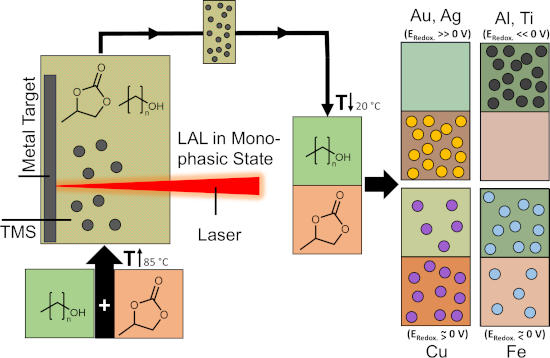
- to the two simultaneously occurring and commonly accepted nanoparticle formation mechanisms happening during the plume phase of LAL (picosecond to longer nanosecond time scale) [57][58]. Recent spatiotemporal, large-scale molecular dynamic simulations show that the thermal history of nanoparticles




Radiosensitizing properties of dual-functionalized carbon nanostructures loaded with temozolomide
Beilstein J. Nanotechnol. 2025, 16, 229–251, doi:10.3762/bjnano.16.18
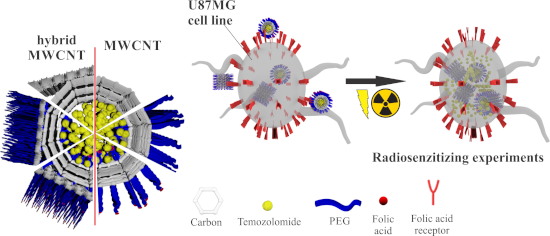
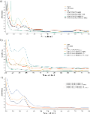
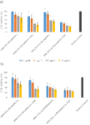
- effects on the proliferation of cancer cells by blocking the cell cycle in the G0/G1 phase and increasing the osmotic pressure [91][92]. In addition, in a paper of Xu et al. [93], dynamic biological interactions between PEG and cells on the molecular level were clarified, explaining both the inhibitory




A review of metal-organic frameworks and polymers in mixed matrix membranes for CO2 capture
Beilstein J. Nanotechnol. 2025, 16, 155–186, doi:10.3762/bjnano.16.14
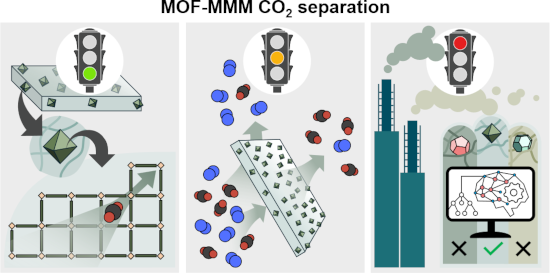
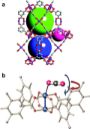
- flexibility, which may undergo dynamic changes in response to external stimuli, such as pressure and temperature. This characteristic allows for gated CO2 adsorption under specific conditions [44], which presents itself as a unique strategy to selectively control CO2 separation in gas mixtures. For instance




Nanocarriers and macrophage interaction: from a potential hurdle to an alternative therapeutic strategy
Beilstein J. Nanotechnol. 2025, 16, 97–118, doi:10.3762/bjnano.16.10
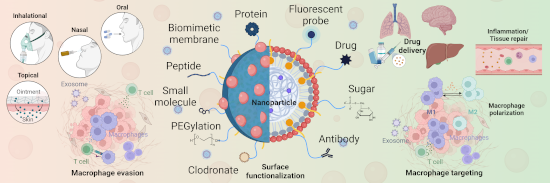
- characteristics [13][14]. This dynamic and complex spectrum of macrophage activity features nuanced challenges and opportunities in leveraging macrophage responses to enhance the therapeutic potential of NCs. Recent research has highlighted the dual role of macrophages in the context of nanomedicine. While their
- therapeutic effects remains a significant challenge, as their activation states are dynamic and often characterized by mixed or transitional phenotypes. This underscores the need for refined approaches to enhance efficacy while minimizing risks such as excessive immune activation. RNA-based therapeutics offer


Instance maps as an organising concept for complex experimental workflows as demonstrated for (nano)material safety research
Beilstein J. Nanotechnol. 2025, 16, 57–77, doi:10.3762/bjnano.16.7

- focused on silica (SiO2) nanomaterials in the size range of 50–100 nm (depending on the method used, i.e., transmission electron microscopy, nanoparticle tracking analysis, or dynamic light scattering (intensity or number distribution)) with different surface modifications, which are reported to be