
Search results
Search for "hydrogen" in Full Text gives 824 result(s) in Beilstein Journal of Nanotechnology. Showing first 200.
Pulsed laser in liquid grafting of gold nanoparticle–carbon support composites
Beilstein J. Nanotechnol. 2025, 16, 349–361, doi:10.3762/bjnano.16.26
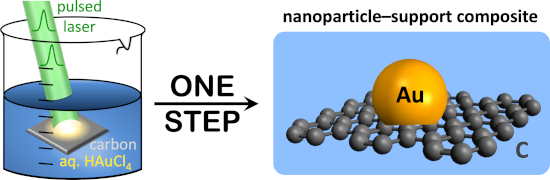
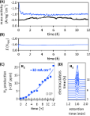
- electrocatalytic hydrogen evolution in aqueous bicarbonate reduction. Keywords: catalysis; composite; electroreduction; gold nanoparticles; impedance; Introduction The main challenge in the manufacturing of nanocatalyst-containing electrodes is the attachment of nanoparticles on electrode supports. Nanoparticles
- , electrolyte (Figure 6). Gas chromatography (GC) was used to identify products. In mildly alkaline electrolytes, as used here, gold-catalyzed aqueous bicarbonate reduction to hydrogen has been reported [66][67]. Our electrocatalysis testing revealed increased durability and electrochemical performance of
- produced predominantly hydrogen in aqueous bicarbonate reduction. Minor amounts of CO2 were additionally detected in the GC data, likely from the reaction of protons with bicarbonate. No other gases were detected (cf. Supporting Information File 1, Figures S2–S4). GC data of a control experiment at open


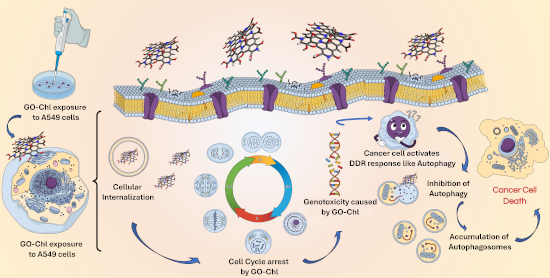
Graphene oxide–chloroquine conjugate induces DNA damage in A549 lung cancer cells through autophagy modulation
Beilstein J. Nanotechnol. 2025, 16, 316–332, doi:10.3762/bjnano.16.24
- . P4170), Triton X-100 (Cat. No. T8787), monodansylcadaverine (MDC; Cat. No. D4008), anti-SQSTM1 (Cat. No. P0067), anti-MLKL primary antibody (Cat. No. SAB5700808), protein A/G agarose beads (Cat. No. IP10), and hydrogen peroxide (H2O2; Cat. No. H1009) were purchased from Sigma-Aldrich (St. Louis, MO, USA



Enhancing mechanical properties of chitosan/PVA electrospun nanofibers: a comprehensive review
Beilstein J. Nanotechnol. 2025, 16, 286–307, doi:10.3762/bjnano.16.22
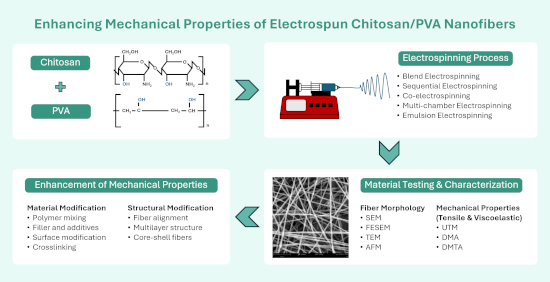
- high solubility [53]. This phenomenon makes it difficult to electrospin chitosan because of its high viscosity [54]. Moreover, the formation of strong hydrogen bonds in a 3D network contributes to difficulties in the mobility of polymeric chains when an electric field is applied [55]. Because of these
- compared to pure PVA nanofibers, said to be due to hydrogen bond formation between chitosan and PVA. Olvera Bernal et al. [58] studied different concentrations of chitosan between 2.5% and 4% (w/w) in the chitosan/PVA membrane, while keeping the PVA concentration constant at 5% (w/w). The Young’s modulus
- explained by the formation of strong hydrogen bonds in the chitosan/PVA nanofiber matrix induced by the O2 plasma, leading to a high cross-link density in the nanofibers and resulting in substantial load transfer to the nanofiber matrix [172]. Additionally, the O2 plasma treatment assists in the formation


Emerging strategies in the sustainable removal of antibiotics using semiconductor-based photocatalysts
Beilstein J. Nanotechnol. 2025, 16, 264–285, doi:10.3762/bjnano.16.21
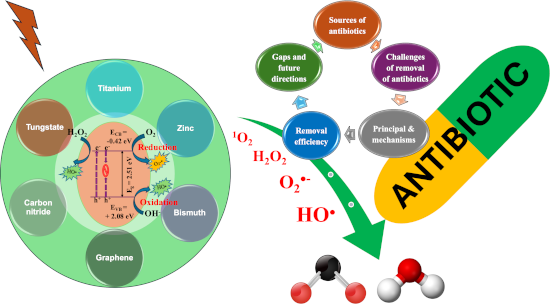
- hydrogen electrode (NHE)). In this reductive pathway, the photoexcited electrons have the ability to interact with electron acceptors, like O2, which can be found on the catalyst surface or dissolved in water. This reaction reduces O2, forming a superoxide radical anion (O2•−) (O2 + e− → O2•−) [35][55
- capabilities in degrading CIP (82.6% within 2 h) and generating hydrogen from rainwater. The effective separation and mobility of photogenerated charge carriers were credited to the role of Ag nanoparticles as electron mediators. There are some other observations, which are shown below in Table 4. Graphene



Preferential enrichment and extraction of laser-synthesized nanoparticles in organic phases
Beilstein J. Nanotechnol. 2025, 16, 254–263, doi:10.3762/bjnano.16.20
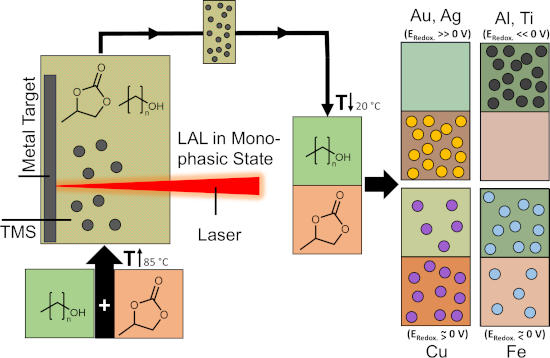
- nanoparticle synthesis was shown to produce gas phases consisting of hydrogen [11][12][13], carbon dioxide [12][14], and carbon monoxide [12][14], as well as carbon-based gases such as methane or C2 hydrocarbons [12][13][14][15][16]. In addition to gaseous by-products, the decomposition was found to produce




Radiosensitizing properties of dual-functionalized carbon nanostructures loaded with temozolomide
Beilstein J. Nanotechnol. 2025, 16, 229–251, doi:10.3762/bjnano.16.18
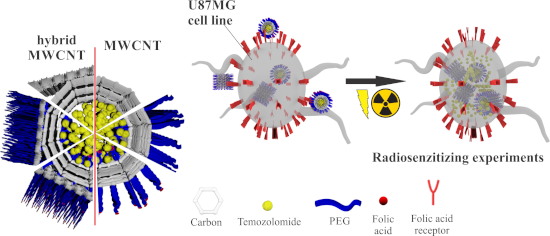
- that TMZ is both physically entrapped in the tubes and wrapped around the CNs because of electrostatic and hydrogen bond interactions with CNs and PEG6000. This assumption is supported by the similar values for loading efficacy and drug content of covalently PEGylated TMZ-loaded MWCNTs and hybrid
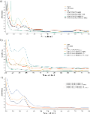
- -FA-TMZ (Figure 4d), but are slightly shifted to 3346, 3389, 3423, 2921, and 2853 cm−1, serving as a spectroscopic evidence for the existence of non-covalent interactions (electrostatic, hydrogen bond, and/or van der Waals forces) between CNs and TMZ. From comparison of the ATR-FTIR spectrum of TMZ




Synthesis and the impact of hydroxyapatite nanoparticles on the viability and activity of rhizobacteria
Beilstein J. Nanotechnol. 2025, 16, 216–228, doi:10.3762/bjnano.16.17
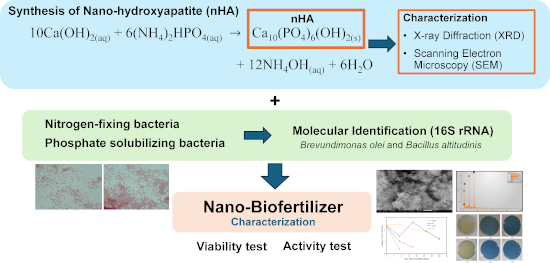
- applications. The nHA carrier is hydroxyapatite (Ca10(PO4)6(OH)2) in powder form, comprising the elements calcium, phosphorous, oxygen, and hydrogen. These elements provide nutrients that support the viability of rhizobacteria. Water within the carrier also plays a crucial role in maintaining the viability of


A review of metal-organic frameworks and polymers in mixed matrix membranes for CO2 capture
Beilstein J. Nanotechnol. 2025, 16, 155–186, doi:10.3762/bjnano.16.14
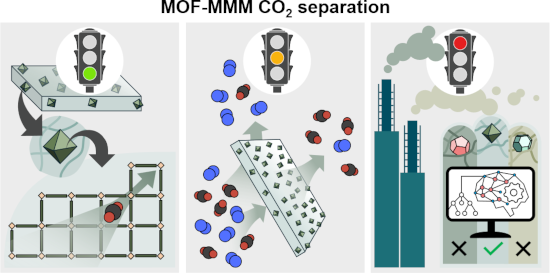
- functionalization of MOFs before MMM preparation can enhance MOF–polymer compatibility by enabling the formation of hydrogen bonds between the MOF and the hydrogen bond donors in the polymer matrix [33]. 3.5 Importance of interfacial morphology An optimal MOF–polymer matrix interface, schematically illustrated in
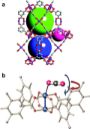
- -free MMM as illustrated in Figure 7a. In another study, Khosravi et al. [33] functionalized HKUST-1 with amines to improve adhesion with a Pebax® 1657 polymer matrix through hydrogen bonding, illustrated in Figure 7c. Differential scanning calorimetry showed an increase in Tg of the MMM, indicating
- reduced polymer chain flexibility. The effect was more pronounced in NH2-HKUST-1/Pebax®, suggesting the formation of hydrogen bonds between the amine-functionalized MOF surface and polymer chains. Alternatively, optimizing the MOF–polymer interface can be achieved through polymer functionalization, Figure




Mechanistic insights into endosomal escape by sodium oleate-modified liposomes
Beilstein J. Nanotechnol. 2024, 15, 1667–1685, doi:10.3762/bjnano.15.131
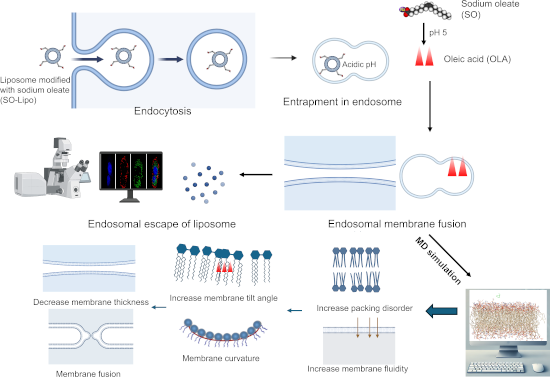
- interact with a lipid bilayer model, providing insights into their potential roles in enhancing membrane permeability. MD simulations offer a detailed examination of these interactions, with Figure 6 highlighting critical aspects such as density distribution and hydrogen bonding over a 200 ns timescale
- the membrane surface rather than penetrating deeply. This distribution reflects AUR’s amphipathic nature, where the peptide’s hydrophilic regions interact with the aqueous environment, while the hydrophobic regions associate with the lipid headgroups. The hydrogen bond analysis (Figure 6b,d
- ) complements these observations by quantifying the interactions between the molecules and the lipid components. For OLA, the analysis reveals a relatively low number of hydrogen bonds with the lipid headgroups, averaging 0.27 ± 0.447 with POPC and 0.13 ± 0.361 with POPG. This limited hydrogen bonding is




Heterogeneous reactions in a HFCVD reactor: simulation using a 2D model
Beilstein J. Nanotechnol. 2024, 15, 1627–1638, doi:10.3762/bjnano.15.128
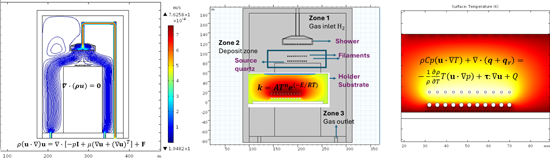
- precursors quartz and hydrogen was carried out. The obtained equilibrium constants (Keq) were related to the temperature profile in the deposition zone and used in the proposed simulation. The validation of the model was carried out by measuring the temperature experimentally, where the temperature range on
- second one is the reaction zone, and the third one is the gas outlet. In the first zone, molecular hydrogen (H2) gas is pumped in through a stainless steel piping system that reaches a diffuser inside the reaction chamber. The gas gets in contact with eleven tungsten filaments from incandescent lamps
- , which are activated by an externally applied voltage generating a current; these filaments have a temperature of approximately 2300 K. The second zone includes the region where the chemical reactions takes place. Here, molecular hydrogen, exposed to the high temperature of the filaments, dissociates to


Natural nanofibers embedded in the seed mucilage envelope: composite hydrogels with specific adhesive and frictional properties
Beilstein J. Nanotechnol. 2024, 15, 1603–1618, doi:10.3762/bjnano.15.126
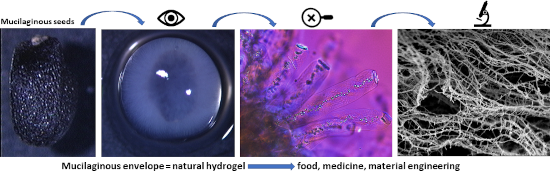
- features with synthetic hydrogels [2][9][10][11]. Hydrogels are 3D networks of polymers (i.e., polysaccharides in plant seeds) interacting via chemical bonds (ionic and covalent), physical interactions (hydrogen bonds), or van der Waals forces [3][11][12]. The ability to produce the mucilage envelope is a
- typical part of plant cells, and its basic chemical composition includes cellulose, hemicelluloses, and pectic polysaccharides [44][45][46][47]. Cellulose is a linear polymer composed of β-1,4-linked ᴅ-glucose [47]. The cellulose chains are held together by intramolecular hydrogen bonds, forming cellulose
- taxa studied. Critical point drying in studies of natural samples containing cellulose fibrils [40][41][81], other polysaccharides (cell wall, mucilage, and envelope) [7][13], and synthetic hydrogels [82] maintained the 3D network of the studied materials. During drying, the hydrogen bonds undergo


Effect of radiation-induced vacancy saturation on the first-order phase transformation in nanoparticles: insights from a model
Beilstein J. Nanotechnol. 2024, 15, 1453–1472, doi:10.3762/bjnano.15.117
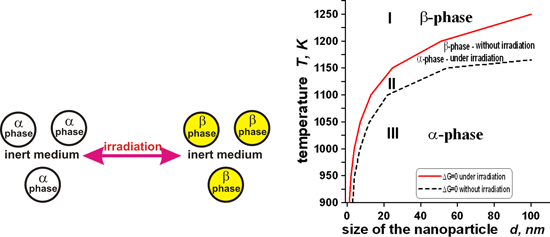
- Aram Shirinyan Yuriy Bilogorodskyy “Laboratory of composite materials for nuclear-hydrogen energy”, Department of nuclear-physical research, Institute of Applied Physics of National Academy of Sciences of Ukraine (Sumy), room 606, building 3, Nauki avenue, 46, 03028, Kyiv - 28, Ukraine 10.3762


Strain-induced bandgap engineering in 2D ψ-graphene materials: a first-principles study
Beilstein J. Nanotechnol. 2024, 15, 1440–1452, doi:10.3762/bjnano.15.116
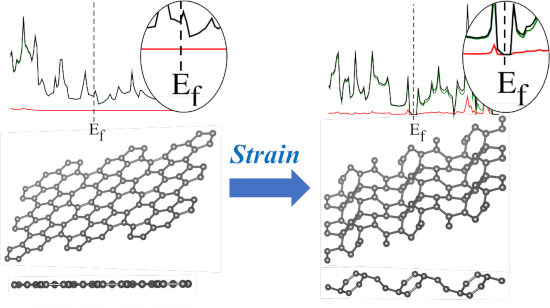
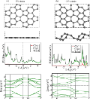
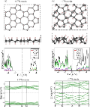
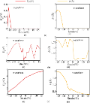
- atoms arranged in 5,6,7-membered rings. The half and fully hydrogenated (hydrogen-functionalized) forms of ψ-graphene are called ψ-graphone and ψ-graphane. Like ψ-graphene, ψ-graphone has a zero bandgap, but ψ-graphane is a wide-bandgap semiconductor. In this study, we have applied in-plane and out-of
- pliable displays and as strengthening material in composites [2][3][4]. It has also gained considerable attention among researchers for its application in hydrogen storage, owing to its good adsorption capacity and controllable storage and re-release of hydrogen at efficient temperatures [4][5]. The
- ), and density functional theory (DFT) study suggests that the hydrogenation of graphene with atomic hydrogen leads to the formation of graphone [8]. The full hydrogenation of graphene (graphane) was experimentally obtained by Elias et al., and their TEM and Raman spectroscopy results evidence the


Lithium niobate on insulator: an emerging nanophotonic crystal for optimized light control
Beilstein J. Nanotechnol. 2024, 15, 1415–1426, doi:10.3762/bjnano.15.114
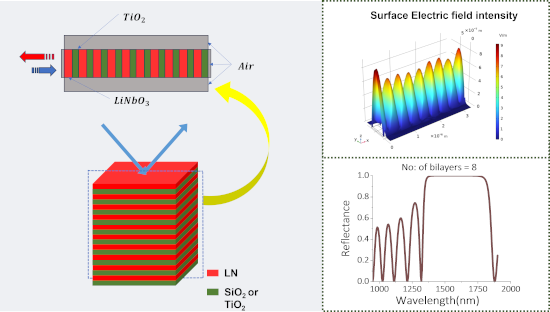
- with SiO2. The ion-slicing method has enabled the production of large-scale, high-quality, and submicron-thick crystalline LN films. First, a lithium niobate wafer undergoes ion implantation, typically using hydrogen or helium ions, to create a weakened layer at a controlled depth [30]. After the


Various CVD-grown ZnO nanostructures for nanodevices and interdisciplinary applications
Beilstein J. Nanotechnol. 2024, 15, 1390–1399, doi:10.3762/bjnano.15.112
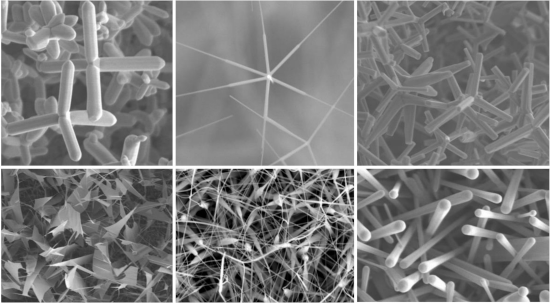
- ], photocatalytic degradation [41], and water splitting for hydrogen technologies [38]. Figure 3a–d show SEM images of ZnO tetrapods. These various morphologies were grown at approx. 625–650 °C. The first one, named T1 in Figure 3a, has needle-like arms of ≈1 μm of length. The dimeter of the arms is less than 50 nm



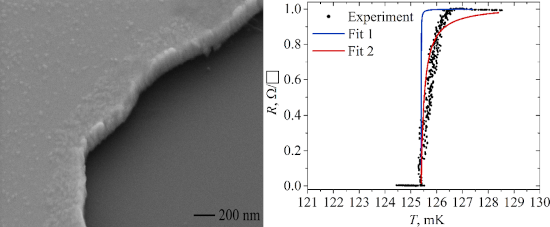
Investigation of Hf/Ti bilayers for the development of transition-edge sensor microcalorimeters
Beilstein J. Nanotechnol. 2024, 15, 1353–1361, doi:10.3762/bjnano.15.108
- Physics and Mathematics, direction no. 8, “Hydrogen Isotope Physics”.


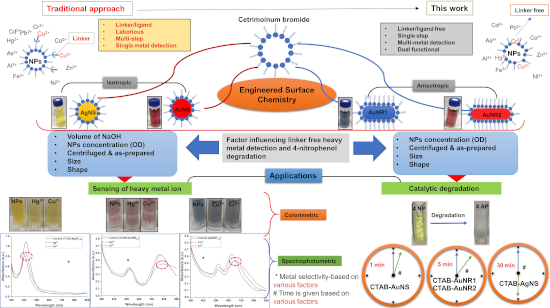
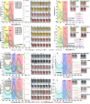
Nanoarchitectonics with cetrimonium bromide on metal nanoparticles for linker-free detection of toxic metal ions and catalytic degradation of 4-nitrophenol
Beilstein J. Nanotechnol. 2024, 15, 1312–1332, doi:10.3762/bjnano.15.106




Interaction of graphene oxide with tannic acid: computational modeling and toxicity mitigation in C. elegans
Beilstein J. Nanotechnol. 2024, 15, 1297–1311, doi:10.3762/bjnano.15.105
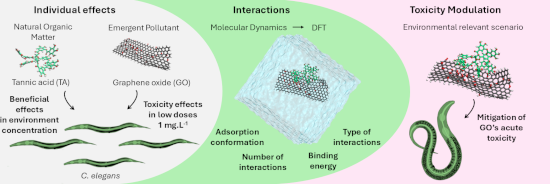
- , phototransformation, and degradation [8]. Furthermore, because of the presence of sites for different types of interaction mechanisms (i.e., hydrogen bonding, van der Waals interaction, and π–π stacking), its structure favors the adsorption of different molecules (i.e., biomolecules and organic pollutants) and metal
- in hydrogen bonding as well as hydrophobic and electrostatic interactions; also, they are responsible for TA’s high solubility, reactivity to metal cations, binding capacity to molecules and surfaces, and significant reducing and radical scavenging properties [19][21][22][23][24]. This range of
- groups indicate that the interactions with TA occur through C=O, C–OH, C–O, and sp2 carbon structures present in GO. Such interactions may involve, for example, hydrogen bonds and interactions between π orbitals, which is in agreement with literature regarding humic and tannic acid interactions with GO


Dual-functionalized architecture enables stable and tumor cell-specific SiO2NPs in complex biological fluids
Beilstein J. Nanotechnol. 2024, 15, 1238–1252, doi:10.3762/bjnano.15.100
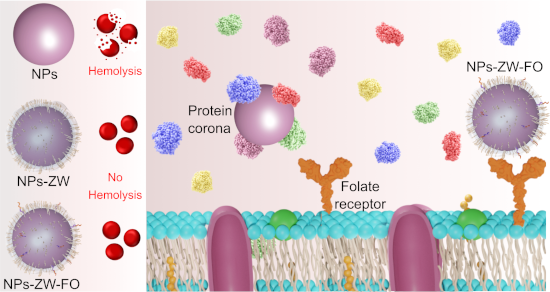
- at 100 °C and the percentages of carbon, nitrogen, and hydrogen were obtained. It is noteworthy that only the nitrogen percentages were considered for the calculations. The elemental composition of the NP surface was obtained using a K-Alpha XPS (Thermo Fisher Scientific) which operates with Al Kα X

AI-assisted models to predict chemotherapy drugs modified with C60 fullerene derivatives
Beilstein J. Nanotechnol. 2024, 15, 1170–1188, doi:10.3762/bjnano.15.95
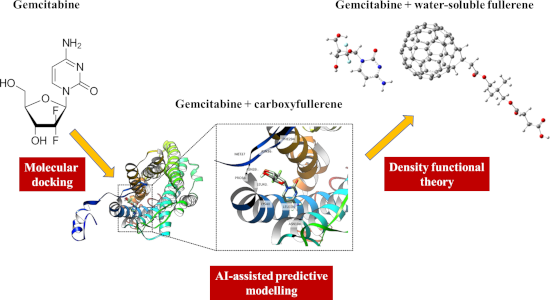
- can be proposed as an orally delivered drug according to its physicochemical properties. According to this rule, a drug compound should have a molecular weight below 500 g/mol, a octanol–water partition coefficient (LogP) below 5, less than five hydrogen bond donor sites, and less than ten hydrogen
- secondary structural features were stabilized by TMpred [48] and HMMTOP [49] during energy minimization. Last, the protein was prepared by setting atomic charges and hydrogen atoms and merging the nonpolar groups. Once the structures were optimized, molecular docking was performed with the CXCR7 protein
- , using Autodock Vina 1.1, to obtain the docking score, established hydrogen bonds, and the binding site (pocket). The above was done for all drugs in the dataset and an external validation set. IBM Watson AI was used to build the models and to predict the docking score through the Extra Trees regressor


Unveiling the potential of alginate-based nanomaterials in sensing technology and smart delivery applications
Beilstein J. Nanotechnol. 2024, 15, 1077–1104, doi:10.3762/bjnano.15.88
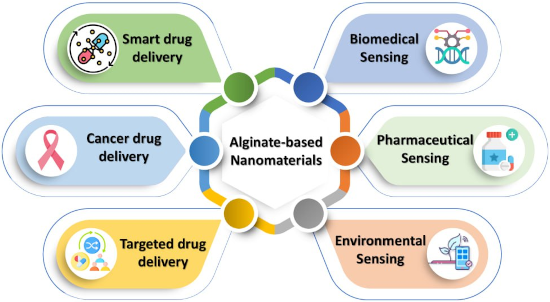
- discussed, including drug delivery and environmental sensing applications for humidity, heavy metals, and hydrogen peroxide. Moreover, biomedical sensing applications of alginate-based nanoparticles regarding various analytes such as glucose, cancer cells, pharmaceutical drugs, and human motion will also be
- result, several researchers are working on alginate to create nanoparticles. One of the most appealing properties of alginate is its capacity to readily form a gel with divalent cations, particularly Ca2+ [31]. Divalent cations create hydrogen bonds with the alginate G residues, resulting in an egg-box
- contains a lot of hydroxy and carboxylic acid groups, it has the potential to purify water by adsorbing metal ions and organic dyes through hydrogen and chelate bonding. A carbonized carboxymethyl chitosan/SA hydrogel evaporator was able to remove phenol with 95.37% efficiency and simultaneously desalinate


Can neutral clusters: a two-step G0W0 and DFT benchmark
Beilstein J. Nanotechnol. 2024, 15, 1010–1016, doi:10.3762/bjnano.15.82
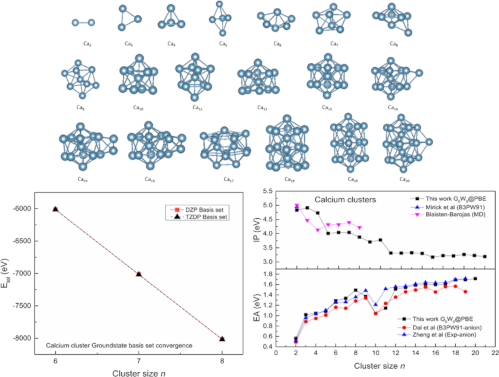
- ; density functional theory; G0W0 approximation; ionization potentials; magic clusters; Introduction Calcium metal has a closed shell structure and belongs to the group IIA alkaline-earth metals [1]. It has been widely used in carbon-chemical engineering (coating fullerene in hydrogen storage), optics, and
- -capacity hydrogen storage [8]. As cluster size grows, the electronic configuration changes its semiconducting behavior from nonmetal to metallic due to the overlap between the s and p orbitals. Moreover, the geometry of clusters is related to their structural properties. Most of the studies on calcium


Recent progress on field-effect transistor-based biosensors: device perspective
Beilstein J. Nanotechnol. 2024, 15, 977–994, doi:10.3762/bjnano.15.80
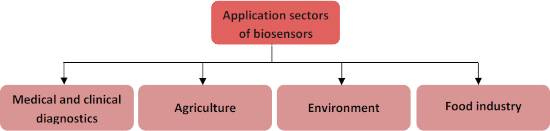
- increasing their use in daily life [38]. The first ion-sensitive field-effect transistor (IS FETs) biosensor combined the metal–oxide–semiconductor (MOS) structure with glass electrodes for measuring ion activities in electrochemical and biological environments [39]. Subsequently, hydrogen-sensitive MOSFET




Identification of structural features of surface modifiers in engineered nanostructured metal oxides regarding cell uptake through ML-based classification
Beilstein J. Nanotechnol. 2024, 15, 909–924, doi:10.3762/bjnano.15.75
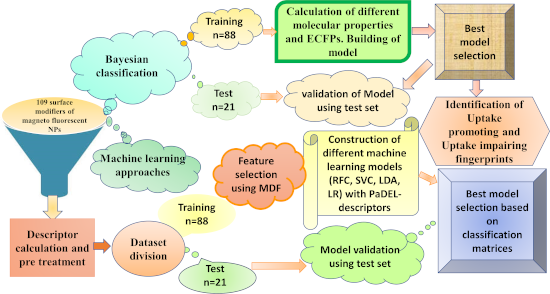
- descriptors were collected, including molecular weight (MW), n-octanol/water partition coefficient (ALogP), number of aromatic rings (nAR), number of rings (nR), number of rotatable bonds (nBonds), number of hydrogen bond donors (nHBDs), and the number of hydrogen bond acceptors (nHBAs) [36]. Extended
- definitions are given in Supporting Information File 1, Table S2. nHBDon_Lipinski was identified as the most highly contributing feature in the developed model for the PaCa2 cell line. The descriptor nHBDon_Lipinski is associated with Lipinski’s “rule of five” where “nHBDon” stands for the number of hydrogen
- bond donors present in a molecule [50]. Hydrogen bonds play an important role in interactions between molecules in various biological processes. However, for cellular uptake in the PaCa2 cell line, the contribution of hydrogen bonds has a negative impact as shown in Figure 7. A higher value of


Water-assisted purification during electron beam-induced deposition of platinum and gold
Beilstein J. Nanotechnol. 2024, 15, 884–896, doi:10.3762/bjnano.15.73
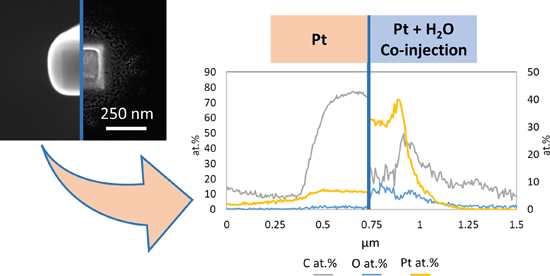
- a two-step procedure, with an initial deposition from the deposition precursor and a successive purification in the presence of a reactant gas (post-deposition purification). Several reactant gases have been tried, either in pure form, such as water [22][23][24][25], oxygen [18][26][27], hydrogen