
Search results
Search for "liquid" in Full Text gives 996 result(s) in Beilstein Journal of Nanotechnology. Showing first 200.
Quantification of lead through rod-shaped silver-doped zinc oxide nanoparticles using an electrochemical approach
Beilstein J. Nanotechnol. 2025, 16, 422–434, doi:10.3762/bjnano.16.33
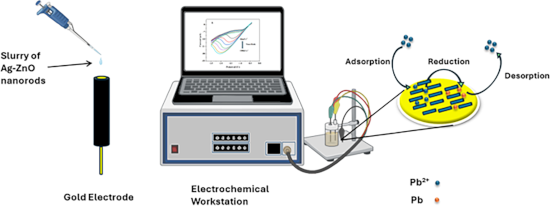
- their acute exposure leads to chronic disorders by affecting organ functions [2]. For example, lead poisoning in liquid effluents, is one of the worst environmental hazards which can affect human health and readily impact immune responses [3]. Due to the detrimental effects on the environment and human
- NRs were studied using dynamic light scattering analysis, and their zeta potential was determined. Figure 5 represents the zeta potential of Ag@ZnO NRs. The samples were collected in the liquid state and the Ag@ZnO NRs zeta potential of ≈30 mV accounts for the stability of the nanoparticles in water




Size control of nanoparticles synthesized by pulsed laser ablation in liquids using donut-shaped beams
Beilstein J. Nanotechnol. 2025, 16, 407–417, doi:10.3762/bjnano.16.31
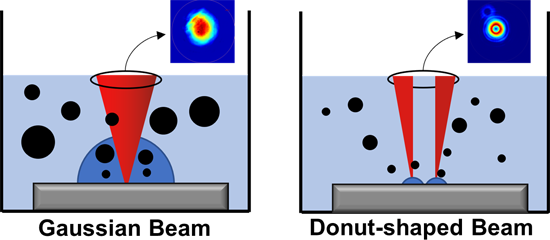
- ][26], ligands [27], and low-salinity ions [28], or by choosing different liquid media [29]. Nevertheless, the addition of molecular stabilizers or the use of liquids that increase the stability reduces the versatility of the technique and limits the applicability of the produced colloidal NPs. The
- that occurs after absorption of the laser radiation and localized heating of the target surface. The plume interacts with the surrounding liquid. This interaction defines the cooling rate of the species present in the plasma and significantly affects NP growth (i.e., plasma quenching forms small NPs
- ). The plasma temperature and pressure determine the cavitation bubble and NP formation [40][41]. The plasma plume that heats up the liquid causes liquid vaporization and subsequent bubble nucleation. The initial pressure of the bubble is very high (higher than 1 GPa) allowing it to expand until it


Engineered PEG–PCL nanoparticles enable sensitive and selective detection of sodium dodecyl sulfate: a qualitative and quantitative analysis
Beilstein J. Nanotechnol. 2025, 16, 385–396, doi:10.3762/bjnano.16.29
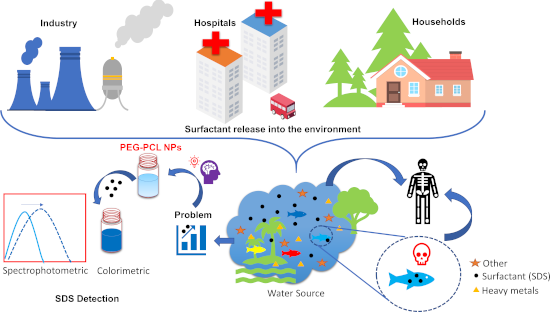
- % in frozen or liquid egg whites. In the context of marshmallow production, where SDS functions as a whipping agent, its concentration must not exceed 0.5% of the gelatine weight. Interestingly, SDS has been reported to exhibit a temporary suppressive effect on the perception of sweetness, which
- applications within permissible limits. To assess the safe dose of SDS in other products, various high throughput tools are available, including spectrophotometrics, potentiometrics, high-performance liquid chromatography (HPLC), capillary electrophoresis, and fluorescence-based methods [15][16][17][18][19


Pulsed laser in liquid grafting of gold nanoparticle–carbon support composites
Beilstein J. Nanotechnol. 2025, 16, 349–361, doi:10.3762/bjnano.16.26
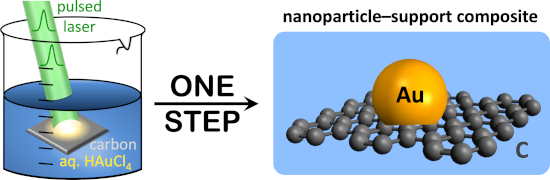
- surfactants for size control [17][18][19]. Nanoparticles prepared by pulsed laser in liquid synthesis are surfactant-free [1], but the same binder strategies are used for nanoparticle–support composites as for conventionally made nanoparticles. Capping ligands and binders hinder intimate contact between
- . Results and Discussion Carbon fiber paper served as electrode support material because graphite is cost-effective, scalable, and the premier electrode support material for reduction reactions [21]. Gold nanoparticles were laser grafted from aqueous HAuCl4 solution. The use of an aqueous liquid requires
- laser in liquid synthesis [1], the nanoparticles resulting from reactive pulsed laser processing are surfactant-free. We used nanosecond laser pulses to minimize surface damage to the graphitic carbon fiber paper. Based on the thermal time constants of graphite, a few nanoseconds are required to


Enhancing mechanical properties of chitosan/PVA electrospun nanofibers: a comprehensive review
Beilstein J. Nanotechnol. 2025, 16, 286–307, doi:10.3762/bjnano.16.22
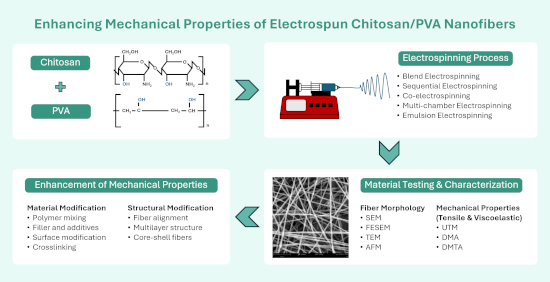
- single-phase homogeneous liquid. Polymer blending allows for the creation of novel materials through the incorporation of the unique properties of the component polymers [78]. In blend electrospinning, the preparation of a homogenous solution is crucial in ensuring the formation of uniform fibers during
- liquid, 1-allyl-3-methylimidazolium chloride into cross-linked electrospun chitosan/PVA nanofibers to improve water resistance and adsorption properties. The mechanical properties, however, were not reported. Coating of nanofiber structures can also provide improvement of the mechanical properties. Kang


Emerging strategies in the sustainable removal of antibiotics using semiconductor-based photocatalysts
Beilstein J. Nanotechnol. 2025, 16, 264–285, doi:10.3762/bjnano.16.21
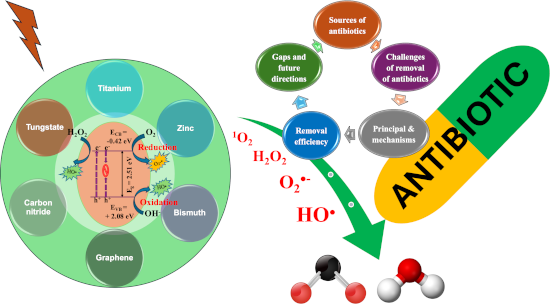
- degradation and solid–liquid separation are also commonly used in making the pollutants non-toxic or non-hazardous [13][23]. It should be noted that many of the conventional methods fail in degrading antibiotics completely since most antibiotics are very complex in structure and are even resistant to



Preferential enrichment and extraction of laser-synthesized nanoparticles in organic phases
Beilstein J. Nanotechnol. 2025, 16, 254–263, doi:10.3762/bjnano.16.20
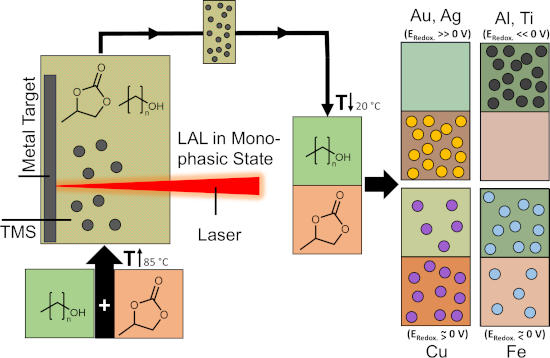
- modify the nanomaterials in situ via chemical reactions of the nanoparticles with the molecules or solutes of the liquid. Particularly when organic solvents are used as liquids, photothermally induced C–C cleavage, addition or dehydrogenation reactions of the solvents, as well as (carbon
- ) functionalization of the nanoparticles have been observed, which ultimately should affect their lipophilicity and, hence, colloidal stability in apolar or polar solvents. Two-phase liquid systems and the possibility to transfer the surfactant-free nanoparticles from one liquid phase into another remain practically
- in liquid; laser synthesis and processing of colloids; phase transfer; size separation; thermomorphic multiphase system; Introduction Laser ablation in liquids (LAL) provides nanoparticles without the need of external surfactants while retaining the initial composition of the educt material in the




A review of metal-organic frameworks and polymers in mixed matrix membranes for CO2 capture
Beilstein J. Nanotechnol. 2025, 16, 155–186, doi:10.3762/bjnano.16.14
- additives that enhance the adhesion between MOFs and the polymer matrix can be used to improve the MOF–polymer interface. For example, Lin et al. [132] utilized [Emim][Tf2N], an ionic liquid (IL), as an interfacial binder between micrometer-sized HKUST-1 and 6FDA-Durene polymer, see Figure 8e. The




TiO2 immobilized on 2D mordenite: effect of hydrolysis conditions on structural, textural, and optical characteristics of the nanocomposites
Beilstein J. Nanotechnol. 2025, 16, 128–140, doi:10.3762/bjnano.16.12
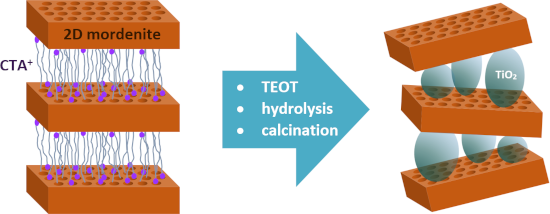
- . Typically, such pillars are amorphous SiO2 nanoparticles formed during the hydrolysis of tetraethoxysilane (TEOS) introduced into liquid crystalline 2D CTAB layers that fill the interlamellar space between the 2D zeolite nanosheets. Tetraethoxytitanium (TEOT) is a homolog of TEOS, and its hydrolysis
- efficiency than the bulk phase, but the bandgap of anatase particles smaller than 10 nm is very sensitive to their size [14]. One of the disadvantages of such free photocatalyst nanoparticles is the limitation of mass transfer between solid and liquid phases. From this perspective, the problem of
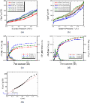
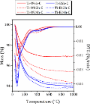
- in a mechanical mixture of TiO2 with microporous zeolite, but higher than for composites obtained by a liquid impregnation method [40]. Thermogravimetric (TG) profiles of the studied samples together with the derivative thermogravimetric (DTG) curves are shown in Figure 6. As can be seen, mass loss



Advanced atomic force microscopy techniques V
Beilstein J. Nanotechnol. 2025, 16, 54–56, doi:10.3762/bjnano.16.6
- software tool (”unDrift”), which allows reliable and fast drift correction. Dickbreder et al. demonstrate the robust performance of the software tool by AFM data recorded under varying conditions (vacuum or liquid environment) on calcite surfaces with recording times up to several hours. The work by Nony
Precursor sticking coefficient determination from indented deposits fabricated by electron beam induced deposition
Beilstein J. Nanotechnol. 2025, 16, 35–43, doi:10.3762/bjnano.16.4
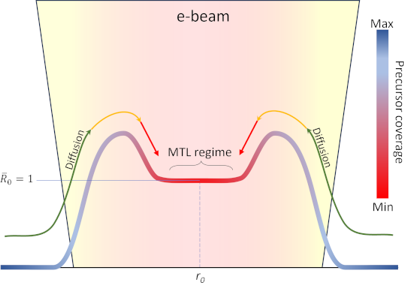
- , 15, 30, 35 and 40 °C using a self-made cryo-stage made from copper and equipped with a heater. The stage was cooled via a thick strand of copper wires connected to a Meissner trap cooled with liquid nitrogen. The temperature was controlled via a heating element inserted as an interface layer between


Bioinspired nanofilament coatings for scale reduction on steel
Beilstein J. Nanotechnol. 2025, 16, 25–34, doi:10.3762/bjnano.16.3
- applications of mimicking the liquid-repelling properties of their skin to address a common industrial challenge: The scaling of steel surfaces. Scaling, a pervasive issue in various industries, results from unwanted water adhesion and mineral deposition, leading to corrosion, reduced efficiency, and increased
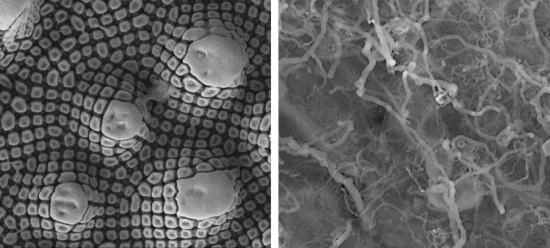
- maintenance costs. By understanding and replicating the nanostructured [3][7][8][9], liquid-repelling features of Collembola skin, we propose a novel approach to mitigate this issue. Figure 1 displays the cuticle micro- and nanostructure which leads to effective water repellency [5]. It has been shown how the
- phenomenon, known as the Cassie state, results in the liquid being more in contact with air than with the solid surface, leading to high apparent contact angles [22]. The high contact angles also become apparent in Figure 1B, where a water droplet is resting on the Collembola surface. Here, we explore the


Attempts to preserve and visualize protein corona on the surface of biological nanoparticles in blood serum using photomodification
Beilstein J. Nanotechnol. 2024, 15, 1654–1666, doi:10.3762/bjnano.15.130
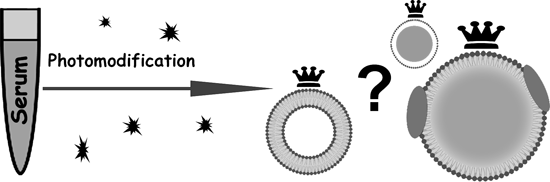
- ). The bio-NPs in the photomodified samples had a body of average electron density, the substance of which looked slightly non-homogenous. The LPs resembled tennis balls (Figure 4a–f), while the EVs, which in their native state had liquid contents, were deformed and resembled collapsed balls with a
- copper grids covered with formvar film. A drop of a sample was adsorbed for 1 min on a grid, excess of the liquid was removed by a pipette; then, the wet grid was placed on a drop of 0.5% aqueous uranyl acetate solution for 10 s, excess liquid was removed with filter paper. Grids were air-dried and



Fabrication of hafnium-based nanoparticles and nanostructures using picosecond laser ablation
Beilstein J. Nanotechnol. 2024, 15, 1639–1653, doi:10.3762/bjnano.15.129
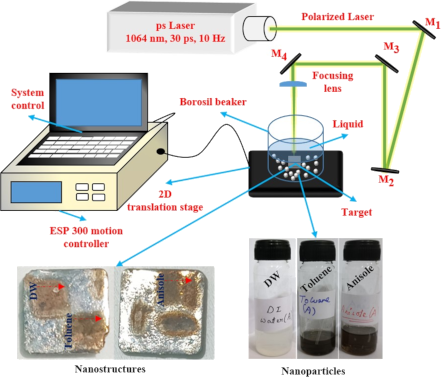
- different liquid media, namely, deionised water (DW), toluene, and anisole, to fabricate HfO2 and HfC NPs along with Hf NSs. Spherical HfO2 NPs and nanofibres were formed when Hf was ablated in DW. Hf ablated in toluene and anisole demonstrated the formation of core–shell NPs of HfC with a graphitic shell
- liquid medium. The target material absorbs the pulse energy via the electrons. It transfers it to the lattice, which expulses the surface material as a plasma plume confined because of the pressure created by the surrounding liquid [16][20][23][24]. A cavitation bubble is formed as the energy is
- transferred to the surrounding liquid from the decaying plasma because of the existing temperature differences between the liquid and the plasma plume, leading to the emergence of a vapour layer with a volume equivalent to the plasma plume [16][20][23][24]. The cavitation bubble collapses because of cyclic




Facile synthesis of size-tunable L-carnosine-capped silver nanoparticles and their role in metal ion sensing and catalytic degradation of p-nitrophenol
Beilstein J. Nanotechnol. 2024, 15, 1576–1592, doi:10.3762/bjnano.15.124
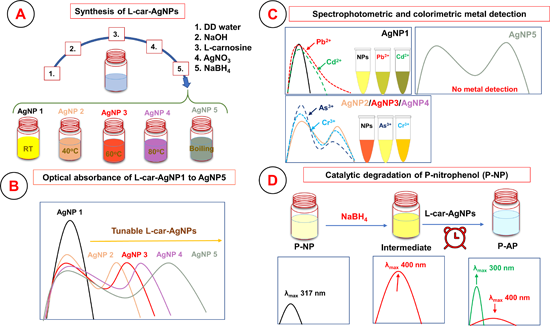
- heavy metal ion monitoring in environmental samples involve complex analytical instrumental techniques such as atomic absorption spectroscopy, inductively coupled plasma mass spectrometry, and high-performance liquid chromatography [8][9]. Environmental remediation of P-NP requires processes such as




Nanotechnological approaches for efficient N2B delivery: from small-molecule drugs to biopharmaceuticals
Beilstein J. Nanotechnol. 2024, 15, 1400–1414, doi:10.3762/bjnano.15.113
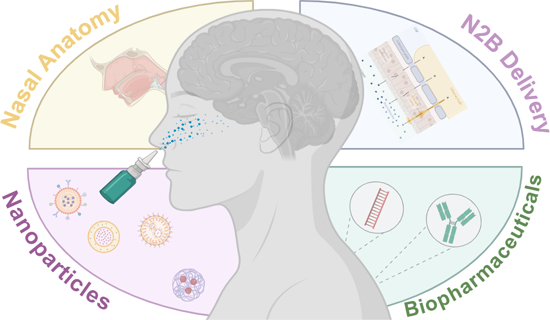
- both liquid and solid lipids. The non-ideal crystalline structure of the NLCs reduces the crystallinity degree, thus offering enhanced drug loading capacity while preventing drug expulsion [103]. Because of their advantages, such as improved encapsulation of lipophilic drugs and increased brain
- concentration in the brain by a factor of 6.15 compared to the oral clozapine tablet [109]. Nanoemulsions Emulsions are colloidal systems consisting of two immiscible liquid phases where one phase is dispersed in the other. Nanoemulsions can be prepared via low-energy or high-energy methods, including
- microfluidics and high-shear-force homogenization [110]. As DDS, nanoemulsions can be reservoirs for encapsulating hydrophobic substances [111]. Moreover, emulsions of emulsions or double emulsions can be prepared by dispersing the droplets of primary emulsion into another liquid phase. Double emulsions can be


A biomimetic approach towards a universal slippery liquid infused surface coating
Beilstein J. Nanotechnol. 2024, 15, 1376–1389, doi:10.3762/bjnano.15.111
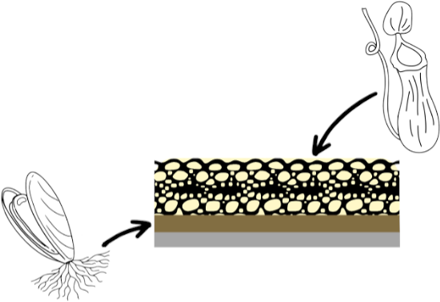
- surface coatings based on the slick surfaces of carnivorous pitcher plants (Nepenthes), termed slippery liquid-infused porous surfaces (SLIPS). This study introduces a simplified method to produce SLIPS using a polydopamine (PDA) anchor layer, inspired by mussel adhesion. SLIPS layers were formed on
- cyclic olefin copolymer, silicon, and stainless steel substrates, by first growing a PDA film on each substrate. This was followed by a hydrophobic liquid anchor layer created by functionalizing the PDA film with a fluorinated thiol. Finally, perfluorodecalin was applied to the surface immediately prior
- biomimetic approach to surface passivation involves a series of surface coatings based on the slick surfaces of carnivorous pitcher plants (Nepenthes), termed slippery liquid-infused porous surfaces (SLIPS) [4]. When wetted, the slippery surfaces on the plant cause prey to slide into the bottom of the




Investigation of Hf/Ti bilayers for the development of transition-edge sensor microcalorimeters
Beilstein J. Nanotechnol. 2024, 15, 1353–1361, doi:10.3762/bjnano.15.108
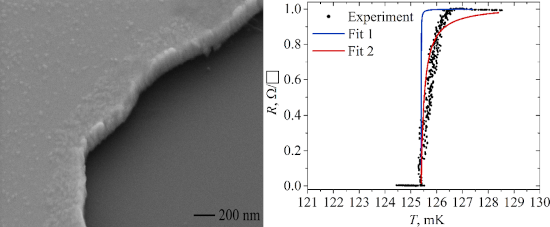
- probability that these excitations will result in the vaporization of one or more helium atoms from the liquid surface. The vaporized atoms then strike the surface of the microcalorimeter, whose task is to determine their recoil energy. When such atoms are adsorbed on the surface of metals, in addition to the


Nanoarchitectonics with cetrimonium bromide on metal nanoparticles for linker-free detection of toxic metal ions and catalytic degradation of 4-nitrophenol
Beilstein J. Nanotechnol. 2024, 15, 1312–1332, doi:10.3762/bjnano.15.106
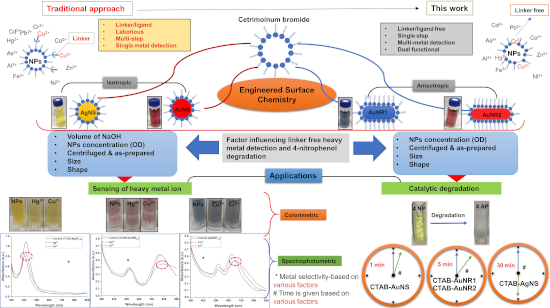
- . Quantification of CTAB through UHPLC The quantification of bound CTAB on the nanoparticles’ surface was analyzed using ultrahigh-performance liquid chromatography (UHPLC; Shimadzu, Nexera, Tokyo, Japan). The chromatography system equipped with an SPD-M20A photodiode array (PDA) detector with a wavelength range




Mn-doped ZnO nanopowders prepared by sol–gel and microwave-assisted sol–gel methods and their photocatalytic properties
Beilstein J. Nanotechnol. 2024, 15, 1283–1296, doi:10.3762/bjnano.15.104
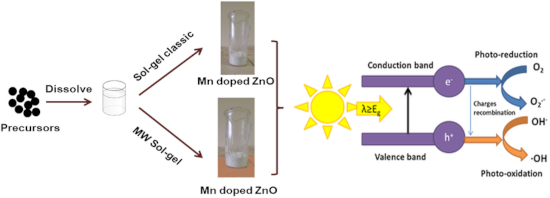
- nanostructured materials from liquid, solid, and gaseous precursors [2]. Nonetheless, many of these methods are constrained by the necessity of high temperatures and pressures, lengthy reaction times, and toxic reagents [3][4]. Although physical methods offer high reproducibility, chemical methods are often


Dual-functionalized architecture enables stable and tumor cell-specific SiO2NPs in complex biological fluids
Beilstein J. Nanotechnol. 2024, 15, 1238–1252, doi:10.3762/bjnano.15.100
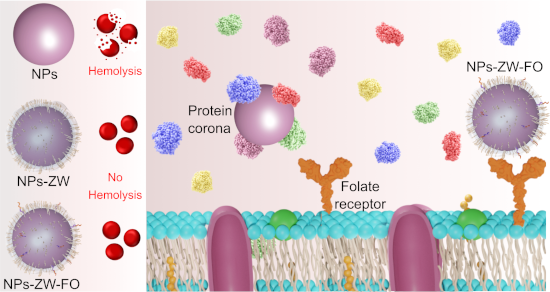
- adsorbed on the SiO2NPs, liquid chromatography coupled with mass spectrometry (LC-MS/MS) was used. The proteins were separated in SDS-PAGE as described limiting the protein run to only enter in the beginning of the resolving gel. Then, the gel was stained with Coomassie brilliant blue, and the unique bands
- Biosystems) liquid chromatography system through a Proxeon nanoelectrospray ion source. Peptides were separated at a flow rate of 300 nL/min in a 2–90% acetonitrile gradient in 0.1% formic acid for a total gradient time of 65 min (35% acetonitrile at 33 min) using a PicoFrit analytical column (20 cm × ID75

Local work function on graphene nanoribbons
Beilstein J. Nanotechnol. 2024, 15, 1125–1131, doi:10.3762/bjnano.15.91
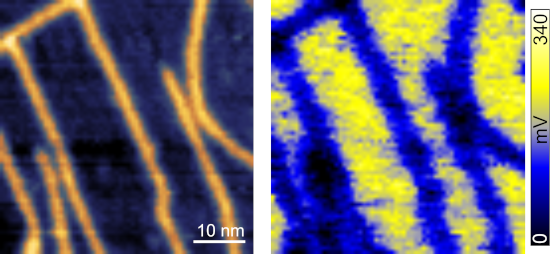
- cyclodehydrogenation and the formation of GNRs following [13][26]. The sample was introduced into our SFM attached to the same vacuum chamber, which was cooled down to 115 K using liquid nitrogen. Nanosensors Si tips (resonance frequency f0 = 158 kHz and longitudinal force constant cL = 45 N/m) and PtIr-coated tips
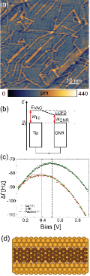

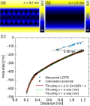
![[Graphic 1]](/bjnano/content/inline/2190-4286-15-91-i4.svg?max-width=637&scale=1.18182)
Effect of wavelength and liquid on formation of Ag, Au, Ag/Au nanoparticles via picosecond laser ablation and SERS-based detection of DMMP
Beilstein J. Nanotechnol. 2024, 15, 1054–1069, doi:10.3762/bjnano.15.86
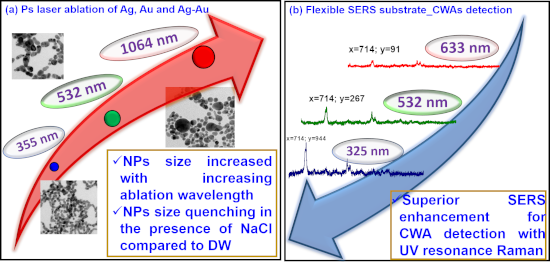
- Abstract The present study investigates the effects of input wavelength (1064, 532, and 355 nm) and surrounding liquid environment (distilled water and aqueous NaCl solution) on the picosecond laser ablation on silver (Ag), gold (Au), and Ag/Au alloy targets. The efficacy of the laser ablation technique
- simulants was observed at a 325 nm Raman excitation. Our findings reveal that a higher ablation yield was observed at IR irradiation than those obtained at the other wavelengths. A size decrease of the NPs was noticed by changing the liquid environment to an electrolyte. These findings have significant
- size and composition, making it a preferred choice for nanomaterials synthesis [2][3][4][5]. The process involves laser plasma interacting with a metal in a liquid; it excites electrons, which then generates atomic vibrations within a few picoseconds, causing rapid heating, melting, and explosive


Atomistic insights into the morphological dynamics of gold and platinum nanoparticles: MD simulations in vacuum and aqueous media
Beilstein J. Nanotechnol. 2024, 15, 995–1009, doi:10.3762/bjnano.15.81
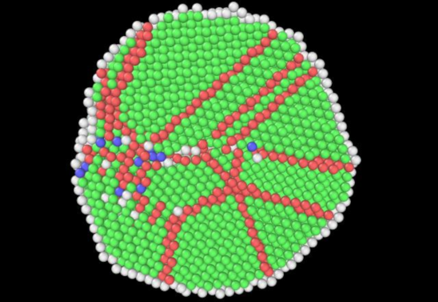
- molecular dynamics [44]. The strong decrease of the melting point of small Au NPs compared to bulk Au was quantified by Qiao et al. [45]. Nayebi and Zaminpayma [46] as well as Shim et al. [47] studied the crystallization of liquid Au NPs. The dependence of the surface energy of gold NPs on their size and
- forms a distance–fluctuation criterion to identify first-order transitions, for example, from liquid to solid phases [71][72]. It is given by where N is the number of atoms in the NP, rij is the distance between the i-th and the j-th atom and ⟨…⟩t denotes time averaging. A critical value close to 0.05
- 1200 K (orange line), while, for the Pt NPs (Figure 2c,d), they are 100 K (blue line) and 1800 K (orange line). Regardless of chemical composition and NP diameter, the number density distributions at high temperatures are similar, and their shape is typical of liquid and amorphous materials. They have


Recent progress on field-effect transistor-based biosensors: device perspective
Beilstein J. Nanotechnol. 2024, 15, 977–994, doi:10.3762/bjnano.15.80
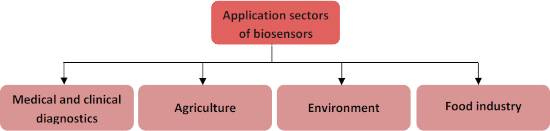
- was employed for the fabrication of the NW structure [92]. Moreover, this device is gated by a back gate and one or two platinum side gates via a liquid which has been characterized for possible implementation in reliable sensing applications. This biosensor uses HfO2 as a high-k gate dielectric