Search results
Search for "laser" in Full Text gives 904 result(s) in Beilstein Journal of Nanotechnology. Showing first 200.
Therapeutic effect of F127-folate@PLGA/CHL/IR780 nanoparticles on folate receptor-expressing cancer cells
Beilstein J. Nanotechnol. 2024, 15, 954–964, doi:10.3762/bjnano.15.78
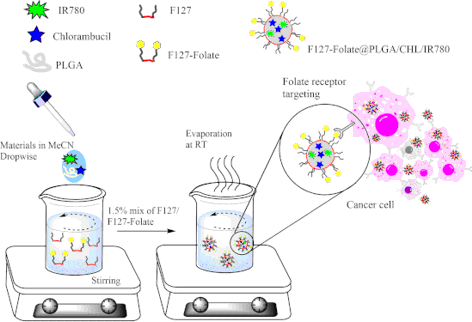
- ]. Therefore, it is essential to prevent CHL hydrolysis by incorporating it into nanoparticles, boosting its stability. IR780 iodide is a lipophilic heptamethine NIR fluorophore that absorbs light with a peak at 780 nm. It turns NIR (750–1000 nm) laser energy into heat after being exposed to it. It was
- . To address these issues, many studies have attempted to encapsulate IR780 iodide in different types of nanoparticles (NPs) [23][24][25] to make use of the protective cover provided by the NPs. In addition, IR780-loaded NPs have been proven to inhibit lung metastasis when exposed to a NIR laser [24



Effects of cutting tool geometry on material removal of a gradient nanograined CoCrNi medium entropy alloy
Beilstein J. Nanotechnol. 2024, 15, 925–940, doi:10.3762/bjnano.15.76
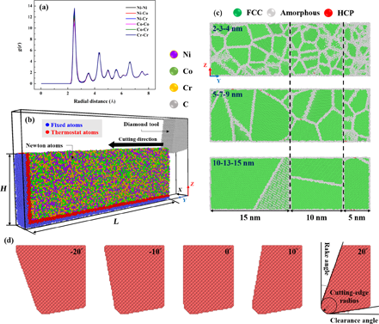
- attention and research [1][2]. Among them, the ternary medium-entropy alloy (MEA) CoCrNi and its derived five-element CoCrFeMnNi HEA [3][4] have been found to exhibit high strength and ductility. Weng et al. used laser-aided additive manufacturing to fabricate a CoCrNi MEA with a perfect combination of








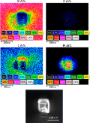
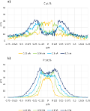
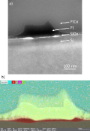
Water-assisted purification during electron beam-induced deposition of platinum and gold
Beilstein J. Nanotechnol. 2024, 15, 884–896, doi:10.3762/bjnano.15.73
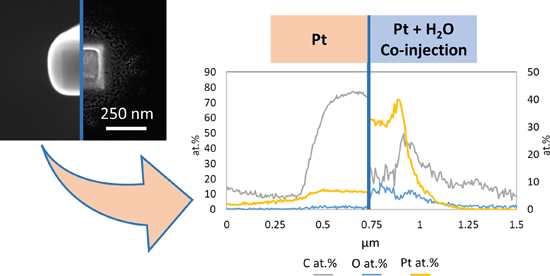
- orientation) with a native silicon oxide layer. Samples of 1 × 1 cm2 were used, on to which an array of annular patterns was lithographically defined, by laser lithography and etching using an SF6–O2 dry-etch, to facilitate location of the deposition areas. The substrates were roughly cleaned in acetone and





The effect of age on the attachment ability of stick insects (Phasmatodea)
Beilstein J. Nanotechnol. 2024, 15, 867–883, doi:10.3762/bjnano.15.72
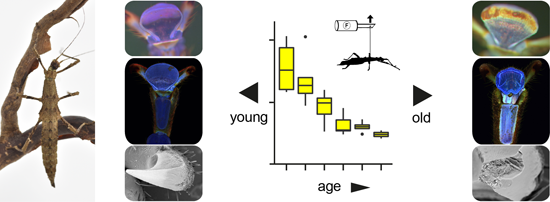
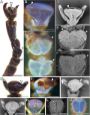
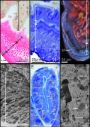
- extending over a larger time frame. Ageing effects on the morphology of the attachment pads and the autofluorescence of the cuticle were documented using light, scanning electron, and confocal laser scanning microscopy. The results show that both adhesion and friction forces decline with age. Deflation of
- Zeiss Axioplan microscope and an AxioCam MRc camera with the AxioVision software (v. 4.8.2) (Carl Zeiss AG, Oberkochen, Germany). The tarsi were examined at 5× magnification. Sets of excitation and emission filters were used according to [50]. 7 Confocal laser scanning microscopy (CLSM) A confocal laser
- microscope, and (D) confocal laser scanning microscope. ar, arolium; cl, claw; eu, euplantula. Scale bars: (A) 2 cm, (B–D) 1 mm. Attachment tests using a tilting platform. (A) Schematic of the experimental setup. (B) Comparison of sliding angles, presented by age (old/young). *** = p < 0.001, Wilcoxon rank


Intermixing of MoS2 and WS2 photocatalysts toward methylene blue photodegradation
Beilstein J. Nanotechnol. 2024, 15, 817–829, doi:10.3762/bjnano.15.68
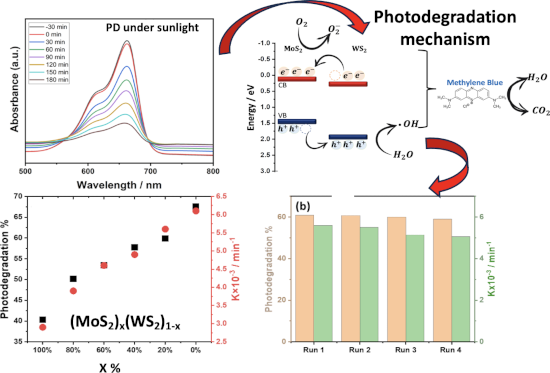
- Cu radiation source at a 1.54 Å wavelength and a micro-Raman spectrometer (Renishaw) equipped with a green laser excitation of 532 nm. The microstructure of the specimen was analyzed using a scanning electron microscope (Thermo Fisher Scientific, Waltham, MA, USA), and a transmission electron


Green synthesis of biomass-derived carbon quantum dots for photocatalytic degradation of methylene blue
Beilstein J. Nanotechnol. 2024, 15, 755–766, doi:10.3762/bjnano.15.63
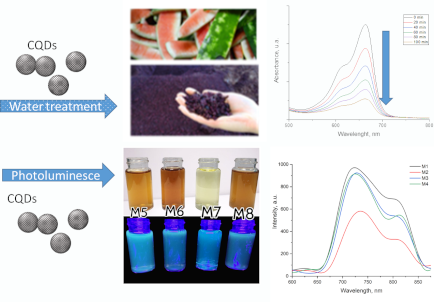
- top-down approaches such as arc discharge and laser ablation, and bottom-up methods such as hydrothermal and microwave synthesis [7][22] Biomass sources for CQD synthesis include eggshells, papaya peel, and lemon peel [23][24][25][26][27][28][29][30][31][32][33][34][35][36][37][38][39]. Applications
- Jobin Yvon Xplora Raman microscope using a 532 nm laser excitation as the power source. The photoluminescence spectra of the samples were obtained with an Agilent Cary Eclipse fluorescence spectrophotometer. It consists of two Czerny–Turner slits (excitation and emission) with a double monochromator and


Effect of repeating hydrothermal growth processes and rapid thermal annealing on CuO thin film properties
Beilstein J. Nanotechnol. 2024, 15, 743–754, doi:10.3762/bjnano.15.62
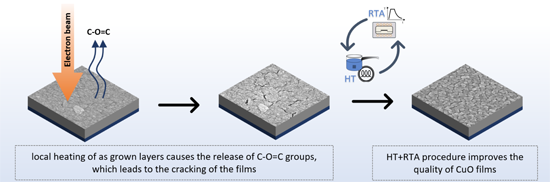
- literature. These encompass methods such as molecular beam epitaxy [17][18][19], direct current magnetron sputtering [4][20][21], and pulsed laser deposition [22][23][24]. Alternative approaches involve techniques such as chemical vapor deposition [25][26][27] and atomic layer deposition [28][29][30]. CuO
- × magnification. The spectral resolution was of the order of 0.5 cm−1. A 532 nm semiconductor laser was used to illuminate the samples. The measurements were performed without detection of polarization of the scattered light. A liquid nitrogen-cooled multichannel silicon CCD camera was used as a detector. Results




Simultaneous electrochemical determination of uric acid and hypoxanthine at a TiO2/graphene quantum dot-modified electrode
Beilstein J. Nanotechnol. 2024, 15, 719–732, doi:10.3762/bjnano.15.60
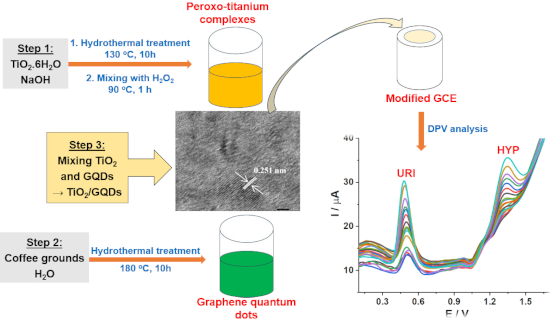
- GQDs were observed by using a JEM 2100 high-resolution transmission electron microscopy (HRTEM), Joel, Japan. Raman spectroscopy measurements were performed on a WiTec, Alpha 300R with a 532 nm laser. Surface analyses of the obtained materials were carried out using a S-4800 scanning electron


Enhancing higher-order modal response in multifrequency atomic force microscopy with a coupled cantilever system
Beilstein J. Nanotechnol. 2024, 15, 694–703, doi:10.3762/bjnano.15.57
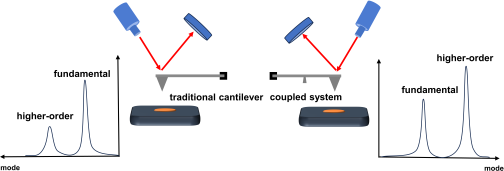
- achieved this by etching specific regions of the cantilever, coating, and utilizing magnetostrictive actuation to enhance the resonance modes of individual cantilevers [13]. Some have explored the enhancement of modal properties by adding rebar structures to cantilever beams using 3D laser writing [14
- mm, respectively. All others excitations were applied with a transducer size of 14 × 2.5 × 0.2 mm with an excitation width of 2.5 mm. The modal response displacement of the free end of the cantilever was measured using a laser Doppler vibrometer (LV-S01, Yuyao Sunny Optical Intelligent Technology Co


Gold nanomakura: nanoarchitectonics and their photothermal response in association with carrageenan hydrogels
Beilstein J. Nanotechnol. 2024, 15, 678–693, doi:10.3762/bjnano.15.56
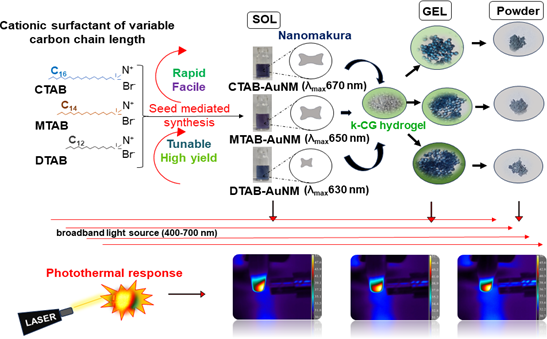
- nanoparticles before and after their incorporation into k-CG were checked for photothermal response. On the contrary, AuNRs after incorporation into k-CG hydrogels showed a small increase in temperature as compared to that of AuNMs upon laser irradiation. Therefore, the intactness and ability of AuNMs as
- ) equipped with a solid-state laser operating at 532 nm with a power of 0.7 mW, a grating of 600 L/mm, and an objective lens of 50× (Zeiss) was used in noncontact (tapping) mode. The cantilevers of length 125 μm and width 4 μm were used at a resonance frequency of 142 Hz and at a constant force of 42 N/m






Laser synthesis of nanoparticles in organic solvents – products, reactions, and perspectives
Beilstein J. Nanotechnol. 2024, 15, 638–663, doi:10.3762/bjnano.15.54
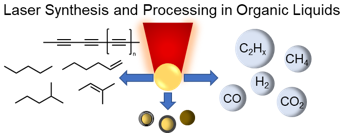
- 23284, USA 10.3762/bjnano.15.54 Abstract Laser synthesis and processing of colloids (LSPC) is an established method for producing functional and durable nanomaterials and catalysts in virtually any liquid of choice. While the redox reactions during laser synthesis in water are fairly well understood
- review also includes findings that are specific to the LSPC method variants laser ablation (LAL), fragmentation (LFL), melting (LML), and reduction (LRL) in organic liquids. A particular focus will be set on permanent gases, liquid hydrocarbons, and solid, carbonaceous species generated, including the
- formation of doped, compounded, and encapsulated nanoparticles. It will be shown how the choice of solvent, synthesis method, and laser parameters influence the nanostructure formation as well as the amount and chain length of the generated polyyne by-products. Finally, theoretical approaches to address the





Exfoliation of titanium nitride using a non-thermal plasma process
Beilstein J. Nanotechnol. 2024, 15, 631–637, doi:10.3762/bjnano.15.53
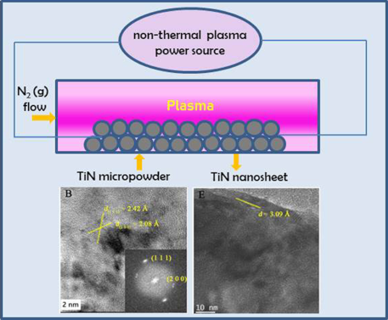
- with a 785 nm laser source. These analytical techniques provided comprehensive insights into the structure and properties of the synthesized TiN nanosheets. Results and Discussion Figure 2 shows the XRD patterns of both the bulk material and the TiN powder obtained from the non-thermal plasma process



Comparative analysis of the ultrastructure and adhesive secretion pathways of different smooth attachment pads of the stick insect Medauroidea extradentata (Phasmatodea)
Beilstein J. Nanotechnol. 2024, 15, 612–630, doi:10.3762/bjnano.15.52
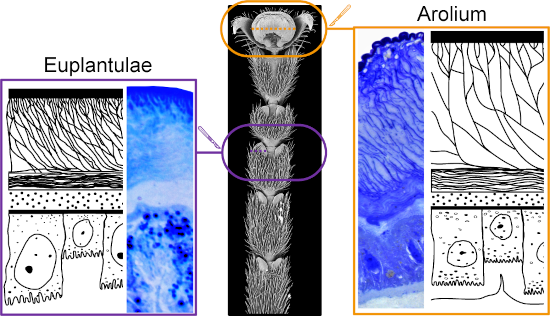
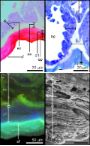
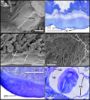
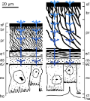
- stick insect Medauroidea extradentata using scanning electron microscopy, micro-computed tomography, light microscopy, and confocal laser scanning microscopy. Our observations revealed structural differences between both attachment pads, reflecting their distinct functionality. Furthermore, our results
- relatively large adhesive organs that bear no further surface microstructures [47][55][56] and because the droplet morphology of its tarsal secretion has been recently analysed [28][38][47][55][56]. Combining different imaging techniques, including scanning electron microscopy (SEM), confocal laser scanning
- obtained using a scanning electron microscope (TM 3000, Hitachi High-Technologies Corp, Tokyo, Japan) at 3 kV acceleration voltage. The recorded images were stitched, merged, and processed using the software Photoshop CS6 (Adobe Systems Inc., San Jose, CA, USA). Confocal laser scanning microscopy Whole




AFM-IR investigation of thin PECVD SiOx films on a polypropylene substrate in the surface-sensitive mode
Beilstein J. Nanotechnol. 2024, 15, 603–611, doi:10.3762/bjnano.15.51
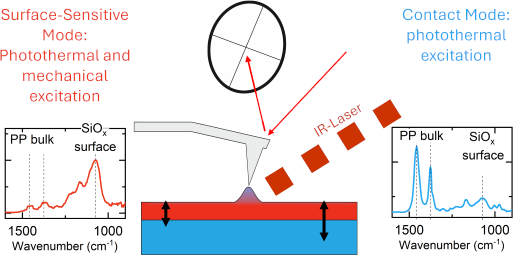
- Photothermal AFM-IR nanospectroscopy is a technique that combines the chemical information from infrared (IR) spectroscopy with the high spatial resolution of atomic force microscopy (AFM). For this, the sample is illuminated with a tunable IR laser [1]. When a suitable IR wavelength is chosen, resonant
- correlation between the IR wavelength of the laser and the thermal expansion of the material enables the recording of IR absorption spectra with this technique which correspond to the spectra of bulk IR spectroscopy [2][3][4]. Compared to ATR-FTIR spectroscopy, AFM-IR provides a drastic improvement in terms
- of spatial resolution. In ATR-IR spectroscopy, the resolution is theoretically limited by λ/2, which corresponds to several µm [3]. In contrast, the development of new and powerful tunable IR laser sources, such as optical parametric oscillator (OPO) and quantum cascade lasers (QCL), enabled a


Cholesterol nanoarchaeosomes for alendronate targeted delivery as an anti-endothelial dysfunction agent
Beilstein J. Nanotechnol. 2024, 15, 517–534, doi:10.3762/bjnano.15.46
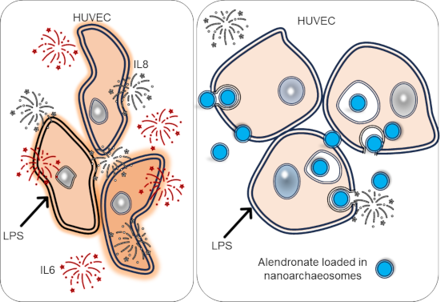
- 33342 for 10 min at RT. After staining, the membranes were separated from the inserts and were mounted on slides using a motion mounting medium. A Leica laser-scanning spectral confocal microscope TCS SP8 (Leica Microsystems, Wetzlar, Germany) was used. Image processing was performed using ImageJ





Aero-ZnS prepared by physical vapor transport on three-dimensional networks of sacrificial ZnO microtetrapods
Beilstein J. Nanotechnol. 2024, 15, 490–499, doi:10.3762/bjnano.15.44
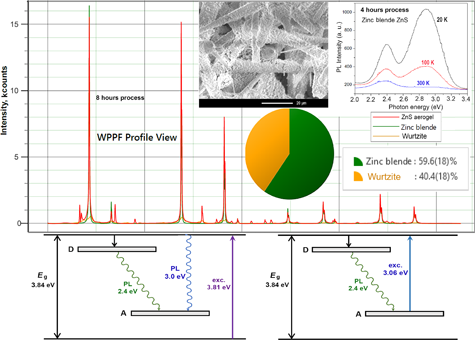
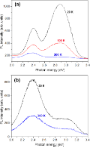
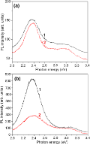
- in the technological procedures of 4 and 8 h were measured at temperatures from 300 to 20 K under excitation with the 325 nm laser line (3.81 eV), which corresponds to excitonic resonances in ZnS, see Figure 4. The spectra of both samples consist of two broad PL bands centered around 2.4 and 2.9–3.0
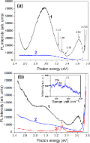
- measured at low temperature in the near-bandgap region, as shown in Figure 6. Apart from that, a narrow emission peak is observed at 3.726 eV. This peak is assigned to multiphonon resonant Raman scattering (RRS) in ZnS since the quantum energy difference between the excitation laser line (3.814 eV) and the
- peak position (3.726 eV) is nearly equal to the 2LO phonon energy in ZnS. The non-resonant Raman scattering measured with the excitation by the 785 nm laser line, shown in the inset of Figure 6b, clearly indicates the presence of a Raman scattering peak at 350 cm−1 (43 meV), which corresponds to the LO



Potential of a deep eutectic solvent in silver nanoparticle fabrication for antibiotic residue detection
Beilstein J. Nanotechnol. 2024, 15, 426–434, doi:10.3762/bjnano.15.38
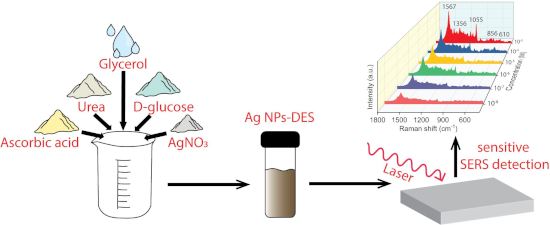
- located at 390 nm, which is suitable for SERS applications with 532 nm laser excitation. Besides, the shape of the UV–vis spectrum is in accordance with Mie scattering theory calculations, as reported in [39], proving the existence of Ag NPs in the solution. Moreover, the XRD pattern of the thin film
- and let dry naturally before the laser excitation. The SERS mapping shown in Figure 6C shows an even distribution of high intensity over the entire considered surface. This shows that the Ag NPs-DES coating has good consistency despite the different analytes. DES is supposed to play a crucial role in
- each measurement). The analyte was then dried at room temperature, and the Raman spectra were recorded via laser excitation at 532 nm. Other investigations on the SERS performance of our sample were also carried out, including Raman mapping, signal consistency, uniformity, and selectivity. Instrument


Classification and application of metal-based nanoantioxidants in medicine and healthcare
Beilstein J. Nanotechnol. 2024, 15, 396–415, doi:10.3762/bjnano.15.36
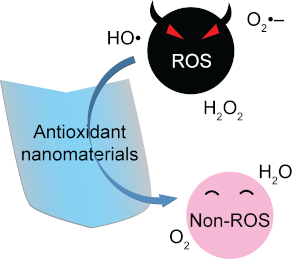
- ]. PDA-Ru nanoparticles could degrade Aβ fibrils under low-power laser irradiation because of their great photothermal effect. Moreover, PDA-Ru nanoparticles could decompose H2O2 owing to their strong CAT activity. PDA-Ru nanoparticles effectively improved memory capacity and decreased neuroinflammation
- collaborators synthesized mesoporous carbon nanospheres (PMCSs) derived from a MOF precursor, exhibiting dual photodynamic and photothermal characteristics. Utilizing this framework, concentration and temperature at thrombotic sites were elevated significantly upon local irradiation (808 nm laser), resulting in


On the mechanism of piezoresistance in nanocrystalline graphite
Beilstein J. Nanotechnol. 2024, 15, 376–384, doi:10.3762/bjnano.15.34
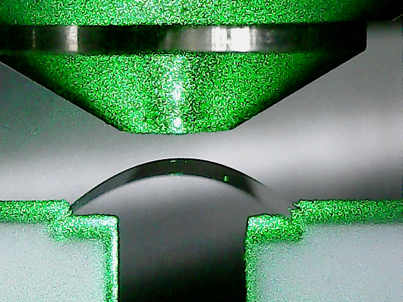
- substrate at 4000 rpm to grow NCG on both sides of the glass. The substrate was then loaded into the vacuum furnace and treated similarly. Raman measurements Raman measurements were done using a 100× objective at 0.6 mW laser power for 60 s integration time for each measurement. The same area on the NCG


Determining by Raman spectroscopy the average thickness and N-layer-specific surface coverages of MoS2 thin films with domains much smaller than the laser spot size
Beilstein J. Nanotechnol. 2024, 15, 279–296, doi:10.3762/bjnano.15.26
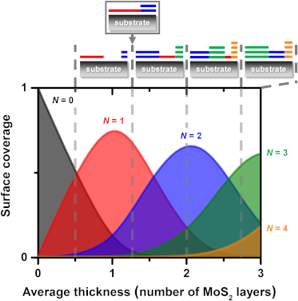
- injection pulsed-pressure chemical vapor deposition (DLI-PP-CVD). Such samples are constituted of nanoflakes (with a lateral size of typically 50 nm, i.e., well below the laser spot size), with possibly a distribution of thicknesses and twist angles between stacked layers. As an essential preliminary, we
- vary. These samples thus have characteristics, especially thickness inhomogeneities smaller than the laser spot size, that differ from the ones used to establish Raman spectroscopy-based MoS2 layer counting methods [26][28][29][30][31][32][33]. In this context, the primary purpose of this work is to
- develop and validate an approach for determining the average thickness of such sub-laser spot size inhomogeneous MoS2 thin films using Raman spectroscopy. First, we reassess here as a ground work the information that can be derived from the Raman spectra of MoS2 flakes for the evaluation of their


Ultrasensitive and ultrastretchable metal crack strain sensor based on helical polydimethylsiloxane
Beilstein J. Nanotechnol. 2024, 15, 270–278, doi:10.3762/bjnano.15.25
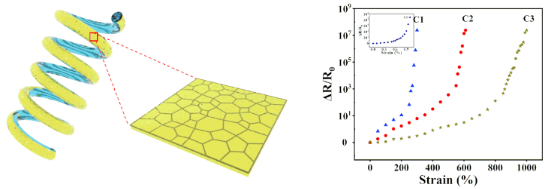
- and stretchable strain sensors with an impressive GF exceeding 42000 at a strain level of 150% [24]. These sensors were created by utilizing precisely controlled cracks in CNT films, which were formed through laser engraving of a CNT paper. In their study, Lee et al. have developed a strain sensor


Vinorelbine-loaded multifunctional magnetic nanoparticles as anticancer drug delivery systems: synthesis, characterization, and in vitro release study
Beilstein J. Nanotechnol. 2024, 15, 256–269, doi:10.3762/bjnano.15.24
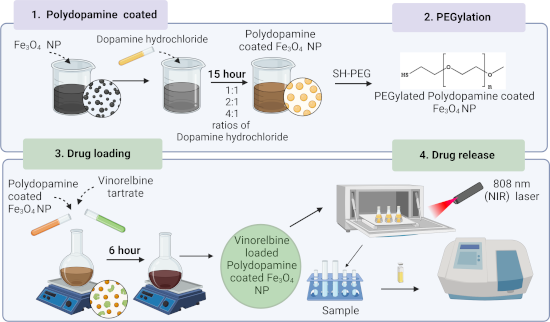
- cancer therapy agent, is included in the nanocomposite structure, and in vitro drug release studies under different pH conditions (pH 5.5 and 7.4) and photothermal activity at 808 nm NIR laser irradiation are investigated. The comprehensive integration of precise multifunctional nanoparticles design
- the heat produced by nanostructures under NIR laser irradiation [17][18]. Compared to traditional treatments, photothermal therapy allows for increased drug release and is less cytotoxic to healthy tissues [19]. It is a minimally invasive technique that offers the advantage of rapid recovery [20
- laser-driven photothermal agent [25]. However, it is challenging to completely eradicate solid tumors using PTT alone because of light scattering and limited absorption in tumor tissues. For this purpose, various modifications have been employed for passive tumor targeting. PEGylation, which involves


Ion beam processing of DNA origami nanostructures
Beilstein J. Nanotechnol. 2024, 15, 207–214, doi:10.3762/bjnano.15.20
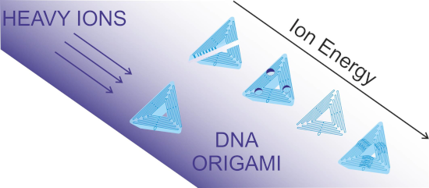
- regimes become the basis of commonly used material processing techniques such as high-energy ion implantation, widely applied in laser, detector, and semiconductor industries [30]. Finally, at low (keV) energies, the interaction of heavy ions is dominated by nuclear stopping, which is used in the most


Graphene removal by water-assisted focused electron-beam-induced etching – unveiling the dose and dwell time impact on the etch profile and topographical changes in SiO2 substrates
Beilstein J. Nanotechnol. 2024, 15, 190–198, doi:10.3762/bjnano.15.18
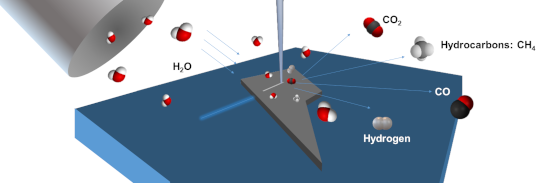
- for a monolayer of graphene onto SiO2) measured using AFM, shown in the insets of Figure 1D, agree with the data obtained in studies presenting femtosecond laser thinning of graphene [28]. In addition to the region located below the baseline, we also observe an elevation in the central part of the
- confocal Raman Alpha 300 M+ from WITec, which combines a Raman spectrograph with a confocal microscope. A laser with a 532 nm wavelength, spot size of 1 μm, and power fixed at 1 mW was used to avoid sample heating. The confocal microscope gives a higher lateral resolution than conventional optical


CdSe/ZnS quantum dots as a booster in the active layer of distributed ternary organic photovoltaics
Beilstein J. Nanotechnol. 2024, 15, 144–156, doi:10.3762/bjnano.15.14
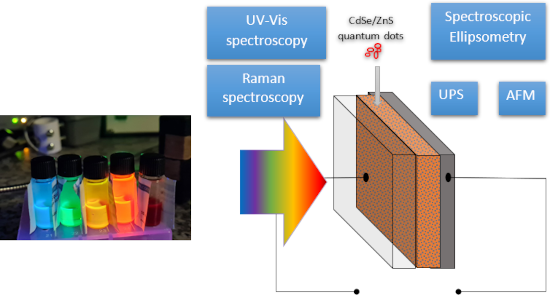
- monocrystalline silicon. A WITec Alpha 300 M+ spectrometer with a 488 nm laser, 600 groove grating, and a 100× ZEISS objective was used for Raman measurements. The samples were deposited on a glass substrate. Ultraviolet photoelectron spectroscopy (UPS) was conducted in an ultrahigh-vacuum chamber with a base
- ultraviolet with a small exponentially decreasing band up to 500–600 nm (Figure 2). The absorption band maximum is about 260 nm in the solid state (quartz was used as reference) and 330 nm in chloroform solution. The photoluminescence spectra, excited by a 405 nm laser, are shown in Figure 3. This type of