

Search results
Search for "substrate" in Full Text gives 1410 result(s) in Beilstein Journal of Nanotechnology. Showing first 200.
Precursor sticking coefficient determination from indented deposits fabricated by electron beam induced deposition
Beilstein J. Nanotechnol. 2025, 16, 35–43, doi:10.3762/bjnano.16.4
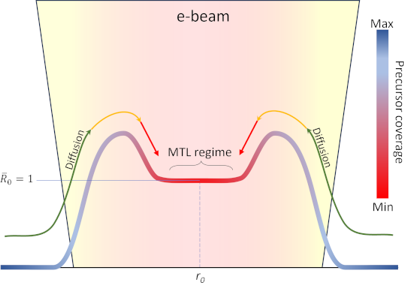
- substantially smaller than the sticking coefficients previously assumed for Me3CpPtMe (1.0). Furthermore, depositions performed at different substrate temperatures indicate a temperature dependence of the sticking coefficient. Keywords: adsorption; continuum model; FEBID; nanofabrication; sticking coefficient
- to obtain values for the diffusion coefficient (D), residence time (τ), and sticking coefficient (s). In this case, the sticking coefficient corresponds to “precursor-to-deposit” sticking rather than to “precursor-to-substrate” sticking as the actual substrate for continued growth is the deposit
- ]. A molecular beam gun equipped with a shutter was used in conjunction with mass spectrometry. The sticking coefficient was deduced from the measured drop in the spectrometer signal upon opening the shutter. In [17][19] the sticking coefficient was determined at different substrate temperatures and a


Bioinspired nanofilament coatings for scale reduction on steel
Beilstein J. Nanotechnol. 2025, 16, 25–34, doi:10.3762/bjnano.16.3
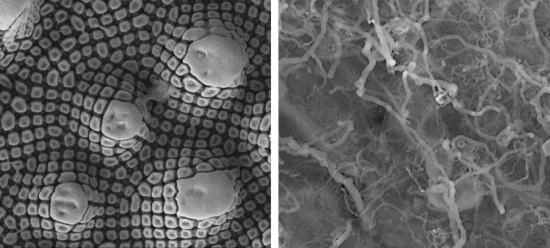
- steel substrate and the elemental composition of the SNFs is difficult to disentangle. The contact angle of the uncoated surfaces was 71°. The contact angle of the SNF-coated surfaces is more difficult to measure as the droplet will not attach itself to the surface seen for Figure 3B and Figure 5D, in


Fabrication of hafnium-based nanoparticles and nanostructures using picosecond laser ablation
Beilstein J. Nanotechnol. 2024, 15, 1639–1653, doi:10.3762/bjnano.15.129
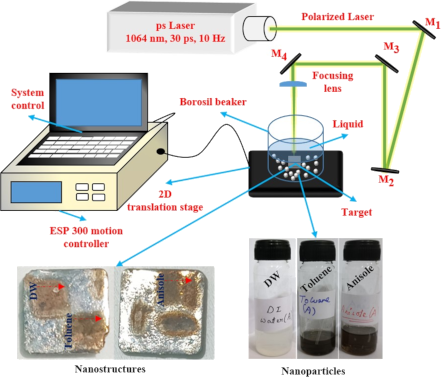
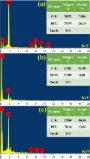
- . The high fraction of C indicates the formation of the graphitic shell around HfC NPs in both toluene and anisole. Figure 8 shows the reflectance data of a pristine Si substrate compared to a Si substrate coated with HfNPs-D, HfNPs-T, and HfNPs-A under three different angles of incidence (30°, 45°, and
- under different incident angles: (a) 30°, (b) 45°, and (c) 60°. The black curve is the reflectance spectrum of the reference Si substrate; the red, blue, and green curves represent Hf NPs synthesised in in toluene, anisole, and DW, respectively. PL spectra of NPs laser-ablated in (a) DW, (b) toluene




Heterogeneous reactions in a HFCVD reactor: simulation using a 2D model
Beilstein J. Nanotechnol. 2024, 15, 1627–1638, doi:10.3762/bjnano.15.128
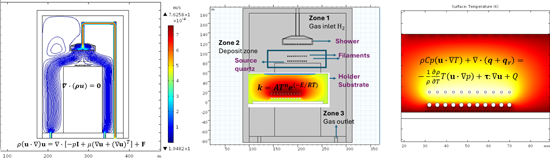
- the substrate is 450 to 500 °C for different deposition parameters. In the simulation, the laminar flow of species contributing to the film growth was confirmed, and the simulated concentration profiles of H° and SiO near the filaments and the sources were as expected. H° and SiO are essential species
- process and the properties of the films, with the most important parameters being substrate temperature, gas pressure, species concentration, and flow velocity [1]. The structural, optical, and electrical properties of the SiOx, more generally known as silicon-rich oxide (SRO), films are determined by the
- surface diffusion to the substrate. The main objective is to optimize the process for an HFCVD reactor and, thus, improve the quality and reproducibility of the films. Experimental The analyzed HFCVD system is a vertical reactor that can be divided into three zones. The first zone is the gas inlet, the


Natural nanofibers embedded in the seed mucilage envelope: composite hydrogels with specific adhesive and frictional properties
Beilstein J. Nanotechnol. 2024, 15, 1603–1618, doi:10.3762/bjnano.15.126
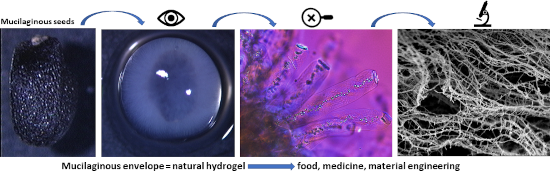
- ], or to animal bodies, promoting epizoochory [31][32][33]. These distinct physical features make mucilage also an important substrate for pharmaceutical, biomedical, and food industries [11][15][19][20][21]. Here, we briefly review the basic composition and structure of mucilage, its frictional and
- ], on monomer and cross-linking concentrations, and on the type of substrate surface [88]. Hydrogels with their low friction are crucial in biomedical applications or for drug delivery [38][83][86][88]. The diaspore mucilage is regarded as a natural hydrogel [38] because of its capacity to absorb water
- as in Alyssum minus [123] to 68 times as in Lepidium perfoliatum [123], or even up to 75 times in Capsella bursa-pastoris [126]. This mass increase, as well as the adherence of the mucilage to the substrate, may prevent the diaspores from being removed during flooding, water erosion, and/or surface


Facile synthesis of size-tunable L-carnosine-capped silver nanoparticles and their role in metal ion sensing and catalytic degradation of p-nitrophenol
Beilstein J. Nanotechnol. 2024, 15, 1576–1592, doi:10.3762/bjnano.15.124
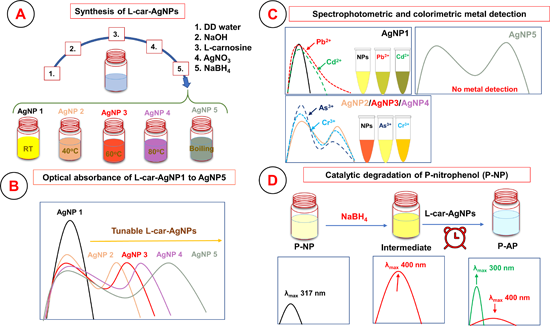
- linear plot of the absorption as a function of the concentration of the detected metal ions. ʟ-carnosine-capped silver nanoparticles as the catalytic agent ʟ-car-AgNPs were evaluated regarding their catalytic performance in the degradation of P-NP as a model substrate. P-NP is reduced and forms p




Strain-induced bandgap engineering in 2D ψ-graphene materials: a first-principles study
Beilstein J. Nanotechnol. 2024, 15, 1440–1452, doi:10.3762/bjnano.15.116
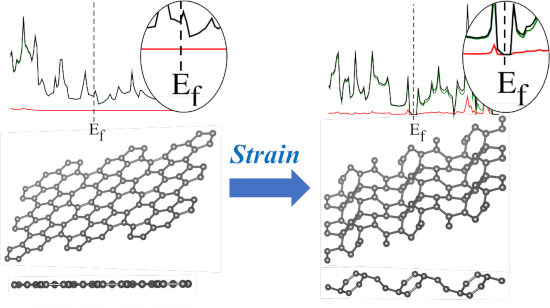
- compatibility with established technologies (the semiconductor industry can adopt it to enhance the performance of devices) [28]. Strain can be introduced in graphene using different methods, namely, by exploiting a mismatch in thermal expansion between graphene and the underlying substrate, by transferring
- graphene to a piezoelectric substrate, by shrinking or elongating the substrate by applying a bias voltage, or by using the tip of an atomic force microscope (AFM) to push graphene over a hole created in the substrate [29]. A wealth of literature on strain engineering of graphene and other 2D materials
- using different experimental techniques is available. Ni et al. synthesized graphene on a polyethylene terephthalate (PET) substrate and studied the effect of uniaxial strain through Raman spectroscopy [30]. They stretched PET in one direction and found a redshift in the D and G bands for a single


Ion-induced surface reactions and deposition from Pt(CO)2Cl2 and Pt(CO)2Br2
Beilstein J. Nanotechnol. 2024, 15, 1427–1439, doi:10.3762/bjnano.15.115
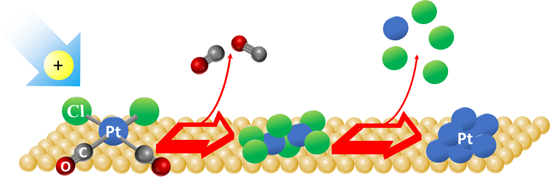
- precursors that are transiently adsorbed on a substrate surface [1][2][3][4][5][6]. Charged-particle-induced deposition techniques offer control over process parameters such as particle position, energy, beam current, and flux, allowing for the formation of nanoscale patterns. Since they are direct-write
- emission, and physical sputtering of adsorbed or substrate atoms [21][22][25][31][36][37][38][39][40]. Ion-induced deposition can occur via a momentum/energy transfer process [21][25][41][42] that results in the decomposition of the precursor to form volatile species and an involatile deposit containing
- transformations of precursor thin films. In this approach, the precursor is adsorbed onto a cooled substrate to form 1–2 nm thin films. The effects of ion beam exposure on the thin films are characterized by X-ray photoelectron spectroscopy to identify changes in the films’ composition and chemical environment



Lithium niobate on insulator: an emerging nanophotonic crystal for optimized light control
Beilstein J. Nanotechnol. 2024, 15, 1415–1426, doi:10.3762/bjnano.15.114
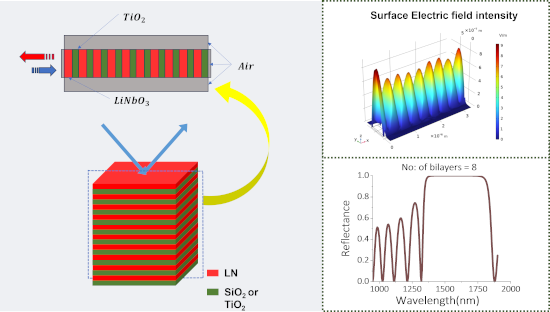
- implantation, the wafer is bonded to a SiO2 (or TiO2) substrate using direct bonding techniques, which involves bringing the surfaces into close contact and applying pressure or heat to form a strong bond. The wafer is then subjected to thermal annealing, which activates the splitting process along the
- implanted layer. This results in the transfer of a thin LN layer onto the SiO2 (or TiO2) substrate, leaving behind a smooth surface that can be further polished if necessary [30][31]. Overall, LiNbO3/TiO2 multi-stacks hold promise for specific applications; however, careful design, advanced fabrication, and


A biomimetic approach towards a universal slippery liquid infused surface coating
Beilstein J. Nanotechnol. 2024, 15, 1376–1389, doi:10.3762/bjnano.15.111
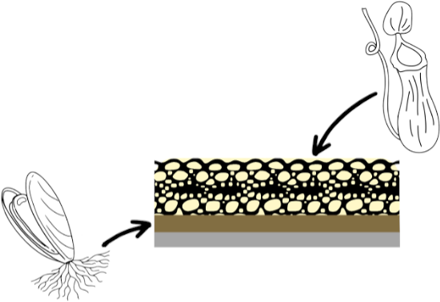
- cyclic olefin copolymer, silicon, and stainless steel substrates, by first growing a PDA film on each substrate. This was followed by a hydrophobic liquid anchor layer created by functionalizing the PDA film with a fluorinated thiol. Finally, perfluorodecalin was applied to the surface immediately prior
- is anchored to a substrate, creating a smooth liquid layer that is energetically favored to interact with the solid surface. The surface chemistry of the anchoring layer is crucial to the viability of the overall coating as the lubricant must have a greater affinity for the substrate surface than for
- defined by either a porous or flat solid surface that consists of chemistry that is similar to the pervading liquid [11][17]. The substrate serves an anchor to a lubricant, which provides a smooth liquid layer that provides some sort of resistance to surface adhesion. The liquid is anchored to the surface




Green synthesis of carbon dot structures from Rheum Ribes and Schottky diode fabrication
Beilstein J. Nanotechnol. 2024, 15, 1369–1375, doi:10.3762/bjnano.15.110
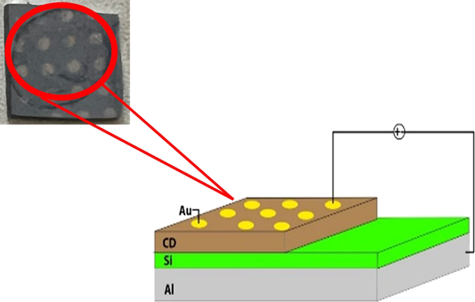
- supernatant was removed by decantation and a stock solution was prepared to be used in the studies. The prepared stock solution was stored at 4 °C to prevent contamination [15]. Schottky diode fabrication An n-type silicon substrate was used for Schottky diode fabrication. In the first step, the silicon
- substrate was cut to approximately 1 cm2 in size and cleaned by washing it in acetone, methanol, and pure water for 10 min each. An ohmic contact was made with aluminum on the cleaned sample at 1 × 10⁻⁷ Torr vacuum in a PVD thermal evaporation device. Approximately 30 μL of the CDs stock solution was taken
- and diluted with 5 mL of pure water; 100 μL of this solution was dripped onto the silicon substrate and evaporated at room temperature. In the last stage, the diode structure was obtained by evaporating gold onto the created CDs film using the shadow mask technique (Figure 1). The size of the diode




Out-of-plane polarization induces a picosecond photoresponse in rhombohedral stacked bilayer WSe2
Beilstein J. Nanotechnol. 2024, 15, 1362–1368, doi:10.3762/bjnano.15.109
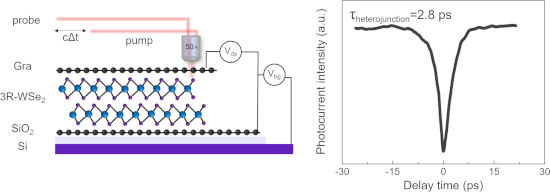
- monolayers of WSe2 were aligned at a 0° angle to form the 3R phase. The graphene/3R WSe2/graphene heterojunctions were aligned and assembled onto a SiO2/Si substrate by the all-dry transfer method. Au/Cr (50/10 nm) electrodes were patterned using standard electron-beam lithography (EBL, Raith 150 Two) and


Investigation of Hf/Ti bilayers for the development of transition-edge sensor microcalorimeters
Beilstein J. Nanotechnol. 2024, 15, 1353–1361, doi:10.3762/bjnano.15.108
- group, yields predictable and repeatable properties of films, whereas iridium is demanding regarding the deposition conditions: A temperature of the substrate of the order of several hundreds degrees Celsius must be maintained to obtain superconducting films [13][14]. Furthermore, the heat capacitance
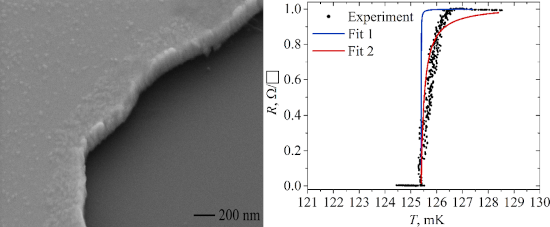
- a TES prototype (A1–A4), (2) films deposited in the form of bridges with different width and length (B1), and (3) films covering the entire substrate (C1). Optical images of the four square bridges and one long bridge investigated in this paper are shown in Figure 1a and Figure 1b. All investigated
- the study of films of these materials carried out in [10]. It is shown that measurements of bridges allow for a more accurate characterization of the material than the measurements of substrate-sized films. Compared to films, bridges exhibit a much sharper transition from the normal to the


Hymenoptera and biomimetic surfaces: insights and innovations
Beilstein J. Nanotechnol. 2024, 15, 1333–1352, doi:10.3762/bjnano.15.107
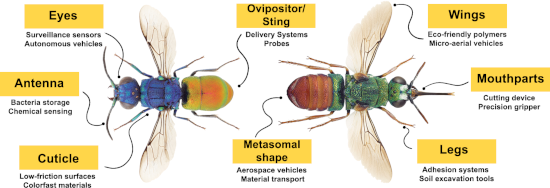
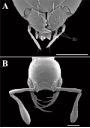
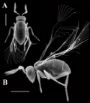
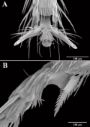
- detachment. In other instances, the presence of curved spines or hair on the tarsomeres enhances locomotion on irregular surfaces by penetrating the microdevices of the substrate, providing thousands of interlocking points that contribute to overall friction [131]. For example, weaver ants, renowned for




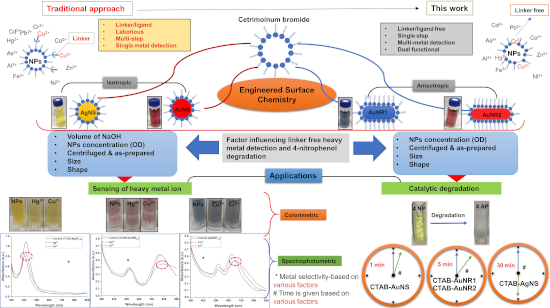
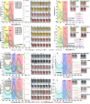
Nanoarchitectonics with cetrimonium bromide on metal nanoparticles for linker-free detection of toxic metal ions and catalytic degradation of 4-nitrophenol
Beilstein J. Nanotechnol. 2024, 15, 1312–1332, doi:10.3762/bjnano.15.106




Interaction of graphene oxide with tannic acid: computational modeling and toxicity mitigation in C. elegans
Beilstein J. Nanotechnol. 2024, 15, 1297–1311, doi:10.3762/bjnano.15.105
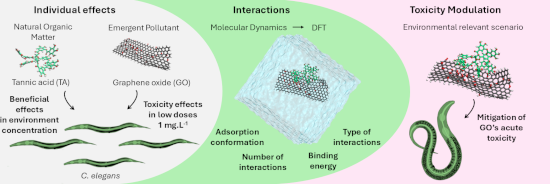
- mg·L−1 TA. Then, to avoid salt interference, the suspension was washed three times with deionized water and dripped on mica substrate. The incubation procedure was repeated for spectroscopy analysis. For Raman and FTIR analysis, the suspensions were dried using the speed-vacuum method at room
- temperature; for XPS, the suspensions were dripped on a silicon substrate. Computational methods MD simulations of interactions between TA and the GO surface were performed in LAMMPS, applying ReaxFF reactive force field [72]. MD simulations were conducted under constant pressure (P) and temperature (T), the


New design of operational MEMS bridges for measurements of properties of FEBID-based nanostructures
Beilstein J. Nanotechnol. 2024, 15, 1273–1282, doi:10.3762/bjnano.15.103
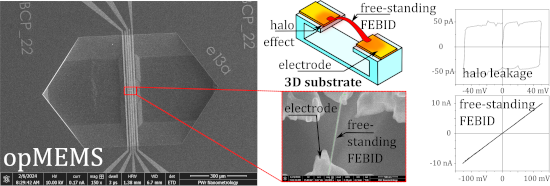
- nanomodification. Finally, we show results of resistance measurements of a free-standing FEBID nanostructure deposited across the RoI of a LiS-embedded opMEMS bridge. Materials and Methods Design of opMEMS bridges The opMEMS were fabricated on an undoped ⟨110⟩ silicon substrate on which a 40 nm silicon nitride
- thermal expansion multiphysics module. The following constraints were imposed: no displacement and no heat sink on the substrate surfaces. Heat sources were defined on the actuation paths as temperature sources of alternating temperatures. The heat source temperature was 293 K (given by the experimental
- only for the visual assessment of the shape and dimensions of a structure, but also for the observation of movement and deflection of an opMEMS. At the same time, the ion beam allows for local doping of the substrate and anisotropic milling. The NanoLab 600i also provides three gas injection systems


Functional morphology of cleaning devices in the damselfly Ischnura elegans (Odonata, Coenagrionidae)
Beilstein J. Nanotechnol. 2024, 15, 1260–1272, doi:10.3762/bjnano.15.102
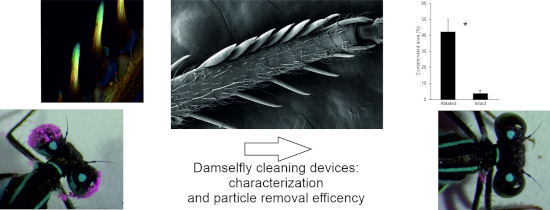
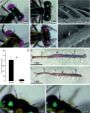
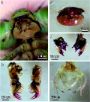
- hairs, while the soft tips ensure effective contact between the attachment system and the substrate. Similarly, the material gradient in grooming devices may enhance adhesion to foreign materials for grooming body surfaces. The soft tip and soft lateral cuticular lamina adapt to various surface


The role of a tantalum interlayer in enhancing the properties of Fe3O4 thin films
Beilstein J. Nanotechnol. 2024, 15, 1253–1259, doi:10.3762/bjnano.15.101
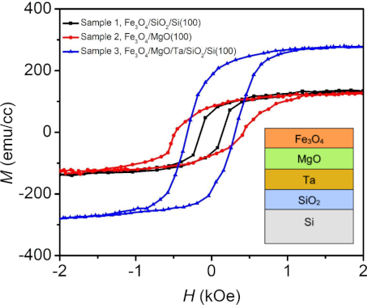
- process [14][15]. The impact of substrate temperature, annealing temperature, gas flow rate, and thickness on enhancing the characteristics of Fe3O4 thin films has been examined [15][16][17][18]. The substrates play a crucial role in directing the growth and enhancing the quality of the crystal, resulting
- [21]. Hong and coworkers deposited Fe3O4 films on a MgO substrate, which exhibited a change in the direction of Fe3O4 crystal formation. The directions (222), (400), and (440) of the Fe3O4 peak matched, respectively, the (111), (100), and (110) orientations of the MgO substrate [22]. In addition
- , Zhang et al. successfully applied a layer of Fe3O4(001) on a MgO(001) substrate. The resulting material exhibited saturation magnetization and magnetic moment values of 407 ± 5 emu/cm3 (3.26 ± 0.04 μB/(f.u.)) and 3.31 ± 0.15 μB/(f.u.), respectively [23]. This paper addresses the deposition of Fe3O4 thin


Dual-functionalized architecture enables stable and tumor cell-specific SiO2NPs in complex biological fluids
Beilstein J. Nanotechnol. 2024, 15, 1238–1252, doi:10.3762/bjnano.15.100
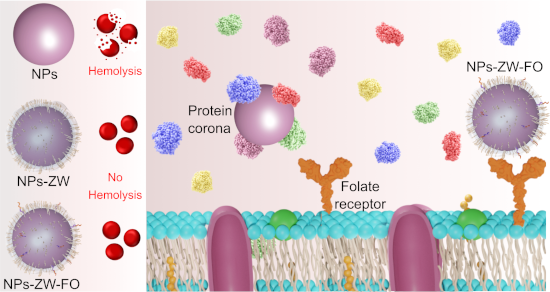
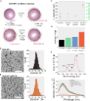
- ), SiO2NPs-ZW-NH2 (with ZW + APTES), and SiO2NPs-ZW-FO (with ZW + APTES + folate). Characterization of SiO2NPs Scanning electron microscopy (SEM) micrographs were obtained in a high-resolution FEI Inspect F50 microscope. A NP suspension (7 μL) was deposited directly onto a copper substrate, dried, and
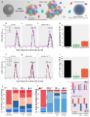
- a chemiluminescent solution (Clarity™ Western ECL Substrate – 1705060, Bio-Rad) for 5 min. Antibody to β-actin (AC-15, Novus) was used as an endogenous control for all samples. To assess the internalization of NPs, HaCat and KB cells were cultured in a 96-well plate (1 × 10⁴ cells/well) for 24 h

Quantum-to-classical modeling of monolayer Ge2Se2 and its application in photovoltaic devices
Beilstein J. Nanotechnol. 2024, 15, 1153–1169, doi:10.3762/bjnano.15.94
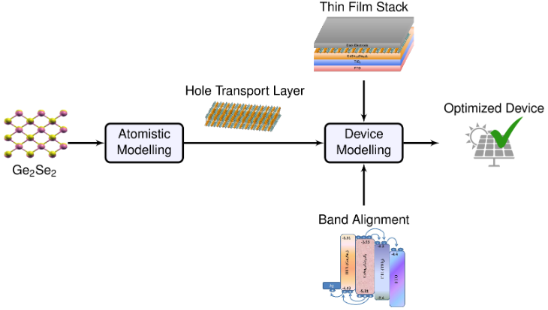
- coating between the absorber and substrate/electrodes in the design of solar cells. Device Modeling The high carrier mobility, optimum bandgap, and suitable optical characteristics of monolayer Ge2Se2 as discussed in the previous section, further motivated us to design a photovoltaic solar cell using




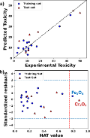
Introducing third-generation periodic table descriptors for nano-qRASTR modeling of zebrafish toxicity of metal oxide nanoparticles
Beilstein J. Nanotechnol. 2024, 15, 1142–1152, doi:10.3762/bjnano.15.93
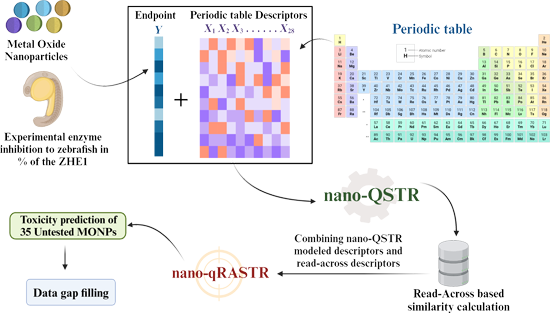
- ), suggesting that nanomaterials composed of atoms with larger radii are associated with a decrease in %EIzebrafish. A larger atomic radius might indicate weaker bonding and less effective interaction with the enzyme or its substrate, leading to less enzyme inhibition. This could be due to the diffuse nature of


Photocatalytic methane oxidation over a TiO2/SiNWs p–n junction catalyst at room temperature
Beilstein J. Nanotechnol. 2024, 15, 1132–1141, doi:10.3762/bjnano.15.92
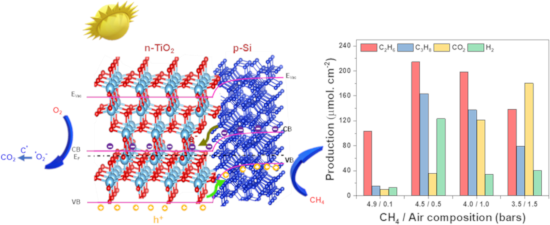
- tools is extremely essential and important [37][38][39]. Herein, we constructed a robust p–n junction catalyst by atomic layer deposition (ALD) of TiO2 thin films on a p-type SiNW substrate for enhancing the photocatalytic efficiency in CH4 oxidation. Pristine p-Si wafers have limited surface area and
- (0.1 M), HF (50 wt %) and H2O (2:1:2 vol %) was prepared and kept at 56 °C for 20 min. The clean Si substrate was rapidly immersed in the etching medium and etched by the Ag+ ions for 25 min to obtain 4 µm long SiNWs. Afterwards, remaining Ag on the Si surface was removed using HNO3 (63 wt %) for 10
- min. The etched p-Si NWs substrate was eventually washed with DI water and dried under N2 flow, as shown in Figure 9. Second, the as-prepared SiNWs sample was transferred to the chamber of an ALD system (R200 Advanced Picosun, 2013) for TiO2 thin film deposition. The TiO2 thin film deposition was


Local work function on graphene nanoribbons
Beilstein J. Nanotechnol. 2024, 15, 1125–1131, doi:10.3762/bjnano.15.91
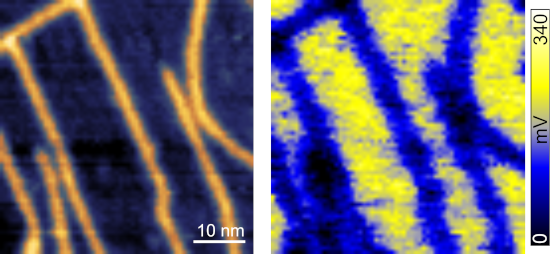
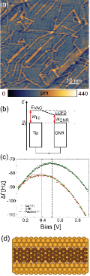
- difference (LCPD) between a probe tip and a surface, related to the work function. Here we use this technique to map the LCPD of graphene nanoribbons grown on a Au(111) substrate. The LCPD data shows charge transfer between the graphene nanoribbons and the gold substrate. Our results are corroborated with
- opening a size-dependent energy gap [6][9]. As in graphene, the Fermi level of GNRs is also strongly influenced by charge transfer between the substrate and the GNR [10], again related to differences in the work function. Here, we take the work function as a local property influenced by local charge, that
- electronic properties, a suitable method to study the charge transfer, that is, the local work function, between a GNR and a metal substrate at the atomic scale is needed. In general, as detailed above, the local work function can provide evidence for structural, electronic, and chemical variations at

![[Graphic 1]](/bjnano/content/inline/2190-4286-15-91-i4.svg?max-width=637&scale=1.18182)
Direct electron beam writing of silver using a β-diketonate precursor: first insights
Beilstein J. Nanotechnol. 2024, 15, 1117–1124, doi:10.3762/bjnano.15.90
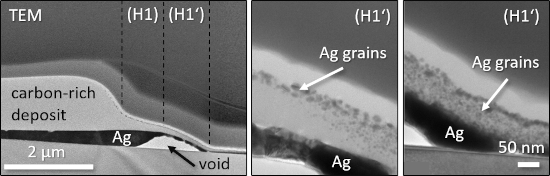
- varying compositions of the deposit and internal inhomogeneities such as the formation of a layered structure consisting of a pure silver layer at the interface to the substrate covered by a deposit layer with low silver content. Imaging after the deposition process revealed morphological changes such as
- fragmentation of adsorbed precursor molecules on a substrate [5][6][7][8][9]. The precursor is typically supplied in gaseous phase. Exploiting the different complex pathways in electron-induced chemistry (such as formation of unstable intermediates and thermal assistance in adsorption and desorption) and the
- , which lead to the pronounced deposition of halos. In addition, all require relatively high substrate temperatures (well above 100 °C) in order to avoid condensation. Hence, thermal effects are expected to play an important role in deposit shape evolution with the enhanced desorption rates contributing