


Search results
Search for "nucleation" in Full Text gives 379 result(s) in Beilstein Journal of Nanotechnology. Showing first 200.
Layered calcium phenylphosphonate: a hybrid material for a new generation of nanofillers
Beilstein J. Nanotechnol. 2018, 9, 2906–2915, doi:10.3762/bjnano.9.269
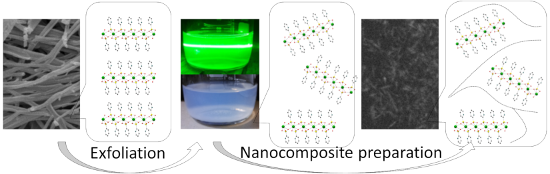
- as nucleation centers; however, these methods were not successful. Although the shape of the particles differs minimally as they are rod-shaped in each case, the thickness of the individual lamellas differs significantly with the selected procedure, as was confirmed by the atomic force microscopy


Site-controlled formation of single Si nanocrystals in a buried SiO2 matrix using ion beam mixing
Beilstein J. Nanotechnol. 2018, 9, 2883–2892, doi:10.3762/bjnano.9.267

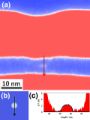
- on the other hand leads to a concentration of the highly mixed volume in the center of the irradiated line and thus predefines the nucleation site of the NC near the position of the highest Si excess. The maximum mixing efficiency dM/dy in the buried oxide – in the center of the line – is


Comparative biological effects of spherical noble metal nanoparticles (Rh, Pd, Ag, Pt, Au) with 4–8 nm diameter
Beilstein J. Nanotechnol. 2018, 9, 2763–2774, doi:10.3762/bjnano.9.258
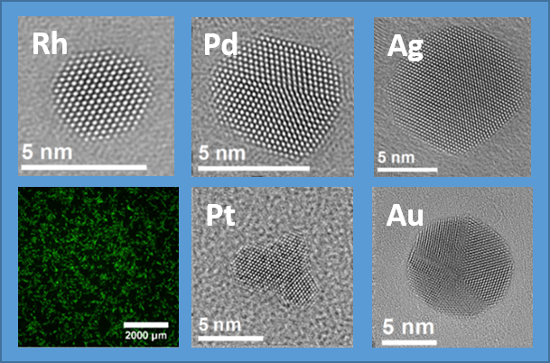
- noble metals has been described in the literature [54]. The shape-controlled synthesis of noble metal nanostructures can be achieved by different experimental procedures that aim to control nucleation, crystal growth, and finally, colloidal stabilization [55][56][57][58]. A very prominent method is the


Oriented zinc oxide nanorods: A novel saturable absorber for lasers in the near-infrared
Beilstein J. Nanotechnol. 2018, 9, 2730–2740, doi:10.3762/bjnano.9.255
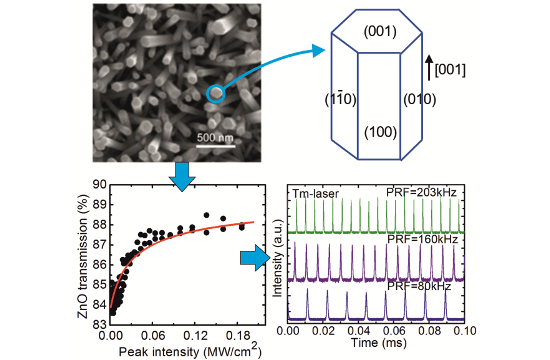
- a hydrothermal process [43]. A ZnO seed layer was initially deposited on cleaned glass slides by spraying 5 mM zinc acetate dehydrate solution in ethanol at 350 °C. The role of this seed layer was to provide nucleation sites for the subsequent growth of ZnO NRs. The seeded substrates were then



Optimization of Mo/Cr bilayer back contacts for thin-film solar cells
Beilstein J. Nanotechnol. 2018, 9, 2700–2707, doi:10.3762/bjnano.9.252
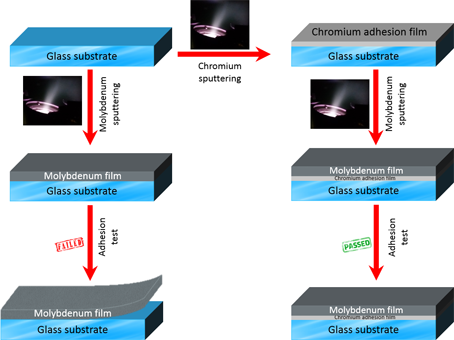
- such as glass or stainless steel [17][18][19][20][21]. Cr forms an oxide interface layer by scavenging the oxygen available on the glass surface during the sputtering process. This creates nucleation centers and promotes nucleation of the next deposited material (in this case Mo), leading to a strong


Size-selected Fe3O4–Au hybrid nanoparticles for improved magnetism-based theranostics
Beilstein J. Nanotechnol. 2018, 9, 2684–2699, doi:10.3762/bjnano.9.251

- be adjusted by heterogeneous nucleation of NPs on noble metal seeds [21][22]. Additionally, such bifunctional Fe3O4–Au NPs are potentially applicable for targeted drug delivery, enhanced hyperthermia, multimodal imaging and theranostics [8][23][24][25][26][27]. In this work, we present the first size



Au–Si plasmonic platforms: synthesis, structure and FDTD simulations
Beilstein J. Nanotechnol. 2018, 9, 2599–2608, doi:10.3762/bjnano.9.241
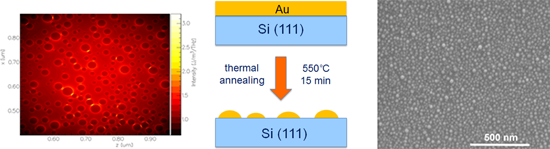
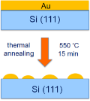
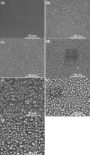
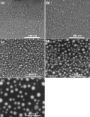
- explained through dewetting. Dewetting of metallic thin and ultra-thin films, although known and widely studied for many years, it is still an interesting phenomenon [11][12][13][14][15][16][17][18]. Dewetting of films is driven by two main processes. The first of them is based on nucleation and growth of
- holes. The growth of holes occurs through the gathering of material from which the layer is made, along the perimeter of the hole, which results in a raised rim around the hole. Nucleation can occur in two ways, as homogeneous nucleation, when holes are caused by small thermal-density fluctuations
- (homogeneous dewetting), or as heterogeneous nucleation, which is caused by defects in the layer or on the interface of the layer and the substrate (heterogeneous dewetting). In the second process, called spinodal dewetting, instability of the film against thermally activated surface waves leads to spontaneous



Pattern generation for direct-write three-dimensional nanoscale structures via focused electron beam induced deposition
Beilstein J. Nanotechnol. 2018, 9, 2581–2598, doi:10.3762/bjnano.9.240
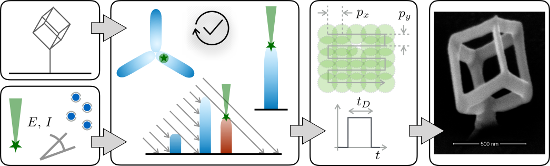
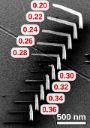
- applied. This process is not only challenging due to the need for accurate alignment of all consecutive slices, but also extremely time consuming, depending on the required resolution in the vertical dimension. Other methods are two-photon lithography [5], heterogeneous nucleation [6] or template-based




Nanocellulose: Recent advances and its prospects in environmental remediation
Beilstein J. Nanotechnol. 2018, 9, 2479–2498, doi:10.3762/bjnano.9.232
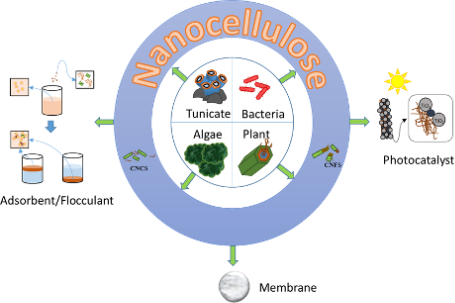
- ) [101]. The abundant surface –OH groups act as hydrophilic sites to accelerate nucleation and growth of inorganic particles, consequently controlling the morphology, particle size, and crystallinity [107]. Such readily available surface –OH groups offer an ideal platform for the fabrication of hybrid


Evidence of friction reduction in laterally graded materials
Beilstein J. Nanotechnol. 2018, 9, 2443–2456, doi:10.3762/bjnano.9.229

- have been used in many recent studies to describe aspects of the transition from static to dynamic friction, the nucleation of rupture wave fronts, and the effects of patterning [32][33][34][35][36]. The SBM method is usually computationally faster than FEM, thus it is more practical for a qualitative


![[Graphic 5]](/bjnano/content/inline/2190-4286-9-229-i10.svg?max-width=637&scale=1.18182) as function of time for the non-graded material: SBM solution for dif...
as function of time for the non-graded material: SBM solution for dif...


Droplet-based synthesis of homogeneous magnetic iron oxide nanoparticles
Beilstein J. Nanotechnol. 2018, 9, 2413–2420, doi:10.3762/bjnano.9.226
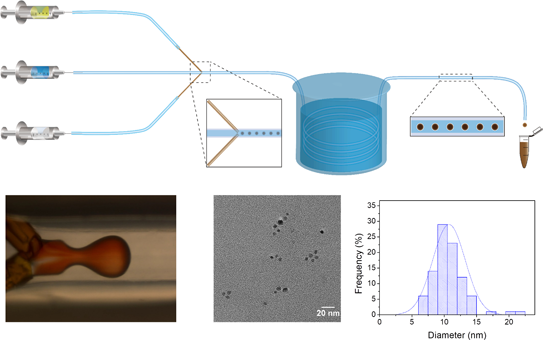
- nucleation and growth predicts a narrowing of the particle size distribution with increasing reaction time [35][36], the opposite is observed in our experiments. This is probably due to classical models not including effects such as Ostwald ripening and, in our case more significant, the aggregation of


Pinning of a ferroelectric Bloch wall at a paraelectric layer
Beilstein J. Nanotechnol. 2018, 9, 2356–2360, doi:10.3762/bjnano.9.220

- parallel to it. Since the domain wall has lower energy when located right at the SrTiO3 layer, one can speculate that a pair of such layers can be used as a nucleation center for favoring antiparallel ferroelectric domain with desirable crystallographic orientation of adjacent domain walls. For example

![[Graphic 2]](/bjnano/content/inline/2190-4286-9-220-i2.svg?max-width=637&scale=1.18182) -oriented 180-degree domain walls in a) pure BaTiO3, b) BaTiO3–SrTiO3 superla...
-oriented 180-degree domain walls in a) pure BaTiO3, b) BaTiO3–SrTiO3 superla...


Electrospun one-dimensional nanostructures: a new horizon for gas sensing materials
Beilstein J. Nanotechnol. 2018, 9, 2128–2170, doi:10.3762/bjnano.9.202
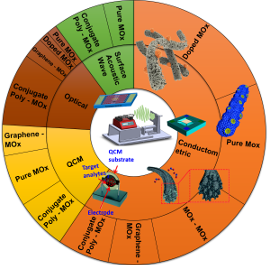
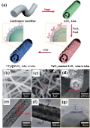
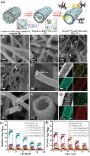
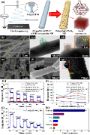
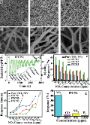
- ]. The average diameter of as-spun fibers is 412 nm which, after annealing, reduces to 315 nm. The fiber diameter increases with increasing Au content. The average diameters of the WO3–Au-0.01M, and WO3–Au-0.1M composite NFs are 350 nm, and 370 nm, respectively. Au NPs act as nucleation sites (seed) on






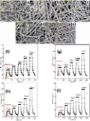


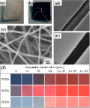
Spin-coated planar Sb2S3 hybrid solar cells approaching 5% efficiency
Beilstein J. Nanotechnol. 2018, 9, 2114–2124, doi:10.3762/bjnano.9.200
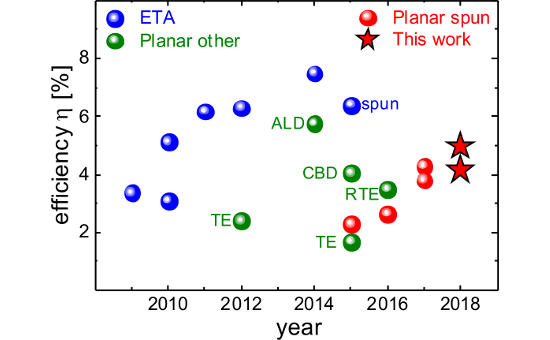
- ] – especially when devices are compared that apply the same HTM and Sb2S3 deposition method [26][29][30][31]. Typically Sb2S3 is fabricated via chemical bath deposition (CBD) [2][39][40][41] with the drawback of a complex growth mechanism that includes heterogeneous nucleation and exponential growth which

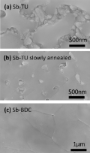


Recent highlights in nanoscale and mesoscale friction
Beilstein J. Nanotechnol. 2018, 9, 1995–2014, doi:10.3762/bjnano.9.190
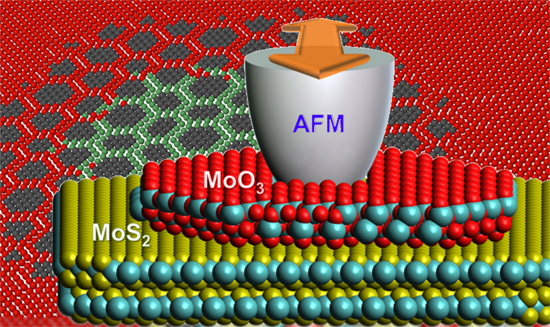
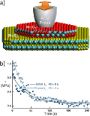
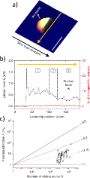
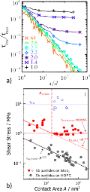
- frictional sliding observed in the case of overlayer/substrate lattice mismatch. Nucleation dynamics characterizes the depinning mechanism of a stiff commensurate colloidal monolayer [167]. In contrast, if the interface is characterized by a lattice mismatch, the presence/absence of static friction depends


Synthesis of carbon nanowalls from a single-source metal-organic precursor
Beilstein J. Nanotechnol. 2018, 9, 1895–1905, doi:10.3762/bjnano.9.181
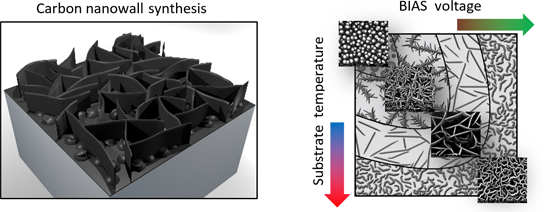
- number of dangling bonds that act as nucleation sites for randomly orientated carbon nanoflakes. 2D growth and the subsequent formation of (few-layer) graphene sheets follow. The nanoflakes being almost vertically aligned on the substrate grow fastest to finally form vertically standing nanosheets. The
- carbon solubility, and it was expected, that this should have a strong influence on the nucleation and growth process of the CNWs. Three different substrate temperatures were used to investigate the influence on the growth process (350, 425 and 500 °C). Furthermore, the bias voltage was set to values of
- length for the growth species at the surface is larger and nucleation occurs more separated in space (similar to the Volmer–Weber growth). Nanoflakes can grow subsequently from these nucleation sites leading to the formation of straight CNWs. This process is similar to the model suggested by Kondo and co


Synthesis of hafnium nanoparticles and hafnium nanoparticle films by gas condensation and energetic deposition
Beilstein J. Nanotechnol. 2018, 9, 1868–1880, doi:10.3762/bjnano.9.179
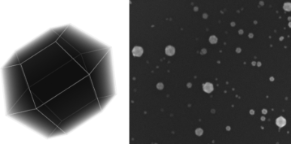
- target (99.95%). Due to collisions with Ar gas, cooling of the sputtered metal atoms takes place, leading to a supersaturated metal atom vapor. Collisions between the cooled metal atoms lead to nucleation and growth of initial clusters. Collisions between these initial cluster ‘seeds’ followed by






Controllable one-pot synthesis of uniform colloidal TiO2 particles in a mixed solvent solution for photocatalysis
Beilstein J. Nanotechnol. 2018, 9, 1715–1727, doi:10.3762/bjnano.9.163
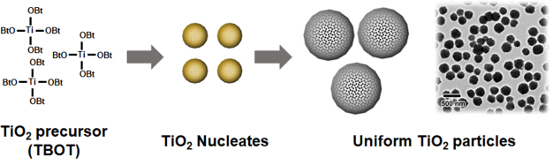
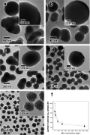
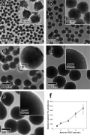
- nucleation/growth rate of TBOT and its hydrolysate is finely controlled by regulating the ethanol–acetonitrile ratio. The spherical curvature and smoothness of the TiO2 layers was also tuned using the ethanol–acetonitrile solvent conditions that resulted from the controlled diffusion rate of TBOT and its
- hydrolysate in a mixed solvent [14][32][33]. Without a sacrificial core material, it should be noted that this sol–gel strategy allows the colloidal TiO2 particles to have finely tuned properties due to the well-controlled nucleation/growth rate of TBOT in mixed solvent conditions. Although this sol–gel
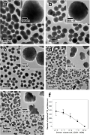
- the particle shape became irregular. These phenomena can be explained by not only the solubility of TBOT and the surfactant, but also by the nucleation-growth kinetics of TBOT in different solvent conditions. It is well-known that acetonitrile is more hydrophobic than ethanol [14]. As the relative ACN


Nitrogen-doped carbon nanotubes coated with zinc oxide nanoparticles as sulfur encapsulator for high-performance lithium/sulfur batteries
Beilstein J. Nanotechnol. 2018, 9, 1677–1685, doi:10.3762/bjnano.9.159
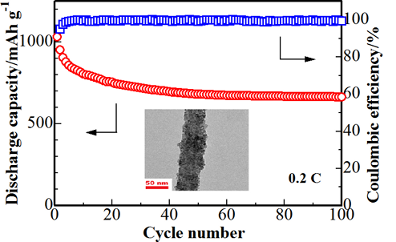
- of nucleation sites in NCNT allows ZnO to uniformly grow on its surface with a small size. Also, NCNT has a higher electrical conductivity due to its additional free electron pairs compared to CNT without nitrogen doping. The ZnO@NCNT composite showed excellent electrochemical properties in lithium


Light extraction efficiency enhancement of flip-chip blue light-emitting diodes by anodic aluminum oxide
Beilstein J. Nanotechnol. 2018, 9, 1602–1612, doi:10.3762/bjnano.9.152

- the LEDs was grown in accordance with a previously published procedure [8]. The textured surface of the PSS occurred at the initial growth site of a GaN nucleation layer. A thick n-type GaN layer (4 μm) doped with Si, a ten-period InGaN/GaN heterostructure used as the MQW, and a p-type GaN layer (120
- nm) doped with Mg were vertically arranged on the nucleation layer in sequence. In the AAO process, a plate layer of aluminum film with a thickness of 2 μm was coated onto the LED surface, and a 0.3 M oxalic acid solution was prepared. The LED was placed into the solution to act as the anode, and a


Inverse proximity effect in semiconductor Majorana nanowires
Beilstein J. Nanotechnol. 2018, 9, 1184–1193, doi:10.3762/bjnano.9.109

- Novgorod, 23 Gagarina, 603950 Nizhny Novgorod, Russia 10.3762/bjnano.9.109 Abstract We study the influence of the inverse proximity effect on the superconductivity nucleation in hybrid structures consisting of semiconducting nanowires placed in contact with a thin superconducting film and discuss the


Understanding the performance and mechanism of Mg-containing oxides as support catalysts in the thermal dry reforming of methane
Beilstein J. Nanotechnol. 2018, 9, 1162–1183, doi:10.3762/bjnano.9.108
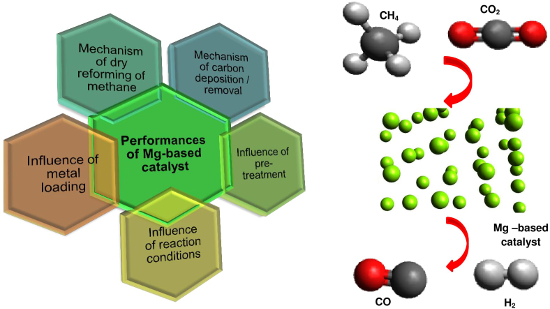
- . Rapid reactions occur between the active plasma species and catalyst precursors compared to the thermal decomposition technique. Therefore, this may encourage the rapid nucleation of the crystals under plasma treatment. The application of low temperature may result in slow crystal growth, which






Review on nanoparticles and nanostructured materials: history, sources, toxicity and regulations
Beilstein J. Nanotechnol. 2018, 9, 1050–1074, doi:10.3762/bjnano.9.98

- the formation of Ag NPs along with possible nucleation mechanisms are presented in recent review articles [153][181][182][183][184]. This list assists in identifying the crucial factor that induces nanoparticle nucleation. This identification results in the preparation of nanometer-sized targeted



Fatigue crack growth characteristics of Fe and Ni under cyclic loading using a quasi-continuum method
Beilstein J. Nanotechnol. 2018, 9, 1000–1014, doi:10.3762/bjnano.9.93

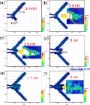
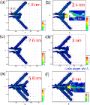
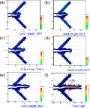
- . Zhang et al. have examined the effect of the phase boundary on the fatigue crack propagation in an α/β-iron biphasic system under cyclic tensile loading [13]. They found that the nucleation of new cracks typically appears at the phase boundary because of dislocation pile-ups. However, most of these




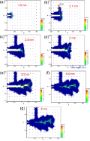
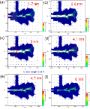

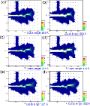


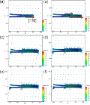


Effect of annealing treatments on CeO2 grown on TiN and Si substrates by atomic layer deposition
Beilstein J. Nanotechnol. 2018, 9, 890–899, doi:10.3762/bjnano.9.83
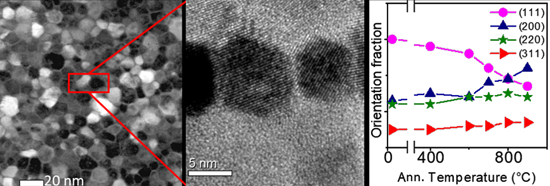
- depends also on the nature of the surface. Metallic surfaces offer less centers of nucleation for diketonate molecules, implying a further reduction of the complete surface coverage and leaving space between Ce atoms to be occupied by O atoms during the subsequent O3 pulse. The alternating presence of Ce
- study of the first deposition steps of CeO2 by thermal ALD upon different substrates is required to fully elucidate the mechanism of the growth and nucleation of CeO2, and possibly validate our proposed phenomenological model. A possible approach would be the study by dedicated in situ ALD growth at





