Search results
Search for "calculations" in Full Text gives 792 result(s) in Beilstein Journal of Nanotechnology. Showing first 200.
Synthesis of carbon dot-mediated gold nanostructures: experimental and quantum chemical insights into turn-on fluorescence sensing of N-acetylcysteine
Beilstein J. Nanotechnol. 2026, 17, 1103–1116, doi:10.3762/bjnano.17.75
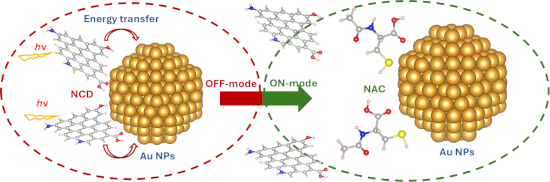
- fluorescence could be efficiently restored upon the addition of N-acetylcysteine (NAC), enabling the development of an “off-on” fluorescent sensing platform. The sensing mechanism was systematically elucidated through a combination of spectroscopic studies and density functional theory calculations, revealing
- Au–S bond and the subsequent recovery of the fluorescent signal. The restored fluorescence intensity exhibited a proportional relationship with the concentration of the added NAC. In addition to experimental characterization, density functional theory (DFT) calculations have emerged as a powerful
- electronic changes responsible for fluorescence quenching and recovery [43][44][45]. Therefore, integrating DFT calculations with experimental studies offers a comprehensive understanding of the sensing mechanism and facilitates the rational design of highly sensitive fluorescent nanosensors. Although carbon


Influence of an external electric field on the catalytic CO oxidation of nanoscaled CeO2 and its La3+ and Gd3+ congeners
Beilstein J. Nanotechnol. 2026, 17, 1028–1038, doi:10.3762/bjnano.17.70
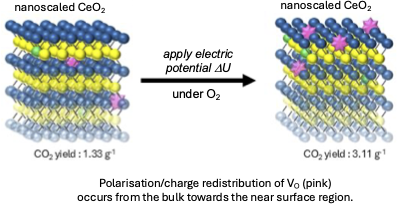
- -dependent measurements, operando spectroscopy, oxygen-isotope exchange, conductivity measurements, or theoretical calculations, would be required to verify the microscopic contributions of these processes. Nevertheless, the present results indicate that applying an electrical bias to reducible oxide


Synthesis and characterization of RF-sputtered ZnTe/Cu2−xTe thin films for solar cell applications
Beilstein J. Nanotechnol. 2026, 17, 1016–1027, doi:10.3762/bjnano.17.69
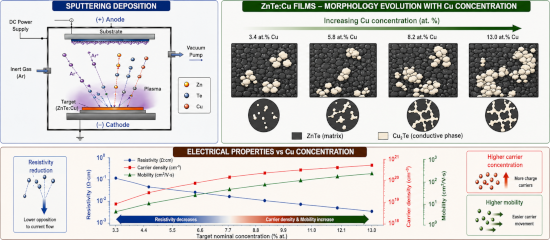
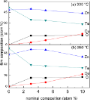
- verified to exhibit ohmic behavior prior to measurement. Film thickness was determined by profilometry and used for resistivity calculations. Since the electrical transport properties of RF-sputtered undoped ZnTe are well established in the literature, they are not repeated here [42][43]. Figure 7 focuses



Ultrasonic irradiation in the synthesis of nanohydroxyapatite: a chemically friendly technique for improving hemocompatibility and antibiofilm applications
Beilstein J. Nanotechnol. 2026, 17, 991–1015, doi:10.3762/bjnano.17.68
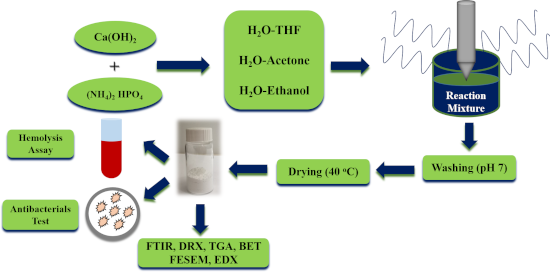
- sonochemical theory calculations and experimental evidence, this process can generate local temperatures as high as 3000 K and local pressures as high as 1000 atm, heating and cooling the medium at rates as high as 109 K/s [16]. In this harsh reaction environment, ions, free radicals, and other highly reactive




Enhanced erosion resistance and radiation stability of WC–WO3 nanocomposite films under 100 keV Kr+ ion irradiation
Beilstein J. Nanotechnol. 2026, 17, 922–934, doi:10.3762/bjnano.17.65
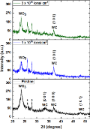
- , , with k being a constant (shape factor; k = 0.9), λ the wavelength of the X-rays, β the full width at half maximum (FWHM) of the peak (in radians), and θ the Bragg angle (in degrees). The calculations showed that the S1 film had a grain size of approximately 17.5 nm, while the S2 film had a grain size
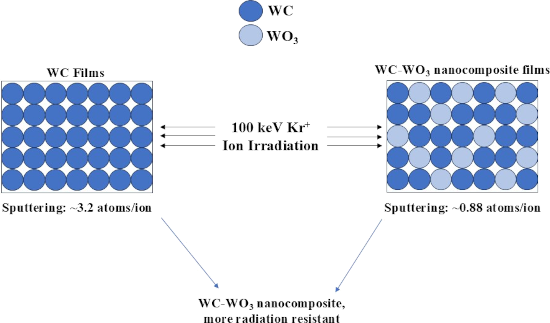
- Equation 1, was found to be approximately 3.2 atoms/ion. This indicates higher sputtering of W in WC films compared to WC–WO3 nanocomposite films. Table 4 shows the comparision of sputter rate in the samples S1 and S2 estimated from SIMNRA simulations. Theoretical calculations using TRIM [80] simulations



Tailoring Ag–Pt nanoalloys through solid-state dewetting: structural and optical insights
Beilstein J. Nanotechnol. 2026, 17, 748–759, doi:10.3762/bjnano.17.52

- Ag or Pt [27][28][29]. However, recent studies have reported the formation of Ag–Pt nanoalloys with nearly equal ratios of Ag and Pt atoms, supported by both theoretical calculations [30][31][32] and experimental investigations [27][33][34][35], raising several important questions worth answering
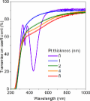
- calculations taking into account the film thicknesses, densities, molar masses, and resulting atomic concentrations of the constituent metals. The total thickness of the deposited multilayer was maintained at 8 nm, which constituted the main measurement series. Due to the well-known plasmonic properties of




Recent progress in enhancing built-in electric fields of perovskite solar cells via junction engineering
Beilstein J. Nanotechnol. 2026, 17, 602–621, doi:10.3762/bjnano.17.42



Fractional shot noise of an SU(N) Kondo system
Beilstein J. Nanotechnol. 2026, 17, 515–540, doi:10.3762/bjnano.17.34
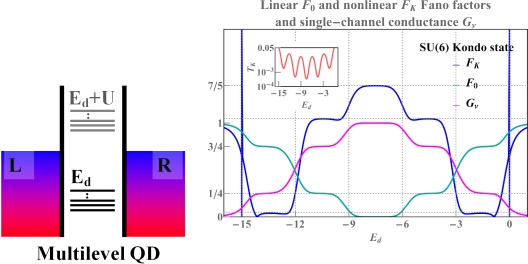
- systems. We address our calculations to multilevel two-dimensional electron gas (2DEG) quantum dots [49] and to single-walled and multiwalled carbon nanotube QDs [50][51]. It is worth mentioning that these symmetries are of a fundamental nature and concern systems from various, sometimes very distant
- fluctuations. Therefore, this method cannot be used for analysis of nonlinear noise and non-diagonal susceptibilities. One way to solve this problem is to perform tedious calculations of fluctuations of boson fields around the saddle point [89][90]. The role of interaction beyond mean-field approximation can
- , the presented study is an analysis based on FL theory with quasiparticles defined within SBMFA. To extend the calculations for high voltages, we went beyond MFA description of slave bosons and determined the auxiliary bosons in a self-consistent procedure including FL corrections. We illustrated


![[Graphic 127]](/bjnano/content/inline/2190-4286-17-34-i187.svg?max-width=637&scale=1.18182)

Probing internal continua and atomic ultrafast charge transfer within size-controlled nanoparticles by post-collision interaction in core-hole clock spectroscopy
Beilstein J. Nanotechnol. 2026, 17, 505–514, doi:10.3762/bjnano.17.33
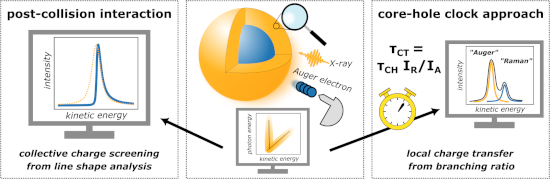
- PCI asymmetry parameters ξ and shown as solid vertical lines, correspond to the conduction band minima (CBM). This interpretation is compatible with electronic structure calculations of ZnS nanoparticles, according to which the Fermi level is approximately 0.4 eV below the CBM [46]; we obtained a



Defects and defect-mediated engineering of two-dimensional materials: challenges and open questions
Beilstein J. Nanotechnol. 2026, 17, 454–488, doi:10.3762/bjnano.17.31
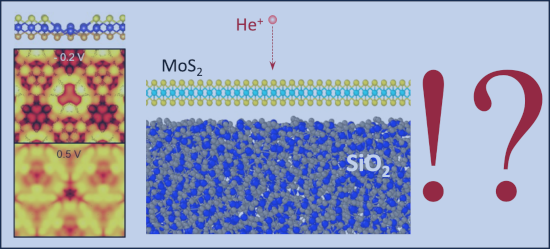
- concentration of individual S vacancies and a lower concentration of S vacancy dimers in exfoliated single-layer films [61]. In contrast, density functional theory (DFT) calculations reveal that molecular oxygen reacts very readily with larger S vacancy clusters (three or more vacancies), with O2 dissociation
- information is rarely available experimentally, owing to difficulties in creating on demand a single type of defect of known concentration. However, type and concentration of defects can be exactly defined in calculations, which is promising for producing reference data. In the past, such calculations have
- resolution for that [113] (Figure 5c). What are the challenges in the calculations of Raman spectra of defective 2D materials? In order to correctly describe how the phonons of the pristine material are affected by defects, calculations of Raman spectra require large supercells to describe the low defect





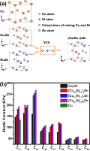
First-principles study on elastic properties of Cu, (Cu1−x,Nix)3Sn and interfacial mechanical properties of (Cu1−x,Nix)3Sn/Cu in the lead-free solder joint
Beilstein J. Nanotechnol. 2026, 17, 428–439, doi:10.3762/bjnano.17.29
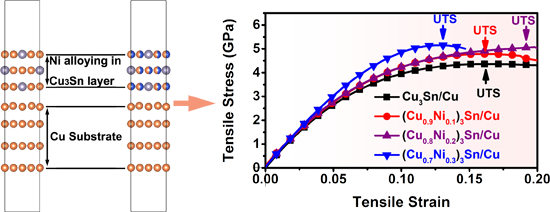
- orientation relationship of (001)ε//(111)Cu and [100]ε//[−110]Cu; the underlying mechanisms responsible for the influence of Ni alloying on the work of adhesion and interfacial toughness are demonstrated. Methods In this study, first-principles calculations within the framework of density functional theory
- were implemented by the ABINIT package [14]. The norm-conserving pseudopotentials [15] and Perdew–Burke–Ernzerhof generalized gradient approximation (GGA) of the exchange–correlation functional [16] were adopted for the calculation. Regarding the calculations on the intermetallics (CuxNi1−x)3Sn
- efficiency without losing the accuracy by reducing the model size of the alloy systems. Considering the phase stability of (CuxNi1−x)3Sn [22], the content of Ni was set within the range from 0 to 30 atom %. As far as the calculations of the structure optimizations and elastic properties are concerned, a


Nanoinformatics: spanning scales, systems and solutions
Beilstein J. Nanotechnol. 2026, 17, 423–427, doi:10.3762/bjnano.17.28
- classical molecular dynamics and ab initio calculations revealed that TA preferentially binds to the most reactive sites on GO surfaces via oxygen-containing groups or the carbon matrix. The binding energy was dominated by van der Waals interaction forces. A dose-dependent mitigating effect of TA on the

Polycatecholamine nanocoatings on stainless steel: the effect on attachment of human fibroblasts and platelets
Beilstein J. Nanotechnol. 2026, 17, 365–380, doi:10.3762/bjnano.17.25
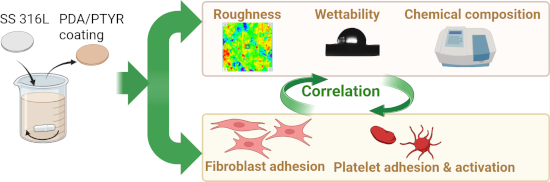
- activation (round platelet, max. 1–2 pseudopodia) and strong activation (many pseudopodia, “hedgehog-like”). For each sample, eight FOVs were acquired. A single FOV corresponded to an area of 3162 µm2, resulting in a total analyzed surface area of 25296 µm2 per sample. Statistical analysis All calculations
- and graphs were made using OriginPro 9. Before correlation coefficient calculations, all datasets were assessed for normality with Shapiro–Wilk tests, and all p values were greater than 0.05; thus, the normality of the data was assumed. The levels of correlation were indicated with Pearson’s




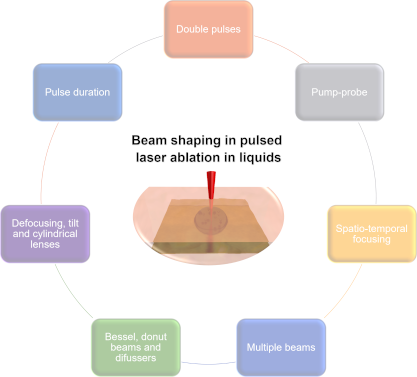
Beam shaping techniques for pulsed laser ablation in liquids: Unlocking tunable control of nanoparticle synthesis in liquids
Beilstein J. Nanotechnol. 2026, 17, 309–342, doi:10.3762/bjnano.17.22



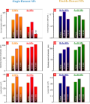


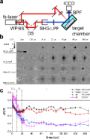


Multilayered hyperbolic Au/TiO2 nanostructures for enhancing the nonlinear response around the epsilon-near-zero point
Beilstein J. Nanotechnol. 2026, 17, 251–261, doi:10.3762/bjnano.17.17
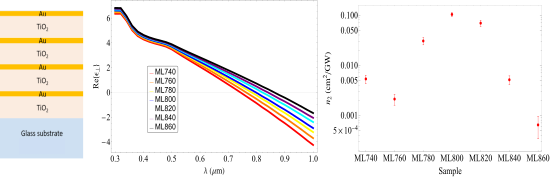
- Recherche et de l’Innovation, France (ECOS Nord M19P01), and NANO-PHOT Ecole Universitaire de Recherche, France (ANR-EURE-0013). Allocations Doctorales Région Grand Est, France (Qsim). We conducted the calculations with the resources of the French regional Grand-Est HPC Center ROMEO.


Structure-dependent thermochromism of PAZO thin films: theory and experiment
Beilstein J. Nanotechnol. 2026, 17, 186–199, doi:10.3762/bjnano.17.12
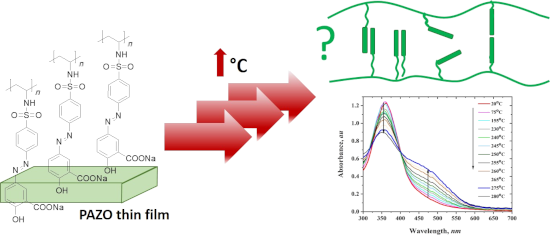
- calculations further support these findings, indicating that temperature-dependent intermolecular interactions and conformational changes play a significant role in shaping the optical behavior of the films. These results provide new insights into the structure–property relationships underlying thermochromism
- ) calculations were employed to model possible supramolecular architectures, allowing us to explore the correlation between thermally induced optical responses and the underlying molecular-level organization. Results and Discussion Experimental results Temperature dependence of absorption spectra Absorption
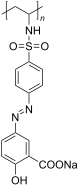
- the PAZO polymer with a relatively accurate but computationally expensive method (DFT calculations), models of a fragment of the polymer main chain with four side chains were considered (Figure 7). PAZO is a polymer with ionized end groups and the orientation of PAZO chromophores is highly dependent


Capabilities of the 3D-MLSI software tool in superconducting neuron design
Beilstein J. Nanotechnol. 2026, 17, 122–138, doi:10.3762/bjnano.17.8
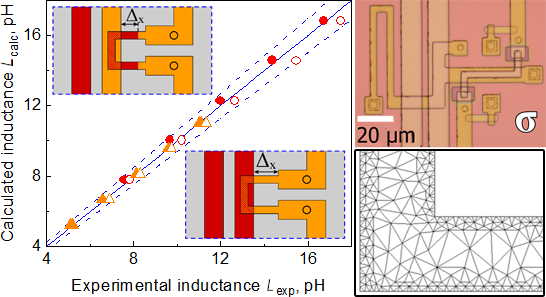
- . Details of neurons decomposition and inductance calculations are given in Appendix B. The fabrication process was the same as described above. All inductive arms of the neurons were formed in the M2 layer, while the control line and the loop of the readout SQUID lied mostly in the M3 layer. Thus, when
- primary subject of this article is the detailed verification of 3D-MLSI software tool. The main task of this inductance extractor is an evaluation of two-terminal partial inductances [48] associated with equivalent scheme ones. The general mathematical model for all superconductor inductance calculations
- total time and memory needed for calculations. In practice, the O(N2) part can be comparable with the O(N3) solution time for moderate N values. Advanced matrix compression methods can be implemented in future versions to be used for dense multilayered schemes of large sizes. A good agreement with the



Microscopic study of the intermediate mixed state in intertype superconductors
Beilstein J. Nanotechnol. 2026, 17, 57–62, doi:10.3762/bjnano.17.5
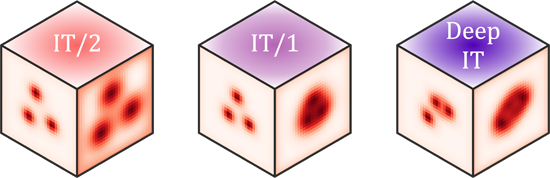
- /bjnano.17.5 Abstract We present a comprehensive microscopic study of the intermediate mixed state in superconductors of the intertype (IT) regime separating types I and II. Using fully self-consistent Bogoliubov–de Gennes calculations for a lattice model, we analyze few-vortex configurations across the
- entire temperature range 0 < T < Tc. Our results demonstrate the key features of IT superconductivity, namely, nonmonotonic vortex interactions and formation of vortex clusters. Using results of the calculations, we construct a “temperature–coupling” phase diagram that delineates distinct superconducting
- microscopic foundation for the IT superconductivity and extend its description beyond the vicinity of the critical temperature. Keywords: Bogoliubov–de Gennes equations; intertype regime; microscopic calculations; superconductivity; vortices in superconductors; Introduction The magnetic response of


Competitive helical bands and highly efficient diode effect in F/S/TI/S/F hybrid structures
Beilstein J. Nanotechnol. 2026, 17, 15–23, doi:10.3762/bjnano.17.2
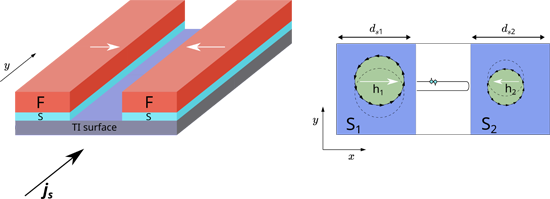
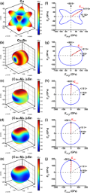
- (a) corresponds to γB1 = γB2 = 0.5, (b) γB1 = γB2 = 0.4, (c) γB1 = γB2 = 0.3, and (d) γB1 = γB2 = 0.2. Funding The analytical calculations were supported by MIPT via the project FSMG-2023-0014. The numerical calculations were supported by the megagrant of the Ministry of Science and Higher Education


![[Graphic 16]](/bjnano/content/inline/2190-4286-17-2-i31.svg?max-width=637&scale=1.18182)
![[Graphic 17]](/bjnano/content/inline/2190-4286-17-2-i32.svg?max-width=637&scale=1.18182)


Terahertz-range on-chip local oscillator based on Josephson junction arrays for superconducting quantum-limited receivers
Beilstein J. Nanotechnol. 2025, 16, 2296–2305, doi:10.3762/bjnano.16.158
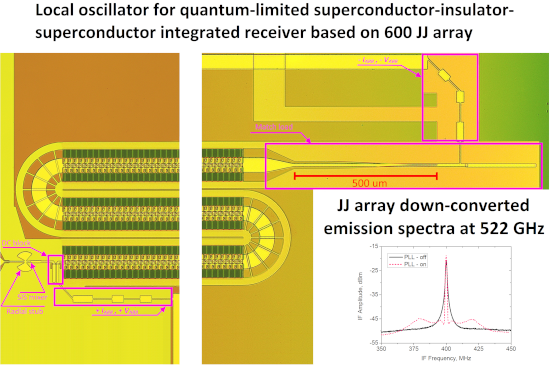
- fabrication technology of the samples. In the second we describe the measurement setup and methodology. After that we present the results of the measurements with the calculations and simulation. Finally, we discuss the feasibility of the LO based on JJ arrays of the proposed topology. Experimental Samples
- to the fact that not all of the junctions in the array are synchronized [50]. Results and Discussion Operation frequency band of the samples We performed numerical calculations in order to design the coupling circuits between the JJ array and the SIS mixer. The calculation methods for the
- London penetration depth [18][53]. The experimental results for the S21 coefficient of the 300–550 GHz and 500–700 GHz matching circuits and the calculations are shown in Figure 6a and Figure 6b, respectively. The experimental values of Ipump are normalized to Ig. However, the experiment shows a


Geometry-controlled engineering of the low-temperature proximity effect in normal metal–superconductor junctions
Beilstein J. Nanotechnol. 2025, 16, 2265–2273, doi:10.3762/bjnano.16.155
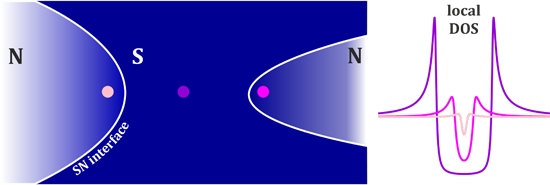
- ][28]. However, at low or zero temperatures, self-consistent Bogoliubov–de Gennes calculations show that the decay is no longer exponential. In the ballistic regime, the pair amplitude instead follows a power-law decay [7][29][30][31][32], where ξ is the proximity length. The exponent α depends on the
- control the proximity effect. This geometric degree of freedom provides a novel route for engineering and optimizing the performance of superconducting hybrid devices. Results and Discussion Model We perform the calculations on a system described by the two-dimensional Hubbard model, defined through the
- quasi-1D superconducting wire (which can only exist for moderate |η| due to fluctuations) immersed in the NM, essentially a “superconducting wire in a normal sea” [55][56]. Representative configurations for different η values used in subsequent calculations are schematically illustrated by white dashed


Hartree–Fock interaction in superconducting condensate fractals
Beilstein J. Nanotechnol. 2025, 16, 2177–2182, doi:10.3762/bjnano.16.150
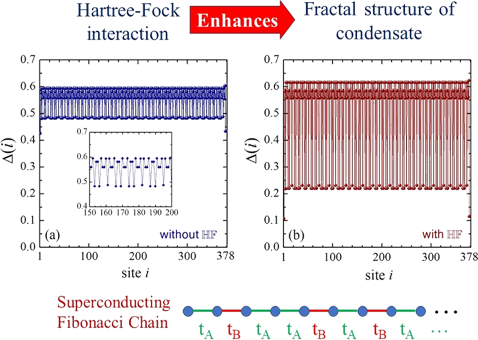
- units of tB). Our calculations are performed away from the half-filling as this regime was shown to produce a uniform electronic distribution in Fibonacci chains [22], where the HF potential does not alter superconducting properties. Here, we adopt an electron density of ne = 0.5. Our qualitative


Electron transport through nanoscale multilayer graphene and hexagonal boron nitride junctions
Beilstein J. Nanotechnol. 2025, 16, 2132–2143, doi:10.3762/bjnano.16.147
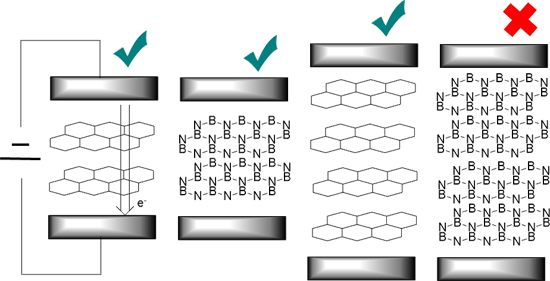
- ) method combined with density functional theory (DFT) to compare electron transport through several layers of nanoscale graphene and hexagonal boron nitride (h-BN). Calculations were performed for one to six layers, corresponding to thicknesses of 0.5–3.0 nm, respectively. Electron transport was computed
- [22]. The electron tunneling through ultrathin h-BN crystalline barriers was investigated recently with experimental techniques showing exponential decay of the current with the number of layers [23]. Accurate density functional theory (DFT) calculations demonstrated the bandgap change in one to eight
- All calculations in this study are performed with NEGF combined with LCAO DFT as implemented in the QantumWise ATK software package [29]. We use the Perdew–Burke–Ernzerhof (PBE) functional [30] combined with the Fritz-Haber-Institut (FHI) pseudopotentials. A single-zeta polarized basis set was used


Molecular and mechanical insights into gecko seta adhesion: multiscale simulations combining molecular dynamics and the finite element method
Beilstein J. Nanotechnol. 2025, 16, 2055–2076, doi:10.3762/bjnano.16.141
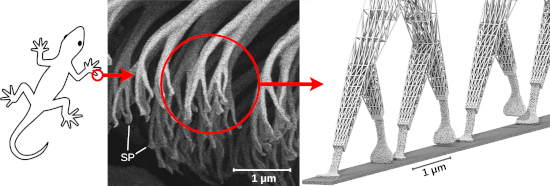
- orientations with their substrates were simulated in 16 parallel MD calculations. The skeleton of our multiscale seta was created by distributing branching points along two parabolas (Figure 3) as described by Sauer and colleagues [21]. Figure 3 illustrates the construction of the seta FE mesh. The seta was
- element mesh with nodes, is the continuum domain; and the overlapping grey region, which includes coupling components such as anchor points (APs) and harmonic springs, is the bridging domain. Calculations alternate between MD and FEM. The finite element mesh and anchor points (see subsection “Anchor







The cement of the tube-dwelling polychaete Sabellaria alveolata: a complex composite adhesive material
Beilstein J. Nanotechnol. 2025, 16, 1998–2014, doi:10.3762/bjnano.16.138
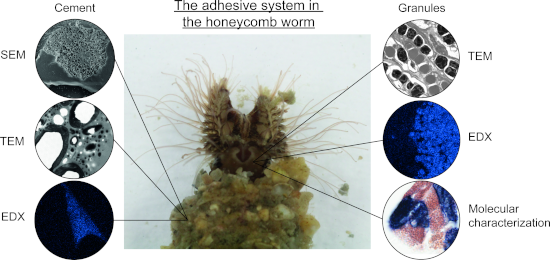
- well as their high phosphorus content [9]. In S. alveolata, TEM revealed an identical lamellar structure between inclusions and spheroids. The link between these two structures is also corroborated by simple volume calculations (i.e., the volume of the largest inclusions equals the volume of the cortex