Search results
Search for 林海雪原第11章概括 in Full Text gives 2627 result(s) in Beilstein Journal of Nanotechnology. Showing first 200.
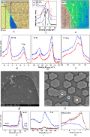
Piezoelectricity of hexagonal boron nitrides improves bone tissue generation as tested on osteoblasts
Beilstein J. Nanotechnol. 2025, 16, 1068–1081, doi:10.3762/bjnano.16.78
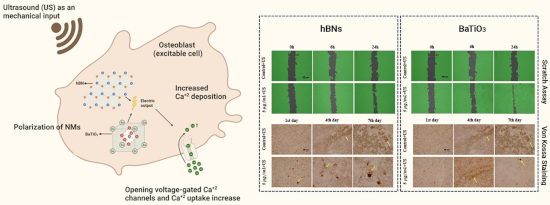
- ][11][12][13]. However, while bone remodeling via piezoelectricity supports regular healing, it is typically insufficient to repair severe bone injuries. Therefore, external stimulation is often required to aid and accelerate recovery. Conventional methods for bone repair, such as autografts and


Soft materials nanoarchitectonics: liquid crystals, polymers, gels, biomaterials, and others
Beilstein J. Nanotechnol. 2025, 16, 1025–1067, doi:10.3762/bjnano.16.77
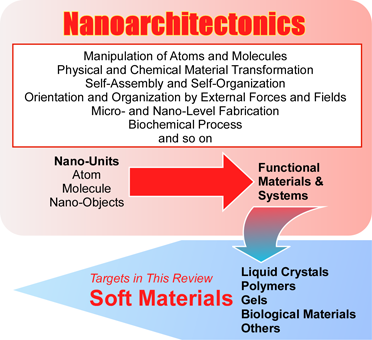
- living organisms. From an alternative standpoint, living things can be regarded as sophisticated soft functional systems, wherein multiple functions operate softly in concert and are highly efficacious [11][12][13][14][15]. With the exception of the skeleton, they can be considered to be almost soft
- -initiated one-by-one electrochemical addition and assembly of bifunctional monomers with electroactive redox units under alternating positive and negative potentials (Figure 11) [263]. The synthesis of uniaxial end-on conjugated metallopolymers in centimeter-sized domains was successfully achieved. SAMs of


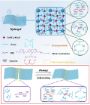




Multifunctional properties of bio-poly(butylene succinate) reinforced with multiwalled carbon nanotubes
Beilstein J. Nanotechnol. 2025, 16, 1014–1024, doi:10.3762/bjnano.16.76
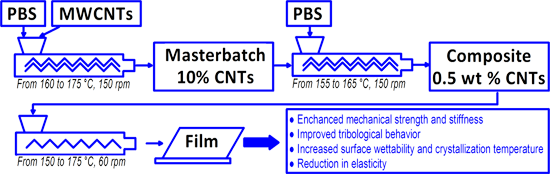
- morphology and properties of the polymer matrix by altering its structure, crystallinity, thermal stability, and mechanical behavior [9][10][11]. CNTs can be classified into two basic types, namely, single-walled carbon nanotubes (SWCNTs) and multiwalled carbon nanotubes (MWCNTs). SWCNTs exhibit slightly
- many researchers [9][10][11][12][13][14][15][16]. Regarding PBS-based nanocomposites, most studies focus on the influence of CNTs (including modified CNTs) on their thermal behavior [17][18][19], crystallization [20][21][22], structure [14][17][21][22][23], and biodegradability [12]. PBS/CNT



A calix[4]arene-based supramolecular nanoassembly targeting cancer cells and triggering the release of nitric oxide with green light
Beilstein J. Nanotechnol. 2025, 16, 1003–1013, doi:10.3762/bjnano.16.75
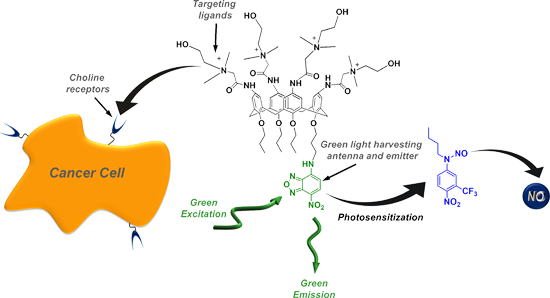
- of an amphiphilic calix[n]arene covalently integrating specific targeting ligands showed improved cell targeting capability [11]. Besides, nanoassemblies of calix[4]arene derivatives proved to be also very suited host supramolecular nanoreactors to amplify the photochemical performances of otherwise
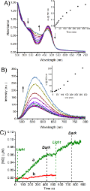
- observed upon exposure of an air-equilibrated NOPD 2 (100 µM) solution at λexc = 420 nm after 0, 6, 11, 20, 30, 40, 60, 80, 100, 130, and 160 min. (A) Absorption spectrum of the supramolecular complex 1·2 in water; [1] = 50 µM; [2] = 40 µM. The inset shows the size distribution of the same solution of 1·2


Time-resolved probing of laser-induced nanostructuring processes in liquids
Beilstein J. Nanotechnol. 2025, 16, 968–1002, doi:10.3762/bjnano.16.74
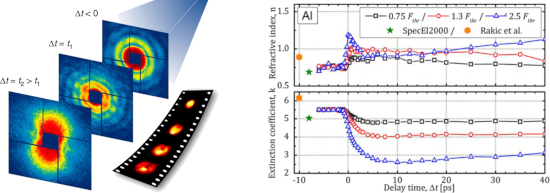
- exchanging energy and material with the excited loci. LSPC commonly encompasses laser ablation in liquid (LAL), which allows for producing NPs from a surface of virtually any solid [6][7][8][9], laser fragmentation in liquid (LFL) to further reduce dimensions of particles down to few-atom clusters [10][11


Shape, membrane morphology, and morphodynamic response of metabolically active human mitochondria revealed by scanning ion conductance microscopy
Beilstein J. Nanotechnol. 2025, 16, 951–967, doi:10.3762/bjnano.16.73
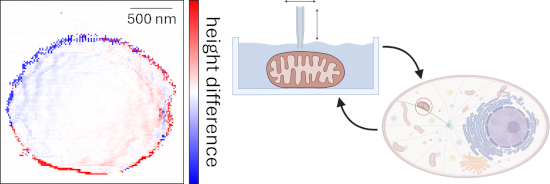
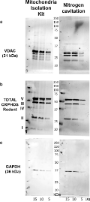
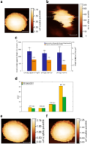
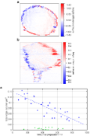
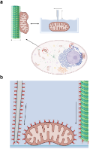
- [6][7][8][9]. These processes are integral to maintaining cellular homeostasis [10], and disruptions in mitochondrial function are implicated in numerous diseases, including Parkinson’s disease [11][12][13], cardiovascular diseases [14][15][16], Alzheimer’s disease [12][17][18], obesity [19], and



Tendency in tip polarity changes in non-contact atomic force microscopy imaging on a fluorite surface
Beilstein J. Nanotechnol. 2025, 16, 944–950, doi:10.3762/bjnano.16.72
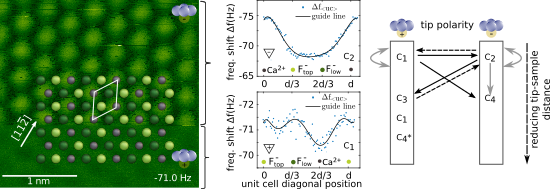
- a vital role as the tip-terminating cluster uniquely interacts with the different surface atoms. At cryogenic temperatures, the use of functionalized tips such as as CO-terminated tips [6][11], Xe-terminated tips [12][13][14] and O-terminated Cu tips [15][16][17] has become the state-of-the-art for
- -ordered CaF2(111) [24][25], see [26] for further preparation details. RT experiments were performed with a UHV 750 AFM system (RHK, Troy, MI USA) operated at a base pressure of 7.0 × 10⁻¹¹ mbar. An Ar+ ion-sputtered silicon cantilever with an eigenfrequency of around 300 kHz and a quality factor of 22000
- ⟨11−2⟩ directions, where a0 is the bulk lattice constant of CaF2. Atomic assignment follows the model introduced in [10], with the solid line in panels (b, c, e, f) representing a polynomial fit of degree seven as a guide to the eye. Examples of polarity-changing tip changes on CaF2(111). (a) Δf data


Synthesis of biowaste-derived carbon-dot-mediated silver nanoparticles and the evaluation of electrochemical properties for supercapacitor electrodes
Beilstein J. Nanotechnol. 2025, 16, 933–943, doi:10.3762/bjnano.16.71
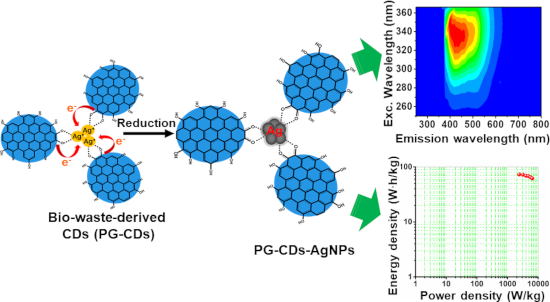
- is essential [11][12]. The cost-effective production of efficient electrode materials for supercapacitors is also very important. Researchers are exploring a wide range of new and affordable electrode materials, while maintaining the superior power and energy density. In this work, we have
- successfully adopted for the production of AgNPs using CDs produced from waste biomass as a stabilizing and reducing agent. The TEM analysis showed that the produced PG-CDs-AgNPs have more uniform surfaces and spherical shapes with an average particle size of 10–11 nm. The synthesized PG-CD-AgNPs are


Structural and magnetic properties of microwave-synthesized reduced graphene oxide/VO2/Fe2O3 nanocomposite
Beilstein J. Nanotechnol. 2025, 16, 921–932, doi:10.3762/bjnano.16.70
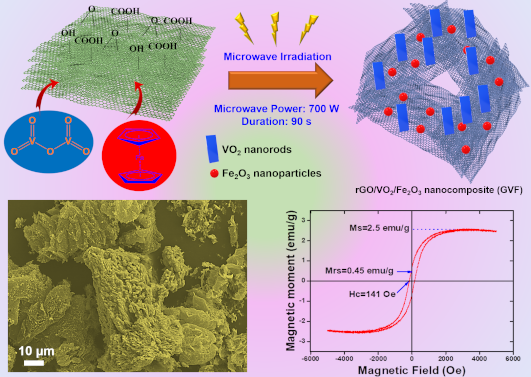
- for supercapacitor applications. In another work, Mn3O4 nanograins-intercalated rGO NC was synthesized through the MW-assisted hydrothermal approach, which showed superior oxygen reduction reaction (ORR) activity [11]. Aside from the oxides, mixed metal sulfides are likewise reported to be combined



Focused ion beam-induced platinum deposition with a low-temperature cesium ion source
Beilstein J. Nanotechnol. 2025, 16, 910–920, doi:10.3762/bjnano.16.69
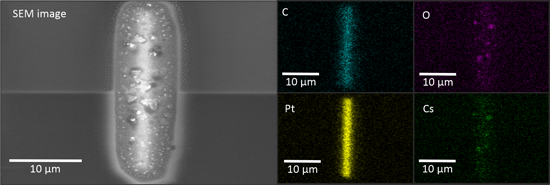
- are more advanced with respect to source development because of their relatively low requirements regarding the cooling laser. Milling [10] as well as induced deposition of platinum (Pt) [11] and tungsten (W) [12] have been studied for a prototype FIB with an ultracold Rb+source. Further, a Cs+ laser
- NanoLab 650 dual beam system. All parameters of the FIBID for the growth rate measurements can be seen below in Table 2 in the Appendix section. The electrical resistivity of Ga+ and Cs+ FIBID-Pt was measured via the Cr-on-glass standards mentioned in [11] using the sample design displayed below in Figure
- and 440 pA, corresponding to current densities between 0.4 and 8 pA·μm−2, were utilized. The deposition time was between 3:05 and 16:11 min, and the total ion dose ranged between 717 and 1921 pC·μm−2. Using acceleration voltages of 2, 5, 8, and 16 kV, the ion beam diameter changed from 25 to 460 nm


Characterization of ion track-etched conical nanopores in thermal and PECVD SiO2 using small angle X-ray scattering
Beilstein J. Nanotechnol. 2025, 16, 899–909, doi:10.3762/bjnano.16.68
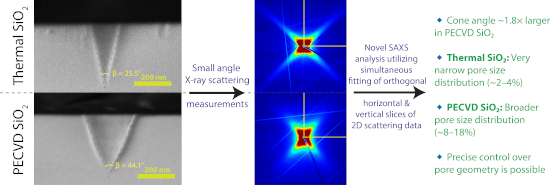
- attracted significant attention in the past decade because of their broad applicability in a variety of areas including biosensing, micro/ultrafiltration, desalination, ion and molecular separation, dialysis, battery technologies, blue energy generation, and nanofluidics [1][2][3][4][5][6][7][8][9][10][11


Heat-induced transformation of nickel-coated polycrystalline diamond film studied in situ by XPS and NEXAFS
Beilstein J. Nanotechnol. 2025, 16, 887–898, doi:10.3762/bjnano.16.67
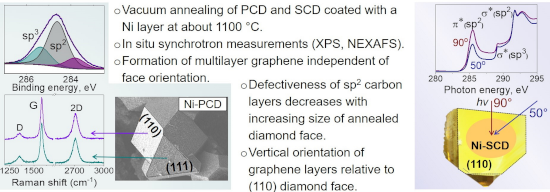
- diamond surfaces is initiated at 750 °C. A temperature of about 1500 °C is needed for the formation of extended graphene-like layers, and temperatures higher than 2000 °C are required for the complete conversion of the diamond (111) surface to graphitic layers [10][11]. Thermal stability of diamond


Ar+ implantation-induced tailoring of RF-sputtered ZnO films: structural, morphological, and optical properties
Beilstein J. Nanotechnol. 2025, 16, 872–886, doi:10.3762/bjnano.16.66
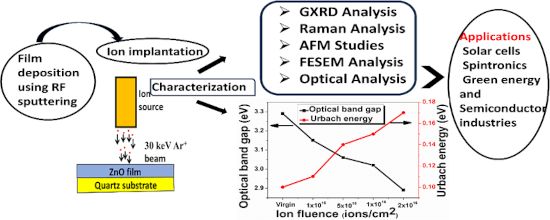
- optoelectronic devices [11]. Thus, a detailed study of the evolution of phonon modes is needed to utilize implanted ZnO films effectively in such devices. The activation of Raman modes in implanted films depends on various implantation parameters, namely, ion energy, mass, and fluence. The origin of these
- 23 keV co-implanted (H+ and N+ ions) ZnO films. But in these two above-quoted reports nitrogen ions were used for implantation. Nitrogen ions act as n-type doping and can alter the stoichiometry of ZnO films, which is not desirable in certain optoelectronic devices [10][11]. Hence, we have used Ar
- : Extrapolation of the linear region of the (hν·F(R))2 versus (hν) plot to the energy axis is used to find optical bandgap values. Figure 11 depicts the different bandgap values, out of which the highest value of the bandgap values in each plot indicate the fundamental bandgap value, while the other three values






Insights into the electronic and atomic structures of cerium oxide-based ultrathin films and nanostructures using high-brilliance light sources
Beilstein J. Nanotechnol. 2025, 16, 860–871, doi:10.3762/bjnano.16.65
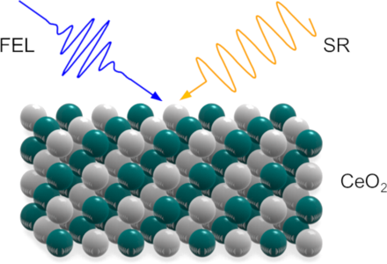
- field of environmental remediation [9]. The related ability of the material to easily store and release oxygen also plays a key role in energy conversion technologies, including fuel cells and batteries [10][11]. Gas sensing applications of ceria-based materials are based on the modifications of the


Synchrotron X-ray photoelectron spectroscopy study of sodium adsorption on vertically arranged MoS2 layers coated with pyrolytic carbon
Beilstein J. Nanotechnol. 2025, 16, 847–859, doi:10.3762/bjnano.16.64
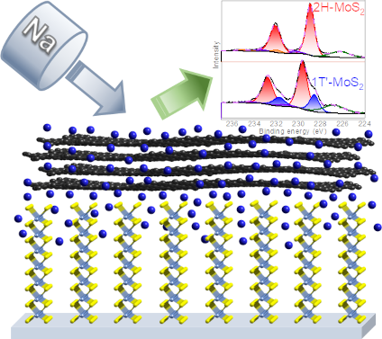
- reversible specific capacity [7][8][9][10][11][12][13][14][15][16]. Moreover, it has been reported that the electrochemical reaction of MoS2 with sodium ions could be reversible in the presence of graphitic components [17]. Wang et al. showed that in an anode material in which graphitic layers were


Facile one-step radio frequency magnetron sputtering of Ni/NiO on stainless steel for an efficient electrode for hydrogen evolution reaction
Beilstein J. Nanotechnol. 2025, 16, 837–846, doi:10.3762/bjnano.16.63
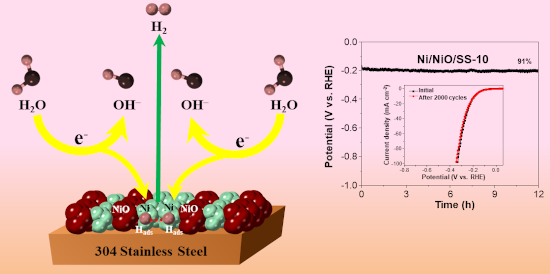
- catalysts were recognized as the best material for electrochemical hydrogen evolution reaction (HER) [11][12][13]. However, it is challenging to use Pt-based nanomaterials for industrial applications because of their non-abundance and high cost. As a result, many studies have explored Pt-free catalysts
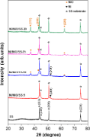


Synthesis and magnetic transitions of rare-earth-free Fe–Mn–Ni–Si-based compositionally complex alloys at bulk and nanoscale
Beilstein J. Nanotechnol. 2025, 16, 823–836, doi:10.3762/bjnano.16.62
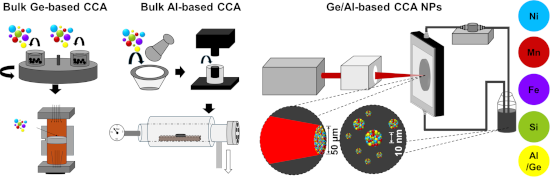
- ) have garnered considerable attention because of their compositional flexibility and exceptional thermomechanical [11][12], magnetic [13][14], and electrical insulation properties [15][16]. CCAs are composed of five or more elements, offering design freedom. This flexibility allows for elemental
- important in the Al-based alloy at low temperatures. The M–H curves for the Al-based CCA (Figure 6d and Figure S5d, Supporting Information File 1) shows a higher Hc at 5 K (11 kA·m−1) than that observed for the Ge-based CCA (8.4 kA·m−1). The Ms (5 K, 9 T) reaches 32.7 A·m2·kg−1, which, although significant
- in the presence of a magnetic field. The M–H curve (Figure 7d and Figure S6d, Supporting Information File 1) of the Al-based CCA at 5 K shows significant hysteresis, with a Hc of 16.6 kA·m−1, which is higher than that of the bulk Al-based CCA (11 kA·m−1). The increase in Hc in the NPs is likely due


Supramolecular hydration structure of graphene-based hydrogels: density functional theory, green chemistry and interface application
Beilstein J. Nanotechnol. 2025, 16, 806–822, doi:10.3762/bjnano.16.61
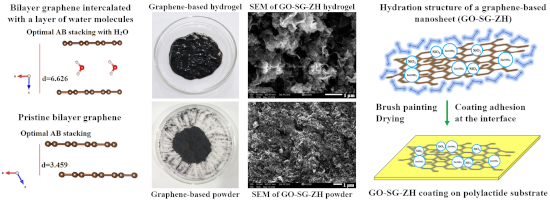
- assembly, and surface hydration [10][11][12]. In our previous works, a number of graphene-based hydrogels (RGO-SnO2, RGO-ZnO, and RGO) were synthesized to evidence the reversible self-assembly of graphene-based nanosheets thanks to water intercalation in the hydrated ensembles [13][14][15][16][17
- stability of the coatings in aqueous environments was measured by calculating the loss of coating weight. These experimental tests are useful for studying packaging materials and chemical releases over a time period in environments simulating food [14][27]. Line charts in Figure 11 report the weight losses


Morphology and properties of pyrite nanoparticles obtained by pulsed laser ablation in liquid and thin films for photodetection
Beilstein J. Nanotechnol. 2025, 16, 785–805, doi:10.3762/bjnano.16.60
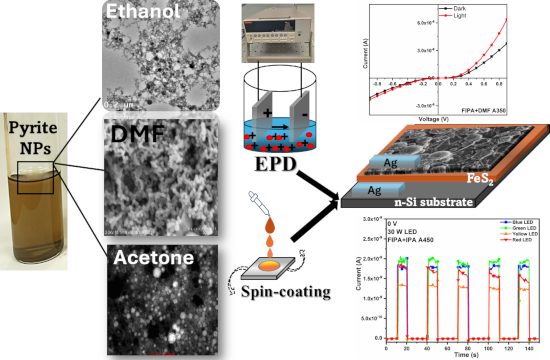
- films. The conventional methods reported for the synthesis of pyrite NPs include chemical methods using stabilizing agents [4], high-energy mechanical ball milling [6][7], colloidal pyrite by wet solution/phased chemical approaches [8][9], and hot injection [10][11]. In this study, PLAL was employed to
- motivated to further look into its possibilities. The fabricated diodes were illuminated using W lamp (results are given in Supporting Information File 1, Figure S6), different wavelegths of LEDs (Figure 11) without applying any voltage and all the diodes showed excellent reponse. The peak wavelengths of






Changes of structural, magnetic and spectroscopic properties of microencapsulated iron sucrose nanoparticles in saline
Beilstein J. Nanotechnol. 2025, 16, 762–784, doi:10.3762/bjnano.16.59
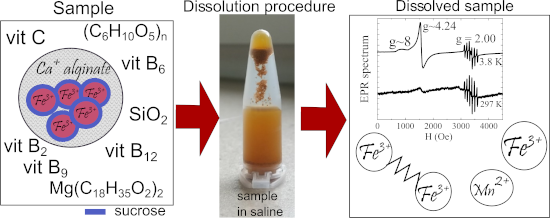
- separated from each other and not magnetically interacting. There are many others literature examples of studies of chemical and physical properties on iron deficiency drugs and their usage in agents [2][7][8][11][12][13][14][15]. However, in this work the whole attention is focused on the iron deficiency
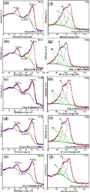
- consistent with the TEM results, which allows us to claim that the dominant Fe phase in the FS0 sample is α-FeOOH. The presence of Fe3O4 also seems to be indisputable; however, the direct localization of this phase remains undefined. XPS results and analysis Figure 11 presents the XPS survey spectra for the
- contamination from physiological saline, which was also proved by the XRD results. In Figure 11, for all the distinguished states, the high-resolution XPS measurements were performed, the results of which will be further analyzed. Figure 12 presents the spectra for FS0, while the results obtained for FST, due




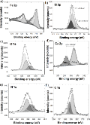

Thickness dependent oxidation in CrCl3: a scanning X-ray photoemission and Kelvin probe microscopies study
Beilstein J. Nanotechnol. 2025, 16, 749–761, doi:10.3762/bjnano.16.58
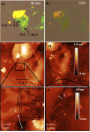
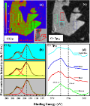
- [2][11][8][10], focusing on thin layered flakes and the role of the layer thicknesses obtained by spectro- and scanning microscopy with a lateral resolution of a few tens of nanometers. The interaction with the supporting substrate is a crucial factor [3][12] regarding the properties of the flakes
- known that 270 nm SiO2/Si substrates provide the highest optical contrast (O.C.) value for a single layer or few layers of CrCl3 [2][11]. Because of the insulating behavior of 270 nm SiO2 and to avoid surface charging, we utilized Si(001) wafers with a 1 nm layer of SiO2 and ITO films (190 nm) on glass
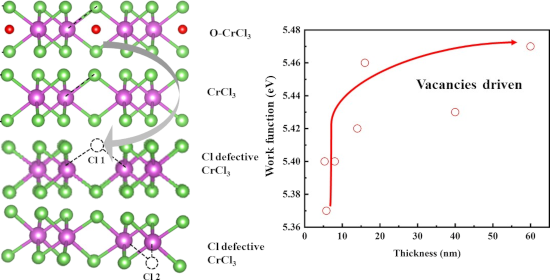
- oxygen. KPFM can be an interesting tool to describe the variation of chemical character of the 2D flakes with sizeable details. In Figure 11 we report the CrCl3 values of surface potential measured under different conditions on flakes of various thicknesses on SiO2 and ITO substrates. A steep increase of





Serum heat inactivation diminishes ApoE-mediated uptake of D-Lin-MC3-DMA lipid nanoparticles
Beilstein J. Nanotechnol. 2025, 16, 740–748, doi:10.3762/bjnano.16.57
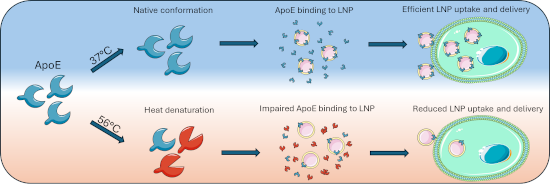
- nanoparticle, reviewed by [6][7][8], as well as the protein source of the corona [9][10][11]. Ultimately, the protein corona can change the uptake [12][13][14], biodistribution [15][16][17][18], immunological responses [19][20] and toxicity [6][21][22] of nanoparticles and its characterization should thus play


Synthesis of a multicomponent cellulose-based adsorbent for tetracycline removal from aquaculture water
Beilstein J. Nanotechnol. 2025, 16, 728–739, doi:10.3762/bjnano.16.56
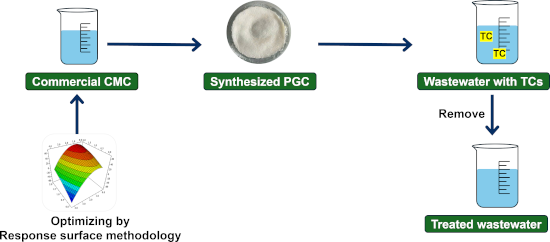
- spectrum, the sample matrix, and the radiation intensity. Activated carbon is a conventional approach [10][11], however, a major drawback of activated carbon is its incomplete recovery after adsorption. Because adsorption primarily relies on physical interactions such as hydrogen bonding interactions
- rapidly, with the sharpest decline observed between pH 10 and 11. This occurs because, as pH increases, particularly around pH 6.8, keto-enol groups serve as preferential sites for chelate formation between TC and Ca2+ in a 1:3 ratio of Ca2+ to TC [26]. In this pH range, reduced competition between H


Efficiency of single-pulse laser fragmentation of organic nutraceutical dispersions in a circular jet flow-through reactor
Beilstein J. Nanotechnol. 2025, 16, 711–727, doi:10.3762/bjnano.16.55
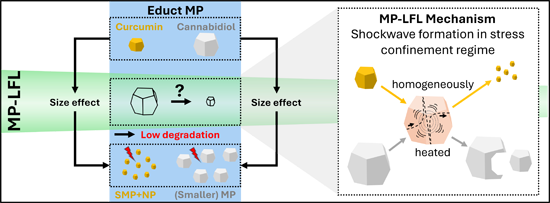
- extraction methods, exemplified by extraction from coffee powders [10] and alkaloid drug extraction from ground root powder [11]. Initially, LSPC research focused on inorganic materials such as metals [12][13], semiconductors [1], and oxides [14][15], where the particle formation mechanisms are well


Nanostructured materials characterized by scanning photoelectron spectromicroscopy
Beilstein J. Nanotechnol. 2025, 16, 700–710, doi:10.3762/bjnano.16.54
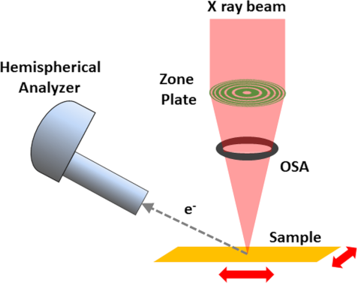
- providing fine chemical and electronic analysis of samples regardless of their morphology, which often limits the capabilities of other microscopy techniques [11]. This work reports three examples of SPEM experiments focused on the characterization of nanostructured materials. Measurements were performed at