


Search results
Search for "HPLC" in Full Text gives 835 result(s) in Beilstein Journal of Organic Chemistry. Showing first 200.
Discovery of sugarnitriles A and B, and structural reassignment of SF-2140, from a sugarcane endophytic actinomycete Amycolatopsis sp. JS-O27
Beilstein J. Org. Chem. 2026, 22, 1114–1121, doi:10.3762/bjoc.22.90
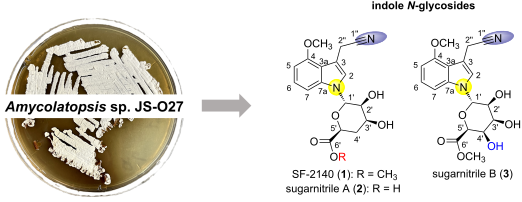
- (2) and B (3), were isolated from a sugarcane endophytic actinomycete strain Amycolatopsis sp. JS-O27 (Figure 1). This paper describes their isolation, structure elucidation, and biological investigations. Results and Discussion HPLC analysis of the MeOH extract of rice culture of Amycolatopsis sp
- . Optical rotations were measured at 20 °C on an INESA WZZ-2B polarimeter. UV–vis spectra were acquired in MeOH on a METASH UV-8000 spectrophotometer. Analytical and preparative reversed-phase HPLC (RPLC) was conducted on a Shimadzu Prominence HPLC system using a YMC Hydrosphere C18 analytical column (3 μm
- Compound 1 (1.0 mg) was hydrolyzed under conditions of 1 N aq NaOH in MeOH (1.0 mL) at rt for 1 h. A portion of the reaction mixture was sampled and analyzed by RP-HPLC (YMC Hydrosphere C18, ∅ 3 × 150 mm, 0.5 mL/min, 0–20 min, grad. 20–100% aq MeCN, PDA: 220 nm). Cytotoxicity In a manner similar to our


Rhodopyran, a carboxylated hexahydrocyclopenta[b]pyran from Rhodococcus
Beilstein J. Org. Chem. 2026, 22, 1107–1113, doi:10.3762/bjoc.22.89
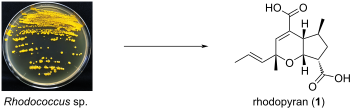
- concentrate was fractionated by silica gel column chromatography, and preparative HPLC afforded rhodopyran (1, 22.7 mg from 2 L of culture, corresponding to 0.18% of the 1-BuOH extract). An uninoculated A-3M medium control was incubated for 5 days and processed under identical conditions. HPLC analysis showed
- no peak corresponding to rhodopyran (1) at the retention time of 1 in the medium control (Figure S9, Supporting Information File 1), indicating that 1 was not a pre-existing medium component detectable under the present HPLC conditions. Although several additional UV-detectable peaks were observed in
- mass spectrometer (Bruker). HPLC separations were performed using a COSMOSIL 5C18-AR-II Packed Column (10 × 250 mm, Nacalai Tesque, Inc., Kyoto, Japan). Microorganism The strain RD066637 was obtained from Biological Resource Center, National Institute of Technology and Evaluation, Japan. The RD strain


Semisynthesis, characterisation, and antibacterial evaluation of a novel lecanoric acid-derived amide library
Beilstein J. Org. Chem. 2026, 22, 1023–1032, doi:10.3762/bjoc.22.81
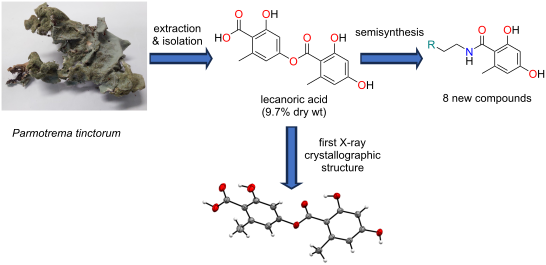
- TLC, with fractions showing a similar profile combined to afford five fractions. These fractions were subsequently purified by semipreparative reversed-phase HPLC (RP-HPLC) using a linear gradient of MeOH/H2O/0.1% TFA. The resulting fractions were analysed by 1H NMR and UHPLC–MS, affording the known
- lichen metabolite divaricatic acid (2, Figure 1) [17]. The MeOH extract was also purified using RP-HPLC (MeOH/H2O/0.1% TFA) to afford the previously described lichen natural products lecanoric acid (1) [18][19][20], orcinol (3) [21], orsellinic acid (4) [22], and methyl orsellinate (5) [23
- kept consistent. Work-up and purification of each reaction involved the utilisation of semipreparative RP-HPLC (MeOH/H2O/0.1% TFA). 1H NMR and UHPLC–MS of all UV-active HPLC fractions from the three trial reactions confirmed that lecanoric acid had reacted as expected, with nucleophilic attack of the


Synthesis and optical resolution of 4,5-diaminohomoadamantane: a promising scaffold for chiral ligands and bioactive compounds
Beilstein J. Org. Chem. 2026, 22, 1013–1022, doi:10.3762/bjoc.22.80
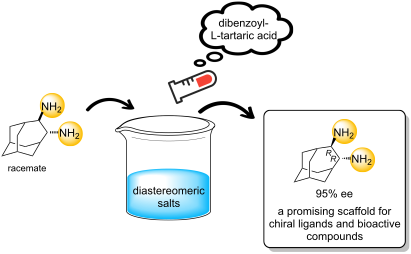
- -diaminohomoadamantane (8a′) in both 2:1 and 1:1 ratios were studied. Successful resolution was achieved by triple crystallization of the bis(dibenzoyl)-ʟ-tartrate from a MeOH/CHCl3 mixture (Scheme 6). The attempted determination of the enantiomeric ratio by chiral HPLC of the free amine failed because no optimal
- analysis conditions could be identified. Therefore, a preliminary derivatization of diamine 8a′ was required, which was carried out by reactions with carbon disulfide [75] or benzil [77]. However, HPLC analysis was only successful for racemic 2,3-dihydropyrazine 17 (Scheme 6). For (4R,5R)-2,3


The role of spacer length and flexibility in peptide self-assembly
Beilstein J. Org. Chem. 2026, 22, 986–996, doi:10.3762/bjoc.22.77
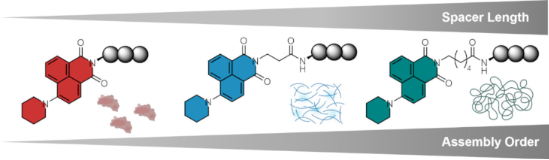
- using PyBOP® and N,N’-DIPEA. All peptides were purified via high performance liquid chromatography (HPLC) and subsequently characterized using LC–MS and NMR spectroscopy revealing high purities (>95%) with overall yields between 25–37% (Supporting Information File 1, Figures S25–S33). Supramolecular
- naphthalene moieties, which are expected to be directly influenced by the flexibility of the spacer length, become the driving force for the self-assembly of the peptide monomers. The assembly conversion of peptide monomers to supramolecular structures was analyzed using an analytical HPLC-based study (Figure
- and 254 nm wavelengths. The softwares LabSolutions by Shimadzu and Origin Pro by OriginLab® were used to process the generated HPLC spectra. The samples were analyzed in triplicates (n = 3). Assembly characterization by NMR To investigate the self-assembly propensity of the three peptide conjugates


A practical CO2-mediated synthesis of 5,6-carboxylated silicon-rhodamines for targeted probe development
Beilstein J. Org. Chem. 2026, 22, 915–924, doi:10.3762/bjoc.22.72
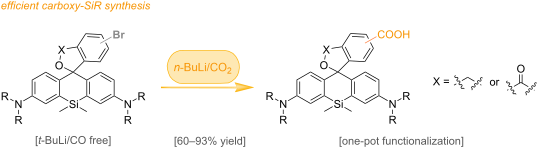
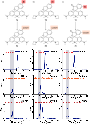
- complete trapping of the aryllithium intermediates by CO2. After aqueous quenching and extraction, the crude products were directly subjected to HPLC analysis. To evaluate the generality of this strategy, three brominated SiR precursors 1a–c, all accessible by reported procedures, were selected as model
- substrates (Figure 3). Direct HPLC analysis of the crude reaction mixtures at 640 nm revealed clear separation between substrates and products. The retention times of 1a, 1b, and 1c were 8.5, 7.5, and 7.4 min, respectively, whereas those of the corresponding carboxylated products 3a, 3b, and 3c were 5.2, 4.4
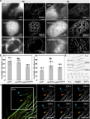
- bromo-SiR precursors 1a–c in the CO2 carboxylation reaction and their corresponding HPLC results. SMLM imaging of different organelles in live HeLa cells stained with 4a and 4b (150 nM). (a) SMLM and wide-field images of actin labeled with Lifeact-HaloTag fusion protein, nucleus labeled with H2B-HaloTag



Chiral cyclopropenimine-catalyzed enantioselective Michael reactions of phenol and benzofuran-derived α,β-unsaturated pyrazolamides with benzophenone-imine of glycine esters
Beilstein J. Org. Chem. 2026, 22, 888–896, doi:10.3762/bjoc.22.69
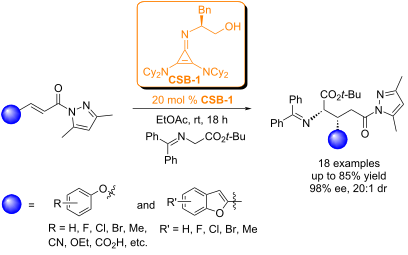
- Supporting Information File 42: Detailed experimental procedures, characterization data of all new compounds with NMR, HRMS, HPLC charts, and X-ray single crystal diffraction data. Funding The authors thank the National Science Foundation of China (no. 21372259) for providing financial support for this work.






Synthetic study of vic-bromination of diarylacetylenes, easy purification and separation
Beilstein J. Org. Chem. 2026, 22, 795–802, doi:10.3762/bjoc.22.61
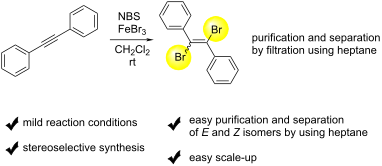
- crude product was analyzed for the ratio of E and Z isomers and starting material 1a, by using HPLC. Purification and separation from the crude product was conducted by the filtration using heptane (Table 1). At first, we have recognized that E-2a is solid and Z-2a is liquid in heptane. After various
- considerations, we found that E-2a could be isolated by only filtration, utilizing the difference in solubility of E-2a and Z-2a in heptane from the crude product. In Table 1, entry 1, the combination of NBS (2.2 equiv) and FeBr3 (1.0 equiv) for 2 h gave the ratio of E-2a/Z-2a/1a such as 86:14:0 by HPLC, in
- GC and/or GC–MS analysis, in the case of the longer reaction time of 23 h. We have examined other Lewis acids such as ZnBr2, LiBr, and FeBr2 instead of the use of FeBr3 under similar reaction conditions. The use of ZnBr2 for reaction time of 4 h showed a ratio of E-2a/Z-2a/1a = 86:14:0 by HPLC



Anti-invasive and cytotoxic evaluation of a (+)-pinoresinol-based semisynthetic library against glioblastoma
Beilstein J. Org. Chem. 2026, 22, 691–704, doi:10.3762/bjoc.22.54
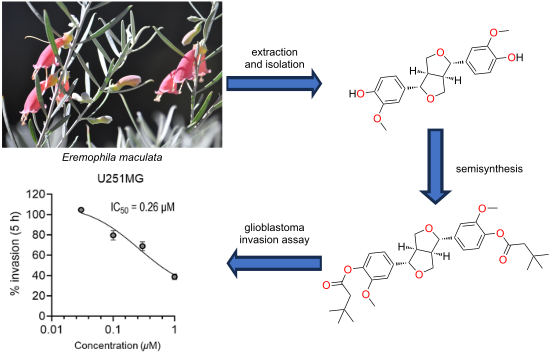
- ], and data was recorded on an Ultimate 3000 RS UHPLC coupled to a Thermo Fisher Scientific MSQ Plus single quadruple ESI mass spectrometer. HRESIMS data were acquired on Bruker maXis II ETD ESI-qTOF. GRACE C18- or C8-bonded silica (35–70 µm, 60 Å) was used for preadsorption work before HPLC separations
- used for semipreparative HPLC separations. A Thermo BetaSil C18 column (5 μm, 100 Å, 150 × 21.2 mm), Luna C18 HPLC column (5 μm, 100 Å, 150 × 21.2 mm), or a BetaSil phenyl HPLC column (5 μm, 100 Å, 250 × 21.2 mm) was used for semipreparative HPLC separation. Merck silica gel 60 F254 precoated aluminium
- -Aldrich. All solvents used for chromatography, UV–vis, ECD, [α]D, and MS were Honeywell Burdick & Jackson brand or Lab-Scan HPLC grade. H2O was filtered using a Sartorius Stedium Arium Pro VF ultrapure H2O system. Plant material E. maculata seeds used in these studies were obtained from the NatureBank



Synthesis of depressin, cryptomeridiol and 4-epi-cryptomeridiol enabled by a terpenoid chiral pool-producing platform
Beilstein J. Org. Chem. 2026, 22, 683–690, doi:10.3762/bjoc.22.53
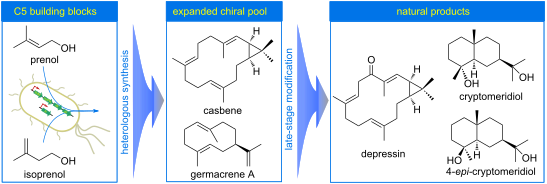
- -butylammonium fluoride (TBAF) for TBS ether removal, followed by DMP for hydroxy group oxidation, delivering the desired product 1 in 29% overall yield in three steps from 14a/b, together with a double bond-isomerized product 15 in 39% overall yield after HPLC purification. The configuration of C12–C13 double


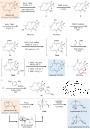
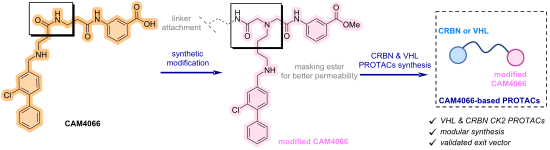
Towards the targeted protein degradation of CK2: design and synthesis of CAM4066-based PROTACs
Beilstein J. Org. Chem. 2026, 22, 611–619, doi:10.3762/bjoc.22.47
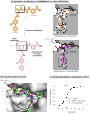
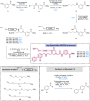
- moderate to good yields (Scheme 2A, Figure 2). It is important to mention that LCMS analysis indicated complete consumption of the alkyne-bearing intermediates and clean formation of the triazole-linked products after 16 hours, although isolated yields varied due to product loss during preparative RP-HPLC

Kinetic resolution of racemic planar-chiral vinylcymantrenes by molybdenum-catalyzed asymmetric metathesis dimerization
Beilstein J. Org. Chem. 2026, 22, 568–574, doi:10.3762/bjoc.22.42
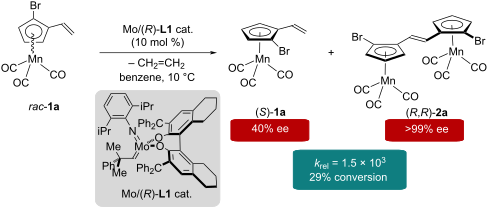
- substrates rac-1a–c. Molybdenum-catalyzed asymmetric metathesis dimerization/kinetic resolution of racemic vinylcymantrenes 1a–c.a Supporting Information Supporting Information File 19: Experimental procedures, NMR spectra (1H and 13C) for all the new compounds, and chiral HPLC chromatograms. Supporting


Molecular tweezer–peptide conjugates disrupt the protein–protein interaction between survivin and histone H3 essential in mitosis
Beilstein J. Org. Chem. 2026, 22, 557–567, doi:10.3762/bjoc.22.41
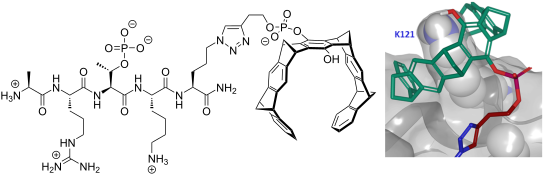
- -terminus (peptide ordered from Genscript), which was subjected to click reaction with the butynyl tweezer (Scheme 1). The coupling protocol was identical to the published version [9][10]. Reaction progress was monitored by analytical HPLC and the product could be purified by preparative HPLC. After
- the included side chain protons [12][13]. HPLC–HRMS analysis finally produced a single chromatographic signal with clean molecular ion peaks for [M + 2H]2+ and [M + 3H]3+. The high purity of 2a was further demonstrated by successful co-crystallization of this tweezer peptide conjugate with survivin
- tweezer peptide conjugates 2e and 2f are much more flexible and may reach lysines in larger distance, which did not show up in manual structure screens. Both tweezer conjugates 2e and 2f were synthesized, purified by preparative HPLC and analytically characterized. They are currently involved in




Synthesis and stereochemical analysis of dynamic planar chiral oxa[7]orthocyclophene
Beilstein J. Org. Chem. 2026, 22, 436–442, doi:10.3762/bjoc.22.30

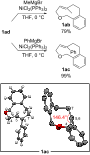
- ideal alkene plane. Stereochemical analysis of C6-substituted oxacyclophenes Next, HPLC analyses using a chiral stationary phase (chiral column) of the C6-substituted oxacyclophenes were conducted. The baseline separations of the enantiomers of 1ab and 1ad were achieved by using CHIRALCEL OJ-H as the
- chiral column at 25 °C (Figure 3) [17]. In sharp contrast to 1ab and 1ad, the HPLC analysis of 1ac showed a plateau between the peaks of the enantiomers at 25 °C, indicating that the interconversion of the enantiomers proceeds on the separation time scale (Figure 4) [18]. The interconversion plateau was
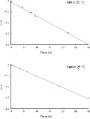
- effect of the phenyl group with the distorted alkene for a jump-rope rotation-type ring-flip (Figure 5) [10]. Enantioenriched samples of compounds 1ab and 1ad were obtained by HPLC separation using preparative scale chiral columns. We evaluated the stereochemical stability of 1ab and 1ad at 25 °C using






Electrosynthetic access to unsymmetrical oxaza[8]helicenes with high chiral stability and strong circularly polarized luminescence (CPL)
Beilstein J. Org. Chem. 2026, 22, 372–382, doi:10.3762/bjoc.22.25
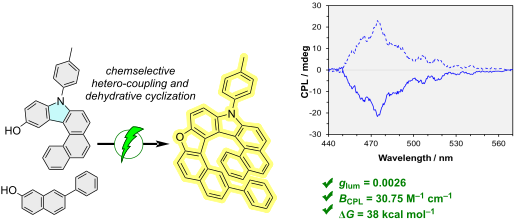
- ) relative to their oxaza[7]helicene analogues (<25 kcal/mol). After chiral HPLC separation, the enantiomers display mirror-image CD and strong solution CPL, with |glum| up to 2.6 × 10⁻³ and fluorescence brightness up to 30.75 M−1 cm−1. Keywords: chemoselectivity; chiroptical; circular dichroism
- ]. Chiroptical features The higher enantiomerization barriers of (P/M)-5a and (P/M)-5b enabled complete separation of their enantiomers by HPLC using a Daicel Chiralpak IA column (see Supporting Information File 1). Despite the rapid enantiomerization of (P/M)-6a and (P/M)-6b, we were able to separate the two
- and second fractions of the chiral HPLC analysis were assigned as the (P)- and (M)-enantiomers, respectively, for all 5a,b and 6a,b. As expected, the increase in helical length (n) from 7 to 8, 5a and 5b exhibited more red-shifted maximum |gabs| values at around 350 nm, whereas 6a and 6b showed values




Synthesis of diaryl phosphates using phytic acid as a phosphorus source
Beilstein J. Org. Chem. 2026, 22, 213–223, doi:10.3762/bjoc.22.15
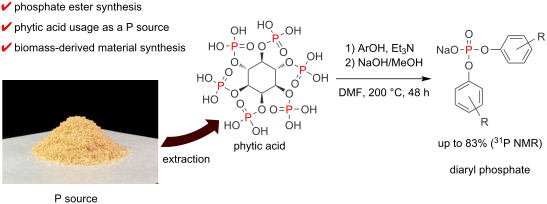
- its light-brown appearance was identical to that of the product synthesized from commercial phytic acid. High-performance liquid chromatography (HPLC) analysis results indicated that the purity of 2a derived from the extracted phytic acid was greater than 95% (Supporting Information File 1, Figure S4




Streptoquinolines A and B, new antibacterial meroterpenoids produced by Streptomyces sp. TMPU-A0679
Beilstein J. Org. Chem. 2026, 22, 185–191, doi:10.3762/bjoc.22.12
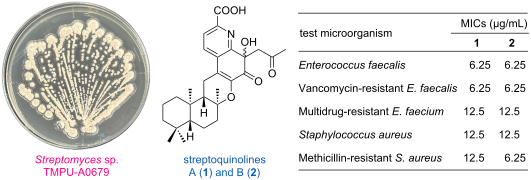
- preparative HPLC, yielding streptoquinolines A (1, 7.50 mg) and B (2, 8.05 mg). The physicochemical properties of 1 and 2 are summarized in Table 1. Compounds 1 and 2 showed characteristic absorption maxima at 200–202, 214, 231–234, 312, and 349–350 nm in UV spectra. Common IR absorption bands at 3414–3427
- crude materials containing 1 and 2 (23.5 mg). These materials were finally purified by preparative HPLC: column, Develosil C30-UG (Nomura Chemical Co., Ltd., Aichi, Japan), i.d. 10 × 250 mm; mobile phase, 55% MeCN aq. isocratic; detection, UV at 210 nm; flow rate, 3.0 mL /min. Under these conditions


Improved synthesis and physicochemical characterization of the selective serotonin 2A receptor agonist 25CN-NBOH
Beilstein J. Org. Chem. 2026, 22, 175–184, doi:10.3762/bjoc.22.11
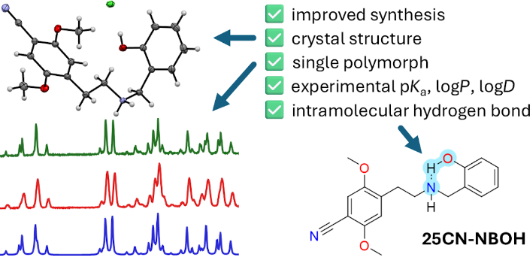
- sufficient for most biological applications given the high potency of the compound both in vitro and in vivo [6]. Here, we show that if solutions with a higher concentration are needed, pure water could be considered. According to HPLC analysis, 1·HCl was found to be stable in solution in phosphate buffer at
- ). Acetonitrile (Ph. Eur.), absolute ethanol (Reag. Ph. Eur.), ethyl acetate (HPLC grade), dichloromethane (HPLC grade), ammonia (25%, analytical reagent grade), and diethyl ether (reagent grade) were purchased from VWR (Radnor, PA, USA). Sodium hydrogencitrate sesquihydrate (99%), salicylaldehyde (≥98
- ) and water at 25 ± 0.5 °C. The solutions comprising 0.2 mg/mL of 1·HCl were kept in a temperature-controlled incubator, and samples were measured by HPLC immediately after sample preparation as well as after one and four weeks for the experiments in phosphate buffer and after four weeks for experiments


Asymmetric Mannich reaction of aromatic imines with malonates in the presence of multifunctional catalysts
Beilstein J. Org. Chem. 2026, 22, 151–157, doi:10.3762/bjoc.22.8
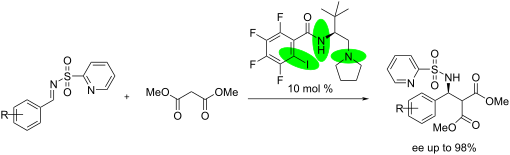
- ]. Although basic conditions caused partial racemization during the protection or deprotection step, the Boc-protected amine was obtained in low enantiomeric purity. Chiral HPLC analysis and comparison with an authentic sample revealed the S-configuration of the Mannich adduct [29]. Absolute configurations of
- 20: Experimental procedures, synthetic details, NMR spectra, chiral HPLC chromatograms. Funding The research was funded by the Estonian Ministry of Education and Research (grant No. PRG1031).


Efficient solid-phase synthesis and structural characterization of segetalins A–H, J and K
Beilstein J. Org. Chem. 2025, 21, 2612–2617, doi:10.3762/bjoc.21.202

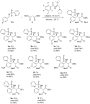
- strategy for the total synthesis of segetalins A–H, J and K (1–10), bioactive cyclopeptides isolated from Vaccaria segetalis. Linear precursors were assembled on cost-effective 2-chlorotrityl chloride resin via Fmoc-SPPS, followed by PyBOP-mediated head-to-tail cyclization in DMF (10−3 M). After RP-HPLC
- purification, all cyclopeptides were obtained in 45–70% isolated yields. Structural identities were confirmed by HRESIMS, NMR, and HPLC (>95% purity). Circular dichroism (CD) spectroscopy revealed distinct secondary structures, including β-sheets (1, 2, 3, 4, 7, 8, 10) and α-helical elements (5, 6). This
- RP-HPLC. This optimized protocol afforded segetalins A–H, J and K (1–10) with 45% to 70% isolated yields (Figure 1). Structural characterization The synthetic compounds 1–10 were rigorously characterized to confirm their identity and purity (see Supporting Information File 1). High-resolution


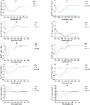
Isoorotamide-based peptide nucleic acid nucleobases with extended linkers aimed at distal base recognition of adenosine in double helical RNA
Beilstein J. Org. Chem. 2025, 21, 2513–2523, doi:10.3762/bjoc.21.193
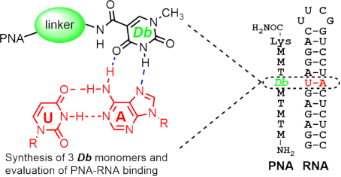
- reversed-phase HPLC, these PNAs were studied against model RNA hairpins containing a purine-rich 5’-end and a variable base pair, Y–Z (Figure 6). The expected matched HRP1 (Y = U; Z = A) was designed to test affinity for the newly prepared Db nucleobases and mismatched HRP2–HRP4 were utilized to test


Comparative analysis of complanadine A total syntheses
Beilstein J. Org. Chem. 2025, 21, 2334–2344, doi:10.3762/bjoc.21.178
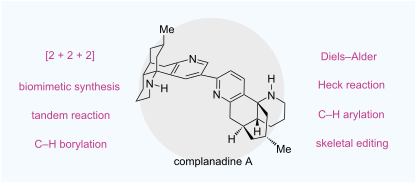
- with MeI in presence of benzyltrimethylammonium fluoride (BTAF). At this stage, to prepare optically active natural product, the racemic mixture of 51 was separated using chiral HPLC to afford (+)-51 and (−)-51, which were used to prepare both enantiomers of complanadine A for biological evaluations


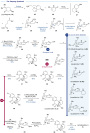
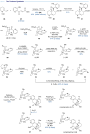
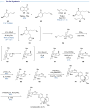

Recent advances in Norrish–Yang cyclization and dicarbonyl photoredox reactions for natural product synthesis
Beilstein J. Org. Chem. 2025, 21, 2315–2333, doi:10.3762/bjoc.21.177
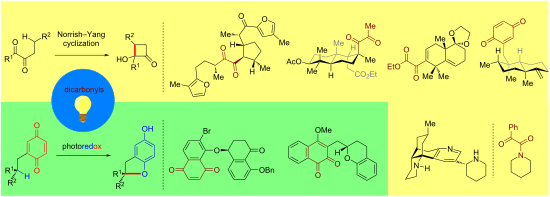
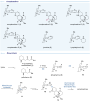
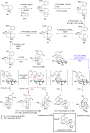
- phenol delivered 1,2-naphthoquinone 106. Notably, enantiomer (−)-106 could be prepared from (+)-105, which was in turn obtained by preparative HPLC on a chiral stationary phase from (±)-105. Following extensive screening, it was found that photoirradiation of quinone (−)-106 under the optimized







A chiral LC–MS strategy for stereochemical assignment of natural products sharing a 3-methylpent-4-en-2-ol moiety in their terminal structures
Beilstein J. Org. Chem. 2025, 21, 2243–2249, doi:10.3762/bjoc.21.171
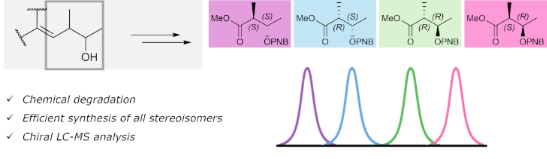
- -hydroxy-2-methylbutanoate (3) [25][26]. We then explored LC–MS conditions for their separation. In our initial trial, the stereoisomeric mixture of 3 was successfully separated by preparative high performance liquid chromatography (HPLC) using a chiral column (data not shown). However, each stereoisomer
- chiral HPLC columns and with various elution profiles, the four stereoisomers of 6 were successfully separated on a CHIRALPAK ID-3 column at 40 °C with aqueous MeOH gradient elution (Figure S3, Supporting Information File 1). The developed method for absolute configuration assignment of MPO was applied
- followed by ozonolysis to generate 3-((4-bromobenzoyl)oxy)-2-methylbutanoic acid. The four stereoisomers of this fragment were prepared through two separate Evans aldol reactions, each affording a pair of diastereomers. The final four stereoisomers were resolved by chiral HPLC (CHIRALPAK IA column with


Thiadiazino-indole, thiadiazino-carbazole and benzothiadiazino-carbazole dioxides: synthesis, physicochemical and early ADME characterization of representatives of new tri-, tetra- and pentacyclic ring systems and their intermediates
Beilstein J. Org. Chem. 2025, 21, 2220–2233, doi:10.3762/bjoc.21.169
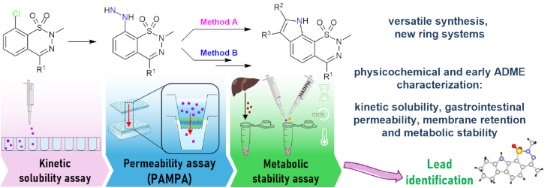
- ), CCDC 2447635 [(E)-7a], CCDC 2447644 (7b), CCDC 2447641 (7d), CCDC 2447634 (7e), CCDC 2447643 [(E)-7f], CCDC 2447642 [(Z)-7h], CCDC 2447640 (7i) and CCDC 2447637 [(E)-9a]. All solvents used in the pharmacokinetic characterization and for HPLC measurements were of analytical grade, purchased from Merck
- during HPLC analysis. In vitro gastrointestinal permeability assay. For in vitro GI PAMPA permeability studies, only compounds with a kinetic solubility higher than 10 µM were chosen. Like in the kinetic solubility assay, 5 μL of DMSO stock solutions was pipetted into a 96-well plate containing 495 μL
- at 37 °C for 4 hours. Then samples were taken from the donor and acceptor wells and analyzed along with the initial solutions by HPLC. Effective permeability and membrane retention were calculated with Equation 1 and Equation 2 as suggested by Avdeef [48]: where A is the filter area (0.24 cm2), t is





