Search results
Search for "amide" in Full Text gives 1000 result(s) in Beilstein Journal of Organic Chemistry. Showing first 200.
Triazole-based hybrid molecules in anticancer drug discovery: structural classes and mechanistic insights, 2014–2025
Beilstein J. Org. Chem. 2026, 22, 1168–1195, doi:10.3762/bjoc.22.94
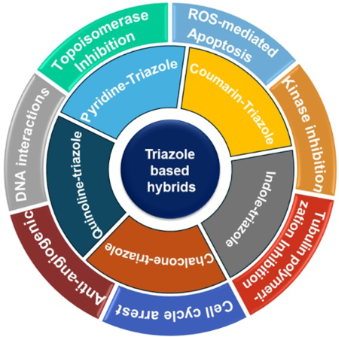
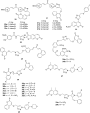
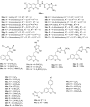
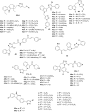
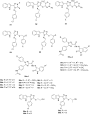
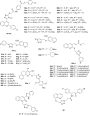
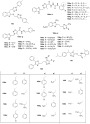
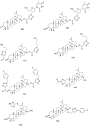
- -triazoles 99a–j tethered via an amide linker (Figure 18) were evaluated for their cytotoxic potential towards gastrointestinal cancer cell lines (EPG, Caco-2, LoVo, LoVo/Dx, HT-29), alongside normal colonic epithelial cells (CCD841 CoTr) for comparative assessment. Among the synthesized compounds






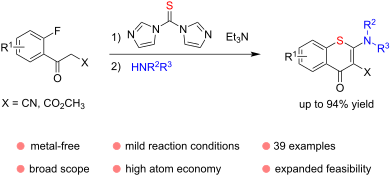
A cascade synthesis of 2-aminothiochromones from 2-fluorophenyl ketone and thiocarbonyldiimidazole
Beilstein J. Org. Chem. 2026, 22, 1151–1159, doi:10.3762/bjoc.22.92
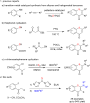
- amide 6. Under more violent conditions, such as concentrated sulfuric acid, the cyano group underwent concomitant hydrolysis and decarboxylation to yield compound 7. Alternatively, basic hydrolysis of the methyl ester in compound 5k provided the carboxylic acid 8, which allows for further structural



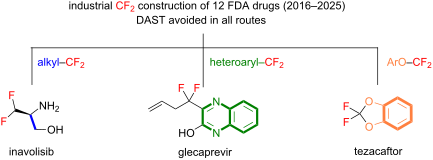
Construction of CF2 moieties in FDA-approved drugs (2016–2025): industrial routes, mechanisms, and scale-up considerations
Beilstein J. Org. Chem. 2026, 22, 1122–1150, doi:10.3762/bjoc.22.91
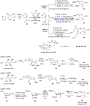
- in four steps to afford 60, with the last three steps all requiring a temperature of −78 °C. After protection of 57, two sequential electrophilic fluorinations at the 2-position of the sugar ring are carried out under lithium bis(trimethylsilyl)amide (LiHMDS) and N-fluorobenzenesulfonimide (NFSI






Amino acid-based surfactants: sustainable synthesis and antimicrobial mechanisms
Beilstein J. Org. Chem. 2026, 22, 1067–1085, doi:10.3762/bjoc.22.85
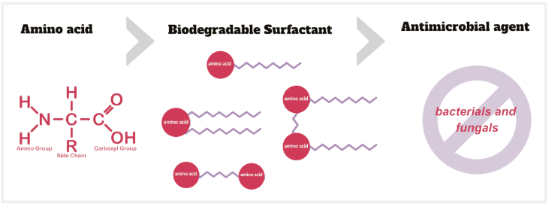
- fatty acids or other lipophilic chains [18][19]. Upon the introduction of a reactive molecule with a hydrophobic chain, such as fatty acids, esters, amines and alcohols, through alkyl ester or amide bonds, amino acids having at least two functional groups (carboxylic and amino groups), can be easily
- conditions [36]. Carboxylic acid activation and amide bond formation are commonly performed using acyl chlorides in Schotten–Baumann-type reactions or carbodiimide-mediated coupling agents such as DCC or EDC, providing high conversions under relatively mild conditions [3][6]. Reported yields generally range
- surfactants generally involves the covalent attachment of hydrophobic chains to amino acid-derived head groups through amide, ester, or alkyl linkages while preserving the structural contribution of the natural amino acid moiety [44][45]. For example, arginine-based double-chain surfactants of the LANHCn


Synthesis of novel 1,2,4-oxadiazole-isoxazoline hybrids and their in silico potential with adenosine receptors
Beilstein J. Org. Chem. 2026, 22, 1033–1047, doi:10.3762/bjoc.22.82
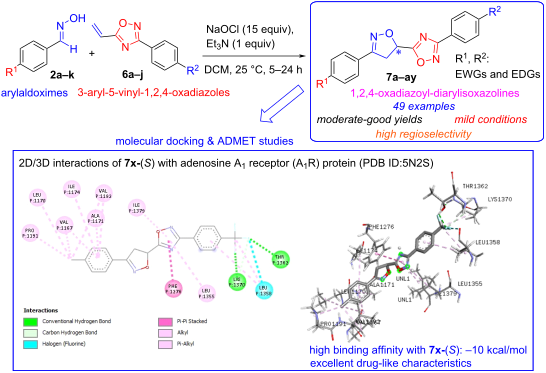
- amide functional groups [1][2][3][4][5]. 1,2,4-Oxadiazole derivatives interact with various receptors as agonists or antagonists, demonstrating a wide spectrum of biological activities including anti-inflammatory, anticancer, antidepressant, anti-HIV, antifungal, and anticonvulsant properties [6][7][8


Semisynthesis, characterisation, and antibacterial evaluation of a novel lecanoric acid-derived amide library
Beilstein J. Org. Chem. 2026, 22, 1023–1032, doi:10.3762/bjoc.22.81
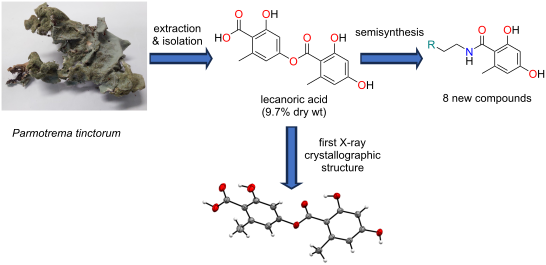
- metabolites that included divaricatic acid (2), orcinol (3), orsellinic acid (4), and methyl orsellinate (5). Parallel solution-phase synthesis using amidation chemistry on the abundant scaffold 1 afforded a series of novel amide derivatives 6–13 in high purity (>95%) and low to moderate yields (12–53%). All
- evaluated for antibacterial activity against the human pathogen Pseudomonas aeruginosa using a biofilm inhibition assay. Of the new semisynthetics, amide analogue 12 showed the greatest planktonic cell growth inhibition (13% at 50 µM), whilst amide analogue 11 was the most active at inhibiting the formation
- of biofilm (21% at 50 µM). Keywords: amide; biodiscovery; depside; lecanoric acid; natural products; Parmotrema tinctorum; Pseudomonas aeruginosa; semisynthesis; Introduction Lichens are organisms resulting from the symbiotic relationship between a fungus (the mycobiont) and an alga (the photobiont


Z-Selective semihydrogenation of alkynes via Ni/Lewis acid synergistic catalyzed system using DMF as hydrogen source and solvent
Beilstein J. Org. Chem. 2026, 22, 1004–1012, doi:10.3762/bjoc.22.79
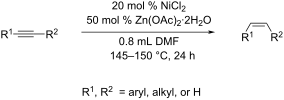
- and nickel catalysts further suggests its potential as a combined solvent and hydrogen donor in a synergistic catalytic manifold [43][44]. Related amide derivatives, such as formamide, have also been employed as safe cyanide sources or hydrogen-donor precursors, offering useful precedents for their
- -withdrawing groups (trifluoromethyl 2f; halogens 2g–o), and even an amide moiety (2p) were smoothly converted to the corresponding (Z)-stilbene derivatives in good to excellent yields (70–95%), with uniformly high stereoselectivity (Z/E = 97:3 to >99:1). The reaction demonstrated excellent functional group
- detected after 64 h, thus ruling out a catalyst-mediated Z/E isomerization. To further verify that formic acid serves as the hydrogen donor while the polar amide solvent assists the catalytic cycle, diphenylacetylene was subjected to the standard reaction conditions using DMA together with 2.5 equivalents



Recent advances in copper-catalyzed direct hydroamination of alkenes with (hetero)aromatic amines
Beilstein J. Org. Chem. 2026, 22, 925–947, doi:10.3762/bjoc.22.73
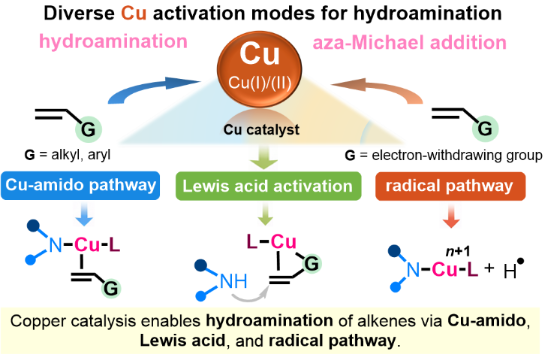
- generated an amide species that coordinated to the copper center to form the catalytically active copper–amido intermediate II. Subsequent metal-assisted activation of the olefin led to the formation of C–N bond through aminocupration, generating organocopper intermediate IV. Computational studies indicated
- transformation, the chiral Pybox-diPh/Cu(OTf)2·C6H6 complex initially promoted imine formation followed by asymmetric alkynylation, generating the α,β-unsaturated ester intermediate 23. Subsequent treatment with LiHMDS (lithium bis(trimethylsilyl)amide) induced base-promoted intramolecular aza-Michael
- functionality generated a hemiaminal intermediate, which underwent Cu(I)-assisted air oxidation to produce the corresponding amide intermediate 27. Subsequent intramolecular aza-Michael addition of the pyridinyl nitrogen to the activated α,β-unsaturated ester led to cyclization, ultimately furnishing the







A practical CO2-mediated synthesis of 5,6-carboxylated silicon-rhodamines for targeted probe development
Beilstein J. Org. Chem. 2026, 22, 915–924, doi:10.3762/bjoc.22.72
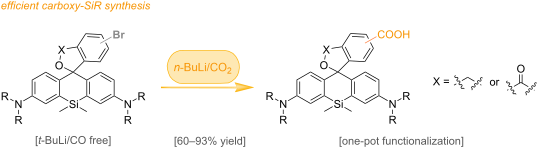
- readily available CO2, this method delivers carboxylated SiR derivatives in 60–93% yields while avoiding the use of t-BuLi, toxic CO, and expensive palladium catalysts. In addition, the crude carboxylation mixtures can be directly subjected to amide coupling without chromatographic purification, enabling
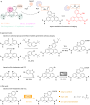
- maturity of photophysical optimization, the broader expansion of SiR chemistry is increasingly constrained by the limited accessibility of 5,6-carboxylated SiR derivatives. The carboxy groups provide a general and efficient handle for amide coupling with targeting ligands and are therefore central to the
- . Importantly, these species lack a carboxy group and therefore cannot participate in subsequent amide coupling reactions. Moreover, although small amounts of these byproducts were formed, they did not significantly interfere with the subsequent reactions. Thus, the reaction mixtures could be extracted with



Palladium-catalyzed benzocyclization reactions of quinoline-2-carboxamides via sequential C–H/N–H functionalization
Beilstein J. Org. Chem. 2026, 22, 905–914, doi:10.3762/bjoc.22.71
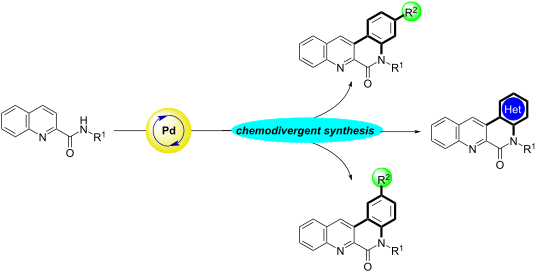
- proceeds at the C–H bond on the quinoline adjacent to the amide group and at the amide N–H bond in the presence of 10 mol % Pd(OAc)2 in o-xylene as a solvent to afford the cyclized product in 34% yield. The yield increases to 81% when the reaction is carried out with 80 mol % P(4-MeOC6H4)3 as a ligand and
- metal affinity [9][10]. It is therefore expected that annulation of the amide moiety in quinoline-2-carboxamides would extend their functionality as biologically active structures, ligands, and extractants. Transition-metal-catalyzed coupling reactions are crucial for constructing carbon–carbon and
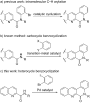
- phenanthroline and quinoline, containing amide groups (Scheme 2a) [38][40]. These reactions efficiently provide the corresponding annulation products; however, it remains difficult to selectively obtain a variety of substituent positions following cyclization. Moreover, these methodologies necessitate the




Site-specific labelling of native peptides and proteins: chemical and enzymatic strategies
Beilstein J. Org. Chem. 2026, 22, 857–881, doi:10.3762/bjoc.22.67
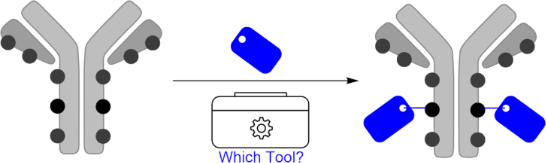
- to form amide bonds via trans-thioesterification, though often under denaturing conditions (Scheme 1c) [9]. Intein-mediated ligation is a recombinant alternative but often requires linker sequences. Newer reagents such as 2-cyanobenzothiazole 2 (CBT) react with N-terminal cysteine to form luciferin
- and glutamine (or other small primary amides) is another frequently used enzyme for bioconjugation. The primary amide in glutamine is converted into an acyl intermediate that is subsequently attacked by amine nucleophiles such as lysine ε-amines and glycine α-amines. Although MTG can modify Gln295 on
- . [141] provide a comprehensive summary of recent advances in engineering amide-bond-forming enzymes for modifications, including asparaginyl endopeptidase (AEP), omniligase and other emerging biocatalysts. Comparative Analysis, Outlook and Future Directions In Table 1, we compile a bird’s-eye overview








The trans-influence in gold chemistry from a catalytic perspective
Beilstein J. Org. Chem. 2026, 22, 838–856, doi:10.3762/bjoc.22.66
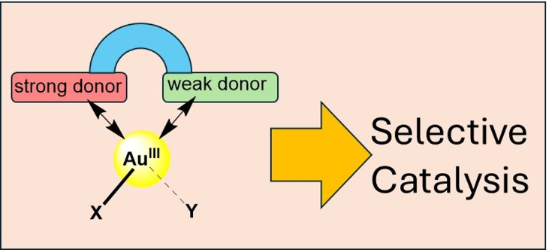
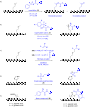
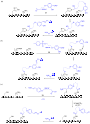
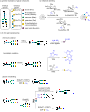
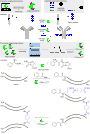
- complexes. Both terminal and internal alkynes could be inserted, with a wide variety of functional groups including alkyl, aryl, OH, COOH, amide and aldehyde substituents, but not DMAD. The excellent stereo- and regiochemical selectivity could be explained by a bimolecular mechanism, as confirmed by DFT


Synthesis and structural elucidation of a novel bis-spirooxindole from isatin and ethylenediamine
Beilstein J. Org. Chem. 2026, 22, 813–820, doi:10.3762/bjoc.22.63

- retained the four-signal pattern of isatin (H4', H5', H6', H7'), slightly shifted by the new structural environment. In the 13C NMR spectrum, the amide carbonyl appeared at δ 176.5 ppm, while a key quaternary carbon at δ 61.0 ppm (C3‘) – formerly the C-3 isatin carbonyl carbon – confirmed the formation of


Design, synthesis, and biological evaluation of FXR/ASK1 dual-target modulators
Beilstein J. Org. Chem. 2026, 22, 771–781, doi:10.3762/bjoc.22.59
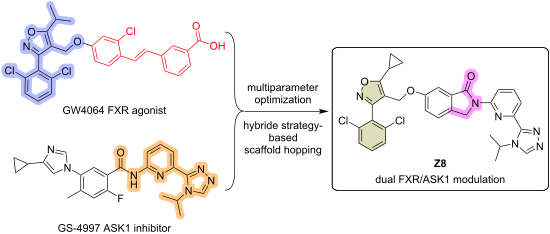
- systems or the phenyl ring at the 3-position of the isoxazole to enhance hydrophilicity and improve pharmacokinetic properties [42]. Co-crystallization of GS-4997 with ASK1 unveiled key stabilizing interactions in the active site. Specifically, the amide carbonyl forms a hydrogen bond with the backbone
- amide of Val 757, and concurrently, a triazole nitrogen engages in a hydrogen bond with the amine moiety of Lys 709 [43]. By merging the key pharmacophores of the two drugs and systematically optimizing the resulting bipharmacophoric structure, we ultimately obtained balanced dual-target modulators


Preparation of 3-(alkylamino)imidazo[1,2-a]pyridine-2-carbaldehydes via Kornblum oxidation and unexpected ring-opening reactions of the corresponding alcohols under oxidative conditions
Beilstein J. Org. Chem. 2026, 22, 763–770, doi:10.3762/bjoc.22.58
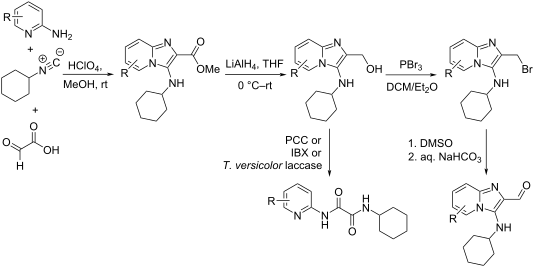
- ester 13b into the corresponding amide using AlCl3 were not promising and therefore the hydrolysis of this ester to corresponding carboxylic acid 14 was tested. Using KOH in MeOH at 35–40 °C for the ester hydrolysis reaction resulted in decarboxylated compound 12b being isolated as the sole product in


Synthesis of heterocycles based on azomethine ylides from α-amino acids (or amines) and carbonyl compounds
Beilstein J. Org. Chem. 2026, 22, 705–741, doi:10.3762/bjoc.22.55
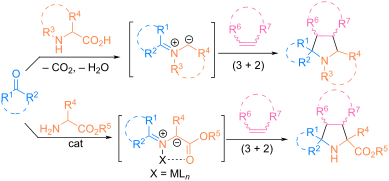
- the catalytic precursor and chiral bis-ferrocenyl amide phosphine (FAP) (L1) as ligand [36] (Scheme 2). The obtained results demonstrated the high efficiency of the Ag(I)-FAP catalytic system for this transformation. In particular, most α-(arylimino)esters yielded cycloaddition products 3 in excellent


Advantages of PROTACs in achieving selective degradation of homologous protein families
Beilstein J. Org. Chem. 2026, 22, 628–661, doi:10.3762/bjoc.22.49
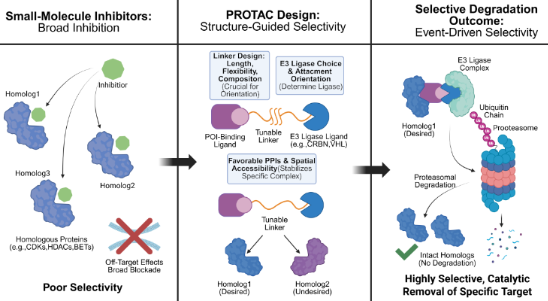
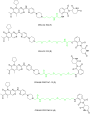
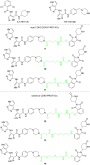
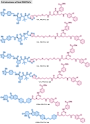
- to explore the influence of the direction of VHL recruitment of PROTACs on selectivity (termed the “amide series” and “phenyl series” individually). Simultaneously, they used four linkers of different lengths to connect the E3 ligand and the POI ligand to explore the influence of linker fragments on
- molecular selectivity (Figure 10). As for the “amide series”, the authors discovered that in MDA-MB-231 human breast cancer cells, the 10-atom and 11-atom linker PROTACs (SJF-6693 (26) and SJF-6690 (27)) were not selective and degraded both p38α and p38δ nonspecifically with DC50 < 100 nM (Figure 11









Towards the targeted protein degradation of CK2: design and synthesis of CAM4066-based PROTACs
Beilstein J. Org. Chem. 2026, 22, 611–619, doi:10.3762/bjoc.22.47
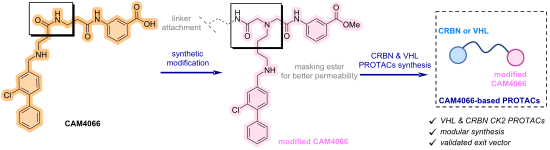
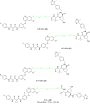
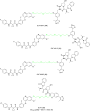
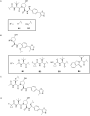
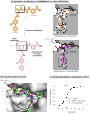
- revealed a small solvent-accessible channel adjacent to the amide linking the ATP- and αD-binding fragments (Figure 1). This channel represented a promising region from which to project a linker, as it was oriented toward solvent and spatially removed from residues critical for 1 binding to CK2α. The amide
- closest to this opening was therefore identified as the optimal site for structural modification. To allow more flexible functionalisation, the linking region was redesigned to introduce a secondary amine adjacent to the original amide position. This amine maintained the length and orientation of the

Molecular tweezer–peptide conjugates disrupt the protein–protein interaction between survivin and histone H3 essential in mitosis
Beilstein J. Org. Chem. 2026, 22, 557–567, doi:10.3762/bjoc.22.41
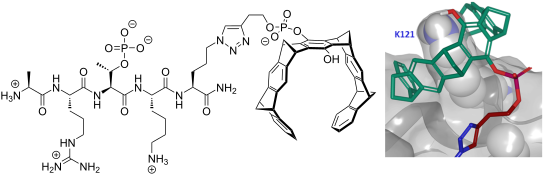
- as a barrier for the rearrangement of survivin’s side chains and the interaction diagram reveals contacts to all nine accessible acidic amino acids on the protein surface [14]. The new tweezer H3 conjugate 2a has a C4 spacer between the Lys-4 amide and the azide, very close to 1 with its C3 spacer




Synthesis and uranyl(VI) extraction performance of a calix[4]pyrrole–tetrahydroxamic acid receptor
Beilstein J. Org. Chem. 2026, 22, 486–494, doi:10.3762/bjoc.22.36
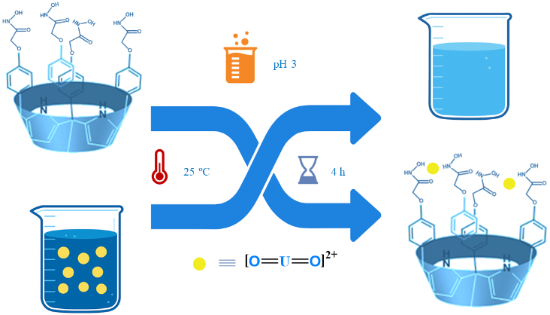
- the hydroxamic acid moieties, in agreement with previous reports (Supporting Information File 1, Figure S3) [57]. Additionally, two pairs of singlets at 8.97, 9.32 and 10.20, 10.93 ppm (2H total) were assigned to the hydroxy (–OH) and amide (–NH) protons of the hydroxamic acid groups (Supporting


Synthesis of a HDAC inhibitor–nanogold probe for cryo-EM visualization in class I HDAC co-repressor complexes
Beilstein J. Org. Chem. 2026, 22, 480–485, doi:10.3762/bjoc.22.35
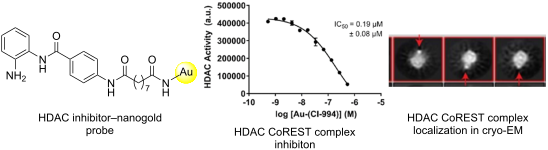
- dibenzylated by-product. Compound 5 was then coupled to the CI-994 intermediate 3 via HATU-mediated amide bond formation to produce 6 in good yield. Removal of the benzyl protecting group was performed by catalytic hydrogenation and acid 7 was obtained in near quantitative yield. Intermediate 7 was converted



Synthesis and anti-cancer activity of naphthalimide–organylselanyl conjugates
Beilstein J. Org. Chem. 2026, 22, 416–435, doi:10.3762/bjoc.22.29
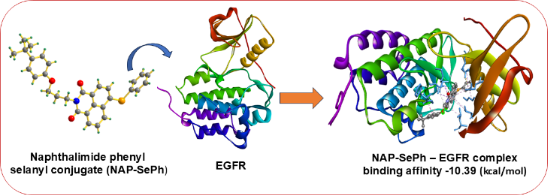
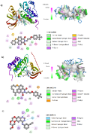
- interactions: van der Waals (Gly772), hydrogen bonding and carbon–hydrogen bonding (Met769), π–donor (Thr766), π–σ (Leu820), π–sulfur (Met742), amide–π (Phe771), alkyl (Leu694), and π–alkyl interactions (Val702, Ala719, Lys721, Leu764). In contrast, compound 8 formed eight interactions: van der Waals (Pro770
- ), hydrogen bonding (Met769), carbon–hydrogen bonding (Thr766), π–anion (Asp831), π–σ (Leu694), amide–π (Met769), alkyl (His781), and π–alkyl (Val702, Ala719, Leu768, Leu820). These results confirm that both ligands are well accommodated within the binding pocket of EGFR tyrosine kinase, with compound 7


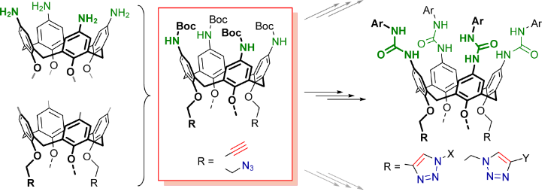
Cone p-aminocalix[4]arenes enriched with ‘clickable’ alkyne or azide functionalities
Beilstein J. Org. Chem. 2026, 22, 399–415, doi:10.3762/bjoc.22.28
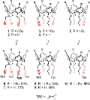
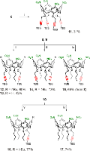
- commercially available lithium bis(trimethylsilyl)amide (LiHMDS), but the latter was found inconvenient for routine syntheses due to high moisture sensitivity which prevented reproducibility of the reaction conditions. To overcome this difficulty, the LiHMDS solution was instead prepared in situ by reacting




Recent advances in the cleavage of non-activated amides
Beilstein J. Org. Chem. 2026, 22, 352–369, doi:10.3762/bjoc.22.23
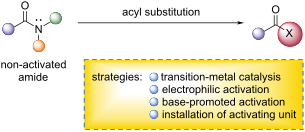
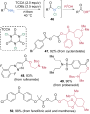
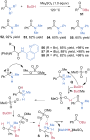
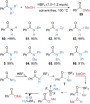
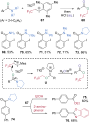
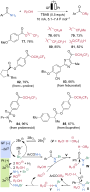
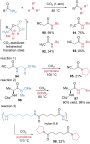
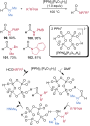
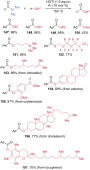
- Eun-Sol Choi Hyo-Jun Lee Department of Chemistry, Kunsan National University, Gunsan 54150, Republic of Korea 10.3762/bjoc.22.23 Abstract The amide bond is one of the most fundamental and widely utilized functional groups in organic chemistry, central to the structures of pharmaceuticals
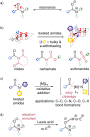
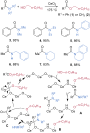
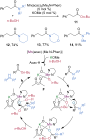
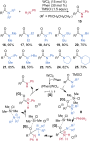
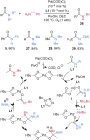
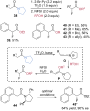
- of conventional, non-activated amides remains far more difficult. This review summarizes recent advances over the past decade in the activation and cleavage of non-activated amide C–N bonds for their conversion into diverse carboxylic acid derivatives. Key strategies covered include transition-metal
- catalysis, electrophilic activation, strong base-counter-cation systems, and N-based activating groups that enable chemoselective bond cleavage. Together, these developments provide powerful tools for amide functionalization and offer new opportunities for efficient, practical, and selective syntheses








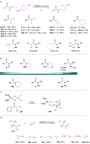


Spirobarbiturates with a pyrrolizidine moiety: synthesis, structure and biological evaluation
Beilstein J. Org. Chem. 2026, 22, 274–288, doi:10.3762/bjoc.22.20
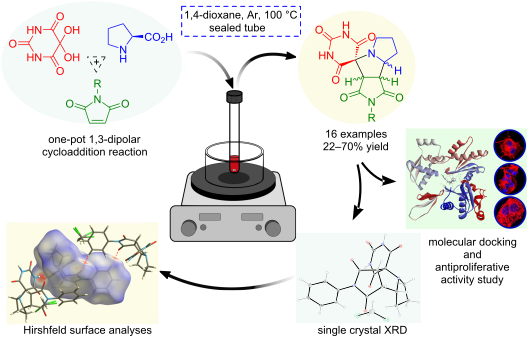
- contacts: the barbiturate ring forms hydrogen bonds with water molecules through C=O···H–O and N–H···O–H interactions; the amide group of the barbiturate ring is engaged in a C=O···H–N hydrogen bond with the carbonyl oxygen of the maleimide fragment; additionally, a C=O···H–CH2 contact is observed between
- the hydrogen atom of the maleimide methyl group and the carbonyl oxygen of an adjacent maleimide ring. The crystal structure of compound 4b exists as a solvate. The oxygen atom of a water molecule forms a hydrogen bond with the amide hydrogen of the barbiturate fragment (N–H···O–H = 2.783 Å), while