Search results
Search for "coupling" in Full Text gives 2093 result(s) in Beilstein Journal of Organic Chemistry. Showing first 200.
An undecacyclic carbon-centered hydrocarbon radical: synthesis and investigation
Beilstein J. Org. Chem. 2026, 22, 1196–1204, doi:10.3762/bjoc.22.95
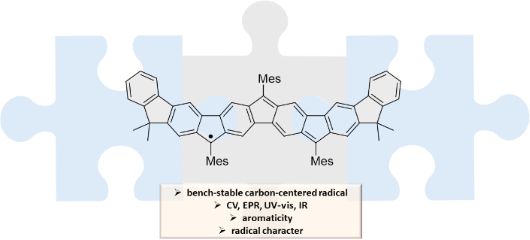
- -conjugated system. The target radical was obtained in eight consecutive synthetic steps with an overall yield of 7%, with a Suzuki coupling and cyclization via electrophilic aromatic substitution (SEAr) serving as key steps. Mesityl substituents attached to the five-membered rings provide kinetic
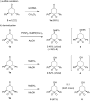
- by preparation of the corresponding boronated building block 12, followed by Suzuki coupling with a dibromofluorene building block 13, and concluded by a double ortho-cyclization and subsequent rearomatization. Pinacol (Pin) boronate 12 was synthesized from commercially available fluorene 8. Initial
- borylation to the boronated species 12. The synthesis of mesityl-substituted fluorene 13 from commercially available 2,7-dibromo-9H-fluoren-9-one has already been reported [45]. Its subsequent double Suzuki coupling with boronate 12 generated terfluorene 14 (Scheme 2). The following nucleophilic addition






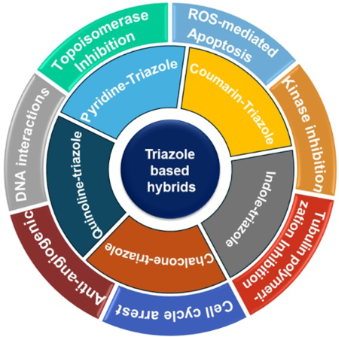
Triazole-based hybrid molecules in anticancer drug discovery: structural classes and mechanistic insights, 2014–2025
Beilstein J. Org. Chem. 2026, 22, 1168–1195, doi:10.3762/bjoc.22.94
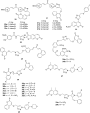
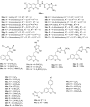
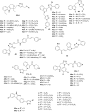
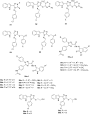
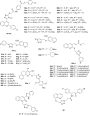
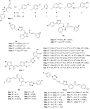
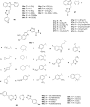
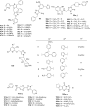
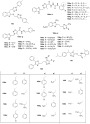
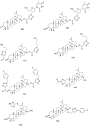
- adverse effect [67]. Recent research has explored the potential of indole–triazole hybrids as anticancer agents. Indole and triazole units have been connected using several synthetic approaches, including click chemistry and various coupling reactions, to generate a diverse array of structurally distinct






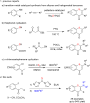
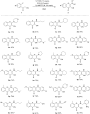
A cascade synthesis of 2-aminothiochromones from 2-fluorophenyl ketone and thiocarbonyldiimidazole
Beilstein J. Org. Chem. 2026, 22, 1151–1159, doi:10.3762/bjoc.22.92
- obtained on a Bruker 400 (Bruker, Rheinstetten, Germany) at 100 MHz and a Bruker AVANCE 500 (Bruker, Rheinstetten, Germany) at 125 MHz. Chemical shift values were referenced to the residual solvent peak and reported in ppm (δ scale) and all coupling constant (J) values were given in Hz. CDCl3 or DMSO‑d6



Construction of CF2 moieties in FDA-approved drugs (2016–2025): industrial routes, mechanisms, and scale-up considerations
Beilstein J. Org. Chem. 2026, 22, 1122–1150, doi:10.3762/bjoc.22.91
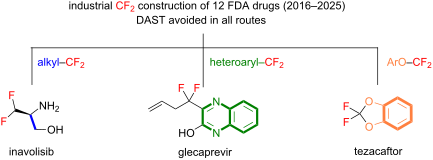
- –CF2 Direct CF2 functionalization of aromatic rings typically employs metal-catalyzed methods, such as the reaction of ethyl bromodifluoroacetate with 2-haloarenes in the presence of copper powder, or metal-catalyzed coupling using difluoromethyl 2-pyridylsulfone (Hu's Reagent). Among the four drugs
- product 99 was found to be highly prone to HF elimination under palladium-catalyzed coupling conditions. The best yield achieved by this method was only 62%, while the worst was as low as 11%. Further studies revealed that even the purified coupling product 99 decomposed by 67% within just 1 hour under
- the optimal reaction conditions (0.015 equiv Pd2(dba)3, 0.07 equiv Ruphos, 60 °C), indicating that this structure is inherently unstable under such coupling conditions. Route b (reported in 2020) [6] uses a CF2-containing building block 101 to generate the α,α-difluoroallyl carbanion in the presence






Discovery of sugarnitriles A and B, and structural reassignment of SF-2140, from a sugarcane endophytic actinomycete Amycolatopsis sp. JS-O27
Beilstein J. Org. Chem. 2026, 22, 1114–1121, doi:10.3762/bjoc.22.90
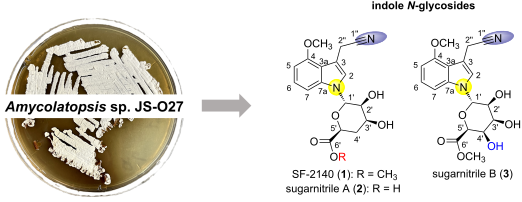
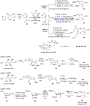
- (2) and B (3), were isolated from a sugarcane endophytic actinomycete Amycolatopsis sp. JS-O27. The planar structures of 1–3 were established by HRESIMS data and detailed 1D/2D NMR spectroscopic analysis, and the conformations of the sugar moieties were deduced by the analysis of 3JH-H coupling
- twist-boat conformation in solution based on 3JH−H coupling constants [19]. The chemical shifts, 3JH−H coupling constants, and NOESY data of the sugar moiety of 1 indicated that its relative configurations were the same as those of SF-2140, which adopts a twist-boat conformation in solution (Table S2
- , Supporting Information File 1, and Figure 2b). The large coupling constant (J = 9.4 Hz) between H-1' and H-2' indicated both the indole and the 2'-OH to be in pseudo-equatorial positions. Furthermore, the small coupling constants between H-2' and H-3', and between H-3' and H-4'b, and NOESY correlations of H


Rhodopyran, a carboxylated hexahydrocyclopenta[b]pyran from Rhodococcus
Beilstein J. Org. Chem. 2026, 22, 1107–1113, doi:10.3762/bjoc.22.89
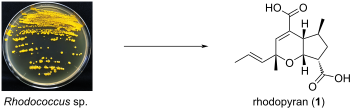
- Rhodococcus sp. strain RD066637. The planar structure was elucidated by 1D/2D NMR analyses and HRMS spectrometry, and the relative configuration was assigned from vicinal coupling constants and NOESY correlations, while the absolute configuration remains undetermined. Rhodopyran represents a structurally
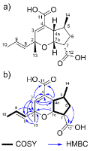
- defined two main partial structures: a 1-propenyl moiety (H-8/H-9/H3-10) with a large trans vicinal coupling (J = 15.4 Hz), consistent with an E configuration across C-8/C-9, and a methyl-branched aliphatic spin system, H-4a/H-5(H3-14)/H2-6/H-7/H-7a, including the H-5/H2-6 and H-5/H3-14 COSY correlations
- -7a to C-4 was also detected and is shown as a dashed arrow in Figure 1. These data completed the planar structure of 1. The relative configuration of 1 was determined by analysis of vicinal coupling constants around the bicyclic junction (H-4a, H-5, H-7a, H-7) and NOESY correlations (Figure 2). The


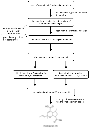
Controlled supramolecular assemblies of luminescent tridentate cyclometalated alkynylgold(III) amphiphiles in aqueous media
Beilstein J. Org. Chem. 2026, 22, 1097–1106, doi:10.3762/bjoc.22.88
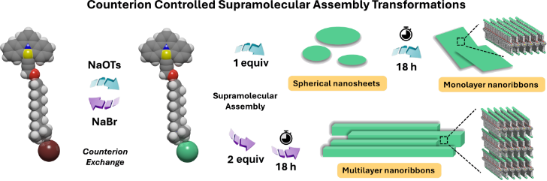
- Information File 1, Figure S3), the emission spectral results suggested that the luminescent properties of GA have been greatly improved through the coupling with a σ-donor to gold(III) complex. Upon progressively heating the aqueous solution of GA from 10.0 °C to 50.0 °C, the resulting emission intensity of


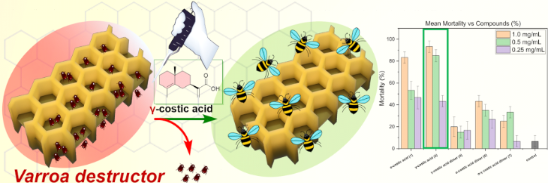
Synthesis and acaricidal activity against Varroa destructor of α- and γ-costic acid dimers
Beilstein J. Org. Chem. 2026, 22, 1088–1096, doi:10.3762/bjoc.22.87
- as internal standard at δ (ppm) 7.26 and 77.0. Chemical shifts are given in δ (ppm). Data for 1H NMR are reported as follows: chemical shift, multiplicity (s = singlet, brs = broad singlet, d = doublet, brd = broad doublet, brdd = broad double doublet, m = multiplet), coupling constants (in hertz


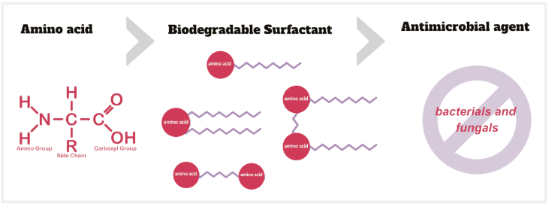
Amino acid-based surfactants: sustainable synthesis and antimicrobial mechanisms
Beilstein J. Org. Chem. 2026, 22, 1067–1085, doi:10.3762/bjoc.22.85
- conditions [36]. Carboxylic acid activation and amide bond formation are commonly performed using acyl chlorides in Schotten–Baumann-type reactions or carbodiimide-mediated coupling agents such as DCC or EDC, providing high conversions under relatively mild conditions [3][6]. Reported yields generally range
- requires the use of protecting groups, including Boc (tert-butyloxycarbonyl), Fmoc (fluorenylmethyloxycarbonyl), Cbz (benzyloxycarbonyl), and ester-based strategies, to ensure regioselectivity and controlled coupling [3][13]. Although effective, these approaches increase synthetic complexity and may limit
- core of the membrane [63][64]. This property correlates with their improved efficacy against P. aeruginosa [16][59]. This adaptability allows tailored designs for specific interactions, balancing charge and hydrophobicity. Synthesis typically involves stepwise coupling strategies using protecting


Synthesis of functionalized, 13-alkyl-substituted coralyne derivatives and investigation of their interactions with duplex and abasic site-containing DNA
Beilstein J. Org. Chem. 2026, 22, 1057–1066, doi:10.3762/bjoc.22.84
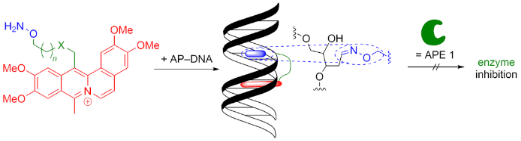
- , the carboxylic acid unit of coralyne 2d was esterified by the reaction with ethyl 4-aminobutanoate hydrochloride [46] and PyBOP as coupling reagent (Scheme 4). The structure of the resulting coralyne was confirmed by NMR spectroscopy (1H, 13C, 19F) and mass spectrometry, but the analysis also revealed
- a mixture of counter anions PF6− and Cl−. Therefore, the product was converted into its bromide salt by ion exchange chromatography to give coralyne 2e in an overall yield of 70%. Likewise, coralyne 2d was functionalized with an aminooxyalkyl linker [37] by PyBOP-assisted coupling and ion metathesis
- analysis of the ligand–DNA complex unambiguously indicated the intercalation of the coralyne unit of 2e into the DNA by the characteristic negative LD band in the absorption range of the ligand [54][55]. At the same time, the relatively strong bisignate ICD signal is usually caused by exciton coupling [56


The role of spacer length and flexibility in peptide self-assembly
Beilstein J. Org. Chem. 2026, 22, 986–996, doi:10.3762/bjoc.22.77
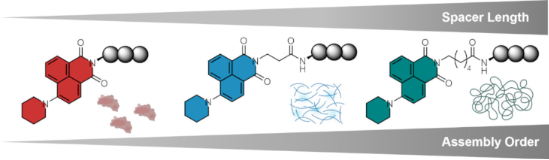
- modulate the self-assembling properties of short peptides through directional and cooperative non-covalent forces [25][26]. Coupling these to the N-terminus of the peptide sequence leads to the formation of peptide amphiphiles with a general architecture of a hydrophobic tail attached to a hydrophilic
- , using (benzotriazol-1-yloxy)tripyrrolidinophosphonium hexafluorophosphate (PyBOP®) and N,N’-diisopropylethylamine (N,N’-DIPEA) in peptide-grade dimethylformamide (DMF). After the coupling, the peptides were cleaved from the resin under acidic conditions (95% TFA) in the presence of TIPS (2.5%) and H2O
- (2.5%) acting as scavengers to suppress carbocation-mediated side reactions [38]. Furthermore, the utilization of the Clt-resin, instead of the commonly used Wang resin, reduced S-alkylation of the thiol side chains [39]. C0-Nap-ICA 8 was obtained through coupling of C0-Nap 5 to H2N-Cys-Ala-Clt-resin


Recent advances in copper-catalyzed direct hydroamination of alkenes with (hetero)aromatic amines
Beilstein J. Org. Chem. 2026, 22, 925–947, doi:10.3762/bjoc.22.73
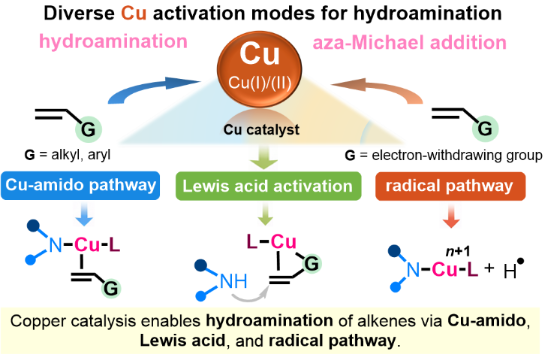
- imination-alkynylation-aza-Michael cascade for the enantio- and diastereoselective synthesis of 1,3-disubstituted isoindolines and tetrahydroisoquinolines 24 via a three-component coupling reaction involving 2-formylphenyl acrylates or 2-formylphenylcrotonates 21, arylalkynes 22, and anilines [46]. In this
- catalyst, affording chiral cyclopropyl pyrazoles with high levels of regio-, diastereo-, and enantioselectivities (Scheme 15) [55]. In the presence of Cu(CH3CN)4PF6 (5 mol %) and the chiral bisphosphine ligand (R,R)-iPr-DuPhos, the coupling of pyrazoles with substituted cyclopropenes proceeded efficiently
- %) and LiOt-Bu in CH3CN under blue LED irradiation enabled the coupling of alkenes 49 with carbazoles, indoles, and aniline derivatives to afford the corresponding amination products 50 with Markovnikov regioselectivity. Various styrene derivatives bearing electron-donating or electron-withdrawing




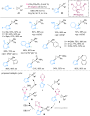


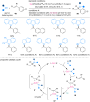

A practical CO2-mediated synthesis of 5,6-carboxylated silicon-rhodamines for targeted probe development
Beilstein J. Org. Chem. 2026, 22, 915–924, doi:10.3762/bjoc.22.72
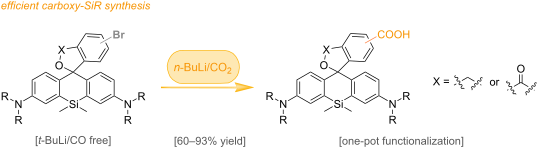
- readily available CO2, this method delivers carboxylated SiR derivatives in 60–93% yields while avoiding the use of t-BuLi, toxic CO, and expensive palladium catalysts. In addition, the crude carboxylation mixtures can be directly subjected to amide coupling without chromatographic purification, enabling
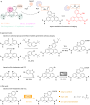
- maturity of photophysical optimization, the broader expansion of SiR chemistry is increasingly constrained by the limited accessibility of 5,6-carboxylated SiR derivatives. The carboxy groups provide a general and efficient handle for amide coupling with targeting ligands and are therefore central to the
- . Importantly, these species lack a carboxy group and therefore cannot participate in subsequent amide coupling reactions. Moreover, although small amounts of these byproducts were formed, they did not significantly interfere with the subsequent reactions. Thus, the reaction mixtures could be extracted with



Palladium-catalyzed benzocyclization reactions of quinoline-2-carboxamides via sequential C–H/N–H functionalization
Beilstein J. Org. Chem. 2026, 22, 905–914, doi:10.3762/bjoc.22.71
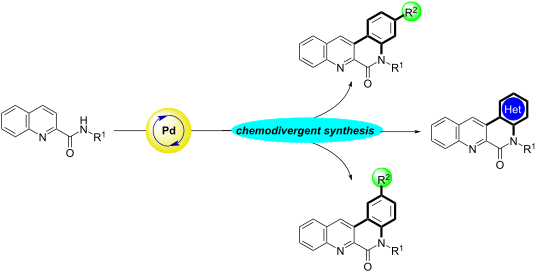
- corresponding heterocycle-fused compounds. The high chemoselectivity of the 1,2-dihaloarene functional groups is confirmed in this reaction, thus enabling divergent synthesis of various multifused heterocyclic systems. Keywords: C–H activation; chemodivergent synthesis; C–N coupling; fused-ring system
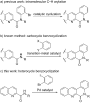
- metal affinity [9][10]. It is therefore expected that annulation of the amide moiety in quinoline-2-carboxamides would extend their functionality as biologically active structures, ligands, and extractants. Transition-metal-catalyzed coupling reactions are crucial for constructing carbon–carbon and
- carbon–heteroatom bonds. The classical coupling reactions, such as Kumada–Tamao–Corriu coupling [11][12][13], Sonogashira coupling [14][15], Negishi coupling [16][17], Migita–Kosugi–Stille coupling [18][19][20], Suzuki–Miyaura coupling [21][22], and Hiyama coupling [23][24] involve carbon–halogen and




Chiral cyclopropenimine-catalyzed enantioselective Michael reactions of phenol and benzofuran-derived α,β-unsaturated pyrazolamides with benzophenone-imine of glycine esters
Beilstein J. Org. Chem. 2026, 22, 888–896, doi:10.3762/bjoc.22.69
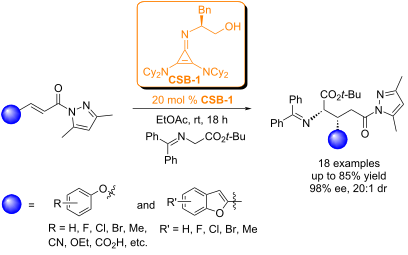
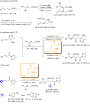
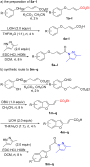
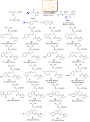
- benzofuran-derived pyrazolamides 5m–q were synthesized through DBU-mediated cyclocondensation of 2-hydroxybenzaldehydes with 4-bromocrotonates to afford (E)-2-benzofuranyl-3-acrylates followed hydrolysis and coupling with 3,5-dimethyl-1H-pyrazole (Scheme 2b) [12]. Initially, the Michael reaction between α,β






Site-specific labelling of native peptides and proteins: chemical and enzymatic strategies
Beilstein J. Org. Chem. 2026, 22, 857–881, doi:10.3762/bjoc.22.67
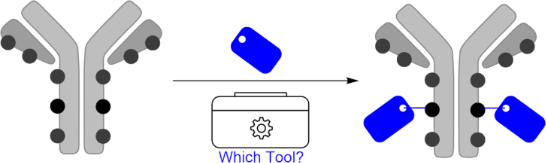
- sortase. Optimisations using depsipeptides or coupling strategies have further improved conversion efficiency and reduced reagent consumption [144]. Due to its ease of preparation, large libraries of sortase variants have been generated and screened to expand substrate scope [143]. In one example, sortase








The trans-influence in gold chemistry from a catalytic perspective
Beilstein J. Org. Chem. 2026, 22, 838–856, doi:10.3762/bjoc.22.66
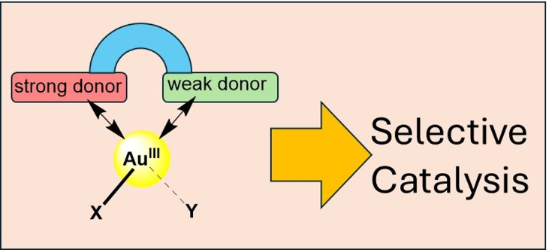
- ^C)AuH(C6F5)]− 21 react slowly at room temperature with DMAD to give the corresponding Z-vinyl products 24 and 25, respectively. On treatment with acid 24 decomposes with reductive C–C coupling but without Au–vinyl protolysis, while irradiation of THF solutions of 24 or 25 at room temperature leads


Total synthesis of the capsular polysaccharide repeating unit towards the development of a glycoconjugate vaccine against Klebsiella pneumoniae ST512
Beilstein J. Org. Chem. 2026, 22, 821–827, doi:10.3762/bjoc.22.64
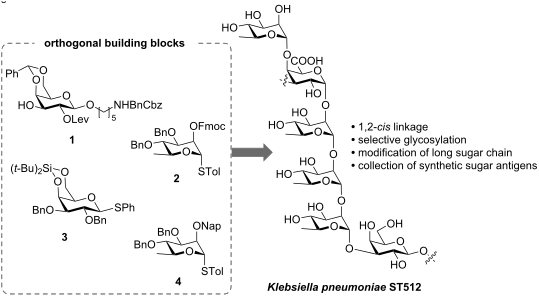
- ). Finally, protection of the hydroxy groups with benzyl ethers furnished building block 3 in 83% yield. With the building blocks in hand, the assembly of the hexasaccharide was pursued as outlined in Scheme 2. The synthesis commenced with the coupling of monosaccharides 1 and 2 promoted by NIS/TfOH followed


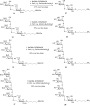
Synthesis and structural elucidation of a novel bis-spirooxindole from isatin and ethylenediamine
Beilstein J. Org. Chem. 2026, 22, 813–820, doi:10.3762/bjoc.22.63

- and HMBC experiments were used for signal assignment. Chemical shifts (δ) are expressed in ppm and coupling constants (J) in hertz (Hz). Chemical shifts are reported using CD3OD or DMSO-d6 as internal reference. IR spectra were recorded with a Bruker Alpha spectrometer using a single reflection ATR


Knoevenagel condensation of 4,5- and 1,8-diazafluorenes
Beilstein J. Org. Chem. 2026, 22, 803–812, doi:10.3762/bjoc.22.62
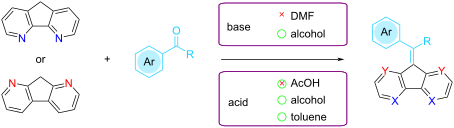
- for their synthesis involves coupling reactions of diazafluoren-9-one [4][6][7] or diazafluoren-9-diazomethane [17][18] with thiones yielding the products in moderate yields (20–70%). However, these routes require the preliminary synthesis of malodorous thiones and diazomethane derivatives from the




Halogenated azobenzene acrylates: from efficient solution photoswitching to stable solid-state photochromic materials
Beilstein J. Org. Chem. 2026, 22, 782–794, doi:10.3762/bjoc.22.60
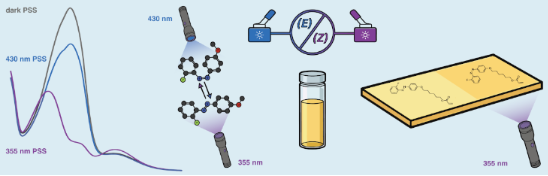
- halogenated azobenzene acrylate monomers bearing fluorine, chlorine or bromine substituents is reported. The monomers were prepared via a facile three-step synthetic route involving azo-coupling, O-alkylation and O-acylation. Apart from the steady electrochemical properties, halogen substitution proved to be
- polyacrylate or polystyrene materials. Results and Discussion Synthesis of azobenzene monomers The target azobenzene monomers 1a–f were obtained using a facile three-step synthetic route as shown in Scheme 1. The first step represents an azo-coupling reaction between phenol and the corresponding diazonium


Design, synthesis, and biological evaluation of FXR/ASK1 dual-target modulators
Beilstein J. Org. Chem. 2026, 22, 771–781, doi:10.3762/bjoc.22.59
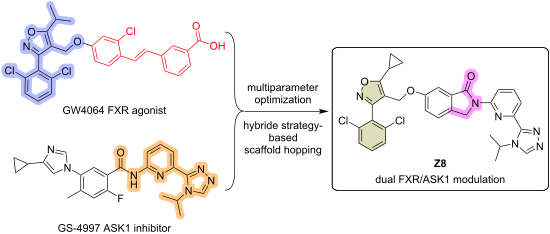
- LiOH or lithium aluminum hydride to obtain compounds Z4–7. The synthesis of compounds Z8–15 followed a similar preparation procedure as for Z1–7. The synthesis of target compounds Z16–29 is illustrated in Scheme 7. Intermediates 8 and 10 were synthesized by the Suzuki cross-coupling reaction using
- Z26–29. The synthesis of target compound Z30 is illustrated in Scheme 8. Treatment of intermediate 2 with N-Boc-4-hydroxypiperidine (11) in the presence of sodium hydride produced ether 12, followed by removal of the Boc-protecting group, provided intermediate 13. Coupling of intermediate 13 with IXa


Preparation of 3-(alkylamino)imidazo[1,2-a]pyridine-2-carbaldehydes via Kornblum oxidation and unexpected ring-opening reactions of the corresponding alcohols under oxidative conditions
Beilstein J. Org. Chem. 2026, 22, 763–770, doi:10.3762/bjoc.22.58
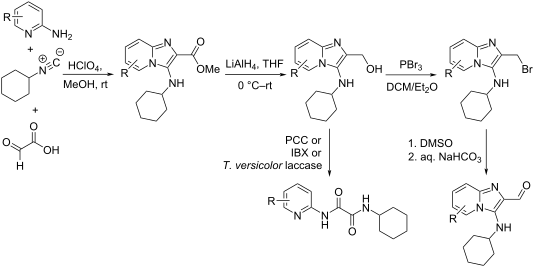
- ester. In this paper, we describe the synthesis of a library of derivatives of 8, whose imidazo[1,2-a]pyridine core could be accessed via the Groebke–Blackburn–Bienayme (GBB) multicomponent coupling reaction [20][21][22][23]. Results and Discussion In order to access our initial target compounds 7, the
- -chloroaniline, followed by reduction; ii) reaction of the corresponding carboxylic acid with 2-chloroaniline under peptide-coupling conditions followed by reduction; and iii) reduction of the ester to the aldehyde, followed by reductive amination to give compounds 8. Initial attempts at direct conversion of
- ]. The very small number of compounds of this type reported is suggestive of their inherent instability and their tendency to readily decarboxylate. Having ruled out using a peptide-coupling approach we moved to investigate the preparation of the 2-substituted aldehyde derivative, with subsequent


Synthesis and biological evaluation of new brassinosteroid analogs with C-22 benzoate function
Beilstein J. Org. Chem. 2026, 22, 753–762, doi:10.3762/bjoc.22.57
- these signals show direct correlation (1JHC coupling) in the 2D HSQC and 2JHC or 3JHC on the 2D HMBC spectra (Figures S1–S5, Supporting Information File 1). The structural determination of compounds 24–28 has been performed in a similar manner to that used for compound 23. Next, Sharpless
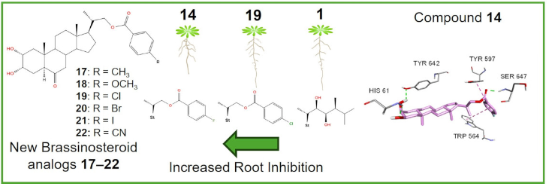
- . From a comparison of binding energy and relative accumulation in dBES1 overexpression it might be expected that there is an acceptable correlation between both parameters. For example, compound 19, possessing a chlorine substituent on the phenyl ring, has an outstanding molecular coupling in BRI1, and


Rongalite addition to dienones: diastereoselectivity in cyclic sulfone synthesis; stereochemical rationalization and prospects as a general conjugate nucleophile
Beilstein J. Org. Chem. 2026, 22, 742–752, doi:10.3762/bjoc.22.56

- sulfide oxidation. In that early work, the stereochemical analysis was dependent on conformational analysis and comparison of coupling constants in the 1H NMR spectra. Experiments discussed in our inital report confirmed that the reaction proceeded under kinetic control [21]. Closer examination of the