


Search results
Search for "cross coupling" in Full Text gives 615 result(s) in Beilstein Journal of Organic Chemistry. Showing first 200.
Design, synthesis, and biological evaluation of FXR/ASK1 dual-target modulators
Beilstein J. Org. Chem. 2026, 22, 771–781, doi:10.3762/bjoc.22.59
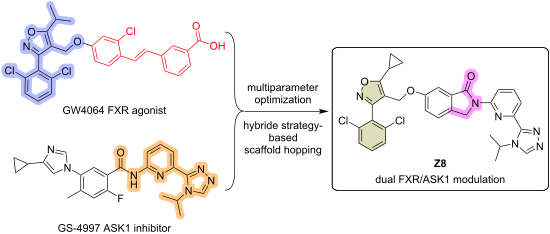
- LiOH or lithium aluminum hydride to obtain compounds Z4–7. The synthesis of compounds Z8–15 followed a similar preparation procedure as for Z1–7. The synthesis of target compounds Z16–29 is illustrated in Scheme 7. Intermediates 8 and 10 were synthesized by the Suzuki cross-coupling reaction using


Towards the targeted protein degradation of CK2: design and synthesis of CAM4066-based PROTACs
Beilstein J. Org. Chem. 2026, 22, 611–619, doi:10.3762/bjoc.22.47
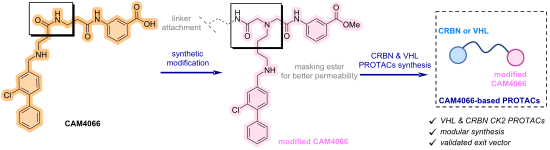
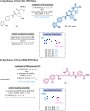
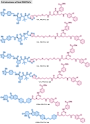
- corresponding triflate using triflic anhydride, followed by Suzuki–Miyaura cross-coupling with phenylboronic acid to give 16 in 59% yield (Scheme 1). Boc removal from intermediates 11–14 enabled attachment of the αD binder aldehyde 16 via reductive amination. Interestingly, NaBH(OAc)3 had performed well in the

Recent advances in the stereoselective synthesis of distal biaxially chiral molecules
Beilstein J. Org. Chem. 2026, 22, 461–479, doi:10.3762/bjoc.22.34
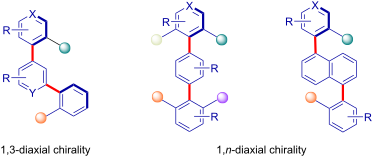
- , Hayashizaki, and Ito reported a highly stereoselective asymmetric cross-coupling reaction of 2-methylnaphthylmagnesium bromide with bromonaphthalene, catalyzed by a nickel complex with ferrocenylphosphine as the ligand, successfully synthesizing biaxially chiral molecules, namely 1,1':5',1"- and 1,1':4',1
- biaxially chiral compounds. In 1989, Ito and co-workers reported the synthesis of the first distally biaxially chiral compound (Scheme 12) [35]. This reaction employed nickel as transition-metal catalyst, for the cross-coupling of 2-methyl-1-naphthylmagnesium bromide (43) with 1,5- (44) and 1,4
- catalyst control, ultimately forming a helix and another stereogenic axis. In 2019, Shi and co-workers developed a Suzuki–Miyaura cross-coupling reaction catalyzed by a chiral NHC–Pd complex proceeding with high enantioselectivity (Scheme 16) [55]. This reaction can be used to synthesize different kinds of


Synthesis of tricyclic fused pyrrolidine nitroxides from 2-alkynylpyrrolidine-1-oxyls
Beilstein J. Org. Chem. 2026, 22, 344–351, doi:10.3762/bjoc.22.22

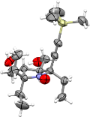
- benzoylation of hydroxymethyl groups under the conditions of Sonogashira cross-coupling, nitroxide 2a was treated with acetic anhydride in the presence of sodium acetate, yielding the diacyl derivative 5. Radicals 5 and 3a were heated with benzoyl chloride and triethylamine in toluene in the presence of a




Arene activation via π-bond localization: concepts and opportunities
Beilstein J. Org. Chem. 2026, 22, 257–273, doi:10.3762/bjoc.22.19
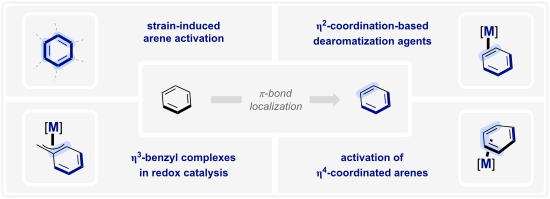
- enriching the repertoire of arene functionalization beyond the established cross-coupling and C–H activation canon. Alternatively, merging arene activation with additional concepts, such as photoredox catalysis offers an exciting opportunity to address thermodynamic constraints and to harness light-driven
- reactions of η2-arene complexes with alkenes and alkynes; NMM: N-methylmaleimide [64][65]. Binding characteristics and pioneering examples of isolable η3-benzyl complexes. p-Selective allylation of benzyl chlorides with allylstannanes and subsequent synthetic expansion of dearomative cross-coupling




Configuration–packing synergy enabling integrated crystalline-state RTP and amorphous-state TADF
Beilstein J. Org. Chem. 2026, 22, 224–236, doi:10.3762/bjoc.22.16
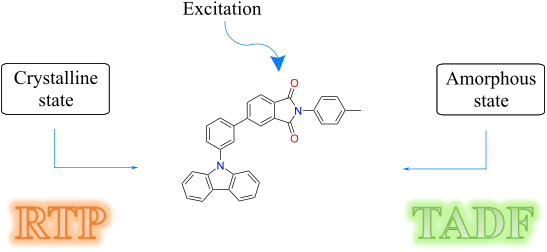
- EL spectra were measured under ambient conditions. Synthesis The synthetic route to 1 is shown in Scheme 1 and comprises imide formation followed by a Suzuki–Miyaura cross coupling. Synthesis of 5-bromo-2-(p-tolyl)isoindoline-1,3-dione (PI-Br, 4) In the first step, 2 (2.00 g, 8.81 mmol) was carefully
- , b) relationship between external quantum efficiency and brightness and c) current density–voltage–luminance characteristics of the OLED device based on 1 measured under ambient conditions. Synthetic pathway to 1 via imide formation and Suzuki–Miyaura cross-coupling. Energy-level parameters


Synthesis and applications of alkenyl chlorides (vinyl chlorides): a review
Beilstein J. Org. Chem. 2026, 22, 1–63, doi:10.3762/bjoc.22.1
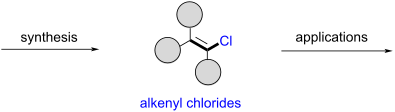
- alkenyl chlorides. The discussion begins with reductive metalation, reactions with organolithium reagents, and eliminations to terminal alkynes – some of which are also exemplified in chapter 1. This is followed by palladium- and nickel-catalyzed cross-coupling reactions. The chapter concludes with a
- arylboronic esters (Scheme 52) [181]. They discovered that a rhodium/1,4-bis(diphenylphosphino)butane (DPPB) complex, in combination with a large excess of 1,2-trans-dichloroethene, facilitated monoselective cross-coupling reactions. In 1987, Minato, Suzuki, and Tamao reported the first monoselective coupling
- demonstrated that the use of 4 equivalents of 1,1-dichloroethylene in combination with XPhos or JohnPhos ligands enabled monoselective cross-coupling with alkenyl- and arylboronic acids (Scheme 54B) [184]. Though mechanistically not related it is noteworthy that diazonium salts couple efficiently with alkenyl

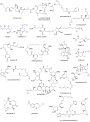

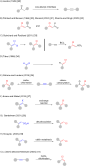


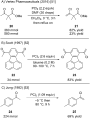


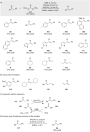







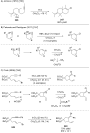


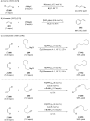


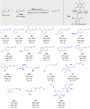
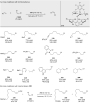
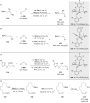


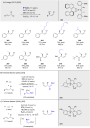


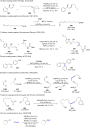


Total synthesis of asperdinones B, C, D, E and terezine D
Beilstein J. Org. Chem. 2025, 21, 2730–2738, doi:10.3762/bjoc.21.210
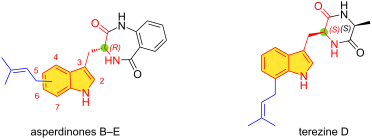
- tryptophan were explored. Different approaches were adopted for the functionalization of C4–C7 prenylindoles at C-3 using Negishi cross-coupling methods. The asperdinones are among the rare tryptophan-derived indole alkaloids which appear to have undergone epimerization due to genetic alteration of specific
- transferase AnaPT. A second, less evident approach, starts with a prenylindole, followed by introducing an (R)- or (S)-2-aminopropionate (alanine) unit at C-3 by a Negishi cross-coupling reaction (Figure 2, approach B, D–F). Although each approach has precedents in different contexts, achieving regioselective
- prenylindoles (Figure 1, approach B) which would rely on a Negishi cross-coupling reaction [37][38] using Jackson’s iodozinc N-Boc-ʟ-serine methyl ester [39] and 3-iodoallyl- or 3-iodoprenylindoles (Figure 3). Related Negishi cross-coupling reactions have been reported for bromoindoles [40] and 3-iodo-N-Boc-7


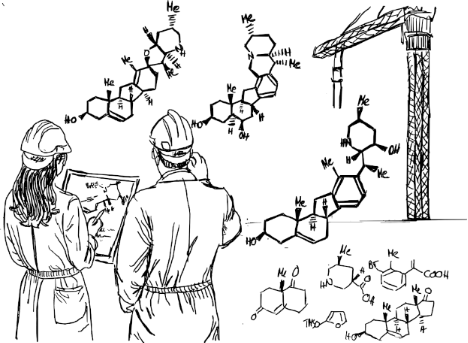
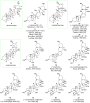
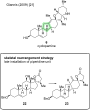
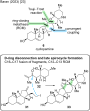
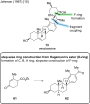
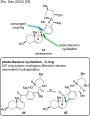
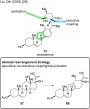
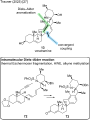
Recent advancements in the synthesis of Veratrum alkaloids
Beilstein J. Org. Chem. 2025, 21, 2657–2693, doi:10.3762/bjoc.21.206




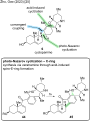
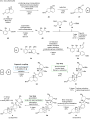
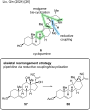

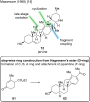






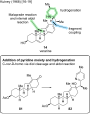


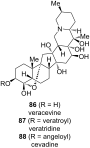


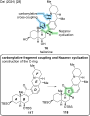

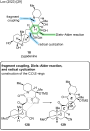
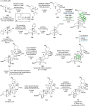
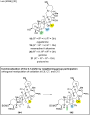
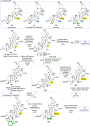
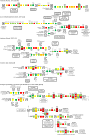
Visible-light-driven NHC and organophotoredox dual catalysis for the synthesis of carbonyl compounds
Beilstein J. Org. Chem. 2025, 21, 2584–2603, doi:10.3762/bjoc.21.200
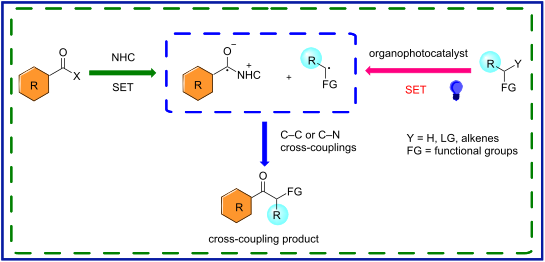
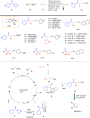
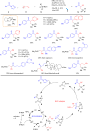
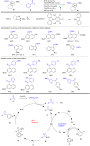
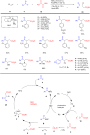
- carbenes (NHCs) with photocatalysts. The review encompasses transition-metal-based photocatalytic reactions for C–C and C–HA cross-coupling reactions involving various acyl fluorides, amides, aldehydes, carboxylic acids, and esters, highlighting their broad applications in organic synthesis and medicinal
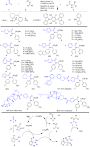
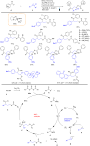
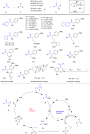
- , generating an N-centered radical species C. This species subsequently undergoes a rapid C–N cross-coupling with ketyl radical B. This cross-coupling method offers a transition-metal free route to highly substituted amides 3 from aldehydes 1 and imines 2, without the need for any external reductants or
- cross-coupling between the C-centered and N-centered radicals. These methods are expected to open new avenues for visible-light- and NHC/4CzIPN-catalyzed carbon–heteroatom bond-forming processes (Scheme 1) [51]. In 2021, Studer et al. developed a novel method for the 1,3-difunctionalization of





Palladium-catalyzed regioselective C1-selective nitration of carbazoles
Beilstein J. Org. Chem. 2025, 21, 2479–2488, doi:10.3762/bjoc.21.190
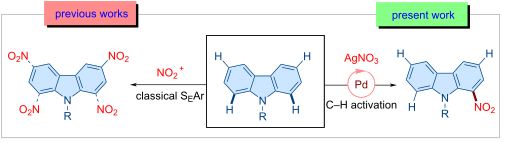
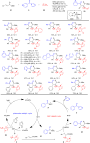
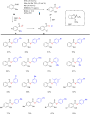
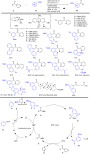
- methodologies are greatly limited due to harsh reaction conditions that impact the scope of the reaction, poor yield, and regioselectivity issues. In sharp contrast, transition metal-catalyzed cross-coupling reactions promisingly improve the regioselectivity issues and substrate scope [25][26][27][28]. In
- addition to cross-coupling reactions, transition metal-catalyzed cyclization involving C–H activation approaches have also been reported [29][30][31][32][33][34][35][36]. Despite the significant advances in carbazole core constructions, the established protocols significantly lack access to selectively C1


Comparative analysis of complanadine A total syntheses
Beilstein J. Org. Chem. 2025, 21, 2334–2344, doi:10.3762/bjoc.21.178
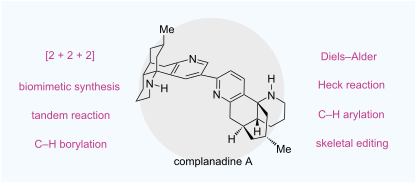
- reaction to rapidly establish the tetracyclic skeleton of complanadine A and an iridium-catalyzed site-selective pyridine C–H borylation followed by a Suzuki–Miyaura cross coupling to forge the C2–C3’ linkage. Their synthesis achieves a high degree of synergy between classic transformations and modern
- in 55% from 25 and 26 in three steps. Triflation of the pyridone gave 33 with a triflate at the C2 position for cross coupling to form the C2–C3’ linkage. At this stage, the Sarpong group needed to install a functional group at the C3 position of the pyridine. They creatively solved this challenge
- lycodine 34 underwent Ir-catalyzed C3–H borylation mainly guided by steric factors to provide boronic ester 35 in 75% yield. With the boronic ester handle at the C3 position, the subsequent Suzuki–Miyaura cross coupling between 35 and 33 occurred smoothly to deliver pseudo-dimer 36, which upon acidic



Recent advances in Norrish–Yang cyclization and dicarbonyl photoredox reactions for natural product synthesis
Beilstein J. Org. Chem. 2025, 21, 2315–2333, doi:10.3762/bjoc.21.177
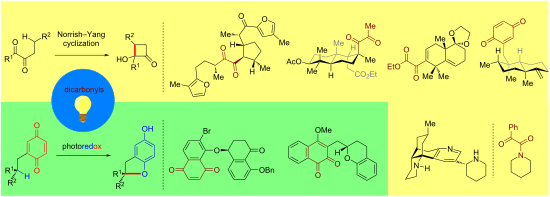
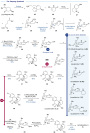
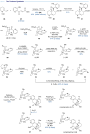
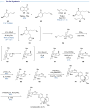
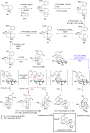
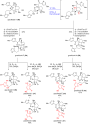
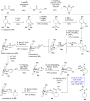
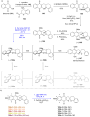
- Norrish–Yang cyclization, followed by a strain-release Pd-catalyzed C–C cleavage/cross-coupling protocol [9][11]; the strategy was subsequently applied to the total synthesis of lycoplatyrine A (89) in 2021 [38]. Isolated by Low’s group [39], lycoplatyrine A (89) belongs to the lycodine-type Lycopodium
- to construct a β-lactam, an α-metallated piperidine equivalent, overcoming poor yields and stereoselectivity in traditional methods. Its palladium-catalyzed cross-coupling with 2-bromolycodine via β-lactam C–C cleavage enabled stereoretentive coupling, efficiently synthesizing lycoplatyrine A and its
- epimers. This strategy merges photochemical selectivity with cross-coupling efficiency, avoiding reactive metal incompatibility and enabling precise stereocontrol for chiral nitrogen heterocycles. 3 Antibiotics 3.1 Synthetic study toward γ-rubromycin Since 2017, Suzuki's group has developed a







Enantioselective radical chemistry: a bright future ahead
Beilstein J. Org. Chem. 2025, 21, 2283–2296, doi:10.3762/bjoc.21.174
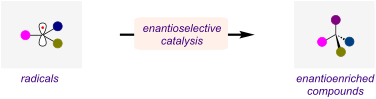
- and NiCl2·diglyme, was used as the catalyst to obtain the coupling products 20 in good yield and high enantioselectivity. The first nickel-catalyzed asymmetric reductive cross-coupling reaction between acid chlorides 21 and secondary benzylic chlorides 22 was reported by Reisman and co-workers (Scheme
- and pyrrolidinone electrophiles. Organocatalyzed formal [3 + 2] cycloadditions affording substituted pyrrolidines. Synthesis of a hexacyclic compound via an organocatalyzed enantioselective polyene cyclization. Nickel-catalyzed asymmetric cross-coupling reactions. Chiral cobalt–porphyrin


Pd-catalyzed dehydrogenative arylation of arylhydrazines to access non-symmetric azobenzenes, including tetra-ortho derivatives
Beilstein J. Org. Chem. 2025, 21, 2234–2242, doi:10.3762/bjoc.21.170
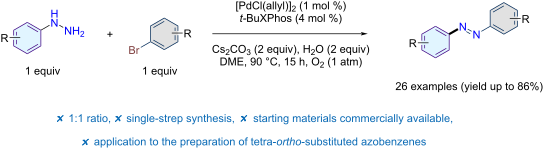
- the presence of water, highlighting its robustness. Keywords: azo compounds; cross-coupling; domino catalysis; palladium; phosphine ligands; Introduction Azobenzenes are a widely studied class of compounds known for their distinctive photoresponsive properties, rendering them valuable in a variety
- , most synthetic methods have focused on the preparation of symmetric derivatives [12][13]. Traditional approaches, such as oxidative coupling of anilines [14][15][16][17][18][19], reductive coupling of nitroarenes [20][21][22][23], or cross-coupling between anilines and nitroarenes have proven
- and co-workers developed a Chan–Evans–Lam-type oxidative cross-coupling reaction between N-arylphthalic hydrazides and arylboronic acids using copper catalysis [41]. Similarly, in 2003, Lee and co-workers introduced a desymmetrization approach employing simpler N=N precursors, specifically N-protected


The application of desymmetric enantioselective reduction of cyclic 1,3-dicarbonyl compounds in the total synthesis of terpenoid and alkaloid natural products
Beilstein J. Org. Chem. 2025, 21, 2085–2102, doi:10.3762/bjoc.21.164
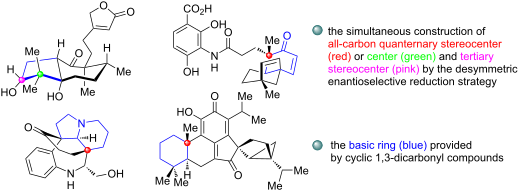
- and transformations of 43 produced hydroxyketone 44. Due to the steric hindrance of this substrate, the subsequent Suzuki cross coupling reaction with 3-boronophenol proceeded in low yield. To address this issue, Han′s group employed a novel palladacycle catalyst 45, previously developed by their
- -catalyzed Suzuki cross-coupling reaction of sterically hindered substrates developed by Han [35][36][37], the coupled product 57 was obtained in a satisfactory yield (72%) from 55 and pinacol boronate 56, along with trace amounts of the double bond migrated side product 58 (57:58 = ca. 15:1). Demethylation
- hydroxyketone 104 in excellent diastereoselectivity and enantioselectivity [9][11]. Ozonolysis of the double bond in 104 followed by Purdie methylation with Ag2O/MeI, base-mediated vinyl triflation, and Pd-catalyzed Suzuki–Miyaura cross coupling with pinacol boronate 105 delivered diene 106. Next, The Et2AlCl







Measuring the stereogenic remoteness in non-central chirality: a stereocontrol connectivity index for asymmetric reactions
Beilstein J. Org. Chem. 2025, 21, 1995–2006, doi:10.3762/bjoc.21.155
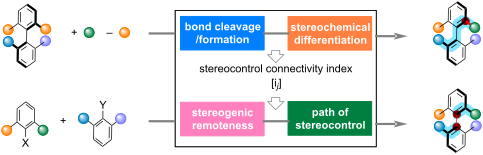
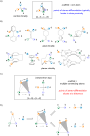
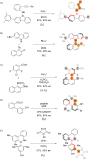
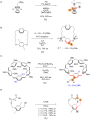
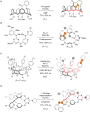
- –B [14] (Scheme 3E) bonds. In the case of an asymmetric cross-coupling reaction (Scheme 3C) [10], both sets of the substituents on individual aryl groups are considered because neither is involved in the bond formation/cleavage. Accordingly, the catalyst-controlled atroposelective Suzuki–Miyaura
- same procedure as in Scheme 5C. In analogy to Scheme 5B, the direct cyclization forging the planar chirality [24] in Scheme 6B is regarded as [31 10], in which two stereogenic arenes are proximate and the two distal arenes are considered diastereomeric. The desymmetrization cross-coupling of cavitands




Aryl iodane-induced cascade arylation–1,2-silyl shift–heterocyclization of propargylsilanes under copper catalysis
Beilstein J. Org. Chem. 2025, 21, 1984–1994, doi:10.3762/bjoc.21.154
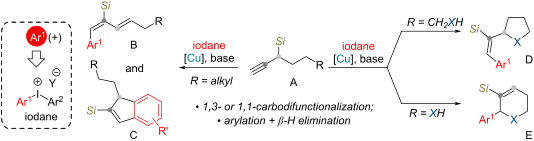
- propargylsilane 7d halogenation–cyclization cascade and Suzuki–Miyaura cross-coupling in the second step [22]. Thus, we have developed a faster and palladium-free route towards tetrahydrofurans 8. The latter can still be modified further through silicon–halide exchange followed by cross-coupling chemistry as
- can arylate propargylsilanes and induce a 1,2-silyl shift to generate β-Si-stabilized allyl cations. Compared to the previously employed two-step halocyclization–cross-coupling sequence [22], this approach offers a shorter, [Pd]-free synthetic sequence to the modified styryl-containing tetrahydrofuran


Rhodium-catalysed connective synthesis of diverse reactive probes bearing S(VI) electrophilic warheads
Beilstein J. Org. Chem. 2025, 21, 1924–1931, doi:10.3762/bjoc.21.150
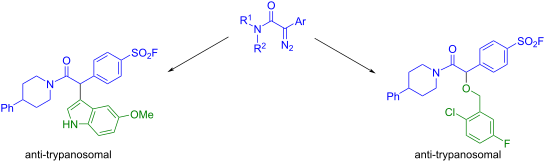
- -diazoamides 1. Finally, Pd-catalysed cross-coupling with warhead-substituted phenyl iodides gave, in low to moderate yield, the required α-diazoamide substrates 2 (referred to individually as D1–5 below). Whilst the Pd-catalysed arylation of α-diazoamides and esters is known [15][16][17][18][19], its


Photoswitches beyond azobenzene: a beginner’s guide
Beilstein J. Org. Chem. 2025, 21, 1808–1853, doi:10.3762/bjoc.21.143
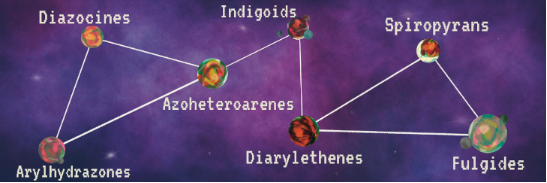
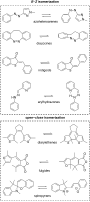
- reductive cross-coupling of benzyl halides when substituents prone to reduction (CN, esters) are present (Scheme 12C). The Ullman–Goldberg coupling of 41b with Boc-hydrazine followed by deprotection and oxidation then affords 35 [55]. Asymmetric diazocines can be synthesised by Sonogashira cross-coupling
- methods for N-arylation depending on the aryl type: electron-rich and electron-neutral substituents are introduced via Chan–Lam coupling with an arylboronic acid, electron-poor aromatics via Cu(I)-catalysed cross-coupling with aryliodonium salts, and monosubstitution is achieved via Ullman–Goldberg
- aldehyde and, if required, N-functionalisation via nucleophilic substitution (for aliphatic substituents) or palladium-catalysed cross-coupling (for aromatic substituents) (Scheme 25) [77]. Hemithioindigo can be synthesised by treating phenylthioacetic acid (83) with triflic acid. Then, the product is






Fe-catalyzed efficient synthesis of 2,4- and 4-substituted quinolines via C(sp2)–C(sp2) bond scission of styrenes
Beilstein J. Org. Chem. 2025, 21, 1799–1807, doi:10.3762/bjoc.21.142
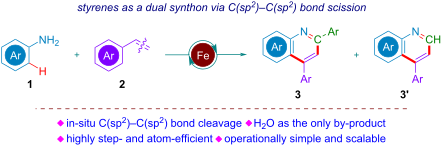
- cycloaddition, tandem annulation, intramolecular cyclization, and cross-coupling reactions are commonly employed under thermal conditions, utilizing metal catalysts based on Pd, Ru, Au, Cu, and Fe to access a wide array of substituted quinoline frameworks [29][30][31][32][33][34][35][36][37][38]. Conversely, in




Synthesis of optically active folded cyclic dimers and trimers
Beilstein J. Org. Chem. 2025, 21, 1603–1612, doi:10.3762/bjoc.21.124
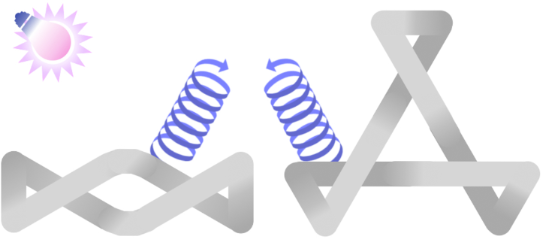
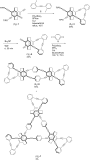
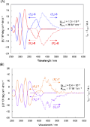
- –Hagihara cross-coupling [37][38] of (Sp)-1 with diiodotolane 2 afforded the corresponding ribbon-shaped compound (Sp)-3 in 39% isolated yield. Triisopropylsilyl (TIPS) groups in (Sp)-3 were removed using Bu4NF to afford diyne (Sp)-4 as a monomer in 45% isolated yield. The reaction of (Sp)-4 with


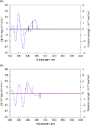
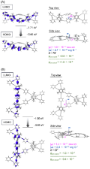
Thermodynamic equilibrium between locally excited and charge transfer states in perylene–phenothiazine dyads
Beilstein J. Org. Chem. 2025, 21, 1577–1586, doi:10.3762/bjoc.21.121
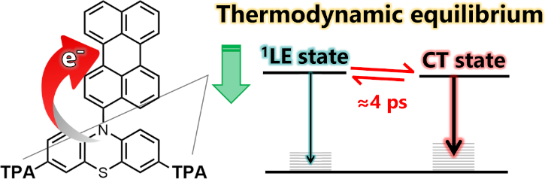
- -catalyzed cross-coupling reactions between bromo-substituted perylene or phenothiazine precursors and appropriate donor or linker units, followed by purification via column chromatography and gel permeation chromatography (Figures S18–S21 in Supporting Information File 1). The details of the syntheses are


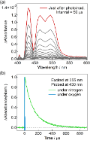

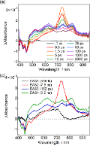

Synthesis of an aza[5]helicene-incorporated macrocyclic heteroarene via oxidation of an o-phenylene-pyrrole-thiophene icosamer
Beilstein J. Org. Chem. 2025, 21, 1561–1567, doi:10.3762/bjoc.21.119
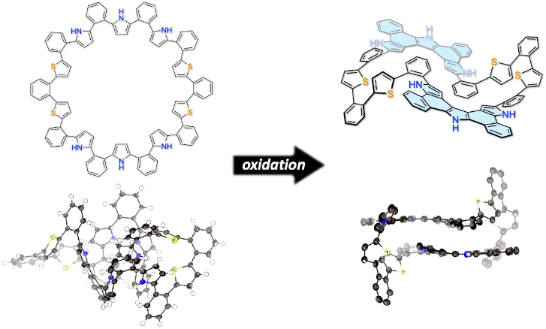
- hybrid decamer 3 in a previous report [26], via a Suzuki–Miyaura cross-coupling reaction between dibromo precursor 1 and borylated precursor 2 (Scheme 1). The resulting mixture was successfully separated by column chromatography on silica using CH2Cl2/n-hexane as an eluent to give icosamer 4 in 6% yield
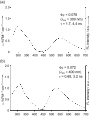
- common organic solvents. Conclusion A novel o-phenylene-pyrrole-thiophene hybrid macrocycle (icosamer 4) was synthesized via Suzuki–Miyaura cross-coupling and isolated in 6% yield. Oxidation of 4 with PIFA produced a partially fused aza[5]helicene-containing macrocycle 5 in 58% yield, which was also


Copper catalysis: a constantly evolving field
Beilstein J. Org. Chem. 2025, 21, 1477–1479, doi:10.3762/bjoc.21.109
- cross-coupling reactions of bifunctional boryl- and germyl-containing compounds. On the other hand, a Full Research Paper presented by Lee and co-workers introduces a highly regioselective formal hydrocyanation method of allenes [7]. The strategy is based on a copper-catalyzed hydroalumination of



