Search results
Search for "insertion" in Full Text gives 368 result(s) in Beilstein Journal of Organic Chemistry. Showing first 200.
Construction of CF2 moieties in FDA-approved drugs (2016–2025): industrial routes, mechanisms, and scale-up considerations
Beilstein J. Org. Chem. 2026, 22, 1122–1150, doi:10.3762/bjoc.22.91
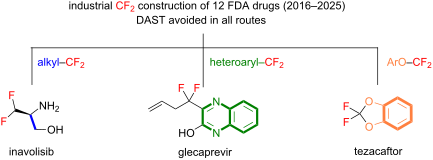
- approaches and building block-based approaches. Key process steps and scale-up data are summarized in Table 1. The article systematically discusses four types of reaction mechanisms – nucleophilic fluorination, electrophilic fluorination, radical pathways, and carbene insertion – and evaluates their






Amino acid-based surfactants: sustainable synthesis and antimicrobial mechanisms
Beilstein J. Org. Chem. 2026, 22, 1067–1085, doi:10.3762/bjoc.22.85
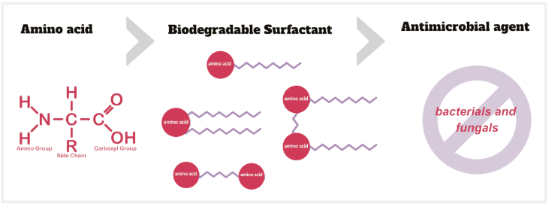
- mechanisms [28]. Surfactants incorporating phenylalanine (Table 1, entry 22) demonstrate significantly deeper insertion into lipid bilayers, as measured by fluorescence quenching studies, an effect attributed to the aromatic side chain [52], while tryptophan derivatives (Table 1, entry 23) show exceptional
- hydrogen bonding, followed by insertion of the hydrophobic tail (typically C8–C14) into the lipid bilayer, causing membrane destabilization and cell lysis [81]. The polar head of surfactants binds to bacterial membranes initially through electrostatic attraction between the surfactant’s positively charged


Synthesis of functionalized, 13-alkyl-substituted coralyne derivatives and investigation of their interactions with duplex and abasic site-containing DNA
Beilstein J. Org. Chem. 2026, 22, 1057–1066, doi:10.3762/bjoc.22.84
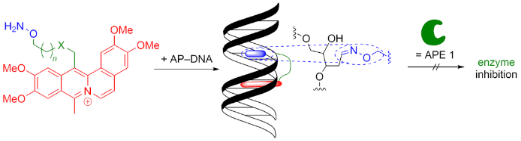
- enzymes to the lesion site [41][57]. With the available data, however, insertion of the coralyne part of 2g in the AP site cannot be excluded. Nevertheless, as this is only a dynamic non-covalent interaction, the competing covalent attachment through oxime formation will prevail. Conclusion In summary


Z-Selective semihydrogenation of alkynes via Ni/Lewis acid synergistic catalyzed system using DMF as hydrogen source and solvent
Beilstein J. Org. Chem. 2026, 22, 1004–1012, doi:10.3762/bjoc.22.79
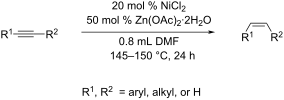
- hydrogenation systems. HCOOH then reacts with the Ni species to form a formate nickel hydride intermediate B (HCOONi(II)H), a key species documented in nickel-catalyzed hydrogen-transfer reactions. Subsequent selective insertion of the internal alkyne into the Ni–H bond of B affords the vinyl-nickel



Rh(III)-catalyzed chelation-assisted C–H activation/annulation of 2-arylimidazolines with cyclic diazo-1,3-dicarbonyl compounds: a novel approach to tetracyclic annulated derivatives of 2,3-dihydroimidazo[2,1-a]isoquinoline
Beilstein J. Org. Chem. 2026, 22, 997–1003, doi:10.3762/bjoc.22.78
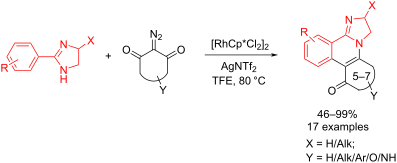
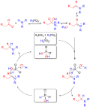
- intermediate B, followed by coordination of diazo compound 3 to give diazonium intermediate C. The latter transforms into a carbene complex D after nitrogen loss. The next intermediate E is a result of migratory insertion of the carbenoid into the C–Rh bond. The last step of the catalytic cycle is


Electrochemical reduction of unsaturated carbon–carbon bonds via 3d transition-metal catalysis
Beilstein J. Org. Chem. 2026, 22, 955–981, doi:10.3762/bjoc.22.75
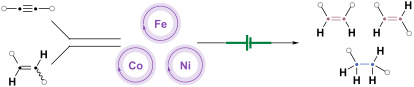
- , or PCET-enabled hydride generation provide catalytically relevant M–H species, which subsequently engage with unsaturated substrates through distinct reaction modes. One prominent mode is migratory insertion, in which the coordinated alkene or alkyne inserts into the M–H bond to form a metal–alkyl or
- governed primarily by bond dissociation free energies, radical stabilization, and cage escape or recombination kinetics, rather than by inner-sphere insertion chemistry. In addition, in certain systems, hydride transfer can operate as a distinct mechanistic mode, wherein the M–H unit directly delivers a
- reaction pathway [88], in which a reduced Fe(I) species mediates alkyne semihydrogenation through net reductive protonation rather than classical metal hydride insertion pathways. Alkenes to alkanes In sharp contrast to the reduction of alkynes, the direct electrochemical reduction of unactivated alkenes








Recent advances in copper-catalyzed direct hydroamination of alkenes with (hetero)aromatic amines
Beilstein J. Org. Chem. 2026, 22, 925–947, doi:10.3762/bjoc.22.73
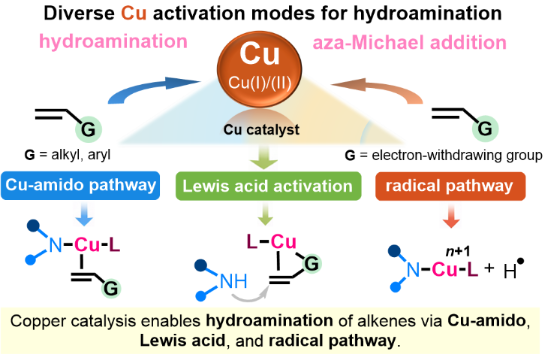
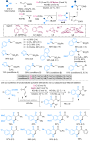
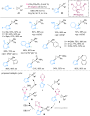
- insertion pathway. Accordingly, the proposed catalytic cycle involved protonation of the alkene to generate carbocationic intermediate III, followed by nucleophilic attack of the (hetero)aromatic amine or copper–amido intermediate II to furnish the hydroamination product. In this system, the copper complex







The trans-influence in gold chemistry from a catalytic perspective
Beilstein J. Org. Chem. 2026, 22, 838–856, doi:10.3762/bjoc.22.66
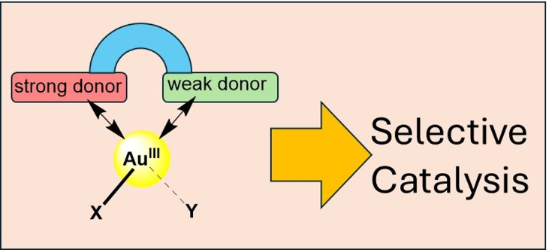
- electronic aspects such as photoluminescence and the spectroscopic and reactivity properties of gold(III) hydrides, before moving on to trans-influence enabled insertion reactions and catalytic applications. Perspective General considerations “Trans-influence” is a term applied to the weakening or
- proved not possible due to the trans-influence of the N donor, which renders (C^N^C)AuH stable to hydrolysis (Scheme 8) [30]. A by-product of this cycle is the gold(III)–CO2 complex 14, also obtainable from [(C^N^C)Au]2O by insertion of CO into the Au–O bond. More recently, Nevado et al. isolated a
- why CO insertion into the Au–aryl bond was not observed [60]. Bidentate Au(III) hydride complexes The selective protolytic cleavage of an Au–C bond in C^N^C complexes with a strong acid [61], or the displacement of pyridine in C^C^N hydrides by H−, leads to hydride complexes supported by bidentate C^N


Computational prediction of C–H hydricities and their use in predicting the regioselectivity of electron-rich C–H functionalisation reactions
Beilstein J. Org. Chem. 2026, 22, 603–610, doi:10.3762/bjoc.22.46
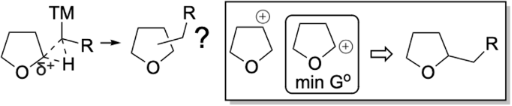
- regioselectivity of various C–H functionalisation reactions and machine learning (ML) models have been developed for both properties [1][2][3][4][5]. In contrast, C–H hydricities have received considerably little attention. However, the insertion into, or H-abstraction from, innately electron-rich C–H bonds are
- ). Many of these transformations are not formal hydride transfers; however, they commonly involve buildup of positive charge (e.g., via metal–carbene/nitrene insertion transition states, radical cations, or polar hydrogen atom transfer). Hydricity could therefore serve here as an empirical reactivity
- descriptor rather than a mechanistic assignment. The results are shown in Figure 5. Compound 1 He et al. [38] reported a dirhodium(II)-catalysed intermolecular C–H insertion into securinenine (compound 1) to generate a C–C bond. The reaction occurs at the site with the lowest predicted hydricity, but only


![[Graphic 6]](/bjoc/content/inline/1860-5397-22-46-i8.svg?max-width=637&scale=1.18182)


Recent advances in the stereoselective synthesis of distal biaxially chiral molecules
Beilstein J. Org. Chem. 2026, 22, 461–479, doi:10.3762/bjoc.22.34
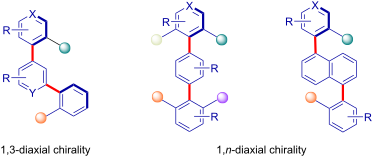
- –C derivatives through reaction of 1-alkynylnaphthalenes with benzamides. In this context they observed that the stereoselectivity of the alkyne insertion could be tuned by solvent effects, particularly with hexafluoroisopropanol, which induced inversion of the C–C axial configuration (not shown). In


Concept-driven strategies in target-oriented synthesis
Beilstein J. Org. Chem. 2026, 22, 451–454, doi:10.3762/bjoc.22.32
- radical cyclization (prostaglandin D2 metabolite, Jun Huang et al.), reductive cyclization cascade (aglacin B, Jina Xiao, Yu Peng et al.), electrochemical cyclization (review, Bin Li, H. N. C. Wong, Xiao-Shui Peng et al.), photochemical reactions (review, Shao-Min Fu, Bo Liu et al.), carbene insertion


Arene activation via π-bond localization: concepts and opportunities
Beilstein J. Org. Chem. 2026, 22, 257–273, doi:10.3762/bjoc.22.19
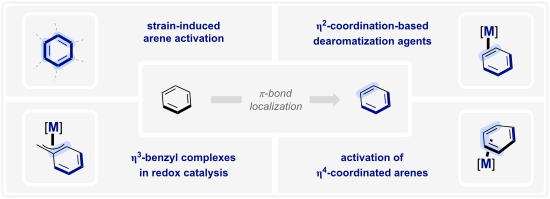
- η3-benzyl intermediates from aryl halides in combination with diazo compounds (Scheme 7B) [89][90]. Oxidative addition of the halide to palladium is followed by carbene formation, and facile migratory insertion to generate the η3-benzyl complex. In analogy to Bao’s protocol, this intermediate then




Synthesis and applications of alkenyl chlorides (vinyl chlorides): a review
Beilstein J. Org. Chem. 2026, 22, 1–63, doi:10.3762/bjoc.22.1













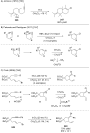


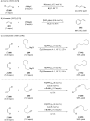


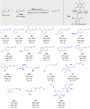
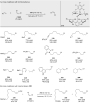






Total synthesis of asperdinones B, C, D, E and terezine D
Beilstein J. Org. Chem. 2025, 21, 2730–2738, doi:10.3762/bjoc.21.210
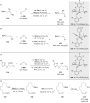
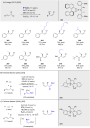
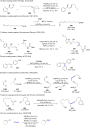
- in the presence of the Pd catalyst. It follows that elimination and reduction must occur after Pd insertion and formation of a pallado–zinc intermediate which undergoes β-elimination and proton transfer. Seminal studies by Jackson [61] have reported related results with iodozinc N-Boc-ʟ-alanine


Effect of a photoswitchable rotaxane on membrane permeabilization across lipid compositions
Beilstein J. Org. Chem. 2025, 21, 2498–2512, doi:10.3762/bjoc.21.192
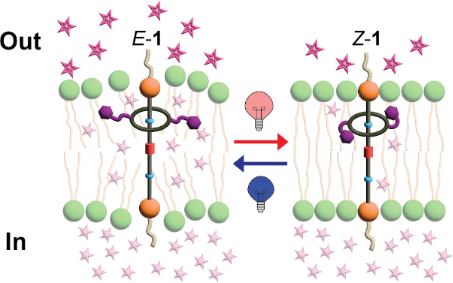
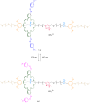
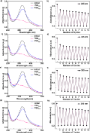
- first minutes of rotaxane insertion. Likewise, azobenzene photoswitching did not induce permeabilization in the more rigid and thicker EYPC/Chol 6:4 bilayers, which showed minimal release (5%). Furthermore, we discovered that when the unthreaded axle is irradiated with light, an unknown, irreversible
- File 1, Figure S4). The data also shows that most of the release for rotaxane 1 and 2 occurred immediately upon rotaxane insertion, whereas release caused by axle 3 increased gradually. Bilayers composed solely of EYPC exist in the liquid-disordered (Ld) phase, characterized by high fluidity and
- loosely packed lipids, which makes them inherently more permeable [16]. The insertion of rotaxanes or axle further increases this permeability, indicating that all molecules effectively disrupt the bilayer of this lipid composition. However, the rotaxanes with the macrocycle threaded onto the axle caused




Assembly strategy for thieno[3,2-b]thiophenes via a disulfide intermediate derived from 3-nitrothiophene-2,5-dicarboxylate
Beilstein J. Org. Chem. 2025, 21, 2489–2497, doi:10.3762/bjoc.21.191
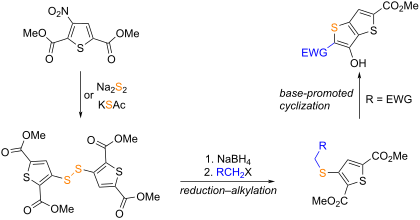
- cyclization to furnish the TT framework [2][23][24]. Despite the wide structural diversity of TT derivatives, 3-hydroxy-substituted analogues remain rare, with only a few synthetic strategies described for their preparation, as illustrated in Scheme 1. One such route involves sulfur insertion into a thiophen


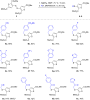

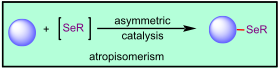
Catalytic enantioselective synthesis of selenium-containing atropisomers via C–Se bond formations
Beilstein J. Org. Chem. 2025, 21, 2447–2455, doi:10.3762/bjoc.21.186
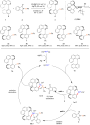
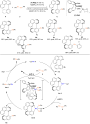
- alkyne insertion step may be rate-limiting, as it involves the participation of selenol, alkyne, and the rhodium catalyst. The Rh(III) mechanism appears to be more plausible than route B, which can be attributed to the enhanced ion-pairing effect resulting from the higher oxidation state of rhodium


Synthetic study toward vibralactone
Beilstein J. Org. Chem. 2025, 21, 2376–2382, doi:10.3762/bjoc.21.182

- vibralactone, a potent inhibitor of pancreatic lipase, is reported. The synthesis of the challenging all-carbon quaternary center within the cyclopentene ring was achieved through intramolecular alkylidene carbene C–H insertion. Keywords: alkylidene carbene; C–H insertion; total synthesis; vibralactone
- lactone 13 through allylic oxidation and cross metathesis. For the construction of the cyclopentene ring, an alkylidene carbene-mediated C–H insertion would be applied [35]. The synthetic route could be traced back to β-lactone 14, which contains two continuous stereogenic centers with trans configuration
- deprotection followed by C–H insertion. However, when attempting to remove the ketal protecting group, only decomposition of the starting material was observed. A plausible explanation for this outcome is that the β-lactone ring, located at the β-position of the methyl ketone, may undergo facile β-elimination


Pathway economy in cyclization of 1,n-enynes
Beilstein J. Org. Chem. 2025, 21, 2260–2282, doi:10.3762/bjoc.21.173
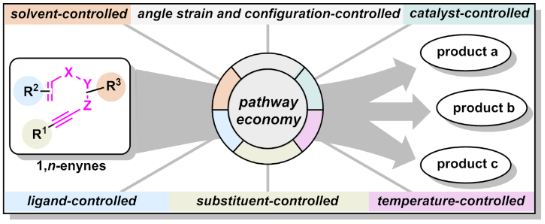
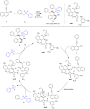
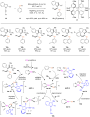
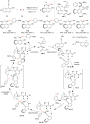
- solvent-controlled selective syntheses of two polycyclic compounds (Scheme 6) [13]. Using PdCl2 as the catalyst and DMF as the solvent, substrate 22 underwent a 6-endo-dig cyclization and subsequent enone insertion, forming a palladium–carbon bond intermediate. Protonolysis yielded isocoumarin-fused
- distinct from those generated through thermal Diels–Alder cycloaddition of (Z)-100. However, when [ReCl(CO)5] was used as the catalyst, a regioselective C–H bond insertion pathway was observed for substrate (E)-100, leading to the formation of tricyclic products 104 and 105 (Scheme 21, path b). This


Thiadiazino-indole, thiadiazino-carbazole and benzothiadiazino-carbazole dioxides: synthesis, physicochemical and early ADME characterization of representatives of new tri-, tetra- and pentacyclic ring systems and their intermediates
Beilstein J. Org. Chem. 2025, 21, 2220–2233, doi:10.3762/bjoc.21.169
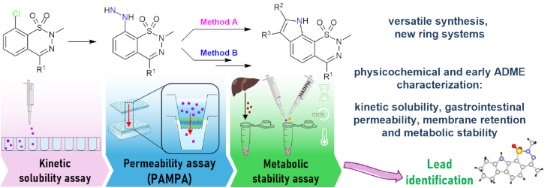
- spectrometer equipped with a Direct Insertion Probe (EI+ ionization) or on a Bruker Q-TOF Maxis Impact mass spectrometer (ESI+ ionization) coupled with a Waters Acquity I-Class UPLC system equipped with a diode array detector. The reactions were followed by analytical thin-layer chromatography on silica gel 60


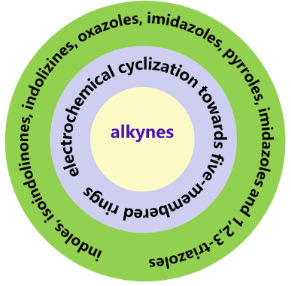
Electrochemical cyclization of alkynes to construct five-membered nitrogen-heterocyclic rings
Beilstein J. Org. Chem. 2025, 21, 2173–2201, doi:10.3762/bjoc.21.166
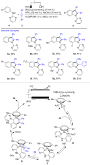
- reversible C–H activation to give the six-membered intermediate C. Substitution of the acetate ligand in C by 3 caused the generation of complex D. The six-membered ruthenacycle E was then obtained by migratory insertion of acetylene into the Ru–C bond. Finally, reductive elimination of E formed the target








C2 to C6 biobased carbonyl platforms for fine chemistry
Beilstein J. Org. Chem. 2025, 21, 2103–2172, doi:10.3762/bjoc.21.165


The application of desymmetric enantioselective reduction of cyclic 1,3-dicarbonyl compounds in the total synthesis of terpenoid and alkaloid natural products
Beilstein J. Org. Chem. 2025, 21, 2085–2102, doi:10.3762/bjoc.21.164
- insertion [74] with ketone 91 and deprotection of the dithiane group delivered alleneketone 92. Sequential treatment of 92 with TsNHNH2 and NaH, the trimethylenemethane (TMM) diyl-mediated cycloaddition via intermediates 93 and 94 proceeded uneventfully to form the tetracyclic product 95. Next, reductive


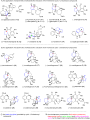


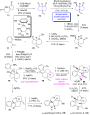

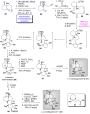


Rhodium-catalysed connective synthesis of diverse reactive probes bearing S(VI) electrophilic warheads
Beilstein J. Org. Chem. 2025, 21, 1924–1931, doi:10.3762/bjoc.21.150
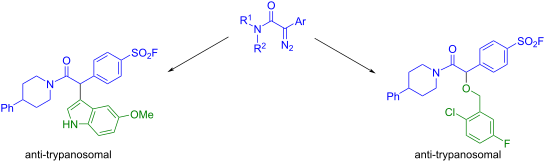
- -substrates with the potential to react with metal carbenoids in many different ways [14], for example through O–H, N–H or formal C–H insertion, cyclopropanation, or oxazole [20] formation. The 16 co-substrates, selected from available compounds in our laboratory, are shown in Figure 2 (panel A). Many of
- these substrates had more than one potentially reactive site to enable, for example, O–H insertion (C1–5, C8, C11 and C14), N–H insertion (C3, C6, C12, C13 and C15), formal C–H insertion (C1, C3, C4, C12, C15 and C16), oxazole formation (C9 and C10) and cyclopropanation (C7, C10, C14 and C16). To start
- reactions, a product with molecular weight consistent with O–H insertion into water was also observed. For these 18 substrate/co-substrate combinations, the reaction with the highest estimated yield was selected for mass-directed purification (Table 2). In total, 23 intermolecular reaction products were


Influence of the cation in hypophosphite-mediated catalyst-free reductive amination
Beilstein J. Org. Chem. 2025, 21, 1661–1670, doi:10.3762/bjoc.21.130

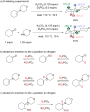
- ). Insertion of D into β-position to nitrogen atom in the product was likely to be caused by fast exchange via keto–enol tautomeric equilibrium in the starting cyclohexanone or equilibrium between iminium cation and enamine (Scheme 4b). Reduction of the iminium cation led to insertion of D into α-position of