Search results
Search for "intermolecular" in Full Text gives 807 result(s) in Beilstein Journal of Organic Chemistry. Showing first 200.
The role of spacer length and flexibility in peptide self-assembly
Beilstein J. Org. Chem. 2026, 22, 986–996, doi:10.3762/bjoc.22.77
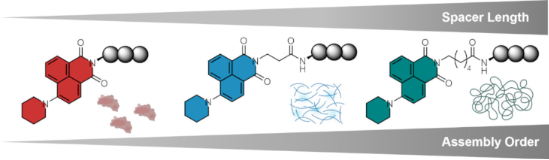
- through the rotational freedom of the π-block, thus enabling or limiting the possible intermolecular interactions. These results help to understand the fundamental role of spacers within peptide amphiphiles and improve the rational design of future peptide assemblies. Results and Discussion Synthesis The
- µM final peptide and 1% final TFE concentrations. By diluting the peptides in neutral aqueous buffer conditions, the hydrophobic intermolecular interactions of the peptide molecules are promoted, thereby inducing self-assembly into supramolecular structures. Here, the π–π interactions of the
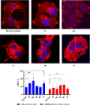
- , having a low assembly conversion rate of (14 ± 6)%, therefore indicating that intermolecular interactions are weaker for the peptide monomers with short spacer lengths. The obtained results were confirmed by the Proteostat® aggregation assay (Figure 1B). Proteostat® fluorescence increases upon binding to


Recent advances in copper-catalyzed direct hydroamination of alkenes with (hetero)aromatic amines
Beilstein J. Org. Chem. 2026, 22, 925–947, doi:10.3762/bjoc.22.73
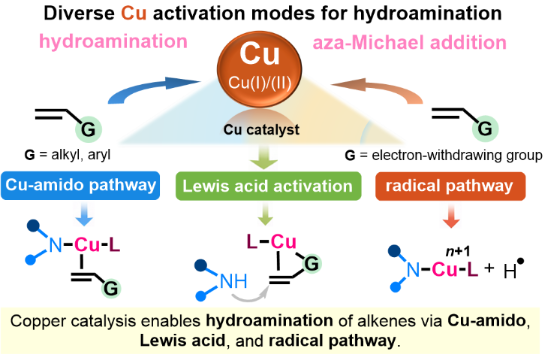
- vinylarene. The amido ligand then underwent regioselective intermolecular nucleophilic attack at the less substituted β-carbon of the alkene, generating zwitterionic intermediate II. Subsequent proton transfer from aniline released the anti-Markovnikov β-amino product 36 and regenerated the copper–amido
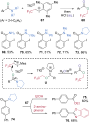
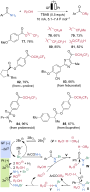
- hydroamination. For example, Lee et al. reported the intermolecular hydroamination of vinylarenes with arylamines and aza-heterocycles using a readily accessible NHC–copper catalyst system (Scheme 13) [53]. The reaction used IPrCuCl (5 mol %) in combination with KOt-Bu as a base and MeOH as an additive in
- challenging substrates for intermolecular hydroamination reactions. These results demonstrate that the Cu/NHC catalytic system significantly expands the substrate scope compared to earlier copper-amido systems. This transformation is proposed to proceed through the in situ generation of NHC-copper–amido







Palladium-catalyzed benzocyclization reactions of quinoline-2-carboxamides via sequential C–H/N–H functionalization
Beilstein J. Org. Chem. 2026, 22, 905–914, doi:10.3762/bjoc.22.71
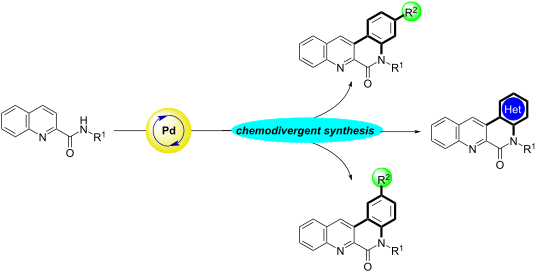
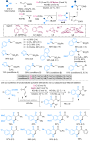
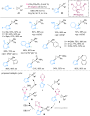
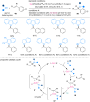
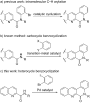
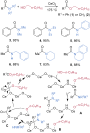
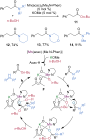
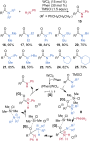
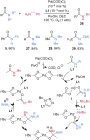
- reported [44][45][46][47][48][49][50][51][52][53][54], although the reaction mechanism with π-deficient N-heteroaromatics has not been elucidated (Scheme 2b). It is therefore valuable to investigate the differences in reactivity between C–H and N–H for intermolecular arylation in the presence of transition
- indicated that the anticipated C–H and N–H intermolecular–intramolecular coupling reactions occurred. When PdCl2(PPh3)2 was used instead of Pd(OAc)2 as a catalyst in the absence of PPh3, 3aa was afforded in 10% yield (Table 1, entry 2). When Pd(OCOCF3)2 was used as the catalyst, the desired product was




Unsymmetrical sulfoxides with sterically hindered catechol fragment: synthesis, structure, electrochemical properties, and antiradical activity
Beilstein J. Org. Chem. 2026, 22, 828–837, doi:10.3762/bjoc.22.65
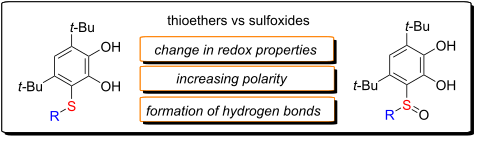
- reaction products ranges from 42 to 89%. The crystal structures of catechol sulfoxides with isopropyl, cyclopentyl, adamantyl, benzyl and 1-naphthyl moieties were established by single-crystal X-ray analysis. The possibility of forming intra- and intermolecular hydrogen bonds has been shown for these
- presence of the readily oxidizable catechol core. The presence of a redox-active catechol moiety adjacent to the sulfoxide group can significantly influence the formation of intra- and intermolecular hydrogen bonds and affect the O–H bond dissociation energy, which in turn may substantially impact the
- °, depending on the nature of the substituent. The hydroxy group at the second position participates in the formation of an intramolecular H-bond with the oxygen atom of the sulfoxide group (Figure 1), and the second OH group forms an intermolecular contact with the SO group of the neighboring molecule (Table


Rongalite addition to dienones: diastereoselectivity in cyclic sulfone synthesis; stereochemical rationalization and prospects as a general conjugate nucleophile
Beilstein J. Org. Chem. 2026, 22, 742–752, doi:10.3762/bjoc.22.56

- used to rationalize the diastereoselectivity of the reaction by transition-state modeling, and showcases the conformational subtleties of sulfur-containing rings. Extension of the original reaction to double intermolecular additions is also demonstrated along with a comparative study of Rongalite with
- demonstrates the general viability of sulfinate addition to produce C-tertiary sulfones, but also implies steric limits to these processes in double intermolecular conjugate addition with Rongalite as the nucleophile. Our approach was to use competition experiments to indicate the relative reactivity of
- oxygen, which is absent in the other sulfinates. We finally elected to examine double intermolecular conjugate addition with some commercially available enones (Scheme 7). These reactions were sluggish, but yielded the expected adducts 30, 32, and 34 as 1:1 diastereomeric mixtures (30 was obtained in a 1




Synthesis of heterocycles based on azomethine ylides from α-amino acids (or amines) and carbonyl compounds
Beilstein J. Org. Chem. 2026, 22, 705–741, doi:10.3762/bjoc.22.55
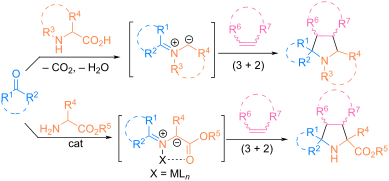
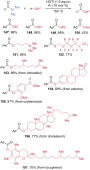
- containing cyclic succinimide, pyrrolidine, pyrrolizidine, and chroman moieties [73] (Scheme 30). The authors showed that the first stage involves intermolecular 1,3-dipolar cycloaddition of azomethine ylides obtained as a result of the interaction of aromatic aldehydes 67 and glycine methyl ester (62) to N


Computational prediction of C–H hydricities and their use in predicting the regioselectivity of electron-rich C–H functionalisation reactions
Beilstein J. Org. Chem. 2026, 22, 603–610, doi:10.3762/bjoc.22.46
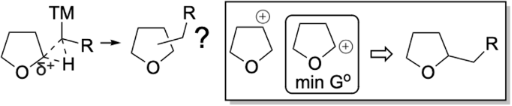
- descriptor rather than a mechanistic assignment. The results are shown in Figure 5. Compound 1 He et al. [38] reported a dirhodium(II)-catalysed intermolecular C–H insertion into securinenine (compound 1) to generate a C–C bond. The reaction occurs at the site with the lowest predicted hydricity, but only


![[Graphic 6]](/bjoc/content/inline/1860-5397-22-46-i8.svg?max-width=637&scale=1.18182)


Synthesis and anti-cancer activity of naphthalimide–organylselanyl conjugates
Beilstein J. Org. Chem. 2026, 22, 416–435, doi:10.3762/bjoc.22.29
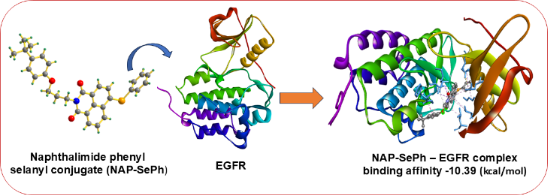
- geometry around the selenium atom. The structure reveals the four distinct intermolecular interactions that facilitate the self-assembly in the crystal packing. The first is a chalcogen bonding interaction (Se···Se) [53], as shown in Figure 2b, in which one aryl selenide molecule linearly connects to
- ···C distance of 3.588 Å. Third and fourth, as shown in Supporting Information File 1, Figure S20, the intermolecular interaction of C–H···O, having an H···O distance of 2.544 Å and the (π···π) interaction having a C···C distance of 3.376 Å, stabilise and glue the self-assembled architecture in the
- % probability, b) and c) show Se···Se and Se···C intermolecular interaction in compound. DFT optimised structure of compounds a) 7 and b) 8. HOMO, LUMO, and the energy gap of the compounds: a) 7 and b) 8. Mulliken atomic charge of the compounds: a) 7 and b) 8. MEP analysis of the compounds: a) 7 and b) 8. log


Cone p-aminocalix[4]arenes enriched with ‘clickable’ alkyne or azide functionalities
Beilstein J. Org. Chem. 2026, 22, 399–415, doi:10.3762/bjoc.22.28
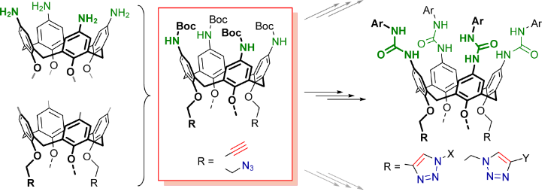
- bonds. However, the effect of adding this polar solvent turned out to be too strong, and the resulting spectrum only contained signals from the tetraurea monomer 47, indicating the disruption of intermolecular hydrogen bonds between the urea moieties as well. Still, it was discovered by chance that
- the other hand, this water content is apparently sufficient to disrupt weaker intermolecular contacts involving triazole heterocycles as hydrogen-bond acceptors. Since the structures of the above mentioned non-capsular aggregate(s) formed by calixarene 47 cannot be drawn based on the available data
- concentrations of dissolved compounds was too low for NMR analysis. Thus, additional experiments need to be designed to reveal whether the triazolated tetraureacalix[4]arenes can be used to include pairs of triazole-bound cations into supramolecules via intermolecular hydrogen bonding between the urea groups




Electrosynthetic access to unsymmetrical oxaza[8]helicenes with high chiral stability and strong circularly polarized luminescence (CPL)
Beilstein J. Org. Chem. 2026, 22, 372–382, doi:10.3762/bjoc.22.25
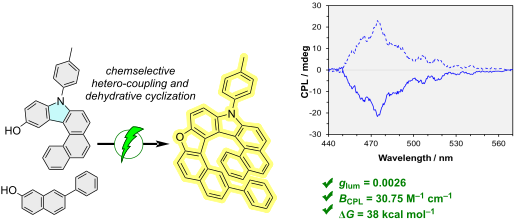
- frontier orbitals, intermolecular interactions, and excited-state dynamics, frequently enhancing fluorescence efficiency and circularly polarized luminescence (CPL) [16][17][18][19][20][21][22]. Consequently, heterohelicenes have emerged as attractive platforms for optoelectronic devices, 3D displays
- , enabling regioselective intermolecular coupling with 4. While a Scholl-type coupling-first scenario cannot be ruled out, the computed acidity of [3]·+ (pKa ≈ −5.2) together with the more spin-density localization in Int-I supports a deprotonation-first, neutral-radical pathway, consistent with related




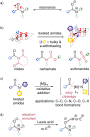
Recent advances in the cleavage of non-activated amides
Beilstein J. Org. Chem. 2026, 22, 352–369, doi:10.3762/bjoc.22.23
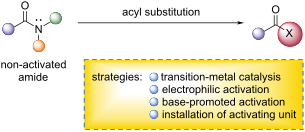
- . Its characteristic hydrogen-bonding ability strongly influences molecular conformation and intermolecular interactions, while the exceptional thermodynamic stability of the amide moiety contributes to its persistence in diverse atmospheric and biological environments [1][2][3][4][5]. Owing to these




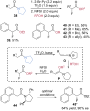
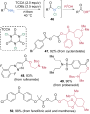
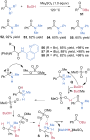
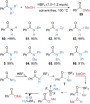






Spirobarbiturates with a pyrrolizidine moiety: synthesis, structure and biological evaluation
Beilstein J. Org. Chem. 2026, 22, 274–288, doi:10.3762/bjoc.22.20
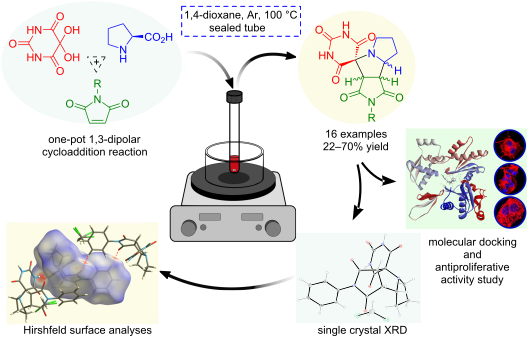
- ]. In 2018, Kota and Sreevani prepared spirobarbiturates via a Mo(CO)6-catalyzed intermolecular [2 + 2 + 2] cycloaddition of propargyl halides with dipropargylbarbituric acid [24]. Almeida and colleagues described the formation of spiroindoline barbiturates via thermal rearrangement of 2,1-benzisoxazole
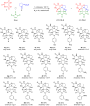
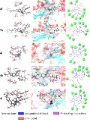
- barbiturate moieties of paired enantiomers (see Supporting Information File 1, Tables S2 and S3). The Hirshfeld surface (HS) analysis provides a robust tool for visualizing and characterizing intermolecular interactions in organic crystal lattices. The calculations of the HS were performed using
- CrystalExplorer 21.5 [55]. On the Hirshfeld surface, color coding indicates the nature of intermolecular interactions: red highlights contacts shorter than the van der Waals radius, white represents distances equal to the van der Waals radius, and blue denotes contacts longer that the van der Waals radius. Figure




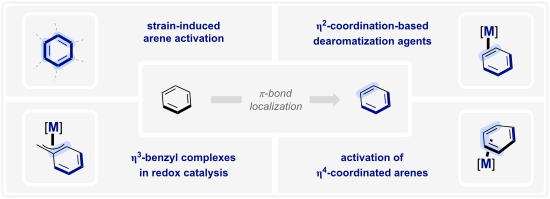
Arene activation via π-bond localization: concepts and opportunities
Beilstein J. Org. Chem. 2026, 22, 257–273, doi:10.3762/bjoc.22.19
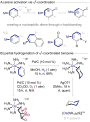
- undergoes selective nucleophilic attack by malonates. Both intra- and intermolecular versions of this reaction have been reported [91][92][93][94]. Notably, this three-component approach has recently been rendered enantioselective for the first time, marking a pivotal advance toward the construction of




Conformational analysis of difluoromethylornithine: factors influencing its gas-phase and bioactive conformations
Beilstein J. Org. Chem. 2026, 22, 237–243, doi:10.3762/bjoc.22.17
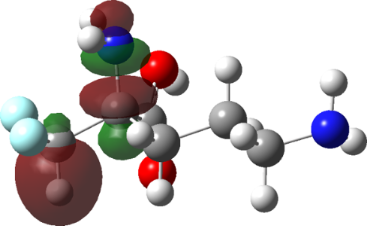
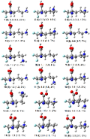
- intermolecular interactions in biological environments. This study clarifies the electronic origin of DFMO’s gauche effect and provides insight into how local electronic factors determine the structure of fluorinated amino acid derivatives. Keywords: conformational analysis; difluoromethylornithine; gauche
- intrinsic stereoelectronic preferences but also by intermolecular interactions within the ornithine decarboxylase active site. Therefore, the conformational behavior of DFMO arises from a delicate balance between the fluorine gauche effect and the intermolecular interactions that stabilize the ligand–enzyme
- changes in DFMO [11], a systematic evaluation of its zwitterionic and non-zwitterionic forms in the gas phase, aqueous solution, and biological environments is necessary to disentangle the respective contributions of intra- and intermolecular interactions to its conformation and biological activity. In




Configuration–packing synergy enabling integrated crystalline-state RTP and amorphous-state TADF
Beilstein J. Org. Chem. 2026, 22, 224–236, doi:10.3762/bjoc.22.16
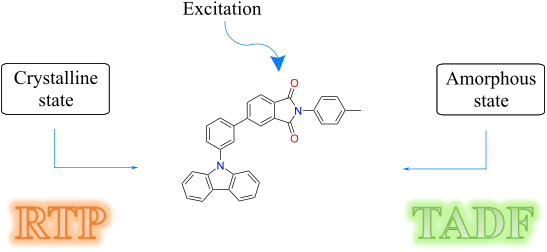
- states, intermolecular interactions enhance spin–orbit coupling and crystallinity suppresses nonradiative decay, thereby activating RTP. This work achieves an integrated “crystalline-state RTP–amorphous-state TADF” regulation within a single molecule. Keywords: imide; π–π stacking; room-temperature
- of both intra- and intermolecular non-radiative decay pathways [20][21][22]. Several strategies have been developed to enhance RTP in organic materials, such as incorporating functional groups with n→π* characteristics, such as carbonyl [23], sulfone [24], or sulfonamide groups [25], constructing
- intermolecular coupling to enhance SOC and suppress non-radiative decay channels, while TADF relies more on donor–acceptor decoupling and smaller ΔEST to lower the thermal activation barrier for RISC. Thus, a key challenge in the field is how to establish adjustable synergy between the molecular-scale


Highly electrophilic, gem- and spiro-activated trichloromethylnitrocyclopropanes: synthesis and structure
Beilstein J. Org. Chem. 2026, 22, 123–130, doi:10.3762/bjoc.22.5
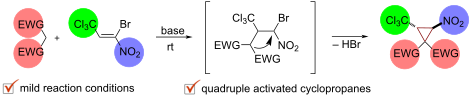
- geometry of the molecules and the intermolecular interactions in the crystals was carried out using the PLATON program [50] and the drawings of the molecules were performed using the MERCURY [51] programs. The non-hydrogen atoms were refined in anisotropic approximation. The hydrogen atoms were placed in


Advances in Zr-mediated radical transformations and applications to total synthesis
Beilstein J. Org. Chem. 2026, 22, 71–87, doi:10.3762/bjoc.22.3
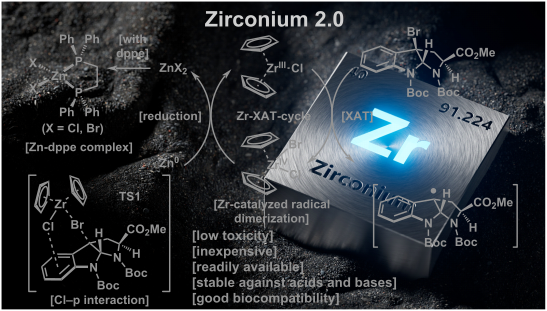
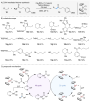
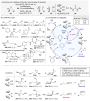
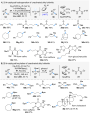
- alkyl iodide 10 were subjected to nickel catalysis in the presence of zirconocene dichloride and zinc dust, intermolecular coupling occurred to afford ketone 12 in good yields. This reaction was applicable to substrates bearing β-alkoxy substituents, which are typically problematic under anionic








Reactivity umpolung of the cycloheptatriene core in hexa(methoxycarbonyl)cycloheptatriene
Beilstein J. Org. Chem. 2026, 22, 64–70, doi:10.3762/bjoc.22.2
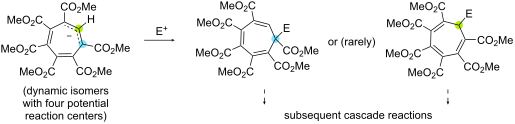
- -group elimination but through intermolecular hydride-transfer reactions as well. Therefore, the expected strategy to establish a chemical bond with a cycloheptatriene core is a reaction of a tropylium ion derivative with a nucleophile. Such reactions may involve either carbon [9][10][11] or heteroatom


Sustainable electrochemical synthesis of aliphatic nitro-NNO-azoxy compounds employing ammonium dinitramide and their in vitro evaluation as potential nitric oxide donors and fungicides
Beilstein J. Org. Chem. 2025, 21, 2739–2754, doi:10.3762/bjoc.21.211
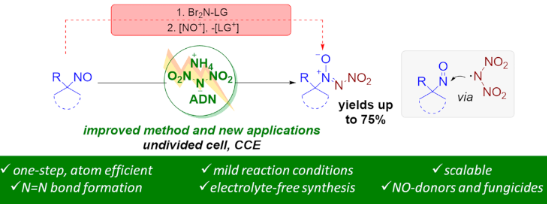
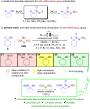
- approaches focus mainly on intramolecular radical cyclizations [42][54][55][56][57][58][59][60][61][62][63], while intermolecular [1][64][65][66][67][68] N–N coupling remains a poorly studied area. In addition to the preparation of azo compounds [69][70], intermolecular N–N coupling reactions are of





Competitive cyclization of ethyl trifluoroacetoacetate and methyl ketones with 1,3-diamino-2-propanol into hydrogenated oxazolo- and pyrimido-condensed pyridones
Beilstein J. Org. Chem. 2025, 21, 2716–2729, doi:10.3762/bjoc.21.209
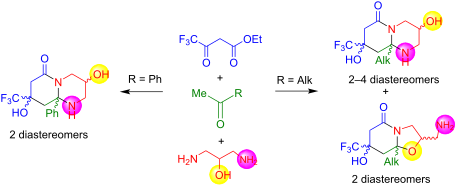
- the OH group. The crystal packing of single crystals 4att, 4atc, 4acc, 4act, 4dct is ordered by intermolecular hydrogen bonds linking O–H groups and heteroatoms O/N of neighboring molecules (see Table S8 in Supporting Information File 1); N–H groups of the hexahydropyrimidine ring and a carbonyl
- hexahydrooxazolopyridone 5ctt is ordered by intermolecular hydrogen bonds of the NH2 group with the hydroxy and carbonyl functions of two other molecules (Figure 3b). The OH substituent of the piperidone ring is in the trans-configuration relative to O(4) atom. In the oxazolidine ring, the CH2NH2 group occupies a pseudo
- -equatorial position and is in the trans-position toward the Bu group. The single crystal structure of the bicycle 5ctc is ordered by intermolecular hydrogen bonds between the hydroxy group and the amino group as well as between the amino group and fluorine of the CF3 substituent of the neighboring molecule


Recent advancements in the synthesis of Veratrum alkaloids
Beilstein J. Org. Chem. 2025, 21, 2657–2693, doi:10.3762/bjoc.21.206
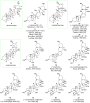
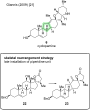
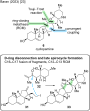
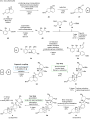
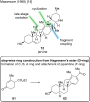
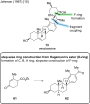
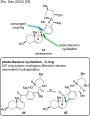
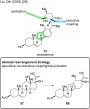
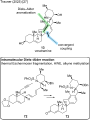
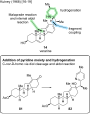
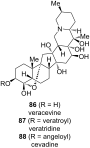
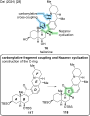
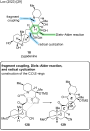
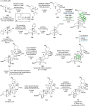
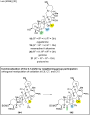
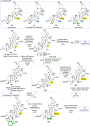
- -sensitive hemiketal motif. The synthetic plan was to carve out the superfluous hydroxymethyl group in the late stage of the synthesis using a stereoretentive decarboxylative hydroxylation procedure [48]. A key step in the synthesis was an intermolecular Diels–Alder reaction between diene 97 and dienophile
- olefination to construct diene 97 for the Diels–Alder reaction. Dienophile 98 was constructed using a Horner–Wadsworth–Emmons (HWE) reaction between aldehyde 103 (2 steps from butenediol) and phosphonate 104 (1 step from commercially available materials). The intermolecular Diels–Alder reaction was achieved
















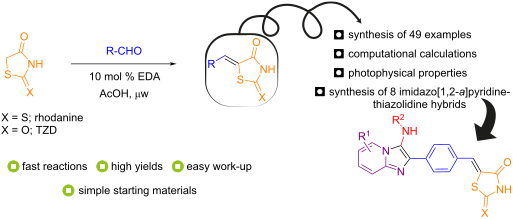
Thiazolidinones: novel insights from microwave synthesis, computational studies, and potentially bioactive hybrids
Beilstein J. Org. Chem. 2025, 21, 2618–2636, doi:10.3762/bjoc.21.203
- system with two molecules in the asymmetric unit. The bond distances in 3n C1=O1 is 1.229(4) Å and C2=S2 is 1.629(4) Å. For compound 4n, the observed C=O bond length is shorter than that of compound 3n (1.202(2) and 1.221(2) Å), respectively (Supporting Information File 1, Table S3). Intermolecular
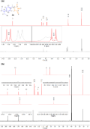
- : a) 1H NMR spectra (600 MHz, DMSO-d6) with expansions, and b) 13C NMR spectra (151 MHz, DMSO-d6) with expansions. a) Molecular structure of 3n with crystallographic labeling (50% probability displacement). b) Perspective views of intermolecular hydrogen bonds (dotted lines) of 3n. (‘) symmetry






Recent advances in total synthesis of illisimonin A
Beilstein J. Org. Chem. 2025, 21, 2571–2583, doi:10.3762/bjoc.21.199
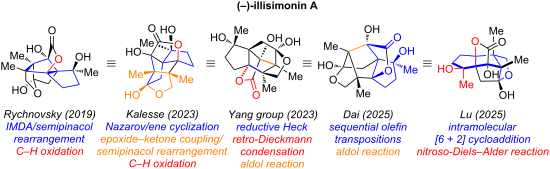
- rearrangement. Finally, a White–Chen C–H oxidation [33][34][35] was employed to install the lactone ring, thereby completing the synthesis. The synthesis began with commercially available compound 19 and known compound 20 (Scheme 2). These were joined via an intermolecular aldol reaction to give adduct 21
- of 85 with iodine and BnOH enabled the intermolecular iodoetherification to yield ketal 86. A KF-promoted intramolecular alkylation of the cyclopentadiene moiety then delivered compound 87. To introduce the C4 hydroxy group and C1 functional handle for further elaboration, a nitroso-Diels–Alder






Total syntheses of highly oxidative Ryania diterpenoids facilitated by innovations in synthetic strategies
Beilstein J. Org. Chem. 2025, 21, 2553–2570, doi:10.3762/bjoc.21.198
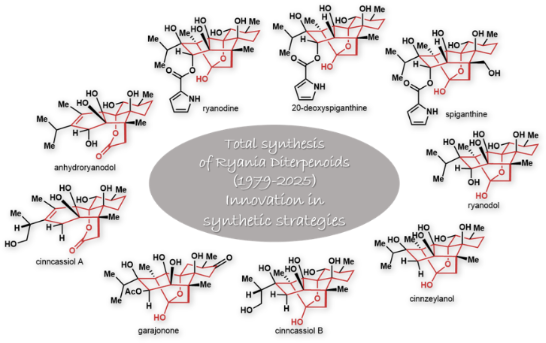
- is as follows: Starting from the chiral compound (S)-carvone, four simple transformations yield the enone intermediate 11. This intermediate undergoes an intermolecular [4 + 2] cycloaddition with diene 12, generating two sets of regioselective products in an approximate ratio of 1:1. The product with
- hemiacetalization to construct the oxa[3.2.1]-bridged ring system, thereby forming the D and E rings. Subsequently, the introduction of a tertiary hydroxy thiocarbonate at C11 afforded compound 38. Under thermal conditions, 38 underwent smooth introduction of an allyl fragment via intermolecular radical addition







Effect of a photoswitchable rotaxane on membrane permeabilization across lipid compositions
Beilstein J. Org. Chem. 2025, 21, 2498–2512, doi:10.3762/bjoc.21.192
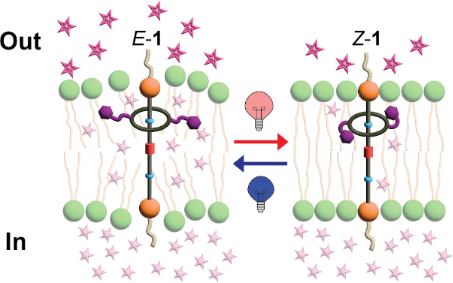
- structure, and saturation, can result in different membrane mechanics, hydration, thickness, intermolecular spacing, and non-covalent interactions with the rotaxane. For example, EYPC bilayer thickness increases linearly with cholesterol concentration and can induce the formation of nanodomains [16]. Such