


Search results
Search for "metal-organic frameworks" in Full Text gives 47 result(s) in Beilstein Journal of Organic Chemistry.
Insoluble methylene-bridged glycoluril dimers as sequestrants for dyes
Beilstein J. Org. Chem. 2025, 21, 2302–2314, doi:10.3762/bjoc.21.176
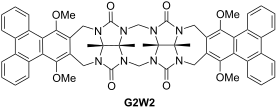
- due to its simplicity, efficiency, low cost, and the absence of hazardous byproducts [6]. Many different adsorptive materials have been investigated including activated carbon [7][8][9], hybrid nanomaterials [10], metal oxide-based hybrid materials [11], metal organic frameworks [12], polymers [13


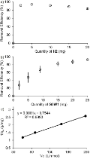

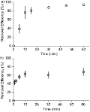
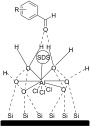
Systematic pore lipophilization to enhance the efficiency of an amine-based MOF catalyst in the solvent-free Knoevenagel reaction
Beilstein J. Org. Chem. 2025, 21, 1854–1863, doi:10.3762/bjoc.21.144
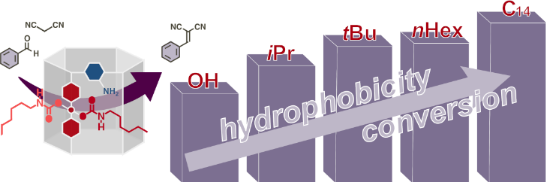
- efficiency. Keywords: metal-organic frameworks; post-synthesis modification; supramolecular catalysis; Introduction Most enzymatic reactions take place in multifunctional cavities in which multiple amino acid residues work cooperatively to orient and activate reactants [1][2][3]. These residues may also
- ], and metal-organic-frameworks (MOFs), among others [18][19][20]. Within this group of porous materials, MOFs boast the advantages of their crystallinity, the uniformity of their pores that are typically in the microporous range (5–20 Å), and the ability to fine-tune their pore chemical environment [21


Research progress on calixarene/pillararene-based controlled drug release systems
Beilstein J. Org. Chem. 2025, 21, 1757–1785, doi:10.3762/bjoc.21.139
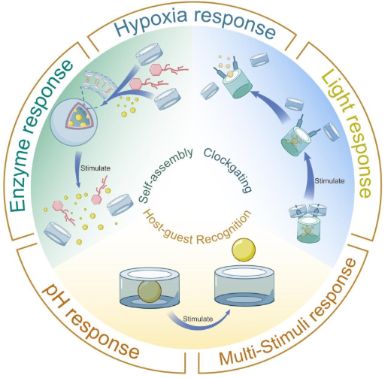
- hybridized with various inorganic materials, such as metal-organic frameworks (MOFs), mesoporous silica nanoparticles (MSNs), metal nanoparticles, and carbon materials [87]. By designing through electrostatic and non-covalent interactions, PAs can be used as "molecular switches" to construct mechanized MOFs






Tautomerism and switching in 7-hydroxy-8-(azophenyl)quinoline and similar compounds
Beilstein J. Org. Chem. 2025, 21, 1404–1421, doi:10.3762/bjoc.21.105
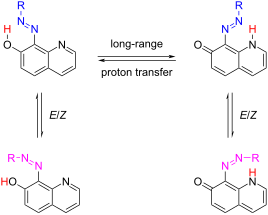
- and systems, including gels [17], metal-organic frameworks [18][19][20][21], photocatalysts [22][23], container molecules [24][25][26], drug delivery systems [27][28][29], photoresponsive polymers [30][31][32][33][34][35][36][37], photoswitches [12][13][38][39][40][41], optical storage devices [42][43




Gold extraction at the molecular level using α- and β-cyclodextrins
Beilstein J. Org. Chem. 2025, 21, 1116–1125, doi:10.3762/bjoc.21.89
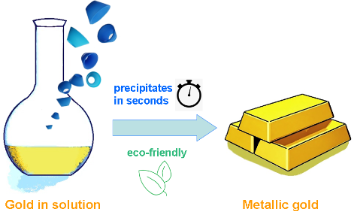
- tridimensional γ-CD metal-organic frameworks (CD-MOFs) [38][39] using a variety of salts instead of the traditional KOH employed to link them together. In his experiments, he used a different cyclodextrin, α-CD, in the place of the traditionally employed one, γ-CD. α-CD molecules did not, however, form the


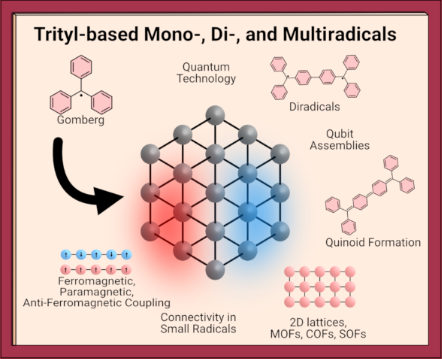
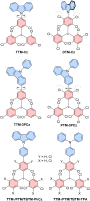
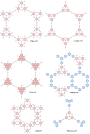
On the photoluminescence in triarylmethyl-centered mono-, di-, and multiradicals
Beilstein J. Org. Chem. 2025, 21, 964–998, doi:10.3762/bjoc.21.80









Unprecedented visible light-initiated topochemical [2 + 2] cycloaddition in a functionalized bimane dye
Beilstein J. Org. Chem. 2025, 21, 500–509, doi:10.3762/bjoc.21.37
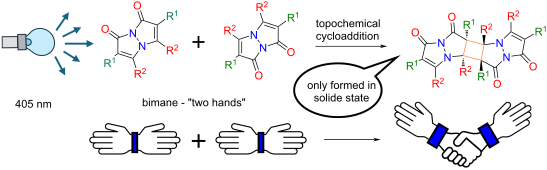
- topochemical reactions. Currently, topochemically active monomers are limited to large, planar aromatic molecules, aryl-substituted olefins, and polyenes, often complexed with metals. These compounds are frequently employed in the construction of metal-organic frameworks [13][14][15]. The limited range of


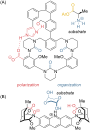
Beyond symmetric self-assembly and effective molarity: unlocking functional enzyme mimics with robust organic cages
Beilstein J. Org. Chem. 2025, 21, 421–443, doi:10.3762/bjoc.21.30
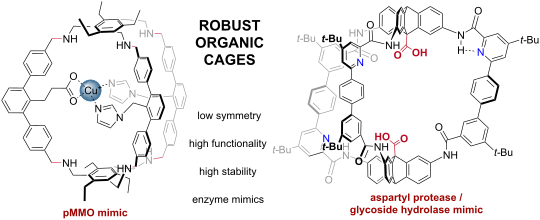
- release [216] and even switch catalysis on and off [196]. MOCs containing peptides in the edge pieces also look promising to direct catalysis [217]. Extended frameworks Metal-organic frameworks (MOFs) [218][219] and covalent organic frameworks (COFs) [220][221][222][223][224] are well-studied as




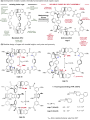
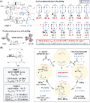
Advances in the use of metal-free tetrapyrrolic macrocycles as catalysts
Beilstein J. Org. Chem. 2024, 20, 3085–3112, doi:10.3762/bjoc.20.257
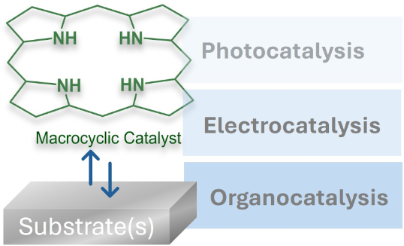
- or transform into a long-lived radical cation by substrate reduction, which are the fundamentals of photoredox catalysis (Figure 13a). Monomeric porphyrins and supramolecular porous frameworks composed of porphyrin building blocks, such as metal-organic frameworks (MOF) and covalent organic


Factors influencing the performance of organocatalysts immobilised on solid supports: A review
Beilstein J. Org. Chem. 2024, 20, 2129–2142, doi:10.3762/bjoc.20.183
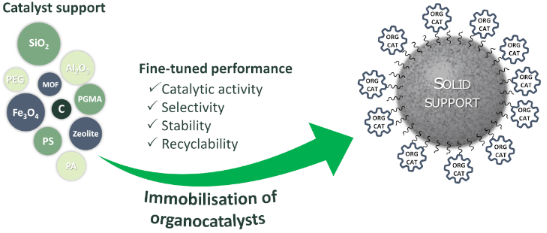
- key research directions in the transition from homogeneous to heterogeneous catalysis. Special nanostructures, the so-called metal-organic frameworks (MOF), covalent organic frameworks (COF), porous organic frameworks (POF), and hyperbranched systems are formed with a special case of tethering. The


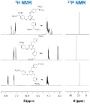
New triazinephosphonate dopants for Nafion proton exchange membranes (PEM)
Beilstein J. Org. Chem. 2024, 20, 1623–1634, doi:10.3762/bjoc.20.145
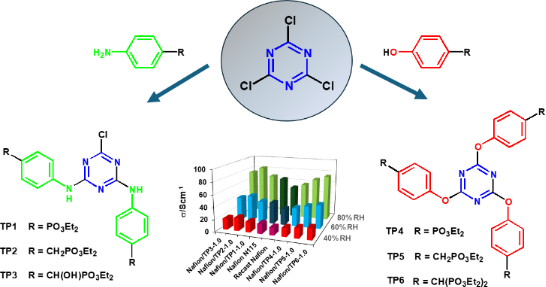
- molecular cages [46][47] and at porous materials, as linkers in metal-organic frameworks (MOFs) [48], used in the evaluation of the cycloaddition of CO2 to epoxides [49] and CO2 uptake [50]. Taking in consideration the strategy of the incorporation of dopants to promote the proton conduction in Nafion




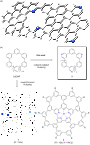
Introduction of peripheral nitrogen atoms to cyclo-meta-phenylenes
Beilstein J. Org. Chem. 2024, 20, 1207–1212, doi:10.3762/bjoc.20.103
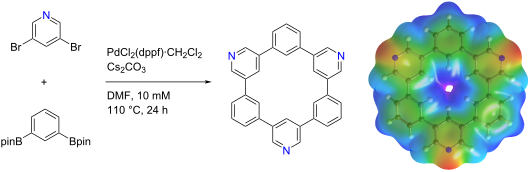
- π-stacking may also enable exploration of molecular assemblies. The experimental lone-pair electron densities were directed outward in 3a and could be used as linkers for metal atoms to assemble trigonal pyramidal macrocycles, for instance, in networks of metal organic frameworks [23][24



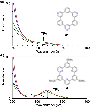
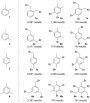
Light on the sustainable preparation of aryl-cored dibromides
Beilstein J. Org. Chem. 2024, 20, 1076–1087, doi:10.3762/bjoc.20.95
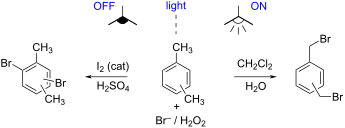
- context of covalent organic frameworks (COFs) and metal-organic frameworks (MOFs), frequently assembled through imine linkages. While C–H activation through halogens presents clear technical advantages, it also brings forth concerns about the toxicity of halo compounds to both human health and the



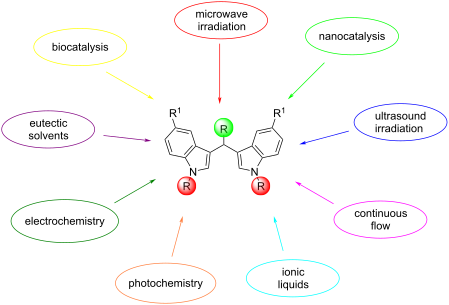
Green and sustainable approaches for the Friedel–Crafts reaction between aldehydes and indoles
Beilstein J. Org. Chem. 2024, 20, 379–426, doi:10.3762/bjoc.20.36




Cyclodextrins as building blocks for new materials
Beilstein J. Org. Chem. 2023, 19, 889–891, doi:10.3762/bjoc.19.66
- science that require high performance with minimal environmental impact. They are involved in the construction of interlocked molecules (rotaxanes and catenanes), supramolecular polymers, artificial enzymes, hydrogels, metal–organic frameworks, supramolecular solvents, fibers, nanotubes, nanoparticles
Light-responsive rotaxane-based materials: inducing motion in the solid state
Beilstein J. Org. Chem. 2023, 19, 873–880, doi:10.3762/bjoc.19.64
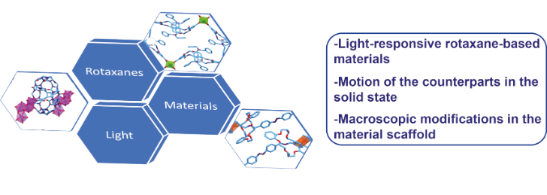
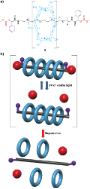
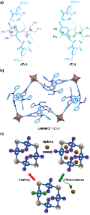
- photodegradation of intertwined gels could lead to advanced functional materials avoiding the UV phototoxicity for biocompatible implementations, such as protein patterning and tissue engineering. Light-responsive metal-organic rotaxane frameworks The integration of the mechanical bond into metal-organic
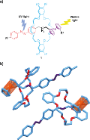
- frameworks (MOFs) [16][54] has allowed the dynamics of the different counterparts in the solid state, as well as some advanced applications [55][56][57][58][59][60][61]. Berna and colleagues prepared a copper-organic framework (UMUMOF-(E)-3) containing the interlocked fumaramide (E)-3 as the organic ligand

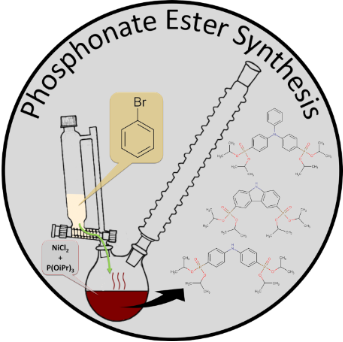
An alternative C–P cross-coupling route for the synthesis of novel V-shaped aryldiphosphonic acids
Beilstein J. Org. Chem. 2022, 18, 1518–1523, doi:10.3762/bjoc.18.160
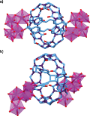
- . Phosphonates can also be employed as organic linkers in combination with metal ions to afford coordination polymers and metal-organic frameworks (MOFs), or more aptly, metal phosphonate frameworks [19][20]. One of the main challenges in the synthesis of metal phosphonates is that the linkers are rarely


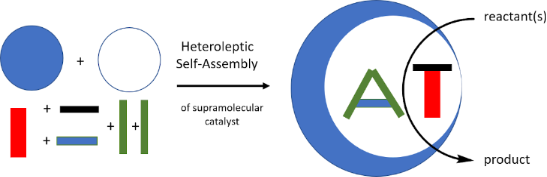
Heteroleptic metallosupramolecular aggregates/complexation for supramolecular catalysis
Beilstein J. Org. Chem. 2022, 18, 597–630, doi:10.3762/bjoc.18.62
- transfer) that include organic materials and supramolecular assemblies. Recently, FRET phenomena have been successfully demonstrated in supramolecular architectures based on metal organic frameworks and covalent organic frameworks [62][63][64]. However, poor solubility of such polymeric systems in common






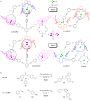


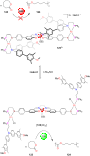

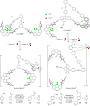


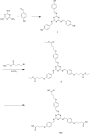
Study on the interactions between melamine-cored Schiff bases with cucurbit[n]urils of different sizes and its application in detecting silver ions
Beilstein J. Org. Chem. 2021, 17, 2950–2958, doi:10.3762/bjoc.17.204

- to yield different metal-organic frameworks [6][7][8][9][10][11], but also can be used as analytical reagents for the detection of different organic and inorganic substances [12][13][14]. Among the various central molecules for the synthesis of Schiff bases, melamine (2,4,6-triamino-s-triazine) has


Heterogeneous photocatalysis in flow chemical reactors
Beilstein J. Org. Chem. 2020, 16, 1495–1549, doi:10.3762/bjoc.16.125
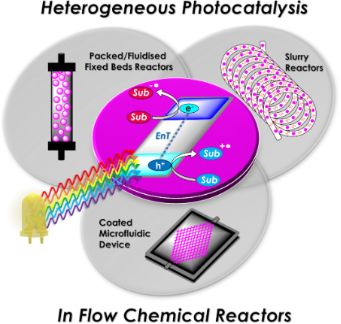
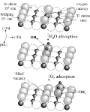
- conjugated porous polymers (CPPs) [3][10][171], covalent organic frameworks (COFs) [172][173][174][175], and hybrid materials, such as metal–organic frameworks (MOFs) [1][176][177]. MOFs, for example, have three distinct origins of photocatalysis; (i) semiconducting metal cluster nodes, (ii) photocatalytic




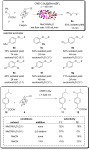


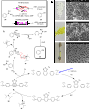







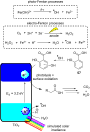

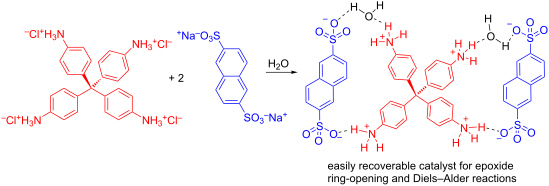
The charge-assisted hydrogen-bonded organic framework (CAHOF) self-assembled from the conjugated acid of tetrakis(4-aminophenyl)methane and 2,6-naphthalenedisulfonate as a new class of recyclable Brønsted acid catalysts
Beilstein J. Org. Chem. 2020, 16, 1124–1134, doi:10.3762/bjoc.16.99
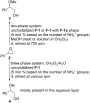
- architectures have been discovered, which allow a rigid and uniform distribution of a single well-defined catalytic or precatalytic center within a solid matrix. Of these, metal–organic frameworks (MOFs) [13][14][15][16][17][18] and covalent organic frameworks (COFs) [19][20][21][22] have been the forerunners




Combining enyne metathesis with long-established organic transformations: a powerful strategy for the sustainable synthesis of bioactive molecules
Beilstein J. Org. Chem. 2020, 16, 738–755, doi:10.3762/bjoc.16.68
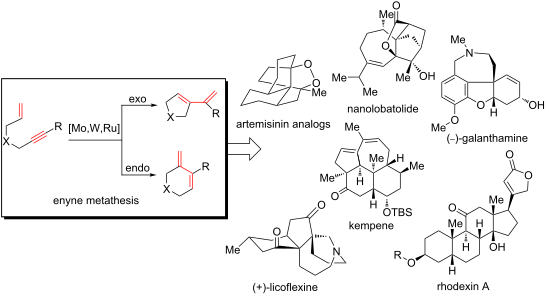
- dihydroartemisinic acid (DHAA) [64][65]. Also, high efficient and recyclable catalytic systems based on metal-organic frameworks (MOFs) have also been reported for the tandem hemisynthesis of artemisinin [66]. In a remarkable work, this antimalarial drug was obtained by a new route involving enyne metathesis as the




Synthesis of dipolar molecular rotors as linkers for metal-organic frameworks
Beilstein J. Org. Chem. 2019, 15, 1331–1338, doi:10.3762/bjoc.15.132

- dicarboxylic acid-substituted dipolar molecular rotors for the use as linker molecules in metal-organic frameworks (MOFs). The rotor molecules exhibit very low rotational barriers and decent to very high permanent, charge free dipole moments, as shown by density functional theory calculations on the isolated
- also been pursued to implement molecular rotors in the solid state. Crystals of linear molecular rotors [8][9][10][11][12][13], caged rotor crystals and gyroscope like molecules [14][15][16][17][18][19][20] as well as organosilicates [21] and metal-organic frameworks [22][23][24][25] containing


Understanding the unexpected effect of frequency on the kinetics of a covalent reaction under ball-milling conditions
Beilstein J. Org. Chem. 2019, 15, 1226–1235, doi:10.3762/bjoc.15.120
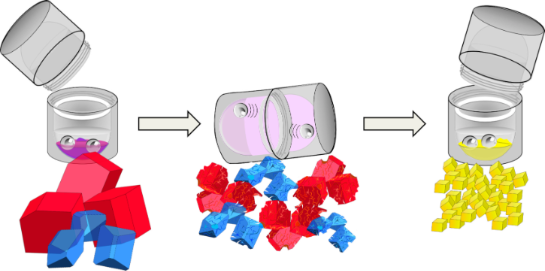
- for a wide range of different syntheses and chemical reactions of inorganic [8][9] and organic [10][11] compounds. Even supramolecular architectures such as co-crystals and metal-organic frameworks [4][12][13][14], cages [15] and rotaxanes [16] could be formed mechanochemically. Crucially, the


Mechanochemical synthesis of hyper-crosslinked polymers: influences on their pore structure and adsorption behaviour for organic vapors
Beilstein J. Org. Chem. 2019, 15, 1154–1161, doi:10.3762/bjoc.15.112
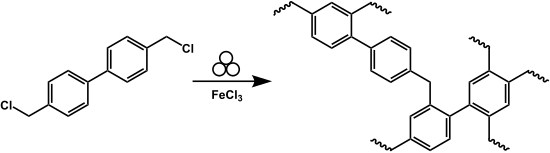
- variety of these materials [1]. While inorganic materials such as activated carbons, porous metal oxides, and zeolites have been investigated for decades, hybrid materials such as metal-organic frameworks [2], purely organic frameworks such as crystalline covalent-organic frameworks [3], and amorphous





