


Search results
Search for "NHCs" in Full Text gives 70 result(s) in Beilstein Journal of Organic Chemistry.
Water-soluble SNS cationic palladium(II) complexes and their Suzuki–Miyaura cross-coupling reactions in aqueous medium
Beilstein J. Org. Chem. 2018, 14, 1859–1870, doi:10.3762/bjoc.14.160
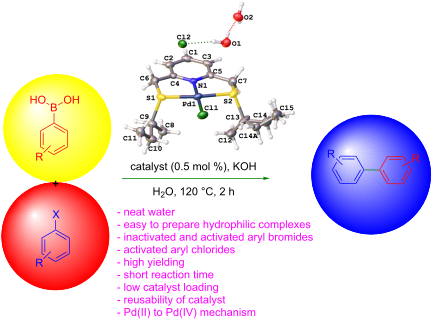
- reactions [32][33]. As it was elegantly reviewed by Singh and co-workers [33], these organosulfur ligands can be classified into pincer type (symmetrical and unsymmetrical), thioethers, thiourea-based ligands, sulfur-substituted NHCs, thiosemicarbazones and sulfated Schiff bases. Of the pincer ligands


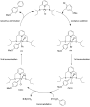


Enhanced quantum yields by sterically demanding aryl-substituted β-diketonate ancillary ligands
Beilstein J. Org. Chem. 2018, 14, 664–671, doi:10.3762/bjoc.14.54
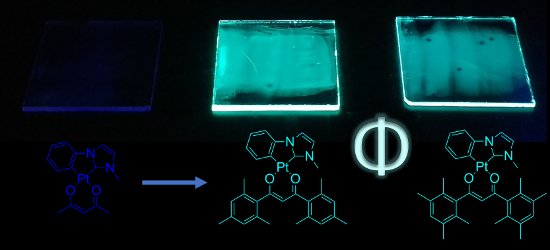
- demonstrated. Phenyl-substituted N-heterocyclic carbenes (NHCs) as C^C* cyclometalating ligands shift the emission color towards higher energy, due to the strong donor character of NHCs compared to C^N cyclometalating ligands [33][34]. Recently, it was shown that the introduction of sterically demanding aryl


Recent progress in the racemic and enantioselective synthesis of monofluoroalkene-based dipeptide isosteres
Beilstein J. Org. Chem. 2017, 13, 2637–2658, doi:10.3762/bjoc.13.262
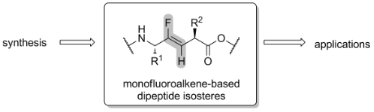
- -heterocyclic carbenes (NHCs, Scheme 11) [40]. The reaction was first performed on the γ,γ-difluoro-α,β-enal 52 which was synthesized via a Wittig olefination of 50. The resulting monofluoroalkene Boc-Val-ψ[(Z)-CF=CH]-Gly-OEt was obtained in good yield. Afterwards, the γ,γ-difluoro-α,β-enoylsilane 55, obtained


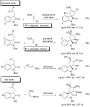
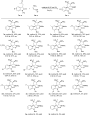
NHC-catalyzed cleavage of vicinal diketones and triketones followed by insertion of enones and ynones
Beilstein J. Org. Chem. 2017, 13, 1816–1822, doi:10.3762/bjoc.13.176
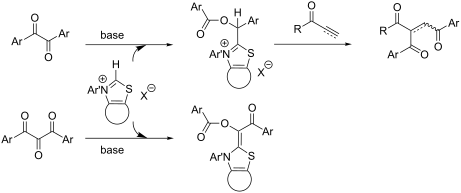
- ; N-heterocyclic carbene; ring enlargement; Stetter reaction; vicinal polyketone; Introduction N-Heterocyclic carbenes (NHCs) have been indispensable catalysts for organic synthesis, particularly for umpolung of various functional groups [1][2][3][4][5][6][7][8][9]. In the Stetter reaction, NHCs
- -triketones reacted with NHCs to afford bisacylated Breslow intermediates in high yield. However, their nucleophilicity was so weak that they were recovered unchanged in the reaction with enones. It was also found that the monoacylated Breslow intermediates changed reversibly to the resting state of acid




Pd(OAc)2/Ph3P-catalyzed dimerization of isoprene and synthesis of monoterpenic heterocycles
Beilstein J. Org. Chem. 2017, 13, 1807–1815, doi:10.3762/bjoc.13.175
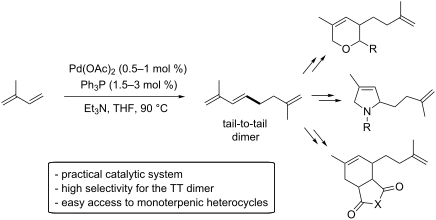
- Beller and co-workers (Scheme 1, reaction 2) [33]. The use of NHCs proved to be the key, since the more accessible monodentated phosphorus ligands such as triphenyl (Ph3P) or tricyclohexyl (Cy3P) phosphines showed a significant lower efficiency and different selectivity with the same palladium source Pd


An efficient Pd–NHC catalyst system in situ generated from Na2PdCl4 and PEG-functionalized imidazolium salts for Mizoroki–Heck reactions in water
Beilstein J. Org. Chem. 2017, 13, 1735–1744, doi:10.3762/bjoc.13.168

- (NHCs) have been recognized as the preferable candidates [35][36]. In contrast to common phosphine- and nitrogen-based ligands, NHCs exhibit stronger σ-donating and weaker π-accepting properties, which make the corresponding Pd–NHC complexes more air and water stable. Furthermore, the convenient


Construction of highly enantioenriched spirocyclopentaneoxindoles containing four consecutive stereocenters via thiourea-catalyzed asymmetric Michael–Henry cascade reactions
Beilstein J. Org. Chem. 2017, 13, 1342–1349, doi:10.3762/bjoc.13.131
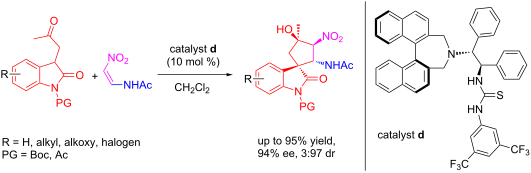
- strategies with chiral transition metals [27][28][29][30][31][32][33], organocatalysts such as secondary amines [34][35][36], nucleophilic phosphines [26][37][38][39][40][41][42][43][44], tertiary amines [45], N-heterocyclic carbenes (NHCs) [46][47][48], and cinchona alkaloid derivatives [25][28][49][50



Electron-transfer-initiated benzoin- and Stetter-like reactions in packed-bed reactors for process intensification
Beilstein J. Org. Chem. 2016, 12, 2719–2730, doi:10.3762/bjoc.12.268
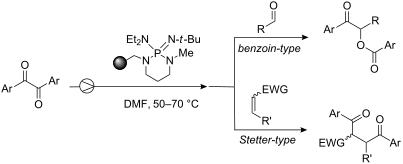
- -reaction phase and improving NHCs’ stability towards air and moisture [10][11]. Quite surprisingly, however, implementation of continuos-flow techniques with micro- and meso-reactors is rare in this field [12][13][14][15][16][17]. Indeed, microreactor technology is today a powerful tool for the fine
- chemical and pharmaceutical industries facilitating the automation of the production processes with reduced costs and improved safety and sustainability [18][19][20][21]. Very recently, Monbaliu and co-workers described a convenient continuous-flow setup for the generation of common free NHCs under
- homogeneous NHCs [13][14]. On the other hand, heterogeneous catalysis in microstructured flow reactors represents a robust synthetic platform, with benefits over the corresponding batch processes such as catalyst stability, lower degradation of supports, and ease of scale-up with minimal changes to the


From betaines to anionic N-heterocyclic carbenes. Borane, gold, rhodium, and nickel complexes starting from an imidazoliumphenolate and its carbene tautomer
Beilstein J. Org. Chem. 2016, 12, 2673–2681, doi:10.3762/bjoc.12.264

- biological activities of NHC complexes [23][24]. In the last decade, attention has also been directed to anionic N-heterocyclic carbenes [25]. In this context, mesomeric betaines are interesting from two viewpoints. They are not only able to undergo tautomerisations to neutral NHCs and thus provide a safe
- storage form of otherwise unstable species [26][27], but proved also to be suitable starting materials for the generation of anionic NHCs by deprotonation. As examples of the latter mentioned species, sydnone anions 1 [28], imidazole-2-ylidene-4-olate 2 [29] as well as its 4-aminide derivatives [30] have




Experimental and theoretical investigations on the high-electron donor character of pyrido-annelated N-heterocyclic carbenes
Beilstein J. Org. Chem. 2016, 12, 1884–1896, doi:10.3762/bjoc.12.178
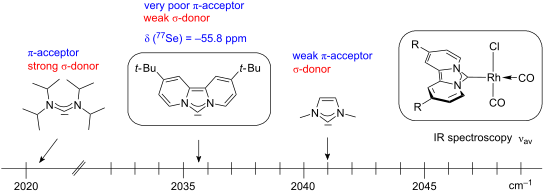
- character than that of typical unsaturated NHCs is expected. However, the IR stretching frequencies of their Rh(CO)2Cl complexes suggest an electron-donor character even stronger than that of saturated NHCs. We ascribe this to the extremely weak π-acceptor character of the dipyrido-annelated NHCs caused by
- carbenes derived from imidazole so far. This overcompensates even the lower σ-donor character, so that their overall electron-donating ability lies in between that of acyclic diaminocarbenes and saturated NHCs. Results and Discussion Synthesis of the rhodium CO and 13CO complexes 2a and 2b We generated the
- -heterocyclic carbenes based on the average wavenumber of the CO stretching frequencies of their respective Rh(CO)2Cl complexes. The strongest donating NHCs are found on the left side (lower ), the weakest on the right side (higher ). In addition the N–C–N angles are given (from X-ray, if not marked otherwise


Reactivity studies of pincer bis-protic N-heterocyclic carbene complexes of platinum and palladium under basic conditions
Beilstein J. Org. Chem. 2016, 12, 1334–1339, doi:10.3762/bjoc.12.126
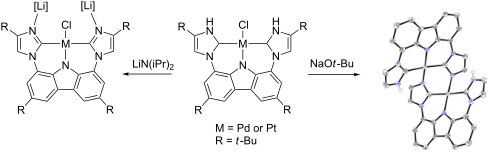
- dibasic complex 8. Keywords: NHC; 15N NMR spectroscopy; palladium; platinum; protic N-heterocyclic carbene; Introduction N-Heterocyclic carbenes (NHCs) have been extensively researched for a number of purposes since 1991 when Arduengo first isolated free NHCs [1][2][3]. NHCs as ligands have been known


Bi- and trinuclear copper(I) complexes of 1,2,3-triazole-tethered NHC ligands: synthesis, structure, and catalytic properties
Beilstein J. Org. Chem. 2016, 12, 863–873, doi:10.3762/bjoc.12.85
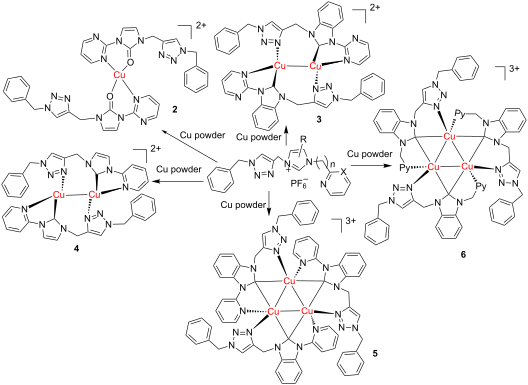
- [1][2][3][4][5][6][7][8][9][10][11][12]. A number of transition metal complexes of NHCs containing pyridine [13], pyrimidine [14], pyrazole [15][16], naphthyridine [17], pyridazine [18], and phenanthroline [19][20] donating groups have been studied in metal-catalyzed organic transformations. Recently
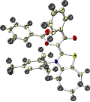
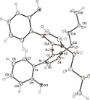
- addition, a triangular Cu(I) complex 6 can be obtained when a flexible ligand was used. Complex 6 consists of a triangular Cu3 core bridged by three NHCs, which is similar with the published Cu3 complexes containing flexible ligands [33]. Interestingly, we can also obtain a similar triangular Cu3 complex 5
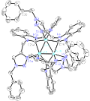
- . Complex 5 was also characterized via X-ray diffraction. It's structure is shown in Figure 4. Complex 5 consists of two independent molecules in the unit cell. Here, only one molecule was given in Figure 4. The molecule structure consists of a triangular Cu3 core bridged by three NHCs ligands. Each NHC



Recent advances in N-heterocyclic carbene (NHC)-catalysed benzoin reactions
Beilstein J. Org. Chem. 2016, 12, 444–461, doi:10.3762/bjoc.12.47
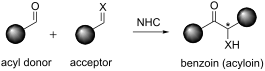
- Interdisciplinary Science and Technology,Trivandrum 695 019, India.; Fax: +91 471 2491712; Tel: +91 471 2490406 10.3762/bjoc.12.47 Abstract N-Heterocyclic carbenes (NHCs) have emerged as a powerful class of organocatalysts that mediate a variety of organic transformations. The Benzoin reaction constitutes one of
- the earliest known carbon–carbon bond-forming reactions catalysed by NHCs. The rapid growth of NHC catalysis in general has resulted in the development of a variety of benzoin and benzoin-type reactions. An overview of such NHC-catalysed benzoin reactions is presented. Keywords: acyloin reaction
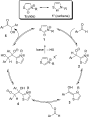
- -heterocyclic carbenes (NHCs) are the two main classes of catalysts that are known to mediate benzoin reactions. This review focuses on the recent advancements made in the area of NHC-catalysed benzoin reactions. Historically, the first benzoin reaction was reported by Wöhler and Liebig in 1832. They discovered



Scope and limitations of the dual-gold-catalysed hydrophenoxylation of alkynes
Beilstein J. Org. Chem. 2016, 12, 172–178, doi:10.3762/bjoc.12.19
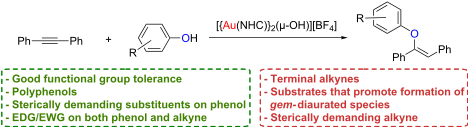
- in unsymmetrical alkynes can help to achieve high regioselectivity in the hydrophenoxylation. Keywords: cooperative catalysis; gold catalysis; hydrophenoxylation; N-heterocyclic carbene; vinyl ethers; Introduction During the last 30 years, N-heterocyclic carbenes (NHCs) have evolved from mere
- curiosities to one of the most powerful tools within the synthetic chemist’s arsenal [1]. Due to their unique steric and electronic properties [2][3][4][5][6], NHCs are nowadays used in a myriad of chemical processes, for example as catalysts in organocatalysed reactions [7][8][9], or as ligands in transition




Versatile deprotonated NHC: C,N-bridged dinuclear iridium and rhodium complexes
Beilstein J. Org. Chem. 2016, 12, 117–124, doi:10.3762/bjoc.12.13
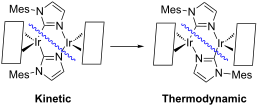
- bulky N-substituents [1]. However the existence of stable NHCs was before postulated by Wanzlick et al. during the 1960s [2][3][4] and supported later by Öfele [5][6]. NHCs have become useful ligands in many transition metal-catalyzed reactions, stimulating the study of the unique features of the M–NHC
- bond [7][8], which favored the synthesis of new NHCs and to their use as ligands in transition metal complexes. The latter complexes were usually obtained by an easy replacement of a phosphine by the new NHC ligand, displaying a very high stability under many catalytic conditions. Furthermore, NHCs
- a key structural feature for the introduction of asymmetry in the NHC ring. Second, these H atoms might transform the corresponding NHCs in potentially efficient chiral NHCs in asymmetric synthesis [22]. Following with the latter recipe, protic NHCs (pNHCs) consist of the presence of a N-bound H


N-Methylphthalimide-substituted benzimidazolium salts and PEPPSI Pd–NHC complexes: synthesis, characterization and catalytic activity in carbon–carbon bond-forming reactions
Beilstein J. Org. Chem. 2016, 12, 81–88, doi:10.3762/bjoc.12.9
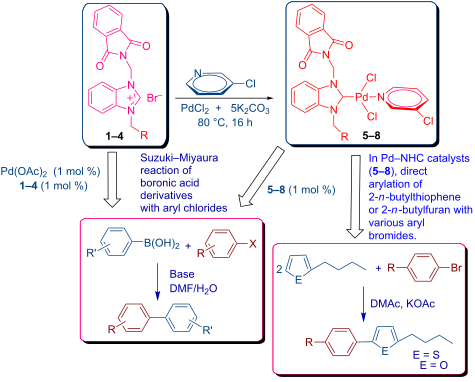
- with 4-chlorotoluene. Keywords: arylation; benzimidazolium salts; catalysis; N-heterocyclic carbene; PEPPSI complex; Suzuki–Miyaura cross-coupling reaction; Introduction The use of N-heterocyclic carbenes (NHCs) as ligands was started by Wanzlick [1] and Öfele [2] almost fifty years ago. There have


Direct estimate of the internal π-donation to the carbene centre within N-heterocyclic carbenes and related molecules
Beilstein J. Org. Chem. 2015, 11, 2727–2736, doi:10.3762/bjoc.11.294
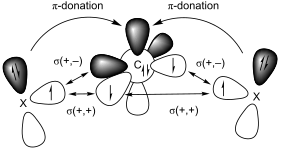
- calculations and with an energy decomposition analysis. The investigated molecules include N-heterocyclic carbenes (NHCs), the cyclic alkyl(amino)carbene (cAAC), mesoionic carbenes and ylide-stabilized carbenes. The bonding analysis suggests that the carbene centre in cAAC and in diamidocarbene have the
- has become a major field of chemical research [2][3][4]. The outstanding stability and synthetic utility of N-heterocyclic carbenes (NHCs) is an ongoing subject to an ubiquitous number of experimental and computational studies exploring their structural and electronic properties [5][6][7][8]. In the
- last two decades, these versatile compounds have been widely employed in transition metal [9][10][11][12][13] and organocatalysis [14][15][16], organometallic [17][18][19] and main group synthesis [20][21][22][23][24][25][26], and activation of small molecules [27][28]. NHCs possess a divalent C(II


Rhodium, iridium and nickel complexes with a 1,3,5-triphenylbenzene tris-MIC ligand. Study of the electronic properties and catalytic activities
Beilstein J. Org. Chem. 2015, 11, 2584–2590, doi:10.3762/bjoc.11.278
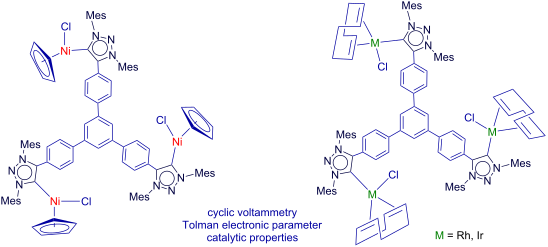
- addition reaction of arylboronic acids to α,β-unsaturated ketones. Keywords: arylation of unsaturated ketones; mesoionic carbenes; nickel; iridium; rhodium; Introduction Highly symmetrical poly-NHCs are a very interesting type of ligands, because they allow the preparation of a variety of supramolecular
- assemblies that include molecular squares and triangles [1][2][3][4][5][6], cylinder-like structures [7][8][9][10][11][12][13], organometallic polymers [14][15][16][17][18][19][20][21][22] and even organometallic mesoporous materials [21][22]. Another interesting feature of this special type of poly-NHCs is
- interested in the design of several types of C3v-symmetric tris-NHCs, both for the preparation of self-assembly molecular cages [12][13][27] and for the design of discrete trimetallic molecules whose catalytic performances were explored [23][25][28][29]. Among these ligands, we found those featuring a


N-Heterocyclic carbenes
Beilstein J. Org. Chem. 2015, 11, 2474–2475, doi:10.3762/bjoc.11.268
- Thematic Series. This compendium again highlights the diversity of fields that are affected and enhanced by NHCs. It is my hope that such a collection of contributions will inspire readers in novel and exciting directions. I never tire of being amazed at the ingenuity of researchers in using these entities
Copper-catalyzed asymmetric conjugate addition of organometallic reagents to extended Michael acceptors
Beilstein J. Org. Chem. 2015, 11, 2418–2434, doi:10.3762/bjoc.11.263
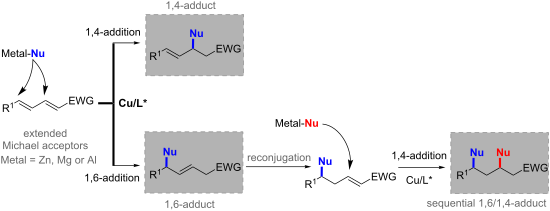
- (CuTC) and (R)-Binap L4, which afforded the desired final products bearing two stereogenic centers with excellent diastereoselectivies (93–97%). N-Heterocyclic carbenes (NHCs) have emerged, in these last two decades, as a powerful and versatile class of ligands, and appeared to be potent in many


Efficient synthetic protocols for the preparation of common N-heterocyclic carbene precursors
Beilstein J. Org. Chem. 2015, 11, 2318–2325, doi:10.3762/bjoc.11.252
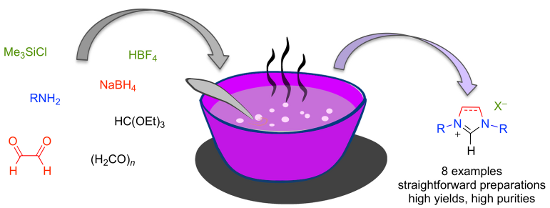
- N-heterocyclic carbenes (NHCs) have become a staple of modern synthetic chemistry [3][4][5][6][7]. Over the past twenty five years, they have evolved from laboratory curiosities to ubiquitous ancillary ligands, not only for all the transition metals whether in high or low oxidation state [8][9][10
- ][23] and organic synthesis [24][25][26]. In particular, they were successfully employed for the umpolung of carbonyl compounds, sometimes in an asymmetric fashion [27][28][29]. Currently, the NHCs most frequently encountered are based on the imidazol-2-ylidene and imidazolin-2-ylidene scaffolds, which
- serves de facto as a carbene source for most catalytic and synthetic purposes. Alternative methods to generate NHCs without the intervention of a base, which might lead to unwanted side-reactions, include the facile cleavage of NHC·CO2 zwitterions (Scheme 1, path B) [31][32][33][34][35], the thermolysis


Convenient preparation of high molecular weight poly(dimethylsiloxane) using thermally latent NHC-catalysis: a structure-activity correlation
Beilstein J. Org. Chem. 2015, 11, 2261–2266, doi:10.3762/bjoc.11.246
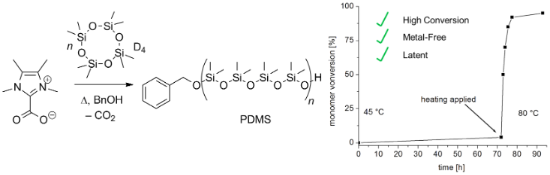
- of Textile Chemistry and Chemical Fibers, Körschtalstrasse 26, D-73770 Denkendorf, Germany 10.3762/bjoc.11.246 Abstract The polymerization of octamethylcyclotetrasiloxane (D4) is investigated using several five-, six- and seven-membered N-heterocyclic carbenes (NHCs). The catalysts are delivered in
- ; polymerization; polysiloxanes; Introduction N-Heterocyclic carbenes (NHCs) [1][2][3] have had a resounding impact on organopolymerization [4][5] during the past fifteen years. Considerable research effort has steadily deepened the mechanistic understanding of the polymerization pathways open to NHCs, while the
- the performance of NHCs in this area have been published. In 2006, Waymouth, Hedrick and co-workers showed that poly(carbosiloxane)s can be synthesized efficiently from the monomer 2,2,5,5-tetramethyl-1-oxa-2,5-disilacyclopentane in the presence of alcohols as initiators, using two different NHCs [22


Half-sandwich nickel(II) complexes bearing 1,3-di(cycloalkyl)imidazol-2-ylidene ligands
Beilstein J. Org. Chem. 2015, 11, 2171–2178, doi:10.3762/bjoc.11.235
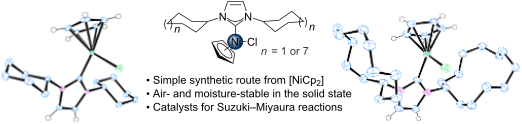
- carbenes (NHCs) [2] are an interesting class of catalysts [3][4], due to the fascinating characteristics of NHC ligands, which can be designed to have a wide range of steric and electronic properties [5][6][7]. Nickel catalysts of the form [Ni(Cp)X(NHC)] have been shown to be versatile and relatively easy


Olefin metathesis in air
Beilstein J. Org. Chem. 2015, 11, 2038–2056, doi:10.3762/bjoc.11.221
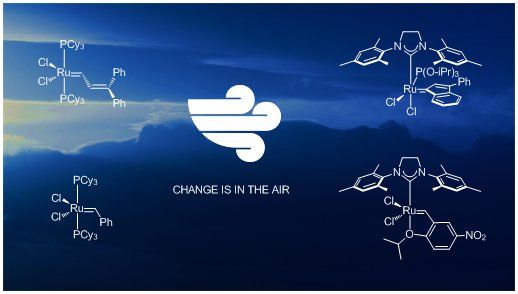
- the Grubbs’ 2nd generation catalyst. The increased stability of 17 is due to the unsaturated backbone of the NHC; the steric bulkiness on the metal center is improved and the σ-donating ability is increased compared to other NHCs. These were the first ruthenium-based catalysts able to perform RCM




Nitro-Grela-type complexes containing iodides – robust and selective catalysts for olefin metathesis under challenging conditions
Beilstein J. Org. Chem. 2015, 11, 1823–1832, doi:10.3762/bjoc.11.198
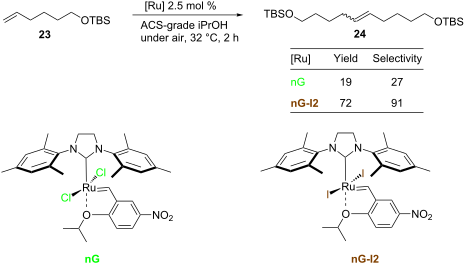
- their syntheses require additional steps because the necessary anilines – the starting materials for the preparation of NHCs precursors – are not commercially available [10][11]. Up until now, there had been no disclosures of increased catalyst efficiency caused by the exchange of chlorides with larger





