


Search results
Search for "activation barrier" in Full Text gives 71 result(s) in Beilstein Journal of Organic Chemistry.
Control over size, shape, and photonics of self-assembled organic nanocrystals
Beilstein J. Org. Chem. 2021, 17, 42–51, doi:10.3762/bjoc.17.5
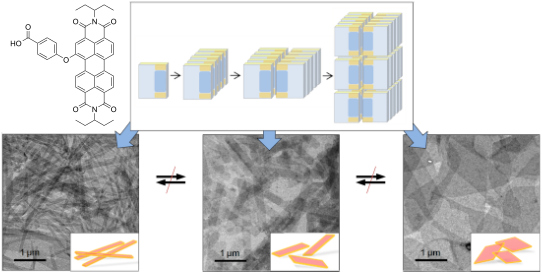
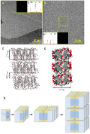
- (THF renders the system more dynamic, lowering the activation barrier for a molecular reorganization [38][49]), resulting in long rigid fibers that interact (Figure 3E), leading to larger ordered arrays and templating the further assembly process. This, together with the better stabilization of the




Pentannulation of N-heterocycles by a tandem gold-catalyzed [3,3]-rearrangement/Nazarov reaction of propargyl ester derivatives: a computational study on the crucial role of the nitrogen atom
Beilstein J. Org. Chem. 2020, 16, 3059–3068, doi:10.3762/bjoc.16.255
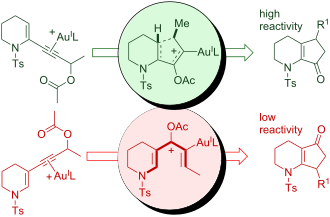
- rearrangement (specially the TS1-like first step). is rate determining with a low activation barrier of 10.0 kcal⋅mol−1 and that the Nazarov-cyclization is an extremely easy process (ΔΔG‡ = 5.1 kcal⋅mol−1) [16]. To homogenize with our results in Figure 1, we computed the corresponding N-sulfonyl-protected
- anion as a base (Figure 6). In fact, the abstraction of the hydrogen atom in the position adjacent to Au (C3) shows a low activation barrier (TS8, ΔG‡ = 12.6 kcal⋅mol−1) from the corresponding precomplex, leading to the formation of the intermediate XI and triflic acid. The high acidity of the latter


One-pot synthesis of oxazolidinones and five-membered cyclic carbonates from epoxides and chlorosulfonyl isocyanate: theoretical evidence for an asynchronous concerted pathway
Beilstein J. Org. Chem. 2020, 16, 1805–1819, doi:10.3762/bjoc.16.148
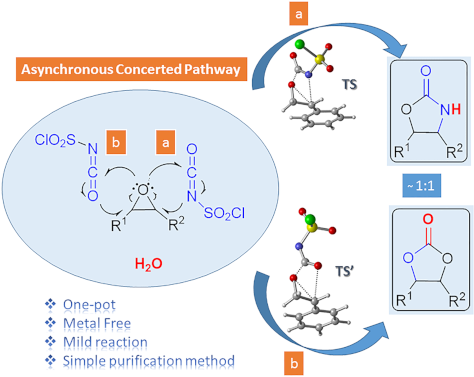
- observed oxazolidinone 9f since its precursor intermediate 10 has a remarkably lower activation barrier compared to 11. Methodology All calculations have been carried with the Gaussian 09 program package [58]. Geometry optimizations of all the minima and transition states involved have been performed using


Rearrangement of o-(pivaloylaminomethyl)benzaldehydes: an experimental and computational study
Beilstein J. Org. Chem. 2020, 16, 1636–1648, doi:10.3762/bjoc.16.136
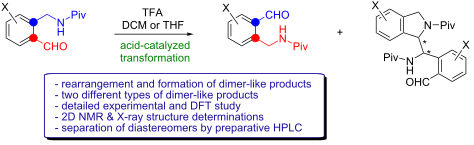
- →22a = 89.1 kJ·mol−1, while the reaction leading to the minor (RR) isomer had a larger activation barrier (ΔG#4e→22b = 101.9 kJ·mol−1). Moreover, the formation of the latter intermediate was significantly more endergonic (ΔG4e→22b = 69.2 kJ·mol−1) than ΔG4e→22a (37.9 kJ·mol−1). The structure


Photophysics and photochemistry of NIR absorbers derived from cyanines: key to new technologies based on chemistry 4.0
Beilstein J. Org. Chem. 2020, 16, 415–444, doi:10.3762/bjoc.16.40
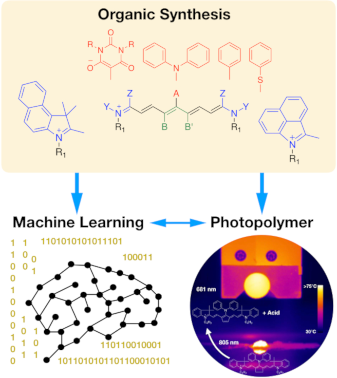
- possesses an internal activation barrier resulting in a system having a certain energy threshold. Equation 8 shows how temperature affects the rate constant for electron transfer ket The free activation enthalpy [67][72] controls the internal activation barrier, Equation 8 [65]. The free enthalpy of
- the outer sphere coordinates (λo) while geometric changes of the starting materials responsible tune inner-sphere coordinates λi (λ = λo + λi) [72]. Many NIR sensitive systems possess an internal activation barrier although ΔGet < 0 using either the positively charged iodonium compound 88 (Ered
- -sensitive systems comprising 12–87 and 13 or 14 result in ΔGet being +/−0.5 eV using 88 as acceptor [5]. The reorganization energy λ can approach values of 1–1.5 eV [65][70]. This helps to overcome the internal activation barrier. Non-radiative deactivation of the NIR absorber provides enough thermal energy


[1,3]/[1,4]-Sulfur atom migration in β-hydroxyalkylphosphine sulfides
Beilstein J. Org. Chem. 2020, 16, 88–105, doi:10.3762/bjoc.16.11
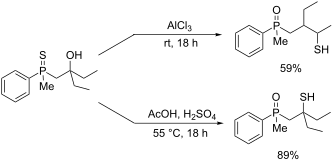
- that this transformation was reversible, and therefore the dication IV may have entered an alternative pathway, which involved the rotation of the molecule around the Cα–Cβ bond (activation barrier: +5.4 kcal/mol, stabilization: −3.4 kcal/mol), which was feasible under the reaction conditions. The
- formed dication V underwent an intramolecular nucleophilic substitution through transition state VI, which proceeded with a small activation barrier, leading to the cyclic intermediate VII and further to the rearranged product 54. The tentative mechanism discussed above does not explain the formation of
- different pathways. A complex of 19 with AlCl3 underwent simultaneous C–O bond cleavage and α-hydrogen (but not γ-hydrogen) atom abstraction, which led to 35, with activation barrier of +24.8 kcal/mol and a stabilization energy of −16.1 kcal/mol. Yet, at the moment, this preference remains to be further


Why do thioureas and squaramides slow down the Ireland–Claisen rearrangement?
Beilstein J. Org. Chem. 2019, 15, 2948–2957, doi:10.3762/bjoc.15.290

- )- and (Z)-silyl ketene acetal 2c derived from 1c as starting material for the reaction. The activation barrier for the uncatalyzed reaction of (E)-silyl ketene acetal was 98.5 kJ·mol−1, and for (Z)-silyl ketene acetal 88.7 kJ·mol−1 (Figure 2). Charges on the allylic oxygen in the reaction transition
- corrected hybrid density ωB97X-D functional showed that thioureas and squaramides stabilize the starting ground state more than the corresponding transitions states. This fact leads to a higher activation barrier and slower reactions in the presence of hydrogen-bond donating organocatalysts. On the other


Diazocine-functionalized TATA platforms
Beilstein J. Org. Chem. 2019, 15, 1485–1490, doi:10.3762/bjoc.15.150
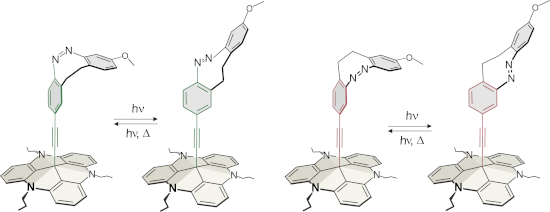
- ][2][3][4]. However, there are very few reactions which do not follow the classical Eyring theory [5][6]. The rate of these reactions is not dependent on an activation barrier but controlled by quantum mechanical transition probabilities between two quantum states [7][8][9][10]. The majority of these
- the metal surface [11][18]. With increasing π-conjugation from the azobenzene into the platform, and thus coupling to the gold surface, the activation barrier drops to almost zero (≈8 kJ mol−1) and the frequency factors (log A) become negative [11]. Vanishing barriers and low frequency factors are



Switchable selectivity in Pd-catalyzed [3 + 2] annulations of γ-oxy-2-cycloalkenones with 3-oxoglutarates: C–C/C–C vs C–C/O–C bond formation
Beilstein J. Org. Chem. 2019, 15, 1107–1115, doi:10.3762/bjoc.15.107
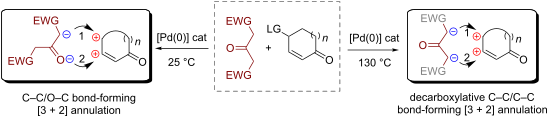
- a rather high activation barrier. This activation barrier might be even greater in the case of the triketones 1b,c and 1,3-bis(benzenesulfonyl)propan-2-one (1d), which would explain the impossibility to access the corresponding 1,3-disubstitued bis-cycloalkanone derivatives. With these


Sigmatropic rearrangements of cyclopropenylcarbinol derivatives. Access to diversely substituted alkylidenecyclopropanes
Beilstein J. Org. Chem. 2019, 15, 333–350, doi:10.3762/bjoc.15.29
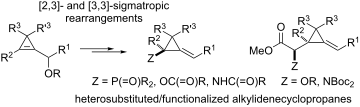
- thermodynamically favored, displays a high activation barrier compared to that of the acyclic allyl analog H. An even higher activation barrier was calculated in the case of the 3-methyl and 3-phenyl-substituted cyclopropenes, I’ and I’’, respectively, which indicates that the concerted [2,3]-sigmatropic







Silanediol versus chlorosilanol: hydrolyses and hydrogen-bonding catalyses with fenchole-based silanes
Beilstein J. Org. Chem. 2019, 15, 167–186, doi:10.3762/bjoc.15.17
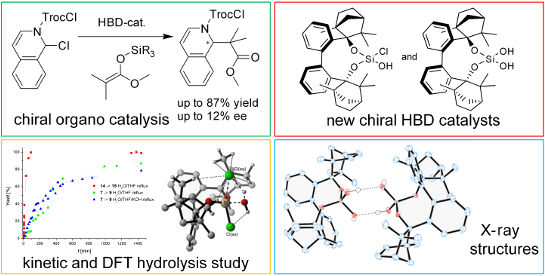
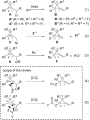
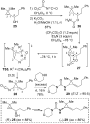
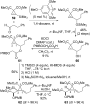
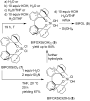
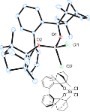
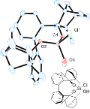
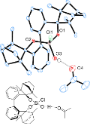
- computationally. Chlorosilanol 8ax, with the axial Si–OH alignment, is the thermodynamically more stable isomer (ΔEr = 2.7 kcal mol−1, Table 3), in accordance with X-ray crystal structure analyses of 8 (Figure 13). The first hydrolysis has a higher activation barrier than the second step, and thus appears to be








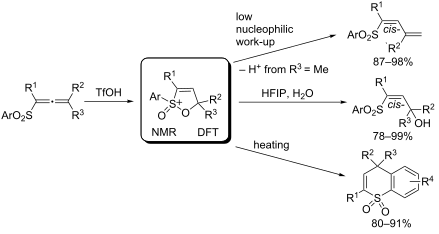
Generation of 1,2-oxathiolium ions from (arysulfonyl)- and (arylsulfinyl)allenes in Brønsted acids. NMR and DFT study of these cations and their reactions
Beilstein J. Org. Chem. 2018, 14, 2897–2906, doi:10.3762/bjoc.14.268
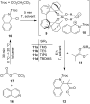
- , entry 2) shows that the intramolecular cyclization to the ortho-carbon of phenyl ring occurs, most probably, through cation C (Scheme 2). And this reaction has a high activation barrier, analogously to the similar cyclization of phosphonoallenes to the corresponding phosphonoheterocycles [30]. We


Microwave-assisted synthesis of biologically relevant steroidal 17-exo-pyrazol-5'-ones from a norpregnene precursor by a side-chain elongation/heterocyclization sequence
Beilstein J. Org. Chem. 2018, 14, 2589–2596, doi:10.3762/bjoc.14.236
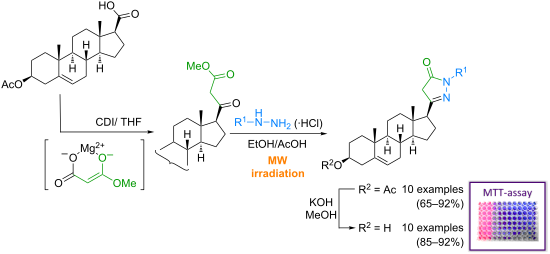
- mainly exists as the CH-tautomeric form (Figure 1). The characteristic signals of the 4'-methylene hydrogens appear at 3.36 and 3.46 ppm in the 1H NMR spectrum. However, in the more polar solvent DMSO-d6, the equilibrium mixture of the NH- and OH-tautomers of 7f predominates. As the activation barrier


A mechanochemical approach to access the proline–proline diketopiperazine framework
Beilstein J. Org. Chem. 2017, 13, 2169–2178, doi:10.3762/bjoc.13.217
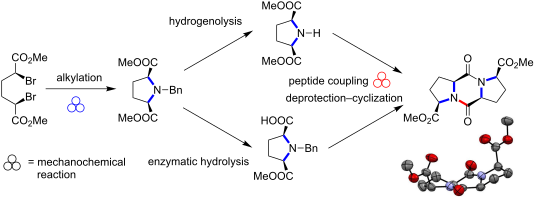
- cleavage of the C–OMe bond through TS-16b-solv was associated to a higher activation barrier with ΔG# = 30.0 kcal mol−1 and a less exoergic reaction (ΔG = −2.6 kcal mol−1). Selected bond distances in Table 4 clearly show that the formation of C–N and cleavage of C–O are both well advanced in TS-16b-solv


Nucleophilic and electrophilic cyclization of N-alkyne-substituted pyrrole derivatives: Synthesis of pyrrolopyrazinone, pyrrolotriazinone, and pyrrolooxazinone moieties
Beilstein J. Org. Chem. 2017, 13, 825–834, doi:10.3762/bjoc.13.83
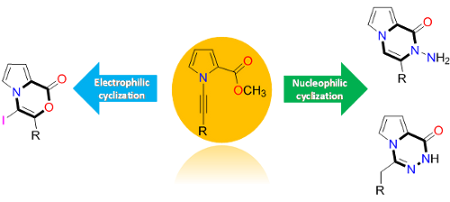
- lengthening of the C2−I interaction from 2.801 to 3.001 Å and of the C1−C2 bond from 1.304 to 1.339 Å in 20 and 21 was observed (Figure 8). The activation barrier for the formation of 21 is 1.61 kcal/mol in dichloromethane and the transition state TS2 is 10.51 kcal/mol lower than the initial reactant. In the




Dimerization reactions of aryl selenophen-2-yl-substituted thiocarbonyl S-methanides as diradical processes: a computational study
Beilstein J. Org. Chem. 2017, 13, 410–416, doi:10.3762/bjoc.13.44

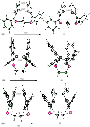
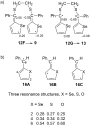
- a 1.2 kcal/mol activation barrier (TS2) forming a C–C bond to give the intermediate, delocalized diradical 12 in a spontaneous reaction (∆G = −50.5 kcal/mol, Figure 3). This diradical can adopt a number of conformations. While the conformer surface was not fully explored, five conformers were


Experimental and theoretical investigations into the stability of cyclic aminals
Beilstein J. Org. Chem. 2016, 12, 2280–2292, doi:10.3762/bjoc.12.221
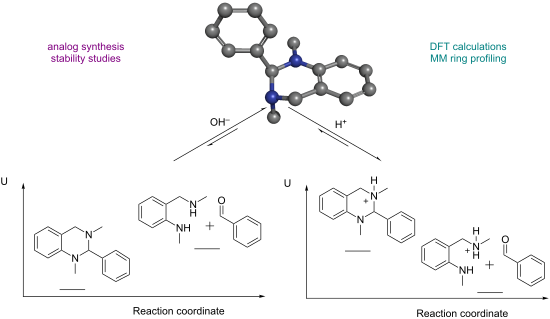
- and the resulting nitrogen basicity is not straightforward [53][54]. Probably more interesting, the hydrolysis of cyclic geminal ethers was recently reported to be drastically accelerated by introduction of sterically demanding side groups through reduction of the activation barrier [55]. These





The hydrolysis of geminal ethers: a kinetic appraisal of orthoesters and ketals
Beilstein J. Org. Chem. 2016, 12, 1467–1475, doi:10.3762/bjoc.12.143
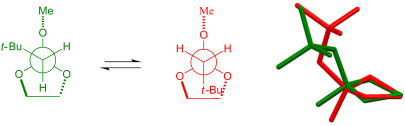
- -membered endo-cyclic orthoesters accompany increasingly bulky C(2) alkyl substitution. Dramatic increases in the hydroxonium catalytic coefficients for hydrolysis are observed for Cβ branching at C(2), which can lead to conformational distortion of the five-membered ring which lowers the activation barrier


Ring-whizzing in polyene-PtL2 complexes revisited
Beilstein J. Org. Chem. 2016, 12, 1410–1420, doi:10.3762/bjoc.12.135
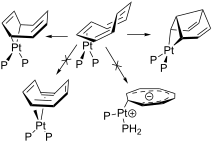
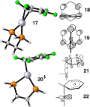
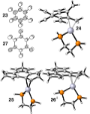
- 19. The structure is shown in 20. Special care was taken to search for a transition state where the Pt(dpe) group was rotated by 90° but none was found. The activation barrier was computed to be 7.4 kcal/mol. Reinhold, McGrady and Perutz [46] obtained a barrier of 6.4 kcal/mol for the same molecule
- transition state for ring whizzing. The activation barrier was computed to be 3.2 kcal/mol. Barriers from 10.5 to 7.6 kcal/mol were found for the Pd complexes [49]. Interestingly an η1 transition structure with one imaginary frequency was also discovered. It was found to be 7.2 kcal/mol above the ground
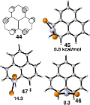
- a chair form with a boat conformation slightly higher in energy [51]. The D6h structure lies higher in energy by 17.1 kcal/mol [51]. Our optimization of the η2 ground state shows a twisted boat conformation to be the most stable, 24, in Figure 7. The activation barrier was found to be 13.7 kcal/mol






Scope and mechanism of the highly stereoselective metal-mediated domino aldol reactions of enolates with aldehydes
Beilstein J. Org. Chem. 2016, 12, 813–824, doi:10.3762/bjoc.12.80

- with benzaldehyde (PhCHO) is followed by the exergonic first aldol addition showing a small activation barrier of 1.82 kcal mol−1 via a half−chair like transition state (TS-C-A1), which is in accord with the anti-selective aldol addition of titanium enolates [53][54]. TS-C-A1 leads to the formation of
- , which is responsible for the formation of product 5a. This finding suggests that the hydrolysis occurs on the stage of A2 furnishing A2OH. Afterwards, intramolecular ring closure of A2OH with a relative activation barrier of 23.8 kcal mol−1 leads to 5a in an exergonic process (Scheme 7). At higher


Strecker degradation of amino acids promoted by a camphor-derived sulfonamide
Beilstein J. Org. Chem. 2016, 12, 732–744, doi:10.3762/bjoc.12.73
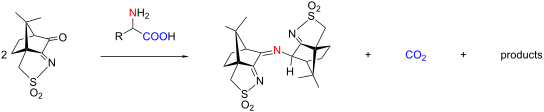
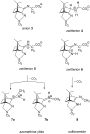
- structure of such zwitterions, decarboxylation occurs instead. Thus, we do not find a transition state, and the activation barrier approaches zero. Experimentally, Strecker degradations are not instantaneous, which means that there must exist at least a small barrier somewhere in the reaction sequence. One
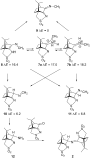
- activation barrier is considerably lower (∆Ea = 29.0 kcal/mol). Transition-state geometry and distances along the IRC path are shown in Figure 10, and the corresponding illustrating movie is available Supporting Information File 5. The transition state leading to compound 8 is considerably closer to the non
- -ionic ground-state geometry 6g than its counterpart, as can be seen by comparing the distances of the atoms participating in the degradation reaction (Figure 9 and Figure 10 (right)). This may also contribute to the lower activation barrier in the reaction through the eight-membered TS. In both





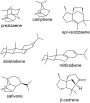
Dynamic behavior of rearranging carbocations – implications for terpene biosynthesis
Beilstein J. Org. Chem. 2016, 12, 377–390, doi:10.3762/bjoc.12.41
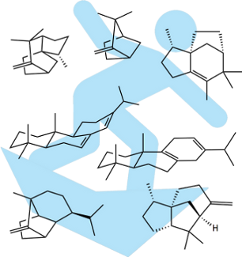
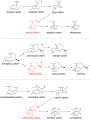
- an overall predicted activation barrier of 33 kcal/mol, while the longer pathway involved 16 steps with an overall barrier of 37 kcal/mol. Similar results have been obtained for other complex carbocations: the same group used molecular dynamics to explore the homocubyl cation’s rearrangement behavior
- of which had a lower overall activation barrier, any number of which could be operative in the rearrangements of the 2-norbornyl cation to DMCP+. While a systematic search of all possible isomerization pathways should always be considered for carbocation rearrangements, it is often unnecessary (and
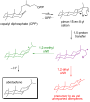
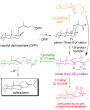
- cation in the absence (solid lines; computed relative energies in kcal/mol) and presence (broken lines) of epi-isozizaene synthase. The number of pathways found by Lobb corresponding to a certain number of steps in the mechanism and the lowest overall activation barrier necessary for a pathway with that



2-Hetaryl-1,3-tropolones based on five-membered nitrogen heterocycles: synthesis, structure and properties
Beilstein J. Org. Chem. 2015, 11, 2179–2188, doi:10.3762/bjoc.11.236

- ) indicate that increase in the acceptor properties of the fragment X are manifested in the significant increase in the activation barrier of the double proton transfer stage (7A∙AcOH) → (7B∙AcOH) and in decrease in the activation barrier to the formation of norcaradiene derivatives (7B'∙AcOH) → (8∙AcOH). On


![[Graphic 3]](/bjoc/content/inline/1860-5397-11-236-i8.png?max-width=637&scale=1.18182) N···H–O equilibrium in solutions of 2-hetaryl-5,6,7-trichloro- and 4,...
N···H–O equilibrium in solutions of 2-hetaryl-5,6,7-trichloro- and 4,...


Surprisingly facile CO2 insertion into cobalt alkoxide bonds: A theoretical investigation
Beilstein J. Org. Chem. 2015, 11, 1340–1351, doi:10.3762/bjoc.11.144
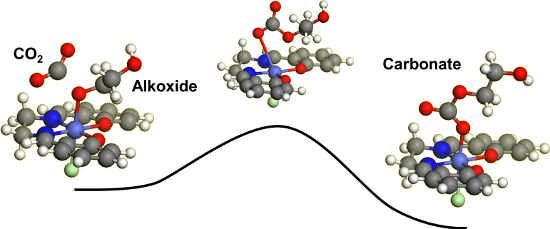
- (salicyliden-1,6-diaminophenyl)) is exothermic, whereby the exothermicity depends on the trans-ligand L. The more electron-donating this ligand is, the more exothermic the insertion step is. Interestingly, we found that the activation barrier decreases with increasing exothermicity of the CO2 insertion. Hereby
- polymers are thermodynamically less stable than cyclic carbonates, a kinetic control must be attained to direct the reaction to the polymeric products. To selectively lower the activation barrier towards polycarbonates, a rational development of suitable catalysts is essential. This current study aims to
- . A low activation barrier found for the CO2 insertion into the zinc–alkoxide bond may be related to the use of a relatively high energy unsaturated 16-electron complex. In the reaction mixture of neat cyclohexene oxide, the complex will readily coordinate additional cyclohexene oxide as solvent


On the strong difference in reactivity of acyclic and cyclic diazodiketones with thioketones: experimental results and quantum-chemical interpretation
Beilstein J. Org. Chem. 2015, 11, 504–513, doi:10.3762/bjoc.11.57

- ’d and the corresponding alkene 5’d resulting from desulfurization are the main products formed at elevated temperatures when the reaction is thermodynamically controlled. At the same time, the lower activation barrier of 1,5-electrocyclization (ΔGa# = 8.7 kcal·mol−1) as compared to 1,3
- -electrocyclization (ΔGb# = 15.1 kcal·mol−1) results in the dominance of oxathiole 3’d, which is preferentially formed in the reaction mixture at room temperature when the reaction is kinetically controlled. Due to the relatively low activation barrier of the 1,3-oxathiole 3’d ring opening back into ylide 7’d (ΔG-a
- alkenes. In the case of the C=S ylides bearing two alkoxycarbonyl groups, the latter pathway clearly dominates. The reversibility of the 1,5-electrocyclization of the transient C=S ylide, generated from diazomalonate 1d and thione 2b, is attributed to a relatively low activation barrier (ΔG# = 23.8





